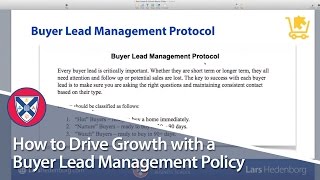
The speaker outlines a buyer lead management policy for real estate teams emphasizing the strategic value of long-term leads and systematic pipeline handling. Leads are bucketed as Hot/A (<30 days), Nurture/B (30–90 days), and Watch/C (90–180+ days). The team enforces a maximum of 100 active buyer leads per agent in BoomTown (ABCs combined). The policy document (in Dropbox) covers lead sources, handling procedures, tracking/accountability, roles (client care/inside salesperson), opportunity time rules, and the recommendation to issue the policy as a draft to solicit team input and buy-in.
So the buyer lead management protocol, I'm going to go through this pretty high level. There's a document in there in the Dropbox that you can look at and make your own. But every buyer lead is critically important. So here's the thing that you really need to instill in your agents if you're, if you're not working these leads alone is that the longer term leads are even in my opinion, more important. So if you look 6 months out or 12 months out as these buyers are going online, you know your ability to service them 12 months before they're ready to buy. They're not going to go anywhere else. Even if they come into town once or twice or they want to go out once or twice before they're really ready to buy. Your ability to lock up that relationship early in their search process is super, super important. And your agents are going to want the quick check. But it's your job to make sure the pipeline is handled properly. So we bucket these. I chose the headings that Boomtown gave us. Hot, nurture and watch. But ABC is a typical way to track these buckets. So hot or A buyers are ready to transact immediately. So less than 30 days. Nurture or be, buyers are ready to buy in 30 to 90 days. And watch or see, buyers are ready to buy in 90 to 180 plus days. So those are the buckets that you're going to want to keep track of. And then here's the thing, I'll say on having a buyer lead management policy, you can see the document. It's very, very robust. It goes through all the different lead sources. It goes through how leads are supposed to be handled. It goes through what we do as far as tracking, how we hold them accountable and what the consequences are if they're not doing what they're supposed to do. It also explains we have a client care person and inside salesperson, how that person fits in. We do opportunity time. It covers what our opportunity time is and what you're supposed to do as an agent during opportunity time. We handle that all through if by phone, through technology, the calls and the leads are routed and then it goes into our are top 100. So buyer agents on my team are only allowed to have 100 leads in their boomtown. So their ABs and Cs can only add up to 100 leads total. So they can have some new leads or some leads that they're looking to qualify. But they're A's and C's. These are people that they've had a conversation with that they feel there's a good chance, at least there's a possibility for them to transact with our team. And that's a lot of people, if you think about it. That's a lot of people. 100. We used to not have it that way, but now our agents every week are looking to keep that list as slimmed down as possible so every one of those leads are meaningful to them. So we understand 100% what it means to have a pipeline of buyers. So go through the buyer lead management policy if you're just a solo agent versus having a team if you're a solo agent. I wouldn't go through this document and make it your own and spend, you know, hours making it your own, but just read it once through to see the things that are important and where you might need to go when you launch a team. If you've got a team that's up and running already, you're going to want to go through this document, but go through it in a way, make it your own the way that you want it. But make sure when you hand it out, you stamp draft, that everyone knows that it's just a draft because ultimately you want to enlist your team in helping you build out this document. So we're pretty flexible. We're more flexible than some teams, I believe, as far as making sure that we listen to our agents. So when they complain about having opportunity time on the weekends, I tend to not just tell them to suck it up like some team leaders do. We actually listen to what, what they're saying and figure out ways to manage, you know, within reason to manage the issue that they're bringing up. So you want to put out this document in a draft form and then enlist your team to be able to finalize the draft and have everyone get buy in on every part of it.