Learn how I sold over 300 homes this year working only 1 day per week
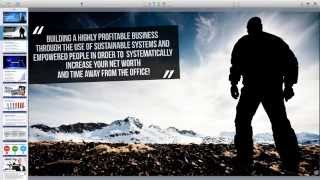
A real estate team leader shares how he closed over 300 homes in a year while working one day per week. He breaks down three leverage pillars: marketing, technology, and people systems. The presentation covers team structure, financial metrics, and a planning exercise, then takes audience questions.
Questions this video answers
2008
Over 300 sides
Three main admin
600 sides
Approximately 65–67% gross margin
All right, so we are going to talk about. And I have a quick story to kind of kick this off because obviously it's a controversial headline, right? So, you know, selling over 300 homes, you know, working one day per week. You know, sky's full of it. There was a Facebook thread that, man, if I didn't have thick skin or didn't really care what people thought, it would have upset me. Just cruel comments. One of the comments was about this picture here. And I guess it was an older suit. Just someone saying, man, if he sells that many homes, why doesn't he have a better suit? So I don't know, man. I think it's a. It's a navy suit. I don't know if it's cheap or not, but I tend not to put a lot of my money into my clothes. So maybe, maybe someone picked up on that. But what I do is 100% legit. It's not rocket science. I built a highly profitable business. It's based on systems and very, very productive agents. So it's unlike most teams that you'll see. And the process that I went about building it is unlike most coaches and how they sort of train their clients to build a team. So I'm gonna go through a lot of the core sort of fundamental things that you'll need to be able to achieve what I've achieved. So this is really what we're setting out to do, or at least give you the framework to. To do this. So building a highly profitable business through the use of sustainable systems and empowered people in order to systematically increase your net worth and time away from the office. So my dream for all of you is the last part of that there is to systematically increase your net worth and time away from the office. And so my business is, I've got agents that are doing well. You know, they're making good money, they're happy, they're kicking butt. It's a fun environment. I've got staff that just love to come to work. It's a unique office environment unlike any other corporate environment there is. They lean on each other and they're cross trained and they look out after each other. And I've got clients that get great service and all of it's delivered by me, quote, unquote. And when we get client reviews, everyone says, Lars and his team did an awesome job. Lars does a great job. So I'm gonna talk about a little bit about that and how we do that. But this is the goal, right? Build a highly profitable business through the use of systems, not just brute force. So my business doesn't run because I show up every day and I get all the different cogs running and all the plates are up in the air and I'm the one that's standing in the middle of it. It's sustainable systems and a very lean staff. So I've got three core admin and that blows everyone's mind. But when you have the right systems in place, you can run a lean staff. And our goal for next year is 400. And I've recently changed my vision. My vision now is to get to 600 sides and to do it with the three same staff. And we've already talked about it and we're going to get there. So that's the mission. And at this point, my business, it serves one purpose for me. It's to increase my net worth. And I don't spend a lot of time at the office. So that's my dream for all of you as well. So here's what we're going to cover today. I want to go through and give you a little bit of context on what my business looks like. I want to talk about some of the technology tools you should be looking at or have in your business. The core marketing pillars. The one thing I've done really, really well is that I've gone very, very deep. When I spend money, I want to see it return for me before I spend more money. And a lot of agents get caught up in really just getting distracted by trying this for a few months, trying this for a few months, and never going deep on the core marketing pillars that you should have in your business. A lot of business. And I learned this from my time with Tony Robbins. Went to Fiji twice. Business mastery. And my main takeaway, I don't know if I'd recommend it for everyone. Cause it's really, really expensive. Probably gave Tony Robbins over $75,000. My main takeaway is that business is a large part of his psychology. And I'll go through that. We're gonna cover a little bit about how the real estate industry is changing. And in my opinion, if you don't take a look at what I'm going to show you today and get on a path of building out a real company that delivers consistent service without you being involved in it, I think you're going to have problems in the future. I think our industry has some changes ahead of it. And then we're going to go through probably the coolest part of what we're going to cover today is I'M going to push you a little bit to think about three questions. I'm going to push you to think about your future three years out. I'm going to ask you about what your business looks like today and what you think might hold you back from achieving that really audacious plan that we're going to put together for you. And that's really probably the most exciting part of what we'll cover today. So make sure you stick around for that. So let's kind of set the stage here. So my business, my first full year in real estate was 2008. By the end of 2009 I just hired my first agent by the end of 2009. We have 15 today, seven outside agents, two inside sales, seven outside agents, two listing specialists, five buyer agents, a couple VAs and three main admin. So we're over 300 sides this year. Ops manager was key. So that's how I'm able to not get caught up in the details of things. I've got an amazing operations manager. Really starting to find the sweet spot for profitability. So profits this year, even though we had a flat year, we lost our top agent this year. But the business did really well profitability wise because we're, we're lean and mean on expenses and solid org structure in place. You know, we are pushing toward having just an awesome experience that people are willing to pay more than the average agent for. So this is our recent experience at Disney. I'm happy to give Disney more money to go on their cruise ship because the way they treat my family, the experience that we get from it and it's just I want the same experience for my clients. This is really something. If you haven't read any books on, none of them are available on Audible, but there's a couple books on the Disney way and sort of how they're able to get double the rate of other companies for the same quote unquote, the same experience or the same kind of vacation. So my production by design has just diminished. 2008 it was only me and then I hired one agent at the end of 2009 all the way to the last listing I took. The last client I really worked with was probably second quarter 2012. It took a full seven months to get that property under contract and sold. That's why I had a little bit of production in 2013, but basically no production here for 24 months. Probably closer to 30 months or so. So I've been out of the business. So definitely a work hard, play hard culture, simple Org structure plug and play sales system. We lost an agent this year but because we're systems based, we're able to plug another agent in and suffered a little bit with growth but we did not sort of, you know, we own the client relationship so we didn't have too much of a problem picking back, you know, picking back up and having the business move forward. The Salesforce, they are 100% driven. They have a reason to make a lot of money and work hard. They respect accountability and we feed the hungry. So if you're doing what you're supposed to do, we'll give you opportunity. Agents and staff, we have a lot of fun, there's a lot of financial opportunity. I hold a weekly team meeting. So Tuesday is my real estate day. I do some one on ones, I do the marketing, financing and I run the buyer and listing agent meetings. So all that happens really before one o' clock on Tuesday. So I hang around the rest of the day. I do some other things, but mainly Tuesday is my real estate day. And so we kind of cut the company up into sales operations. And then there's a part time person that helps me with executive services. Jessica Sheree runs the operations and she has a buyer client coordinator, a listing client coordinator and a couple VAs. And then we've got a seven person salesforce. Outside sales are five buyer specialists, two listing specialists and one buyer ISA and one seller ISA, both local. So when I look at my business I really think about leverage. And you know, way back in 2000, I guess it was less in 2007. 2008 was my first full year. You know, I really, really looked at these three pillars and it was one of my coaches that gave me this sort of framework. But it's marketing technology and people and systems and my ability to build the business I have today and step out of it and have it run without me is based on being able to leverage marketing, to leverage technology and to leverage people and systems. And so obviously marketing leads to sales, leads to growth. So let's go through some key marketing pillars. I'm not going to go too deep on the marketing pillars because I want to leave time for questions. But basically there's five main marketing pillars that I run in my business and really the order I'll kind of go through the order that I built my business in because some, some of you on the call are selling 100, 200 homes a year, some of you are selling 10, 15, 20 homes per year. So the way I was able to build my business, I knew that Buyer leads, just buyers in general aren't out there a little bit more so here recently with, you know, available data on agents and some of the social review sites and whatnot. But for the most part the easiest and the lowest barrier to entry is with, with buyers. And so that's Internet leads. So Boomtown Commission, Zinc, Zillow, Trulia, all those different sources. Craigslist still works on my market. People claim that it doesn't work, but we just give them instructions to copy and paste the URL and it still works. So getting really good at buyers through the Internet and then probably from there. I got really good at expired and fizbos, which helped me to get to pillar number two and get yard signs up in yards and we run three yard signs and, and having three yard signs gives us two and a half times more call volume than if we just had a single yard sign. Farming, I consider farming just groups of people and I lump expired FSBOs and geographic farming. Direct mail, we don't do a lot of smiling and dialing. We don't do outbound calling. We have a couple dialers. We have Vulcan 7, we have Mojo, but they are rarely used for all of our, all of our farming is direct response and people call us. And I've just become really good at the marketing messaging for direct response marketing and getting people to call us off of our advertising. Then it's our raving fan club people that know, like and trust us. Our past clients in sphere through direct mail, through video, video marketing through client giveaways and the quarterly calls, our client events. We do market snapshot. So We've got a 60 touch program with our past clients in Sphere. So if you're Keller Williams or you've heard of Keller Williams in the 33 Touch, we have amped it up to a 60 Touch program. It represents this is my seventh full year. 40%. Yeah, full 40% of my business is past client and soi, which is pretty good for only seven years in the business at the volume that we're at and then go for. No, it's sort of the flip side of that is training my agents and staff to ask their sphere and in their networks and even to strangers to get them to generate business. And that's working really, really well for us Marketing and spending time on marketing is, you know, if you contrast calling expireds every day for two hours a day versus setting up an expired mailer system, you know, it may take you 10 hours to set up the system, but it's going to lead to results Continuously versus every day you got to get up and dial that phone. And so I've always just focused on the marketing in my business versus the activity of just being a phone warrior. And you know, so I started when I was early in the business. I started with direct response and then shifted to branded advertising. Most agents out of the gate want to create this brand that is a myth for the most part and we hold expenses accountable. I don't have time to go into marketing ROI tracker but I track every expense and what it does for our business. So I know that for the most part when I spend buck, I want to make 10 bucks before I pay agents. On average I pay my agents about 40 cents out of a dollar. And so I need a six times return on my investment. Ten times when I'm looking at gross, when I'm looking at gross commissions and six times when I'm looking at gross margin. And so I'm not gonna. I have a lot of detail on the individual market pillars. So for Internet buyers it is a finding the needle in the haystack. The best conversion rates are 3 to 5%. There's a lot of competition here so you really need to get aggressive with calling early and often. You know, focus really has to be on lead conversion and management, not just the lead generation. Part of this is easy now yard marketing, we use voice pad, we use everyday open house signs. We've got three signs in our in our yards and that increases our call volume. We got rid of flyers and our call volume went up two and a half times versus just having a single yard sign with flyers farming again. So basically the focus on it is on expired mailing here and we have a USP your home sold in 29 days or I'll sell it for free. Huge ROI here. We added a 12 page color newspaper to 10,000 homes in a good area in our market. That'll take some time to yield results but we've already getting results there. And like I said, the focus is direct mail there. Through a combination of video marketing. We send out our color newspaper to this group as well. We do giveaways and events and top producers market snapshot and getting surveys from your past clients. ROI for this is off the charts, which is really, really cool. Go for no. I have this little thing here, trifold brochure holder. All of our all around our office we have these referral cards. We do a go for no. We do this 30 day challenge. We have contests in the office. I made these referral cards after getting totally taken advantage of by like a 22 year old Cutco knife salesperson where basically sold me 600 and I think $58 worth of knives that I didn't need and then proceeded to ask me for 20 referrals. Not like do you know anyone that might want to buy knives? But put a piece of paper in front of me and wrote the numbers 1 through 20 on it, turned it around and put it in front of me and said can you give me 20 names of people that might be interested in purchasing, you know, the best knife in the world or whatever. And man, I didn't give her referrals but I took the piece of paper and I created this referral card and it's, it works like magic. So Jay Abraham, probably they called him the billion dollar man because of his, his ability to, to change how companies look at their marketing. He says you are surrounded by simple, obvious solutions that can dramatically increase your income, power, influence and success. The problem is you just don't see them. And so he has just really cool, simple ideas to change how you look at your marketing. So let's talk about technology tools. So this is one area that I see agents really fall down because we are marketed to so heavily and there's a lot of money in our industry because everyone's looking for the next best thing, the tool that's going to give them five closings a month and make it easy. So this is the biggest risk that you run in your business is by not settling in on just a few technology tools and sticking to those tools. And I've got to say that again is that the whole chasing squirrels and being distracted by shiny objects is the kiss of death when it comes to scaling your real estate business. It's a very simple business. My business is run on four technologies. So the first one, the general category is called a real estate CRM. So you have to have something. CRM stands for customer relationship management. So some technology tool that helps you manage the relationship with your clients. That includes lead management, getting them as a client and how that relationship looks as a buyer, seller, client, how the contract to closing portion works and how you communicate them with as a past client. So real estate CRM the next is direct response websites Boomtown and Commissions Inc. Real estate webmasters. There's a bunch of other ones out there, a website that someone can go to that prompts them to register. So it's a direct response website. Google Apps for business. I can't imagine having my business without having Google Apps. They call it Google Apps for work now but it is an integrated suite of tools including email, calendar, docs, spreadsheet, chat, video, everything you need to sort of scale a small business. And then call tracking and routing. And for that I use if by phone, which is I used to have three critical technology tools until a couple of years ago I started using if by phone. And that is an absolute game changer. Every call that comes into my office, I have 3:30 different phone lines that are very inexpensive through if by phone that are tracked, they're routed, they're recorded and they're reported. So for only for not so much money, I'm able to do that all with it by phone. Very, very important. Agents love to hate Top Producer. I don't know why they're always looking for something better. This does everything that I'll ever need a CRM to do. You've got to use it. If your system for maintaining contact with your clients was index cards, handwritten index cards, and you use that system, it would probably work okay. And this just makes that way easier. And so it is the best tool that's out there right now. I know there's a couple other tools that you could use. I wouldn't overthink it. We do four critical functions in top Producer. It handles our seller lead management and conversion, our seller client servicing, our listing management, closing management, past client servicing. Direct response websites. Just understanding direct response and how to advertise is half the battle here. You have to be able to settle on a website. We've got two basically at this point we run Boomtown and we run realaunch, realaunch seller site. So I've got a site dedicated to sellers and we run Boomtown as well. Google apps for work. I'm not going to go into this. You can just Google it. And ironically, we run a Blogger platform. We have Google Drive. We obviously do a ton on YouTube with our video marketing. Google Calendar, Gmail, all integrated. Makes it real easy versus having individual personal Gmail accounts and trying to tie those together. Call routing and tracking. We get reports on a daily basis of every call that came in and every call is reviewed. So we maximize every opportunity to work with a buyer or seller. Here's Bill Gates. He said the first rule of any technology used in a business is that automation applied to an efficient operation will magnify the efficiency. The second is that automation applied to an inefficient operation will magnify the inefficiency. So obviously you have to have your systems in place before you structure technology around them. All right, so let's talk about some mindset shifts that are required. As part of that Facebook thread that I was sort of teasing about in the beginning, it went on, there were probably 10 different agents. All of them were friends of mine on Facebook, which is another joke in and of itself. You know, Facebook really have no friends, but just kind of going on like, man, this is BS and he obviously doesn't understand or he does REO business or some like really, really not so great comments. And all of it revolves around the fact that agents, our industry is just plagued with a bunch of traditional thinking agents that can't, can't get past the fact that right now, as the industry exists, there are margins. You can make enough money to have everyone do everything for you, and there's a lot of teams that, that have that set up, but they do it in a way where there's not much money left over. So my gross margins range from 65 to 67%. So after I pay my agents, I still have 65 to 67% left over. That doesn't mean I underpay my agents because all my agents are making more than six figures, which puts them in the top 5% of agents in my market for income. So my agents are very well paid, but they're paid well because they're productive and my systems help them be productive. So the ability for your mind to get to wrap itself around the fact that you can build a business that truly serves you, that you don't have to be in every day. That's probably half the battle when it comes to being able to do what I've done. So shift your mind, achieve your wildest dreams. So the first one is straight from Tony Robbins. Business is 80% psychology and 20% strategy and tactics. I promise you that if you can. What's the quote? I'll probably mess it up. The pulling hill. What the mind can conceive, you can achieve kind of thing. So if, you know, I've, I've got the path, I've been down this path myself. And so that is half the battle. It's not so much the strategy, but you believing that you can go down this path yourself. So number two is you're a business owner. You know, start acting that way. Marketing is your primary activity. The thing you need to worry, worry about most new business development. You've got to make it rain every day. You always have to be thinking, is this the best use of my time right now? And I mentioned it before, shiny objects and chasing squirrels will kill you. So when I was In Fiji, I have a recording of it, and I always forget to play it. But really being. Being able to understand why you're doing what you're doing. I mean, real estate's a tough business, right? So it's not enough just to sort of do the job of. I even have haters in this. I'm just. I'm just kind of going through here real quick. I've got someone that said, who cares? Move on. So, awesome, guys. Give me a little bit of grace. You're going to. Someone said, I'm going too fast. There will be a replay available, so don't worry about me going too fast. I've got to get through a lot of information. Information, and at the end, just make. Make notes, and I will ask. I will answer questions. So do not be a hater on this call. I should just totally get rid of that person that said, who cares? Move on. Yeah. So my goal here is just to serve you today, to open your mind that this is entirely possible. So definitely get over yourself. If you're on the call and you're wanting me to move on, you need to get off the call now and you know who you are, so just drop the call. All right, cool. So the takeaway from this event was that there was. There was a time. There's like 50 of us in the room, and Tony was in front of the room. And whenever I say it, I mean, it was a. It was a. Worst time is about three years ago, and the winter was the season. Economically speaking, it was a pretty dark time. It's probably maybe even four years ago when we were kind of still in economic terms just a little bit. I guess we were coming out of the recession or whatnot, but we were all at the top of our lungs. I mean, I'm a gladiator. Winter is my season. This is my time. Give me your fears and limitations, and I will give you results. Your ability to step up and lead your team or to step up in your market and decide that you're going to build a team. Not many people are willing to do that. So the psychology around being able to lead a group of people, inspire, enlist people to join you, is a big deal that very few people are willing to do. But with the right mindset, the feeling that you can do anything, there's lots of examples of people that have achieved greatness that came from way worse circumstances than you, you will infinitely increase your odds of success. All right, so here's Tony. So many people know what to do, but they don't Follow through. They don't take the action needed to get the results they're seeking. This is because 80% of mastering anything comes down to your psychology. Thus the more you can understand about yourself, the more you can master sales, management, marketing, and business overall. So it is psychology. So you're a business owner. And I'm going to go through this one quickly, but it's even with my clients, it amazes me. Well, it doesn't amaze me now knowing, you know, most real estate agents go into real estate because they are sort of friendly, outgoing, their high I personalities, and less than 10% have monthly financials to track anything. The scorecard in your business is your monthly financials. Every decision you make. If you decide not to generate new business every day, that's going to end up in your financials. You, if you decide to spend money on something that isn't proven, that's going to show up in your financials. And most agents don't want to look at that scorecard on a regular basis because it is really, really sad. And so the scorecard that we measure our success by, at my, at my company and with my clients is not only your monthly financials, but what is your net worth doing on a regular basis? So is it going up every year? You know, my business serves that purpose for Ned is to systematically increase my net worth. Is your business serving that purpose for you? You know, most agents are busy working with clients and the minutiae that comes along with, with the home sale and home buying process. And even with team leaders, a lot of team leaders are just wrapped up in minutiae and not going anywhere. All right, so marketing, direct response marketing, being able to put something out there either online or via direct mail or through your past clients or through a farm piece or an expired letter. Your ability to put something out there in a way that people are going to be compelled to take action. That is direct response marketing. So Dan Kennedy is probably the grandfather of direct response marketing. And I would absolutely. I've got a stack of Dan Kennedy books right here next to my desk. Dan Kennedy, no BS Time Management. Really, really awesome book. Sales Success and Business Success and Wealth Building Wealth Attraction for Entrepreneurs. Four really good books. They're not available on audio, but those are four awesome books from Dan Kennedy that you should look out to, look out for. And agents don't track their advertising and marketing. And you can't spend money if you're not going to measure it. So anyway, new business every day with all of the details involved in transactions. It's easy to get to get sidetracked and not focus on generating new business. But your ability, not only you personally, but your ability to inspire other people around you to generate new business every day will directly correlate to your ability to build a sustainable and system driven business. You've got to focus on not only lead generation, but lead management conversion. There's more money in lead management than there is in the initial, you know, 10 days that an inquiry comes into your office. So if you, if you can have a lead management system in place and I've got a lead management policy that my office follows, if you can get that in place and follow it, you're going to be able to make a lot of money in the, in the, you know, they say the fortune is in the follow up and it must be part of your culture. You got to be thinking new business, new business, new business and not in yourself. If you're a solo agent, you have to focus on building enough momentum to be able to get that first agent because you're so busy or that first admin. And same thing goes with referrals. We run contests and we have referral cards and we make it fun. The one comment I want to make, and I'm seeing it, it's really, really bad, the whole outsourcing of lead conversion. I have solo agents that are doing it. So they decided that they're not going to be responsible for lead conversion in their, in their single person team and they're going to hire someone else to do it. And worse yet, and I have nothing against offshoring because I do have VAs in other countries, but offshoring your inside sales, it's. I've not seen 10 people that are doing it. One is getting it to work really, really well. One is getting it to work okay, maybe a couple think it's working well, but it's really not. And then six are just, it's failing miserably. So offshoring your ISA is very, very, very challenging. The whole knowing your dollar worth. And so I have, even when I was early in the business, my calculation was that my time, I wanted to make $500,000 working 2,000 hours per year. And so my hour, every hour I spent on something, I should be making $250 for that hour. Having that number. Now I've changed that number to 1,000. So if I'm going to spend an hour doing something has to be worth a thousand bucks to me. And so just having that number, even if you don't have the leverage of an admin, knowing what that number is for you will get you really impatient. Like if you're working in a file and you're chasing down an attorney or you're following up with a lender in most markets that's $15 an hour, maybe $20 an hour, maybe 25 in some of the more expensive markets. But you're losing money. You're losing at least 100 bucks an hour every time you spend an hour working on an admin task. So start thinking about what this number is for you and I promise you it will change your world. And I've touched on this already. Shiny objects and chasing squirrels the fact that I've been consistent in my use with Top producer the fact that I've been consistent in my use with Google apps. The fact that I've been on my Boomtown platform since 2008 and it's not there are other platforms that are now more feature rich. Commission Jinx Commissions Inc. Is is really blowing Boomtown away with their features. And I have a Commissions Inc. Platform but I've stuck with Boomtown. It's still my main platform. So I'm very hesitant to switch all the time because there's always the latest and greatest thing. So you've got to be able to to not fall into this crippling trap. Darren Hardy gives a great example of, you know, getting anything working in your business is kind of like pumping a hand pump for a hand pump water well, a well water. So the water is 400ft down and you're pumping it by hand. You're pumping for probably a good five minutes and you're pumping your ass off to get that water to come out. Once it starts coming out, it doesn't take a whole lot of effort to keep it going. And, and most agents are constantly pumping pumps and they're never letting the water come out to where it's easy to keep a system up and running. So don't fall into that trap. Settle in on one. Do one marketing pillar at a time and focus in on 2, 3, 4 key technology platforms and you'll watch your business scale. So let's talk about some industry issues. Not going to spend a lot of time here. I spent a year coaching with Harold Ware, brilliant guy who talked most of his focus was on really the changing consumer, the evolving industry dynamics and how agents should be responding. And I sort of believe the same thing that if you're not thinking along the lines of building a team and sort of a more business like structure and delivery of services, you're going to be working for someone that has that. So you're going to be on one of these teams or you're going to be running one of these teams. And there's nothing wrong with the people that are going to be working for the team leaders, but it's, it's a huge risk. So you have to, you have to figure out what your response will be if you want to continually have the same year over and over in your business or if you want to truly own a business that serves you, serves your family, where you're able to create a really good income without having to work in it every day. So too many agents get caught up in the trap of trying to be Superman or Superwoman. So if you're selling 15, 20, 30, 40 homes per year and you've got little marketing technology or people systems leverage in your business, you will burn out and you will limit your income. So remember, if you don't have a business, you have a job. So three elements of my model, I consider it and I call it the corporate model. Three features are that the company maintains the client's lifetime value and deliver the value proposition to the consumer versus giving up control to your agents. Workflow processes are performed by specialized employees rather than jack of all trades traditional agent. And agents are transitioned from traditional high splits to much lower splits in line with the value they provide in the transaction. That third point is not a dis to agents on my team. Quite the contrary. Every agent on my team knows that there's a dollar that comes in and they get a piece of it for the what they do in it. And then there's overhead that helps them make their job easier. And then there's profit that I split with the government. So it's not a dis, it's just we were able to get them so productive. Every one of my agents is selling more than 40 homes. And we could do it because we've got solid systems and key people in place. Okay, so you have to decide what your response will be to what's going on in the industry. I'm deciding that in retail clothing, there's Nordstrom, Macy's and TJ Maxx. Nothing wrong with TJ Maxx. Maybe I bought my suit there. Apparently from some of the Facebook comments, there's nothing wrong with Kia or Toyota, right? I mean, both are really good cars. I like shopping at Nordstrom and I drive a BMW and I'm willing to pay premium prices to have the experience I have by being in those worlds versus going to TJ Maxx and rifling through, you know, damaged goods or stuff that, you know, whatever. And Kia, there's nothing wrong with Kia, right? It's an awesome car. It'll get you from point A to point B, but it certainly doesn't provide the experience that a BMW provides. So I'm deciding that I'm going to be a Nordstrom or a BMW in my business. And as a result of that, when the market continues to shift or the industry continues to change, I'll be positioned, I'll have a position of strength going into that change. So the average agent delivers average service. Our industry is changing. Consumers are demanding more and more, and we have to continually improve our service and our skills and our systems to deliver the most memorable experience we possibly can to our clients. I'm not going to go through this exercise right now, but is the experience you're delivering to your clients, is it average or is it world class? When you think of going to Disney World versus going to a Six Flags, are you Disney or are you Six Flags? Are you BMW or are you a Hyundai? And if you drive a Hyundai, that's cool. So this is not a comment on that being a bad thing, but what is great about what you do, what can be improved? So this, if you're a solo agent, I don't have an org structure for you because there's just you. But this is the progression that I took. Sorry about that. The progression that I took was to sort of have a couple buyer agents. TIA was my main admin person. Then to break out sales from admin, had a seller client care person, a buyer client care person, added a listing partner, had three or four buyer agents, and then ultimately to split up responsibilities for the different sides, have seller, buyer, client care, listing partners, buyer partners, and inside sales. So, Michael Gerber, if you haven't read the E Myth, and I think the updated version is the E Myth revisited, he says it's a whole on versus in your business. Most entrepreneurs are merely technicians with an entrepreneurial seizure. Most entrepreneurs fail because you're working in your business rather than on your business. And so if, if you're a solo agent, you are definitely working in your business all the time. Even if you're a team leader, your chances are you're spending 80% of your time working in your business versus on your business business. I did a really good job even from my first start in real estate, to always spend a little bit of time working on my business because I wanted to become a true business that functioned without me all Right. So this is probably the most exciting part of what we will focus on here and then I'll open up for questions. So we are doing really awesome on time. All right, so grab a and I put a Sharpie up here because I don't want you to to overthink your answers to these questions, but grab a blank piece of paper and just humor me on this one. Just grab the piece of paper and do it. This is doing an exercise that I'm going to take you through. Right now may be the turning point for you. It may be the point at which you are going to project a future that is dramatically different from the prior years that you've been working in your business. So grab a piece of paper and a pencil. I'm going to take you through really three questions. So let's talk about the future. And so just write number one. First question is let's imagine we're having a conversation three years from now. So you and I are sitting down and we're talking about three years, three years from now. And we're looking back over those three years. What would have happened over those three years for you to feel wildly successful about your progress and about what you've achieved. So three years from now, maybe your business is you're a solo agent now or you've got one admin, or you've got a small team, but you're still heavy in production. You're working too many hours. What does life look like three years from now? How many transactions are you selling three years from now? If everything works out perfectly, are you selling 200 transactions? 250. 300 transactions? Are you in production at all? Do you have someone else managing the day to day operations? Someone who's dealing with all the client issues that come up in transactions? Tell me what it looks like three years from now. Write this down. I'm going to wait until you write it down. So take some time here. What does your schedule look like? Any evenings, Any weekends three years from now? What's your net worth look like? Do you have a positive net worth right now? And what does it look like three years from now? What's your liquid net worth? If I had to have you write a check right now, how much money could you get within a day or two? Notice and write a check for it. What do you want that to be three years from now? Well, one goal of mine is to be able to write a check for a million dollars to my church. I think that'd be pretty cool. It's going to take A lot of money to do that. I'm not going to. You know, I do give systematically to my church, but to me, that's a written goal that I have. So what does your net worth look like, your liquid net worth look like three years from now? How about your health? What does your health look like three years from now? Are you where you want to be, health wise? Your relationships, you know, do you have children that you're not spending enough time with? You're not focused when you're with them, you're not present. A spouse that probably wants a little bit more of you? I was probably that way about four or five years ago where I wasn't focusing on my health. My wife was so gracious and supportive of what I was doing, but she wasn't getting enough of me. Two small children, a new baby, and Anders was 3, 3, 4, while I was still sort of building this business. So what does it look like three years from now? What's your gross commission income, your volume? What are you taking home? What are you splitting with the government? Whose lives are you impacting three years from now because of your increased income? I'll give you just a couple seconds to finish that out. You should be writing a lot. This is your chance to just. To just lay it all out there, even if it seems ridiculous what you're writing. I just held an intensive workshop for my clients here a couple months ago, a month ago, end of October. And I shared with everyone there my written goals for 2010. And unedited, had a bunch of personal, intimate stuff in there, and I just shared it all and what I wrote. As for my goals for 2000 in 2010. So going into 2010, I wrote my 2010 plan, which includes 2014, what I wanted to do. It was within five transactions. So I think I wanted to do. I projected like 320 sides, and we'll be just under that this year. And so your ability to think about this stuff and write it on paper, you'll find a way to get there if you're. Why your emotional juice is big enough. All right, let's go on to number two here. So where. Let's talk a little bit about where you are. Write down on the paper. I mean, it sounds silly because you know where you are, but write down, how many sides will you do this year? What's your net worth look like this year? Are you working evenings? Are you working weekends? Where's your health now? Your relationships? Are you present with your family, with your children? I even slip now sometimes. It's not like I don't have a lot going on. Even though I don't spend a lot of time in real estate business, I slip up and my 4 year old lets me know she is not shy about smacking my phone out of my hand. So where are you now? Write it down. Write your net worth down. You may not have an exact calculation. For some of you it's negative and that scares you to admit that. You got to be able to face the reality of your current situation. Some of you, you've got NET Worth, maybe it's 2000-003000-00400,000, but you've got to face the reality of your current situation. So what is life like now? What is it like to show up in your business now? Are you holding it together every day? Are you doing your transaction management? Do you have any systematic marketing going on? Are leads coming to you? High quality leads coming in all the time to you? So where are you now? And now let's talk about bridging the gap. So what's holding you back? So you put this, let's. I'm going to sort of use a fictitious example. Let's use. You did 37 sides this year. You've got a part time admin. Life's a little crazy. You're negotiating, you're doing showing appointments evenings, you know, you're taking appointments on the weekends. You've got a couple young children, you know you're working a little bit too much. You're not present with the family because you're trying to hold it all together. That's. Let's just use that as a fictitious current example. And then let's look at, okay, this, this, this person, couple young kids, busy, doing pretty well. 37 transactions, not too bad. He wrote down 240 transactions three years from now and he's not working with a single client. Imagine that scenario. What would hold you back from achieving that plan that really, they call it bhag, right? I think that's a Darren Hardy term. Big, hairy, audacious goal. And he may not have coined the term, but what's going to hold you back? Is it the path? Do you not know how to get there? Or do you suffer from shiny object syndrome? SOS where you're never really spending enough time to get one thing working? Do you struggle with the details? Maybe you don't have a lot of C in your personality and you can't put the systems together. What's going to hold you back? Take some time. Maybe it's just fear, you know Maybe, maybe you don't think you can achieve it. Maybe it just scares the shit out of you to look at that number. Say, man, I know some of these guys and gals around the country are doing a couple hundred sides, but I don't have any business experience. I've never managed people. So maybe it's fear. I didn't have any management experience when I went into this. I didn't have any sales experience. I had never sold anything in my life before when I got into real estate. So what's going to hold you back to achieving your goal? That scary goal that we wrote in the. In number one here, Is it skills? You know, are you not, you know, maybe your skills working with buyers or convincing your buyers and sellers to do business with you? Maybe it's just you think you can't afford to generate leads. Whatever it is, just write it down. So I'm going to go through some thoughts. You know, when I look back and I always look over to my left here I'm on third floor of my home and I look back and I look at the dots and I connect the dots of my last. This is my seventh full year in real estate. It definitely is not a straight line. Every single stage of the growth process made me feel uncomfortable. I finally learned about three years in, I had this constant feeling of discomfort. And it was because I was growing. And so every single part of it just made me uncomfortable. This is not an ego thing or patting myself in the back, back. But I think people are drawn to me as a leader and as a coach because I'm real. I. For, for the, for one thing, most, most coaches and team leaders don't lead in sort of a servant leadership kind of way, but they don't admit their faults. And so there are just certain things that I'm good at, and I lean heavily into those. And I surround people with. I surround myself with people that are good at the things that I just know I'm not good at. I'm not great at working with clients. I'm very impatient, very impatient. So I surrounded myself with people that are really, really good and really patient with clients. But one thing I realized is that people want and even need to be led. And I don't mean that in a negative way like they're a bunch of lemmings. But they need vision, you know. So despite my, you know, often intense fears and feelings of really extreme discomfort at times, I remain focused on my vision of building a sustainable real estate business. My main takeaway was that anything is possible if you focus on it and you take consistent action every day toward your goals. Here's the thing though. You have to decide what you want. You may not have the exact plan today. I'm going to give you an opportunity to jump on the phone with me and build out this plan. So if we get on the phone, we're going to talk about these three things, so you better have written them down. We're going to talk about what you want for your future. We're going to talk about where you are now, and we're going to talk about what's going to hold you back. And we're going to build that plan for you. But you have to decide what you want. Set out with a plan, work hard, enlist and inspire others and make it happen. I love this and I can't find the source of it. It's always quoted with author unknown. But entrepreneurship is living a few years of your life like most people won't, so that you can spend the rest of your life like most people can't. Read that again. When I read it, it gives me goosebumps because I know what it was like to work those couple of years doing what most agents weren't willing to do. Working my ass off. Funny story, My wife just recently made a comment. In the early days, I would, I'd get up early, so I spent a little bit of time with my wife and our newborn son. And then I'd get after it, around 8 o', clock start. I'd work till 6 o', clock, if not later. If I had an appointment, I'd have a little bit of dinner time, family time. Then I'd spend a little bit of time with Julie, put her to bed, and I'd work upstairs for three, four hours. Just recently, the last couple months, she said, I didn't even know what he was doing up there. I thought he was probably into porn or, you know, so I was making shit happen. I was working on my expire program. I was stuffing envelopes. It was really, really crazy. I was working on top producer action plans. How I want my client experience to be kind of just building the business. But I had to do it at a time, you know, I sacrificed sleep at the time, which isn't always the best way to do it. But entrepreneurship is living a few years of your life like most people won't, so that you can spend the rest of your life like most people can't. So why am I doing this? You know, even offering up this free information, you know, the bottom line is that I've been there and I feel your pain. So I know there are some people on this call, on this webinar here that are in the shit right now and they're either ready to go back to a corporate job. Maybe you've built up your business to a point where it's just the worst job you've ever created and you're in the midst of just really not having a good situation. You're not spending time with your family, your wife is to pissed, your health is suffering, your friends don't get to see you, you're stressed all the time. So I've been there and I feel your pain. I had a new baby when I got into the business, a really new marriage as well. I spent money on everything. All the coaching systems, all the marketing that was out there, all the technology. I tried it all and lots of it worked, but lots of it didn't. I really did build a really cool business. It runs itself for the most part. You know, I work a basic day on Tuesday when I'm in town. My goal now is to help agents and team leaders avoid wasting time and money on things that don't work. So when I mentioned that, I look back over my seven years in real estate and I connect the dots and it's not a straight line. The first four years are definitely jagged and then it smooths out a little bit. My goal in helping agents now is to help that be a very, very straight line. So to get you from where you are now to a version of what I have a built a fully built, a fully systems based, sustainable business that runs without you tinkering with it. That's my passion now. So getting rich in real estate sales is boring. You know, once you build this thing the right way, it's a pretty boring business. And so now I help other agents do it and that's actually helped. My real estate business is not messing with it and not messing with things that work. So the four core building blocks, most of you have seen the business blueprint and that's the basis for how I run my business and for what I do. So a little bit about me, like I said, 2008 was my first full year. I've been coached by probably half of the real estate trainers in the industry. Spent over 150k on real estate coaches, 250k on coaches. Outside the real estate industry, I have a franchise, but I don't run it as a franchise. So I don't have a brokerage. It's just my team there's only the seven agents in my team drop buyers in 2010. Sellers I mentioned my last listing was 2012. It closed January 2013 and I dropped a day to day in 2012. My passion really is my family. So this is like our latest, you know, version of all our pretty pictures around fall. So I've got a baby girl who is really not a baby anymore. She's like super, super, super, super sassy. She's like four and a half. Anders just turned seven and my wife, we've been married since 2006. So really, really cool time for us. So this was just a cool, random snapshot that Julie was able to take of me and Tony Robbins. And one reason so few of us achieve what we truly want is we never direct our focus. We never concentrate our power. Most people dabble their way through life, never deciding to master anything in particular. And so I can't stress on that enough. Here's the thing. I'm willing to get on the phone with people that are just interested in having a conversation around these three points here. So what do you want for your business? Where are you now? What are your frustrations, your challenges, what's working, what's not working? And then what's going to hold you back from achieving it? So we're going to talk about these three things. It's open to anyone that is serious about growing their business. So there's no obligation whatsoever. It's going to be valuable if you choose to have me help you do this or not. So largestrategysession.com to take the next step. And Henry Ford, whether you think you can or you think you can't, you're right. So it's time for you to make your move. Your business and your life won't change unless you do. I liken the work I do to a recent personal experience. I've maintained a membership at our YMCA for the last 10 years. Probably more than that. Since I was single, since I Moved to Charlotte 12 years ago, I've been a YMCA member. Never really consistently went. I've done some workout classes. They have athletic conditioning classes there. There's a little bit better. But just six months ago, I hired a personal trainer, a guy that I'm accountable to that has my cell phone number that texts me if I don't get into the gym. And when I'm in the gym, he's in my face and he is pushing me beyond any point. I could push myself. So this next step with me is if you want me to personally make sure that you're going to do what it takes to achieve what you thought about when we were over here. So if you want a business that runs itself and you want help doing it, let's get on the phone and talk about it. LarsStrategysession.com to take the next step. All right, let's open up for Q and A. That is all the talk I have. And there's a bunch of questions I'm going to ask you guys. To start with your questions, just, just type retype them in because there's probably about a hundred comments in here. Some of them. Yeah, like Curtis, I appreciate your comment there. All right, so yeah, here's the thing about my comment about. Because I got a lot of comments on the, on the haters. I really could. There's only like three people that I care about. Their opinion. Obviously I answer to God first. But beyond that, it's like my wife, my kids, my mom and my sister. I'm really the only opinions I care about. So I don't get phased at all by haters. So I just think it's funny. All right, so let's start with questions. Email us the slide presentation. I could see if I could do that. I could probably have that. The replay is definitely going to be available if you registered, if you attended, or even if you didn't attend, you'll be able to get a copy of the replay. Yeah. So for Matt. I will not share anything with Matt. Can you describe the financial scorecard you use? Yeah. So I had a. One of my clients is like an Excel wizard and he put together, I call it business Tracker. We kind of co developed. He put like 75% of it together and I put in marketing ROI, cash flow, forecasting, agent, productivity. So I have a tracking tool that my clients have access to that tracks everything you would want to know in your business from a financial standpoint. So you know your profitability by agent, you know what your cash flow looks like over the next 90 days. You know exactly what's coming in, what's going out. And you have a real time marketing ROI analysis going on. Really, really cool system. And it's just an Excel based system. Ben asks, what does DPA stand for? DPA is Dollar productive Activity. So when you're working on, you know, running a sign out to a listing you're getting, you should get paid $10 an hour for that. And when you're on a listing appointment, that could be like a $250 to $500 an hour activity. And so just having an awareness of where you're spending your time and what the worth is of that kind of activity. That's the whole concept of dpa. Matt, I was just kidding you. Yeah. So Matt asked a question about expired. So I use a few things for expireds. I use and I've had good success. I've been mailing to expireds for five years and I've probably done a few different quote unquote systems. The letters I use now are Hosspratz letters. Hoss Pratt has actually gone, gotten away from the letters that he, that he used to use or used to have his clients use. So I use his. It's a five letter sequence. Works really, really well. We're testing handwritten note cards. I also developed my own postcard jumbo postcard sequence. It's six postcards and those are working really, really well. And I'm going to roll those out to my clients as well. Yeah. So John asked for direct mail. I've done a lot. I had a lot of success with jumbo postcards and just really direct response. USP offer rich jumbo postcards. Not much image, so my picture isn't posted over it. But it's something that if you're expired FSBO where you're thinking of selling your home or your past client, you know someone is looking to sell you, you're going to take action on the stuff that I send out. So I've had great results with postcards. Okay. So Jay asked what is the best background great buyer's agents come from? So we have a filter and I think there's like five or six things that we look from, look for from potential buyer agents that are going to join our team and write these down because this is like saving you a lot of heartache if you get this right. The first one is that they have to have the right personality profile. So we test on disc and values and you can Google Tony Robbins disc profile and it's actually free. You can get free on his site. So that's personality profiles number one. Number two is primary or necessary income earner in their family. Everyone on my team, I think six of the seven are the primary income earners and the seventh, her income is necessary. So her family couldn't operate without her income. I learned that the hard way. We don't have any people on our team that are their husband works at the bank and she's doing it part time and she seems like a good agent. There's no motivation. So we don't even give those agents any Time. So profile, personality profile, primary income, a prior record of success. So I don't care if they were like the best broad jump jumper in the world or they ran track and they built out a track for their team. Like, they just have to have some way to prove that they've been successful in something before. Number four is you got to find out if they bring any drama. So is their personal life stable? I like people that have a reason to get up out of bed and make shit happen in their business. What else? Ours is six. I just can't remember the other ones. They understand accountability, they understand the job, and they're going to respect accountability. So top performers typically don't mind being held accountable, but they've got to understand it. What else? Here, my thoughts on infusionsoft. You know, I use infusionsoft for my coaching business. It's a great tool for information marketing. It is a difficult tool to integrate into a real estate business. I just think it's trying to put a square block through a round hole. I don't think it's a great fit for a real estate business. And I actually spent a lot of time really testing infusionsoft and seeing if it would be a good fit for my real estate business. And I decided to not implement it in my real estate business. So I do not think anyone should have infusionsoft in their real estate business. Let me say that differently. So let's take 10 agents. I think one, it's not even that much. Let's take 100 agents. There's probably one or two out of 100 agents that can integrate Infusionsoft properly into their real estate business. And I think there's well over 90 of those hundred that it will severely impact their real estate business and how the real estate business runs. So I would. I wouldn't go near it. All right. Keep providing me with. Yeah. So I'm sure I'll provide the presentation with the replay. So Jay asked the question, what message worked best in getting agents to join your team? So we do a guarantee, an income guarantee. So we're so confident in our systems and our ability to get you busy and productive and making money that if you don't earn $60,000 minimum in your first 12 months, I'll pay you the difference. It's a pretty attractive message if you're not at the point where you have the systems in place. Clearly getting on the phone with me and talking about it is a step. I would encourage that. But being able to show them that you've got the systems, not only just the leads, but the way to work the leads. The time management systems, the accountability systems, the tracking systems, getting all that in place, your buyer packets, your buyer presentation, all of that is going to help you help them. And so you got to be able to show that to agents and not focus on splits. So your ability to help them make money is really what it comes down to. Specific Todd asked a question. We'll talk about it later. Todd, I know we've got a call later today. One of my clients but, but Boomtown Real Geeks Commissions Inc. All the systems can work. So if a system has failed for you in the past, chances are you didn't have a solid lead management policy in place and you weren't working the leads the way you should be working the leads. Oh man. Brad said great session. Would love to catch up some time. Yeah Brad, I would just go to Lars strategy session. He said my wife and I got married 2006 as well. Started selling 2008 and this year started selling full time. Four kids. Yeah. Very, very cool. So Brad, I would encourage you to definitely reach out and we'll get on the phone and we'll talk about it. Do you do. Yeah, I don't do get your home value postcards. I mean it's one of the direct response offers we make on some of our farming pieces. But to blanket mail the question was do you do the get your home value postcards? And it's just, it's been tough. I've not had good success with just that. Sort of a non branded version of that. Let's see here. Disc profile for buyer agents. This is also part of what we help team leaders with is building out the team the right way with the right personal personality profiles. Mid D High I Low C is the best for buyer agents too. High D and they'll drive you crazy because they'll want to sort of build their own thing and kind of tell you how to do things. Low I they're not going to be friendly enough. Too much C and they won't move past the details to go sell more homes. All right, let's see here. Yeah. So I've coached with probably six different coaching organizations. Buffini, Corcoran, Proctor, Kinder Reese before they were na just as they were moving to NAEA is when I stopped coaching with Kinder Reese. Max Avenue, Harold Ware, I mentioned him. Prodigy Solutions did a little bit with Curtis and Don and those guys are ridiculously wicked smart. Yeah. And that's about all I can mention. Someone asked a question about who I've coached with in the past. I've taken a little bits and pieces from all of those experiences, but more so from my business background and what I've done outside the real estate industry. Within our industry, it is a bit messed up as far as what goes on. So to look in our industry for solutions to build a business is kind of like, you know, and some of those coaching organizations I talked about did a better job than others. But to really, truly build out what I built out took me going outside of the real estate industry. I don't do Happy Grasshopper. And Todd says, are you ignoring my question because we'll be talking at 5:00pm tonight. Yeah, partly, Todd. Some of them are good. Some of them are just a little bit too detailed. What do you do for a listing presentation? So I've got a. As part of working with me as a client, you get access to my buyer presentation, to my listing presentation. We give a. It's a lot of slides, but I don't go on listing appointments anymore. And I've got every objection handled in our listing presentation. And we get a really good response. My two listing agents on it. So it's a PowerPoint presentation. Any pointers for a lead management policy? So obviously my lead management policy is available to my clients. We have how to handle leads, the consequences for not handling leads. We organize it in a way where all of our agents only get 100 leads at a time and we monitor how they follow up with them. Jay asked a question about KPIs, and that's Vern Harnish Mastering the Rockefeller Habits. We do. Yeah. So we track everything that goes on from lead to closing on both sides, on the buyer and seller side. So we do track those. I do have an ISA in place. I actually have two ISAs in place. My seller ISA, 95% of her job is responding to inbound inquiries for people to sell their home. My buyer Isa is doing outbound prospecting 90% of the time and then, you know, calling people that register on our website or answering the phone when our yard yard sign calls. Someone asked about fuel as a CRM Hosspratz fuel system. I typically don't like new technology, so I've demoed the system. I know it's every new technology has some glitches that they work through. I keep things simple. I work on a couple platforms and I'm not looking for the next best thing. And so I don't have a direct comment because I'm not a fuel user. But I've seen it and it looks okay. I just tend to avoid new technologies. Yep. Bill asked about a replay. There will be a replay. If you registered, there'll be a replay. Examples for articulating value versus a discount broker. Yeah, that's pretty easy. You know, part of it's scripting on listing appointments and part of that is what I help, help my clients with is how to. We've got a seven step system for nailing listings and getting listings at a high rate. And it's sort of. It's a lot to go into but it's handling everything from the first conversation to what you send before the appointment to how you show up at the appointment, to the walkthrough and building rapport, to sitting down and going through market data and establishing your expertise to going to your marketing presentation to the way you ask for the business and the way you go through pricing and the order of all of that. Yeah. So Jay asked a question about the usp. I'll sell your home in X days or I will buy gets the phone to ring. Some agents lead with it heavy and they want everyone in their guaranteed sale. Some we don't tend to leave with it. Most people don't qualify because they're not trading up into one of our listings. So that USP is a trade program. So one person asks three signs that we use in our yard. So one is the main yard sign, one is an everyday open house so it's calling for a showing appointment and one is a 247 info hotline. Yep. Long term drip campaigns. Yeah, we use both we have for sellers and buyers that aren't ready to buy. We, we do use long term email drips. All right, what else? That's the last question. I'll hang around here for just a few minutes. Let me see if there's some old questions that I didn't get to. Someone said Happy Holidays, which is cool. Let me see. Susan asks is there a business model philosophy you align with? Keller Williams mega agent model. No on that. Or Brian Buffini? Definitely no on Brian Buffini. I mean what he, what Brian Buffini does specifically is a part of what we do. You know, getting business from people that know like and trust you. The mega, mega agent model. That's not exactly what I do. I built out the corporate model where everyone is served by Lars, quote unquote and we maintain the client relationship and we structured in a way where I know what a good agent should get paid and I don't focus on splits like most teams. So Even the Keller Williams model, the splits are messed up. We gross 66% of what we take in, so we pay out 34%. That might be close to MREA, but no, there's no real model that I developed my own model. I did some work with Corcoran and they sort of helped me with some of the steps. But there's not a specific business model or philosophy that I follow. It's more developing, developing my own. All right, so someone made a comment here and it was Mickey Moore. I'm not being negative. I would really like to understand. Everything you're talking about costs a lot of money. How do we succeed when we're starting out? Also, I work at 100% commission company and they are popping up everywhere. How do I get a team to work with you when. Yeah, so the whole hundred percent thing, I mean the. There's a training video I recorded. It's 27 minutes long and it's like the first thing that I get agents, clients of mine to watch because it's wrapping your head around on why the whole even talking about splits is a complete joke. So if you sell, average agent in my market sells four or five homes per year. When I just chop off the part timers, it goes up to about 8 to 10. So if I give that the benefit of doubt, it's 10 sales per agent that makes money doing real estate. It's their primary occupation in my market. That's a $6,000 commission check. It's 60,000 top line. Probably average out 20 to 25,000 of expenses to generate that amount of income. So an average agent in my market is earning 40,000 at best. If I double that and look for maybe the top 15, 20% of agents in my market are maybe netting 80,000. And so I know those numbers and I have confidence in those numbers. It doesn't matter if I give you 10% commission split. If I can show you a path to make six figures, are you willing to sit down and have a conversation with me about your business? That's the direct thing I would say to an agent, but I'm with 100% split company. But what does your business look like this year? How many homes did you sell? Let's go through the numbers. Like I don't know my numbers, but okay, so you sold seven homes. Let's go through it. So seven homes average commission check 6,000. What are your expenses? I don't know my expenses. Let's just talk about it. And you're going to go through that math with them. You're going to show them that, okay, this near this year, you're going to net about $35,000. If I could show you a way to eliminate all the risk, all the expense, and double your take home your net income, are you willing to talk further about that? So commissions are a joke. Our biggest company in our market is 100% commission company, and they average one transaction per agent. They've got about 800 agents, and they sold 800 homes last year. Now, how effed up is that? Like, what value are they bringing to the market? They're housing all the agents that just suck. They either suck or they don't do full time and they shouldn't be licensed, in my opinion. And so the whole hundred percent thing is a joke. I'll do 400, come heck or high water next year with probably adding an agent or two. So 10 or less agents, I'll do 400. And if you do the math, it would take me 20 agents to do 800, and it takes them 800 agents to do 800. So the 100% commission thing is just. It's totally irrelevant development. All right, cool. So we got some more questions here. I've got a little bit more time here. All right. How do you get around them saying you're false? So Todd asked a question. How do you get around. So USP based marketing, it's a legit program. So both versions of it are legit. And it's a trade. So it's like when you bring your car to your dealer, they'll give you a price, not the price you want, but they'll give you a price to buy your existing car if you buy a car from them. So if you come to me, you're a buyer, you got to be unrepresented. You come to me, you're going to buy my listing at 500,000, and you have a $200,000 home to sell. I will buy that $200,000 home if I can't sell it on my own. The truth is that I've got both ends of the 500,000, and there's a 7% commission on the 200,000. So there's 14,000 plus 95% of market value. There's a full 7% on the 500,000 or 35,000. There's so much commission income in all of that. If I had to buy that $200,000 house, I could, because I've got the income there to apply toward it, or I would just reduce the price of it so it would sell Before I had to buy. So that's generally how you're able to do that. But you just go through it with them. Most people, they call up and they're not going to qualify for the program. They don't really want to do that program anyway. And you're going to do a great job of selling their home everyday. Open house. Susan asked a question. It serves two purposes. It is a yard sign. Instead of holding a traditional open house, it gives a 24, 7 open house. So people call and set up a showing appointment on your listing and that's all it is. And we track that line and we get very, very good leads from it. Basically our yard marketing program, it removes it makes it non threatening to call the other two phone numbers versus the main yard sign. The psychology of buyers is that they don't want to talk to an agent so they're not going to call the main yard sign as much as they will those two signs that are flanking it. Yeah, you can offer any USP. There's a bunch of USPs that will go through if we work together. But you can offer any usp. It doesn't matter if you have a large listing, large inventory of listings. Dennis asked, do you go with an audio hotline or do you go with the text for info? I don't like texting. We have special scripts on our 27info hotline that 95% of the time the people, the buyers that are calling press 1 and get transferred to a live agent. So it's all about scripting. So John asked a question about doing 1200 postcards, a cold mailer to homes that have been owned for more than three years, which features a get your value. I, I haven't had, I've done a lot of that. I did, I did that to people that have owned their homes for more than four years and I sent out 7,500 postcards for six months straight that offered a get your home value and I didn't get one listing from it. So 7,500, six months to the same 7,500 homes and I didn't get a single listing from it. I'm not saying that you can't get a traction on that, but I sent out $49,000, 49 whatever, 45,000 postcards and I didn't get a single listing on it. Do you know when the replay will be available? It will be available. I don't know. I. It takes me a little bit of time to upload this and then probably within a day or Two, and it'll be all over. You guys are getting the email about it. What do you recommend to agents that really want to get involved but have a fair amount of debt? So, Brad, I don't know if you're talking about agents recruiting to your team or that want to be part of my coaching program, so maybe you can clarify that. Cool. Mickey, I look forward to talking to you. Mickey scheduled an intro call. A couple of you have mentioned that as well, which is really cool. And we'll have a good time on the call. It's low pressure. We're going to talk about your business and you and what you want to achieve. And if I can help you, great. If I can't, that's totally cool too. So Susan is saying, and this is awesome because this is like every mindset of agents. So are you saying as an agent, I'd be making 34% on every transaction if I worked for you? I'm not exactly saying that. I'm saying blended on our listing and buyer side, our buyer agents make more than that, and our listing agents make less than that. All of my agents take home more than $100,000. Every mindset of agents. So are you saying as an agent, I'd be making 34% on every transaction if I worked for you? I'm not exactly saying that. I'm saying blended on our listing and buyer side, our buyer agents make more than that, and our listing agents make less than that. All of my agents take home more than $100,000. So it's. When you're talking about percentages, you're just caught in the old world thinking of splits actually matter. And they don't. So it. My program is. Is. Is focused on helping you build a real estate team where everyone is super productive. Yep. All right. And that's pretty much about it. I've got to run. Yeah. So Brad asked question about, you know, if you're a new agent, you don't have a lot of money to get involved in the coaching program. If I had the benefit of this program when I got into real estate, I know that it would have saved me a bunch of time and money. And I understand the cash flow crunch. You know, that's just something you either need to figure out or focus and scale your business to the point where you can afford someone that can show you the path to get there. So LarsStrategysession.com take action. Don't hesitate. Only if you're serious about your business and personal development and you're serious about building this thing. Yeah. And Larshedinborg.com is also another source of information to look at the types of things that I offer. So we will talk to you guys soon. Much love to all you.









