My Hiring Horror Stories & Mishaps & How to Avoid Them
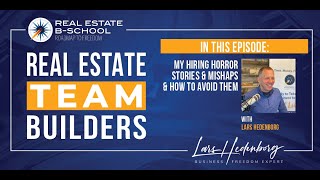
Lars Hedinborg built a real estate sales team from scratch and made plenty of hiring mistakes along the way. He learned to hire for demonstrated patterns, not potential, and scaled to 13 agents handling 400+ transactions. Look for financial motivation, a track record of wins, and people willing to work non-standard hours.
Questions this video answers
Dr. Christopher Kroner; Never Hire a Bad Salesperson Again (2nd edition).
June 2007; referenced as the start of a market shift during the mortgage meltdown that affected his early business years.
27 homes in his first 10 months; 44 homes in 2008.
He cites 27 (first 10 months), then 44, then 58, 118, 178, 248, 312, and 400+ transactions.
Maximum of 13 agents; standard to remain on the team was two closings per month.
Welcome back to Real Estate Team Builders. Lars Hedinborg, the founder of Real Estate B School here. And I literally just ended an interview with Dr. Christopher Kroner, one of the masterminds behind SalesDrive.info. they just put out the second edition of a book called Never Hire a Bad Salesperson Again. And for Real Estate Team Builders, not that I've, you know, I feel like I've been blessed to have on my, my teams really good salespeople. But I will say it has never been the hiring process that has gotten me that result. I feel like I have just been at it enough and just keep swinging at the bat to the point where like some of them were good. And, and for sure, if you're just tuning into the podcast, you need to go back one episode and really understand what Dr. Kroner has really dedicated his professional life to. And I mentioned I hope he took it the right way. I think he did. But I love guys that have gone so deep and like geeked out. And I mean that like with absolute love and respect, you know, geeked out on one thing. And just to help business owners not hire bad salespeople. And I've said it this way before, and I want to use this podcast a little bit to unpack some of the things that I've learned in my mis hires to help anyone looking to hire again. Go back one episode and listen to the real expert. Mine's more like the blood and guts good, bad, ugly about, you know, hiring real estate salespeople. And I kind of preface this conversation so if you haven't heard my journey, it was one of like leaving a corporate job in 2007 in Charlotte, North Carolina. Our market shifted dramatically. Only realized it like a year into the business. But June 2007 is when our inventory shot through the roof fires. With all that was going on in the mortgage meltdown and all of it, the market shifted. And I had just gotten into real estate and I left a cozy multiple six figure corporate job. So 27 homes in my first 10 months in the business, then 44 in 2008 as the market was really just sort of unraveling. And then went to 58 and 118. 178. The year we did 118, I hired for salespeople. I'm sure I had some mishires in there that I literally, I've tried to clear my mind of some of those. And then we did 178that next year, probably another three or four. There were two years in a row where I hired four salespeople in January and none of them were left, like even six months later. And they were all mis hires. And so here is kind of what have I learned. And then we went on to 248 and 312 and 400 plus, and, you know, 13 at the most amount of agents was 13, 10 of which were like highly, highly productive agents, averaging, you know, as many as 100, but, you know, 30 plus homes on average. Our standard was two closings per month, you know, to remain on the team. So we did figure some things out, even though we made a lot of mistakes. And I like to. Kind of the backdrop to the conversation is the difference between patterns and potential. And there's actually a really. This clicked for me in a sermon from my pastor, Pastor Steven Furtick of Elevation Church. If you go to YouTube and you type in Steven Furtick, it's F u R T I C K relationship advice. I don't really care if you share my faith. It is straight up business training, has nothing to do with business. But I was sitting in church live in this, in this sermon. And the pastor goes on to say the name of the sermon series was the power of potential. But then he was talking about, like, relationship advice. He's like, ladies, you know, y' all want to see the potential in, in, you know, someone to marry. And they have all the patterns of someone that you do not want to go anywhere near. They're like, they're 32 years old. They're. They live with their mom. They, you know, they have like, gobs and gobs, 100,000 in junk consumer debt, they're addicted to porn, they're 40 pounds overweight. And, you know, you want to just see that this, this has some potential when all of the patterns of this person pre. Getting into a relationship with them would indicate, like, red lights and bells ringing, like, you need to run the other way. Because this is a person who has not demonstrated a pattern of, you know, being a worthy mate. You know, like, all of a sudden you're going to come into their life and you're going to. You're going to get them on the right path. And you see, like, oh, this guy can be so good. And as I was listening to my pastor preach this message, I was like, it clicked. It clicked where all the mistakes I've made with, with people in my business in terms of hiring and letting people into my world, it's because I probably wasn't as deliberate as I should have been in the interview process. And even though we had a system in place. I really didn't follow it. I'm not the best interviewer. I naturally am optimistic, and I want to see the potential in someone versus their pattern. So rather than. Or here's what I would do in an interview, I would say, okay, so the position is this, and looks like your background is this. And I would ultimately sell them the vision of the company and how they could fit in. And they would say, yeah, that's great. I could totally do that. I could crush that position. It's going to be great. And, you know, we would just talk about the potential in the future and how they'd move forward and how their background fits a little bit. They seem nice. I could get along with them, and off we go. Really not great. But I imagine most business owners hire this way. And the flip side of that is that you look for the patterns. And this is what Dr. Coroner was saying. And the sales drive assessment is the only assessment that I know that measures this part. But it's their actual patterns, you know, so if I need someone that's going to be accountable and, you know, bring a positive attitude to work and, you know, they embrace their discipline, they hustle, they work hard. There's actual questions I can. I can ask them, and there's actual things that they could have done or couldn't have done to this moment in time where I'm interviewing them versus, like, okay, so, you know, Lars, this is me interviewing someone. Lars, you know, share with me, you know, a time where you've had to work really hard to achieve something. You know, because one of our core values. Our hiring process starts with core values. One of our core values is that, you know, we hustle and work hard. So give me examples of where you, like, totally grinded and just did whatever was necessary to achieve a goal. And they're like. They think about it and then. Give me another example. Give me another example. So you're actually looking for patterns that give support to the things that you need the person to do. And when they show up to work, if they're lazy, they generally haven't achieved anything. They don't. They're not competitive. They're not. They didn't, like, work us, work two jobs in college and play a varsity sport. Like, there's patterns you can look for. And we need to avoid looking for potential in people. And there's a few other things that I want to cover here as I wind this sort of rant down about my mishaps in hiring. There are certain things and I actually created a list of like the things that we know, like we're looking for in someone. Like I made the mistake of hiring agents on my team that their income was the second income of the household. Like they didn't actually need to make money. And so that never has worked out for me. You know, someone, I need them to come in and do the work necessary, you know, the actual work of a salesperson and time block and make calls and track numbers and like the predictable part of building a business. If you have someone that like their, their spouse is out making multiple six figures and they have insurance through them and this is kind of a side gig, they're not going to do those things and they're kind of, kind of show up, you know, halfway for things and they don't really need it necessarily. So that's one, one big thing. And then I would say for my business it was, you know, someone that wants to make, you know, six figures or multiple six figures. And in my market that's, that's really good compensation. We had a path to get agents to 150 plus of take home money by their second full year on our real estate team. Like an actual step by step plan. We actually have it as part of real estate B school now. But you know what, what is driving them, you know, to want to make money? Like do they actually, are they motivated by making more money? You know, a lot of people are not motivated. They think they want to be in real estate and they want to join a team to take off some of the heavy lifting, but they're not actually motivated to go out and make a lot of money. You need salespeople that are financially motivated. It sort of sounds stupid saying, but so many people hire someone like from their, like book club or from their church group or like they just seem like a nice person, they have their real estate license, they're going to be on my team, it's going to be great. And there's no structure, there's no cadence whatsoever. And we're just hoping that somehow they're going to work out. We want to hire people. Another thing is that they have demonstrated a track record of achievement. And I don't actually care what the achievements are. You can ask them a straight question like, what are the, you know, the last three major achievements? You know, you've, you've set out to sort of knock down or achieve the last three big goals that you wanted to achieve and how you went about achieving them. Right. And that actually reveals if they actually are setting goals if they're challenging themselves, if they're sacrificing in any way to make their life different in the future than it is today. And those are the kind of people that you want, you want in your business. Last thing I'll share is that, you know, folks that understand real estate is not a 9 to 5 and folks that have the ability, the capacity, whether through a support system or they're not attached to, you know, kids or spouse, or you know, folks that can actually work the hours of a real estate agent evenings and weekends. Right. Are you willing to put in for a couple years, 60 hour work weeks so that you can get to a level of income that is far beyond any of your peers? We'll tell that to someone who's in their late 20s. You have the ability to make multiple six figures here, but it's not going to come out of the gate. You need to double down for a couple years and in that third year you will earn more, twice as much as all your friends are earning, you know, because they, they, if they're competitive, they want to, they want to know that they're going to be earning more than their friends. So those are just a few things that I've learned in all the mishaps that I've made in hiring. If you're at the point in your journey where like, you want to grow, you want to scale, but it seems like you're trading time for money, it seems like you're making all these mistakes. You're not necessarily good at building systems in your business. There's a unique opportunity to partner with me personally to help grow your real estate team and also plug into different multiple streams of income. Go to partnerwithrebs.com that's partnerwithrebs.com you could see what the opportunity looks like. We can have a conversation about it. You can book directly into my calendar for a strategy session. So go to go to partner with rebs.com and we'll see you over there. Much love, much respect. We'll see you in the next episode.









