Navigating Growth in Your Real Estate Business
Lars Hedenborg and Tyler Simmons coach on scaling a real estate business through six growth phases. They detail a 21-day follow-up system (10 calls, 4 emails, 4 texts), show how agent Dan Jones hit 226 closings a year, and break down margins: roughly 76% gross with 24% payout, plus percentages for lead generation, people, and overhead.
Questions this video answers
10 calls, 4 emails, 4 texts (the '10-4-4' protocol within 21 days).
About six attempts (one attempt ≈37% contact; six attempts ≈90%).
Average response time ≈44 minutes; about 43% of companies did not respond to leads in the referenced data.
Lars cited a gross margin of about 76% with roughly 24% paid out to agents (he stated he does no production).
Agent Dan Jones closed 226 deals in a year and took six weeks off; used as a case study of scaling off production.
Live in our B school community. We are at 2:30, so we'll see.
How much we can correct it.
Now we're good. We're live in real estate B school community, which is cool. And I'm going to hit broadcast here where we are broadcasting. Let's see if anyone shows up, which will be exciting. We have people here. Awesome. So we're ready to go. All right, so let's get the party started. My name is Lars Hedenborg, I'm the founder of Real Estate B School and Tyler Simmons invited me to kind of just do a call to host a call around kind of what we've done that's worked in our business around lead generation, lead conversion, lead management, accountability with our agents hiring the struggles, going through different phases of growth. So, Tyler, what's going on, brother?
How you doing?
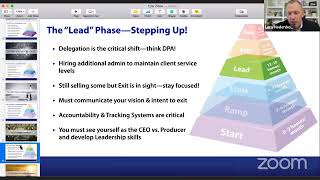
I'm doing awesome. This is just the call I want. I know. Tyler, your clients are like you, they're looking to grab more in their business, in their markets and just play life bigger. So I'm honored that you tapped me on the shoulder to host this call. And this is going to be the type of call that is. It's wide open, you know, there's a chat box. There should be a chat box and a Q and A on your zoom, sort of. If you see my face and you hover over my face, there should be a couple options to communicate with Tyler and I. So definitely take us up on any question. Nothing's off limits. I've done a lot of things. I've done more things wrong in my real estate business than I've done right. And a lot of times it helps for me to lead with the mistakes that I've made so all of you don't have to make those same mistakes. Let me see if crew in here. I just want to get a sense of. We have four Tyler Simmons. So they. You probably snuck out a different link to you. Alright, so let's get after it. So to start, Tyler asked me to go through, to kind of really, really quickly go through my journey in real estate as it relates to. To kind of the phases of growth and where I did well, where I struggled and that sort of thing. And I'm not going to spend a lot of time on this, but I think it'll help give some context to what we're trying to accomplish today. Now, Tyler, can you see my screen with this little line and can you see the slide here just to be sure? No, you should be able to let me, let me pull some. Pull you Guys, somebody go to the chat and give me a yes. If you can see this market, 2100 homes sold in 10 years. All right, I think I'm getting a couple yeses. That's cool. Yes. All right, cool. Thank you Jim, and thank you Ken, and thank you, Mike. And we're good. All right. So I basically got into the market around this time 10 years ago, just got married, got into real estate. Just like literally two months in my market before inventory spiked, I guess there were signs of a major, major financial crisis. Looking back, we knew some things that weren't entirely obvious. And in my market, it took a good year, 12 months, 12, 18 months for everything to hit. And so it was about June 2007 when inventory spiked up. And then all the bad stuff happened the end of 2008. And so despite all of that stuff, I kind of just trudged my way and slogged my way and fought my way through not really having a roadmap in terms of how to do things right, how to hire, how to manage leads, how to even manage people, let alone leads. And grew about 450 sides was my first nine months, was 27 sides, up to 453 sides in a single year. And I did it through a leverage model. It was very, very profitable. So I made a lot of money, sold a lot of homes, and all this stuff happened to me personally. So I got married, I had a son, My wife's dad had a tumor, My dad had a major stroke. My daughter was born. I got out of production about five years in and then launched a coaching company about four and a half years ago or so, going on five years. My father passed away. And then I really do think it's going to get fun again. So in terms of the timing of scaling a real estate business, I think the timing is perfect. And I want to spend a little bit of time on this real quick. I don't want to preach it anyone. I want this to be an open conversation. Although I do think a little bit of a sense of what you might be going through because of the stage that you're in. I think it's helpful. I built this real estate B School navigator based on my journey in real estate and real estate B school. As a general rule, we tend to focus on people, agents that are out of survival mode. So that is, you know, two homes per month. You're a top agent in pretty much every market. That is survival mode. You know, there's not a lot of income if you're a 6,000 to $9,000 average commission check. You know, your gross commission income on, you know, even 20 deals is. It's not that much money. There's not a whole lot of money freedom at 150 or even 200 GCI before expenses. So that's a survival mode in my opinion. We're after time and money freedom. So everything I attempt to teach you today is around time and money freedom. And I don't have any other ulterior motive. Obviously I founded a coaching company. So if a conversation makes sense about what we do, more than happy to have it. And I'll talk about that. It's 100% to serve all of you. Let me kind of get into start phase. You know, this is where you're barely making a living. Hustle is the name of the game. Cash flow. If you're looking for growth, you're probably investing every commission check back into the business into something that, that may or may not be proven. The key to escaping this level is skills building and a determination to grow. Then you get to ramp, which is two to six homes per month. So up to 72 homes a year. We have individual agents that are selling up to 72 homes a year with a single admin. Their time isn't their own and the money's pretty good. And you have no ability to unplug from your business. The realization that you can only focus on DPAs, which is dollar productive activities, getting the right admin and getting relief from buyers. So in this stage is where you must have a key admin and we'll talk about that. Tyler's gonna kind of drill me hard on how to find and hire and retain great people. And then also getting relief from buyers. You know, getting someone else to do the thing that you used to do. Follow up with with leads and convince them to meet and sign them to buyer loyalty agreements. Show homes and get them under contract. That is an activity at this phase. If you're looking for growth that you have to get off your plate, that is a. For someone that's not looking at their real estate business like a true business, that's a mind blow type thing. Like you know it's going to blow your mind to think you have to give away part of your production. You have to look at the activity of a buyer agent anywhere from 25 to $50 an hour. And if you want to make more than $50 an hour, that's one of those. Including all the admin tasks. That's one of those activities that you have to get off your Plate at some point as you scale and then you focus 100% of your time on listings. And that's this next phase here, overwhelm in the scale phase. So this is where you're, you're leading a small team, you've hired a couple, three buyer agents, likely not a lot of systems in place, no real accountability, that sort of thing. So it's this messy sort of thing. You're probably not holding your agents accountable. You're not leading or managing very well because you're still heavy in production. The thing we see the most at this point is your home life is suffering big, big time. And so you're carrying your business into. There's just not enough hours in the day and, and you don't have enough time to properly recruit. So you let any buyer agent on your team and they have enough business to do because you're overwhelmed and you're not holding them accountable. Still the major producer on the team, everything falls on you. The key is to building systems and that's going to provide the sustainability. Real estate B school. We have about 24 core systems and building those in the right order allows our members to scale from, you know, 50, 60 units all the way up to, you know, had a guy over 300 sides, started with me at 50 sides and it's just a sequential building out of the systems. At this phase, your admin staff is getting stretched very thin. We probably won't have time to get into it today, but there's a very specific economic model that we follow and I'm going to, I'm going to lay it out here real quick because I think it's important. As you're scaling your business, you need to make sure you're building the proper margins into your business financial margins. And that includes what you pay the agents on your team for the production they do. If you're not building systems, you don't have value to provide agents that join your team. And the only differentiator is the splits you offer them. Our gross margin on my team currently is about 76% and I don't do any production. So we pay out 24% on average to our agents because of the value we provide. About 80% of the business is generated by the team and we have people that negotiate repairs and attend closing for them. We have courier concierge services where you can get your dog walked or you can get your laundry or dry cleaned, your dry cleaning done by someone on our team. So we really provide a level of service that allows our agents to Be that more productive. And it's. And so you just need to know the economic model. What are your gross margins. A lot of teams build it the wrong way where they're stuck in production. Even when it's fully built out, the only money they're making is on their personal production. And that's. Even most broker owners do it that way because there's no money in the brokerage business anyway. A little bit of a tangent. I won't go too deep on that. At this point the vision of building a real business is beginning to take on a life of its own. And it's important that it becomes less you and more what you're building. And that's super exciting at the lead point. So when you make the shift from build right. Most. Most say six homes a month, 70 to 144 units. Most agents that make it there do so without building. So they haven't set themselves up properly for the next phase, which is this inspire phase where you're more of a manager, a leader and you're the business operator versus the main producer. Sort of. E myth 101. If you've ever read the book E Myth by Michael Gerber, working on the business versus working in the business. You have an entrepreneurial seizure that forces you to go into business for yourself and you hire people according to no plan. And you kind of end up with this thing that's not very well thought out that you couldn't duplicate if you had to. Good book. If you haven't read it. And so at the lead phase, this is 144 to what's 216 units? Something like that. 12 to 18 homes per month. Delegation and thinking dollar productive activity all the time. Hiring that additional admin to maintain a client service level. You're still selling some at this point. But exiting production is in sight and the goal is to stay focused and have that be the ultimate outcome. Intent to exit. This is something that I went through this with my team, this navigator. I literally went through this with my team to show them the plan that I was on and the reason why me doing this was going to benefit them. Accountability and tracking systems are critical. These would have been built up in the prior two stages. We'll talk about that today. And you must see yourself as the CEO versus Producer exit. This is where you're literally exiting production and just realizing and it's tough to realize this that you're not that important. You being out on buyer consults or listing appointments. It's not the thing that matters. If you really want to run a high level business and then mission and vision have to be part of the DNA of the team. Focusing on leadership, management skills and key operations lead to stepping into their own org strategy must be clearly articulated and you have to become the CFO of your business and maintain financials. All mindset in terms of I don't have any direct day to day responsibility in my real estate business today. And so just to realize that there, the cadence, the structure, the tracking, knowing your numbers, the culture, who you hire, right person, right seat leading indicators in the business, we'll go through some of that today. All of that is, you know, when you're in this position in your business, if you don't have those tools, you're running a very risky business, no pun intended. If you don't have those dials and you really don't have the cockpit laid out in the right way to know that you're flying the plane the way you want to. So that is just really a quick intro of the six phases just to give you all a little bit of a background in terms of what I hope you're looking to achieve in your real estate business. And the backdrop to all of it is that the only way to get time and money freedom is if you build sustainable systems and have empowered people, run those systems. And I think that's what we want to get into next. And Tyler, I don't know if you're still. Are you still there, Tyler? All right, I'm going to stop the share here, see if Todd, we've got a good crowd in here. I love it. Let me see. I'm gonna show you guys real quick. This is. I'm in. I'm in North Carolina actually. Just moved. And look outside there. Not that this relates to anything, but we have got snow coming down. My kids are home from school today. That's just a random thought. I'm from New Jersey originally, so I definitely have seen my sheriff's snow before. So two more things I want to get into today that I think will serve all of you and hit me with questions, chat it up as you guys have any questions at all about anything that I've covered. And I'm talking good, bad and ugly. What I've done wrong, what I've done right, all of that good stuff. I want to show you some of the tools that we use in terms of lead management and accountability. I think that will be helpful for all of you to kind of see the tools that we run. And then when I want to go into some of the people issues that we, we deal with on an ongoing basis. So there I am going live on Facebook. All right. So I don't want to cover that yet. So the one thing I was like super impressed when I first heard Tyler speak. And the reason we're even doing this joint call is because he talked about. He did a study with a client of his that looked back and looked back at all their closings from a particular year on Zillow. And this was Zillow, a Zillow leads analysis, basically. And let's say I don't think this was the exact number, but let's say there was a hundred closings in 2016. What they figured out was that there was 50 of them registered in 2016 and 50 of them registered in 2015, 14, 13 and 12. I think he went back five years and it was sort of like diminishing as the years. I think it was like say 25, you know, two years out, then it went to 12 and then eight and then five, whatever the other 50% was. And if you don't have a quality lead follow up system in place, you're missing the boat in terms of the returns you could get with, with any lead source. So leads are highly competitive and they're getting more and more expensive. And that's. And Zillow's responding to that. Every lead source is responding to that. Pay per click's responding to that. It's a free market for leads. So our leads aren't getting cheaper and they're high quality leads only if you have these accountability systems in place. So I want everyone to write this down. 10, 4, 4. So in the first 21 days, every lead needs to get 10 calls. We actually do. 15. 10, 4, 4 sounds better. And it's even numbers. So 10 calls, 4 emails, 4 texts. So we are boomtown users. And so a lead registers in the first 24 hours, they have a certain lead protocol. And then in the next 20 days or 21 days total, we have to make sure that they got the 1044. And so this is a very manual process. And if you want to squeeze the lemon on every lead, you have to run something like this. The thing that I notice, and I noticed looking back when I was the only one in my boomtown platform, I worked every lead like it was $10,000. When you hire a buyer agent, they don't have any skin in the game for the leads. And they don't treat the leads like that. They treat them like another one's coming. You Know, maybe in two hours. Why would. I don't even care. I'm not gonna stop eating dinner. I'm not gonna get out of bed. I'm not gonna, you know, sneak out of the showing to respond to the lead. We know that if you haven't seen the MIT lead response studies, this one here, Lead Response management, this is a good one to literally read with your team. And I'm going to post the. Let's see. All right, I'm going to go into the chat and I'm going to post this. I'm going to say, all right, panelists and attendees, I'm going to post this. So this is worth literally reading. So you can go to the chat and grab that literally reading with your team, word for word. Just pull it up at a team meeting. And if you don't have a team yet, you know, you need to go through this, kind of goes through days of weeks and all that stuff. Initial dials to leads, that was one hour. And then there's a 15 minute. Yeah, so section three says response time analysis by five minute increments. And basically just saying your odds of contacting, let alone qualifying, that lead, it drops 21 times outside of the first five minutes. And like, really, really think about that. You know, if you're not. We still do everything we can to. We load them into dialers. We call from different caller IDs. We call them three different times a day in the first 24 hours. 2. Just think of this statistic, though. When someone registers, that's the best time to follow up with them. When they're actually in the mental space of doing the thing that you want them. You want to. Oh, Tyler, sound not working? I don't know on my end. Tyler, it's working. If you want to chat, if you want to take me in a different direction. If you can't get it to work, if you want to chat me, you can say to just Lars, you can chat me and kind of keep me on track. I think I know the agenda that you want to cover today. And Kendra, I saw that you were on. If you want to hook up with Tyler and get him. Get him square. Yeah, I don't know. Tyler, I got both your messages in the Q and A. So, yeah, I don't know. I will do my best to serve you, brother, I promise. And your peeps at a very high level. So just go through this and read it. So it's easy to go through and just look at this one thing, but actually read it. This was a guy for illustration, we decided to test some of these principles firsthand. They registered our president of Lead Response. This company signed up with a top lead provider to get quotes in his mortgage. He received a total of seven calls. The first one called in 30 minutes. The last one called on the lead three days later. Think of that. Think about that. Knowing these numbers and the people that are responding to these leads don't know these numbers. But lead response is a huge thing. There's one other resource that I want to give you. It's this slide share research from Harvard mit. It comes up when you do, when you type in MIT Lead Response Study, I'm going to post it in here for you. For all of you, grab these two links and make sure you share them with your team. So this is just a cool respond immediately that we saw, right? That's the same chart. This is the average response time of these six companies. 44 minutes. There was no response from a good. An average of 43% of companies didn't even respond to the lead. And you guys have those as well. Respond persistently. So an average response, average response attempts is 1.29. And we know that it takes about six calls to get to 90%. If someone gives you a good phone number and you call them six times from different caller, we've actually extended to 12 to 15 because we hammer them with different caller IDs and we have a strategy around that. One attempt gets you 37%, six attempts gets you 90%. And the average is one. And so that's really, really huge. And then it talks about, you know, the dilemma with leaving voice messages, you know, taking the time to do it versus dialing the. If you're struggling to scale your team, this is going to sound a little preachy, and I promise I won't mean it as very preachy. Susan asked question, what's the name of this? Susan, go to the chat box. And I respond, I put both links in there. And if you Google MIT Lead Response Study, there are two that I want you to go through with your team that are super, super helpful. Let me share my screen just so I don't miss the if you go back. So if you go back and you literally Google MIT Lead Response Study, it's this, this one here, this one here, leadresponsemanagement.org and then it's this research from Harvard MIT pinpoints, hardly conversion. That's really helpful. It's the slideshare one. And I posted both links in the, in the page there. All right, so what was I going to say yeah. So as a team leader, if you're looking to scale and build a real business, you have to provide the system for your sales rep to be successful in. So you have to build the system in a way that they can slide in and be successful. And one way that we do that is that we, we actually audit every lead. So anytime a lead registers, we literally put it in what we call a pipeline daily audit sheet. If you guys can see this, if you can't see it, holler. And then on the back end here was the lead entered into Boomtown. Was a call logged with notes. Was an email with video sent. We are huge bombbomb users. Was a text sent. This is in the first 24 hours with to do scheduled was an agent E learned that's a Boomtown thing. So did you set up a property search for the prospect and then we started doing the 1044 you can see down here. So this is and we have a VA doing this low cost geo arbitrage different, different part of the world in India running this for us. And I just want to show you, I just want to get it a little bit. So on the ones that didn't, I forget the naming method here. On the ones that did versus didn't receive 1044 I think on the ones that did, we put NA and then and that's why while they're in the qualified bucket in Boomtown. So if you guys are running Boomtown, you know what I mean? But 10 calls, 10 emails, 10 texts and then if it, if it was transferred, there needs to be notes in Boomtown as to why the agent thought it was, it wasn't a good lead. One more thing that we do is that we have a very specific way that we want appointments handled. As we scale our business we need to make sure that certain things happen when appointments are done. Lead must be entered in Boomtown with notes appointment entered into calendar the right way send a bombbomb video and for listings have a pre list packet delivered. And so this is just a very specific way. And on the ones that haven't met yet we don't have, you know those were just set so we don't have outcomes yet. And that's every appointment, you know. So these aren't sorted. This is every appointment you know, you could see all of our December appointments. So here's our December appointments from line 391 to line 524. So whatever how many or that many is 391. So about 130, 140 appointments set in December and we are probably going to list about 33 to 35 homes this month. And what's typically a low month in terms of listings, February, March, April, scale from there. And that's all from activities from November, December. And we know because we track all those leading indicators. Let me see. I just saw like a little chat come up. Let me see if you guys have a question. Yes, John Sulo asked a question. Hi Lars, does your team set up a personal, a property search on BT or the mls? Always on bt. So BT just makes it easier. We use Boomtown as our lead incubator and so yes, we don't want it on the mls. That's, you know, you're fighting a numbers game battle. The best of the best convert at 5 to 7% on 100 leads. So they can, they can sell 5 to 7 closings on a hundred leads. Average teams are like 1 to 2%. So with 90, let's call it 97 people that register on your, on your platform, you know, 97 of them aren't going to buy through you. And if you spent time putting them all into your mls it would be a monumental waste of time. So that's why you need, you need to have, you need to make sure that you're using the easiest technology possible to get them that value add property search and then you have a customer service follow up as well mentioned over on Facebook. Awesome. Yeah. So Kendra, Chris asked a question and if there's any more current data available. Yeah, I would do, I would take it. The MIT. There is one. It is from three response time studies. There is probably a hundred more. InsideSales.com is a good one. There's another one I'm specifically looking for. Yeah, there's a lot of good stuff that you can bring. I've just never looked for any. Here's a good one. So I don't know. So this is Harvard Business Review. I don't know if this is the same data set. This is a blog post. New breed Inbound Marketing plus sales. A cool infographic. Yeah, there's going to be a bunch of stuff. The whole point of that is there's going to be a bunch of stuff for you to use as you lead your team through. From a shift around not giving a crap about your leads to really caring about them and knowing how to win. There's going to be a good amount of stuff. Like I've never seen this thing, but it looks really cool. InsideSales.com has, I'm sure they have a lot of a lot of new stuff. I'm going to save this image fo show. That's a cool one. Yeah, I mean I'm thinking, yeah, I'm thinking everyone on this call needs to, needs to go through this with their team. So let me, let me post that in there. There's so much good stuff on this now that the whole point. And this might be best based on the same data set. I know the numbers work because we work a system around, you know, persistence and just a relentless, you know, in 21 days. And then after the 21 days we still load them into a, into a call list. All right, Ernst asked a question. Can you explain the lead follow up or write it in the text box? So it is. Just write down 10. 4, 4. It's 10 calls, 4 emails, 4 texts, 10 calls. Let me see if I have it anywhere. 21 days email and text scripts. So I have. So the calls are the calls. Yeah. We could probably get this document. I've got different versions of it break down there. Yeah. So we can, we can get a version of it. The whole point is that in X amount of days you're going to make sure you get to X amount of calls. And I'll get into how we organize our. It's in 21 days and I'll. In the first day, it's at least three dial attempts and different times of days with different caller IDs. And that's where technology comes into play. I'll get into that in a second here. All right, so let me backtrack here. So appointment audit, same sort of rationale is that whatever you want to have happen in your business, you need to make sure someone's inspecting. And we're scaling our business, you know, we're setting 100 plus appointments in a month, you know, where it's a little bit more challenging for us. So we have to get VAs in place to track these sorts of things. If you don't have that volume, then you have, you still have to make sure these things are happening to your standard. One other thing I want to mention to you guys is that we audit our agents every week. So we used to have this complicated lead management policy and we really simplified it with this document here. So Brian's an agent on our team. He's not doing a good job. So we can. This is real time. This is me me showing you the good, the bad and the ugly. And Brian sells a lot of homes. He had a like a $36,000 a month in December or something crazy people four under contract yesterday. And so our number one rule is that we have a total of 100 ABC hot nurture watches. That's how Boomtown's organized. No more than 100. He has 262. And every hot lead needs to have a call in the last seven days. And basically, so we audited on a Friday and we recheck it on Monday. And so these are just the rules that we have set around lead management in our team. So we don't let our agents have a thousand leads. We want them to have 100 meaningful leads. People that they've had actual conversations with. That's it. That's a, that's a million dollar idea right there. Is force your agents as you scale your team to go deep on their relationships with these strangers, these prospects. These would be potential clients. Rather than think that it's a game of a thousand. I'd rather have our agents have 50 to 60 than 268 hot leads. Get a call in seven days logged in Boomtown Nurtures, which are B's hots are they're gonna buy in less than 30 days. Nurtures are 30 to 90 and watch are 90 to 180. That's our whole lead management, the way we organize it. ABC 7, 14, 30 days call logged. And this is, this basically just shows me that fail, fail, fail, fail. And then again on Monday morning, Brian took no action to make this situation right. And so it's. Part of it is that we're down. We're down lead agents, so we don't have a lot of breathing room in that position. And then leads in qualifying in the qualified bucket. That's the bucket before hot nurture watch or ABC is following. 21 days of gain. Then new leads within four hours. 24 hours, that's that E alerts, active call, attempt log and a to do scheduled. Sufficient notes. Any lead moved, must have notes why it was moved there future call scheduled at all times. It has to have a to do a future call scheduled, no missed to do's. So Brian, he had 99 to do's on Friday. This was last Friday. And then on Monday he actually had more. So that is a monumental miss. And if he didn't sell like six homes in the last week, we would have, you know, taken, taken action. So 99 leads have past dues. And then all appointment sets. We talked about that number of leads that would be transferred. So we are going to the. The accountability comes only when we actually act on the thing that we're holding them accountable to Just like with your kids. Great example. My daughter Kendall, I keep word, giving her words that will let her believe that I'm going to take action if she doesn't do something and I don't follow through and it's leading to not good things, you know, it's just taking advantage of me. Which is what your agents will do if you don't actually have consequences. Basically the consequence of not having this right on Monday morning based on whatever leads you, whatever criteria you set, the consequences that leads are turned off for seven days. Obviously you're too busy, don't need to get emotional about it. This is just the consequences. No big deal. We'll review it next Friday and when you get it right, then we'll turn these back on and off you go. And you only need to do it once, right? If I actually took action with Kendall, my daughter, who's super spirited and I actually. I'm sounding like a horrible parent. It's not that bad, you know, if I, if I canceled a family trip or I gave her some serious consequence, she would, she probably wouldn't take advantage of me the way that she does. I'm not explaining that the best, but. Okay. So Tyler wants me to backtrack a little bit. He said, can you define the shortest amount of time from someone going from survive to freedom if they follow the right systems and processes. So really, really good point. And so this journey took me, you could see it's about 10 year journey. I was out of production five years in working really one to two days a week for about three years. I was Tuesdays only. I had other people running the business. Super profitable in here. When you look at it here, each one of these stages took me a year. And we have clients in real estate B school doing it in half the time. And that really I really in my heart, when I went into this coaching deal, I designed it around making the journey easier. If you're willing to do the work, if you're willing to do the work and have the mental shift around production to building a business, this is a 3 to 4 year journey from 2 to 6 homes per month all the way to 18 to 30 or at least 12 to 18 homes per month where you're out of production and you're getting out of production, you're out of buyers for sure. You're working a 40 to 45 hour work week. You're very profitable. You know, in my market you're probably making 5 to 750 net per year at this point in your business. When you do the things, the right things at the right time. So yeah, so that, and it's really. I'm not going to spend a lot of time on what the what, how to organize the business. When I looked back on my journey in the business and I really looked at, you know, what, what holistically, what, what drives a real estate business. I came up with six drivers. The first one was having a roadmap, a clear plan. The second was having a system around sales. Not having me be the, you know, dog and pony show to go out, but having a system around sales, marketing, same thing. A systematic attracting of people into our buyers and sellers operations. How do we deliver a service repeated, you know, sustainably without me having to be in it? Finance tracking, becoming the CFO of your business, knowing your numbers, the leading indicators, the lagging indicators, and then having the people to execute the plan. And then around each of these drivers, you can see them on the left side here. There's five levels deep of systems and tools that we implement for our clients in pure transparency. Each one of these are a coaching program in and of itself. And basically our goal is to meet you where you are, implement the right system at the right time so that you can scale your business to the next level. A business is merely a system of systems. And if you, if you can't leave your business for about a month at a time, you don't have a business, you have a job. One of my most proud success stories is a guy that started on my team. His name is Dan Jones and he moved to Charlotte from Hilton Head. And his mom was basically, she was dying, she was passing away, so he wanted to be with her. And he only worked about 20, 30 hours a week. Andy was one of my top agents. He was a hustler. I knew he was a hustler. Coming in, I knew he wanted to start his own team, Spent about two years with me and eventually went out his own. His mother passed away and he did it for two years on his own. And then I launched the coaching business. I'm like, dude, just let me show you. I had a heart for this guy because he's just a really good guy. And I basically convinced him to let me coach him. And so he was at about 60 units, really good admin had made a couple bad buyer agent hires. We agreed to work together and that was about three years ago. So he went into the hundreds and then the high hundreds, and then he closed 226 deals last year. He took six weeks off. So six weeks off to be with his wife while they had their first child. And he was out of production for about four or five months before that. So he's out of production. Took a good chunk of time off. His business is still growing this year. His goal is to sell 300 homes this year. And so that's what's possible. And the thing I love about Dan Jones is that he just did it with a step by step approach. He didn't complicate anything. He didn't change the systems that I just showed you. He didn't do anything. So that sounds like a sell. I say it more out of just pride for what he did and what's possible. Christine Sparks. I recognize that name. You have your hand raised. I wonder if you are. If you have a question or you just wanted me to see you there. If you have a question, type it in the Q and A or I don't know. Let me see if I can do a Tyler Simmons. If I can get him back on here. Let me see. Tyler. Tyler Zillow Group. Tyler Simmons at Outlook. Let me see if this is you, Tyler. I just promoted a Tyler Simmons. Is that you, Tyler? Well, I did. I cannot see you, Tyler. So that's the challenge I'm having. Okay, so Christine Sparks has a. How do you budget for starting a team? I have admin, but not sure how to budget to add people. Really good question. Let me see. So I want to go into key roles and people. Let me see if I've covered kind of what I want to cover here. Christine, I'm definitely going to answer that question because I think it's a really good one. So anyway, you guys got to have a sense of how deep we go on different lead sources. I want to go through a little bit core values because I think it really helps. This is one other thing. This looks complicated. We have a VA running this for us. The cadence of set, met, signed is everything in our business. It is the whole game in our business. And if you look at, you know, let's go. So we're about. We're two weeks in, and so this is one of our agents. So two weeks in, we have a cadence of. Our outside agents are expected to set, meet, and sign 5, 4, 3 on their own efforts, and then they get 5 appointments set for them by inside salespeople. So their cadence is 10, 8, 6 total. So the goal is to sign six new clients a week. If you are a lead agent on my team. And we only have three lead agents. Well, four lead agents now. And then the Rest are sort of inside sales or showing agents or junior agents. We're putting about 3.25 million of GCI through four lead agents. We run a unique model. It's not for everybody. Really, really cool though. And some of these need to be updated. We haven't met some of these appointments so there's a little bit of a lag when you run these numbers. But bottom line is that we have the ability with not a lot of effort on my part to run this sort of these sort of numbers for our team where we can track set met signed we can look at a team scorecard for set met signed. We can each agent, we can look at their quarterly inside sales versus outside sales. We also track our marketing spend as well. And then we track on a two week look back basis we track dials, contacts, talk time and all that stuff. So just another way that we kind of, we need to manage and hold our agents accountable and be clear on our expectations with our agents and that kind of leads into the key roles and people. And Christine asked a question about how do you budget for. I'm trying to think of what I want to, how I want to show this because I have some, some really important thoughts around it. Let me go to our economic model. So I want to go to finance, I want to go to our economic model. I'm just going into our toolbox and I just want to take you guys through what the economic model looks like. This is sort of an older version of it. So this is when you're the only person in production. Your gross margin is 100%. Does everyone get that? You take a $10,000 check, you pay out nothing to your agents as cost of sales and 100% of it goes to gross margin. If you hire agents on your team at too high splits because you're not selling the value or you're not giving the value, then you fall into this trap of having a business that has very low gross margins. And that's just sort of a comment. The the rule of thumb is that I want to change this. This is 10 to 12%. The rule of thumb is that in three categories this is what you have money to spend. So you can go a little bit outside these ranges but not too far. And so if you're $100,000 GCI agent and $100,000 falls to gross margin, these laws still apply. You have about 10% to spend on lead gen marketing, advertising, 10% to spend on people and your all of your other overheads about 10%. And so the numbers are hard at 100,000 because what can you hire for 10,000? You know, 10% is $10,000. It's really a part time, it's a VA at that point or 20 hours a week person, you know, 1,000 hours at $12 an hour. That's what you need to hire. You need to get that 20 hours a week off of your plate so you can focus on higher dog productive activities. When you're at 250 you have $25,000 to spend on an admin and so you can hire a full time admin at about 12 to 13, 14, 15 bucks an hour. And you can only spend about $1,000. Well at 2. Yeah. To 250. About 25,000 to spend on lead gen marketing. So that's about $2,000 a month and then all other overhead is another 10%. So at 250 you could spend 25 on lead gen, 25 on people and 25 on all other overhead. You're likely doing all the production yourself. So your margin, your gross margin is 250 on the 250/75. You're at 175 profit before taxes. The reason you're doing the lead gen and the reason you're adding people is so you can take the 250 to 500 and then same rules apply. At 500 you're spending 10,000 on people. That's probably a full time admin and maybe that admin managing a VA and you're spending 50,000 on lead gen, 4,000amonth on Zillow, other sources of lead gen marketing. Then all other overhead is another 50,000. At 500,000 you probably have an agent or two adding to some of that and the splits that you pay them on average you don't want to pay more than 40 to 45% for buyer business and then 20 to 25% listing business and then you know, we've ROI tracking and all that stuff we don't have time to get into. That's a high level view of the economic model, to answer your question, is that you always know for every point in the business what you should be spending on each level.
I think I'm in. Lars, can you hear me?
I can hear you. Yep. Oh man, that's right. We're still rolling. Yeah. And that's percentage of annual gci, Ken. Exactly. So it's not, it's, it's the total commission tax, not what your broker gives you. Because a lot of you have to analyze what you're paying your Broker as well. You know, I'm with kw. We're capped. We've got a pretty big team in kw. You need to be analyzing the value of your broker. I worked with a guy in Hilton Head. He was. They were going to on about a million and a half GCI. They were going to give about 350,000 to their broker. And so it's important that you know how much you're paying your broker as a percentage of gci. And when you're small, that's in all the other stuff, all other overhead. And that varies if you're independent or if you're with a discount broker or whatnot. So hopefully that answers your question. Tyler, I don't know if you heard a lot of it. Are there any holes you want me to fill? I want to go into people next and some of the key lessons I've had around people. Anything you want me to fill? You know, if I had requests, I.
Know that you have like 24 systems processes in place that you kind of coach by. What would you say are your top three that if you had to focus on right out of the way that made the biggest impact? What would you say those top three would be?
Yeah, that's a good question. I can answer that one really easily. So it surprises me, you know, when you look at, you know, six drivers, five levels of tools and systems. So 30 total. There are one or two at each level and I want to go through them. So having. Having a productivity system for you and your people. We have a very specific thing that we do. It's called our productivity planner. And it revolves around team leaders. You've gotta have a way of daily, weekly, quarterly, daily, weekly, monthly, quarterly. A rhythm around your productivity and knowing what you need to do every day and protecting the, you know, time blocking in the morning. Ours is very deliberate, very, very focused. So that's number one above and beyond anything else is that agents are just not productive. They're not working on the highest dollar productive activities. Can I ask you a question about that? Yeah. How do you.
Because I hear this a lot.
How do you get around. I don't know if you want to.
Call it dictating what their daily regimen is since they are a 1099 employee. And I have somewhat of an answer, but I want to hear yours first. I'm just recently heard of mine, which kind of got me excited. So how do you get around that or getting pushed back?
I'll give you. So we actually retained an attorney. It's a national. Actually it's a regional attorney in the Southeast. They have to research what it would take to make our agents, employees. We got comfortable on it. FLSA Federal Label Standards act has an outside and again, disclaimer, I'm not an attorney. If you do this and it bites in the ass, it's on you. There's an exemption, an outside sales exemption. And used in every other industry where you, you can call your agents employees and they qualify for compensation via the commissions they get. And that's what we do. Our agents are employees and they're only paid commission, so they're not paid a base salary. The false thing is that you think you have to pay them a salary to call them an employee and you don't. So do your research. Hire an attorney. That's one answer. So that's the route we took. We were like, screw this. I'm not going to have this conversation. The other thing is that you, in order to be, in order to get leads from our team, you need to do these things. You're just going to be out of lead rotation if you do it. And then there's no point to be on the team. I don't have a great answer other than what we did was we just got the definitive on you are an employee and you show up at 7:29am that's the report of everyone on our team because we know 8 o' clock to 9:30 is the most fruitful time to be on the phone.
Can I share with you what I recently learned of.
Yeah, sure.
And I'm not a tax attorney, I'm not an accountant, but I recently heard or learned from one of my clients that if you pay your bonuses to your team members, they will be a W2 employee. So if you have a bonus where let's say if you close three deals a month, you get a $500 bonus or $1,000 bonus that at least in some markets makes them a W2 employee.
Yes. So be careful with that, though. It's still. I know more about this than I want to know. That's along the same lines of this outside sales exemption, which. All on the same track. And it doesn't have to be W2 wages. Okay. So in my case, mine's pretty convoluted and I got legal comfort on it. Our agents, our lead agents, they do actually. We bonus them on transaction fees and we bonus them on if they hit their targets in a month. So they get that. But they're 1099 with Keller Williams. And via our relationship with Keller Williams, we're Actually able to make the claim that they're employees of ours. And so, and we spent, you know, we've spent a good 7, $8,000 to figure that out. So there's a way around it. It's, it's typically that you're scared to hold them accountable. Anyway, that's a federal. So Susan asked, I'm not an attorney. That was just federal Labor Standards act in North Carolina. She gave us opinion, this attorney on North Carolina as well. Because we're all in violation of. By having a team meeting or telling them to use your listing presentation or your signs or you know, we're already breaching over. Teams are already in the gray zone. They're already treating their people like employees. So I would just get comfort on it. So. All right, let me see. Arturo, what's up, brother? Would you say there is a 20% difference between compensation, 45%? Would you? Yeah, I say there is. We actually, we have a bit of a more aggressive plan now. Our lowest split on the listing side is 10% to our listing agents. If we set the appointment for a listing agent, we pay our listing agents 10% at closing. And our average commission check is 10,000. So they get 1,000 bucks for easily less than 10 hours work. So the split thing, to me it never really registers. We talk about it with drive time, a couple market reviews, a couple Monday calls, negotiate a contract, they don't attend closing. Take a picture, you know, get it secure a Zillow review. We get Zillow reviews. There's less than 10 hours involved. Even if it was 20, it's 50 bucks an hour. It's not bad pay. So they're at about $100 an hour on those. And then on buyers, they naturally have more time in that. But we have showing agents, you know, so the split there is only, it's 20, 30, 40. So if we set an appointment for them or it's a gimme, actually it's an easier. It's 20. So there's a 10% delta. But yeah, at least a 10% delta is right. So let me get back to the question. Surprisingly, marketing, surprisingly agents don't have a database. Database and referral marketing, we use viral. Two videos a month. We do giveaways, we do postcards, direct mail. Easy, low hanging fruit here. If you have a thousand contacts, there's probably 500 to 600,000 of GCI if you treat them right. Operations. Having three or four core tools in your business is really important. The second on marketing is having two or three good lead sources. It's not 12 lead sources. You don't want to spend your money on 12 things. You want to go deep on a couple things. We've been with Zillow for, I think for seven years or so. Finance, it's all of these. It's knowing the model, it's knowing the commission splits. Agents don't run monthly books, that sort of thing on people. We're not gonna have a lot of time to dig into it. On people. The number one thing is to know your core values. That's the biggest miss that I see is that agents bring people onto their team that don't represent what they really want. Ours are really super clear. Our first two core values, get rid of 90% of the general population, and that's that we hustle and work hard and we embrace accountability and discipline. So if you're not cool with us tracking every dial you make, we have a phone system that literally knows if you're on the phone or not. We're adding. We're doing some crazy stuff. I won't even mention it's okay for us because we embrace accountability and discipline and we want to get better. And we hustle, work hard, and we have a positive attitude, growth, mindset, team player, and we do the right thing. So this is really, really important to us. If you hire to your core values, you will be leaps and bounds ahead. And this is the mistake I made. I hired too many people that don't represent this. And it was a big, big mistake. So let me see. There's a couple questions here I want to get to. I know we're at the hour. So anonymous attendee says, what do you think is the best ROI lead gen system outside national websites like Zillow? How large does database have to be to support a team? So the second part of that question is that I believe you can start a team just by giving someone structuring and coaching and accountability, like the whole number of leads per month. I mean, yeah, that's part of it. I believe that you can literally coach someone and add all the value that they would need just with that. Do open houses, even open houses on other listings in your. In your office? Teach them how to work their database. So I don't think there's a number of leads that they need. They can generate their own business. The structured accountability and the cadence you give them. Legion systems, we're working on advertising our listings on our own on Facebook and Craigslist, and we're getting lesser quality leads at a lower price than a zillow or realtor.com so it's not a head to head competition because they're probably, you know, convert at X percent not as good as. But we're doing more with our listings to advertise them. And then your database, if you're not getting a good portion of your business from your database, that's a 20 times return. And Christine Sparks asked the question what's first? The first thing is to add a person to get all of the stuff you're doing including setting up your marketing pillars and your lead management systems and auditing your leads and all of that. Get a really good admin. And if you have a margin, you know, if you're at 200,000 GCI you have the margin to add a 10% part time person and spend 10% on lead gen or 1500amonth.
So Lars, I know we're not going to have time to dive into all the key roles and hiring kind of cadence. So you would agree or support that the admin should be your first hire, not a buyer's agent.
100%. Yeah, there are. You could get to 60 to 75 deals with just a really good admin and at that point you know you're 4 to 600, 700,000 GCI depending on your market and then you've got a solid base business to be able to hand off buyers. Bring in two to three buyer agents, get them busy doing their own stuff and then reward them with your buyer business. As you're offloading buyers. It's that, it's that 12 to 18 months of grinding very hard so you don't get out of production too easy to abdicate parts of the business too quickly.
And so you mentioned admin and then agents. Would you. Does that include a transaction coordinator in there as well?
Yeah, I was blessed early on by hiring a licensed admin. And so she started out part time very quickly went to full time. She could attend the closing to me, she could show a home for me, she could run stuff to the post office, put out signs. She closed every deal for me. She put every listing in mls. You know that first admin is utility player. If they're licensed there's in most brokerages there's really good licensed agents, agents that are not good agents and they'll make good advice. So it's really finding that person that can fit that. There are lots of part time agents that would love to be an assistant for a top agent and they would love to, love to be part of that. Someone asked a question about the intensive Workshop. Yeah, it is going to be live stream and there's nothing like being there live live. But yeah, we'll, we'll announce the live stream about seven to 10 days ahead of the event. Yeah. March 5th, 6th in San Diego. It's rebslive.com and the only call to action today. I was going to show you guys our mojo call list every day. This is really cool. Every day we have a VA come in and load up all of our lead sources into call lists. So you can see our 2017 Zillow call list. So we haven't even called through these lists yet. Our struggle is we can't literally call through all of our lists. And so these are live real time lists. You can see our, we use dialog tech, our dialog tech seller lists. We've still got a bunch of, you know, people that haven't even been called in dialog tech, which is the good, the bad and the ugly of leading a big team. You literally have leads that aren't called. So that's something that's really cool. Using technology at a high, high level. The only call to action, the only ask I'll have if anyone is interested in scaling their business, I'm offering free coaching sessions. So literally, as long as you're serious about growing your business, you're likely out of that survival phase. You know, go to rebstrategysession.com rebs strategysession.com or if you want to join us in San Diego, if you live in a crappy cold market, go to rebslive.com rebslive.com this could be an awesome event. I'm going through my marketing playbook. Everything I did to sell about $500 million worth of real estate without cold calling. So this would be an awesome event. We're offering a $300 coupon for this event which would be pretty cool. Yeah, so check that out. Ken said he did this a few days. Ken, what's your email address? I'll follow up with you personally. Can make sure you give me your contact information. I'll make sure I follow up with you personally.
Technical difficulties in getting here towards the last, whatever, 15, 20 minutes. Mutual clients. Even if I have other clients that are using different coaching programs way with proven systems, processes, tactics, supports, you know.
Yeah, anytime you guys want to reach out to me, my personal email address is Lars and I'll put these in the revstrategy session.com attendees. You guys have that revslive.com info on the event and then my email address, larsprea.com email me personally any questions that you would have, just email me directly. And then, Ken, I'll make sure for some reason you're not in our CRM. So I wonder what might have happened. But I'll definitely check into your situation, Ken. And yeah, this, this is recorded. So we'll have a recording out to you, Tyler, which you can share and then, well, it's already live in our Facebook group, so if you're a member of the Real Estate B school community, our public group, if you're not, you can check that out as well. We post a bunch of free resources there. The goal, even if we never formally do business with, with any of you, the goal is just to make your life easier as you ascend this model of running a real business. So that's our mission in life. Cool. All right, cool. I will. I'll talk to you later. Susan Wright. Email me or give me your email address, Susan Wright. And I'll definitely reach out to you. Okay. Yeah, sounds good, Tyler. Thanks so much. And Susan, make sure you reach out to me. Larshprea. We'll talk to you guys later. Bye. Bye.









