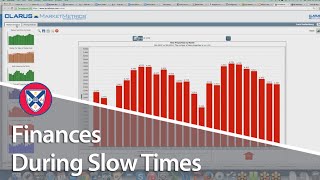
A real estate agent asks how to handle slow winter months. The speaker uses MLS data showing May peaks and December drops to separate real market slowdowns from poor follow-up, then recommends targeted winter marketing, cutting costs for 90 days, and building cash reserves before the season hits.
So Greg has a question about, you know, sort of finances during slow times. And, and this was the conversation that, that Kevin. So I'll just, just address this time of year and what to do about it. So this is if you have Claris Market Metrics, the company is Teradatum. If you have this available in your market, this is a must, a must get. So it's Claris March Market Metrics. I'm going to, I'm just going to show you how easy it is to use and the whole point of it. How do I start a new search? Okay, so basically pulls up a search diagram. I just chose residential and I chose all mls. But you can easily do it for a zip code and you can narrow it down to a price point. But I just did a two year monthly all residential in my entire mls and I just did a search. This will come together here in a second. The point of doing this, you need to know your numbers for your market in terms of properties that go under contract, what the seasonality is in your market. Kevin and I basically had a conversation like, you know, he hasn't listed maybe 10% of what he normally lists this time of year. But when I look at under contract properties, this is my entire MLS under contract properties, my peak month is May. So actually March through July, even August are pretty tight, 2,800 to 3,200. But December 1600. So Kevin doesn't have this data, but he's in a like a freaking cold area where there's already snow on the ground. It's like miserable. People don't want to go out. Buyers generally, if they had a choice, you know, I could see the whole spring market being way more, way less of a self fulfilling prophecy. You know, agents just getting lazy around the holidays and not generating the business. So you need to know your numbers. I would suspect that in some of the really colder markets you may only do 3, 4% of your volume in each of these really December, call it December, January, February or mid November through mid February. So if the volume is just way down versus the peak months, you could definitely do and I love this. So Kevin put together, sold in the cold. We can sell your home. Now he's got, he's got a video of him and he's doing all these cool things and if you were, he said, you're not going to do this to me again. So it's twofold. If the reality in your market is that things just slow down and it's not because you were slacking at prospecting over the last 90 days. One of the conversations I had this morning is that they shifted their approach on lead follow up and lead conversion. They gave it to all of their agents from one guy, one of the partners on the team doing it. And now they have no closings for December because their agents aren't doing the follow up and they're not nearly as good as the one person that was doing it. So that's different than your market just drying up because the weather, the cold is upon you. So I don't think Kevin needs to stop this. I love this. I think it's super clever and unique and just know that if it's the right story for the sellers. And I sort of picked on him a little bit and he had a great answer at the intensive workshop. You know, are you bringing people into your office because you think it's best for them? Are you offshoring? And this is questions that I answer my business as well. Are you offshoring your lead conversion on Internet leads because you think it's best way to serve the client or you just want them, you know, you just don't treat them like real, real, real, you know, live buyers. So I would know what the truth is and then come at it from two points. Maybe have challenges for your team in those slower months and sort of rally around, you know, the market's gonna be slower and you have to work that much harder in August, September, October leading into November, December, January. But part of it is for Kevin is to have a 90 day cost control, you know, so you, you know, radio scale it back to a third spend. You know, you probably shouldn't be generating any buyer leads around this time. Or maybe you should, I mean, I don't, I don't know, maybe in those colder markets there's a lot of people searching on the Internet that are going to go out and buy in April, May, so maybe that would not be a good idea. But I think part of it is coming from cost and part of it is coming from doing everything you can leading up to those months. So Greg asked a specific question. You know, you know, paying yourselves during the slower times. I mean, yeah, the reality is that, you know, you, you have to live. So either it's going to come from cash reserves or you take less pay. Either way, you know, when you've got a small team, you should treat it like business and personal. But it's, it's generally all the same money. So maybe around those times it's spending less personally and in your business so you can try to match your, your income, your gross commission, or your gross margin to, to your expenses so you're not losing money during those.