Real Estate & Time Off, Is That Even Possible?!
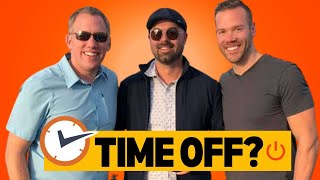
John Mikish, A.J. Maida, and Lars Hedenborg discuss how real estate agents can actually take time off. They cover setting boundaries, building systems that work without you, and creating residual income so the business doesn't stop when you do.
What's going on? Real estate game changers live show here. We got all three of us this week, so it's going to be awesome. I got my man AJ Maida, Lars Hedenborg, and I'm John Mikish. And today we're going to be talking about time off in real estate. Is that even possible? But before we dive into that topic, let's, let's go around the horn here and, and see what, what's been going on. What's. What you got it up to last week?
Yeah, so last week I actually flew to Houston, Texas for dentist appointment. So not, not a trip I was necessarily looking forward to, but Puerto Rico.
To Houston for dentist appointment. Yeah.
And one of my Realtors here is actually from, from that area, that exact area I went to. Her dad played for the Houston Astros, so that was kind of cool to talk to her about that. Last week when I went to her, her open house that she did. A nice home in the community. But more exciting, I had exp. Partner visit last Sunday, Nevin and his family. So we went to the water park here in my neighborhood and had a lot of fun just spending the day together and showing them Dorado beach where I live and, you know, just kind of chatting a little bit about business and life. So that was, that was really neat.
Nice. What about you, Lars?
Man, last week, specifically, I turned 50.
Wow.
So that was. Man, I gotta tell you, it's been interesting leading up to it and, and I'll get into some of it, you know, in this conversation today, but got to go to Hilton Head. So we've been going to Hilton Head, South Carolina for, since Anders, who is now 15, 6 foot 3, driving since he was like this big. So it probably, it probably was like he was born in November and we go in June time frame. So he's probably seven months old the first time, first time he went. We haven't missed a year. So. So it's just, it's just an interesting dynamic, you know, with a 13 and 15 year old and a couple friends came along and you know, they did everything on their own. They drove, drove the bikes on their own, went out to eat on their own, and they're living their best lives and it's, it's a little bit, little bit sad on the one hand, but you know, the freedom part of it was, was awesome. I did a few long runs, which were pretty painful. So I, I tested the threshold on being able to, to put in six miles of straight running. So that was a good, a good test. But yeah, still crushing my health plan. So I'm down 13 pounds, you know, which is really, really good. I've got probably 15 more to go, but yeah, so last week was a good week. I feel strong at 50.
So you're 50, but what's your biological age? Have you ever done one of those tests before?
You know, this, we're all kind of into this fountain life, Tony Robbins thing. So this Thursday, I haven't really given you guys an update. We should probably do a call on just physical health would be a good call. But this, yeah, this Thursday I've got my last meeting in all the series of meetings. So I'm already on their health plan. I'm already, you know, on their supplements and all that. But the, the meeting this week I think finishes it off and I find out my, my biological age. I'm expecting it to be hopefully close to 50. Hopefully. It's not like, you know, I'm 62 years old and I've got to work my way backwards, but yeah, so I'm feeling good.
Well, I, I, this past week I got my results back from Biome, which is a company that exp partnered with and they do like, you know, health analysis with saliva sample, stool sample and something else sample, a blood sample and they go through all these different metrics. And my biological age is actually 44 and I'm 42, so I got some work to do, but at least I have a path and I can kind of see the areas that I need to improve and, and they'll make recommendations and then I'm going to fountain help later this summer. So. Yeah, excited about that, but really excited about today's topic. Real estate and time off. Is that even possible? You know, I think that for 99 of real estate agents, this isn't a reality for them. You know, they're working 24 7, they're always chasing the next deal. You know what, what does it even take to build a foundation to where you can truly take time off? What do you guys think about that? As a real estate agent?
Yeah, so as a real estate agent, man, like that's why I got in this business was for that time off, that time freedom. And you just gotta have standards. When, when I first started in real estate, I was lucky enough to find seller prospecting. And when you're a listing agent, you definitely have more control of your time, but it's just about having standards with your time too. It's setting expectations right off the bat with your clients. Like, hey, these are the hours I Work, unless it's an emergency. You know, I take Saturday, Sunday off. If we get an offer over the weekend, I'll negotiate all offers with you. I'll go over the offers with you on Monday, we'll negotiate them on Monday, but we'll let the offers pile in over the weekend. So I just did first year agent. I mean, I was 26, had never sold a house. And really that first year, this is how I started to run my business, being really green in the industry, and I had a lot of success with it. So I was able to take most nights and weekends off unless I chose to work a Saturday morning for some more prospecting. My clients knew not to reach out to me after hours. If they did, they knew to expect a phone call from me the next day during prospecting hours. On my voicemail, I said, hey, I'm looking for buyers and sellers from 8 to 11. I'll get back to you after that. So I find when you're. When you set proper expectations, even if you're just an individual agent, you can have a lot of control over your time and not burn out in this business. A lot of agents, I feel like, are so needy when it comes to the clients they are on 24 7. So I think a lot of it does help. When you got good, consistent lead flow, you're consistently prospecting, lead generating. That also helps to give the confidence to set those expectations with your clients.
So, yeah, my business was not at all pretty or thought out like that in the beginning. That sounds like a wonderful, like, perfectly executed textbook plan. Mine was a total crap show. I worked all the time. I was just like, trying to get set up, you know, I was still probably running from fear of not having money in earlier days and like, just putting the pedal down hard to try to escape that, you know, previous reality. And I remember getting to a point where I was like, I have to build a team because I can't keep going at this rate. And, you know, Lars came into my life in that sense in a big way. And I want to hear what he has to say about this in a minute. But I remember feeling guilty for taking time off initially. And one thing I had to do was just kind of like get over that mental hurdle of feeling guilty for taking time off and, and not making excuses for time. I needed to be with the family, to go out on the lake, on the boat, you know, and I would just call it an appointment. And that started to, like, help me make that mental shift is like, hey, can you do this, John? Or can you take me here? Or can we look at a house then? Or can we have a listing appointment at this time? And I'd be like, actually, I already have an appointment then. And it didn't matter what I was doing, if I was out in the lake or I was just taking some downtime, it just became an appointment. And I found that to make it easier for me to say no to people, which was like, hey, I'm on an appointment. Lars, what, what were your earlier days in real estate like?
Yeah, it was quite a shit show for me, too. I mean, I, I'd like to say that I, I had boundaries in the early days, but I, I identified the path I was going to go down was through leverage and systems really early on. So when I wasn't like playing the job of a real estate agent, I was, you know, building systems, you know, So I would, I would probably work about 50 to 60 hours as an agent, and then a few nights a week, like I'm talking like 10pm to 1 or 2am, I would sneak upstairs and I would just, I would just like build systems. And I did it with a vision toward, you know, having leverage. And I was willing to, you know, I was willing to do the 12 to 15 hours a week of new business development. And, you know, that brings sort of the lifeblood, the engine of the business. But I just had a specific vision of what I wanted. And to AJ's point, you know, having standards and a specific focus in the business, right? I mean, buyers are going to take every evening and every weekend, you know, and it's, it's tough to rationalize being a good buyer agent and not giving away most evenings and most weekends. So that's not the side of the business that you're going to have any freedom whatsoever. So that's one thing. Early on, I had to get the heck out of working with buyers. My first 10 months, I sold 27 homes and I think 25 were buyers. I technically didn't work on Sundays, but of course I worked on Sundays if I was working an offer or whatever. But AJ, there's one thing, and I'm coming off of 30 days completely disconnected from anything in business business. First time I've ever done it. One thing that you said, aj, when you talked about, you know, having standards, but then also having the discipline to not go into email, to not go and respond to the text of the not so well behaved client that texts you, you know, nine o' clock on a Friday night, right? Like, make sure as long as they know you don't respond unless you know the, the, the house is burning down. In that case, call 91 1, don't call me. You know, I will talk to you Monday at, you know, 11:00am When I'm done with new business development. So agents are, it's the good and bad about our industry. The reason we can succeed at a high level is that it's filled with a bunch of commission hounds. You know, people that are so desperate for a commission check that they're willing to work whenever. Right. And there's one specific tactic though, I think every agent can, can pick up and aj you touched on it a little bit, is that you have to decide in advance what your calendar is going to look like. You know, when you're doing new business development, when you're, you know, in email, when you're taking lunch, when you're doing appointments and have appointment slots in your calendar pre decided. So if someone's like asking you, hey, can you go out, you know, Friday at 6pm to look at this house? It's like, I can't make Friday. I've got an appointment. But I do have Friday at 4pm Open if you. And, and, and, and you know, Jill can get out of work an hour early. You know, you can grab that appointment, right? And so just have those appointments in your calendar and your job every morning is to fill those appointments. And that's freedom, right? It's. The irony is that there's freedom in the structure. Taking vacation as a solo agent is super hard. You know, that's, that's another challenge that we'll get into. But those, those are some of my initial thoughts, you know, standards and discipline and just being willing to focus on the things that most agents won't focus on consistently. New business development, that solves all the problems, you know, despite the market, even the squirrely market that we're in now.
Yeah, yeah, it's challenging, man, like to be a single agent and to, to deal with all of the different clients and the emotions that come up in a transaction and try to take time away. Like, I don't even know how that works. But that was kind of like the first thing that pushed me into wanting to get a team was like, hey, there's got to be an ability to take some downtime. A.J. you've always been very intentional. And like when I think of you, I think of that word intentionality and it's, it's no surprise that you were the first one to come over to EXP. Was exp. When you first saw it, did you see it as a path to more, you know, time off or was it just, hey, you know, I'm gonna do this because this makes sense to me.
Yeah, definitely. You know, I look at everything and really have since probably age 16, when I read Rich Dad, Poor dad by Robert Kiyosaki about this idea of financial freedom through residual income. It was so the lens that I looked at in terms of, you know, the lens when looking at opportunities was, you know, how can I live this ideal lifestyle which for me is being able to work when I want, when wherever I want doing things that I enjoy. So yeah, the EXP thing with the residual income piece through revenue share was the, the main factor for me. A lot of other great benefits like the stock and the split in the cap, but I got very good at only looking at opportunities and pursuing opportunities that provide either complete residual income or, or very high dollar per activity income. I guess it was an income, high dollar income producing activities. So to get me to do something at this point, it's a lot per hour if it's not residual and, and it's been that way for years.
That's awesome, man. Well, I took a different path to that. And I remember you and I having a conversation early on when you had just started with exp. And you know, I was, you know, a proponent of the team model and building out a team with leverage systems and processes like I had learned from Lars. And you were like, no man, I'm going to do this. And you know, you got to a level of freedom that most real estate agents will never get to in a very short period of time, which is amazing. But I went the opposite way and kind of like the long way around the bend the way that I learned from Lars. And I really did have a sense of freedom in my business from, you know, building out the processes and systems that not only took me out of production profitably, but eventually took me out of the day to day. So much so that I was able to take 14 months off and travel around the country and really just manage my business on one 90 minute meeting per week. Lars, when you started your coaching company, I think I remember hearing you say one time, like you were doing it with the idea in mind to help real estate agents achieve a level of freedom that most of them would never get to on their own. Was that part of your process? And hey, let's, let's help these people get more balance in their lives.
Yeah, I mean, my journey was so painful, you know, that I felt I Didn't ever really see myself as like, you know, being, being leading others in any kind of way. Like, like even we're doing now with game changers. But it was, it's, it's painful to, to build a business, you know that, that it's, it's really, really hard. You've got to keep so many ball. You got to keep your pedal down on new business development and lead gen and all of that. And then you're bringing people in and you're building systems and the people you bring in, you know, think real estate's easy and it's like this just like complicated sort of mess and but the motivation was like I just wanted to make it easy for, for others. There, there is no pot of gold. There is no freedom at the end of the production rainbow. You know, after, call it so 20 and so 13 years in, you know, building a business, I took a tremendous income out of, you know, my real estate business. But you know, a seven figure low seven figure valuation, you know, so there's not these businesses, even when you build into hundreds of transactions, there's not this like exit, you can't exit and live off the residual income from, you know, it just, it ends. And so that's just something that, you know, when you look at all the ways that there are to, to, to, to make money in the most leveraged, as close to passive as possible. There just aren't that many ways, you know, and, and that, that really opens, opens up. That's what opened up me to the conversation about what could it look like to, you know, I did the production thing, I've done, you know, the coaching thing for 10 years. You know, what's the next thing that I can still have massive impact, but it allows me to literally delete all the business apps from my phone. I think John caught me texting like once in 30 days about business. But the thing that allowed me to do that, I still have a great core team at real estate B school and I checked my rev share dashboard so I'm not gonna lie, I did check that. That's the only work that I did. But you know, it's for every business day. You know, I'll probably make about $4,000 every transaction day, every Monday through Friday that I was gone, I made about $4,000. And, and that was me, that was me doing nothing, me not showing up for any calls or you know, really anything. So that, I mean that that's the ultimate in terms of anything I've ever put my hands on or been involved in.
So, yeah, I think it's nuts. Like, so. So we all kind of knew each other early on. You know, we were all doing real estate the hard way. We all eventually saw the light through. AJ Came over to exp. Let's fast forward to that now. Like, aj, what would you say on a. On an average week for you? Because I'm sure people have heard of your success or Lars's success, and they're like, well, how much time do you guys put in? Like, what would you say is like a, like a true average business week for you? And what kind of flexibility do you have at this point?
So it's, it's been a lot of flexibility for a long time now. I've been with EXP for seven years and like, you took about a year and went around the country in an RV and really from, from mid-2018, when we started that trip, I was consistently working, gosh, I'd have to guess now probably about 10 hours a week. And necessary work at this point, it's. It's probably five to ten hours a week. So some most weeks I do more than that. And a lot of my work now is evaluating investments, managing my money, keeping track of it all. Great, great problem to have. And working on building, you know, YouTube. So I enjoy that. But that's not like, really a necessity. So bare bones, if, if I had to just say, hey, what's the least amount of work I can do to. To maintain my current income? It would probably be about five hours a week. That'd be the necessity. But. But I'm putting in probably 15 to 20 hours a week right now. I have a plan in place to bump that up to 25, but that's where my comfort level is. That's, you know, it's when you get, when you, when you reach financial independence at the lifestyle that you desire. Sure, I have higher aspirational goals lifestyle wise, but. But not that much higher. So I'm kind of already financially independent and my dream lifestyle. So any additional hour that I put into my work week is an hour taking. That I'm taking away from either my family, my health, or my hobbies. And it, the financial reward just is. It's hard to explain, but it's incremental. The value you get from that extra 10k a month or whatever it might be, it doesn't really move your lifestyle that much. But if it's, if it's a significant additional effort that goes into it, it could really affect your lifestyle. And having a kid, that's Three in one, two kids that are three in one. I'm just not willing to do it. So that's one thing I'm working through with my coach right now. Because I have an opportunity on the table right now over the next 10 years, I think, to realistically make an extra $10 million over the next 10 years by working an extra five, 10 hours a week. And, and I'm, I'm wrestling with it, man, because it's like I already have the lifestyle I want, so why trading more time for money that I don't necessarily need. So it's kind of a little bit of a moving target for me. But man, the, the freedom that comes from having residual income that supports your lifestyle is the greatest blessing that, that I think one could have. It just allows you to do whatever you want.
And the model is so, is so pure and so simple that what I find kind of the thing I'm most in love with it is that, yeah, it's passive and it comes in residually, but you can take these breaks, these pauses. So like if I leave tomorrow, which I am, and I go on a, you know, 30, 40 day break and I come back, you can just pick up where you left off. So there's just, there's just a lot to it that most people, you know, we want to them to experience that freedom. And Lars, you know, what was your catalyst for this idea of taking a 30 day sabbatical and really unplugging and, you know, setting your structure up to do that?
Yeah, it was specifically inspired by, I don't have many bromances, but Mike Michalowicz, who wrote the book Profit first, also wrote a book called Clockwork and I had him on my podcast. I met him at an event he spoke to. I'm in the highest level of this group. And you know, he spoke about this Clockwork challenge. You know, it's, it's 30 days away from your business and, and you're, you're not in anything. So there are no meetings, there's. You're logged out of email, you're not on social media. So I set this date about nine, 10 months ago and, and I had, I did a one week, a couple, two weeks. I failed at, at those. So I was surprised that I was able to actually pull this off. But I love work. I'm driven, I'm highly driven. I also, if you put me in a situation where you're going to ask me a lot of questions, it probably.
Fills structure up to do that.
Yeah, it was specifically inspired By. I don't have many bromances, but Mike Michalowicz, who wrote the book Profit first, also wrote a book called Clockwork and I had him on my podcast. I met him at an event he spoke to. I'm in the highest level of this group and you know, he spoke about this Clockwork challenge. You know, it's, it's 30 days away from your business and, and you're, you're not in anything. So there are no meetings, there's. You're logged out of email, you're not on social media. So I set this date about nine, 10 months ago and, and I had, I did a one week, a couple, two weeks. I failed at, at those. So I was surprised that I was able to actually pull this off. But it, I love work. I, I'm driven. I'm highly driven. I also, if you put me in a situation where you're gonna ask me a lot of questions, it probably, it probably fills my ego a little bit to be the guy that has all the answers and in that comes just a, never, never being able to unplug. And so the thing that the biggest, even if you can do it. And John, I saw your video on the 12 hour walk. Even if you could take 12 hours and disconnect from business and social media and email just to clear your mind to not do it for a whole day. So wake up and then go to bed at night and then wake up the next morning and just, that was the biggest thing. I'm out of email, out of slack, off all social media. And I just have a, just a peace and serenity that I haven't had in a long time. And I don't necessarily, I still have financial goals that I'm going to hit over the next five years, but there's not this need to go out and grind and make money anymore. But I'm still just wired that way. Whether it's through a chaotic childhood or coming from dirt as a kid or, you know, whatever. We're still wanting to provide, you know, a big future, an opportunity for my family. It's still very unnatural. My response to all the stuff I could get my hands in. And you guys have seen it like I get my hands in something and it's like, let's, you know, spin it into this big thing and some things don't need to be, you know, big, big compl. Complicated things. So, so that was the inspiration, you know, the Clockwork Challenge. Really, really good book on just, you know, thinking your business as a system of systems Highly recommend that sort of mindset. It's kind of like to. To me, it's the updated version of E. Myth Revisited by Michael Gerber. You know, how could your business run without you? And I think everyone, even I think real estate agents need to consider that, like if you're going to get any time off, any freedom whatsoever, you need to. There's like 12 different jobs you could do as a real estate agent, but you need to envision most of those jobs being done by other people. You know, you don't need to be the one showing us homes. You don't need to run the lockbox or put the yard sign or take the pictures or design the brochure or enter, you know, listing into mls. There are folks that are, you know, created uniquely by God to do those things that are willing to do them at a fraction of the money you want to make. You know, so your freedom starts with just drawing a line in the sand about like AJ mentioned it, you know, what's your target hourly wage? What do you want to earn in your real estate business? And then work backwards from there. If you want to make $100 an hour and you're making $25 an hour, stop doing all the things that you could outsource for less than 20 bucks an hour. And then you'll go from 25 to 50 to 100 and then upwards from there. So. And then it could be infinite, you know, so last 30 days I struggle to say I worked an hour, you know, but for the income I made, the hourly wage is ridiculous, you know, so now it's inspired me. Like, how can I get my work week to like, literally I'm looking at my calendar. I want to get it Tuesday through Thursday, you know, 12 to 4pm you know, if I can get it down to a probably I'm going to stick to the Monday through Thursday, 12 to 5. So a 20 hour work week. And just, you know, and the cool thing is I got on the phone with Jessica first thing I did, 11:30 on Monday morning. I had, I had literally just left Julie downstairs and I said, honey, I didn't miss a thing. Like I literally missed nothing outside of our, you know, long boxer conversations and stuff, like along those lines with the higher level, level, level level thinkers. I didn't miss anything. And I wondered if I would even tell that to Jessica, you know, cause she's still gainfully employed. She's been in my world for 13 years. And she, first thing she says is like, all I need you for is content. Literally I don't need you for anything else. Like, she's running the sales team, she's running, you know, the whole business. She ran and the team figured out how to do all the things I was peppering in my opinion on, you know, the team figured out. And we're a team of like five or six people, but four of them are VAs and you know, in Brazil, in, you know, Philippines, you know, we have. So it's not like these are not like highly, you know, I mean they're, they're, they're great team players, but it's not like they're, you know, 100k people. And people are smart and they want to succeed and they want to do right and you give them a little bit of guidance, you know, people can figure out on their own. So long winded answer to your question. But part of me just wanted to see how, how well it could run without me. And, and now I'm, I, if I'm being honest, I'm struggling of how I really want to insert myself back into, you know, what things do I really need to do every week. You know, the fun things are, you know, showing and John and aj, you guys share this. Showing up for the people that are building, that's the most fun and it's like massive leverage as well, you know, so it's, it's a compound effect, just kind of sticking yourself in those things.
My wife used to say when I went on vacation that I would spend the first two days kind of unwinding and like relaxing, and then the last two days winding back up with stress, going back to the office. And I found that to be true when I went on my extended trip for 14 months too. I would say the first three months I was still worried about like things back home at the office. And it took me a good few months to really get into like that new pace of life. Did you find in your 30 days or AJ, when you took your year long trip, did you guys find that to be the same for you too?
Well, I'm, I'm definitely like on a vacation, like the historical way to do vacation. Like, I'm definitely like Julie, Julie, like on the beach laying there like just annoying her. You know, she's already like into her book and she's just chill and I'm like, you know, antsy. So yeah, so that's definitely been the case for me, but now I'm just not going to go back to it. Like, I'm pretty committed to not go back to it.
Yeah, for me it was a pretty easy transition and I wasn't completely unplugged like you, John. I remember you put like, you know, the blurry, colorful lines that you get, you know, when we used to actually have cable television, when your cable goes out, you get all those lines. I remember that was your Facebook profile for like a year. So I didn't go that extreme. So I still kind of plugged in a little bit. My hours were just down to 5, 10 a week. And man, I can still like right now, even though I got things I need to get done. I could take off for a week and put it all on hold for next Monday or next Tuesday and not even care. So that's probably a skill I have because I'm a master procrastinator. So it's maybe a superpower that bothered me to put things off too much. I've always been that way throughout school and everything. But man, you know what I like about this conversation? Just listening to you guys talk about how you think about things. Because in, in the world today, you know, really the how to type stuff that you can see on YouTube or, or how to like build your real estate business through sales, it's, it's all just how to, it's, it's a commodity, that type of information. Whereas I think a lot of people need help and, and what I'm personally looking for is like how to grow in, in my thought processes. And it's cool just hearing you guys talk about this. I'm hoping, you know, who's going to take away a lot from this call today because, because this is what's important, you know, I, I, I, I, I still need to read the book, you know, this, what is it? The seven Regrets of the Dying. Is that what it's called? Have you guys read it?
I, I heard, I heard Azul talk about it.
Oh, okay, perfect. Yeah. Zul, great YouTube channel by the way, if you guys want to check him out. Azul A Z U L But I haven't read it. But I know what's not in it is no one regrets not working more when they die. So the stuff that we're talking about here is really the most important stuff, like how do you live better? How do you spend time with those that you love better? How do you give better, serve better? So it's exciting, I think for real estate agents, they can benefit a lot from putting some standards in place, getting an idea of what you want your ideal week to look like. Probably increasing lead generation activities so that you, you have more Confidence to say no to certain opportunities, because that's going to have to happen. As a real estate agent, you might lose that buyer who's adamant going out every Sunday afternoon if you don't want to work Sundays. But when you got that lead flow, you can do that. And then the next step to do What Lars did, 30 days off, you know, come back yesterday. John, a year off, me, a year off. You got to figure out how to create residual income outside of your active work. You know, as long as you're always trading hours for dollars, you'll never be free. So you can do that as a real estate agent by investing your money maybe in index funds, real estate investments, or with our company.
Exp.
Residual income through revenue share and then the stock opportunity and, and the revenue share is what created freedom for me about five years ago now. And now I'm super excited to just keep investing the money that I'm earning. Just this past week, I closed on a rental property on Friday. Single family. Then I invested a significant amount of money in a chain of car washes in South Carolina, and that's through a syndication. So it's. How do you take the active income that you're earning? Redeploying it, not spending it, just redeploying it into other investments that are going to create more residual income and doing it over and over and over and it's a snowball effect. And, and that's been a lot of fun. And something that I'm really passionate about is, is helping people kind of life do some lifestyle design around, you know, that. So that's like phase two of financial freedom.
I think there's a lot of people watching this that. Or will watch it that are going to say to themselves, like, I can't even. Like, this isn't even a reality for me. Like, this is so far from my current situation. You know, what are, what are some initial steps that you either took or you feel like are necessary to take for somebody that's think like in the grind right now with no light at the end of the tunnel, like, what's, what's the things they got to do to get there, like, to start getting on the right track.
I mean, if you're in the, if, if you're in the thick of the production, you know, the transaction treadmill. The. The easiest thing to do is to say, I am a listing agent. I don't work buyers. You know, like, I think our careers are different in that it sounds like you guys were more buyer heavy in the beginning. From day One, I always work sellers. Like my first, first full year as a full time real estate agent, 2014, I sold 36 houses and probably 30 were sellers. So if that would have been 30 buyers, there's no chance, you know, you're just not going to find enough buyers that won't, that are okay, okay, no problem. I won't go see houses on Saturday or Sunday. Okay, no problem. I won't see houses after I actually get out of work. Like you're just not going to be able to really do that. So if you're resonating with what we're talking about, you got to start thinking, how do I put myself in a position to become a listing agent, refer out my buyers. That could be an agent in your office, it could be a buyer agent you hired to your team. But you just say, hey, I'm done working buyers or hey, I'm done working buyers under a half million dollars a year, a half million dollar price point. So now you're only working your higher end buyers maybe. Um, so you start limiting them that way and then just being upfront with your clients. Like this is when I work sellers, in my experience at least they're 100% okay with it. They actually respect you more because you're professional. If I could text my doctor at 10 o' clock at night for something that wasn't an emergency and he responded to me, I'm going to question his professionalism, to be quite honest with you. And like, does this guy have nothing else going on? Like, I don't want that if it's an emergency. Yeah, I want him to reach out obviously. And we do have a doctor for that. But like Lars said, if there's an emergency, your house is burning down, call 91 1, don't call me because I can't do anything about that. So it's, it really is that simple, guys. But the one thing I wish I would have done that would have got me farther along for true financial freedom, for, for like true freedom, not just some time off here and there is, is investing my money sooner, like saying, hey, I'm going to sell three homes a month, spend the money from two, but invest the third, commission check into index funds primarily because it's 100 passive. But I didn't know that back then. I, I was commission check to commission check for a while early on and, but I could have saved something so, so I, I would be very mindful today. What percentage of your income are you saving? I, I think that would go a long way for agents Good stuff, man.
You know, I wish I would have had somebody early on that was a mentor to me about these kinds of things, because, you know, I think I probably started out like a lot of realtors, where it was just about making money. It was like, man, if I could just make six figures and I could like, have this lifestyle. And then you get there and you realize, like, okay, now that I have this six figure lifestyle, all I have is like, more demands on my time and attention and my money. And, you know, as you scale this thing, whatever that looks like for you, and you become more successful and you do all the right things, you're still going to have those demands, those external demands, trying to steal your time, steal your attention, and ultimately sell you something to steal your money. So if you can't develop the discipline when you're in the grind, you're not going to be able to develop the discipline later on. And that's just something that you gotta, you gotta be mindful of. And I think what Lars did over the last 30 days is great. I think it's a recalibrating, a resetting. You and I were out in, in Breckenridge this year. We talked a lot about, like, you know, what is it that we're going to invest our time in? Because our time is our most valuable asset. So, you know, when we think about this topic today, real estate time off, is that even possible? What we're really talking about is your number one asset and how you're using that asset. So in closing, anything else you guys want to share on this topic?
I would just, I mean, if, if you're in the thick of it, it's, it's the 90% of agents that are struggling. I heard a stat, you know, I think it was monthly, but I think it may have even been weekly. Like 10,000 agents are leaving, you know, are dropping their licenses, let's say on a monthly basis, or, you know, so there's so many agents getting out of the industry. The only thing that's going to keep you going to do the work today that you may not feel like doing is a vision of something better in the future. That's the only reason I'm not a natural salesperson picking up the telephone. For me, it was a very, very heavy telephone call. Reluctance was super high. But I knew on the other side of the phone call was, I would just say, there's a $10,000 commission check, you know, I can help someone, and there's $10,000. And it was building into this vision you know, I knew in 2009 I decided what 2012 was going to look like. And it was like I was working less than 40 hours a week. I was only doing listings. I was, you know, so that vision was the thing that made me work 60, 70 hours, you know, for a year or two. And then I was able to get, buy some more leverage, buy back more of my time. So it's just a process. There tends to be, I don't want to, you know, stereotype, but there tends to be. And I don't think it's generational, it's been dubbed as generational. But I'll just give the analogy that, you know, people want to get to the top of the mountain. Wait, how does it go? They, they, they want the top of the mountain, but they're not willing to do the hike. Right. Like, you know, everybody wants to be at the top. They want to have financial freedom. They want to, but they're just not willing to kind of take one step at a time. And, you know, so just, you know, everything you've done to this point in your journey is just fuel for the next phase of your journey. All the mistakes, all the good, all the bad, all the ugly, you know, is just going to give you the experience to be able to approach things differently. And then, you know, the only thing, other thing I would say is that, you know, don't, don't do the grand gestures. You know, it's, it's, it's not, you know, working out. I worked out three times yesterday. It just so happened that it was that way. My son told me, he's like, that's probably overkill for one day, dad. It's all about, he said it's all about consistency. And he's 15, right? And so, you know, don't work out four times in a day and then expect like the next day you're going to be, you're just going to be sore and miserable and not work out the rest of the week, right? So just start by taking a 30 minute walk a few times or whatever that looks like in your business, but just, just start doing the work. Real estate's not going away, agents aren't going away. All the headlines would lead you to believe that no more homes are going to sell or, you know, the bottom is going to drop out of the real estate market. It's not going to, they're comparing. All the stats you'll see in the headlines is comparing against these two unicorn years, you know, 21 and 22, that we're just getting back to normal. And the market is super, super strong. And it's. It's a healthy market. And the good thing is a lot of agents are getting out of real estate. Yep.
Yeah.
And I.
And I would just say, if you guys are resonating with what we're talking about, the way you start making strides towards having a business like this, a life like this, is surrounding yourself with the right people. I don't think you can do this on your own. If you don't have friends or colleagues that you're on a regular basis having conversations like this with, you need to seek them out. You can do it through paid coaching. You can join a mastermind. You can just go on Facebook and get in these different real estate groups and just start reaching out to people who might be posting comments in alignment with what we're talking about, forming free mastermind groups. There's a lot of ways to do it, and one of the ways is by joining Game Changers Nation. We have a link in the description. You can book a call with one of us to talk about what it might look like with partnering with us at Exposure and just staying in this conversation. One thing that I discovered for myself is I level up really fast when I surround myself with people who are at the next level. I'll give you a perfect example of that. I was kind of new at Snowboarding back in 2018. I've been doing it for a couple years, but wasn't really that great yet. And I was on this lift with these two kids. I'll call them kids. They're like 20, and I was like, 30 at the time. And. And they're just like, hey, man, you want to ride with us the rest of the day? Because I was by myself. Abby was at home and at home. My RV was home at the time in Breckenridge for a few months. And I was like, sure. And they were way better than me. They're dipping in the trees. They're hitting jumps. And by the end of that day, I was hitting small jumps. I was getting air. And for the rest of that winter, I was able to build on what I learned in that one day of surrounding myself with people who are at that next level. So every area of life is like that. Want to be a better dad. Want to be a better husband, wife, mother. Want to be a better business person. Want to get in better shape. So reach out to us. We're here. This is what we love to do. We love to partner with agents and help them get to that next level.
Awesome, man. Well, it's good call. It's going to call it a wrap for this one, but next week we'll be back. It'll be you and Lars. I will be out, but just looking forward to coming back and sharing some new insights with you guys when. When it's over. So thanks for your time and we'll catch you next week.
See you guys.









