Stop Trying To Do It All! Tara Limbird On Leveraging Ways To A Better Business And Quality Of Life
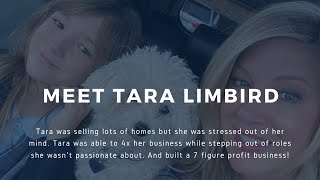
Interview (YouTube, Mar 2022) with Tara Lindbergh by Lars Hedenborg about building leverage in real estate. Tara, a Northwest Arkansas team leader, recounts moving from solo agent (6+ years) to a 12-year team with ~20 agents and 19 support staff; her operation closed 648 transactions last year (~$191M volume, just under $6M GCI). Key themes: progressively delegating tasks (starting with an 8-hour/week assistant), expanding support roles, developing leadership layers so owners can 'work themselves out of the job', balancing business growth with personal life (hiring home help, buying back time), and the mindset of 'choose your hard' and season-based life planning.
Welcome back to Real Estate Team Builders. Lars Hedinborg, the founder of Real Estate B School. Today I have the honor of having a chat with Tara Lindbergh, who I think we've probably known each other for maybe six, seven years or so somewhere in that timeframe. And one of the most humble and super smart business owners that I know, and I've said this before, that there's only, like, a handful of, like, some of these businesses that post these monster numbers. There's only, like, a few that are worth owning in, like, the entire country. And if yours is one of those businesses, and I won't quote your financials, but you are running an economic model that is unlike any other organization in the country. So that's why you want to pay attention. I'm going to give you the quick stats, and then, Tara, I'm going to let you introduce yourself. So 648 transactions last year for 191 million in volume, just under 6 million of GCI. Plus, you and your trophy husband do property management, title flips, rentals. You turn, like, dirt into money, and you just do all this crazy stuff that I've always honored and just appreciated how you guys roll in life 12 years into the team, six years before that as a solo agent. So, Tara, we're going to kind of unfold this conversation of leverage, which you have taken to, like, the ultimate, ultimate levels over the last, like, well, really 12 years, probably. But just give us a quick backstory, talk about your market, why you got into real estate, and then just kind of catch us up, and then we'll get into the conversation about leverage.
Okay, cool. Well, like I said, I'm Tara Lindbergh, and I'm here in Northwest Arkansas. If you can't tell by my. I know people confuse me with my Boston accent, so. No, just kidding. But, yeah, we. We've. We run a team here. We've got a little over 20 agents. We're real heavy on our support team. I think we now have 19 support team members working for us. You know, we're home of Walmart. That's our claim to fame. And our area is growing like everywhere else. A lot of people are moving here from east coast and West Coast. Especially when you can work from home and get a Pacific Northwest salary and live on an Arkansas budget, it's pretty attractive. So it's growing a lot. It's a lot of fun to see our area turn. And of course, that creates a lot of opportunity and challenges all on its own with real estate as well.
Yeah. So let's unpack the conversation around leverage. So we all kind of start out in this industry where, like, we get a real estate license, and then it's kind of like, all right, let's figure out how to make some money at this thing. So probably not focusing. Well, maybe a little bit. But you, like, unpack the leverage and the main sort of points in your journey.
Sure.
You really sort of leaned into leverage.
Okay, definitely. Before I even had a team, I knew I was working 24 hours a day, seven days a week as a solo agent because I was, you know, I was the closing coordinator, the photographer, the sign, put a wrapper, you know, everything. And I actually had a meeting with my broker and talking about next year's goals. And I wanted to, you know, always do more, more, more, more, more. And they said, there's only so much you can do by yourself. And so I said, maybe you should get an assistant. I'm like, no, my gosh, I can't have an assistant. I can't pay somebody. What if I don't have a closing? So I finally listed and I hired an assistant, but I would only let them work like eight hours a week. I'm like, that's it. Don't work like a minute more. That's all. Because I was terrified. But as we rolled with that for a month or two, I started to realize that this could actually work. And it wasn't an expense, but it was an investment. So because I was able, I didn't let it allow me to have any time off, but it was just, okay, now I can go get more. So I did that for a little while, and then I started hearing this buzzword of a team, which of course we. There's teams everywhere now. But at the time in our area, there was only one team. It was a mother daughter or mother son team. And I didn't even know really what that meant, but I'm like, but that sounds good. So whatever that is, it must work. So I started doing a lot of research. And about that time, my husband Nick, he'd had a real estate license years before, but he came on board and then we hired another agent. So all of a sudden we went from me and my little bitty part time assistant to three agents and a full time assistant. And that worked. And I think we stayed that as a team for several years and just kind of got our feet underneath us and try to figure out what was going well and what was not going well. And then we just kind of slowly started adding to our team that One assistant became one and a half and it became two. And it just kind of over the years started peeling off the layers. Like, you know, as realtors, we all wear a lot of hats. And even when you have a team, you know, it's not like we work at Walmart where everyone's got a super specific job. So. But, but through the years now, especially now with 19 support team members, we've really started to peel off those hats. So everybody's hyper focused on what they do. So anyway, you know, kind of having a team getting started, to me, my next point of leverage was now that I had been doing this for at that point, probably at least 10 years, 10 to 12 years, I'm like, now how do I buy some of my time back? You know, the, all the leverage before was how do I do more and how do I help my team do more? But then it was how do I start buying some of my team my time back? And that was so as building a little bit larger team and having that support team took some of that off of me. And so that worked really well. And then now here in the last year or so, one of the biggest mistakes that we made in our team is our whole foundation for leadership was just me and Nick and that was it. There was no other layers of leadership. And that's kind of where we went wrong for a while. And kind of I started driving myself crazy, you know, as an agent, driving so crazy with buyers and sellers. Well then I started driving myself crazy with the, with agents and the management of the, of the team and the training and, and because we had, you know, we were the go to for everything. So in the last couple of years we've really worked on that a lot and hiring and training people to be leaders on the team. And that's really been like our next level of leverage because now it's, you know, I always say my, my goal in real estate is to work myself out of a job. Like, I don't want to, you know, I want everyone, no one to have to come to me for an answer. I don't mind someone coming to me with a question, but I always say my goal is to be the receptionist. And that's no disrespect to a receptionist. That's like, I would love just to be the door greeter when someone walks in. I get to say hi and I get to go make copies or tell someone, someone's here. And that's my main, my main role. But the team has doubts that I could actually do that. And keep my mouth shut. They're like, you'd be over there like going, hey, did you see that? That this, this needs done or that needs done. So I probably, that I probably wouldn't work. But that goal is just to work myself out of the job. And so that's kind of the level or the, the, the season that kind of we're in now is to leverage other leaders. And so because I also, you know, we work, we're an independent company and an independent team. And I, you know, I don't want people say, oh, but you know, you're limber, you're the team. I don't want to be the team. I want the team to be the team because I would love for this to keep on this, this train keep rolling even with me and Nick out of the picture. Uh, we have an 11 year old daughter and she said to me other day, she said mom, I know you probably want me to take over the real estate company someday, but I just want to tell you I'm just not passionate about it. So, so anyway, so that job's up for the taking if anybody is interested. So. But yeah, but that's, that's kind of our goal now is just to work ourselves out of the job.
Yeah. So, so let's, let's unpack. The first moment where you're, you're, you know, working 247 and I don't know how many homes you're selling, but it's probably way more than like a typical agent. You're probably totally maxed out.
Right.
And like to think of where you are today and like you could only imagine offloading eight hours to an assistant.
Right.
And now you have 19. Not, they're not all assistants, they're all at different levels, but essentially nine backstage professionals where in the beginning you couldn't even fathom hiring one for eight hours. So talk about the mental game there. Like what, like, and almost like what advice would you give your eight hours? Couldn't even imagine it a week self that could have accelerated the journey. So others that are struggling, for sure.
Well, and that's. You really have to decide like where you want to take this because you know, I talked, I have a lot of friends in real estate, of course locally and across the country. And sometimes they'll say, you know, I want to get out of production or I don't want to have to manage the team. But, but then they don't want their team to grow. They're like, it's too many people. I don't want to mess with it. And you know, because I don't know, to me, I still feel like we're not that big of a team. But I guess in the grand scheme of things where, you know, average large kind of team, but the thing is, is like you can't, you can't hire people to do these positions to replace yourself if you don't have the income and income comes from sales. So you have to grow and you have to grow in agents and you, or you have to help them grow in their production or you have to increase their average sales price because you have to have that in order to continue to add people to your team. So, you know, so I tell the people on our team now like there's, there's a path for them to grow with our team. But that path only happens if we, if we keep doing better and we keep doing more. So it's an incentive for all of us to, how do we help push ourselves? How do we help grow so we can, you know, even a lot of times we talk about the careers for the agents and how do they make more money and, but it's also how are you set up a long term path and a career for your support team members as well. And so I think that's the thing to kind of think about is if you want to continue to replace yourself, you have to grow an agent count and you have to grow in production because for the agents, those support team members are there to help them too. So now sometimes with agents, you bring people on the team. Like, I don't want more people on the team. That's, you know, more competition for leads or whatever the case may be. Some of that kind of limited belief. But the more support team members we have, the better it helps their life and their production as well. Because we're, we're, we're basically helping our agents now to build leverage. But they don't have to go out and do what we did. They don't have to start a team. They don't have to start from the ground up. They can take the foundation we already have and then kind of help with that. Whether they have, you know, an assistant or showing partner or junior agent or whatever that might, that might be. But that kind of helps them building leverage within the team itself.
Yeah, that's so, so good. And it's almost like, and that's where some of our frustration comes from as team leaders as well. We're like, even with our kids, we're like, you have no idea how good you have it. Like, I tell my kids, I'm like, you better figure out a way to make money. Because, like, this house and the pool and the vacations, like, this is not how. This is not normal. It's not how I was raised.
Right.
It's almost like we create this environment for our agents, and we want it to be easier for them, and we built it in a way where it works for everybody. Just the whole analogy where, like, you know, our agents become our kids in the similar way. We're like, we love them, but there are times where they just don't appreciate us. Do you have any comment on leading and managing agents?
Oh, gosh. Well, lots of patience, you know, where it's all like, herding cats. And I mean, you know, I relate a lot to the agents because that's, you know, that's all. That's how we all started. So. But I think, like I said, I think the best thing to do is to get yourself to a point where you can add layers of leadership and help. Because, you know, it's. You know, I love. I love working with agents, but it gets to a point sometimes where it's like working with buyers and sellers where you're just like, oh, my gosh, I'll pull my hair out. And. And it's kind of the same thing with the agents because we're all crazy. We're all running in different directions. We're all independent contractors. And so. But if you can have some help and gain that leverage, then, you know, you could take a little time off because, you know, on the weekends are nice. That are the buyers and sellers calling. It's agents calling and needing help and contracts written and all that. So just have lots of patience and get yourself some help. So.
Awesome. So before we hit record, we talked about, like, you kind of talked about leverage at work and leverage at home. Unpack that a little bit.
Yeah, sure. You know, we've talked about this before, like, with you. I know, because I had mentioned, like, we have. We have an assistant at work that helps us, just me and Nick personally with work stuff and then some of our other businesses. But then we also have help here at our home as well, because, um, you know, again, I'm in a season of, like, I'm trying to buy my time back. And so if I can, you know, have some help with, whether it's, you know, the laundry or the. The dishes or picking up after the house, just those things that I could find the time to do, but I'd rather be able to come home and spend that extra time with, with my daughter or my husband. And so just trying to buy back, buy back some of that time. But it's hard because there's also a level of guilt. You know, it was always like, oh my gosh, I feel guilty. Like, like, you know, as a wife or a mother or a woman, you just feel like there's certain things that are just kind of your responsibility. But I know you mentioned them to me one time that always stuck with me is you have to think about it as you're creating an opportunity for someone else. And so that's. That always helped me kind of come to peace with it is that, that, you know, doing this every, every job that we have at work, someone else could probably do, but it's created opportunity for them. So. So whether it's professionally or personally, the things, you know, so like I said, it's just all about leveraging your time and whether, whether you're, or whether you're going to use that time to go out and start an ancillary business off of real estate or increase your production or just, or just have some. A little bit of your life back. So that's, that's what we've been trying to do here lately is just, just recapture a little bit of the time that, that from my, from my 30s to my 40s, there was no family, friends, personal time. So trying to buy back a little bit of that now.
Yeah. And you know, when you think of, you know, when you think of selling like one person selling 30 homes a year, and that's pretty crazy, their evenings and weekends and a lot of stress involved. And then thinking of like your entire journey led to the point where you're able to sell almost 650 homes in a year, and now you have the opportunity to even scale back a little bit less. I think it's the whole journey. It's all a mindset game.
Right.
So when you think. And you mentioned before, I want you to comment on a couple things. You mentioned this. So these are your words, and it's kind of like your overarching, like choose your hard, you know, so talk about that as it relates to your journey in business.
Sure. You know, as a single agent, you know, there were less stresses in terms of, I wasn't, I had no payroll, no salaries. So there's less stress from a financial standpoint in that regard, but there's more stress on time and things slipping through the cracks and bad customer service and those kind of things. And so, you know, and then have adding a team like I said even just eight hours a week, that was super stressful for me in the beginning to have to bear that burden of an assistant. And now as a. Having a team with, with agents, you know, that's. There's. There's a lot of stresses because now there's so much real estate you can't control. But before, I at least knew that I would go out and bust my rear and go sell houses. So now I have to put my faith that other people are going to be like me. And so, you know, it's. So it's. I would say it's just kind of choose your hard, because each one of these stages, you know, is hard one way or the other. It's hard with the financial burden or financial stress that maybe comes with knowing that you're paying all these salaries or marketing expenses whether someone sells a house or not. Or it's hard knowing that your time is completely sucked up by working 247 and not having any help in any regard. So I think it's just, you kind of got to look at each piece, and I think sometimes we think we're going to do this because it's going to be easier. And it may be easier in one regard, but it adds a layer of. Of hard in another area. So you just have to kind of pick which one that you can lay your head down at night and feel the most comfortable with.
So there was one. One time we were at a B school intensive, and I forget exactly how you said it, but we talked about it a little bit before we, before we started today and something around, like chasing more and realizing success. And then we talked about, you know, the halftime mentality, like the. Your life is broken up in quarters. So talk about all of that and like, as if you were talking to, like, the younger version of yourself or somebody that wants to go down this path of growth and expansion. What would you talk about with success and, you know, wanting more? What are you trying to accomplish? And then just the seasons of life.
Okay. I think at the base goal, the mastermind, I said something along the lines. And for so many years of my life, I chased success, thinking once I, you know, once I hit some level because I was always moving the goal post, you know, if you hit something like, well, that wasn't good enough, you got to move it up and thinking, well, if I ever hit that, then I'll be happy. And then realizing that success doesn't breed happiness, but happiness breeds success. And so it's like just, just trying to have a mindset and be careful about what, what you're actually chasing. And, and, and you had mentioned one time you kind of think of your life. And I tell people this all the time. I think they look at me like I'm, you know, morbid. But I'm like, well, okay, let's just say I live to be 80 years old. So I'm going to chop my life into four quarters. So from 0 to 20 years old, to me, that path, you know, it's already kind of set for you. You're growing up, go to school, that sort of thing. 20 to 40 was, you know, getting your college education, getting your, you know, your feet wet, getting your career. And so 20 to 40, that's all I did, was just focused on, like, career more, more, more. What's it going to take? I just want to be successful. What does success look like? I don't know. But I'm chasing it with, you know, someday I'll catch it. Oh, I think I caught it. Oh, that wasn't good enough. You know, I just kept moving the goalposts. Um, and so now, like, I'm in my third season of life between that 40 and 60 and. And now, you know, I don't really have it all figured out. I'm trying to, like, I was just been so focused for so long on, on building a career and being successful, but now I'm trying to use that career and keep the pedal, the gas pedal down. I want everything to keep turning, but I don't want to be the one pushing the pedal all the time. So it's now. But then now if I buy back my time, I even put a Facebook post a few years ago. I'm like, I need a hobby. Does anybody have any ideas on hobbies? Because, like, my only hobby has always been just to work. So, like, I don't even know if I buy my time back. What do I. What do I even do with it? And I'm still trying to figure that out because it's have been. My focus is idle time. It's just, you know, how do you do more and how do you. How do you be more and get more and that kind of thing? So, so that's kind of where I'm at now, is just trying to figure out that. That I'm glad I did the things I did between 20 and 40 so I can have the options now. Trying to figure out what do I want this next stage to look like. Because a lot of people don't have that choice. You know, they just, you know, you get in a career, and you just stick there for 30, 40 years and, you know, get your retirement and that's it, you know. And so I'm fortunate to now be in a position where we're trying to figure out what this next stage looks like. And. But if I didn't build the team and I didn't build the leverage and all these kind of safeguards, then, then, you know, these wouldn't. Wouldn't even be options for us.
Yeah. And I don't want to take credit for that. There was a book called, like, literally called Halftime by Bob. Bob Buford. And I remember when I was listening to the book, it was literally my 44th birthday and I'm an even numbers guy. Like, if I'm buying a house, the offer is going to be like, every number is going to be even. Like, drives my wife crazy. So I was 44, listening to the book and just realizing, like, the same realization, like, this is literally my hat, like, to the day. This is my halftime. 22, 44, 66, for sure. I'm going to die at age 88, remember?
Yeah.
And the book forces you to think about, like, hey, at 88, you know, what are you going to wish you, like, how you spent your time when it's too late.
Right?
So it's almost like thinking about, like, where am I going to have regrets in my life? So if you focus too much on the business, you may, you know, neglect your spouse or your kid or whatever, or your physical body. And so I just thought it was such an awesome, like, you know, realization is that we can easily, people like you and I can easily just grind and chase more without a realization that there. It's not all about more. You know, there's our ability and we impact through our business. So I don't want to minimize, you know, the blessing we are to so many people. But at the same time, you know, so I had to find, like, I'm literally aligned with a nonprofit here that all nonprofits have no business sense. So one thing you could do is find a nonprofit that has no business sense and you could just plug in and like, and you'll just create such. Like, I did one meeting with this nonprofit and like, it all just shocked them, the questions I was asking, because it was all like, straight up growth capitalistic, like, we're going after money, right? You have to extract it from the rich people. They're like, oh, you're talking like crazy talk. It's like, no, that's like how we work in business. Like, real estate is Cutthroat. So, so your journey is awesome. I just love every piece of it. You know, I remember, you know, remember that time where we put like your functions of all your business and then we, we just went through, you know, okay, so who's in this position? And you're like me. Who's in this position? Me.
Yeah, this position.
And it was like literally all the major functions of the business. So.
And that was probably at least four or five years ago. So that's, yeah, that's the thing too. I think a lot of times like these things don't happen overnight. You know, it's like, it's, it's this gradual thing and in life still happens. Like, I mean like right before I got on the phone with you, I found out one of the, one of the girls on our team, on the support team side for one of our businesses put her two week notice and I'm like, well all right, but you know, but we have things in place where this person is going to step up and they're going to do this. And I think that's my thing with all of this is like trying to like just be preventative and safeguard everything because you know, especially in a real estate, when you're self employed, own a business, commission only, there's so many things to worry about. And there's being a real estate, there's so much you can't control. Like I can't control the economy, I can't control interest rates, pricing, interest rates, consumer confidence. Like I, you know, I just, you know, but I've been in the business long enough now to know that no matter what's going on in the, in the economy, people start to have a place to live. So now it's just working through what is that? What does that look like? And so, you know, I like in the beginning, like, you know, you worry about leads. Where'd your next lead come from? Well, I think we've done a good job throughout where, where to spend money on leads and how to brand ourselves. Okay, so that's checked. And it's, you know, how do we train the agents? We've got people, we've got someone that does contract training, we've got someone that does sales traffic check. And it's like you're just trying to go through all the things that can go wrong and again, kind of work yourself out of the boxes and because like I said like my name was in every box and like, so it was very easy to say, okay, yeah, that's the, that's the Problem, you know, and so now that. Now my whole thing is how do I get my name out of every box, work myself out of a job where I'm not even on the accountability chart? You know, so. And then. Then you get. Then you have the freedom to actually do what you want to do instead of having to do what you have to do because you don't have any choices.
So, yeah, that's really good. So I. I want everyone to remember, you know, that that last sentiment there is. It's mostly a mindset game that Tara has played over the years. And like. So Tara has, as we all do this, um, it is a sh. It's a shadow. Side of the way we're wired is that we're constantly going to seek the next level, and then, wait, it moved, you know, so that's just part of who we are. But this mindset of how can this run without me? You know, so it's. So you're. You're actually. You're able to disconnect your income from the hours that you work, from the stress that you endure. So I love it. I think that is like a parting message is that I posted recently, and I'm not new to the 75 hard sort of thing, but, you know, the backdrop behind that is that people, like, fail in life and they don't play to their potential because they don't do anything hard. So it's not like the guy. I actually don't love the guy that is behind that. But the sentiment of it, it's a mental toughness program, is that you have made a decision to constantly choose hard things to do, and as a result, you've just been able to increase your game, increase your confidence, increase your capabilities, and just to keep expanding. I just love that thought, and I want to end on that. Just choose your hard. And Tara, you have been just awesome to have worked with a little bit over the years. And just to call a friend and just. Nick, do not take the comment about. It was only meant as a positive comment that you're. What did I call Nick in the beginning? Nick blows my mind. As, like, one time you guys told me, it's like, yeah, you know what? I turned a $10,000 piece of dirt into like. Like, all this money. Like, I'm like, how do you do that? Like, how do you just.
Like, I know Nick is. Yeah, Nick, he's the networker of our team. And it's funny because sometimes new agents, they come on and they don't. And because Nick still produces and he does well. And people, I think sometimes I have to remind them. Just so you know, Nick doesn't get leads. And I'm like, first of all, do you think I would trust him with the lead? He wouldn't be able to put it in the right system. He wouldn't do it. So he just goes out and jibber jabbers with everybody and somehow becomes best friends with everybody he talks to.
Yeah. That's awesome. All right, Tara, will you be good? And this was amazing. There's a lot of value in here, so I appreciate your time.
Oh, yeah. Thank you. Good to see you.
Yeah.









