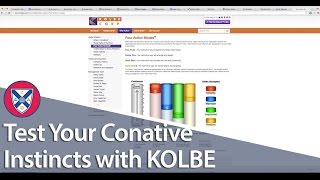
The Kolbe A Index measures conative abilities, your instinctive actions and striving instincts, separate from how you think or feel. The speaker walks through personal results and explains how the test reveals patterns useful for team dynamics and self-understanding.
One other thing that was really helpful, and I bring it up because it is. Because it's really valuable for your team as well, is Colby. It measures conative ability. So there are like three parts of your brain. I'll probably mess it up, but there's cognitive, affective and conative. C O N A T I V E. And this Kolbe test, and this is where you would take it. You would go to kolbekolb e.com and take the Colby A index. I recommend everyone take it and potentially have your spouse take it and significant team members take it and you can do a Colby. What do they call it? A Colby A2A. So I had already taken it and Julie took it for this event and it gives us an A2A report. So you'll get. You'll get your report. So I'm a. There's fact finder, follow through, quick start and implementer, and I'm a typical entrepreneur. As a quick start, the report is very, very detailed and helpful and just insightful as far as who you are and how you show up. And the whole conative sort of the three parts of the mind. One being cognitive, which is kind of your intellect and your skills. The affective is your feelings and your personality. That's the feeling. So the cognitive is thinking and. And conative is doing. So it's your striving instincts and your actions. So it's something that, you know, Disc is more feelings and personality where conative is more striving instincts and actions. And disc is not cognitive. So some people think, oh, they have a good disc and somehow their intellect or skills, that's not what disc is. So disk is more effective. So this is just a very cool test. And so one thing on the A to a report. So we each took the Colby A Julie and I did, or you and an operations manager can take it and you can get them compared to each other. So, Julie, let me see if they have like an overview here real quick. Hold on a second. It's 50 bucks, so it's not cheap. But let me see here. They also have it for youth, which is very cool. Okay, the four action modes. So hopefully this brings up a chart. Okay, so here. So the fact finder, this is the instinctive way we gather and share information. Follow through the instinctive way we arrange and design quick start. The instinctive way we deal with risk and uncertainty. So I'm a very high quick start. So I'm very tolerant with risk. And Julie has a low quick start and a high fact Finder. So she really wants to dig in and gather a bunch of information and do a lot of analysis before jumping into something. And I'm a very low fact finder, so where I'm high, she's low, and where she's high, I'm low. So one of the things in the A to a report on fact finder says the worst mistake you could make is expecting Julie to read your mind. And I do this often with not only Julie, but my team. And so just a really cool analysis and tool that. The thing about Colby and the conative, you know, the doing, the striving instincts and the actions is that they're factory installed. So these are part of who you are, and for the most part, you can be aware of them, but you really can't change them. So, I mean, obviously, I'm aware of my quick start in terms of, you know, I'm very comfortable with risk and uncertainty, but I know that a lot of my staff is not. So I have to really temper that and make sure that I slow down and make sure that they understand why things might change or those sorts of things. So just a really, really valuable tool. I would suggest there's probably on some of your teams, there's a few people that should take. You should take this, and you should take this as well. It's $50, but it's a. It's. You'll get a comprehensive report, and it will help you begin to uncover how you. How you do, how you strive and how your actions show up in the world.