The Vicious Cycle of Pouring Into the Wrong People & How to Break Free w/Gary Rodriguez
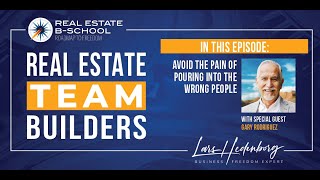
This is a ~30-minute YouTube interview (June 2022) where Lars Hedenborg interviews Gary Rodriguez (CEO, Peopleistic). Rodriguez (35 years in people-leadership work) explains how wrong hires drain leaders and damage culture, and presents a psychometric solution (the Tauscher Max assessment) that creates custom "success patterns" from top performers to screen candidates. He stresses seven deep personality traits used to predict job-match, the high cost of replacing talent, and leader-focused remedies: being the hiring gatekeeper, personal values/mission alignment, ongoing training, and creating a culture of caring and trust. Practical takeaways include a five-step values-identification exercise and the recommendation to interview more candidates and use deep assessments to avoid pouring energy into poor matches. Contact: gar y@peopleistic.com (gary@peopleistic.com) and peopleistic.com. (Guest cites coaching ~11,700 people globally.)
Questions this video answers
About 11,700 people worldwide.
35 years.
The Tauscher Max assessment.
Profit through People with Passion and Purpose (referred to as Humanistic Profit through People with Passion and Purpose).
gary@peopleistic.com; peopleistic.com
All right, welcome back, real estate team builders. It's going to be a great episode. I've got Gary Rodriguez, who's the CEO of Peopleistic here in the US of A. And I had the pleasure of working with Gary in our highest level real estate B school. It's our boardroom members and these guys and girls are running, you know, businesses from a million to 5,6 million in GCI, which in our industry is like, these are big businesses. And we were chatting before I hit the record and Gary, I'm going to let you kind of brag on yourself for a little bit, but something like, you know, I don't know how many over 10,000 people you have coached and 35 years doing sort of this one thing. And I really always, and I say this lovingly, but you are like the biggest nerd there could possibly be when it comes to this area. And you said it. And this will be the overarching sort of theme of the conversation. A lot of the work you do is to help business owners and leaders avoid the pain of pouring into people that don't perform. And you have got assessments and you have got all this cool stuff that we can talk about. But first give us just a couple minutes on you and your background so you hook us in and we are going to watch every minute of the goodness that is to follow.
Okay, great. So hello everybody. It is really good to be on the call with Lars. We haven't spoken for a bit, so it is good to reconnect. And yeah, I have been doing this for 35 years, hence all the gray hair. And also, you know, I've coached about now to date about 11,700 people worldwide and I focus primarily in large to mid sized businesses, a lot in real estate brokerages as well. There is a common theme that runs through all organizations and that is it's pretty hard to find good people. And so your, your talent management has to be pretty slick. You have to have some competenc in your culture that include ongoing trainings, building trust. We look at the really important competencies of integrity, belonging, creating a culture of caring. That's just a few. Our company is published by Bloomsbury Publishing House on this very subject. The book's called Humanistic Profit through people with Passion and Purpose. It is a really important book on the structure of how to create culture. But one of the main places, the gateway to the culture is always who's doing the hiring, how good are they at being able to select the right candidate for the right position. And because when you bring Someone into a team, they either act as a massive asset or a massive detriment. And I've seen so many real estate brokerages saying, you know, like, we're, we're hiring now, we're bringing in agents, agents are approaching us, become part and parcel of our team. Then they pour in training, they pour in their culture, they do the onboarding, they do all of it. And then the individual doesn't perform. And the people at the top that are actually doing the training and the managing just get burned out by having a sense that this person's never going to perform. And yet I'm pouring all this energy into the. And then they start to become disengaged and less loyal and want to have even a higher attrition right there because they don't see the point in adding numbers to the team if the team isn't going to perform. So I worked very hard over the years to come up with a solution. And I was recruited by a assessment company that does psychometric assessments on job matches on the deep dive personality traits that are deeply hardwired into us. Now, this is not. These are not disc assessments. Disc assessments are based on behavioral profiling. These are based more on the. On the deeper dive, hardwired unconscious patterns that you will never discover in an interview or in a series of lunches or however you would sit down and do a fundamental personality assessment. It's never going to be revealed there. You have to go much, much, much deeper. So the Tauscher Max assessment is the assessment that I utilize. I'm a registered distributor of that particular assessment. But what it does is that it gives you. You can create custom success patterns which are kind of like algorithms. You take your four top performers, let's say a luxury agent, you take four top luxury agents that are the performers that are really crushing it. You condense their personality traits, and it turns into this sort of success pattern that we can use that is a custom success pattern for you and your team. Then what we do is we take candidates that are applying to be part of the team and we analyze those candidates into that success pattern. And you'll see then that whether you are hiring a person that's a 97% job match or whether they have a lower percentage job match to those top performers, which means they're going to be a lot of work and they're not going to perform to the highest level that's going to match your top performers. So this way, when people say, oh, gee, I Wish I had 10 of those guys, well, now you can actually have a system that you can get 10 of those guys because you can analyze whether they have the unconscious patterning of personality, whether they have the ability to take charge, whether they have the competitive edge where they have a sense of urgency, how quick are they on their feet in their thinking. So which is your reasoning ability? It shows you the manageability of them. Whether they're going to be a renegade on the job or they're going to follow policy and procedures and training suggestions from top performing agents, then you have their people contact. If they're really low on people contact, they're going to be way introverted. So you want to make sure, especially in a high performing job, you need to be more extroverted. And then you're going to have attitude. It'll measure whether they see the glass half empty or they see it half full, whether they're going to be filled with optimism or filled with always throwing out risk assessments. So we have these seven personality traits that gives you the very deepest insight into them. And I can look at those, how the scores come out. Well, first of all, the assessment gives you the percentage job match to a high performing luxury agent or high performing real estate agent. And if they are a high job match, you can better bet that the energy you pour into them is going to actually bear great fruit. And if they're a lower job match, it's less of an opportunity for you to avoid that risk of pouring energy into someone that is not ever going to perform to the level that you would want them to. So ultimately, at the end of the day, this is how you safeguard your culture. This is how you safeguard your own energy to not be exhausted by building a team. Because then you have people who will take the ball and run with it and you can sit back and give them the training that they need, of course, to blend and be in your brand. But without these type of assessments, you're hiring blind. They may interview great, but you're hiring blind.
Yeah. So let's, so let's take a step back a little bit and you just mentioned a little bit. So let's talk about a typical, meaning they don't have this area completely dialed in. What do you see typically in a real estate environment with you know, say the owner or the executives or the people running the show? So let's talk about those areas. So this is listening can kind of identify like oh yeah, that's me, that is me, that is me. And then let's talk about what it looks like on the healthier side. Once you get alignment with these seven, all of the stuff you just talked about. So what does it look like when this is off kilter for a company?
Yeah, what it looks like is that your leadership team becomes exhausted. That's what it looks like. The broker becomes more frustrated and more frustrated and more frustrated. Remember I mentioned the cultural competencies. Some of them are culture of caring, culture of communication, culture of loyalty, culture of trust, ongoing trainings. And what is really important is that how the leader shows up in a team is what the team models. So if the leader becomes so depleted in their energy, so discouraged by the lack of performance by the team members that they have poured coaching into, then endless amounts of hours of trying to help people perform and they still don't, what the leader does starts to slowly dwindle their motivation. Not only does it dwindle their motivation, it dwindles their emotional bandwidth. And they become more uncivil, more short, more curt to their team. When that begins to deteriorate, when the leader begins to deteriorate their own leadership capabilities, the whole team will begin to model that. They'll become disengaged, they'll become less loyal, you'll have higher attrition rates. And it all comes back down to what is the culture that the leader is demonstrating. I like to use this kind of metaphor. Running a team is much like being a parent. The kids are going to model you the best qualities and the worst qualities and they'll demonstrate that amongst each other. If there's incivility at the top, there'll be incivility laterally. These are some stats from the Marshall School of Business. That incivility in the workplace for low level employees, let's say they're not making much, but it takes like a person making 30, $50,000 a year, it takes $16,000 to be able to build that person back up. To not only build them up, but to replace them, it takes about 16 grand. But when you go up into the higher echelons of your organization, a mid level employee, it takes about 150% of their annual payout to actually replace them. At a high level, about 400% of their annual payout to replace them. So there's a lot that can go in to high attrition. And it's my opinion it's a little bit of a secret bleed out that most organizations never calculate. So we have to be really careful that it's costly. In the real estate industry, it may be a little bit different, but it's costly to replace your top Talent. So you want to make sure that the culture stays as good as it can be. But that's going to begin with the mental emotional management skills of the leader. They don't keep the emotional bandwidth. They don't have incredible communication skills. They don't have the ability to manage their own emotions well, you're going to have incivility, and you're going to have disloyalty and a lack of caring as your culture. Incivility coming up more than it should. And that's when your. Your sales will start to drop.
Yeah. So it's almost like it's a really vicious cycle. Right. So you're coming in there, and I'm just thinking of me in my past life in leading and the running the everyday of a real estate team, where you're coming in there, you're like, all right, I'm going to set the tone every day. I'm going to bring my energy, I'm going to model excellence. And then little by little, you have people sort of like, you know, not showing up the way they should, or a bad hire there that stays three months but sucks the life out of you. And then you got to hire another agent, and you're like, man, I hope this one works out and you give them less love and less time because you just got burned on the other one. And slowly, and slowly and slowly, you as the leader, there's only so much energy, there's only so much enthusiasm we could bring to something that constantly sort of hurts us. So let's talk about what have you seen? So let's say someone is listening right now, and they're in that world. I know team leaders right now, and I'm thinking of one of the largest national franchises who's been through, like, three CEOs in the last five years that you probably need to call and maybe help him out. But let's not talk about that one right now. But someone that's listening right now that's in this sort of potentially vicious cycle. How do you turn it around and create this more virtuous cycle where, okay, I'm feeding into my people and they're growing, and then I bring on a new agent, and then those agents help them grow, and it's. What advice would you give? Let's break it down with some tangible things we can tell someone who's in the rut right now.
There's so much I could say about that. I'm going to be very general first, and then I'm going to drive it deeper. The first Step is you manage your culture by who's the gatekeeper of your culture at the point of hire, you have to know who you're bringing in, whether you're bringing in a virus or whether you're bringing in someone that's going to be high performing. That's the very first step because that begins the cycle, cycle of despair, of making wrong hires and wrong hires until the leader becomes so there's only so much you can be betrayed. You know, I know it doesn't look like betrayal, it's not normal betrayal. But when a leader goes, I want this team to thrive and flourish so much, I want everybody to be really successful. And yet people go, well, I don't really care about that, or I don't have the same vision for myself. And they continue to betray the vision of the leader. The leader becomes disenfranchised. So that's the first step. But the deeper level is that the leader has to look at the organization is a reflection of their own thinking and how they live their own life. Being an entrepreneur is probably the most powerful mirror you can ever look into because the results you get or don't get it is a reflection of what is missing inside your own belief system. Your misaligned values, your lack of dedication to your, your mission, your inability to actually grasp the fact that every word you speak, every thought you think is either worshiping at the temple of your success or worshiping at the temple of your demise. So we have to be able to hone our own ability to create our reality in a way that has us one, pointedly focused that we are the sole person that is going to take ownership of our success and we own it. We walk into our businesses every day and we train that same aspect of everyone stepping out of the drama triangle of I'm a victim, there's the villain now I need a hero to More the creator triangle where we are creating, we're creators of our own success and we are solely accountable for that. That has to be trained from the top down, the bottom up, and laterally throughout an organization and throughout a team. Because people have to step up. And if they can't, and many of them won't, if they don't have the innate personality traits, they won't be able to. They do. They'll be able to really be a rock star. But it's about training from the top down and the bottom up. People have to have the same skills. They don't have deep enough personal development skills to be able to have them go to that next level of their success. Personally, I believe that leaders are responsible for educating their teams on how to be a highly functional human being. Now, many co organizations won't do it, but what I am saying is if we are going to create a culture of belonging, integrity, interdependency, trust, loyalty, caring, we have to invest in our team members through a series of trainings. I mean, I started my career 35 years ago working with death and dying, and it was about how to create change in a very fast way. Because I launched my career in the AIDS crisis and there were people that would be diagnosed, they were a skeleton in three months. I didn't have time to sit down, talk with them about their family of origin history. They needed change very rapidly. So I started studying NLP and hnlp, became a master trainer in both of those disciplines. And so there's many, many, many different systems to help people wake up to a new depth of leadership. And that education has to be given.
You're right, there is. Before you hit record, you're like, man, that's a lot to cover. And it's, you know, less than 30 minute podcast episodes. So there's so much good stuff in there. And in particular, like. And part of me doesn't even want to go there, go where I'm about to go, but I'm going to do it anyway. It does seem like it is less and less. It's, it's harder to find people that are willing to show up. And I don't know if it's a real estate thing or if it's a cultural thing or, you know, and maybe it's just now we need to screen through 200 applicants to find one or two versus it used to be 50 to 75 when I was in the game. So part of me wants to maybe go down a little bit more into that, but then another part of me, based on what you said, is like, what does a leader do tactically every day to put themselves in the right mindset to go in and fight the good fight of being a business owner? You choose, which way do you want to go?
I believe that you have to interview more people to find the right people. I do believe that the generational impact and the generational differences is part and parcel of this. Kids are way more disconnected from themselves than they probably ever have been. Not all, but some because of social media and all the electronic devices that they're totally locked into on a daily basis. The leader, excuse the language, really has to get their shit together. They have to have a Personal alignment. They have to align their teams into a dynamic vision. They have to be able to show the pathway to that vision, the actualization of that vision. Each person on a core team has to be able to get to their own alignment as well, because everybody needs to be in the boat rowing in the same direction of the vision or they get to be left off at the shore so they don't take up dead space and someone else that's willing to row gets in that space. Because unless that begins to happen, we are going to have a team of codependency, People who are angry. Someone's getting away with all kinds of stuff. No one's producing, which creates an impact on everyone else, because you're all trying to make these targets, but other people are not pulling the weight. And people get to the point to where they will, they will. It's almost like, like, like oil in a pan. It will go to the place that is sometimes the lowest part of the pan. In other words, we want to be able to rise up the medium performance so people know that this is the mark that we're attempting to at least always maintain. But this is where we want to go. If you have low performers on a team, it just deepens that well that people can drop into. People will generally go to the level of the lower performers because it's always easier to do less. And it's really important that we have as high performing personalities on our team as we possibly can get. People are motivated and they're driven and they care about one another and they want the whole team suit to success, to gain success as well as themselves. When you have that, you have a much more dynamic place where people will not leave. I've worked with brokers that literally team members have come up to me during trainings and go, I will never leave this team because I love this. I love the broker so much because of what he does in the community, how he showed up for me, we had floods and he came in a boat to my house to get me and my kids. I mean, that is a leader that rocks up for their team. Those kind of demonstrations win the heart, the soul and the spirit of their team like nothing else will. In other words, the leader has to be a selfless leader to grow in that unconditional caring. Now, the leader can't do that if they're constantly being betrayed by low performers and no one's reaching their marks. They can do that when there is a reciprocation of effort and love and caring not only for the team by each individual member. But, but to honor the broker as well for the sacrifices that they've made to build it.
Yeah. And it also brings up. And leaders for sure can't show up that way if they're overwhelmed, distracted and stressed. And in my world, a lot of the team leaders, because they don't have the right team members, they're not holding them accountable. They're not stepping up and selling and doing what they could do. The team leaders are in production themselves to make a reasonable amount of money to take home to their families.
Exactly.
So they're like a real estate agent. They're like sort of leading and managing people, but they have no bandwidth or margin to step up and lead on a daily basis. Any, you know, resource or ritual or you know, anything like a tip or a trick that we can give a leader on a daily, weekly basis or that.
So this is what I would, I would recommend. And then I want to say one more thing, that the secret cost of all of this is a leader goes home to his wife and children, has nothing left. The leader has no place that's a sanctuary. And that further diminishes them and further creates anger towards the team members that do not produce. It just continues to rise, this level of intolerance. And that destroys the team and that destroys the leader as well. But back to your question. Yes, I mean the very first thing I would suggest is to start the steps of getting personal alignment. Go on the Internet, Google examples of personal values, there'll be maybe 60 to 80 personal values identified, print them out, mark off 20 of those values. That would be the most important values to you. Once you have them marked off, I want you to study those 20 values and mark off 10 of them. So 10 that are remaining are the most important values to you. Then once you've marked off 10 as less important and identify 10 that are most important, sit down and study that 10 and mark off five more. Leaving you with five top values that drive your life that you could not live without. And then create a mission statement, a personal mission statement that those top five values are in. When you lead a value driven life and you create more alignment. Because where people's self esteem nosedive is when they are betraying their top five unconscious values. Because when they betray their values, they don't like themselves and it's not even a spoken thing, they may not even be consciously aware of it. They'll just do behaviors and walk out of that environment thinking, God, I don't feel great, I don't like I don't feel uplifted. I don't feel congruent. And they'll be with a little bit of guilt and a little bit of sadness. Get your behaviors, your word, thought, and action in alignment with your top five values, and that will help you tremendously. Now there's a whole system of contrastive analysis to get to them. That's done more in a facilitated process. But to begin with, you can get pretty close to it by doing what I suggested.
That's really good. And then you said you had one other thing you wanted to cover.
Yes. As far as the tip goes. Well, the thing I wanted to cover was actually about the secret cost, which is the hurt that it causes the leader by having a disconnect and no time for the ones that they love at home. That has to be probably the most important thing that we have to look at. This is why it is so important to do these type of assessments so we can begin to catch it at the very beginning of that cycle. You do that, then things can start turning around.
Yeah, it's awesome. I'm on three pages of notes here, so if you saw me and my head was down. If you're watching YouTube, I wasn't checking my phone or doing something different. I'm literally taking notes. This has been really, really awesome, especially the part about a personal mission statement. You know, having been. I'm just envisioning these leaders that are going in every day and they're trying to sort of lead in this battle of real estate and not having any guiding sort of, you know, with. With a mission statement that's grounded in these five core values that will get you to go in there. And that what you would you say win the hearts and souls of your team members? Yeah, that really is like the essence of that. And that's like, do a quick exercise. Rate your scale. On a scale of 1 to 5, how good of a job have you done in the last three to six months? Winning the hearts and souls of your team members versus, like, secretly, you know, wanting to throat punch them because they're not showing up. Right. You know, you get to the point where you're so far off to the other side, you're like, I can't stand these people. And then they can't stand you. And it's just this sort of, you know.
You know, there is a. This is literally. This is really research that there is an energetic field that issues off the body, 15ft from the body that people feel in your presence. So the brokers walking into team Meetings with this un. This aquifer of resentment. Everyone's going to feel it in the room. He may not say anything. His language may be just perfect and all friendly and all that, but people feel that it's completely incongruent. So you can't hide your thoughts or your emotional states. It is felt by everyone.
Yeah, I remember vividly my GM came into my office one time earlier in the morning, about an hour into my day. And she just comes in, close the door. She's like, are you okay? And I'm like. And everything was okay. I was just in my head on a personal issue and the force field was probably 50ft because everyone, you know, like Lars was off limits, you know, for. For the whole day because of the energy brought into the office. And so I can. I can feel that. Gary, what's the best way for someone to connect with you? Get into your world, read your stuff. How do they get in touch with you?
You can email me. I'll have to spell it out for you. But Gary, G A r y@peopleistic.com and Peopleistic is spelled P E O P L E I S T I C dot com. So, garypeopolistic dot com and you mentioned the book.
What was the title of the book again? It was Humanistic Business. What was the rest of it?
Profit through people with Passion and purpose.
Profit through People with Passion and Purpose.
You can get it on Amazon. It's up if people desire read. It's a heavy duty business book, I'll say that. So don't expect funny stories and all that kind of stuff because it's like, it's heavy duty.
Okay, so maybe just email you. All right, Gary, I appreciate you and your heart for doing this. I said it and I meant it. And I'm very admirable way that, you know, for. For people that dedicate their life to a single thing and serving, you know, in the way that you do. I just really honor you for it and to keep pushing in an area where even more than ever, we decided not to dive into that rabbit hole of like just the world today and disconnectedness and people not getting out and really working and leaders being dragged down with all of that sort of people that just don't care anymore. It feels like complacency and all that. So just appreciate you and the work that you do and keep. Keep up the good work, brother.
Yeah, well, you as well, my friend. Thank you for all the work and all the caring and giving that you've done. And we just have to turn up our lights a little bit lighter when it gets a little darker. That's all.
Awesome. Love it. We'll talk soon. Thanks again.









