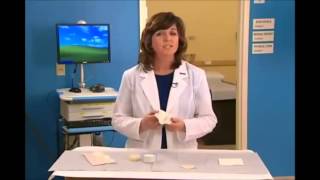
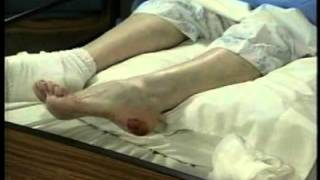
The video provides an instructional overview of alginate wound dressings, describing their seaweed‑derived polysaccharide composition, non‑woven and non‑adhesive physical properties, and high absorbency. It explains the unique mechanism of action where ion exchange with wound exudate creates a soft, moist gel that maintains a moist healing environment, prevents lateral wicking, and can be removed easily with saline. The presenter outlines clinical indications—moderately to highly draining partial and full‑thickness wounds such as venous insufficiency, pressure, diabetic ulcers, surgical wounds, donor sites, and first/second‑degree burns—as well as suitability for infected, granular, and slough‑covered wounds. Contraindications are highlighted, including dry or minimally draining wounds, full‑thickness third‑degree burns, wounds with exposed tendon, joint capsule, or bone, and patients with known alginate sensitivity. The segment concludes with a promotional call to pursue wound‑care certification, noting Medicare accountability and directing viewers to WoundEducators.com.
Chapters
Alginates dressings are made from natural polysaccharide fibers that are derived from processed seaweed. These non-woven, non-adhesive dressings are highly absorbent, soft, and conformable. They are easy to pack, tuck, or apply over wounds of irregular shapes. Because they have no adhesive properties, secondary dressings must be used to secure alginate dressings. Alginates dressings are available in many forms and shapes to suit a wide variety of wounds. Alginates dressings achieve their clinical benefit through a unique mode of action which allows them to absorb large amounts of exudate, up to 20 times their own weight. When the dressing comes into contact with wound exudate, the alginate fibers form a soft, moist, gel-like substance through a process of ion exchange. The gel formed in this way not only helps to provide a moist wound healing environment, but also blocks lateral wicking of exudate, helping to reduce wound maceration. As the gel does not adhere to the wound site, trauma and pain during everyday wear and dressing change is limited. The gel is easily removed from the wound site by irrigation with saline solution. When should an alginate dressing be used? Because they have such high absorbency, alginate dressings are ideal for moderately and highly draining partial and full thickness wounds. In particular, alginate dressings are indicated for venous insufficiency ulcers, pressure ulcers, diabetic ulcers, surgical wounds, donor sites, and first and second degree burns. In addition, they are ideal primary dressings for infected wounds, since infected wounds tend to have significant levels of drainage. Alginates can be used on both granular and slough-covered wounds. The high absorbency of alginates, however, makes them unsuitable for a number of wounds, including dry or minimally draining wounds. In particular, full thickness third degree burns should not be treated with an alginate dressing. What is more, alginates should not be used on wounds with exposed tendon, joint capsule, or bone, due to the risk of desiccating tissue with high collagen content. Some people have a known sensitivity to alginates, and alginate dressings should naturally be avoided in these patients. To learn more about moist wound healing and other key concepts in wound care, you may wish to consider becoming certified as a wound care specialist. The benefits of wound certification are immeasurable, both to your own career and to the standard of care that you can offer your patients. And because Medicare and other organizations are now holding healthcare professionals responsible for outcomes in wound care, there has never been a better time to become a wound care specialist. WoundEducators.com is dedicated to helping you take this all-important step in your career and to help you handle any type of wounds you may encounter in your daily practice.