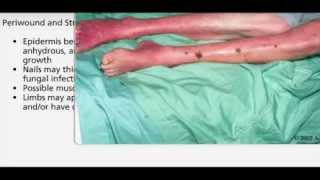
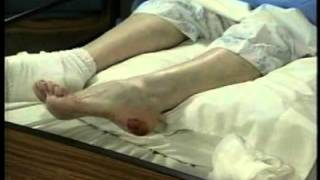
Arterial insufficiency ulcers typically appear on the toes with pale or gray granulation and black or yellow eschar, triggered by trauma and worsened by poor blood flow. Look for thin shiny skin, hair loss, nail dystrophy, and muscle wasting on the affected limb. Minimal drainage and bleeding distinguish these wounds from venous ulcers.
Chapters
Arterial ulcers are almost always located in the lower extremities because of the increased distance blood must travel to reach those areas. Arterial insufficiency ulcers are commonly located on the toes, either dorsally or distally. Trauma is a leading precipitating factor in arterial ulcer development. So potential causes of trauma should be assessed for ulcers located in unusual positions. Arterial ulcers generally begin as small, shallow wounds that gradually increase in size and depth. Ulcers are normally round and regular in appearance or conform to precipitating trauma. Granulation tissue, if present, is pale or gray. Because of decreased oxygen supply. Necrotic tissue is generally desiccated black eschar, but may be yellow if the wound is bandaged in a way that maintains tissue hydration. Gangrene may be present with more advanced disease. Because of diminished circulation, there is minimal or no wound drainage, even in the presence of infection, and only minimal bleeding with wound debridement. Patients with chronic arterial insufficiency ulcers usually show signs of decreased perfusion. When blood supply distal to the occlusion becomes inadequate, many changes occur. The epidermis becomes thinner, shiny, and dry, and there is loss of hair growth. Poor tissue oxygenation increases the risk of fungal infections, making nails yellow, thickened, and brittle. Prolonged severe ischemia may cause muscle atrophy. Color changes may be evident with the affected limb appearing pale, dusky, or cyanotic in color, especially with elevation. The limb may have dependent rubor. Edema is unusual with arterial insufficiency, but if present, may represent concomitant venous insufficiency or congestive heart failure.
To learn more about moist wound healing and other key concepts in wound care, you may wish to consider becoming certified as a wound care specialist. The benefits of wound certification are immeasurable, both to your own career and to the standard of care that you can offer your patients. And because Medicare and other organizations are now holding healthcare professionals responsible for outcomes in wound care, there has never been a better time to become a wound care specialist. WoundEducators.com is dedicated to helping you take this all-important step in your career and to help you handle any type of wounds you may encounter in your daily practice.