A breakdown of pressure ulcer stages from 1 to 4, plus deep tissue injury and unstageable ulcers. Stage 1 is non-blanchable redness on intact skin. Stage 4 exposes bone, tendon, or muscle. Unstageable ulcers can't be assessed until the wound base is cleared of dead tissue.
Chapters
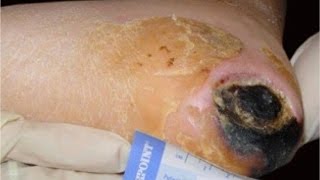
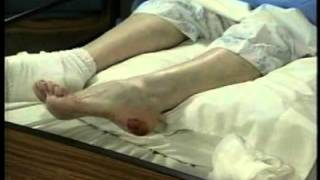
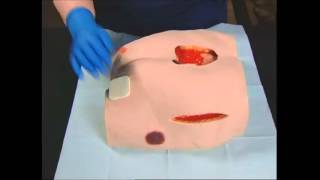
A Stage 1 pressure ulcer presents as intact skin with non-blanchable redness of a localized area, usually over a bony prominence. Darkly pigmented skin may not have visible blanching. Its color may differ from the surrounding area. The area may be painful, firm, soft, warmer, or cooler as compared to adjacent tissue. A Stage 2 pressure ulcer is characterized by partial thickness loss of the dermis, presenting as a shallow open ulcer with a red-pink wound bed without slough. Others may present as an intact or open or ruptured serum-filled blister. This stage should not be used to describe skin tears, tape burns, perineal dermatitis, maceration, or excoriation. A Stage 3 pressure ulcer involves full thickness tissue loss. Subcutaneous fat may be visible, but bone, tendon, or muscle are not exposed. Slough may be present but does not obscure the depth of tissue loss. Stage 3 pressure ulcers may include undermining and tunneling. A Stage 4 pressure ulcer involves full thickness tissue loss with exposed bone, bone, tendon, or muscle. Slough or eschar may be present on some parts of the wound bed. A Stage 4 pressure ulcer often involves undermining and tunneling. Deep tissue injury is defined as a purple or maroon localized area of discolored intact skin or blood-filled blister due to damage of underlying soft tissue from pressure and/or shear. The area may be preceded by tissue that is painful, firm, mushy, boggy, warmer, or cooler as compared to adjacent tissue. A pressure ulcer should be described as unstageable if the base is obscured by eschar or slough. Until enough slough and/or eschar is removed to expose the base of the wound, neither the true depth nor the stage can be determined.
To learn more about moist wound healing and other key concepts in wound care, you may wish to consider becoming certified as a wound care specialist. The benefits of wound certification are immeasurable, both to your own career and to the standard of care that you can offer your patients. And because Medicare and other organizations are now holding healthcare professionals responsible for outcomes in wound care, there has never been a better time to become a wound care specialist. WoundEducators.com is dedicated to helping you take this all-important step in your career and to help you handle any type of wounds you may encounter in your daily practice.