The video provides a detailed overview of transparent polyurethane film wound dressings, describing their semi‑permeable properties that allow oxygen, water vapor, and carbon dioxide to pass while blocking bacteria and liquid water. It explains the clinical indications for these dressings, including minor burns, skin tears, lacerations, abrasions, partial‑thickness wounds, donor sites, postoperative sutures, and IV catheter sites, emphasizing their usefulness for wounds with low to moderate exudate and in high‑friction areas. The presentation walks through the step‑by‑step application process: preparing intact skin with a skin sealant, selecting a film size with a 4–5 cm overlap, ensuring the skin is dry and free of oils, removing the backing paper, applying the film with firm, even pressure, and achieving a wrinkle‑free edge seal. It highlights precautions such as preventing maceration, monitoring exudate levels, and discontinuing use if infection develops. Removal instructions advise pulling the edge and stretching the film parallel to the skin to avoid epidermal damage. The video concludes by encouraging viewers to pursue wound‑care certification through WoundEducators.com, noting the professional and patient‑care benefits.
Chapters
Transparent film dressings are thin, flexible sheets of clear polyurethane incorporating an adhesive coating to one side to allow adherence to the skin. The adhesive reacts with wound fluid to prevent adhesion to the wound bed while allowing the dressing to stick to the dry, periwound skin. Film dressings are highly elastic and conformable to body contours and are suitable for use either as a primary or secondary dressing. The transparent quality of film dressings allows useful visualization of the wound bed. Transparent film dressings have one very important property: they are permeable to water vapor, oxygen, and carbon dioxide, but impermeable to bacteria and water. This means that oxygen is allowed into the wound to promote healing, while the water vapor and carbon dioxide produced are allowed to escape. The dressing also acts as an effective barrier to water and bacteria. It is this semi-permeable nature of transparent film dressings that helps them achieve lower overall infection rates than traditional gauze dressings. Transparent film dressings are indicated in the management of minor burns and scalds and simple injuries such as skin tears, lacerations, and abrasions. They may also be used on partial thickness wounds and donor sites and as a postoperative dressing over sutures. Films may be used on red granular wounds and yellow slough-covered wounds with minimal drainage. Film dressings are also suitable in areas of friction to allow reduced shearing force between the skin and the support surface. Because film dressings are waterproof, they may be used to cover intravenous catheter sites or wounds to allow bathing. Because transparent films are so thin, they can sometimes prove tricky to apply. We will now look at the best way to apply transparent film dressings.
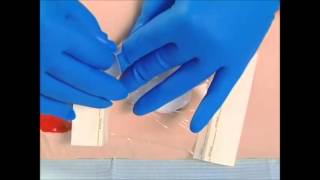
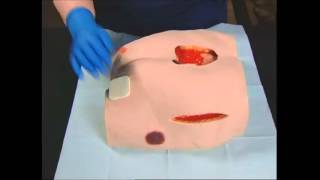
To prevent maceration, a skin sealant must be applied to all areas of intact skin that will be covered by the film dressing. Next, a piece of film should be chosen that is large enough to cover the wound with an overlap of at least 4 to 5 centimeters over the edge of the wound.
It is important to ensure that the skin around the wound is dry and free from oils or cream because these reduce the adherence of the dressing. The bottom backing paper should first be removed and the film dressing carefully applied over the wound. A light but firm stretching pressure should be maintained on the edges of the film to prevent the dressing from sticking to itself. To prevent bacteria from entering the wound bed, it is important to obtain a good edge seal by ensuring that no channels or wrinkles are formed in the film. If the edge seal is compromised, the dressing must be changed. If the edge of the film begins to separate from the intact skin, this area may be trimmed as long as the wound bed remains safely covered. Once the dressing is correctly in place, the upper cover should be removed. Transparent film dressings may be left in place for a week or even longer. However, they should be removed if an increased level of exudate causes pooling under the dressing, as this can lead to maceration of both the wound and the surrounding skin. Use of the dressing should also be discontinued if the wound becomes clinically infected. To remove the film, gently pull up on the edge of the dressing, then pull and stretch the dressing at an angle parallel to the skin, breaking the seal and allowing the dressing to come free. Do not pull straight up, as this can cause damage to the epidermis. To learn more about moist wound healing and other key concepts in wound care, you may wish to consider becoming certified as a wound care specialist. The benefits of wound certification are immeasurable, both to your own career and to the standard of care that you can offer your patients. And because Medicare and other organizations are now holding healthcare professionals responsible for outcomes in wound care, There has never been a better time to become a wound care specialist. Woundeducators.com is dedicated to helping you take this all-important step in your career and to help you handle any type of wounds you may encounter in your daily practice.