How To Find Your Life Purpose With Holistic Healing - Leilah Mirza's Insights
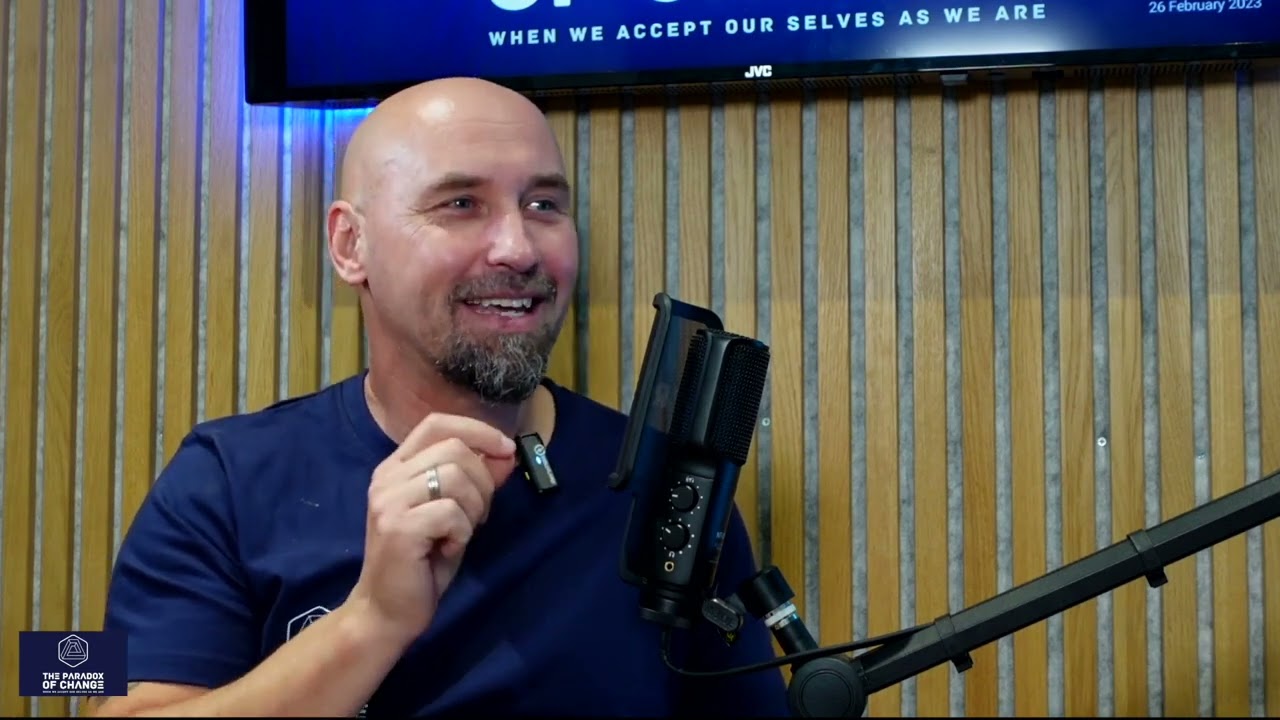
This content was created by Leilah Mirza. This content was uploaded by Leilah Mirza. This is a YouTube episode (Paradox of Change podcast) titled "How To Find Your Life Purpose With Holistic Healing - Leilah Mirza's Insights," published 2023-11-16T16:48:22Z. The recording is an interview-style conversation between host Elliot (ELLIOT) and guest Leilah Mirza, a holistic/integrative therapist and coach. They discuss Leilah's background and approach (inner child work, trauma, abandonment, hypnotherapy, EMDR), themes of self-awareness, parenting and social media influence, healing journeys, and how to find a therapist; Leilah also shares her website for contact. The tone is educational and promotional for the podcast channel.
Chapters
Hi there, welcome to the Paradox of Change podcast and YouTube channel, your spot for everything mental health and personal growth. And we've got just the team for it. We have a relationship and sex therapist with all the juicy insights, as you would expect, a personal life coach to help us level up, and me, a therapist focused on one-to-one support. With over 30 years of combined know-how, we're all about mixing things up a little bit, from chatting with entrepreneurs about their mental health to digging a little deeper with practitioners about how they do their thing, plus interviewing ex-clients with real-world stories. Our first guest today is Leilah Mirza, a holistic therapist working out the south of England. Leilah's had a myriad of radio and TV appearances, even hosting a number of shows helping people untangle their world. I think today's recording is more of a a reason for us to connect more than anything else. We talk a little bit about the POC and its origins, and more importantly, some insight into how Leilah works. I hope you enjoy. We can sound like we're a proper studio then. What do you think of it?
I think it's amazing.
So this—
I love it. Yeah, it's so like technical, but I even love this, how you've done this. Like everything. Yes. Like, you know, your branding. I love how you found your branding. Well, and it speaks. It's powerful.
I mean, that's an interesting point. So the, um, POC, as we're calling it, Paradox of Change, as a classically trained client-centered therapist— and I've got his book up there— Carl Rogers, if you've heard of him. So he's— but yeah, so he pioneered client-centered therapy, and it was just— it was one of his books. He said that He'd noticed a thread that had run through his therapeutic work, which was when a client accepts themselves as they are, the curious paradox is that they change. It resonated because I made it a reference to it in one of my pieces of coursework, and, uh, I think like 4 years into it, it— that the whole paradox of change, it kept on coming up for me. So it was, it was speaking to me in some way, shape, or form. And then working with clients from sort of 2012 onwards has been a genuine recognition.
Yeah.
That when— whether we, whether we exhaust the dialogue of, or the identity that we might have, there is a point where a client will just switch and start making positive changes.
Yeah.
Um, new aspirations. Yeah, doing things that scares them, whatever it might be. So, so that's kind of the reason for it.
Yeah.
And then I was thinking, as far as branding is concerned, uh, I think I just like the colors, the, the kind of royal blue.
Yeah, I mean, I even like this, this universe part of it as well.
I can't remember where I got that original image. I did the— the graphic was interesting because, you know, ChatGPT. Yeah, yeah, where you can just, you know, talk to AI. Uh, I asked ChatGPT and another app, um, what images were conjured up with, um, the, the par— um, the word paradox, and nothing came up that was any use at all. And then whilst doing a bit of a Google search, you know, I, I can't remember the artists, but it's the, the infinite stairs, those pictures that, you know, could be upside down and And that's what came up with the paradox. And then, and I was thinking about that kind of evolution of going around and around, sort of accepting ourselves as we are. Oh wow. Um, I worked on quite deep.
Thanks. I love it.
So, so that's where it came from.
Yeah, I love it. Very good.
There might be some tweaks to it, but certainly, certainly for the meantime and where we are at the moment, as I say, there's 3 of us in this, so Wow, you like it?
You should just trust this process. This is just a start.
Yeah, well, you have to be a permanent, a permanent guest a few times a year. So if we think about, um, your background, right, and who you are, let's say pretend you've never met me and we've got our audience listening, uh, tell me a little bit about sort of who you are and how you became Well, explain to me your, your therapy, cause you're, you're an integrative therapist or you're a holistic therapist. Is that kind of your type?
Yeah. Yeah. Um, and the reason why I call myself a holistic therapist, it's because I want to move myself away from just being perhaps a child therapist. You know, as I may have said to you before, that therapy is such a big word.
Mm-hmm.
Um, and holistic to me means working on mind, body, and soul. I want to focus on the whole person, their whole character, to what's made them the way they are, from understanding their childhood, understanding their character, their human design, basically, to what have led them to the path.
How long have you been doing this now?
So I started in 2014, same as me.
Yeah, I qualified 2014.
Yeah.
And started the journey 2010.
Yeah, yeah, yeah, yeah. I had this, I just had this this deep desire. I always loved people from, from a child, you know. I was what they call like an empath, you know. Yeah, I always, I was quite empathic. When people would speak, I'd always look at them on a deeper level, trying to understand them, you know. So I loved working with people, and it was until 2014 something clicked and said, you know, you need to help people, you need to get to work with people to understand people on a deep deep layer.
What did you notice then in you that you thought that there is more to this than just like, yeah, so you've got a natural gift, you connect with people, but what was, what was like that, what instigated that I can do more?
You know, because I think as a child I was searching for someone and I basically became the person that I was looking for.
You became the go-to person.
Yeah. For me. And I thought if we can open that light bulb in anyone else, I'd be the one who'd happily do this for people, you know. So, um, I noticed who— I noticed my power more in helping people. Not my power, because I don't want to own it, because I feel like we have— we are catalysts. We, we open the path for people and we show people their potential. So I don't want to say like, hey, it's because me, I'm the guru, I changed your life, because I don't believe in that. I feel like we are catalysts in people's life and we meet them at certain places where they need, need us, you know.
So would you say your kind of your demographic of, uh, the clients that you, that you find, how do they, how do they manifest themselves? Where do you find the people you want to help?
When I started doing, doing therapy, I realized that therapy is a very broad term.
Well, we're just talking about this.
Yeah, exactly. I mean, you could be, um, a child therapist, a play therapist, a sex therapist, or whatever therapist. So I needed to understand who do I really truly resonate with and why. And that became my messaging.
Yeah.
So the people that I truly resonate with is people who's gone through trauma.
Yeah.
Um, or people who perceive themselves as a trauma, because our sense of perception are all different. You know, that 69 thing, the way you see 69, maybe 96, I may see a 69. So, um, that's how I started defining my niche with working with people. It's people who's gone through trauma and mostly people who's gone through abandonment trauma.
You must have. So through that journey then, you've, you've become, uh, you've got a qualification in hypnotherapy, is that right? Yeah. And, and you are a therapist as well. And there was something else that was Um, that was the one. Tell me a little bit about this inner child work, because I, I'll be absolutely frank with you, I don't know much about it, and this is my opportunity to learn. So, so what is inner child work?
Inner child work is when we go back and meet ourselves at that age that we were fragmented at. So we all have an inner child. So we have the chronological inner child and we're the biological, um, child. So we have to make sure that they are algamated because 90% 80% of our subconscious is programmed based on our childhood experiences.
Okay.
Yeah. So, um, basically what I'm trying to say is our responses, the way we, we carry on in the world, is based on our stories that we have formed.
Yes.
So if we have gone through, for example, like a trauma as a child, let's say about Perhaps, um, let's use this one, finance.
Yeah.
Maybe we grew up in a childhood where money was a struggle and there was a lot of scarcity and there was a lot of fear around money. And as we become older, we have this fear around money, or we kind of manifest this in our lives that we tend to have this distorted relationship with money. And this is because we have some beliefs that's been formed in our childhood.
Yeah.
So Our stories that we form, or our unhealed parts of us that we have formed, are based on our childhood. And that's the inner child work that we do.
So that was a good example, sort of the, sort of the financial side. It actually resonated with, with me. I think when I was a young man, there was, you know, as far as my family is concerned, they were fairly well off. So I didn't earn the respect of finances. It's only until I was out in the big wide world later on that I had to have a better quality relationship with it. So that kind of makes sense. But you're talking about any kind of distorted perception of what we think is— yeah, it's not for us to say whether somebody's reality or not, but it's certainly something that we can see if it's affecting somebody in a negative way. Yeah, kind of look at that and then kind of calculate where there could be a better relationship with you said finances, or themselves, or family, or health, or even love, you know, even love.
And I think this is one of the big things that I find with working with people, that your love story can sometimes be based on your childhood's perception of love story. Yeah, because as children we actually born like a blank canvas, and us as parents, we start installing beliefs on our children, like, oh, don't go there because if you walk that side you're gonna get hurt, or the, the snake will bite you, because child doesn't know that the snake is going to bite, you know, but we install these beliefs. So our love story can also be formed on what we perceived as what our parents shown each other, perhaps. So for example, what my mother shown my father, what my father showed my mother, could have become my love story. So just for like an example, because I know I use this in lots of interviews, right? So my father and my mother I was born in Cape Town, South Africa. Yeah. And my father is, is mixed, mixed race. So we, we're classed as like coloreds. So it's okay for us to use this term in South Africa. Yeah. It's not actually offensive. So, um, they're very strict, you know, and they, they can be quite possessive. So my father was quite strict. He was quite possessive. On some level, it could be as quite seen as controlling. So I would then form relationships with males.
Ah.
Would be strict and possessive and controlling. That's normal, because to me that was normal, and that was what love looked like. Even so, that was not true, but that's what my subconscious mind has saw what love looked like. So I based my love story on that. So even so, I didn't want to recreate those relationships. I didn't want to be in a relationship with a man who is perhaps violent or aggressive, or perhaps, um, controlling and abusive or, you know, unhealthy in some toxic ways, I was manifesting that because it was safe. So the brain sees what's safe, even so it's not healthy, but it's what's known.
And it's interesting you're saying about manifesting. We do, whether we realize it or not, if we think negative, we breed, we evolve into a negative mindset.
Yeah.
And we attract it.
Yeah.
And it's so true in the opposite term. You do, if you think positive, which is a hard thing to do, it's a, it's a gradual shift into that way of being, positive things do happen.
Yeah, yeah, yeah, absolutely. Because in our life, 80% of our mind— 80% of our life is based on our mindset. And then the rest is, is 30% is based on action. So it all really starts in here. So a healthy mind's a healthy life.
Definitely. I've, um, I was just thinking about sort of some of the client work that I might have when we talk about some of the, uh, self-concepts that young— that someone might have from a very early age. And then you hear some of their history, whether it might be a critical parent— can't do this, can't do that, can't do this, can't do that— having that drummed in every day. And then I'm sat with this lovely human being.
Yeah.
And they are repeating word for word, oh well, I can't do this, I can't do that. Yeah. And it is just evolved into the next demographic of that family unit. The—
yeah, yeah, yeah.
It's, uh, it's hard to, it's hard to see, but also get— I feel a lot of value when that person can start to— client-centered therapy, one of the, one of the core components is being congruent. So being okay with not being okay, being compassionate, being comfortable, and holding yourself accountable more than anything else. And I like the fact that when, when I can have— when I can replicate a nice safe environment, positive, uh, way of being, um, open and not scared of change, all those kind of things, saying you evolve into this nice comfortable conversation they start to recognize how that fits in with their own self-image.
Yeah.
And they start to go, actually, I'm, I'm not seeing this right, am I? Or I'm not— my history is coming into, into play. So I'm not a bad person, I'm not an ugly person, not a fat person, I'm not this. It's just that that's what I've been told.
Yes.
And you must— that, I guess that's, yeah, in part some of the child— I'm trying to connect the dots here with your inner child work.
Yeah. Because that's what, that's ultimately what people are seeking. Yeah, people are seeking connection. Humans are born to connect.
But it's hard to change, isn't it?
Exactly.
And we were only talking about this when we're having a cup of tea just before we started. If, um, you have two kind of individual— two kind of people— the ones that are holding themselves rigid, their, their identity, terrified of change. So they might be aggressive, they might be abrupt, they might be— they might have absolutely zero self-esteem. Versus others that might be a little bit more empathic. Yeah, as you were saying, but they at some point they hold themselves accountable to a shift or a change and then they go, I'm open to that change, I'll come to therapy.
So yeah, I think it's like it's a journey. The world is basically, we're on a journey and I think sometimes not everybody is ready to go in there and that Could be because it could be too painful, you know, for some people to go into those, those to become internal, to become internal. It's basically taking accountability, you know, it's going and—
that's a big thing.
Yeah, absolutely. It's a big thing. And not everybody is truly ready to take accountable, accountability for things. And I've seen this and even in therapy, there are some people who go, I want to heal.
Great.
Yeah. And there are some people who really want to heal.
Yeah.
You know, some people are really looking to do the deep work. And I mean, this is called secondary gains. I don't know if you've ever heard of this.
No, tell me more about that.
Secondary, secondary gains trauma. It's basically when we, we want to heal, but we hold onto our trauma as well because we are gaining something from having that trauma.
'Ah, okay, I understand that.' It's a bit like, um, trauma bonds, when you have two individuals that become best of friends or lovers or whatever because they've both been through the same trauma.
Yeah, it's like going to a park and saying like, um, 'Hey, my husband went and neglected me last week and he's done this,' and then another lady goes, 'Yeah, my husband too.
Oh, let's have coffee.' Yeah, let's both revel around in this trauma together. It makes me feel good. Yeah, but it's not positive.
Exactly. It's not in aligned, it's not healthy. Um, but you get this with people as well, people who perhaps use their illnesses because it gives them the attention of needing to be loved, needing to be validated. And this is that victim archetype that we have, you know. So people who use the pity story, but there is a desire in some people who really do want to heal.
Maybe this is in part the reason why there's a group of us that have started this podcast, because we want to have— uh, I said to you before, I don't want to sensationalize people, don't put people under the microscope, don't embarrass these lovely human beings that are going to spend some time with us. But I think when, when we think about those traumas and we think about those identities, it is nice that we can, we can bring about those conversations. We can, we can say, well, there's lots of people like this. You don't hold on to the identity. Taking that accountability to then grow is a big step. So I'm hoping that sort of doing these kind of podcasts and having these kind of interviews, it gives— because you're a different, um, modality to, to me. You're like that holistic therapy. I've got a very sort of niche way of working. But it is good that we have this opportunity to connect with people and give them a bit of insight that they might be, they might be trauma bonded to their partner.
Yeah.
They might be trauma bonded to a best friend or even a group of individuals.
Yeah.
But you can hear them reveling in the identity, in the trauma, in the negative mindset.
Yeah.
Because somehow it validates them.
Yeah. Well, like attracts like, doesn't it? Yeah, sometimes. And you know that saying that you are the 5 people you hang around with? Um, I think Tony Robbins may have said that. There are loads of people who may have said this, that you are the first 5 people that you hang around with. So if there's—
I've heard that.
Yeah, yeah. So like, I've seen women who's gone through some form of narcissistic abuse or some form of abuse by their partners, and they form like almost not like a groupie But they form like this friendship with other women who are in a similar, like a support group, but it doesn't actually help them to heal. It actually keeps them stuck on some way because they are not shifting from that. They are staying in that, that emotion, in that energy, you know. So there's no real awareness to pull them out or help.
No, that's common. It's commonplace. And, and It's such a huge ask to shift out of that mindset. It's a, it's a huge ask if you're potentially under the microscope when, you know, the mirror's been held up and then you realize that you're doing something that actually could be quite seen as quite embarrassing or shameful. I don't know, I don't know about the work that you do, and you mentioned it sort of, oh, you know, I want to heal, and I was going, yeah, you know, to me that was like, I kind of got a sense of what you're saying, saying you want to heal and then actually going, I need to change. I'm— because of— I'm going for these type of relationships. I'm recognizing the pattern. When, when you're at that point, then you're open to change. And you must see that as well.
Yeah. I actually think that that is a really brave thing for someone to do.
Yeah.
And I actually think that's really beautiful as well. If someone comes to me and says to me, look, I need to heal because I'm attracting these relationships.
It's that accountability, the ownership.
Yeah, that, that for me, I mean, I get goosebumps because I— sorry, I keep moving your mic. I get goosebumps because I'm someone who's quite positive and I love empowering people in therapy as well, giving people back their power. I love that. It's, it's passionate, it's sexy, it's everything to me. It's like the new version of, you know, it's just so nice. You have power. You should walk this earth like you were made to, you know. And that's what I love to do. So when someone comes to me and say, look, I really just want to form a functional, healthy relationship, I want to stop attracting this, I want to be free, that shows me that they are ready to take accountability. And I can resonate with that, you know. I can say, look, at some point in my life, I looked at my life and go, hold on, this needs to change, and the only person who's going to change it is me. Yeah, it's not the type of man— I'm not going to wait for Prince Charming to come. I'm going to find myself so I'm available for Prince Charming to come.
You know, Prince Charming—
I'm gonna attract Prince Charming because I'm gonna do the work and make myself ready.
How do you think this is kind of playing into our social structure at the moment? Because I'm getting— I don't know if this is the same concept as you, but this is a social media and, um, Instagram, Facebook, um, TikTok, which gives me shivers, but I understand it's got a— it's got a place. But I'm, I'm getting a sense of our society is degrading at a fairly alarming rate, that whole external validation for social media and I don't know if we're being affected a little bit by the US, but it does seem that no one is holding themselves accountable for their behaviour, for the way they think, how they treat people. People are being used more. Are you seeing the same sort of trend? Do you get the same sort of feelings?
Yeah, I do. I also feel like it's, um, it's not really authentic. I think it depends on obviously what you filtered to be watching.
Like sometimes we're being fed artificial intelligence, aren't we? So the algorithms.
Exactly, exactly. But for example, I have children, so if my daughter is watching girls who are doing stuff to them and constantly, that's what she's going to be getting, and that's going to feed into her, and she's going to look at herself as a product of the society where she's at. She's going to try to blend. So it's very important for me, and it's— I feel it's very imperative for us as parents to lead our children into understanding self-love, self-worth, um, to understanding what a healthy human looks like.
I love that. And I'll tell you the reason why. We were talking 10, 15 minutes ago about sort of the childhood and the inner child work, and I was just sort of connecting the dots. We have— and I think this is probably— I'll come back to this— we have an obligation to look after ourselves, to be the roadmap for our children. So if we tell our kids what to do, it has no impact to showing our kids in comparison what to do. It's completely different. So I think there's— I would say there are a lot of parents that might be quite critical of their children to try and show them, or, you know, hand them an iPad or a phone, and then we're at risk having our kids being brought up by the internet, which quite frankly terrifies me.
Yeah. Well, amazing. I want to clap my hands to what you just said. We should be— take the responsibility and we should take the lead on how we're raising our children because we want to raise children as empowered. And especially in this, um, in this world right now, you know, where we are right now, like everything's so advanced, you know. I'm sure now you have choices that you can make without your parents at a very early age, you know, that you don't really—
what they're exposed to.
Exactly.
So easy to press, press a button and then you go down a rabbit hole.
And they are not even developed. Our children are not fully developed to make these decisions, which is scary. So this is why it's so important to have healthy parents and conscious parents who are self-aware of what's going on around.
Your— what's your interpretation of self-awareness?
Self-awareness for me is about going inside. It's about going— it's about being internal, thinking first, thinking before you cast a judgment, thinking before you speak. It's much about being present inside of yourself first.
I, I often think about— there's also the element of taking accountability and also thinking about how, um, and having empathy for others so we can have some kind of idea about how we impact others and how we kind of serve other people, how we fit in, how we can be better in our community.
Yeah.
And self-awareness is just— it's almost having a helicopter view of yourself. And I'm being open to any blind spots. And we were talking about this earlier. I like it when, uh, someone, uh, close to me— usually has to be close to me because I'm a bit, a bit stubborn— but if I've got someone who's close to me and they can say, you did this wrong, you did that badly, um, here's some, here's some tough critique, I love it. And it's— and I— but I think in part it's because I'm sort of fairly comfortable in my own skin. But that self-awareness doesn't come overnight, does it? And you must know that from your own work and the work you do with your clients. Self-awareness is once you learn a little bit, there's a bigger gap, there's more to learn.
Yeah.
It cascades.
Well, that kind of shows, Elliot, it shows that you have actually healed quite a lot.
Mm-hmm.
I mean, we are all humans, so we all have a healing journey. I mean, I'm sure there are masters and gurus, whatever, who has a healing journey, you know? So we are all on a journey. But it shows that you have done a lot of work. To become self-aware requires the work.
Mm-hmm.
Someone who's formed in trauma, someone who has grew up, who's quite defensive, you know, it's not gonna take that very well.
And, and I think that's one of the key attributes of someone without self-awareness is the defensive, um, elements that you see sparking conversations.
Yeah.
It's a little, it's a little giveaway, isn't it?
Yeah. And it's that, why is this happening to me? Are you attacking me? Or the constant need to defend when you're trying to have a conversation with— that's a sign really that there needs to be some therapy. Not maybe therapy, but perhaps healing. What I, I don't like to tell people is like, you need therapy. I always like to tell people, perhaps you're gonna go on a journey, a self-journey, self-awareness journey, self-healing journey.
What would you— so what would you say to anyone that is on the cusp of wanting to progress, wanting to find a therapist, or wanting to evolve? If you were speaking to someone that's been in a bad place and they're going, where do I go from here? What would I— what would— what do you recommend me doing? What would kind of be your advice, you think?
I definitely think it's important to find someone that you really resonate with. That you're aligned with.
Potentially a therapist or a modality or with a particular—
yep, with a modality, with the therapist. Um, you should do research. And I feel like we have so much at our hands now that we can do the research with. For example, like, even I'm a therapist, so I will look for the modalities that I feel resonates with me and my clients. So for example, at the moment, I'm doing this EMDR therapy, the training.
I'm glad you brought that up because I was gonna, I was gonna ask you about this.
Yeah. But I would only do it if I know that it'll be as useful towards my clients for me, because most of my work is based on going deep, diving deep. Tell me about your childhood. Tell me about your relationship with your mother and father. What did you witness? How did you feel? You know? So most of my work is basically going back and digging into the child work, inner child work, and being almost like the perspective, then finding out what has happened or where they formed the interpretations. But then I have children, I mean adults, who has perhaps been abused or have, um, have gone through some form of traumas that I know that EMDR therapy will help them through the process.
So tell us what, uh, EMDR is. That, did I get it right?
Yes, eye movement Right.
So it's rapid eye movement, isn't it?
Yeah.
Yeah.
It's eye movement desensitization.
Right.
So basically when we go through a trauma, say for example, we sit outside and a man walks past and he starts hitting his wife. What a silly example.
But anyway, no, it's a good example. I've got the image in my head now.
Yeah. So you see the image, but what is, what you, what your eyes are seeing. So your eyes are seeing the image, but It's, it's sending the feeling to the brain. It's, it's feeding the brain with the emotions. It's giving you feelings. It's giving you memory, right? So that's what happens because the eye's connected to the brain. So by doing eye movement, we are trying to remove the feeling from the event because history cannot be cleared. History cannot, we can't cancel history, but we can change the feeling. Mm-hmm. Because feelings is what gives us a story. And humans usually really rely on feelings and emotions a lot more. They hold on to feelings and emotions a lot more.
I think the story thing is, is something I might say in, in in our therapy work, you hear the story when a client first comes to spend some time working together with me, and the story might go on for a couple of weeks. It might be— it might be on repeat mode for quite a few times. And then, then it's uncovering very quickly that they're just stuck in this loop. Yeah. And it's lovely when you have the opportunity for them to go, okay, I'm seeing the pattern. Yeah, seeing what I'm holding on to that actually isn't my identity. I need to hold myself accountable for this because I'm holding on to it. I'm not letting go. And then we kind of explore the— well, what are we holding on to? Ah, my identity. Yeah, who I am.
Yeah, yeah. But you see, when, when you go through that story with your client and you ask your client, you know, how does this make you feel? And what does that make you? So if, if my client usually has gone through a trauma, I said, and how did that make you feel? They will tell me, I felt unlovable, or I felt like unheard. And what does it make you? It makes me nothing. So they use that one story and that one story branched out into so many things.
That's the narrative of how they live from that point onwards.
That's the narrative. Yeah. And that's why I said humans hold onto that narrative.
Mm-hmm.
Humans hold onto that, that feeling. So when we work with, with the inner child, we say, take me back to that time. So it's a bit like regression. Yeah. Take me back to that event. What happened? So what happened when you had your first memory about money?
Mm-hmm.
Right. Oh, there was debt collectors by our door.
Yeah.
And I was really scared. What did it make you feel? It made me feel like we are gonna be in trouble. Mm-hmm. You know, and what did that do? If you keep digging into those, You can see how all these beliefs started to happen, stack and stack and stack on top of each other. And those beliefs becomes a narrative for the current life.
And it doesn't play out very well when you're trying to be a grown-up and an adult where you've got bills to pay and you've got a job to do.
Exactly. And then, and that's why we have a lot of broken adults who are still recovering from their childhood. But it doesn't necessarily make it like you're broken because I think that It's just the space that where you are at. We have to meet people where they at. To some people, I would ask them, do you have a trauma? Have you gone through a trauma? And they're gonna go, no, absolutely not.
Well, and, and we don't know what we don't know. You know, there's, you know, I, I don't think I have a client that comes to me who says I've got this exact problem, cuz it's never the one that we end up working on ever. So it's, uh, it, it's, it's very clear that we might have a perception, maybe it's that the self-awareness thing kicks in. And then we start to maybe— yeah, inner child working, those things can come out and you can start to connect the dots as to why you're holding on to a persona or why you're holding on to a hurt or a feeling, because it makes us feel, strangely enough, safe. Because it's, it's the better option of safe versus going out and doing something which is terrifying in the big world.
Exactly.
I'm curious, exactly how do you look after your mental health?
I'm, I'm quite self-aware as well. Yeah, I've come to the point that— I mean, you know, I'm 38 now, so I've come to the point that in my life, when I know something's not right, I can go, hold on, I need to check this out. I'm also very careful, so I'm someone who, if I know I've upset someone or I've done— I've crossed the line, I need to take a step back, you know. So I need to observe myself, you know. I like to observe myself, which could be— perhaps I'm not sure if it's a part of my character, my human design.
Well, you are.
But I like to make sure that I, I'm treating people how I want to be treated.
Yeah. And I guess if you've done the inner work and you are comfortable in your own skin and you know you're doing things with good intentions, you got half a chance.
Yeah, yeah, yeah. So for me, like, when I say something to you, before I say it, I make sure that it's going to come out properly, that you'll be okay with that message inside, you know, that I might not offend you, I might not hurt you by the words that I'm saying, that I'm not projecting as well. Yeah, you know, so it's something because I'm not being selfish.
Yeah, and that's a— you can hear that in conversations that you might have with clients or friends and family, everyone. That's easier if you can deliver something with kindness at the core. I don't think you can go wrong. It's like I was saying, I like it when I get a, um, close member of the family or friend that is brutal with me. Yeah, I know it comes from a loving space. They only want me to exceed but there's an undertone of it's for the right cause.
Yeah. Yeah.
So I'm, I'm, I'm never offended by it.
Yeah. But it's also because you deliver your message so compassionately.
Yeah.
That people are able to receive that so well.
I think language is important as well, isn't it?
It is. When someone delivers a message or you need someone to deliver a message that you can take that.
Yeah. So if there's a, if there's an opportunity to share something choose your words wisely, because then you've got half a chance that it'll be taken in the, in the manner that it was, that it was meant, I guess. So with regards to your, um, your business and what you do, how, uh, what's the best way for someone that's listening to this podcast today, what's the best way to contact you, and what kind of audience do you think you, you can help?
Usually Yeah, people, people will resonate with, you know, with me or they will resonate with you. You know, if you watch someone and that means there's something in the message or the delivery that's just like, ooh, I need to research someone. So people usually choose people who they resonate with. That's one thing. But I'm there for people who, who are stuck in their life and they are stuck because of patterns. Yeah. And they are not sure where they're at. Maybe it's that crossroads. You're not sure where you're at. And you need to have clarity because, you know, I believe that it's not, um, it's not time that heals, it's working with the right person that can help you to move on. Um, and people can find me on my website, which is www.leilahmirzacoachingandhealing.com. It's quite long. They can find me there. They can book in a discovery call with me, which is complimentary. And that discovery call is just to see if we are a fit, if they feel they resonate with me.
Yeah.
You know, if they, they get a feel of understanding how I work. And in the discovery call, I'll usually do what I call like almost a scan.
Yeah.
And I'll show you, okay, this is where I feel we're at and this is how we can go forward moving. And, um, that's what I do.
Thank you so much for joining me today. Uh, do you think you might come back again?
I will definitely. You're doing a great job. You really are.
Thank you, sweetheart. I'll see you soon, okay?
Thank you so much, Elliot.
Firstly, I want to thank Leilah for dropping in and having a chat with us. We do appreciate it. And of course, if you want to get in contact with Leilah, please look at the description below and appropriate links. Remember, personal progress is a continuous journey and every Every step counts. So if you found value in today's conversation, please give it a thumbs up, subscribe, and feel free to share it with family and friends. Until next time, take care.
More from Leilah




Real transformation can happen when you willing to go and meet yourself #heal#coach#wisdom#

Rewiring Your Money Mindset with guest Ilana Jankowitz | Alchemy Within Podcast