Motivational Healing Strategies: Leilah Mirza's Guide To Liberating Yourself From Emotional Pain
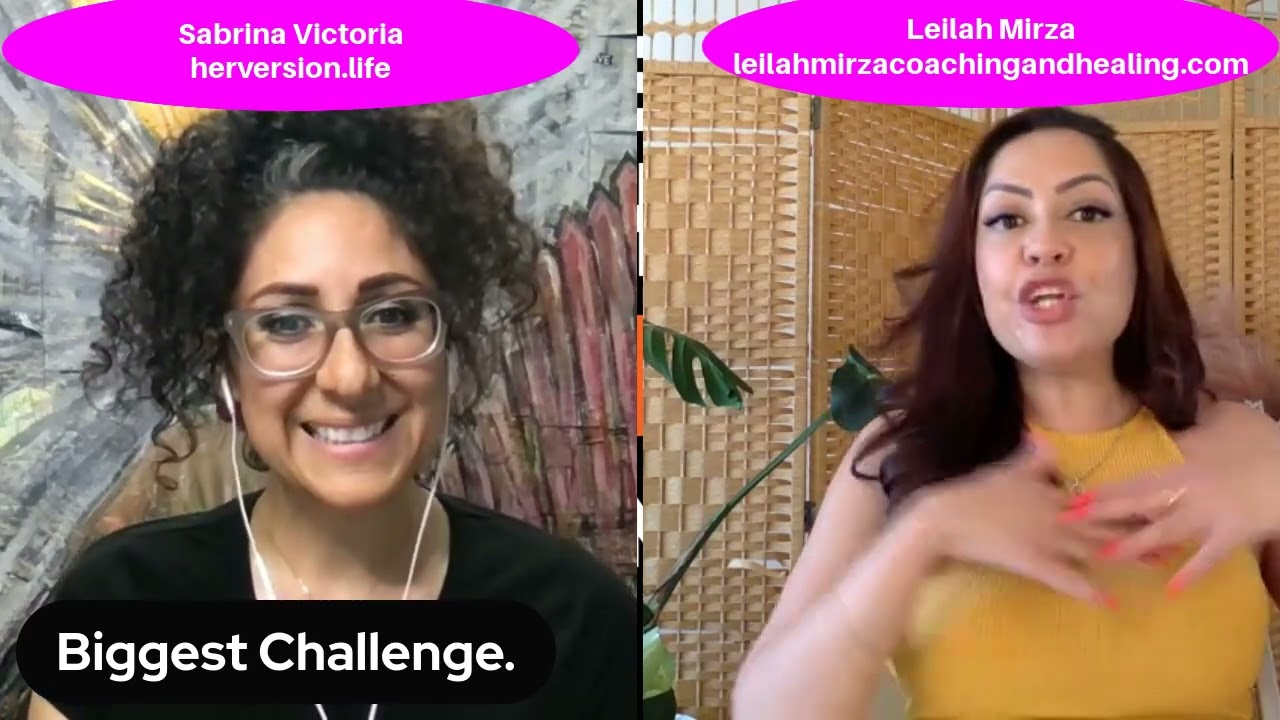
This content was created by Leilah Mirza. This content was uploaded by Leilah Mirza. This is a YouTube podcast interview (Her Version) titled "Motivational Healing Strategies: Leilah Mirza's Guide To Liberating Yourself From Emotional Pain" (posted 2023-11-16). Host Sabrina Victoria interviews guest Leilah Mirza about her personal journey and work as a healer and coach, covering topics such as ancestral trauma, codependency, boundaries, self-worth, emotional processing, spiritual development, and Leilah's coaching services (including 20-minute clarity calls). The content is an English conversational interview blending personal storytelling, therapeutic insight, and practical advice for listeners seeking personal growth and healing.
Chapters
Hello, hello, hello, and welcome to today's episode of Her Version. This podcast is dedicated to sharing stories of struggle to triumph, a platform that allows individuals to tell their truth in order to inspire and uplift others. For those of you that are new to this podcast and like content like this, make sure you hit that subscribe button, follow, like, and share. I am your host, Sabrina Victoria. Let's jump right in. Hello and thank you for joining us today for this episode of HerVersion. The HerVersion platform is built on storytelling and the understanding that many times our greatest learning experiences come from listening other people's stories. Today I am speaking with an amazing woman named Leilah Mirza. Is that right? Yes.
Yes.
She is able to forward high frequency information in a grounded way and helps people who feel disconnected from source, disconnected from love, and who experience mistrust, abandonment, and betrayal. She has an amazing capacity to hold people in a safe space to love them and heal all of their deeper and darker parts that were lost. She is a Reiki master teacher, SRT practitioner, chakra teacher, healer practitioner, inner child trainer and therapist, intuitive. Welcome, lady. How are you?
I'm great. Thank you, Sabrina. What a great introduction.
Ah, thank you. So is it Leah or Leah?
It's Leilah.
Leilah?
Yeah.
Oh, I love that. You know what's so funny is I went to school with a Leilah. She spelled it L-Y-L-A. She was literally my best friend from like kindergarten through probably 7th grade.
Oh wow.
And I never saw her again. Oh wow. Yeah, she just disappeared. I look for her on Facebook all the time. Obviously she's married now, so that's low-key impossible. But even friends that we went to school with, like, I'll ask, nobody like even remembers her or knows her. She's in my yearbook, so I know I didn't make her up.
Oh wow.
But like, she just disappeared.
That's interesting. So maybe she's changed her name.
I don't know. Who knows? Crazier things have happened. Well, you are joining— you are joining us from England. I appreciate you taking some time out of your day to hang out with us and tell us a little bit about your journey. And teach us some things. I would love to kind of just start by jumping in. I love getting right to it and kind of just learning a little bit about you. I'd like to ask you, what is one of the biggest challenges that you've had in your life and what did you learn from that challenge?
Wow, that's really deep.
We're jumping in, girl.
We are. Um, one of my biggest challenges, um, I think I've had quite a lot of, um, intense challenges. And especially like, one of my biggest challenges I feel was in Australia, um, living in Australia, which is ironic because so I'm from South Africa, from Cape Town, and my family moved from Cape Town to Australia. So I'm all by myself— well, I was all by myself a few years ago in, um, in England. So I decided as a single parent then to take my children and be closer to my mother and my sisters. And, um, I entered a, a very intense relationship, um, at that stage with someone who was from New Zealand, and it got to— it got— I don't know if you've ever heard of the story of a karmic type of relationship, very fast, very intense, filled by passion, filled by some form of toxic behavior. And I had to make a very quick decision to leave overnight and to come back to England. So this guy actually proposed, proposed to me, and I was very— I think I was very blindsided because sometimes when you fall in love, or you think you're falling in love with someone, you can lose yourself. And it's that moment of losing yourself, you don't actually have the clarity of who you really are in that moment. So I speak to the biggest challenge, and I, I've gone through many challenges being born and raised in Cape Town. I come from a very, um, unstable childhood background, you know, so I had to do a lot of healing. So I've gone through different types of watching my parents go through abuse in their, in their life and, um, going through ancestral trauma of abuse. But I think by far this was the biggest as an adult where I think I've dealt with quite a lot of my, my shit, you know, my childhood stuff. But then I was put in a situation where I was living in amazing Australia, in Sydney, and it was sunshine, and I had a great, a great job. I was actually working on TV at night, and during the day I was working in bank, and I had my children there with my family. So I was like in bliss, but behind the scenes I was really fighting, survival, keeping in this relationship where I started seeing that I had codependent patterns, you know, codependent patterns, and I was continuing it. And as you know, whatever you allow will continue. Um, so this guy proposed and I said yes. And, um, the night before, I, I looked at my mother with tears in my eyes and I said to my mother, I feel that I'm not going to be true to myself, and I feel like I'll end up in a grave if I go ahead with this. And I lost myself, you know, because he was quite— he had quite an abusive background. And I looked at myself in the mirror and I asked myself, who are you? Yeah, what do you stand for? And in that moment, as I speak here, because bumps because I had the saying that every day we have to make a choice and we need to take the chances and we need to make the change. The 3 C's. And I found that internal wisdom within me to look at myself and to say that this is my gut instinct, that I have to trust the feeling of nothing. That feeling that's just not there. I just had to trust myself that I was doing this for me. Yeah, because you can try to fix someone, and in that process you will break yourself, you know. So in the process of trying to fix someone, you can actually break yourself. And that was really painful, you know. It was painful because I thought I was actually staying in the relationship to fix someone who wasn't really my responsibility. Yeah, fixing someone sometimes is not your responsibility. Fixing something that's broken, you have to accept it's broken, and it wasn't my responsibility to fix that. And in that moment, I made a decision that I can end up like my, like my mother was growing up, like my mother did. Or I can find that internal strength and walk away because that was not my responsibility. And that was hard because I had to walk away from my life that I started there and coming back to nothing. But when I did, I found courage and actually I found that faith of a mustard seed. I came here, Sabrina, with no inkling how I was going to redo everything from scratch one. Because I was meant to go to work in Australia the Monday. My boss called me when I was on the plane because it was a two-day flight. I had to turn up for work, and I also had to turn up being someone's partner. And that took real courage, you know, that moment that I had to fight for me. I had, I had to love myself not expect someone else to love me.
Exactly. Yeah, 100%. I'd love for you to expand a little bit on— you mentioned ancestral abuse, and I've heard that a few times, um, in the podcast that I've done, and it's been a while since I've had somebody explain that. Can you give us just a little bit more on what exactly that is for our listeners?
And ancestral trauma, it's It's a lot to do with the trauma in our bloodlines that we carry forward, you know, and this could look like anything. A trauma, firstly, is anything that moves you out of alignment of who you are. It could be mental, it can be physical, it can be emotional trauma, but trauma is something that moves us truly out of alignment. Now, when we have ancestral trauma, that's a trauma we've taken on, trauma that we've witnessed. Like my mother's gone through trauma, and the same trauma that she's gone through while I was in her womb, I have taken that— some elements of her trauma, um, trauma of the way we see, perceive our body, um, disconnection from our body. So even something like eating, our eating habits, because we're eating out of depression, we're eating out of anxiety, our lifestyle, it could be going back to survival instincts of our own ancestors. Is.
Well, okay, so if great-great-grandmother would eat when she was stressed, that is then a, like, a trigger that could be carried on. So every time there's stress that's felt, um, a trigger of feeling like you need to eat could go past through generation and generation and generation. Is that what you're saying?
Yeah, sometimes through our survival instincts. Our survival instincts is very base. We are growing up with survival instincts, and many of our survival instincts are learned behavior. So 94% of our brain is learned behavior, and all this learned behavior that we need to unlearn, which is some form of healthy, can be carrying on. So for me especially, going back to my father's side of the family, and I know that this interview is going to ruffle some feathers because I'm going to tell the truth. So going back to my father's side of the family, they've all had an unhealthy relationship with food, whether it's because they have gone through abuse, whether it was mental, physical, or even sexual abuse. And there's a belief that when you're sad, just eat your emotions. Do you want a cookie? 'Oh, I've broken up with my boyfriend, let's have chocolate and wine.' So we've all learned to numb out our stuff by food, and this is where our relationship— our trauma comes from. And this is going back, this is going way back, how we've been programmed to eat through our emotions. So I mean, this is an example of food. Yeah, but yeah, it needs to be food. You know, abuse can be very ancestral. Sexual abuse can be very ancestral. You know, it can go back way, way, way, many, many years that we've had to— it could even go back to our past where we've had to, to sacrifice our body, to sacrifice who we are. You know, by speaking our truth, we might be cut, we might be hurt. So ancestral trauma can, can play in many roles, in many forms, and show up in many ways.
Yeah, you had mentioned, um, feeling a, a need to fix someone, and I think a lot of females feel that when they're in a relationship, that they need to sometimes even seek out, um, partners who need fixing. Where do you think that comes from, and how should we be viewing that? How should we be taking on relationships when we're met with somebody who needs a lot of fixing?
We always need to remember that in a relationship, it's natural instinct. Let me just say, for women to nurture, it's natural. It's our primitive instinct. And especially for me, I happen to be a very maternal person. I love babies. I love children. When you come to my house, I just love to feed you. I'm just a very maternal person. So it's understanding the line, you know. We need to understand there's a line that we don't cross, you know. And especially when it comes into codependency, when we know that we're trying to— how I would describe it is trying to make something that's not better, better on some level. Being okay with something that's not in our boundaries. We need to really understand that in our relationship, we need to have an honoring of our own boundaries and honoring our relationship boundaries. You know, my partner can show up and tell me that he feels quite upset about something, and that's okay. I can support him in feeling upset. I can support him. So being by his side. But when it comes to crossing our boundaries in a relationship, it becomes quite abusive. That is not our responsibility. My responsibility is not to fix his childhood trauma. If he keeps, for example, which he doesn't do, but I'm in a relationship now, and if my partner was to be, example, physically abusive, which I would like to highlight is not, um, it would not be my responsibility to say, it's okay, you hurt me, I understand that you're in pain, 'Let's try for you,' you know, that is not healthy to make it okay. It's not okay to be abused. It's not okay for someone— for you to sacrifice yourself to heal someone. That is not okay. You can support your partner, you can be with your partner, you can seek out the professional help, but it's their journey that they have to cross. So you have to— you have to have— I feel it's very important to have boundaries within yourself, loving yourself first. And there's, there's an important, um, line that I once heard so many years ago. I heard this line and it said, um, fly, as in flying, fly. And it actually meant first love yourself, because if you really don't know how to love yourself, how to honor your boundaries and stand in your truth and stand in your power, they are never going to really love you for that. If you don't even understand yourself, how do you expect someone else to love you authentically? Yeah, you don't know who you are authentically.
Absolutely. I love the way that you're putting that, and I think that it's so important to recognize that there's a difference between helping somebody and enabling somebody. You know, you, you're, you're describing a very distinct line there between being taken advantage of. I want to ask, um, when did you kind of fall into personal development or personal growth? When did you find it and how did you come about? How did you— why did you seek it out?
Okay, so I feel like as a child I was always a seeker, you know. I feel as a child I was, um, I was what I would say I'm an empath. So I was always quite empathic. I felt from very on in my life, I, I felt that I was different the way I perceived the world. And I think you would know when you have the deep desire of feeling. I'm a very emotion-based person. And my seeking started when I was raised as a Catholic. So I was born in Cape Town and my mother was a Catholic. So I was a Christian as a Catholic and I was always, you know, the good girl. We have to be the good girl in life to be something, which I will tell you later, it's not necessarily true. You just have to be powerful and be who you are. You don't have to be society's version of good. So I was, um, I was raised as, as a Catholic, and then later on my father died in a car accident and I was 10. And I remember reading the Book of Psalms, and then I remember going to a Pentecostal church and really feeling connected to some sort of mystical force and crying in this church and feeling this overwhelmed sensation of love that the music brought. But then later I felt like all this, the religion stuff, really put me on some form of plane. It put me off because I felt more fear, you know. Oh, I can't do that because I'll be sinning. Oh, we can't do that because we'll do something wrong. So it took me back a little bit. And then I left the journey of religion and I came to England when I was 18 and I met my first husband. Ex-husband. I'm not married multiple times, but I met my ex-husband who's Muslim, right? So he was, um, he was a British-born Pakistani, and, and then that was my first real relationship. And once again, I thought I had to sacrifice myself, you know. So I, um, I went into religion with reading his stuff and his scriptures And then the ultimate test again came, where in their culture, a woman literally on some level— what I experienced, not, not most people probably do— but I had to sacrifice myself at the cost of my own happiness. And then I learned that this is, this is not healthy. I am not a woman, although I'm maternal, I'm not gonna cook all day and wear a scarf. That's not really who I am. I love you, but I can love you from a distance if you're not healthy for me. I don't have to be in a relationship to be with you if I recognize signs that I'm not in alignment. And then, um, at that stage, I got into my very first book, which is, um, by Wayne Dyer's The Power of Intention. And I loved him.
Did you go buy it or did somebody give it to you?
You know what, it just, it just happened. I just, I just found this book, um, at a bookshop I was walking by. And I was, I was with my ex-husband at this time, and I got to the stage in my relationship because I actually seeked so much that I actually thought maybe I should be a Muslim person. Maybe I relate to Sufism because I always related to love religion, the description of love, you know. And I always thought that love should be universal, and I still believe that, but I don't necessarily believe in religion because I feel like it's man-made. That's my opinion. I love, I love the Creator, and I believe in the power of the Creator, but I feel like that power is within you, and we all have innate power. And, um, yeah, I, I read this book of Dr. Wayne Dyer, and then I thought, you know what, I am the captain of my life. Yeah, I am the author of my book, you know. And I started studying counseling, and that's when I, I learned counseling. I changed my life. And that was many, many years ago. That was about 15 years ago. So that was a catalyst. The catalyst was, was, yeah, I suppose, going through that experience.
Sorry, about 15 years ago.
Go ahead. Yeah, oh, sorry. Yeah, so it was— it started 15 years ago, and that was how my transformation journey started. That is personal transformation. Um, I, I'm 37. I just turned 37 last week, and I'm still going through transformation in my business and in what I do. But I have learned so much because relationships— through relationships you learn about yourself. You learn so much more about who you are. Without relationships, I don't really feel you can grow. And this is not just romantic relationships, these are relationships in general. We need relationships to grow as humans.
Definitely. What's the number one lesson you've learned about life?
You need to own your self-worth. You need to own yourself, your own power. You need to learn that life is always teaching you about your own power. Um, I have learned a very big lesson in life that you will never be good enough with the wrong person. And no matter what you do in your life to please, it's never going to be about them. It's always going to be about you. You are good enough as you are. And we have to accept that. And every day we'll be taught about our power in life. Life will always teach you to take your power.
Do you think men and women both have an issue with that, with really embracing who they are?
I think all of us have that. I feel in, in masculinity and femininity, we're all learning to take our power, whether you're man or whether you're female. It's all to do with who you are as a person, if that makes sense, and what you've gone through to experience that. But everyday people are really fighting to stand in their power. It's this empowerment that people really struggle with, being stuck and disempowered.
Definitely. What— what— speaking of that, what do you think is, um, success? What do you think success means? Um, which I think a lot of people are striving for.
It's the— it's a definition of real success, your definition of what success means to you. This has been a very interesting question for me because even though I'm a therapist, then people perceive me just as a therapist, you know. So if I go out and people would see me, they would see me as Leilah the therapist. Right? So it's your definition of what you form. To me, in my life, I've come to the understanding that I'm actually successful. And successful to me means that I've done what I've come here to do on Earth. My job was to come and find my soul, find my purpose, and evolve as a human. And that to me is success. You know, I also believe that we can never stop bettering ourselves. But if you're gonna constantly seek, if you're gonna constantly run after money, you're always going to be running after money. Yeah, because you're not running for the money, you are running for the feeling that money is giving you. It's not about money, it's not about earning the money, it's about the feeling you're looking for. And to me, the point where I've come in my life right now, I've achieved everything at this age that I wanted to achieve. I have my children, I have my home, I have my business, I have an amazing partner. And it's taken me a long time, but I feel success as a human.
What do you think is that feeling that people are striving for?
In my— in what I do, I feel like lots of people are thriving for freedom as humans.
Yeah, that would be me too. Whenever anybody asks me why I work so hard or why I do what I do, it's just freedom.
Yeah, but you know what, Sabrina, you are free. You are a free, powerful woman.
Yeah, people don't know that though.
No, but the very thing that you are looking for is the very thing that you are.
Yeah, yeah, people don't recognize that they're free or that they have choice. It's funny, but the, uh, the painting behind me is actually, is actually, uh, her name is actually Freedom.
Oh, wow.
Yeah, I painted her myself.
Oh, you did?
Yes. And I put at the top, "Yes, you can," because so many years of my life wasted thinking that I didn't have a choice and thinking that I couldn't, and then fell into self-development and personal growth and recognized I have choices. And I can. And, uh, so yeah, I totally agree with freedom, 100%. I think that that is exactly what, um, humans in general are always striving for.
Oh, Sabrina, that's beautiful. I, I love what you draw, and that painting, it's so powerful, and I can see you in that, like, in so many ways. Yeah, I want to tell you, I want to tell you something that you, you just reminded me a moment ago. Yeah. And I had to really think twice about this, but I want to share this with you. The, the thought of freedom, the, the seed that everyone is fighting for freedom. So, you know, my mother— my father died when I was 10, 11, and we, we went from having everything, like, on a material aspect, to having nothing. This is through with freedom. And We, we were at the brink of losing our house, and my mother had this pattern of entering relationships that was abusive. The men would beat the lights out of her, and I had all the shame and guilt going to school the next day. Then my mom sat black and blue, right? Wow. And I was 10 years old, and I used to witness this as a 10-year-old child. It was, it was quite heavy, you know. And, um, I remember walking to the lounge one day, and I remember my mom, she used to sit outside, um, on the lounge by the table, and she used to look like this. And I was distraught, distressed, seeing my mother with eyes like that, not understanding as a child, but feeling her pain. I felt her pain. And, um, she used to sit like this, and I used to ask her, what are you thinking? And she used to look out the window, but I knew her thoughts were, how am I going to survive?
Wow.
With 3 little children. And she was my age I am now. And I asked her, and I was really little, and I asked her, what is it you want? What do you like to have in your life? And what are you praying for? Because we had the same language of God. And she said to me, I would like to walk on the beach. This is a black and blue. I'd like to walk on the beach with a beautiful fair man with two dogs and just walk in freedom with no problems. And this is my mother. Now, as you know, I come from Cape Town. We are Green Books. We are very limited in South Africa. Very limited country. It's not that easy to get your freedom. It's not that easy to have a vision.
Wow.
Easy to have a vision of your future when you are stuck. When people are stuck, they can't really see the future because they're so focused on the pain of that moment. And she sat there almost every week in the same situation and I did not know how my mother will end up, but she will end up dead before her age, or she's always going to be like— how far will she go? How much hidings is she gonna get before she says enough? What is our future gonna look like, right? Yeah, but she had this belief from a very early moment that no matter what, if you have that seed, that faith, it will get you by. And you know, Sabrina, with goosebumps on my arms right now, my mother, she lives in Sydney in Australia on the beach with a tall, fair husband. I don't want to get emotional because the story moves me all the time. Wow, it brings, um, it brings like tears of joy to my eyes to see the woman that I looked up to suffering so much, you know, to her living on the beach with the two dogs, building the house of their dreams with the man who provides her with safety, love, and peace. Wow. And she couldn't see that vision, but she had hope and she had faith to have freedom. And if she could do that, we could all do that. And that was the faith that I had, that from a little child, we can all create the life that you want, if that's what you need, if that's Freedom to dream big. Yeah, don't let your circumstances keep you stuck.
Yeah, and I think that that's important, you know, everyone has their own vision of what their freedom looks like.
Yeah, we all have our own definition, and, and this is like when I'm in therapy and I'm with a client and someone asks me, or if I ask something, what does freedom look like to you? What does love look like? The one person in the relationship— because I do couples therapy— and some of my clients, the one person's answer is very different from the other person's answer because we all form a definition of something in our own mind. And sometimes that definition is our own stories that we have created. And as you know, many people have their own stories, their own creation of stuff. So say example, I'm in a relationship with you and I say to you, what does love look like, Sabrina? Your definition of love may be very different to my language of love. So yes, You're right, we all form different definitions of stuff in our lives.
Yeah, I, uh, I want to ask, what do you wish for?
What do I wish for? Well, what am I wishful? I— no one's really asked me that. Um, I really wish for, I think, the world, the Earth. To evolve and for people to wake up, to people to realize that they all have power. Because there are too much victims in this world. There are too much people walking around thinking, I need more, I'm stuck, without really realizing that you are your own, you are your own power, you are powerful. I wish for people to find their own power. I have, and that's why when you ask me what you wish for, I couldn't think of anything I don't have, you know. I, I feel like I have everything because I created that for me. I created the life for my, for me and my, my children, my partner, you know, whatever. He's great, he helps create the life. We both do it together, we're a team. But, um, what I really wish for is for people to really wake up, really take control, Take your power. It's your Earth. Walk the Earth as it's your birthright, because it is.
Yeah. Speaking of victims, um, I think that there's this lull a lot of times over the nation or globally of not being good enough. There's this whole thought process of just feeling less than. In your opinion, at what point is somebody good enough?
You're always good enough, but I feel like at some point it's truly accepting who you are. Because if you are trying to be good enough for someone else, then you have a problem. Then you have a problem in not realizing that you are already good enough. So why do you keep selling yourself?
Yeah. Was there ever a point in your life when you didn't feel good enough?
Oh yes, I'm human. I felt very much not, you know, not good enough at some points, you know. And, um, sometimes I need to check in, mate, and check in with myself and go, check, mate, look at yourself in the mirror, look at what you've become, look at what you do. We are, we are natural, we are spiritual beings having a human experience, you know. So at some point we're gonna get these lessons of feeling inadequate You know, no matter what car we have on the outside— I love cars, you know— no matter what house we have, there's always going to be a moment that you're going to think, "Can I?" And that's okay. But when we are seeking that validation outside from people to define who we are, that's a no. We need to really realize that we are enough as we are. We truly have to accept that we all are different, you know. You are a woman, I'm a woman, you're beautiful women, you know, as you are. You've got character, you've got definition, and that's good, and that's enough. I have to realize that I'm a woman and I am different and that's enough in my own right. We have to honor ourselves rather than critique ourselves more, because I think in this world there's enough people telling us we can't.
Yeah.
So we have to kind of feed our soul and know that we are enough. But there were times that I, I went through spells of thinking, you know what, I'm not good enough, I can't do this. And then I realized that saying that I told you earlier, but if you keep trying to do that, is that good enough? Is that enough? You know, we can get surgery on our face, we can get— we can do things the whole time, but if we're going to keep doing that, we're never going to feel enough. So it's never really about what you're doing, because whatever you're doing on the outside is never going to make you feel enough. You need to feel enough and know that you are enough.
How does someone do that?
How does someone do that? I feel like going through— that's a very good question. Um, going through the space of truly honoring yourself. And I think that if you don't know how to honor yourself, you're never gonna know when it's enough. So I would think it's asking really How do you honour yourself? What does honouring you mean? How do you accept honouring? To me, it's accepting, accepting myself. Like, I can stand in the mirror and I can question my body the whole time, right? I mean, I'm quite curvy, I'm a, I'm booby, I've got big boobs, you know, I'm small, and I can stand in the mirror and I can question myself quite a lot. But if I'm gonna question myself on the external, I'm never gonna feel like that's enough. But if I start going, look, I'm actually quite booby, or I'm actually quite curvy, and start accepting myself for who I am and feeling enough as I am, that's a start. And I think true, it's truly a sick thing, which is truly honoring. So honoring yourself is to really love yourself for who you are. First. The voice, what you tell your children, what you tell your partner, you know, the voice of you— that's okay. It's telling yourself, giving yourself permission. You're feeling you're hurting right now, and that's okay. Or you're feeling quite shitty right now, that's okay. That is enough. It's like a layer. We have to build ourselves with layers, you know. We have to feed ourselves with layers. Like a house gets built, we are our own home, so we have to build our foundation, you know, and honor that process.
What do you think someone's foundation should be made of?
Love, firstly. I, um, I, I love love. And I feel like love really heals. And when you can truly start loving yourself is the moment you can start to heal yourself, because if you are not loving yourself, you're acting from a space of fear. You're, you're living from fear, and it's fear that keeps you stuck. It's fear that creates the story, because fear comes from the ego, and fear is driven by the ego. And I'm not saying the ego is the devil or bad, but the ego creates a story. So you know that emotion that comes up when you feel something? That emotion is a chemical response to the body that only lasts 90 seconds. The emotion goes, but it's a story that you—
wait a minute, wait a minute, say that again. What'd you say?
When you feel an emotion— yes, an emotion is a chemical response that comes into the body for 90 seconds only. Only 90 seconds.
I didn't know that. Yes.
So an emotion lasts for 90 seconds. It's like a visitor, right? You feel pain, you feel sadness, you feel joy, you feel anger. It's only there for 90 seconds. But then when the emotion goes, what makes the emotion stays longer is the story, the history of the earliest feeling of that emotion.
Yes. So this is why it's hard to get out of it. So it only lasts 90 seconds, but then we get stuck in the story.
Yes, yes, yes. Yeah, emotions is energy in motion. You feel the emotion, it comes, it really goes, but it's your attachment to the story of the past that you're creating the scenario. That's upcoming.
Yes, I absolutely love that. That totally makes sense for sure. It's detaching from the story is what can pull you out of it quicker.
Exactly, exactly. So the, the best question, and going back to the question you asked me, if someone asks, ask, am I doing the right thing, I'll always ask them, are you coming from fear or you coming from love? Where is this decision coming from?
Beautiful. Um, speaking of, speaking of this, um, your clients, I want to, uh, get into what you do. So first of all, uh, for those of you watching live right now, thank you so much for hanging out with us. And listening to Leilah Mirza share some of her journey and some of her expertise here on the Her Version show. So thank you. For those of you that are coming in a little late and watching on the replay, if you could do us a favor and just hashtag replay wherever you're watching us so that we can show you some love. Leilah, I would love to learn a little bit about what you do in your business for your clients. I know your website is right above your face area there. Can you give us some, some rundown of what you do?
I help people who feel stuck in their lives. I help people who have gone through trauma, people who feel stuck in finance, in business, in becoming who they really want to become, becoming in their power. I help people who are disempowered in their relationships, just people who are at that point, the crossroads are going, I can't manifest, I can't attract, you know. I help untangle all your stories by digging in to the very core of who you are. So I work, I, I work with various modalities. So I have studied clinical counseling and hypnotherapy, so that's my base. So it gives me my accreditation, my qualification, but I've got various modalities. But really, I always tell people, you know, it's not really about the modality because it's not time that heals, it's really the right energy that heals. So, um, yes, that's what I do. I work on helping people to become unstuck wherever they are.
Beautiful, I love that. Can people find you on social media?
People can find me on, um, yes, on Instagram, it's Leilah Mirza Coaching and Healing. Um, I'm not a TikToker, but I'm learning to TikTok. I love it. I'm learning to TikTok. And, um, they can find me on Facebook under Leilah Mirza or Gracing Lives, as in, um, I'll grace your life. Gracing life. That's fantastic.
Yeah.
And otherwise, you can find me on leilahmirzacoachingandhealing.com. So I do offer, I do offer 20-minute clarity calls just to help people or to laser coach people and tell them where they are in life and why they're going through the blocks that they are going.
Beautiful. Um, why do you do what you do? Why'd you get into coaching or therapy? You both?
Because I became the hero that I was looking for, to be honest, Sabrina. When I was little, um, I wanted someone like me to help me.
I love that.
So I had to become the hero that I was looking for, and I feel that we are all the heroes we are all looking for. We all have our cape for our own lives, and we're all responsible for our own lives. And I love transformation. I love seeing people touch their power. I love telling people, how does it feel to feel empowered? I love seeing people rise. I love seeing people create magic in their lives. I love being a witness to people's magic.
Absolutely, definitely. What's your big dreams for your business?
My big dreams is to be the little light in the dark room in this world, to light the world one by one and to touch people's lives. That's not rehearsed. I really didn't rehearse. It's spontaneous thinking. I don't know how else. I don't know how else to express that, but it's just in rich lives. And I feel very enriched when I put my head on the pillow, you know, and I feel that love.
Absolutely, definitely. Well, I know that you, um, work with men and women, and this podcast is heard and seen by men and women, but we predominantly seek out females. Yeah, and predominantly females watch. So I would love to have you give some advice to the females listening now or, or on the replay who are possibly struggling with, you know, finding their power, finding their voice? What would be some words of encouragement or some advice you could give to them?
That it's never too late. That it's never too late. You are not, you are not a a prisoner of your past. That if you came to me and told me that you are bankrupt, that you don't have money, that's not the excuse. Don't form excuses. There's no excuse to become your powerful person that you are. It's never too late. You're not old enough. You're not unfit enough. You're not unhealthy enough. Whatever your excuses are, I don't believe in excuses. I don't work with excuses. I work with powerful people. You are powerful. And if they're on your podcast, they are powerful enough to be here. So your, your past does not need to keep you in prison. And it doesn't mean that as a child you were abandoned, that in your business you are abandoned, in finance you're abandoned. You have the power to rewrite your story. Whatever you want, create. You can create. So I would strongly suggest you just keep believing in yourself and invest in yourself because you pay the highest dividends.
Yes, absolutely, absolutely. I love that. Well, I thank you so much for coming on, for, for hanging out with us and sharing some of your journey and some of what you do. What's What's the name of your business, by the way? Is it Leilah?
It's Leilah Mirza Coaching and Healing. It's a long name. But it's just Leilah Mirza, my first name and my surname, and coachingandhealing.com.
Awesome. So for those of you that, that are watching, the description, the link is actually in the description. So if you want to just click, you can click the link in the description to find Leilah and learn more about her. Um, or you can screenshot the screenshot and you can actually get it put right on your phone right there. We have it right above her head area. So if you resonated with Leilah and, uh, what she was talking about today, make sure you check her out on social media and check out her website, reach out to her, connect with her in any way possible. I know that she'd be more than happy to sit down with you, and I think she said she does 20-minute clarity calls.
So I do, I do. It's just a quick clarity call. Usually it's for people who feel stuck in life, for people who don't know where to go, or even what their purpose is, you know. It's just a slight reminder. Um, so I do clarity calls for people who are stuck all over the world.
I love that, I love that. Well, thank you so much. I so appreciate you taking some time. Uh, thank you for those of you watching live. I so I so appreciate you being here and taking some time in your day to sit down with us. I am going to go ahead and close up now. So this community is expanding every single day and it's filled with females who are striving to do better than they did yesterday. For those of you that are new to this podcast and like content like this, make sure you hit that subscribe button, follow, like, and share. If you have an amazing story to share of struggle to triumph, be sure to reach out to me. I am your host, Sabrina Victoria. And I'm so grateful to be here sharing a platform that allows people to share their truth and inspire others. As always, do something awesome today.
More from Leilah



Real transformation can happen when you willing to go and meet yourself #heal#coach#wisdom#

Rewiring Your Money Mindset with guest Ilana Jankowitz | Alchemy Within Podcast