Creator Interviews: Xayli Barclay; Your message is more important than your fear
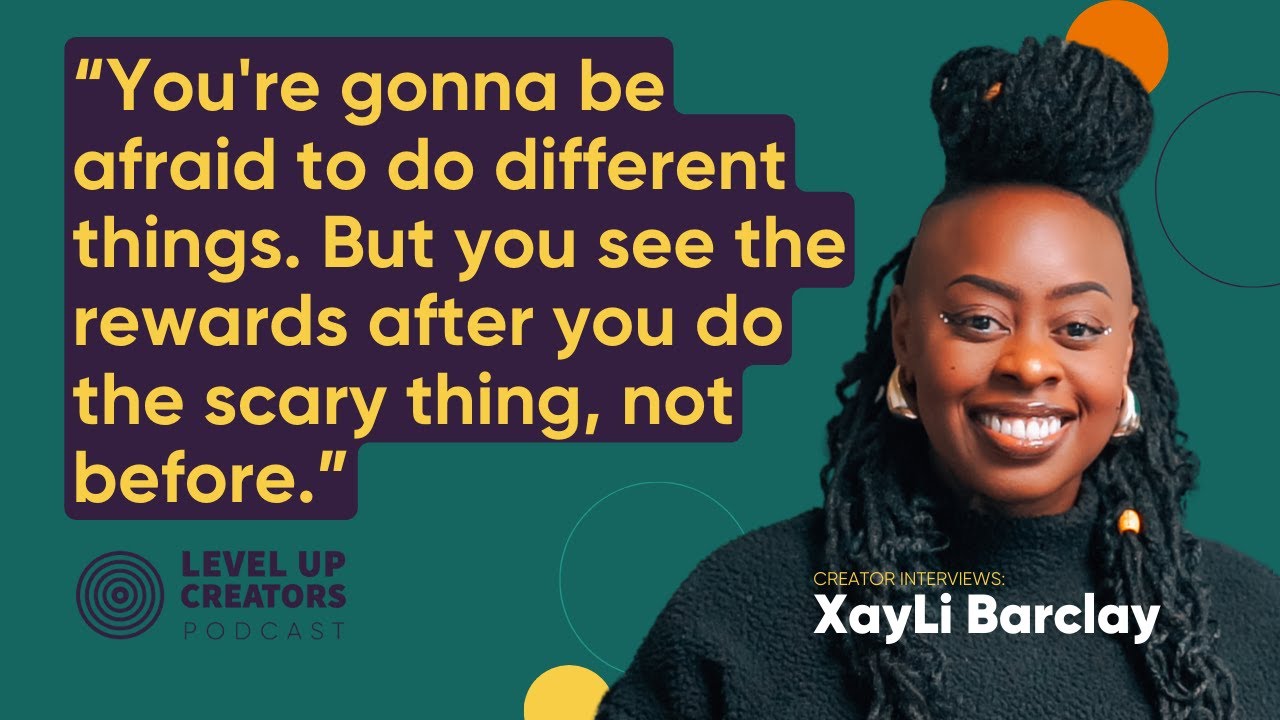
In this Level Up Creators Podcast episode, host Amanda Northcutt interviews Xayli Barclay (also known as Zalie Barkley), a camera‑confidence coach who helps entrepreneurs and professionals become comfortable on video. Xayli shares her early YouTube experience in the beauty niche, the pivotal moment when YouTube recognized her channel, and her decision to pivot into coaching. She discusses the deep roots of imposter syndrome, emphasizing that roughly 80% of her work focuses on mindset shifts rather than technical setup. Practical production advice is offered, outlining a three‑stage equipment progression (Start, Shoot, Grow) and stressing the primacy of good audio over video quality. Xayli explains her business model, highlighting memberships, recurring revenue, and the Camera Confidence Cards as tools for confidence building. She recounts a burnout period, how she restructured her work around a Venn diagram of purpose, passion, and profit, and the importance of aligning work with an "in‑demand version" of oneself. The conversation moves to launch philosophy, advocating for community‑driven, peaceful launches instead of high‑pressure, one‑sided campaigns. Xayli also provides a litmus test for aspiring thought leaders, encouraging self‑inventory of expertise and external validation. The episode concludes with three actionable takeaways: affirming personal worth, honest self‑assessment of what serves or hinders growth, and consistently sharing one’s story on camera. Xayli promotes an upcoming storytelling challenge and her Camera Confidence Cards, directing listeners to find her on social media under the handle "Zayli Barclay."
Chapters
Hey, hey, you're listening to the Level Up Creators Podcast. Amanda Northcutt here, our founder and CEO. We help digital creators and thought leaders like you turn your knowledge and experience into rock-solid recurring revenue. And we're so glad you're here today. Welcome. Today, my amazing guest, the inimitable Zalie Barkley. Zalie is a dedicated camera confidence coach empowering entrepreneurs, leaders, and professionals to enhance their presence using video content. Specializing in helping individuals stand out and engage their target audience, she offers tailored guidance for attracting, nurturing, and converting viewers effectively through educational video content and comprehensive online courses. She equips others with the skills and confidence necessary to harness the power of video for impactful storytelling and importantly, business growth. Welcome, Zalie.
Thank you, Amanda. Thank you for having me. I'm so excited to be here. Uh, you have me cheesing today on camera,
so. It's a well-earned bio. You have such an incredible journey. I'm so happy to unpack it and have this conversation today. Um, speaking of which, if we could kind of start with you sharing just more about yourself, your background, and the winding road journey, uh, you've taken to become a very successful creator who has your own team and multiple product and service offerings, including a membership product, which we love. Anything you'd like to share is fair game. Just. Whatever you'd like us to know.
Thank you. Uh, well, I— it has been a long winding road. I got started years ago before, uh, everyone wanted to be on camera. So I was on YouTube very early. I remember uploading my first video and the morning after I uploaded it, I woke up and I said, who the heck do you think you are? Please delete that. And I did. And so, um, I can look back now and I'm like, man, if I Had kept that video up and kept going. However, everything happens for a reason. 5 years later, I restarted my video journey and I have pivoted and shifted and doubled down and so many things along the journey that I'm so grateful for because of all of the lessons that I can— that I learned and that I can teach now to people who are going through the process. But yeah, in a nutshell, I started on YouTube very early and I started in a very niche, like, beauty space, and YouTube actually found my channel and they started nurturing me. They gave me a partnership manager. Um, they allowed me to come down to YouTube Space DC for workshops. And from there I realized, oh wait, if they're recognizing me in this way and my audience keeps asking, how are you on camera? Like, how are you doing this? What? Tech are you using? Um, how are you so confident? Like all of those things. It's like, I have something here. And I completely pivoted and started teaching, you know, how to own your authenticity and awesomeness, but also how to build a community, how to sell and all of those things. Because those are skills I picked up along the way. And yeah, that's a bit of how I got here.
Wow. Um, that is so interesting. And you touched on, you kind of alluded to, um, imposter syndrome. I'm sure we're gonna talk about that a lot more today, but, uh, I think, would you mind sharing a little bit more about like where your passion for entrepreneurship came from? I know you made a big move from, I believe, Brooklyn to Dallas, Texas, my hometown. Uh, what was the impetus for all of that?
Yeah, I moved because I had started my entrepreneurial journey and I just realized that New York was very busy. And I was like, New York is already a lot. I just need to go somewhere else. And I had been wanting to leave, but my partner at the time, who's now my husband, he is a Brooklynite to the core. And he just did not see anything outside of New York City. And we had decided to separate. Like we decided to go our separate ways. And I was like, okay, this is my chance to just move somewhere. And I had one client here and I asked her like, what is it like in Dallas? And she was like, it's nothing like New York. Don't go there. Like, don't come here. And I was like, okay, gotcha. So I locked in a 16-month lease and I moved. And I think a lot of people even here, when we tell them we're from New York, they're like, what? Like, why would you come to Texas? Uh, but for me, I love, I love, I love Dallas. I love being here. Um, And I was able to start again and find myself again. And so, just connecting that back to an entrepreneurial or business journey, it's kind of the same thing. You're going to be afraid to do different things or to even like show up and be on camera. But you see the rewards after you do the scary thing, not before. You're never very clear before. Probably went off the rail a little bit there, Amanda, but—
Not at all, Zaley. Actually, I think it's so important that you made a really intentional decision about the physical space that you were going to create in. And you're like, I realize this isn't my vibe. It's not working for me. I gotta land somewhere else. It is hilarious to me that you landed in Dallas, Texas, um, from New York because that's quite a switch, but you needed a big switch like that. You were looking for a completely different place, right? And I mean, would you say that your— Creativity has flourished because of that intentionality and including your space sort of in that?
I feel like it has. I feel like I needed to be in a different creative space, especially— it's just like sometimes I'm in the house, I have a beautiful studio here, I can really work here, but sometimes I need to go to the coffee shop to, to do something different or do a different task. And for me, I think I just needed quiet, but also introspectively, I love saying Business is a self-awareness journey, and so moving away from everything I had come to know in New York allowed me to sit with myself and sit with my truths and dig deep into who I was and what I wanted my life to look like. So just to go back to your first question, I am from a family of entrepreneurs. My dad had his own business. Like you know, it's all I've known. My grandfather had his own business. My grandmother on my mother's side, she had a little shop, and she taught me to count. Mm-hmm. And one of my most vivid memories is her selling in her little shop, but she used to put a little bench for me to be able to see the customers and like, you know, count the change and give back the correct amounts. And so I started learning about entrepreneurship very early, and I'm so grateful that I am able to live in that purpose that is deeply connected to my past. And continue on the work that they had been doing. So.
Oh, I love it. So it's in your blood and you're not just talking the talk, you are walking the walk. And so I really wanted to kind of tee us up to demonstrate that, right? You are not just pulling information out of nowhere or regurgitating anyone else's information on the internet. You have so uniquely come up with your POV and planted your flag in this camera confidence space. Um, and again, you are walking the walk. You are actually doing what you are teaching people, and what you're teaching people is based on your lived experience and, you know, your, your trials over the years and, and what you— what's worked and what hasn't worked, and sort of, I'm sure, adjusted your approach based on that. Um, I think that's just super important. You are such an incredibly credible person. Um, I don't want that to be overlooked because people need to take what you're about to say very, very seriously. Um, so you started in the beauty industry and you were applying your, wow, like very well-honed, uh, camera confidence skills in making YouTube video and maybe other social media content in the beauty industry. And you said you got recognized by YouTube, which is a really big deal, even in the earlier days of YouTube. That's huge. Uh, so you were right that you were onto something. And it seems like based on your, the, the entrepreneurial blood running through your veins and all of the experiences that you've had, you could have taken your business in So many different directions and been, been so successful. So why camera confidence?
You know, so I love saying to even my community that it's just the top of the, the whole experience that I provide, right? Like, you know, once we start getting you confident on camera, we're working out like what would work best for you, fine-tuning your messaging, figuring out your platform and all, all of that jazz. But the reason why I specifically chose Camera Confidence, to be honest, is the people that are the most talented, genius, unique, knowledgeable, like the crème de la crème of the crop, are so overwhelmed with the idea of actually getting on camera, sharing their expertise, speaking on stages, sharing their knowledge, leading people in a specific way, like being visible. Is scary because we have so many aspects of our lives that we don't want people to know about or see. Or— and I'm here to debunk all of that and to guide you in a way that is easy. And it's gonna take work, but we're gonna get there to where you are clear on what you're putting out there, who you're speaking to, the information that you should be sharing versus maybe what you don't want to share. Or, you know, depending on how you feel about the information, you can put it There, but I'm here as a guiding light for those people specifically. So that's why I chose Camera Confidence. There are lots of people out there, they're already confident, they're killing it, they have large communities, platforms. I love those people, but they're— my people are the people who need just an extra push. They're usually, um, you know, going through imposter syndrome, overthinking things. They're sometimes even neurodivergent, like There's so many factors that go into the things that stop them from showing up. And so that for me in coaching, like my coaches would tell me, forget those people because they're not action takers. They're not like on it. Like, but then I think about myself and I think about how long it took me to be confident on camera, how much it took me to be able to sell live on camera, how long it took me to be consistent, to build a brand, to attract people that I don't even know where these people are coming from. All of that, for me, if I forget those people, it's like forgetting about myself. And I don't want to do that. So, I want to operate in purpose and do what I deeply feel like I was put here to do.
Cool. I'm thinking about so many different business and genius, like, marketing principles that you just put into play here. So, it's the camera confidence. Positioning is just the tip of the iceberg, but it leads the correct customer persona to you. And so you are gathering, I'm sure, these very highly intelligent, very kind people. They're just shy, right? Maybe they're more introverted. And so that narrows the playing field of your ICP. You're directly hitting their biggest pain point. Like, that is your business, is the solution to their biggest pain point. And then below the waterline is what you're kind of like the follow-on services, right? So once we get past camera confidence, then we can start talking about community building, monetization opportunities that are going to come your way because of that. Is that reasonable? Accurate?
Yeah, it really is. And honestly, like camera confidence really comes from— or not being confident on camera, sorry— comes from just Being confused. Right. So as soon as you start getting that clarity of like who you should be speaking to, what you should be saying, what they're searching for, all of that, you begin to get a bit more like, oh, so I don't have to be an influencer, or I don't have to step way out of my comfort zone to be confident on camera. I can, I can be confident on camera no matter, you know, who I am or what I've been through or. So I just wanted to share that, like, but you're absolutely right. You're spot on.
That's so, that's so neat. And I mean, I've always been a background person. I've been an executive a bunch of times and a coach and executive mentor and consultant. Never have I ever until Level Up Creators been like the front person for a business and getting over the lights, camera, equipment, tech and tools, you know, tech stack and the workflow, everything that Goes into this. I mean, down to like the microphone and the microphone arm, you know, that's attached to my desk. So overwhelming and intimidating. Such like a massive hurdle. But it's like when people like you come on the scene and are like, here, I'm gonna peel back the curtain. Here's everything you need to know. I got you. You're okay. I mean, the the confidence that you instill in your customers is just incredible. I think what you're doing is is very very meaningful. I mean, it is like. creator AF work, right? You have a purpose. You are aligning your, your mission with, and your area of passion with something that actually really matters. And I really love and admire that. And you're teaching others to do the same. So it's like you're having these exponential effects of your work, right?
Definitely. Thank you for that. Thank you for all of your kind words, Amanda. But yes. Um, and let me tell you, you've done an amazing job. Your video looks amazing. You're confident, you're killing it. So Kudos to you. You did it.
Thank you. It was a big hurdle. It was a really big hurdle. Um, okay, well, let's talk about opportunities that come people's way when they are willing to kind of like put their face out there, right? We know that on-camera presence and visibility unlocks doors or opens doors that maybe wouldn't have otherwise. And so, um, how does that typically work for someone who is willing to show their face versus someone who simply won't?
I mean, if you're, if you're not willing to show your face, and I'm not saying that you have to show your face, but you have to build a presence out there. Um, people have to begin to know who you are, what you stand for, what are your core values, what are your morals, what do you help people with? And I do believe that you can be really intentional about what you're putting out there when you first get started. Now, I know a lot of people who, of course, everything that I'm sharing, it depends on what you desire for yourself. I would say, think about your next 3 to 5 years. Mm-hmm. Where do you want to be? If you're building a company and it's on you to build it, you gotta show up. If you are looking to attract a specific audience that is out there and they're on social media, or they're, um, doesn't matter where they are, you gotta put yourself out there and solve their problems in order for them to first of all find you, but also know you, like you, and trust you enough to buy what you're selling. And so when we think about the amount of touchpoints it takes for someone to make that decision, I love being able to cut that down in half by using intentional video content. So if you want to think about it like that, you can. Other opportunities, when you show up and you decide, I'm going to shine, other people want to be a part of what you have going on. Literally for me, what happened is Like I said, YouTube reached out to me. Um, then I, when I pivoted, companies started reaching out to me like, who are you? Like, you know, like, how can we be a part of what you have going on? And now that opened me up to other opportunities. Other experiences opened me up to new audiences that I would have never tapped into. So it also invites collaboration. So there's so much on the other side of actually showing up.
Awesome. So, I mean, that unlocked your entire business for you basically, right? And we're not even sure what doors are gonna continue to open for you as you continue on this journey. And so I think that's pretty exciting. Again, like you're walking the walk and you are like blazing the trail for all of your customers and saying, I've been there and done that. Here's where I was and came from and started and I've struggled. Sure. Nothing This hasn't been super easy because nothing is. I stuck with it and here's what I have now. So again, just wanna continue to draw that theme that like, you know what you're talking about and people really need to listen. Um,
thank you. Thank you.
Let's come back to imposter syndrome. So I assume that that's the answer to this question, but there's probably more to it than that. So what are the most common, like deep-seated reasons for camera shyness that you've undoubtedly spent years uncovering with hundreds of clients that you've helped?
There's so many reasons. There's so many reasons. I mean, just first of all, the idea of I am not enough. Nobody will watch. Nobody's listening. I don't have anything significant to share. I can't show up like my competitor is showing up or like my favorite creator or leader or author is showing up. I can't show up like that person. You know, there's so many different things that we tell ourselves. Also, if we I want to dig even deeper into just our inner children, you know, things that you were told as a kid, things that you hold onto because someone defined the rest of your life for you. We can go really deep. I mean, but there are so many things that prevent us from, first of all, believing that the next season or version of ourselves is possible. I like to call that version the in-demand version. So, My camera-shy people, they are invisible. They feel invisible. They feel like they will remain invisible. And they've never actually thought about what the in-demand version of themselves sounds like. I mean, the version that your inbox is overflowing. You have back-to-back interviews happening. You have to actually manage your day in a specific way so that you can show up in the different ways that you need to show up. Mm-hmm. You know, the version that has financial security or the version that can breathe because, you know, everything is okay. I'm not saying that version is perfect because let me tell you, you will have things to figure out in that next version. But sometimes when we're in that space of feeling invisible, we can't even invite the idea of what the in-demand version of myself looks like. And I think it's important to Define what that is for you or who that is for you so that you have an idea of how you can work backwards to make that happen.
That reminds me of that Oprah quote. I hope I don't butcher it, but it's something like, set the highest vision for your life because you become what you believe, something like that. But that in-demand version of yourself, that is maybe the highest vision that you have for your life. And so, That leads me to an ad hoc question. What percentage of your coaching for— with new clients maybe is on mindset?
Oh, a large percentage, as you can probably tell.
I'm thinking like 80%, maybe 20% logistics, 80% mindset. Yeah.
Yes, yes, yes, definitely. Because when we first get in, so usually people come to me and they think the issue is setup and I have Like people have spent thousands of dollars with me getting the perfect setup, no action. Right. So you have the setup, you know, your platforms, you have your strategy, still no action. So I've, I've worked on both sides of the forum, which is why I can say I, my passion is helping the people who really, you need more than just a strategy. You need a mental shift. And so we just released a product called the Camera Confidence Cards, which are affirmations that I used to write to myself every day for years.
Wow.
And I put it out in an audio version years ago because I didn't know how to get the physical product out into the world. And thousands of people listened to those audios about like just how to set yourself up for success before going live, before selling on a webinar, before recording a video. Because for some people it's just not as easy as pressing record. Yeah. You know?
Yeah.
So, so yes, a lot of our work is within the mindset realm, and then we help you to start defining who you're speaking to, what they're searching for, what platforms they're on, their demographics, psychographics, all of those things.
Incredible. So you're really helping. I mean, Full stack business, like positioning, marketing, ICP or customer persona. You're, you're the whole package really. Um, but again, with the camera confidence lead-in, so that's cool. And I love, um, I can't wait to see this card deck with your affirmations on it. I want one. Um, so yeah, I love, I'm, I'm really big on affirmations, so I love that. Um, Yeah. I mean, they're, they're so, so, so, so very important, especially because we all have deeply ingrained messages from—
Yes.
So since day one, right. Um, and as women, I know we probably, you and I probably share a lot of those, you know, similar messages. And so it increases the barrier to be vulnerable and put yourself out there and open yourself up to judgment. You know, what if people say the things that I've always thought about myself, you know, that kind of thing. Uh, so that's so fascinating. And your coaching has to be so much more effective since you're starting with like the foundational problem, not just here's the checklist of things you need to buy, use my affiliate links, you know? Yeah.
And I did that and it wasn't fulfilling and I made a lot of money doing it, but it just was not fulfilling. So I had to come back. So a few years ago, I was not labeled a camera confidence coach. I was a video strategist or a video consultant. So I did all of that. I made the money associated with that. Wonderful. But I was left empty. So I still do serve those people, but now I can also serve the people that I feel like sometimes I'll get onto a consultation and I'm like, oh my gosh, like I see fireworks for you and your work and what you're doing and you can't see it. So we need to dig deeper here into and figure out like what's stopping you specifically. And even when I did the cards, they're affirmations, but if you, if you move them around, they're actually prompts for you to dig deeper into yourself. So, you know, it is, yes, it is a lot of work on that front as well.
Oh my goodness. Okay, cool. All right. Well, let's, uh, shift the conversation just a little bit because there are very, very practical surface level, if you will, barriers to on-camera presence. I mean, I just went through this, um, last year and So it's a little bit fresh on my mind, but how do you help with that 20% piece? This, the practical part of it.
Yeah. So are you speaking about like the tech stack or just presence as in how you show up? Okay. So I would say, okay, when you're first getting started, focus on, make sure that you have great audio. We can sit through bad video, but audio is really important. We wanna make sure that we have really good audio. So even if you're just starting off, I have what we call the start set, the shoot set, and the grow set. And so with your start set, you know, um, whether you're using headphones or now we have Bluetooth microphones, like I've been in this industry for so long that it's evolving in front of my eyes. And now we have to go back and update like parts of those stacks that people can use. But when you're first starting off, your phone is your best friend. Just make sure that you do have external, an external microphone that goes along with your phone. You could start with a window and natural light and, you know, you create with what you have. When you start creating and you feel good, you feel consistent, people will still show up for you. People are here for the journey. When I look back at my old videos, I'm like, that was really bad. But I learned so much along the way. And my community is— I still have people in my community that have been around forever. I actually just had another interview where she asked me like, what is the timeframe that people spend with me? Mm-hmm. And I have had people that are in my community buying my products and services and such for over 5 or 6 years still. What happens is the people that have been following you along the way for so many years, they love seeing the journey of how you're improving as you go along, how you're upgrading. And they are— they love that. And, and they're a part of that process as well. So don't be afraid to start with what you have and continue investing as you begin to make more money. And then you can upgrade to your shoot set, which is where you have a webcam, you're, you know, connecting it to your laptop, you get a softbox or, you know, just any advanced type of lighting, not super advanced. And you keep going, you know, and you keep adding little things to your set. And I definitely have a guide that we can share based on this. Um, and as you go along, you keep growing until you have, you know, whatever set you desire. But what the reason why I'm sharing this is because a lot of people don't get on camera because they feel like they don't have the Right equipment. And I'm a believer of it starts with your messaging first. If you're saying equipment is your problem, messaging is your problem. And what you should be talking about on camera is the issue that you might be struggling with even more than what should I use.
I love that framing so much. And it's not like you're trying to hawk a bunch of products or anything like that. You're not, you're saying start where you're at and work in iterations based on What you can afford and what's important to you. But yeah, nail the messaging first, right? That's what people actually care about and will connect with you over. And you're so right. I mean, it's all about a creator's journey and your followers are so, they feel such a high affinity for you and they're rooting for you. And so when they get to see those like tweaks, one, it makes you look a little bit more human. You're more relatable. I think people attach to you even more. Literally. And they'll get excited for you as you kind of like ramp up and get the better camera, get the better light. Uh, get the better tech or whatever the case may be, your microphone. Uh, so I love that you coach in that way and it's not like, okay, you signed up, now you have to go spend $8,000 on equipment.
Yeah. Yeah. And even as someone who has all of the dream equipment, like I think about myself like 10 years ago, if I saw the studio that I have now, I'd be like, oh, you're lying. You could never have that. But in essence, I'm saying that to say, I I still mix in organic phone, uh, face-to-phone content into my content for that reason, because yes, people can seem to think that, uh, the, the higher quality you have, the less human you are. So I wanna remind you that we're both human and I'll come in with, uh, face-to-phone content as well.
I like the mix. I like the mix. I mean, yeah, it's very interesting to test your content too, to see like what level of polish your audience actually resonates And I think from our research and experience with our clients, it's, the answer is it's a mix and it depends. Like if you're delivering a course that people have paid for, the expectation is that you would have a higher level of quality. But the humanness of like going live and, you know, um, yeah, recording a reel while you're walking the dog or whatever the case may be seems to be a really great strategy. So I like that. I like that that's your, your approach.
Yeah.
And I'm gonna walk back a couple of steps. You said a couple of years ago you realized that what you were doing was not fulfilling or particularly purposeful. This sounds like a COVID maybe related epiphany or not so much.
No, actually my epiphany happened, um, last year. So last year, yeah, I took a year off and I was able to observe and really get into my work and, and see like what I loved. I was burnt out, to be very honest. I was dealing with a lot of anxiety and overwhelm and panic attacks. And, uh, thank God I still had a foundation that allowed me to make money and, you know, take care of my team and all of that. But last year I just stepped back and it really— I was able to dissect because I had the time to dissect, which I do want to say is a privilege that I did have time to step away and really think about things. But I also found that I was able to take a step back and really think about what I wanted to do. Mm-hmm. found the, the aspect of my work that lit me up the most and that I saw the most results from that I was really proud of with my customer base.
Hmm.
So it helped me restructure everything, as in how I want to work, who I want to work with specifically, or where do I want the bulk of my work to do? What do I have more fun doing? Like, what energizes me? Because For the year before, I removed a lot of the things I loved doing or the play or fun in my work. And this time I was able to include it, but in a very structured way, because now I believe in having a boring business. Back then, maybe not. And so, so I understand where I can be creative as a creative, but what needs to be very structured and systemized and automated.
So, okay. So this is almost like a post-COVID switch.
Yeah.
All right. Let's unpack that a little bit because, uh, I know you probably work with creators who have, who are barreling toward burnout or who are in burnout or who have experienced burnout in the past. We certainly, um, speak to that a lot, uh, with our clients and within Level Up Creator School and in social media content, right? It's, it's, it's an epidemic, if you will, and goes right along with like loneliness, right? When we're creating new community. I think that's kind of a conversation for a different day, but it's very top of mind for me. Right. So if we could take your experience there and flip that into advice for our listeners, like you got, you were headed straight for burnout and you were able to take a step back. And I think what I'm hearing you say is you found the middle of this Venn diagram of like what you are best at. Yeah. What you find purposeful. And you gotta keep that third circle in there cuz you're running a business, what people will pay for.
Um, yes.
So you're trying to find the middle of that 3-circle Venn diagram. But if you could, um, putting you on the spot here, so I apologize for that, but if you can turn—
No worries.
Your process into advice for listeners so that they can create more meaningful work, what would that look like?
Yeah. Uh, and I would say I was not, I was burnt out. I wasn't heading for it. I was in the middle of it. Like, Literally. And so I sat with myself and I started asking the deeper questions of, is this what you wanted to build? You know? And some of those answers were yes, and some of those answers were no. And I had to refine because I had also gotten to a mental ceiling of I've accomplished everything that I I think I could even ever want. And it scared me that I didn't have another in-demand version of myself, uh, you know, that surpassed what I had come to already, if that makes sense. So I'm even sharing this because your process is gonna switch and change and develop as you go along, right? Some of us may be doing the same thing in the next 10 years. Some of us may not be doing the same thing in the next 10 years. Or some of us are going to be doing an even more in-depth aspect of our work, like me, in the next 10 years. But I sat and I asked myself, I need you to sit down and really think about what that next version of yourself is doing. And it went past money, material things, and all of that. And it went directly into, who do I want to serve? Another thing that I really thought about was, what do I feel like no one can take that away from me at all? So, when I tell you what I do, there's no way that you could ever question what I say I'm going to do. And it came out to be camera confidence because I'm always on camera. It's part of what I love doing. I love creating. I love being a creator and a creative, but I also had to learn how to be a business owner. And really understand, uh, you know, how to run a creative business as well. Because that's a bit different because there are days where you want to give into your emotions and creativity and fun. And there are days where you're like, oh no, listen, we have to figure out these systems. We have to figure out structure and routines and all of those things. So, um, it was important for me to understand what all of that looked like. Mm-hmm. But also to understand how I can thrive and show up and share authentically. And even while we're launching now, I've had so many people reach out to me and tell me, your launch looks so peaceful and it looks so like, I want to be a part of whatever it is you're doing. It doesn't feel like pressure. And for me, that's such a compliment to hear people say that, you know. So I hope I answered your question.
Yeah, definitely. This is so fascinating. Okay, let's talk about that. I really hate the launch, launch, launch, you know, marketing that— I mean, I see all over my Instagram feed, so I'm sure that you and everyone listening does as well. Um, and so there's— it seems like this overarching theme in the creator economy Even for like individuals with strong personal brands, like thought leaders, that the way to monetize your knowledge and wisdom and experience is to launch a course. And that's like positioned almost as the be-all end-all, and that if you fail upon launch, you are sunk. And so one, what's your POV or perspective on that? Like, do you get that vibe from creator economy marketing? And then It sounds like your launches are peaceful because you are at peace and you deeply know why you're doing what you're doing. And it is so genuine and altruistic and you're not desperate. And it sounds like that comes across. So it's sort of like a, a 2-part question. How do you feel about launch, launch, launch stuff? And one thing I really like is recurring revenue products cuz you don't have to do that. Mm-hmm. Um, and then what advice could you give listeners to have peaceful launches when you do have to launch?
Yeah, I think so. First of all, I'm in a very rebellious phase, so this might be the right or wrong time to ask me this question. I'm learning to lead with my intuition. So when we hear that launch, launch, launch messaging, I was part of that for many years and it did not feel good. But part of me is happy that I got all of those launches out of the way because my muscle is so much stronger now. And I have data. I know what works. I know what doesn't work for us. I know what I can do versus, you know, what makes sense, what doesn't make sense. So, but I will say that can be really stressful to, to feel like, you know, you, you have to launch a specific way. You have to do things. And especially if you're smaller and you're just starting out launching. For me, what has really changed is connection and community. That's it. Hmm. So it's not even— yes, I'm in a, in a better place. Yes. But also I understand my community so deeply. So it's, it's, it's a different level of, uh, because some days I'm unhinged, like, oh my gosh, what's going on? You know, on our, our backend. And I'm transparent. I love sharing things like that. I'll be like, Wait, I sent this email out. We sent out the wrong thing. There's no— listen, it can get crazy. But what keeps me having a peaceful launch is that I'm deeply connected to the people that I'm serving. And so I think the launch, launch, launch comes from it's only you pouring out versus we are doing this together in this community. Let me educate you, but I also want to hear you. What are you struggling with? How can I speak into that? And so then it turns from, uh, me screaming at you to us talking to each other and figuring out if this is right for you. Literally.
Total paradigm shift. I love that. Thank you for sharing that. That was very well, that was very well put. And you're absolutely right. When you are like just having a one-sided conversation with, um, the infinite internet and no one is listening, it is very frustrating. Or if you launch a course and it does okay, but then like crickets beyond that, like you've, you've put, you know, 100 hours of work into this and maybe you made $5,000 or $10,000, or maybe you made $50,000, but that's an asset that, you know, I'm a firm believer in, you should be able to create recurring revenue from, or it's the, you know, little seedling of recurring revenue. And so, um, I love, like I said earlier, that you have, um, a membership community and are embracing that, and you're able to earn recurring revenue because you are providing ongoing consumable and reciprocal value. You know your community well, you know the content that they want, and so it makes sense, right? It makes sense to continuously charge for the value that you are continually giving, right?
Yeah, and I really believe in that. I think it's less of, uh, launching at and launching with. You know, it is shifting to launching with me. Let's figure out this thing together kind of thing. Uh, versus listen to me, I know all the answers. I'm going to teach you all the things. Like, you know, that's just my thought. And it's what, what, what has, what shifted everything for me and what makes the process feel, uh, more peaceful.
Yeah. And you were quite successful. So I think we should probably be taking your advice on that. That's really good
advice. Thank you. I try.
Um, all right. Well, I think, uh, I think a lot about the impact of our digital world on thought leaders with strong personal brands. And, you know, we all know that the traditional pathway to monetize a personal brand, um, has always been limited to speaking gigs, book deals, and maybe that leads to some high-dollar consulting gigs. Uh, but in your opinion, what's the most impactful way that a digital thought leader can monetize their expertise and influence, perhaps in lieu of or in addition to those traditional
Uh, from very early on, the thing that has really worked best for me, I would say, is a membership. And I'm not saying that because I'm on your podcast. I'm saying it because it's the truth. Like, for me, very early, I was able— I remember one of my first memberships was literally, you guys are too busy. You don't have time to do anything. Let's sit down and do 3 Sprints, um, you know, of 25 minutes, the Pomodoro technique. Let's sit down and do that together every Thursday evening. And I had people signing up with me in my membership just to buy back their time because I was getting a lot of, I didn't get to plan my videos, or I didn't have time to figure out what I was going to talk about on camera. I was like, all right, if you're serious about this, you're going to pay this money and we're going to sit together every Thursday and we're going to plan or do something related to our business in 3 sprints. What was I even thinking? Right. But I saw the value in that people weren't setting aside time to do the things that would move them forward in their businesses because life is lifing, right? Life gets busy. And so, that was one of my first iterations. And then, as I'm kept launching, I was able to shift and change and really start giving more value. By then I had had like a full curriculum that I kept building, whether it was coaching calls or intentional evergreen courses. And I realized that for me, community was key. Community for me on the front end and the back end is key. And I also realized that that recurring revenue, even though I was doing other I loved having it as a baseline that was just there building. Like, I would just save that money. And so that is one of the best structures I feel like, because you can launch a course and then you don't launch, and then what happens? You know, like the money runs out, you've launched it and now you gotta launch again and all of those things, which is understandable. Yeah. But I do love having memberships and I love having longer containers. I love spending time with my people. I, and so that's really important for me and that works best in a container. Sometimes I feel like we go through a course and we want more, you know? So. Yeah.
All right. I'm going to throw in a random question. This was not in our prep doc, full disclosure, but this is what I'm writing a newsletter on for us this week, actually. And so I'm super interested in your opinion real quick. When I know people are coming to you and people are not coming to you that alike that have this feeling, but people who want to build a sustainable business, want to have that membership community, want to monetize their knowledge, wisdom, and experience, but they don't necessarily think they have what it takes. They don't see themselves as the thought leader that they are. So how can someone sort of almost give themselves a little gut check or a litmus test on, am I really a thought leader? Mm-hmm. I wonder if you're asking yourself that question, you probably are, but how do you sort of guide people to know whether or not they have the breadth and depth of knowledge and experience to, as a prerequisite to unlocking all of these things?
Yeah, it's kind of like, even like when I went back and asked myself that specific question of what is it that no one can take away from me, you know, that I want to put on the forefront or front end of all that I'm doing. Right. And so, when you're thinking about Am I a thought leader? And this is a really common question. So don't feel bad if you're feeling this way or thinking this way, but essentially it's just that you have not looked at all of the things that you have accomplished and put it in one place. Like write it all down, like all of the things pertaining to what you feel like, like write down 3 things that you feel like you could talk about. Like you could ramble on this forever. Like for me, it is, um, online, working online in the online space. It is YouTube and it's camera confidence. Like I could sit and talk about those things forever. But when I looked at the other 2, like what I like, then I came down to what am I really passionate about? And what do I feel like, man, like if I do this, like it can evolve and grow in so many ways, or, you know, and I still get to cover the buckets that I can talk about forever. Right. So for me, that was camera confidence. So sit down and write out all of the things that you've done and all the things that you've accomplished, make a list and really see, like circle, uh, you know, the things that add up to the title that, or, or the position of leadership that you would like to take. And ask around, like, we don't do that enough. Like ask people, uh, that you really trust, because some opinions don't matter. But ask people that you really trust, what do you see me— what do you see when you see me? Or what do you, you know, like, what do you think I could— we all have that. We all have a friend that tells us, like, you know what, you're really good at giving, like, advice on XYZ, or, you know, so what is that? What is it? And even, like, like, your colleagues or your peers. I did that as well. I went to People that I really trust again. And I said, what, what do you think about this? Like, what if I said this? And people will give you answers that they feel like, right? So you gather those answers and then you ask yourself, okay, what feels good? What doesn't feel good? And also remember, it's a season. You're going to be something else. You're going to label yourself something else in a few years. Don't take it so seriously. Like, I know, named businesses with people so many times and I had to remind them like, hey, this, this can evolve and change, right? Like, look at how many rebrands we've sat through with different companies and we aren't complaining. We're like, okay, that's what you're doing now. Fine. You know? So think about it in that way.
I like that. I'm going to yes and you. And also, what are people, what's the commonality of what people come to you for advice on? Like, what do you get asked about? And so you're like, yes, ask your best friend and your mom and your sister about, um, like what you see as your strengths. But if there's like a common bucket of questions that people ask you, that's great. Um, really, really useful, obviously, if you've worked in that field or whatever. But that, I love that, making a big list of what you can talk about. Um, what people come to you for, what your best friend, your mom, your sister say you're really good at. And then kind of rank stacking those.
Literally.
And finding the middle of that 3-circle Venn diagram, what you feel is purposeful, meaningful work that people will also pay for, um, that you're very, very passionate about. So I love that. Thank you for that advice. I think that was a, that was a clarifying thing for me too. Um, all right, well, we've got to head toward wrapping up. So if our listeners could take away just 3 quick pieces of advice from this episode, what would those be?
Uh, they are, you deserve. Like, you deserve. You deserve to accomplish the things that you desire. You deserve to step into your next level. You deserve to change your life and your family's life. You deserve all of those things. Uh, the second thing is You can't get to that next level without being you and identifying the things— 2 things— the things that, that are really serving you and moving you forward, and being honest about the things that are not moving you forward. It's time to get really honest and figure out what those things are because it's also preventing you from the next level. And the 3rd thing is Tell your story on camera, please. It's the thing that's going to differentiate you from everything and everyone out there moving. Okay. So when you are a thought leader, a creator, like whoever you are, a service provider, you're starting to build your membership platform. You are, you know, leveling Please do ensure that you are sharing your story because that— no one else has your story. That's the thing. We all know the same things as it pertains to what we do, our expertise, but it's your knowledge and experience together that makes a big difference. So start figuring out what your story is. And start diving deeper into that and thinking about how you can connect that to your content and your goals in your business. And that's what's gonna help you widen your, uh, reach and your audience. And it's what's really gonna help people to connect with you on a deeper level. Telling your story on camera is so powerful.
Wow. Wow. Wow. You had me at you deserve. That is like a complete sentence, just like no is a complete sentence. And I love that, that, that ties it back to the beginning of the show where we talked about Mindset, and I think when you start writing sentences beginning with "you deserve," what are the old stories? Like what has been inceptioned into your mind over the years that are negative statements? And then how can you spin those around to like no, actually, I deserve the best, and I'm worthy of the best, and I'm worthy regardless of what I have or have not done in terms of what the world. world calls success or not, right? I love that. Just, you deserve. So that was really beautiful. Thank you.
Thank you.
Um, well, what are you working on? What's coming up next? How can people find you online? Things like that.
Yeah, I am currently working on a challenge based on storytelling. Yes, on camera, because I'm so passionate about it. It's something that has worked really well for my clients. It's worked really well for me. It's what I feel has gotten me where I Um, and just being able to be bold and brave enough to publicly share my experiences. And of course, intentional experiences. So in this challenge, we're going to differentiate what you should share from what you shouldn't share, especially so that you don't feel like you're putting all of your business out there, because we don't want you to do that. We want you to feel comfortable with what you're sharing and also feel comfortable with the audience that you're attracting as well. So that is coming pretty soon. Um, and so. I just released the camera confidence cards if you are looking for a little extra support because you're one of those people that need a bit of extra support when it comes to getting on camera. My camera confidence cards are absolutely amazing, and you can find me on social media at Zayli Barclay, which is X-A-Y-L-I-B-A-R-C-L-A-Y. And I love hanging out in my DMs, so please tell me that you came from this And let's connect. I'm in my DMs all the time.
Perfect. And we will link all of that up and anything else you would like in the show notes. I think you mentioned maybe a guide earlier on. We can definitely drop that in there.
Yes, I'll definitely have Sarah send that, that link to the guide over because it's gonna be helpful.
Absolutely. Yes, that'd be a perfect follow-up to this. Thank you again so much, Zaylie. This was such a pleasure. Um, and we know that your time, listener, is very precious. Thank you for sharing yours with us. Us, we help creators like you at levelupcreatorschool.com, where our team becomes your full stack of advisors and includes no fluff creator courses, a vibrant creator community, and more. See the show notes for more info and a suite of high value free resources, both from Level Up and Zalie. We'll see you next time on the Level Up Creators Podcast.
More from Amanda




Audit Your Calendar, Audit Your Life — Dr. Lani Jones on Hidden Guilt & Boundaries



Built a Successful Business & Still Feel Empty? Here’s What to Do with Dr. Lani Jones