Level Up Creators LIVE: You over Nike, Apple, Lululemon?
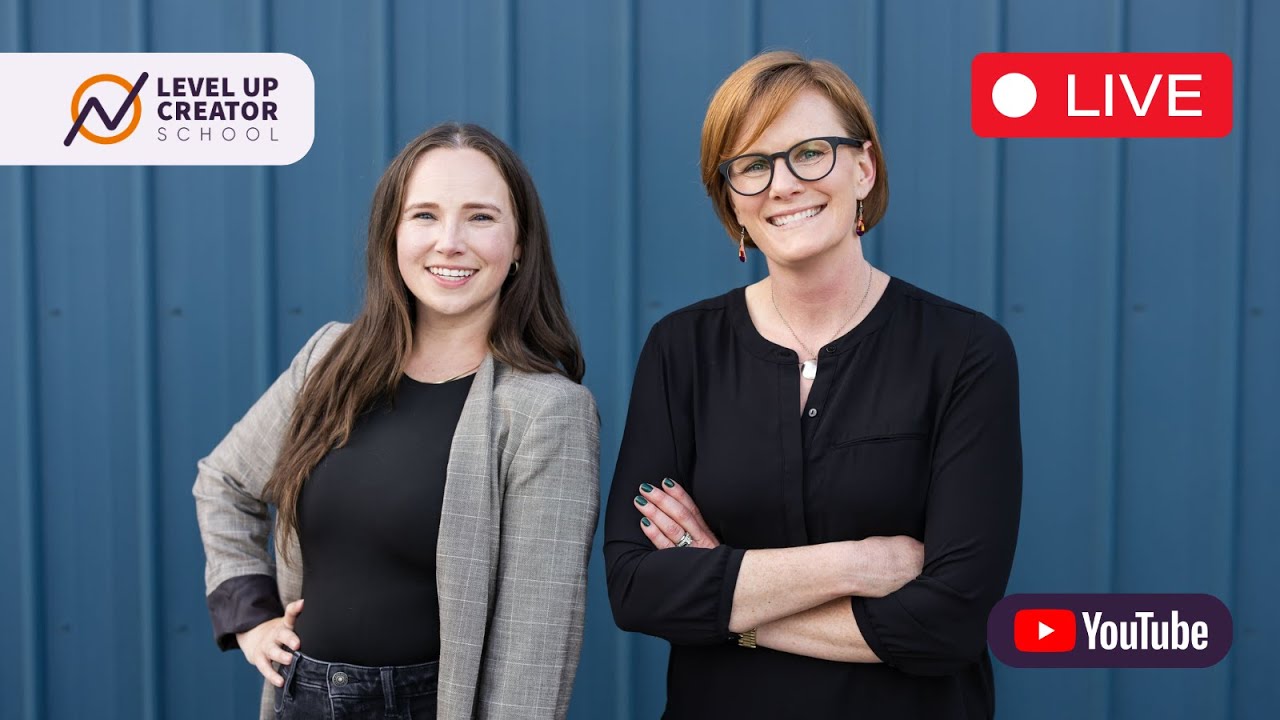
In this LinkedIn and YouTube live session, host Erin interviews Amanda Northcutt from Level Up Creators about a shifting loyalty trend: audiences are developing deep, personal affinity for a handful of creators—typically three to five—outweighing their attachment to legacy brands like Nike, Apple, or Lululemon. Amanda explains that this shift is driven by frequent, human‑centric content, community building, and the psychological need for connection. They discuss how creators can monetize this loyalty through their own products and recurring‑revenue services, noting a widespread discomfort among creators around selling. The conversation moves to brand deals, emphasizing that creators should prioritize value‑aligned, audience‑relevant partnerships over chasing sponsorships, and that legacy brands need to humanize their marketing by putting executives in front of audiences, especially on LinkedIn. Amanda also teases a forthcoming topic about a hidden competitor rooted in affinity dynamics. The session wraps with a promotion of a public case study partnership aimed at scaling a creator’s monthly recurring revenue from $10K to $50K.
Chapters
much for joining us. We're gonna let people trickle in as well. Thank you so much for being here. It's such an honor. We always feel so honored when you choose to spend any amount of your time with us because we know that time is something you can never get back. So thank you so much for being here. And all right, let's get started. Okay. Hi guys, welcome Level Up Creators LinkedIn and YouTube Live. We are so glad to have you. I'm Erin and I'm here with Amanda. We are from the Level Up Creators team, and we are going to talk about something that Amanda wrote in her last week's newsletter about how people have a loyalty to 3 to 5 creators that they follow, that it's actually starting to outshine their loyalty to big brands like Coca-Cola, Nike, and things like Apple. So Amanda, thank you so much for joining us today.
Thank you so much for your— Erin, I always appreciate it and enjoy it. Um, yeah, this is a crazy phenomenon, isn't it?
It is.
So the data is— there's like more data being produced about the creator economy as it is, I mean, experiencing this hockey stick growth trajectory. And the data is very interesting, it's very spicy. And, uh, one thing that is trending in exactly what you just said, in terms of like affinity, is we have our favorite brands, brands that we love, that we wear, that we represent, that we, you know, we want to drive a certain car to send like social signals to other people. And we want to feel a certain way by buying certain brands. Like if you drive a BMW, and you wear Lululemon and Patagonia clothes, like those are identifiers, they're really important. They're part of our culture. And we have very strong affinity For those brands, and those brands have paid billions and billions and billions of dollars to create the desire for that affinity toward their brand. And what's happening with creators is Gen—the most research has been done on millennials and Gen Zers between those two generations. We tend to have three, four, or five creators that we really, really like. We feel invested in personally. We follow them. We are. Looking for their content when we get on Instagram or LinkedIn or Facebook or YouTube or whatever the case may be. And our affinity for those 3 to 5 creators and the personal connection that we have that's enabled through social media— I mean, we feel like we know these creators, right? Which is kind of like a little bit weird, maybe a little bit creepy on some level, but, um, we feel a stronger connection to these creators who have come on the scene just in the last couple of years or even the last couple of months than we do these massive global legacy juggernaut brands who pay billions of dollars a year to capture our attention and create desire and affinity. And that freaking mind. Um, so yeah, I don't know, Erin, thoughts on that? And what are your favorite brands? Like, how is this affecting you and how are you thinking about this?
Yeah, I think like for sure, like being a, like kind of a like the youngest tier millennial, probably. Like, I'm on like the very last, you know, a couple of years there. And so I, I think like for sure, like, I definitely like grew up loving— like, my, my dad was a huge like Ralph Lauren fan. So like anything he bought me was like, oh, it has that little symbol on it and it's, you know, Tommy Hilfiger, Ralph Lauren. And it's just like those like have always stuck with me. Um, like, our— my family is like, we're an Adidas family. We're not really a Nike family, we're an Adidas family. So like, we have our loyalty there, and it's just like, that's so funny. But like, I definitely do feel very like— especially becoming a mom, like, I've gotten really connected with other mom influencers, and I just kind of follow them. I love like, just like even supporting them with like, you know, purchasing their merch. Like going that far, you know? Um, and so it's just like, yeah, I definitely have those in my personal life. So I'm like, I, I bet a lot of other people do too. I never really like put thought behind that though. It's just like something that's happened very naturally. So why, why do you think this is happening now?
Yeah. Um, that's a great question. So access, like frequency, consistency, depth. So how frequently we're seeing things from these individual humans and that they are humans, real humans, not faceless brands, right? Like there's no face associated with Lululemon or Patagonia or, you know, Apple, maybe like Steve Jobs and Tim Cook, but even just like a face of the brand. No, they're using influencers to influence our purchase decision, influencers and creators. Hold the cards in that regard, and so I think it's just the personal human connection. Like we are so deeply programmed, even on like the Maslow's hierarchy of needs level, for community and acceptance, and creators are gathering like-minded people on little pockets of the internet all around the globe, and that is just tremendously powerful, and it's compelling in in our deepest innermost needs. And so I think this is. We should probably have like a psychologist on as a guest on the podcast to talk about this very thing. But I think that's gotta be at the root.
Yeah. So what's crazy is that even if influencers or these smaller creators are selling a similar product or, you know, services, some of these like bigger like companies, like you have that, that personal connection, which gives you a much greater advantage. In some ways. Okay. So now that this is kind of becoming a thing, we're becoming more aware of it. How do you leverage that in a creator or thought leader business?
Yeah. Well, if you're looking for a side hustle or you're looking to be a full-time creator, you need to have things for sale, right? That, that people can buy from you that makes sense. And so the irony here is that most creators have a great degree of discomfort. And this is all data-backed, both quantitatively and qualitatively, based on what we hear on an almost daily basis. Extraordinary discomfort with selling things. And that could be representing other brands in brand deals, but even over that, selling their own products and services. I think imposter syndrome is a huge component, you know, lack of sales or marketing background through no fault of your own, if that's you. Um, it's just Can feel really icky, but these people whose attention you have have such great affinity for you. They like you so, so, so much. They are so loyal to you. Right products and services, whether physical, digital, or a mix of both, that solve pervasive painful problems for those people who you've kind of cordoned away in your section of the internet and or you're adding value to their life in some way. You're you're saving them money. You're helping them make more money. You're helping them get a job, not lose a job. Something about loss aversion is. As well. So helping them not lose what they have and helping them gain more and have a better life— like, these are all under the umbrella in the business world of problems that you can solve as a purveyor of services and products. And so if you're thinking in that mindset and building products that provide— and services that provide solutions to those— to that list of pervasive painful problems specific to your niche and that you are uniquely qualified to solve, you are sitting on an extraordinary opportunity to make the right offer at the right time to the right person in the right way. And when you approach sales with like a heart and posture of service and I'm bringing something to the table that is going to help you, that is going to solve problems, that is going to make your life better, people feel that. Like they get that vibe from you all the time already in the content that you create. And so adding something for sale is just a way to make it what, what is by and large a one-sided relationship where you're putting out all this content all the time. And the other side of the relationship are these thousands or tens of thousands or hundreds of thousands of millions of people who are consuming that content. We actually want to turn the table so that you have like a reciprocal, mutually beneficial relationship that's far more sustainable. It's that one-sided relationship that leads creators to burn out and crash and burn all the time. We see it all the time. Um, and I hate that. And there, there is another way to do this that provides like balance to the relationship, just like a real human relationship between 2 people, um, in real life. And so we want to kind of like replicate those same principles where there's mutual benefit, not just one-sided benefit. And for that to work, you got to be making the deal. But if you're doing that on the up and up, providing amazing, amazing products and services that do all the things I just said Then you have a tremendous opportunity to build a sustainable business, especially when some of those products and services are offered on a recurring revenue basis. So something that people pay you for monthly, month over month, quarter over quarter, year over year for.
Yeah. How do you think this is disrupting things for big brands or kind of changing how big brands are approaching Advertising? Yeah,
that's a really good question. I mean, this is what I'm explaining here is the reason that brand deals and sponsorships with creators and influencers exist. Like, marketing teams have long caught on to influencer marketing, and influencers are also— I'm drawing a distinction between influencers and creators, and we kind of draw that line on like entertainment-based content is more like influencer and creator is more knowledge-based content, like you're sharing, you're teaching other people online what you know. So I'm drawing distinction there. But, um, for real though, influencers have like a bad reputation, uh, of delivering or being easy to deal with in brand deals. And so like there are some hurdles there, but marketing teams and agencies are still very keen on, uh, getting a hold of those influencers and disseminating messaging that promotes their products and services through them. But creators, on the other hand, a little bit easier to work with. It is helpful if you have like a middleman, like an operations person helping with that. But so businesses are leveraging what's available to them through influencers and creators. And then something that's a little bit slower since we're on LinkedIn, this is super worth talking about, is legacy companies who are faceless big time,
who
have not yet come around to the fact That their executives need to be creating content and sharing content online on LinkedIn specifically, and wherever else your target audience is. And just the importance of marrying a brand and a logo with a face or a handful of faces and bringing this human element to create real community and connection with a brand and using a person as a bridge to that is irreplaceable. And so that's, I think, kind of what's next and what will become really normal in the next 18 to 30 months for sure. But that's kind of like a missing piece for the LinkedIn crowd right now, by and large.
Yeah. Do you think, like, for creators that are wanting to have some brand deals or work with larger companies, what are some— what's some advice that you can give them for finding like the right Because like not every big brand is going to be the right fit for every creator. So what's your advice there?
Yeah. One, you should sell your products and services even over representing other people's, right? Because you stand to keep then all of the margin as opposed to whatever bit or leftovers, if you will, a company is willing to pay you for brand deals. So one, that's our POV. You cannot build financial security, abundance, or generational wealth through brand deals unless you're in the top 2% of influencers who are getting multimillion-dollar deals and equity in businesses and things like that. So number one, don't think of brand deals as your core business model or your core revenue stream. That is a recipe for leaving a lot of money on the table and it's really not sustainable long-term because brand deals are pretty spotty. So if you are doing brand deals, you're looking for values alignment for sure with the company. Like, do they have a strong reputation? Do they align with your personal values? And the next layer down from that is, does their product make sense, or product or service make sense for your audience? Like, is their target market matching with the audience attention to you? Mm-hmm. Um, so making sure that any brand you're representing, there's a really, really strong fit, like their product or service is providing a solution to a painful, pervasive problem that your corner of the internet has. If there's not, then there is the opportunity there for your followers to be frustrated about like, why are you, why are you putting this in front of me? This doesn't make any sense for me or for us or anyone like me. Um, you're unlikely to be approached for a brand deal of that nature anyway. A marketer will likely have like already vetted you for that customer persona match and things like that. But so I look for values alignment, make sure you're not overdoing it and just doing brand deal after brand deal after brand deal. Because that really kind of gives people a little bit of an icky feeling, like, wait a minute, where's your content kind of a situation. So make sure that there's a balance to be had. And importantly, statistically, um, people most often do not unfollow an account because you are doing brand deals. Like, so if you do moderation, that's totally fine. The reason that people leave or unfollow accounts is for values misalignment, actually. So just keep that in mind as you are putting out content and also as you are bringing in other products and services to represent and present to your customers, customer persona.
Yeah, that's really great. And it's pretty fascinating, like this shift that's been happening, but we're just becoming, I feel like we're more, we're becoming more aware of it. You mentioned at the end of your newsletter, you kind of gave like a little teaser for next week that it's not all roses and there's a hidden competitor we need to be aware of. Without giving too much away, can you give us a sneak peek on what you're going to talk about?
Um, your competitor is not who you think it is because of this significant affinity component. And so people think about like, oh, they're gonna buy that course from that person, or they're gonna buy that person's course because like I look up to them and I'm intimidated by them. And that is how the people whose attention you have are thinking about You. So I guess we'll probably pick that up next week and talk about
the
hidden commandments.
Yeah. Okay. Before we wrap up, do you have any last parting words?
Sign up for our newsletter, obviously, so you can get the jump on the information on Saturday as opposed to waiting till next week to get it. No, thank you so much for joining us. We appreciate it. Make sure you're following along in our partnership with Amanda Goetz. That's Amanda G-O-E-T-Z. We are working in public and taking you behind the scenes of how we are taking her from 10K MRR monthly recurring revenue to 50K MRR by the end of the year. This is like no bullshit, no games, no gaming of the system. This is building layer upon layer of a foundation to build a long-term sustainable business within Amanda's lifestyle parameters. And it's really, really fun and interesting. You stand to gain and learn so. So, so much just by following this journey of us working in public. So make sure that you are following Amanda and following me so you can get updates on that as well.
Yeah. Well, that's great advice as always. Thank you guys for joining us and we will see you next week. Again, if you're not following our newsletter, subscribe to our newsletter. And if this was helpful, share it with your community. Thank you so much for joining and we will see you next week.
Thank you.
More from Amanda




Audit Your Calendar, Audit Your Life — Dr. Lani Jones on Hidden Guilt & Boundaries



Built a Successful Business & Still Feel Empty? Here’s What to Do with Dr. Lani Jones