Why Most Businesses Stay Stuck—And How to Fix Yours
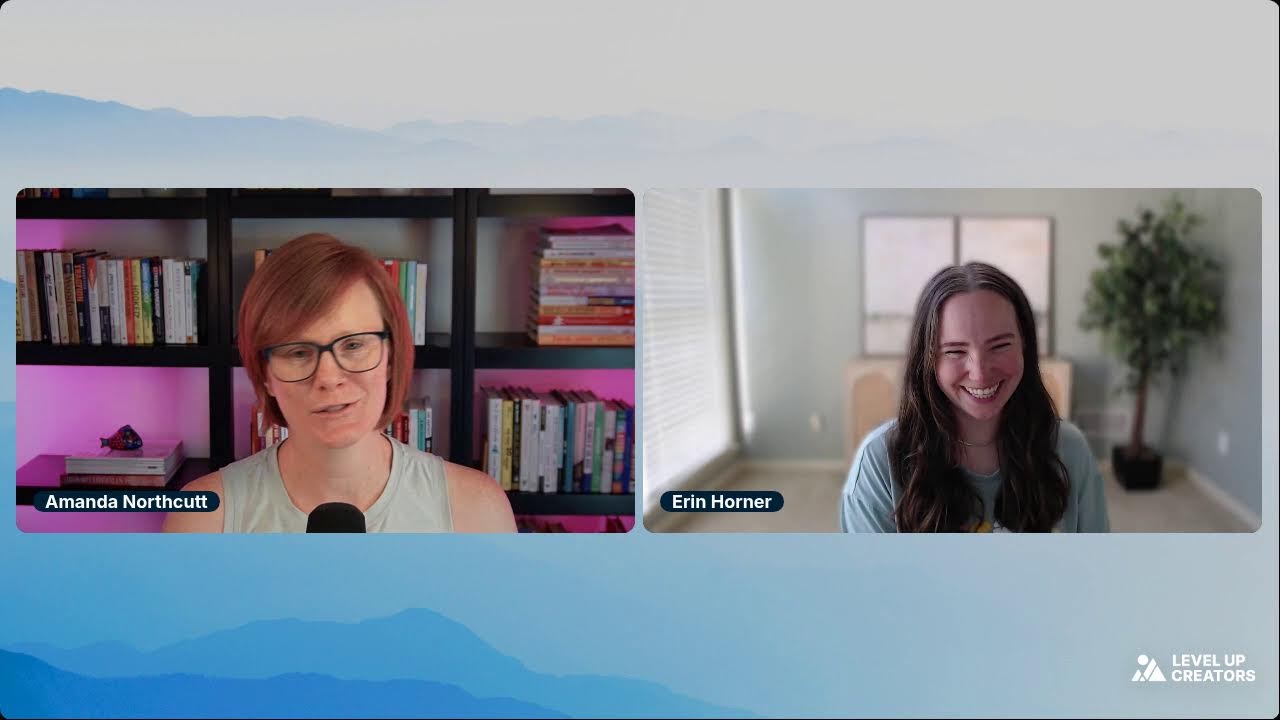
In this Level Up Creators MRR Accelerator update, Director of Operations Erin and CEO Amanda Northcutt discuss the concept of "invisible work"—the hidden administrative and low‑value tasks that cause founder burnout. They review the progress of Cohort 1 (January‑August) and Cohort 2 (started May), highlighting deliverables such as business strategies, product ladders, and sales coaching. Amanda explains that burnout stems from unclear, not hard, work and shares her personal experience of spending 30+ hours on Zoom, coaching, and admin tasks before systemizing her workflow. The core strategy for surfacing invisible work is rigorous time‑tracking and calendar audits, which reveal where time is wasted. Common invisible leaks include bookkeeping, email, tax paperwork, and other admin chores. The team combats these leaks through a three‑pronged "eliminate, automate, delegate" approach: creating detailed SOPs, leveraging technology and AI (including custom GPTs), and now adding a dedicated sales team to handle bottom‑of‑funnel activities for clients. Practical tips such as batching, setting head‑down work blocks, and "romanticizing" disliked tasks with small rewards are offered. The overall message is that founders should spend at least 80 % of their time on high‑value client work, using systems and external help to offload the rest.
Chapters
Creators. I'm our Director of Operations and Amanda Northcutt is our CEO. Thank you so much for spending a few minutes of our day with— of your day with us. Today we're going to be talking about invisible work. So again, thank you so much for dropping by. If you haven't met us, we help founders, coaches, and consultants like you build rock-solid recurring revenue businesses. Level Up Creators is our done-for-you white glove consulting firm, and this includes our MRR Accelerator program. So first, let's start by giving an update of where our MRR Accelerators currently are. We have our first cohort and our second cohort. So Amanda, do you want to give us a quick update?
Yeah. Cohort 1 started at the end of January, is rounding third base here. So the Cohort officially ends on August 21st, and we are marching toward guarantees as quickly as we can. So this is an exciting time. I'm getting, you know, websites all finalized and up, which are a little behind schedule. The, the first cohort, man, these folks are brave that like took a major shot on us, and we are going to come through for them 100%. And it's been a really exciting run, and it's been a lot of work. And some of that has been visible and some of that has been invisible. Sorry, just trying to like bring it back around here, but— Thank you. Yeah, so Cohort 1, marching toward guarantees, learned a lot. Oh my goodness, we love these people so much. This is such an incredible cadre of professionals. I mean, I could not have asked for a better Round 1 of folks. So we're grateful and excited also to hit their guarantees. That's the big cherry on top, right? They all have beautifully defined businesses. And we've answered kind of all the The questions about like things that they needed clarity on to get their businesses up and off the ground. Cohort 2 started in May. And so we've just delivered business strategies and product ladders a couple of weeks ago and are working on marketing and sales strategies. So it's like, those are kind of the couple of the biggest, you know, most foundational documents. It's like, here's how to operate your business. Here's how to get customers. Here's what to do. We're working a lot on sales coaching and how to kind of present your offering and move conversations forward in your pipeline in a non-awkward, very natural way. We call sales matchmaking, not sales. Because that's, once you have clarity around who you are and what you do and what you really have to bring to the table, it's much easier to identify a match with the prospect in front of you or send them on their way and maybe refer them to someone else that might be a better fit. So yeah, that's where the cohorts stand.
Sweet. Okay. Well, let's jump into invisible work. So you have said before that founders don't burn out from hard work. They burn out from unclear work. What inspired that? And what's a real-life example of that happening in your life?
Yeah. I mean, I think we've all probably gone through a day, a week, a month, a quarter, I've even been through some years where I look back and I'm like, what happened? Where did it go? And you're just, you know, grinding it out, especially at the beginning of the business. And that makes total sense. But it is the— I call it kind of like between-the-lines work almost that will just about kill you if you don't watch out for it. But, you know, I spend 30+ hours a week on environments like this and on Zoom calls and on coaching calls and sales calls or matchmaking, as it were. And then there's a pile of work to be done at the end of the day, right? And so I have become much more diligent and effective at delegating that and creating systems around getting work done. I have an amazing team, obviously. And Erin is just one representative here of Team Level Up. And just remembering that my team has my back. And also, if you don't have a team, technology and AI have your back, and you can leverage I mean, an enormous amount of technology at this point that makes your life much, much, much easier. Yes. Is it harder on the front end? Yes, it sucks setting up new systems, creating standard operating procedures, selecting technology, setting it up, learning how to use ChatGPT and create custom GPTs and all those things. There's a learning curve, and your mindset is going to determine how painful that process is for you or not, right? You know that you can take a rip the Band-Aid off approach if you've identified what needs to be done and you can find a tool to help you or a VA or someone or us. Um, but if you think it's gonna suck, it is. And if you think it's gonna be really, really helpful and it's gonna be worth the investment, then it is. So I think mindset honestly is a huge, um, kind of umbrella thing that we have to address when we're talking about invisible work, because you first have to identify it and realize, OK, is this really in my wheelhouse? Am I the only person at this organization who can do this? Or can I bring someone on? Or can I work with Level Up? Or can I use a piece of technology to stop doing this? But if you're just spinning your wheels, and you've got your head down and your nose to the grindstone, and you never come up for air, you're not going to be able to identify what work might be delegatable versus Or things that you might just should stop doing altogether. I think that's often overlooked. And it's like, what if you audited your calendar and tried to remove 30% of the things on it? What would happen? Does your— is your core business affected or are you just spinning your wheels doing people favors and not really getting anywhere?
Yeah, that's really good. So when you go about discovering invisible work, what is your go-to strategy?
Tracking my time.
Yeah.
Writing down what I'm doing, like trying to actually get a data set in front of me about what I'm doing. And then you look at, you know, the amount of time I spend in comments for Notion or comments for Slack or emails or phone calls, or even now it's more like assigning out work at the end of phone calls. But it is a really, really revelatory exercise just to see where you spend your time. And yeah, it kind of sucks to track your time for a week or two, but Guess what? It's really hard to get anywhere if you don't do kind of an audit and assessment. I just did a massive audit of my calendar because it's just gotten completely untenable. Like, I just can't do it. You know, putting people off for a month or two or something that I really need to speak with, and it's just totally untenable. So I had some time off the last couple weeks and allowed myself to pick my head up out of the day-to-day work, look around, and I did a serious audit of my calendar and, you know, thought big about our organization and where we're headed. And okay, what needs to change, you know, on the day-to-day level, on the ground floor, in order to unlock the next step of our long-term vision?
Yeah. What, in your experience and the people that you've come across and in your own life, what are the most common, maybe invisible leaks that, that founders, coaches, and consultants might have? Time wasters, or—
Yeah. Um, I don't know about invisible, but it— all administrative work. You know, I'd ask like everybody that's considering the accelerator, um, during our little matchmaking process what they hate doing. Like, what tasks do you absolutely dread at work? And it's just like doing the books, responding to emails, doing, you know, tax-related paperwork, and All those fun things that none of us enjoy. And so I don't know, do you have something in mind? I wonder if you've seen something that I've missed.
No, I think admin work for sure. I think sometimes it's those things that pop up that feel really urgent in the moment, but maybe they're important, but they're not urgent. Or just even like a, almost like a mental model to help you prioritize what needs to get done right now. And then maybe just to systems of like, okay, I know that I shouldn't allocate my 30 minutes to context switch to this small task, but I can add it to this Friday list of all these little things that I know that I need to knock out. So I think things like that really suck up your time, especially if you do communicate with a team. Sometimes scheduling like just a head-down block of like, I need to get through this really important work, which means I don't open an email or a Slack message or anything that's going to jump me to a new task. So being really diligent to give yourself time and space to work and complete your actual tasks, maybe adding blocks to your calendar to do those things. So for me, it's, it's the small tasks that really sneak up and steal your time. I don't know if you feel the same way.
Yeah. Yeah. Sometimes at the end of the week, I'll end up with like 25 to 40 tasks, it's like, oh my God, this is actually a week's worth of work. And I had to just keep pushing and pushing and pushing because of my, um, like live synchronous time with other people, which is what I really, really enjoy doing. Um, but everyone has their limits. Like absolutely everyone. I think I've only more recently started to acknowledge mine. And so, um, I'm feeling that.
But no, Crazy. She doesn't have limits. That's crazy.
Totally crazy. I haven't, I haven't for about 2 and a half years, and now I'm like, oh yeah, okay.
Well, and I think that's something that's important too, is knowing yourself. What are you going to prioritize or favorite? Like, you're going to prioritize tasks that you enjoy doing over the ones that you don't. So again, back to if there's something that you don't like to do, You know that you are going to put it off. So you might as well find a system, delegate it, or completely remove it from your workflow because you know that realistically you're not going to do it. So kind of going back to that eliminate, automate, delegate, how do you, how do we inside our MRR Accelerator help our clients do this?
Yeah. So we try and help our accelerator clients pretty much just do or spend at least 80% of their time doing what they really, really love to do, which is delivering their services, talking to clients, working with clients. Many times, like creating content, working on books, traveling on-site, you know, for client work can be really fun for a number of our clients. I love doing that, for instance. And so we are really, really diligent about understanding every single step that it takes every day, week, quarter and year to run their operation. And we have standard operating procedures for things that must be done manually. But we let our brain not have to work hard when we're looking at a standard operating procedure about like loading up our LinkedIn posts for the week, or whatever the case may be, or our newsletter for the next month. That should be quite formulaic. And like your creative time writing, if that's what you enjoy, great! Spend a good bit of time on that and batch write and do a series and enjoy it. But Have your standard operating procedure that says, here's how we do our editing, upload, and testing, and deployment workflow, right, for our newsletter, or, you know, social media content, or whatever the case may be. And then, if you hate doing your, you know, kind of CRM stuff, like working through your pipeline for your, your sales pipeline for consulting or coaching, then just do it once a week and limit it to an hour, you know, and give yourself a reward kind of a situation. But we always use technology, standard operating procedures, AI. We build custom GPTs. Like we were working very diligently toward reducing the minutia and administrative work and just the crap that comes along with running a business. And one really important addition to our team that I'm working on extending offers next week is we're adding a sales team to level up creators because while our clients are brilliant and incredibly capable, They, by and large, do not like sales. And so we're like, okay, well, let's help close the loop. We'll take it from, you know, designing or redesigning your business all the way through client, you know, LTV maximization and therefore MRR and therefore gross revenue. So our sales team is not going to sell our services. They're going to sell our clients' services. And so we're very, very, very excited about that, as are our clients who have raised their hands and said they would love to have a salesperson of the caliber that we're going to bring in. So we are super, super, super pumped about that. I mean, that's going to be like a significant game changer. Um, even at the— even though we're at the end of Cohort 1, this will be a game changer for Cohort 1 and all subsequent cohorts. So we're pumped about that. So that takes like a huge— not only like, um, time. I mean, sales takes time, right? It takes, it takes quite a lot of time and At times can feel a little bit like a gamble if you don't love it. And so being able to take off that whole entire, you know, bottom-of-funnel work off of our clients' plates feels like really big and really, really good. And there's a major mindset factor there too. It's like, oh, I can relax and do the thing that I love most, because now I have a lever that I can pull and I can outsource this. Still working closely with the salespeople and level up, but Yeah, that feels really, really, really big. I'm very excited about that.
And I feel like we are not ruthlessly, but very diligent at going like, hey, that's wasting your time. That's not worth the effort you're putting in with our clients. And for delegation, we make it extremely easy because we write SOPs for their entire business and literally have a template of when you go to hand this SOP to somebody else, here's how you do it. Here's the system that's already built for you, ready to go. And so, yep, elimination, delegation, and automation. Obviously we set a lot of those up on behalf of our clients. And so, yeah, I feel like we hit all of those buckets all of the time for each of our clients, which is very interesting. I do have one tip that you reminded me of. If there is a task that you don't like, there is this newer idea to romanticize The small. So make it a thing. Treat yourself. If you hate answering emails, take yourself to your favorite coffee shop, treat yourself to a coffee and say, while I'm here, I'm going to answer every single email that is in my inbox. And I'm going to treat myself and make it a fun little task instead of something that feels dreary. So
yes,
there's your tip. Yes.
I love that. Small rewards. I'll do that. Like, okay, I'll go out and shoot baskets for 15 minutes. I'll walk the dog. I'll do something, you know, whatever it is. And then just real quick, if you don't know us very well in our accelerator process, during the accelerator, we are your full fractional team and we're just doing, we're doing all the work that is not, you know, delivering your consulting services and doing sales calls, except for now we are moving forward for those who raise their hands. But I think that's an important thing. It's not just for handing you an instruction manual. That's for once the accelerator is over. It's easy to cut the cord from us. You own all your tooling and everything like that. So yeah, if you want to bring on a VA, it's easy to just plug and play. Here's your, here's your manual. Here's video instructions for everything. Tech enablement library, SOPs, custom GPTs, ready to roll.
Yep. You want it, you got it. That's, that's our motto. Okay guys, thank you so much for joining and join us next week for another MRR Accelerator update and another business strategy. Bye.
More from Amanda





Audit Your Calendar, Audit Your Life — Dr. Lani Jones on Hidden Guilt & Boundaries



Built a Successful Business & Still Feel Empty? Here’s What to Do with Dr. Lani Jones