Lisa Murphy explains why operating plans fail within weeks and offers an 18-week roadmap to make them stick. She cites research showing 67% of strategic plans collapse, then walks through four phases: anchoring a weekly CEO rhythm, layering daily habits, integrating revenue systems, and activating monthly reviews. The fix isn't more discipline but better sequencing.
Chapters
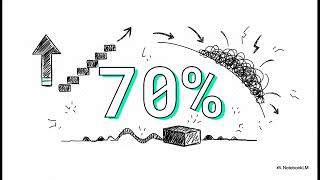
Okay, you know the drill. You've spent weeks, maybe even months, crafting the absolute perfect operating plan. It's brilliant, it's detailed, it's beautiful. And then Monday morning hits. So why do our best-laid plans so often fall apart? And more importantly, how can we build one that actually, you know, works? Let's get into it. So why does this keep happening? You've got the strategy down, you've got the drive, you might even have that beautiful fresh binder for the plan. And yet a few weeks in, you're right back to managing by the seat of your pants. It is a super common, super frustrating problem for founders, but I promise you, it is not inevitable. And here's the first big mindset shift we have to make. Are you ready for this? The problem isn't your plan. And it's probably not your level of discipline either. The failure almost always happens in that gap between the perfect document and your messy, day-to-day reality. To really understand this gap, I want to tell you a story about what I call the 3-ring binder problem. Let's meet a founder named Monica. She built the perfect operating plan. I mean, it was a work of art. She printed it out, put it in a brand new binder, complete with color-coded tabs. She felt so accomplished, so ready. And in week 1, everything was perfect. Monica followed her new system to the letter. She ran her 90-minute weekly planning session, her CEO rhythm, on Sunday night. She checked her daily non-negotiables every single morning. The plan was alive, it was working, and it felt incredible. But then, week 3 rolled around. A client emergency completely derailed her Monday. She skipped tracking a few things on Tuesday. Pretty soon, that binder started to feel less like a helpful tool and more like an accusation, just sitting there on her desk. The brand-new system started to feel like extra work piled on top of her real work. By week 6, it was pretty much over. The binder got moved from the desk to the bookshelf. It became just a professional-looking decoration, completely disconnected from how she actually ran her business day to day. The plan became a shelf ornament. Does any of this sound familiar? Well, if it does, you should know Monica is not alone. Not even close. The Project Management Institute found that a staggering 67% of strategic plans fail. And get this, they don't fail because the ideas are bad. They fail because they completely fall apart during implementation. So if the plan itself is good and you're a smart, capable person, why does it die? This really gets to the heart of the matter. It's not about trying harder or having more willpower. It's about starting smarter. And this right here is the crucial point. We all assume the problem is us. We think, "I just need more discipline. I need more willpower." But the operational reality is, you don't need more discipline. You need a better sequence. You can't just install an entire new operating system for your business overnight, any more than you could for a computer. You have to do it in stages. Which, thankfully, brings us to the solution: a structured 18-week integration roadmap. The whole point is to turn your plan from a document into an ingrained, totally automatic operating system. This isn't a weekend sprint; it's a careful, phased installation. So here's what the roadmap looks like. See, it's broken into 4 distinct phases. Phase 1, for the first 3 weeks, is just about anchoring your weekly rhythm. That's it. Then, in Phase 2, you start to layer in your daily habits. Once that's solid, Phase 3 is all about integrating your revenue systems. And finally, in Phase 4, you activate your monthly reviews. Each phase builds on the last one, and that's what makes the change actually stick. Okay, let's break that down a bit. For the first 3 weeks, your job is to do one thing, and one thing only: run your 90-minute CEO planning rhythm every single week. No exceptions. That's it. Once that feels totally automatic, like brushing your teeth, then you can move to phase 2 and start layering in your daily non-negotiables. But you do it one by one. This slow, incremental approach is the absolute key. Now, once your personal rhythms are solid, you move into phase 3: integrating your revenue architecture. This is where you connect your sales process, your pricing, the very core of how you make money, to this new reliable operational engine you've built. And only then, after a full 9 weeks, do you begin Phase 4: the monthly reviews. Now, you might be asking, why wait so long? Well, it's simple—because now you finally have meaningful, consistent data to review and act on. But listen, getting the system installed is really only half the battle. Integration isn't a one-time project you can just set and forget. You absolutely need a maintenance plan to prevent those old, chaotic habits from slowly creeping back in. And this is such a critical point. A famous McKinsey study found that 70% of major change initiatives fail during the sustain phase. Think about that. People can adopt the new way of doing things, but they can't maintain it over the long haul. This is where most good plans go to die. So how do you sustain it? It's actually pretty simple. You use 3 maintenance rhythms. Every week, you have a quick check-in question. Every month, you do a simple system audit. And every quarter, you do a deep strategic review. These rhythms are what ensure your system evolves with your business instead of becoming obsolete in 6 months. Part of good maintenance is just knowing the warning signs. You know, systems don't just explode. They degrade slowly. So if you feel that old decision fatigue creeping back in, or if your weekly 90-minute rhythm suddenly feels negotiable, those are the canaries in the coal mine. Catching these little signals early Makes the fix so much easier. All right, you've got the roadmap and you've got the maintenance plan. Now let's quickly look at 3 really practical tools that are gonna help make all of this happen. First up is the installation roadmap itself. Seriously, print this out. Put it on your wall where you can see it every day. The simple physical act of checking off each phase gives you momentum, and it gives you visual proof of your progress. It turns this abstract goal into a real, concrete project plan. The second tool is the Monthly System Health Scorecard. Now, this is a brilliant little tool because it forces you to quantitatively, with numbers, assess how your system is actually performing. Are decisions getting faster? Is your weekly rhythm consistent? This turns those vague feelings of "I think things are better" into hard data that you can track over time. And the final tool is the Quarterly Upgrade Planner, which is all about one thing: focus. With this, you don't try to fix 10 things at once. You just ask, "What is the one upgrade that would make everything else easier?" Then you pour all your energy into installing that single, high-leverage improvement over the next 90 days. It's so powerful. And this brings us right back to Monica. She threw out that binder and she started the 18-week process. 6 months later, the plan wasn't some document on a shelf anymore. It was just how she operated. It was automatic. She didn't just build a system, she herself became systematic. And that right there is true integration. You know, it's really easy to get by just being functionally chaotic. Things get done, the business survives, it's good enough. But as the author Jim Collins famously wrote, "Good is the enemy of great." A truly integrated operating system is what makes the difference between just being good and building something truly great. So I'll just leave you with this question. Your plan is probably good. I have no doubt. You're smart, you're driven. But is your implementation great? That's the real challenge. And with the right sequence, it's a challenge you can absolutely conquer.