Why Founders Burn Out: It’s Not Weakness, It’s Your Operating Model
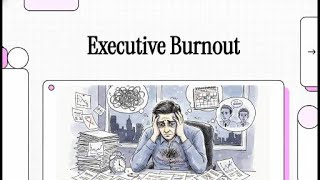
Lisa Murphy argues founder burnout stems from broken operating systems, not personal weakness. She traces how chaos creates a feedback loop of reactivity and fatigue, then shows why vacations fail but operational fixes work. Sarah's story illustrates the shift from rest to building systems that remove the founder as a bottleneck.
Chapters
Okay, let's dive right in with a story that honestly might sound a little uncomfortably familiar. Meet Jason. So Jason is this highly successful leader. His company is growing, his clients are super happy, and if you look from the outside, everything is just the picture of absolute success. But on the inside, well, Jason is running completely on vapors. He hasn't taken a full weekend off in, get this, 11 months. It's a stretch he keeps telling himself is just a busy season, even though he's literally been saying that for 2 years now. His patience with his team has thinned out to an absolute wire. He's forgetting conversations he literally just had. And most tellingly, he's waking up at 3 AM with a tight chest, totally unaware that he's deep into burnout, just mentally sorting through everything that went wrong that day and everything he fears is about to go wrong tomorrow. By the time a client finally asked him, "Hey, are you okay? You seem kind of off," this pattern had been locked in place for a long, long time. Arianna Huffington has this quote that just perfectly frames the reality here: "Your exhaustion is not a personal failing." It's really an epidemic wearing a professional mask. You see, burnout symptoms, they rarely arrive loudly. They build up in these subtle layers—a skipped workout here, a slightly shorter temper there. And the leaders carrying this load? They aren't weak. Actually, scratch that—they're typically the most driven, most capable people in any room. But that exact drive is what makes the symptoms so incredibly easy to dismiss. It masquerades as ambition, right up until it breaks you. So I really want you to ask yourself this right now, because high performers are conditioned to push through discomfort. We're taught to just grit our teeth, you know, and get the job done. But that exact drive, when it's applied without boundaries or proper support, actually becomes the very mechanism of your collapse. You are not failing. Your structural support has simply buckled under the sheer weight of your ambition. In today's explainer, we're going to cover a clinical to structural blueprint We'll hit on: 1. The Silent Leadership Epidemic. 2. The Practical Burnout Assessment. 3. The Overwhelm Engine. 4. A Structural Recovery Plan. And finally, 5. Your Path to Success. Okay, Section 1: The Silent Leadership Epidemic. Before we even look at the symptoms, we really have to understand the sheer scale of this problem. 56%, 56% of leaders reported feeling burned out recently, and that's actually up from 52% the year prior. So this is a growing trend. But here's the most alarming part: that number? It only represents the leaders who are still standing. It doesn't even account for the ones who just quietly stepped back, handed off their businesses, or simply walked away because they couldn't take it for one more day. And the crucial point here is the financial weight of this epidemic. To put this into perspective, C-suite executives face an estimated $20,683 in annual costs per leader, purely due to disengagement. That is money silently vanishing into revenue shortfalls, employee turnover, and completely missed opportunities. And on a macro level, burnout costs an estimated $125 billion annually in U.S. healthcare expenses. So this isn't just a wellness issue, right? It is a massive operational vulnerability. Moving on to Section 2: The Practical Burnout Assessment. We're gonna walk through a practical diagnostic using symptoms that are firmly rooted in research, and I really want you to treat this like operational intelligence. This isn't about, you know, feeling bad for yourself; it's about objectively looking at your data. First off, we have to distinguish between just normal tiredness and bone-level depletion. Think about Monica, a fractional CFO. She went on 3 consecutive vacations, but she still couldn't decompress. She was sleeping 9 hours a night but waking up feeling completely empty, convinced something had to be medically wrong with her. Well, normal tiredness is fixed by sleep. But bone-level depletion? That means your core reserves are just gone. The tank has been running on empty for so long that getting a good night's sleep is literally like putting a tiny Band-Aid on a blown engine. Your body always sends the first signals. Because chronic stress basically suppresses your immune function, you might find yourself constantly cycling through colds or weird, unexplained physical complaints. You might have persistent jaw clenching or tension headaches. And crucially, sleep disruption. Waking up between 2 and 4 AM is a classic nervous system response. It's those cortisol spikes, strongly linked to chronic stress overload. But how do most leaders respond to this? They just override this critical data with extra coffee, jam-packed calendars, and sheer willpower. Emotionally, the toll is absolutely immense. Decision fatigue is a major indicator here. In fact, research from the Kauffman Foundation confirms that founders with unstructured operating rhythms experience significantly higher decision fatigue. Remember Jason? He used to make a dozen complex decisions before 10 AM. But once he was burned out, he started second-guessing really simple emails, taking like 40 minutes for what used to take 3. Neuroimaging actually shows that burnout physically weakens the connection between the brain's emotion and reasoning centers. So you also see emotional detachment, a really short fuse with your team, and worst of all, a loss of enthusiasm. As Simon Sinek notes, when you lose your why, you lose your ability to inspire, and your endurance just vanishes. Behaviorally, burned-out leaders begin to isolate. And believe me, the whole team feels it. They withdraw from relationships. They skip meetings. You start seeing an increase in presenteeism, which is basically being physically present but totally mentally disengaged. Consider Len, a founder who honestly just stopped opening his inbox. And it wasn't because he didn't care. He cared deeply. He just didn't have the capacity for one more urgent thing. Everything felt urgent and nothing felt manageable, which ultimately turned him into the biggest bottleneck in his own company. And again, that's not a character issue. That is a structural breakdown. Section 3: The Overwhelm Engine. So why does this persist? Why can't highly capable people just, you know, pull themselves out of it? Let's uncover the mechanical root cause of this systemic breakdown. We call this the Overwhelm Engine. It's a compounding cascade. It starts with chaos, right, which forces you into reactivity. That constant reactivity breeds deep, deep fatigue. Then fatigue leads to inconsistency in your leadership, which inevitably costs you opportunities. And what happens when you miss opportunities? You feel profound guilt. And that guilt just drives you to push even harder, throwing you right back into the chaos. It's a brutal self-reinforcing loop. Rest alone is absolutely necessary, but it is not sufficient to break this cycle. That brings us to Section 4: Structural Recovery Plan. If you recognized yourself in those symptoms, or maybe you felt a little too seen by that Overwhelm Engine we just talked about, it is time to pivot to these structural Solution. It is absolutely vital to understand the difference between what you think you need and what you actually need. You might think, "Oh, I just need a mindset shift and a week on a beach," but a vacation only resets your nervous system temporarily because eventually you return to the exact same broken operating conditions. Mindset work is great, but it doesn't install the systems that prevent the chaos from coming back. What you actually need is operational clarity—systems that permanently remove you as the bottleneck. A service-based business owner named Sarah had a realization that perfectly captures this shift. She recognized 9 out of the 10 symptoms we discussed in herself, and she said, "I thought I needed a vacation. What I actually needed was a system. The vacation bought me 2 weeks. The system bought me my career." This is exactly what I want you to take away from this explainer today. Burnout is not solved by doing less. We are not talking about hacking a 4-hour workweek here. It's solved by operating better, with the right structural support so your business doesn't just collapse the minute you step away. Finally, Section 5: Your Path to Success. Let's map out exactly how you can install this system and reclaim your capacity. Your success path involves a highly strategic action plan. First, acknowledge the systemic breakdown. Again, you aren't weak, your systems are. Second, you need to seek real operational support from a coach or join a community like the Founders Operations Council. And I wanna be really clear on this point. You have to look for support that is designed to actually move your business forward structurally, not just a place to vent and make you feel better in the moment. You have to replace that reactive firefighting with executive-level weekly operating rhythms. A really great next step is to book a Founder's Freedom Formula Q&A with experts like Lisa Murphy at Limited to Limitless to find out where your operational leaks actually are. I'll leave you with this final, really important thought and question. Your business is absolutely worth fighting for. And so are you. So, are you gonna keep paying that $20,000 hidden cost of exhaustion every single year, sacrificing your health and your clarity? Or will you finally fix the leaks, break that overwhelm engine, and build for sustainable capacity? The choice is entirely yours. But remember, the most dangerous thing you can do right now is tell yourself you'll deal with it after this next quarter. Make the structural change now.
More from Lisa


Lisa Murphy on Speak Feed Lead Conversations with Jackie Bailey | Premieres October 16







