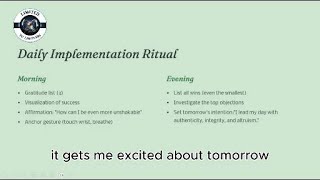
In this presentation, the speaker outlines a personal resilience framework and a sales follow‑up philosophy designed to boost productivity beyond simply filling a calendar with meetings. The resilience routine consists of three nightly rituals: (1) listing every win of the day, big or small, to create a positive mental baseline; (2) reviewing the top three objections encountered, looking for patterns without needing immediate answers; and (3) setting a clear intention for the next day, repeated aloud before sleep. The speaker then introduces a "value‑first" follow‑up approach for salespeople: give without keeping score, deliver genuinely useful resources within 24 hours of a "no," and position yourself as a trusted resource rather than a pushy closer. By sending tailored, helpful content (e.g., an article or checklist) the salesperson stays top‑of‑mind and can turn today’s rejection into tomorrow’s opportunity. The overall message is that intentional, value‑driven habits—both personal and professional—create rhythm, trust, and long‑term success, far outweighing the illusion of productivity that a packed meeting schedule suggests.
Chapters
Listen, I want to list all of my wins. This includes the biggest and smallest win for the day. It creates an emotional and mental baseline for building my resilience. It helps to build repetition because when I start with the wins for the day, it gets me excited about tomorrow. I also want to review and investigate the top three objections from the day. I just want to see what happened. Was there a pattern? Were they the same as yesterday? Were they the same as each other? Were they similar to each other or were they completely different? I don't necessarily need to find all the answers in the evening. I just want to know where. What was the link or what did I see going on so that I'm aware for tomorrow, what to pay attention to. And then I set tomorrow's intention. My intention for tomorrow might be something like I lead my day with authenticity, integrity and altruism. And then I say it two or three times to myself before I go to bed. Remember, rituals create the rhythm for resilience. What do I mean when I'm talking about value first? Well, value first follow up is when you give without keeping score because that's what people are going to remember. People remember generosity. It helps you build trust. It helps you say what they. It helps you stay in what they call is top of mind or front of thought. And it positions you as a resource that can be helpful for them in the future even if your product isn't the correct fit for them. And we'll build on this later because it's not just today that's going to be helpful to you. It's further down the line. As an example, I might send somebody a note with an article and say I saw this article and I thought of you or I thought this could be helpful for you. Or here's the checklist I mentioned in our discussion. I hope it helps you even if it's not the right time for you. I totally get it. But this still might be useful. And I make sure I'm giving them something of value, not just something of flow bluff. I'm sure you all know the difference. Make sure it really aligns to them, to their need and how maybe your solution could make even make it easier for them. But you don't necessarily have to point that out right away. Make sure you send this value within 24 hours of the no, no matter what kind of no it was. And remember, the follow up is about them. It's not about closing the sale or value first. Follow up turns today's no into tomorrow's open door in more ways than one.