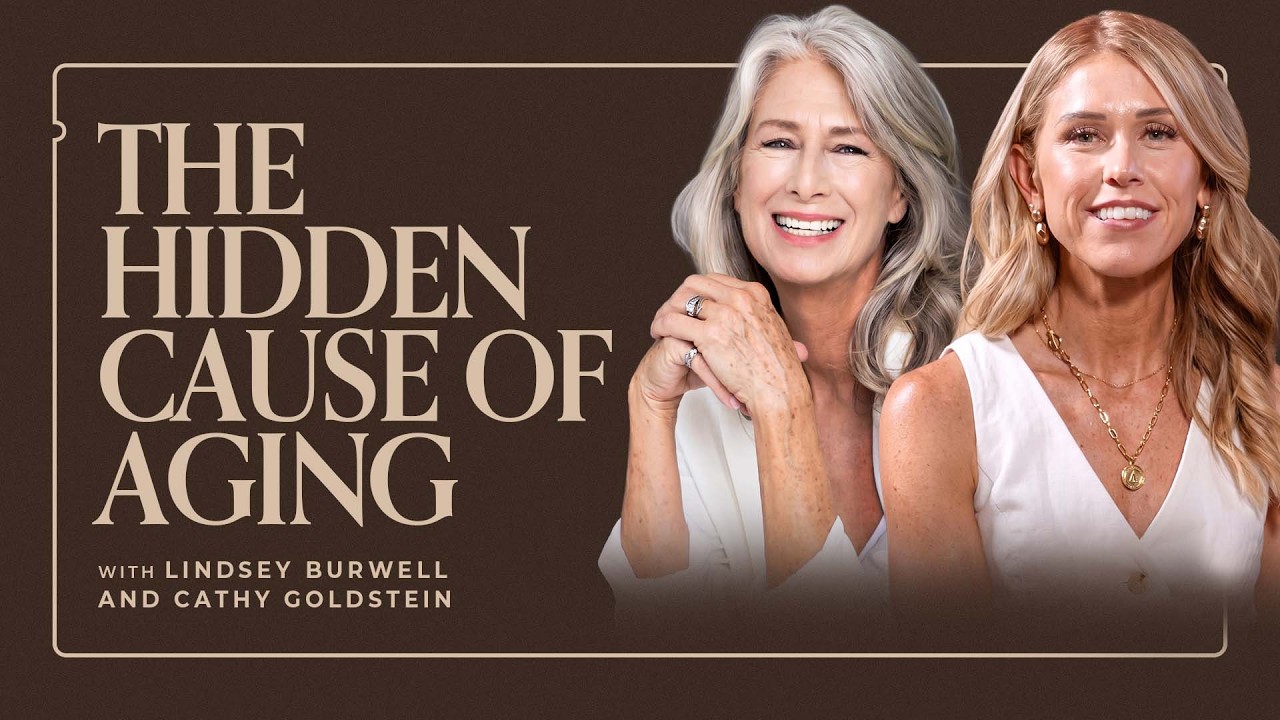
Breast Cancer Surgeon: Your Body Whispers Before a Diagnosis with Dr. Beth DuPree
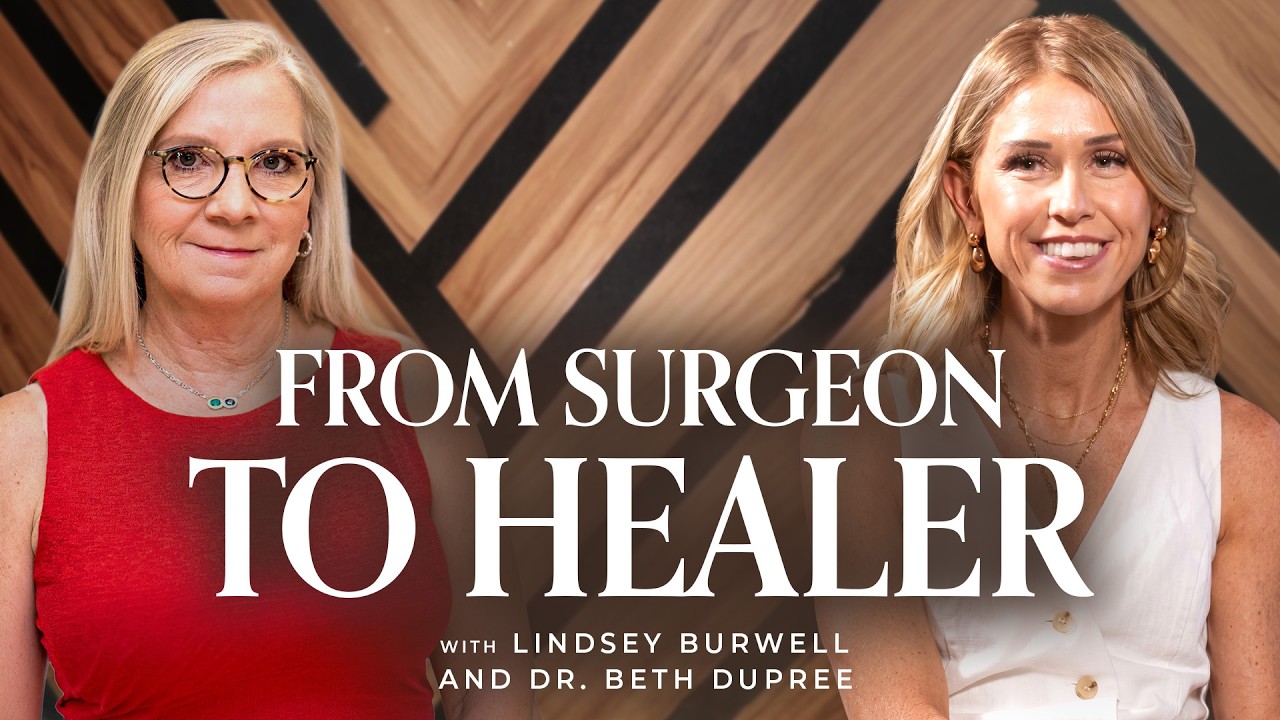
In this episode of The Biohack Method, host Lindsey Burwell interviews Dr. Beth Dupree, a former general surgeon who became a breast cancer specialist and now practices integrative oncology. Dr. Dupree recounts her career evolution—from performing traditional surgeries to recognizing the limits of cutting out disease—and describes a shift toward treating the whole person, including psychosocial, emotional, and spiritual dimensions. She highlights the rise in breast cancer among younger women, possibly linked to pandemic‑related screening gaps, and stresses the importance of proactive screening and listening to bodily signals. The conversation critiques the symptom‑focused, pill‑centric model of Western medicine, advocating instead for root‑cause approaches such as functional medicine, bioelectric interventions (e.g., transcutaneous vagus nerve stimulation), biomagnetism, breathwork, and psychedelic therapies (psilocybin, MDMA, ketamine) for mental health and cancer survivorship. Dr. Dupree shares poignant patient stories—her pregnant patient Dawn, her sister’s thyroid case, and her own melanoma scare—to illustrate the need for holistic care and shared decision‑making. She urges women to take ownership of their health, build supportive “tribes,” conduct emotional inventories, and align with their deeper purpose. The episode concludes with practical advice for listeners and information on Dr. Dupree’s books, foundation, and online platforms.
Chapters
When we look at dis-ease and disease, yeah, we've got to look at the whole picture because if we only treat one part, we're missing the opportunity to really help someone heal at a much deeper level. When you treat something with a pill for a diagnosis, you may be making them feel better at that time, but are you actually getting to the root cause?
It's going to re-manifest physically in a different form because it wasn't resolved.
Welcome to The Biohack Method. I am Lindsey Burwell. I break down the science,
cut the fluff, and give you real tools to optimize your body with peptides, transdermal Welcome back to The Biohack Method podcast. I am so pumped today because I have Dr. Beth Dupree here. We have been chatting for, for a few minutes prior to this. I'm like, oh, I can't wait to get into this. You guys are in for a special treat. She has such a beautiful life story, starting with working with breast cancer and removing breast cancer out of people's bodies, and then transitioning into her life and her mission purpose, why she's here on Earth. And so, Beth, welcome. Thank you so much for having me. Thank you so much for being here.
Thank you for having me in this lovely 100-degree weather.
Oh my God.
Oh my gosh.
I know, coming from Sedona, right? Oh,
it's amazing the difference.
It's crazy how 90, what is it, a 90-minute drive, 1-hour drive, and it's completely different.
Yeah, it's just like 90 minutes and you change climates, but it's okay. I'm enjoying the dry heat.
I love that. Okay, tell us about your story. So you dedicated most of your career in being in oncology and working to remove breast cancer, right?
Correct. I started out as a general surgeon doing all aspects of general surgery, meaning—
Yeah.
Gallbladders, thyroids, everything, parathyroids. And at about 10 years into my practice, I started doing mostly breast cancer care. And it coincided with the time when breast cancer care shifted and we became less— everyone was getting mastectomies when I first trained. Then we did breast conserving surgery with lumpectomies, radiation therapy, and then became much more nuanced. And now we really have precision care where we can, take a biopsy of a tumor under ultrasound or under stereotactic guidance, send that tissue for testing, find out, do you need chemo, not need chemo? Can you benefit? Won't you benefit? Um, and then how many lymph nodes, um, you could have with tumor and not need to get. So it's very nuanced now. So it's not a cut and dry, one size fits all.
Yeah.
And that's the one thing I loved about breast cancer care because it wasn't just like someone's got a hot appendix, you open them up, you take out their appendix, they're better. Goodbye.
Yeah.
With breast cancer, it was more of a journey and learning to walk through the diagnosis and treatment with the patient, and now into other areas that I consider absolutely important in integrative oncology and cancer survivorship, which is including psychedelic therapy and bioelectric medical interventions.
That's so powerful. It's so crazy for me because I feel like in the last 10 years, I'm witnessing a crazy increase in breast cancer. Are you noticing that?
We're seeing it, and I, there, we're, unfortunately, we're seeing it too often in young women.
Yeah.
And it depends which studies you look at around the world. There may be an association with this little process we went through globally called a pandemic. Um, and whether, you know, some people say, well, it's just because people weren't getting screened, but I think, You know, that story is yet to be told.
Mm-hmm.
And I hope it's not true, but if it is, we've gotta be ready to take on the challenge where, for each and every patient that's diagnosed.
Yeah. Yeah. It, it's so, it's wild to see younger and younger women getting now diagnosed with breast cancer. And I had shared with you, my mom, she just went through breast cancer. Thankfully it was caught early. She, um, was, she's been always very regular in getting her checkups. So for any woman listening, Don't ignore those proactive screenings. I know life goes by, things get busy, but the screenings are so important. Or even just tap into your inner knowing. Like my mom said that she was very proactive in her screen screenings, but she started getting in knowing that something was off in her body. And so many women also ignore signs like that. So she had gone in and they took a— it turned out there was like a lump. They took the biopsy of it, ended up being breast cancer. And thankfully she survived. She did opt for the double mastectomy even though she could have just gotten radiation and chemo. She did not want to do radiation. She just wanted— and no chemo. She just wanted to remove everything. But I will say the part that was hardest for her was not the physical recovery.
It's never— it's the psychosocial, emotional hit that your body takes when you get diagnosed with cancer. It is— it's a gut-wrenching, Heart-centered experience because what happens is everything in your life that you pack away nicely becomes unpacked.
Mm-hmm.
And it literally is, I say it's a wake-up call for how do you wanna live the rest of your life? How do you wanna live your best life? And I know that I've done my job, not just as a cancer surgeon, but as a healer.
Yeah.
When a patient comes back a year or two later, I got a text message yesterday. from a grateful patient just telling me how good she's doing. But patients will come back to the office and say, Dr. Dupree, I never thought I would say this, but breast cancer's the best thing that ever happened to me because I now pay attention to all those subtle things in my life.
Mm-hmm.
That I was not awake enough to recognize.
Yeah.
And so it really depends how you look at an adverse experience. It can either be the end of the line, or it can be the beginning of a new chapter.
Yeah, I always say our trials, our suffering are our greatest teachers, which can be really hard to think about when you're in the midst of thick suffering, you're at the veil of life, you're like, why do I need to be this close and go through something so catastrophic to get a teacher? Why couldn't I have taught, you know, learn this in other ways? But I truly believe the body is speaking to you and sometimes has to speak very loudly.
Oh yeah.
To get a message through, to really radically move you in a different direction, you know, I think that our body manifests symptoms. I don't know if you feel this way, but I feel our body manifests symptoms as a way of speaking loud because we are ignoring a lot of the subtle whispers and nudges. And that could be out of alignment in our core contract, soul purpose. It could be diet, lifestyle, mindset, stress, right? What are your thoughts on that?
So when I see a lot of patients after their benign biopsies, like they'll be scared that they, had a diagnosis of cancer. And I'm, I love to see them in the office because I check their incision. I look 'em in the eye and I say, you just got the whisper from the universe. Mm-hmm. You got a tap on the shoulder. If you listen to the tap on your shoulder and make the changes in your life that you swore you were gonna make, if I called you and told you you had cancer, then there may be no need for that 2x4 to smack you upside the head.
Yeah.
With a diagnosis of cancer.
Yeah.
And it is a, It's a complex process because it's not as simple as cutting out a defective body part. You're very much involved in, in looking at the body, multiple organ systems working together as, you know, biohacking systems. I look at it like this. Our bodies are very, very complex biochemical and bioelectric just beings that have a soul.
Yeah.
That soul has a purpose. And When we look at dis-ease and disease, we've gotta look at the whole picture, because if we only treat one part, we're missing the opportunity to really help someone heal at a much deeper level.
Yeah.
And I think that's one of the shortfalls of traditional Western medicine, is when you treat something with a pill for a diagnosis, you may be making them feel better at that time, but are you actually getting to the root cause?
Yeah.
And if you don't cut to the cause, if you don't find what, piece that symptom came from, something else is gonna surface again.
It's gonna remanifest physically in a different form.
Right.
Because it wasn't resolved. And so I'm, I'm so curious, working in this industry, seeing what you saw, what was the pivot point where you were like, were you like, we're not doing service to these women. You know, we're, we're cutting the cancer out. Yes, we're getting them on their way, but there's that missing piece that we were just talking about. Did you have just a moment of clarity of like, we need to be more fully embodied in the support of healing for this experience.
My very first pregnant patient who had breast cancer, Dawn, was a beautiful soul, and she had a lump in her breast while she was pregnant. They thought it was benign. By the time I saw her, she was like 34 weeks pregnant. And when I did the biopsy and found that it was cancer, um, it ripped my heart out because, you know, she then delivered her beautiful baby boy. And she died one week before his first birthday.
Mm-hmm.
And what I realized in that process was, despite the fact that we have modern medicine and we had chemo and radiation and surgery, um, it wasn't going to give her what she needed before she transitioned back into spirit, which was true healing.
Mm-hmm.
And it really, uh, she changed the course of my life. I was a general surgeon at the time. And at that moment, I knew that I needed to become a breast cancer surgeon because there are a lot of doctors that can do a beautiful technical operation. There's tons of 'em out there.
Yeah.
I'm trained by the best, but there's not a lot of healers that recognize that we are playing a role in this patient's life path that is more than just cutting out the cancer. To cut is to cure was what I was told.
Yeah.
In surgical residency, nothing heals like cold steel.
Yeah.
Well, those were surgical idioms that make no sense to me now, because as a healer, I know that there are things that my patients can do to support the terrain, the, you know, the, the part of the, their, their whole body where a cell decided to become, to become cancerous, and then it was fed by that terrain. So if we don't address the terrain, if we don't address the whole body, we're missing the opportunity.
Yeah.
To potentially prevent cancers in the future and To prevent other diseases.
Yeah.
And so that's not just the physical body, it's also the psychosocial emotional piece, which is where the psychedelic therapy came in in cancer care.
And, and just to get it granular too, you know, you're talking about the terrain and the diet, right? The lifestyle, the exercise. Exercise. Yes. It's a, it's the, that terrain, but then it's even deeper, right? It's like the spirit, it's like the energetic, it's maybe not being in alignment of your purpose, living a life that you aren't in love with, be, It could be people in your life, right? Like toxins aren't just food, it could be energy. Absolutely. And so, um, I think that women who are listening, I want you to be, um, inspired by knowing, one, it is so important what you're eating, right? What you're inputting into your body, what you're inputting into your mind, who you're allowing in your energetic field. What energy is it? Do they bring loving energy? If they don't, good butt purge, right? It's like detoxing your diet, but detoxing your life and doing some of that inner work which is not easy.
No, it's very hard.
It's easier to buy a pill, a supplement, to buy—
Well, that's why Western medicine has been based on treating symptoms with interventions. And modern medicine is amazing.
Yeah.
Believe me, I've had my—
Saved lives.
I've had family members where, you know, without modern pharmaceuticals, they wouldn't be alive today.
Yeah.
But pharmaceuticals are not the answer to chronic health issues.
Yeah.
And they're not Most times not the answer to emotional issues.
Yeah.
And in my second book called Shifting Gears, which I just gave you, so I'm excited for you to read that. I'm
so excited
to read that. Um, I say to people, you know, in life you have choices. You can shift or drift.
Yeah.
And if you're going on in life and you get thrown off course, and for me, the shifts that I made from being a doctor to becoming a surgeon, to becoming a breast cancer surgeon, to an integrative physician, and now recognizing that all along, I'm a healer that's been on a very, very powerful path. And it doesn't mean that I've thrown away my Western medical knowledge because I need it. I use it. It's amazing. It's how we treat our patients' physical bodies.
Yeah.
But what I've learned as the healer is I have a lot more tools in my mental health code cart than I ever thought I had as a surgeon.
Yeah.
In our code carts that we use when someone has a cardiac arrest.
You know, I always say, We are so much more than our bodies, and I actually got that message from the Creator when I went through melanoma. It actually was benign, so I got diagnosed with stage four melanoma. It was double peer reviewed by some oncology or pathology in Stanford. When I went in for the appointment at MD Anderson, I mean, this doctor thought it was going to be just eating my body alive the way that the mole looked in pathology. We went right into surgery, ended. Up. This is my entire, uh, scar here on my leg. It takes up most of my leg. I was stapled shut, couldn't walk. They took lymph nodes. Thankfully it was benign. However, the emotional torture—
They did that large surgery and it turned out it was completely benign.
Yeah.
Heartbreaking.
And I will, and I'll also say, side tangent on this, is that I had an inner knowing everything was fine. I tapped into my body and I was like, I am the most powerful I've ever been. My body's safe right now. I don't feel like there is stagnation and pain. I'm very in tune. And sure enough, I, it was such a rushed and rushed emotional experience. And, you know, I learned a lot. I learned, A, always get a second opinion.
Absolutely.
Number 2, don't lead with emotion. I was scared with emotion. And so my, my, um, decisions were based on emotional scare, right? And to calm down, to find grounding before you make a decision, tap into that inner knowing. Don't, don't avoid that. And sometimes that means going against what a doctor says.
That 18 inches between your head and your heart is the longest distance that someone travels when they're diagnosed with cancer, because you can make, there are some patients like, I wanna have surgery tomorrow. Like, wait, wait, wait, it's not a surgical emergency. Cancer becomes an emotional emergency for a lot of people.
Yeah.
But you've gotta just take the time.
Yeah.
Take 3 deep breaths. Recognize that, you know, there are almost no surgical emergencies. There are certainly cancers that sometimes need treatment with chemotherapy more quickly than others because of their aggressiveness. But it's not like someone's gotta rush into surgery the next day for a cancer. You've got time to get all your ducks in a row.
Mm-hmm.
You know, make your tribe very strong, and your tribe includes your doctors, your nurses, your friends. And
your life coaches. Yeah.
And take it one step.
Spiritual healers.
Take it one step at a time. It's, um, healthcare's changing. I'm, uh, I'm hoping that integrative oncology continues to, um, gain traction.
Yeah.
In the world of cancer care, because in integrative oncology, we're not looking to not treat cancers the way we were trained to treat cancers in medical school and residency. Yeah. We're looking to see what we can do to enhance the care that we give, sometimes change things out that are equivalent and less toxic, and look for sometimes alternatives to what has always been thought of as, oh, this is what you have to do.
Yeah.
And until people are brave enough, you know, to take the time, to take the deep breath, you know, to look outside the box sometimes, Yeah. Um, if you get on that hamster wheel of cancer care, you may eventually get thrown off of it and go, wait a minute, what just happened?
And I wanna, I wanna speak to this. And for any woman who's listening that either you've gone through a scary situation where you're speaking with doctors, um, and you feel like you don't have authority in your decision-making, I think that is a problem because my, like for example, my mom, her doctor made her feel as if, if she didn't choose his path and his protocol, that then she was putting her life at risk forever.
So guess what? That's when a woman needs to walk with her feet and don't let the door hit you in the ass on the way out.
I think it's—
You need another opinion.
I know it's hard though. I think that—
That's paternalistic though.
It is. I know.
We are now in a time in healthcare which we need to have shared decision-making.
Yes.
This isn't— there's multiple choices. And I, you know, if I have a patient that can go either way with a decision, I don't tell her what to do.
Yeah.
I give 'em the options and say, These are the choices that you have. I'm happy to help you to go over the pros and cons of each decision. But for someone to tell somebody, you have to do this.
Yeah.
And I've seen it happen more than once.
More, I think it's more often than not. I think that it's rare to find support that is embodied and also to, to pass, right? Because he, I mean, he wanted her to do radiation and then also do, um, the estrogen. Or not do estrogen replacement therapy, hormone replacement.
No hormone blockers.
Hormone blockers. She did not want to do hormone blockers is what it was, and he really shunned her for that. But she she wanted alternative medicine, but she couldn't find it. And I said, "Fight for it. Keep fighting for it." Her inner her inner soul wanted that. She was seeking advice elsewhere, but then she would go to her doctor, and her doctor would be like. You're so silly to ask a doctor online, a naturopath online, or XYZ, you know? And so I think more people need to find— more people need to know that there's better support out there.
Prior to our Western medical model in the early 1900s, naturopathy, herbal medicine, homeopathy, Ayurvedic medicine, utilization of acupuncture, these are all old healing traditions. And when the model got flipped, when there was a little report written called the Flexner Report, and it changed medical school education, it threw the baby out with the bathwater. Modern medicine is amazing, believe me. I, you know, I love— my sister ended up in the emergency room with thyrotoxicosis, and thank God for propranolol and methimazole, because she had a, she had an overactive thyroid, and it brought her, her heart rate down. It was able to help the symptoms acutely, but it wasn't able to deal with the root cause, which was an overabundance of Epstein-Barr virus that had reactivated. And so, looking at healthcare with one lens as, okay, I've got my blinders on, this is the symptom, this is the drug I'm going to treat it with, forgets the fact that we have other modalities such as biomagnetism, bioenergetic, healing. We've got, um, transcutaneous vagus nerve stimulation for anxiety. And, um, we just studied transcutaneous vagus stimulation in, for wellbeing in our breast cancer patients and found that it decreased fatigue, decreased insomnia. Mm-hmm. Improved overall wellbeing and decreased stress. Those are all things that are improving wellbeing. We're not saying that we're going out and we're, you know, we're not making a medical claim that we're treating anxiety, depression. But what we're showing is that through a non-invasive modality, we're able to achieve long-lasting results. And those are the things that challenge the pill for the ill mentality. Here, you've got anxiety, take a pill. Oh, you've got insomnia, take the sleeping pill. And one of the things that I personally do is breathwork. And I know I watched one of your episodes about breathwork.
That was a great one.
And I started doing breathwork years ago with with Isha Sivanand. He's an amazing gentleman who came and brought his Yoga of Immortals breathwork to this country, and statistically showed decrease in depression, anxiety, insomnia. And I personally love it because I have a connection to him.
Yeah.
Helped him get here to the US. And there are so many things that people can do. You don't need to buy expensive devices. You don't have to be living off your Oura Ring, and like living by, Your HRV every day. HRV is a very important metric to look at for resilience, but we have so many things that we can naturally do to our body to help it stay in what we call homeostasis. Mm-hmm. Or in that state of wellbeing.
Yeah. Like, like coherence, right? Absolutely. Being in a state of coherence. So did you have like a spiritual awakening that like shifted you in your career where you kind of started transitioning more into
Um, the spiritual experience that happened was with my breast cancer patient Dawn, who passed
away. Yeah.
Um, the night before her funeral, um, we had been told that she was gonna be wearing a dress that my friend Amy and I bought her a dress, um, for her baby's birthday to wear, cuz she had, her belly was swollen from ascites and it was a dark blue dress and it was really cute and, um, she was gonna wear it. And her husband had told me that they were— she was going to be wearing that in the casket. So I was kind of prepared for that. The night before her service, just as I'm sitting here with you, I had high back, 2 high back chairs in my bedroom. And Dawn was sitting in a chair in this baby blue chiffon nightie, just telling me like, you didn't fail me. You didn't fail me. I am fine. I'm healed. I'm, I'm, you know, I'm always gonna be with you. I'm, you know, she didn't wanna leave her baby Kevin. But it, I woke up that morning. I said to my husband, oh my God. I said, it was craziest experience. I told Amy about it. And when we got to the service, we walked in fully expecting her to be in the dark blue dress. And she was laying there in the casket in the baby blue chiffon nightie. And I knew that, um, she gave me a message that. I had to take with me for the rest of my life that,
yeah,
I couldn't cure, I wasn't able to help cure her cancer, but I played a really important role in her healing. And that's when I shifted my practice from being a general surgeon to becoming a breast cancer surgeon.
Oh my gosh. That is so beautiful. So powerful. I'm like, I've got 2 girls, so I'm like, it's so, so beautiful.
You can't even think about that as a parent leaving your baby. And, uh, you can't think of a parent as losing a baby.
Yeah.
And these are, these are like those pivotal moments in people's lives. And, um, there are a lot of people that would tell me, oh, it was just a dream. What, you know what?
Yeah.
Whatever it was, whatever you think it is. But to me, it was a connection with her spirit that let me know that the things that I was doing with her to help her heal.
Yeah.
Made a difference. And that I needed to do that for other women.
Yeah,
and now for not just cancer survivors because there are a lot of people that are suffering in the world, you know, particularly post-COVID with you know depression and anxiety. And these are the reasons why I'm looking for bioelectric interventions that are alternatives to medications that come with side effects. A lot of you know for someone in the ER that's got acute suicidal ideation, ketamine is an amazing, amazing intervention and can. help that person see that they wanna live.
Yeah.
And it's, it's used, um, in therapy to help people to heal those inner demons.
Yeah.
And those, those trials and tribulations.
Yeah.
But psychedelic therapy was demonized by the Nixon administration way back when, because I think they saw it that if people were connected at a soul level, that if we had that collective consciousness that psilocybin and LSD and MDMA,
Yeah.
can create, that they'd have less control over Human beings.
Yeah.
And I think that now people are beginning to wake up.
People are waking up.
And not just smell the coffee, but try the mushrooms.
Yeah.
In a safe set and setting, please.
Yeah. Yes. Yeah. I, I, I noticed that too. The grip is loosening on the fact that one, there's more research coming out. Absolutely. Which is beautiful. Like, we, we need that. But the, the grip is loosening because I believe people are also feeling called that they're more than just their bodies.
Absolutely.
They're, they have a soul contract to come down here and do specific work. work. And when you're not in that alignment, that's where you feel that internal angst, that anxiety, that frustration that, uh, you may have a beautiful wealthy life, but you're unhappy, right?
Absolutely.
You're getting all these autoimmune diseases, but you're taking every vitamin and you're doing every workout and you're doing red light therapy and nothing is working. It's because you are out of alignment and you are, you're more than a body.
Recently there's been a huge shift. And what's interesting is the veterans who have fought for our freedom.
Yeah.
In other countries for years are now fighting for our mental freedom in this country by being at the forefront of ibogaine research and MDMA research. The Veterans Administration and the veterans— I mean, to get legislation passed in Texas and Arizona for ibogaine research, These veterans, most of their trauma didn't come from being at war. It came from their childhoods.
Yeah.
And what they're teaching everybody is, and what they're fighting for is the emotional freedom for us in this country. And they, they didn't have to just be on the battlefields in other places.
Yeah.
The fight that they're fighting now to bring psychedelic therapy to the forefront is absolutely huge.
The fact that alcohol is legal.
Oh, please.
Which is an actual toxin. Yeah. Like a literal toxin and a drug.
Yeah.
But mushrooms from the earth,
flesh of the gods, teonanacatl.
It is wild. So wild to me. So what if a woman was, let's say, struggling in her health? Maybe it's in the form of cancer, or maybe it's in any form, but struggling in her health. What would you say to her to get started on a journey to learn more about that energetic work and that soul, soul deeper work?
So a couple of things. First of all, the field of functional medicine, I think, is so important because Taking a look physiologically to see if there's something, whether it's thyroid or autoimmune or something, some kind of blood, just something going on in their body that physically is off. And to do functional medicine, you're really looking for the root cause of something. So a lot of people have things that they say are issues for them. We'll find out what the root cause is.
Yeah.
Like in my sister's case, the root cause of her thyrotoxicosis was overactive, was a reactivation of the Epstein-Barr virus. And her doctors told her there was no cure for that. Like, that had nothing to do with everything. But because I think outside the box, I sent her for an evaluation for biomagnetism, which was able to literally help her within the first few sessions to make that virus become quiescent again.
Mm-hmm.
And these are not things that traditional Western medicine trains us for. So number one, um, find out if what you're feeling or what you're experiencing has a biological basis that needs an intervention, 'cause that's first start. Second thing, take the, you know, emotional inventory of the things in your life that lift you up, the things in your life that pull you down.
Mm-hmm.
Because the things in your life that pull you down, you need to prune them. them and let them go and lift, you know, and if they're friends, family members, I don't know, you know, if it's a mother-in-law, I mean, I'm a mother-in-law to 2 girls. Yeah. So I'm just really glad they're letting me in with my inner circle, with my grandbabies. Um, but take that emotional inventory and then start working on it. And it's a process. It's one step at a time. It's one little shift, you know, every day, every week, every month that's gonna get you to the place where you're gonna build resilience, Mm-hmm. And you're gonna find happiness and peace in your heart.
Oh, I love that. Dr. Beth, this has been so amazing. I actually could talk to you for hours. I can't wait to connect.
Well, luckily we live close, so.
I know. I'm gonna have to come see you in Sedona.
Absolutely.
So for women who are listening and they wanna get to know you, they wanna get to know the work you're doing, where can they find you?
Well, my books are available at my, on my foundation website, hcf444.org, and also on Audible and Kindle. And every, every, um, social media is Dr. Beth Dupree. It's pretty easy. And my website, drbethdupree.com. Amazing.
Thank you all so much for listening today. I am doing a fun little challenge. I'm gonna be doing a giveaway for a patch kit if you make sure you first are subscribed to the podcast and 2, drop a comment. What was your biggest takeaway on this episode? When we launch these episodes, we're gonna be doing a drawing for a giveaway, so make sure to do that. See you on the next one. That's it for today's episode of The Biohack Method. If this lit something up in you, Do me a favor, share it, tag me @LindseyBurwellWellness, and drop a review. Ready to dive deeper? Head to the show notes for peptides, patches, and programs that are changing the game for high-performing women like you.