10 Things I Wish I Knew When I Started Lifting
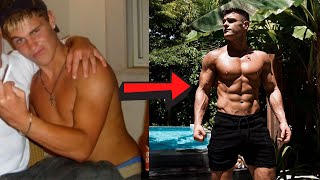
Rob Lipsett shares ten lessons from his early lifting mistakes, including tracking calories, training each muscle group twice weekly instead of a bro split, and sticking with one program for at least 12 weeks. He emphasizes patience, progressive overload, and ditching all-or-nothing thinking about diet.
Chapters
What's going on guys, welcome to today's video. I just want to give a huge thank you for the love and the feedback on the last video. I really enjoyed making it and I put a lot of hours into it, so I'm really glad you guys enjoyed it. And now, kind of going off that video, one of the comments was I should talk about the mistakes that I made along my journey. So today we're doing exactly that. If I had a time machine and I got into the time machine and I went 10 years back in time and there was young Rob about to enter into the gym for the first time and then future Rob appeared, this is what I would tell him, okay? Young Rob would be totally freaked out. He'd be like, "Whoa, this guy looks just like me, but he's more jacked." I'd be like, "Young Rob, just please pay attention. I got some really important stuff to tell you." So this video is the top 10 things I would tell myself before getting started into the gym. Let's go! But before we get into things, I just want to say a quick thank you to Skillshare for sponsoring this video. Skillshare is an online learning community that allows you to delve deeper into topics that you're already passionate about or also learn new skills. They've got classes in everything that you can think of— videography, photography, editing, content creation, productivity. You name it, they've got a class on it. Also, you guys know that I started this whole YouTube channel with an iPhone, sellotape to the wall, and I often talk about how you don't need fancy equipment to get started. They've actually got a course specifically for moviemaking, filmmaking, and videography using just an iPhone. So I thought that was really cool. The first 1,000 of my subscribers that go to the link in the description box and sign up will actually get 2 months free premium subscription service to Skillshare. So I think that's a really awesome deal. And again, I'm gonna link that at the very top of the description box. I highly encourage you guys to check it out, and I hope you enjoy the video. So let's get into it. Alright, so I'm gonna kind of frame this video as if I'm speaking to my younger self, and a lot of people probably are in the position I was in. You're starting off in the gym, you really want to get results, and Um, but you've so much information coming from everywhere, you don't know what's wrong, you don't know what's right. So anyways, here we go. These are in no order of importance. Some are about diet, some are about training, and some can actually be applied to both. So either way, here we go. Number 1 is learn how to track your food calories and macros in brackets there, because macros will make up your calories, okay? And this applies whether you're trying to gain weight or lose weight or just maintain anything. It doesn't matter if you count calories or not, they still count. Say that again. Repeat it to yourself. Repeat after me. Calories still count whether you count them or not. I actually, I actually love that phrase. So basically, if you want to lose fat, you need to be in a deficit, and if you want to gain weight, you need to be in a surplus. And if you're not tracking your food, at least for a certain time, it's kind of like asking someone how long is a piece of string. How on earth would you know how much calories or carbs is in a bowl of oats, or how much protein is in a chicken breast, without measuring it and tracking it for some period of time. It's literally like me pointing at that road outside and saying, "How long is that road?" What? No one would know. But if I got a measuring stick or one of those little walking things that measure the road and I walked it down, then I would know that the road is 1 kilometer. So then when I look at that road, I say, "Oh yeah, that road's 1 kilometer." It's the same with tracking your food. If you don't track your food for a period of time, I have no idea how you'd ever know how much it is. So track your food. I wish I did that. You don't have to track your macros and weigh out and log everything in MyFitnessPal forever, but it will immensely speed up your results if you do it for at least a week. It is eye-opening for a lot of people at how much they're eating or how little they're eating when they just track their food properly, fully accurately for a day or even a week. So that's what I would tell my younger self to do, because there's a while where I was just guessing things and it definitely slowed down my results. Number 2 is be patient. Things take time. We see the, the big jacked bodybuilder in the gym, we see these people, and we just see the end result, and we don't see that they've probably put in 10 years of training to get to this physique. Or, you know, maybe you see someone lifting really heavy in the gym and, you know, you think, oh, they just got there overnight. That's not the case at all. You need to be patient, and you need to understand that things take time, and you need to enjoy the journey. Kind of like when I look back on my 10-year transformation in that video I really loved every step of the way, and that's how I was consistent. That's how I didn't give up. I was patient, and I just enjoyed going to the gym and seeing small results over time. I didn't rush things, and I just liked the whole process. So learn to love the process and be patient with yourself, or you just drive yourself crazy. Number 3: Progressive overload is the key to building muscle. Okay, now how do I kind of put this in layman's terms, right? Okay. Let's say you go to the gym and you pick up 20 kg. You bench that. Okay. And you bench that for the rest of your life. Why would your strength or your muscle grow beyond that certain point? If you're not increasing reps, you're not increasing sets, you're not increasing the weight, you're just going in and getting a pump and doing the same thing day after day, week after week. There's no progressive tension. There's no reason for the muscle to grow. So your training needs to be goal-oriented and it needs to be progression-oriented. And sometimes you may hit a plateau and you know, you're not able to just keep putting on weight. Well, then you need to look at other forms. So even time under tension, like I said, reps, weights, overall volume, there needs to be some form of progress. So you should always keep that in mind when you're training. And actually, just like with your nutrition, you should really be tracking your workouts as well to make sure you're getting stronger and progressively overloading the muscle. So I would go in when I was a young lad and like I said, you know, I would just go chase the pump. I'd do the same thing week after week. And there was no reason for my muscles to grow. Number 4 is hit every muscle group twice per week. Ditch the bro split. Now, if you guys watched my last video, you will know that I used to follow the most ridiculous training split ever when I was starting out. So me, who has hardly even entered gym, would pick up Flex magazine, see Ronnie Coleman's program, be like, yeah, you know, I'll give that a go. Okay, and so basically a bro split is when you kind of do your whole week's worth of volume in one session. You just pick a body part and destroy it. And some people like that, and it works for some, and especially if there's progression in mind, then, you know, it will work. But research shows that we don't need to wait another 7 or 9 days— that's how long I was waiting— to hit another muscle group, and it recovers a lot faster than that. You'll actually see better recovery and more strength gains if you get the volume from your workout and spread it out. So maybe you're doing 14 sets of chest on a Monday, okay? It might be better for you to do 7 sets on that Monday and then maybe do the other 7 sets on Thursday to give you more of a break. And again, that's going to allow you to recover and lift heavier over time. I was following a ridiculous bro split, and I saw a lot more results when I switched to an upper/lower program and also legs/push/pull program. All these programs are actually linked on my website. So if you're training 3 days per week, I'd probably recommend full body. If you're doing 4 days, I'd do upper/lower, upper/lower. 5 days, I would do upper/lower, legs/push/pull. And 6 days, which is what I do— well, when gyms aren't closed, I do legs/push/pull, legs/push/pull, rest. So that said, the current split I follow, and that's what I recommend doing, and that's what I saw a lot more results on. So that's what I'd tell my past self. With That said, that brings us on nicely to the next point, which is follow a workout program you enjoy. Now, say you just enjoy the Bro Split, and I know lots of people who do. As long as you're increasing the stimulus, increasing the weight, and you enjoy it, you stick to it, well, that's the most important thing, is actually sticking to the plan. Same goes for your diet, same goes for training. You need to do what you enjoy, as that's gonna allow you to stick to it and be consistent with it. Number 6 is lose the all-or-nothing approach. Okay, now the analogy that I really like here is if you drop your phone on the on the ground and it got a little scrape on it, would you smash it and step on it a couple of times until it's broken into smithereens? No, you wouldn't. It's the same as with your diet or with your training. If you have a slice of pizza or you eat a donut for breakfast, the day isn't ruined and you go completely off track. Odds are it won't even have the slightest impact on your diet. But people have this all-or-nothing mentality that they're either on the diet or off the diet. And if they slip up once, if they miss the gym, they say, 'Oh, I might as well take the week off.' And that is just not true and not a good way to look at things. And I remember back in the day I would do that. I'd eat something that wouldn't be on my diet plan and I would say, 'Oh, screw it, it's a cheat day,' or, 'It's a cheat week.' And that is just not the way to go about things. So the analogy that I like to give to people is, if you dropped your phone on the ground, would you step on it and jump on it? No, you wouldn't. So again, flexible dieting and if it fits your macros, that whole kind of side of things helped me out. Hugely, and that's what I'd also tell my younger self. Now I'm gonna really upset a few people here. I'm gonna break a few hearts. I'm gonna smash people's dreams, okay? Meal timing is largely irrelevant. People say, "No, Rob! No! The post-workout anabolic window, it can't be so! The supplement company that I saw in Flex magazine, they told me the post-workout anabolic window would only last for 15 minutes!" Sorry to break your dreams, but meal timing is largely irrelevant, and I wish I knew this when I first started out. I swear I swear to God, I used to sleep with a protein shake beside my bed because in the morning I needed to slam that quick-digesting whey protein because I thought I was just going catabolic all night and I needed a hit of protein the moment I woke up or all my progress would just vanish overnight. I honestly thought that, okay? And then you get the complete opposite. You get the people from the intermittent fasting camp, you know, which I like. I IF some days, okay? But you get those people and they say, 'Intermittent fasting, bro, you know, it's the longevity, it changes your life, you know, it just increases your spirituality.' Seriously, okay, you get some people and they're usually just trying to sell you a program based on some type of timing or some type of protocol that they believe in, okay. Meal timing is largely irrelevant and it's just down to personal preference, okay. It's good if you can position some meals in and around your workout, but if you miss your post-workout shake, it's not the end of the world. And the main thing is what you eat in the entire day, okay. Repeat after me, okay, the most important thing is what I eat in the entire day, not exactly what I eat at what times, okay? It's what your calories and macros add up to at the end of the day. That is the most important thing when it comes to body composition. Now, if you want to split your meals up into 6 small meals a day, 3 large ones, you want an intermittent fast, you want to have most your calories post-workout, I'm so fine with that. It's all about personal preference and whatever you will stick to. So when I found out that meal timing was largely irrelevant when it comes to body composition and it's all down to personal preference, I was liberated. I was free. I didn't have to— another story actually. Once when I was going into college, I had a protein shake and it wasn't screwed on properly, and I would always carry around meals and protein shakes with me because I just thought I had to, and it completely ruined everything in my bag. The laptop, notes, everything. So Yeah, screw carrying around meals. I'd rather just like wait a few hours. That is one that really, really got to me, and that helped me out a lot when I found out that it just doesn't matter. Now, number 8, this kind of ties into the last point, is there are no magic foods. So in the fitness industry, people are always going to try to sell you some sexy bullshit, okay? I can't make an ebook based on meal timing is irrelevant. Like, that's the book, you know? But if I wanted to be like 'Intermittent fasting is the way forward, bro,' or 'I've got the cert— 5 magic foods that you need to eat. This will change your life,' the secret foods that work. Okay, you know, people just want to make stuff up to just have something to talk about, but honestly, it's pretty simple, and it's the simple shit that works. So there really are no magic foods, and like what I said in the last point, it's what you eat and the amounts of what you eat in the entirety of the day. So if you want to hit your protein intake with whey protein or maybe chicken breast or tofu, whatever it may be, that is absolutely fine. Sure, it's good to have a varied diet and have a nutrient-dense diet, but don't think that like there's any superfoods or special magic beans that are going to, you know, boost your growth hormone or your testosterone or stuff like that, okay? So just hit your macros and your calories with nutrient-dense whole foods, and that's really it. Number 9, now this one actually applies to diet and training, but let's start with training first. And with training, it's more so referred to as program hopping, okay? And I actually do not recommend confusing the muscle or switching things up for a long time, really, maybe at least 12 weeks. The reason for that is if you're constantly confusing the muscles or changing up your workout routine, how do you know if you're progressing? If maybe one week you're doing leg press and then the next week you're doing squats, they're two completely different exercises. So how can you measure if you're actually getting stronger at those exercises? You can't. So I would recommend picking a program, sticking to it, and keeping close notes on what you're lifting on each one of those exercises during the week. So the more kind of things you keep consistent, the more measurable it will be. So that's my advice when it comes to training, is to stop changing your workout or program hopping every week. Now, when that comes to diet, oftentimes that we just change up our diet for no reason. And if you're losing fat or if you're gaining weight, whatever your goal is, then there's no point changing your diet. Just keep it the exact same. Like, if you're going down on the scales, you're losing fat in the mirror, then keep your diet just like that. If it ain't broke, don't fix it. There's no reason to, you know, drop carbs or add in more cardio. So keep things consistent. And again, this kind of goes back into the be patient thing. Stop switching things up and just, you know, keep on going. So that is number 9. Now, last but not least, is be consistent and focus on yourself. In today's day and age, We're constantly looking at what other people are doing, what car they're driving, what house they're living in, what program are they following, what diet are they on. Okay, and we're getting bombarded with different advice. Okay, cut it all out. Focus on yourself, focus on your own progress, and enjoy that. Along with that, be consistent, and that's how you're going to see results. Because everyone can train hard for a day, they can't train hard for weeks on end. Everyone can follow a shredding diet, for a day, they can't do that for weeks on end, okay? So you got to be consistent and you got to be honest with yourself. So they are the tips that I wish I could go back in time and tell my younger self before I started lifting. Now, last thing I want from you guys is what would you tell yourself just before you entered the gym for the first time? See in the comments. Keep it real. I'm out here.
More from Rob










"I Haven't Worked in 10 Years" - How Rob Lipsett Built a £1M Fitness Empire From Nothing
