Rob Lipsett shows how to calculate your daily calorie needs and split them into macros. Start with your maintenance calories (multiply bodyweight by 14-16), then subtract 500 for fat loss or add 300-500 for muscle gain. Aim for 1g protein per pound, 0.4g fat per pound, and fill the rest with carbs.
Chapters
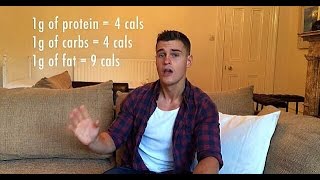
Hey everyone, what is going on? It is Rob here. We are back on the casting couch. A lot of you been at me to do this video for a while, and that is how to calculate your calorie/macronutrient requirements. So anyways, here we go, let's kick it off. So why do we need to know our calorie requirements? Well, a lot of us have specific goals, be it bulk up or cut down or maintain their physique. First things first, we need to find out our TDEE, and this is how how much energy our body uses every day. To start off, we need a good estimate. If you type TDEE calculator or calorie calculator into Google, you'll get tons of results, and I will also link one below. Another thing you can do is, if you're a female, you can multiply your body weight in pounds by 14, or if you're a male, by 15 or 16. This will give us a rough estimate of your maintenance calories. Of course, certain things like training routine, occupation, and other, other lifestyle factors will come into play. For an example, someone who sits at a desk all day is not going to have the same energy output as a construction worker. Whatever amount you estimate to, eat this much for 1 or 2 weeks, and if your weight stays the same or changes very little, then they are your maintenance calories. I know this can be annoying to find, but it will make things easier in the long run and less stressful. Now that we have your maintenance calories, we need to look at your goal. If you want to cut down and lose fat, it is suggested to go into a 500-calorie deficit below maintenance. If you want to add size, add muscle, it is suggested to go into a 300 to 500 calorie surplus above maintenance. The amount of a surplus you're in will determine how much fat gain you will encounter on your bulk. So for that reason, I would suggest staying just over 300. And this is where we differ from lean bulking and dirty bulking, or as I like to call it, bulking bad. Now, as we know, a calorie isn't a calorie. We have different macronutrients—protein, carbohydrates, and fat—and each one of them plays a different role in our diet and makes up our calories. So one thing I want you to remember is that 1 gram of protein equals 4 calories, 1 gram of carbohydrates equals 4 calories, and 1 gram of fat equals 9 calories. Remember that later on in the video. For protein intake, the most widely recommended amount to take in for building or maintaining muscle is 1 gram per pound of body weight. So for an individual weighing 180 pounds, they would be looking to take in around 180 grams of protein. And now for fat intake. Fat is important for keeping our hormones in check, amongst other things. If we didn't have it in our diet, we would not live. Uh, it can also be used as a source of fuel at certain times. Again, the most widely recommended amount is 0.4 grams per pound of body weight. So again, for our 180-pound individual, he would be looking to take in around 70 grams. And now the rest of our calories will be made up from carbohydrates. The amount our 180-pound individual will depend on his goals, or her goals. So let's break it all down using our 180-pound example. Let's say his maintenance calories are 2,500. His protein is at 180 grams, which will give us 720 calories. His fat is at 70 grams, which will give us 630 calories. So altogether, this adds up to 1,350 calories, which means we have 1,150 calories to fill in with carbs. Divide 1,150 by 4, and that gives us 287 grams of carbohydrates. So now his final macros are protein 180 grams, fat 70 grams, and carbohydrates 287, giving us exactly 2,500 calories. So if he wants to cut, he can take out 500 calories, preferably in the form of carbs. If he wants to add some size, he can add in calories, and preferably in the form of carbs, but some people like to add in some calories from fat too. Well, I hope this video came across as clear and it wasn't a case of this. Now that we have that covered, we can go back to less boring stuff like Nutella, feeding George, and making protein pancakes. So thanks so much for watching, I hope you enjoyed. Until next time, keep it real.