From UFC Fighter to 7-Figure Entrepreneur with Luke Barnatt
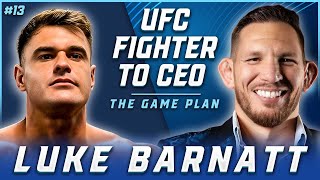
Former UFC fighter Luke Barnatt went from a bullied Jehovah's Witness kid to training with Chael Sonnen and debuting in the UFC on his 25th birthday. After split-decision losses and financial chaos—living on a $2 million yacht then crashing to his wife's family home—he left fighting to launch a gym, athlete-management firm, and YouTube channel.
Chapters
I moved into the gym and I slept on the floor and I gave up my job. And there was like a little dark room in this, in the gym where I used to sleep in. I had like a sleeping bag and there's no lights in the room. It's just like a door you open and shut and it goes black. Cardio is king. Yeah. That's number one. Number one. Because it doesn't matter how strong you are. Doesn't matter how like muscle endurance is good. It's basically a different type of cardio. Yes. But if you get tired, you're done. So it's how much output you can do in 15 minutes, which is still a cardio thing. But then it comes down to muscle endurance and it comes under strength. Whoever I'm fighting now, I want my next opponent to watch this fight and shit themselves from what I'm going to do to this person. It's all about performance at the best. If I can perform to the best I can perform, no man on the planet can beat me. That was always my mentality.
Guys, welcome back to The Game Plan, Marbella's number one podcast.
Something like that. Yeah.
Today we have Luke Barnett on the show. And now, Luke, I am, the only sport I watch is UFC. It's the only one I follow. So I have some genuine questions to get into here and I'm genuinely very excited for today. So first of all, how you doing?
I'm very good, man. I needed this coffee today. For some reason, it's a, you know what Spain's like, but Spanish holiday or the Spanish teachers are on strike or something like that. So my kids are off school. So I had to look after them this morning and then I desperately need this coffee.
Man, I'm dead after 2 o'clock. Usually I have my podcast at like 10 or 11, then after midday, I've got all this energy, then after 2 o'clock I need one of these. But so today we're going to touch on some really exciting topics. How you started out in fighting, went to the UFC, ended up in the world of entrepreneurship. But first thing I want to know is when was the first time you got punched in the face?
Wow. Okay. Would have been at school. God knows how old I was. Let me think. Maybe I was— I would have been in Chelmsford. So I'm from Islington in London. I was— Well, I was born in a place called Redbridge actually, which is technically Essex, but in London. And I went to school there till I was about 10. Yeah. Then I moved to Essex to Chelmsford and I went to school called Boswell's School. And that's where I would've got punched in the face first. But I remember it's a good story. 'Cause I remember, I don't remember exactly if this was the first ever time, maybe it was on, I got two brothers, so they probably hit me first. Okay. But yeah, definitely. This is the one I remember. There was a kid at school, I can't remember his name, but it was an English class and I was walking away from English and I was freezing cold and I had my hands in my pockets like this, but in my coat pockets forward, holding on to my thumbs because I was a child and that's how cold I was. And some kid ran at me from behind and then was yelling at me. So I turned around and he hit me and I hit him back and I broke my thumb because I was—
the classic grip.
Yeah, yeah, yeah, yeah. But that was the first time ever. Well, that's the first time I can remember being punched in the face.
Okay, nice. And what were you like in school as a young lad?
Oh, um, you have to ask the guys who went to school. No, I, um, I was an okay student. I wasn't like good, I would say. Uh, I was like the class clown, kind of, um, but not, not in, um, I wouldn't say that. So basically, when I was at school, my mum was Jehovah's Witness, or still is Jehovah's Witness. Obviously that affected me when I was at school. And my dad used to travel a lot. He was a photographer and he'd always be away. So my mum I was like, how do I explain it? I had like a group of friends, but I kind of became very, uh, what's the word, introvert.
Yeah.
And I became a bit of a computer geek. A bit of? I was a massive computer geek.
Didn't see that one coming.
No, yeah, yeah. So people don't know, most people don't know this. It's quite, it's quite interesting. So at school I was bullied because I moved from London and I was like new to the school. Um, so I was just the new kid, so instantly got bullied. I was obviously tall and skinny. Um, but then I was Jehovah's Witness as well, so when I they found there was something to bully me on, that was the thing. I didn't get birthday presents, didn't get Christmas presents, whatever. So when I got bullied there, but I still managed to get a group of friends, um, like close friends. But even sometimes they would bully me because they would go be with the guys, you know, like it's a school thing or whatever. So I wouldn't say—
an Irish and English thing. Yeah, yeah, yeah, slag each other off.
Exactly, exactly. So, um, I didn't— I had friends and I had a good childhood and all that sort of stuff. I used to play basketball, but, but the main thing I did was play computer games. So I started by playing I'm sure you won't know them, but there's a game called Tibia, which is basically a role-playing game where you pretend to be a wizard and you—
Tibia?
Tibia.
I thought it was going to be something to do with the leg.
That's what you'd imagine. Actually, I don't know why I was—
then you say wizard.
Oh my God. But I can tell, I can tell the story about school, but when I got betrayed, this is quite funny. So this game Tibia was like, it was— everyone knows— well, everyone, but you know World of Warcraft? Of course. Okay, so everyone knows World of Warcraft now. If you haven't, you go watch the South World of Warcraft. That's the best way to know what it is. But Tibia was basically 2D World of Warcraft. So back in the day, you'd have like this little thing, man that walks around, your avatar would walk around and be like, ding, ding, ding. And then you'd attack a troll or a dwarf or a dragon or whatever. But how it would work is you would just sit next to each other and he would light up, you would light up, he would light up. So it was gay. Yeah. That's the best way to describe it. It was super nerdy. Super nerdy. But I played it a lot and actually 2 of my friends, they became like the top tier players in, in the world on this game, right? And, uh, I used to play all the time. And then a couple of my other friends, like fringe friends, got into the game. And there was this one kid that, uh, I was like frenemies. I don't know, like women have frenemies. Yeah, but I had women and kids. Yeah, yeah, exactly. I was a kid. So this guy that I used to, uh, like be friends with or whatever, I got him into the game, and for some reason we fell out and I'll never forget. So I was like not big in the game, but I was doing all right, you know. Let's say if you did levels between 1 and 100, I was like level 80. So I was solid, you know what I mean? Pretty nerdy. Yeah, yeah, super, super nerdy. No, no, super nerdy.
Nearly at 100.
Yeah, but my two mates were like 100 nerdy. I was like nerdy, and this guy was like 50 nerdy, right? And, and, but we fell out. So somehow this 50 nerdy kid hacked my account and he went and I had all the good shit, like dragon armor, golden maces, wizard hats, all this crazy shit.
Make me want to play Tibia.
Yeah, you used to get what they call them runes.
Yeah, yeah.
You used to fire like fireball runes. I'd have the rarest runes, all that crap anyway. And you used to have a bank on the game. So I remember like we fell out and like a couple days later I logged onto the game. When I say a couple days later, as soon as I got home from school, I logged on the game And then I just appeared naked in a field of like some goblins or something, and they just hammered me down and killed me. And I was like, what? And then I respawn and I go to my bank, which is where you have all your armor, your money, and it was empty. And this guy who I'd fell out with had hacked my account and stolen everything I had on Tibia. And that was my first real enemy in life.
And this means war.
Yeah.
So what happened after that? What happened? Did you go kick him in the real Tibia?
No, I couldn't find him because I can't— he like, we weren't as school anymore. It was a bit whatever. So I never saw the kid again, pretty much. I can't remember if I did anyway. But I then, I went home years later after I'd done the UFC thing, and I was doing all right. And my mum knew his mum, and she said to me, oh, I won't go say the guy's name, but have you heard about blah blah blah? And I was like, no. He's like, oh, he's a gambling addict. And he's— and so basically, I— this is what I blame. I blame— this is what I do. I blame Tibia on his demise. Yeah. So him becoming an addict and stealing all my stuff and like stabbing me in the back. We call it karma or whatever. He then became addicted to it. And then slowly the addiction of Tibia grew into a gambling addiction. And he ended up like stealing all his mom's jewelry and selling it. And I was proper serious addiction.
For real?
Yeah, yeah.
I'm like, this is in real life.
Where is Tibia, mom? So he stole my stuff and sold it on Tibia. And then 10 years later, stole his own family's property and sold it and became like a addict and whatever. So my mum came to me and was like, oh, maybe you should speak to him. But I was like, fuck that. Yeah, yeah, he stole my shit. He stole my loot. So anyway, I'll go back to the story, but that kind of happened. Fuck that guy.
Yeah. And so, so how did we get from, from Tibia world fighting to real world fighting?
Well, I would have been like 13 when I started playing Tibia. Then it progressed to World of Warcraft, then I ended up playing this game called Call of Duty. With my friend James.
This game called Call of Duty.
Yeah, yeah, yeah. But then before Call of Duty became big, there was a game on the PC called Tactical Ops, which you won't know. No, no, that's where I draw the line. So this is back, like I said, when I was a kid, gaming in general— I mean, it's geeky now, but it was super geeky. There was no competitions where you could win a million dollars or go in front of crowds and do Call of Duty.
Yeah, it's crazy now. Yeah, it's like bigger than, than real sports. Yeah, it's nuts.
And even that— what's that? There's that free one that you can download that the kids all played.
I don't know if it's Fortnite. Fortnite, yes.
So became huge, right? Yeah. When I was playing, it wasn't that big, but there's a game called Counter-Strike.
Yeah, I know that, I know that.
Yeah. So counter— gonna get geeky for a second.
Go, please.
Counter-Strike, um, basically the game I played is Tactical Ops, is the Unreal Tournament Engine version of that game, which basically means that it's run on the Unreal Tournament servers and all that sort of stuff. So the It's the same game. If you think of Counter-Strike, it's pretty much the same game, different maps and slightly different gameplay, but it's Unreal Tournament style gameplay. If you ever played Unreal Tournament, which maybe you didn't. So me and my friend James became like the best 2v2 players in the world on this game.
And there were— are you exaggerating? No, no, no, no, no.
There was, there was, there was rankings and everything. We were only up there for a few weeks, but we became the best 2v2. You have to play every— like we played wars, they were called. Every like week or every 5 days or 4 days we would have different games set up against different 2v2 teams that were like trying to become the best in the world. Yeah. And we became the best in the world for 2 weeks. Um, so how— well, the only reason I'm explaining all this is to explain my personality. So we used to ask me how I was at school. I became extremely addicted to these computer games, right? So I'm talking in England— I don't know if it's the same in Ireland, but we get 6 weeks summer holiday.
6 weeks. Yeah, we got like 3 months.
Okay, well, we had to get 6 weeks. Yeah, so yeah, you give us a bit of freedom. You're, you're on the European— yeah, they get 3 months as well.
Yeah, yeah.
In England, we got 6 weeks, 6 weeks on holidays. Maybe it turned into 7 or whatever, but it's that 6 weeks. Um, those 6 weeks holidays from the age of like 12 to 15, I didn't leave the house. I was on the computer playing, playing, playing, playing. And, um, you have strategy meetings, all the— like I said, the nerdiest stuff you can think of. But I'm saying I got super, super addicted to that, and then I found basketball. So basketball was like the first active thing I did with my actual body. Makes sense. Yeah, it was easy. There was one— me and one other kid. There was a— I mean, there was a whole team of us, obviously, but the other kid was Bradley Skanes. He's now actually the physio for— you'll know— the, um, the best F1 driver in the world. Verstappen.
Oh, Verstappen. Max Verstappen.
Yeah, he's Verstappen's physio now. So nice. Well, I actually saw him in Monaco last year. And he's— we were like basketball players. We used to play for the team, but he was the best at school. And I was like, I'll call myself the second best. Maybe my school friends are going to watch and maybe they're going to call you out.
There's going to be some comments on this.
I was just a giant, right? So I was 6'6". There was a couple other kids that were probably better than me. There's a kid called James Keeble, good friend of mine. But, um, yeah, we— so I would play basketball and I got addicted to that and I became the basketball kid. So what I'm saying is I became— I was the computer guy kid, computer, computer kid, like Tibia, World of Warcraft, um, Tactical Ops, Call of Duty, whatever. Addicted. Then I became the basketball kid, and I mean, I had all the gear, like proper into it. I ended up playing for Essex for like— well, for no, for Chelmsford and whatever. I played like an okay level. Then I went to America, um, on a cruise like with my family. Went to the whole— the big one. This makes me sound like I have money, but I don't. Yeah, the one big posh family holiday that we did, we went to Disney World, and then after that we did a cruise of the Caribbean. That was the only expensive holiday I ever went on.
The big Barnet trip of the year.
Literally. No, no, of the decade. Well, before that we just camp and do all the normal crap. But yeah, so we did that. And from that trip I played— so basically on the cruise, I got two brothers. So on the cruise ship there was a basketball, unlimited pizza, and unlimited Coke and whatever you want to do, all the drinks. So I was just like, right, I'm going to play basketball and eat pizza for one week. My mom's like, we spent all this money to travel the Caribbean. I wasn't even getting off the islands because I couldn't care less. No way. And the, um, dinner time, they had like a sit-down— I don't know if you've done a cruise, but it was like a posh sit-down dinner. And my older brother would always go to that. And I was like 16, 15, he was 18, you know, 17, 18.
Yeah.
I was like, what are you doing? We've got free pizza. Yeah, I can play basketball. What are you doing? Yeah. And then so I play basketball every single day with these American kids. Kids and they whooped me. And I was like 15, 16, they were like 12.
Yeah.
And in that trip I realized I'm never gonna play professional basketball. Like, I was deluded as a child, you know what I mean? Thinking, oh, I'm gonna, you know, play in the NBA, you know, it's never gonna happen. This kid was like 5'10", smashing me. Yeah. Okay, so I really— so like the day, um, before the end of the trip, I was like down because this, this 12-year-old kid had smashed me, or whatever it was, whatever. Yeah, killing me all week. So I went, screw it, I'll go to dinner with my family the last night. And I show up And on cruises you have to share a table with another family. I didn't realize. So it's my family and on the other side of family, and it's like these two Americans and they've got three daughters and they're all hot.
Nice.
So that's why my brother had been going to dinner every—
That's it. He's putting in work with the daughters.
He was putting in work. He didn't get nowhere. Yeah, but he put in the work. Anyway, so that trip killed basketball for me. So I came back and I was like a bit lost and I was just a bit disgruntled. I didn't want to play basketball anymore. And I started, yeah, I, I left school. All my mates went to university. I didn't want to go to university because I hated it. I wanted to become an architect, so I thought I went to college, but I can't go through it. I just, just hate it. So I kind of left school early and I was working. I had 3 jobs, um, or 2 jobs at the time. Like, I was doing glass collecting and working in a restaurant. I was 16 or something. And then when I got to 18 I realized that working behind the bar, because I was a cocktail barman, I realized like the ones who make more money than me are the doormen. Okay. This was like, you know, you as a barman, you make like— this is— I can't remember numbers, like £7 an hour or £6 an hour, whatever it is. And as a doorman, you make £12 an hour or whatever it is, and you do nothing. You just stand there.
Yeah.
It's not hard, especially where I'm from. It wasn't very rough. Okay.
Because I've seen some terrible videos of doormen just getting in so much, you know, scuffles and, and You just look stressful and people getting like shouted abuse at them and all.
I, I worked at a very nice place and I was a barman, so I thought, I thought, easy, you know. So you have to go do your license, all this crap. So did a license, it's like you go to a 2-day thing and you whatever, you know, finish the license, become a doorman. So I'm 18 years old, I've had a couple of scraps. Yeah, but I'm not— I could— but this time I've done no fighting and I'm a doorman. I'm just a big, tall, skinny guy, but I look intimidating and And I, you know, whatever. I end up working, um, at a bar called The Bar. Amazing name. Original. With a guy called Jack Mason. And he's— at this time, he probably had had 20 professional MMA fights. I don't know, a lot. But he was like— when I'm gonna— he's like 5'10". So to me, he was like smashy.
Yeah, yeah.
So we'd be on the tour together, and then there was a local wrestling club in Chelmsford that he like brought me to. And my mate, me and my mate Rory, and the guy that I lived with at the time, we used to go to this wrestling club. Before we'd go to the wrestling club, because we were kids, like, and we, these were like submission wrestling men, yeah. I mean, we'd go to the pub and we'd drink like 3, 2, 3 pints to get the courage to go on the mats and to wrestle with these guys.
So pre-fight pints, basically. These days we take pre-workout. Yeah, back in this day they were drinking pints.
Exactly. And I think, um, Jack probably doesn't even know this. I don't know if maybe, maybe they smell it on us because we're idiots. But so that was my like first transition into any sort of martial art, any sort of fighting, anything, was me and Rory wanted to be tough men. He— Rory was a doorman as well. We used to live together. His dad ran, or his uncle or someone ran the company that we worked for, and, uh, we were like encouraged to do some. So we went to this wrestling club, and I was like scared, so I started boozing to go to the club. Yeah. Um, and that became like a weekly thing for maybe I don't know, like 2 or 3 months, um, and we just got battered. Like, you just get— anyone who's done any sort of martial art, any— and this is like not you go in there and you all bow, this is like just scrapping. Yeah, it was a guy— I want to remember the guy's names, but I'm sure one of them was called Danny Mann and then Alan something, were the guys running the club. Really good guys, high-level guy. They became high-level guys. Um, I just went because of Jack. So I'd go like just scrapping. I mean, fight for my life and getting hurt because they—
was this wrestling or what?
Submission wrestling. So it's like they call it catch wrestling now or whatever, but it's like jiu-jitsu but without the gi. Yeah. And then without any of the tradition.
So it's a bit closer as well, I think.
Sorry, there's, uh, there's no like bowing or any of that stuff. It's just like, what's up, bro? Yeah, let's go. Like, yeah, men just beating each other up. Okay. And Jack used to go there to practice his wrestling or submission wrestling because he had professional fights. Anyway, I did it a little bit and I was a cocky little bastard and I basically challenged Jack to a fight. And he used to train at like an MMA at the time was because again, this is 17 years ago or whatever it was, 15, yeah, 15, yeah, 17 years ago. So it was like 17 years ago there wasn't your local MMA gym, it didn't exist.
It's so popular now.
Yeah, it's so popular, everyone knows it. Back then no one knew it, didn't exist. We were called cage fighters. No one respected it, no one understood what it was. There was no money in it, nothing like that. It was just idiots who wanted to have a scrap. Yeah, basically. And, um, I would go— so we did this submission wrestling, and then I challenged Jack, and Jack went, okay, come to with me to the— to Tsunami Gym, which was in Cambridge. So I lived in Chelmsford. To Cambridge, it's like an hour and a half drive. And he used to do it twice a week, every Tuesday and Thursday, or every Wednesday and Friday, I can't remember. But twice a week we used to go up and I was like, okay, I'll come up. So I went up, and I've told this story a couple times, but there's this, this short guy, uh, he's like 5'4", 5'5", 60 kilo guy. He was 5 featherweight, so 66 kilos, named Robbie Olivier, who was like the coach. And he was a black belt in judo and a brown belt in jiu-jitsu. I didn't know that at the time. And he goes, you spoke with this guy? And I got raped. And I mean like raped, absolutely disgustingly destroyed by this guy. And then there was another guy there called AJ Wen, same thing, right?
Like these guys are all fucking you up. Oh, like, and in what, in wrestling or just anything? Okay, open.
Okay, it was MMA.
Okay, MMA, right?
Yeah, so this was my first time. Okay, yeah, yeah. So no, so then I remember, so I didn't even train with Jack, I didn't train with some of the bigger guys there, the better guys. There was a couple of, uh, gypsies and all the— I didn't train with anyone. So I remember getting back in the car with Jack and like sloping down and being like, yeah, all right, um, you know, embarrassed.
Like confidence knocked out of you.
Oh, you could not imagine how embarrassed I was. And he like talked me up a little. Like, he laughed at first and grinned. He's got this like grin that you'll never forget. And he like talked me up a little bit, said, that's all right, everyone when they first come, they get beat up, blah blah blah. And then this is where the whole gaming thing I was talking about before. Then I just became absolutely like, I needed— I could not walk around on the streets knowing that it's possible that that could happen to me. Nice.
That's a, that's a very interesting way to get motivated, an interesting way to put it. And it definitely seems that you've got an addictive personality, you know. You could end up selling out like the Tibia man selling your mom's house. You could have been addicted. But it sounds like you got addicted to fighting.
I got— I, yeah, I got super addicted. Like, I became my whole life. So from that day, I got so addicted to the idea of being walking the streets and any of these guys could just murder me. Like, it was like a fear in my brain. It sounds crazy, but in the back of my head, fair enough. I was like, if you met Robbie and seen Robbie, like, he's the most— at the time, it was the most unassuming guy. He was a firefighter, really nice guy. And it just would just, just destroyed me. I don't know how to even explain it. And there's another guy called Mark Day, same. You'd never expect anything, just another bomb, destroy you. Like, all the guys that went there at the time, because it was such a hidden thing, they didn't even really talk about it, you know, because people looked down on people that did martial arts back then. Yeah. Um, so yeah, I became like so addicted to it, and obsessed is the best word, obsessed with becoming better. And I joined the Thai boxing gym in my area. Obviously, I went to Tsunami with Jack. And this is, this is like Jack said to me years later, he said this to me, but he'd had so many people over the years come to him and say, like, I want to fight, I want to train, I want— and I was like, I'll be there, tell me where I got to go. Because he drove to Cambridge and I couldn't drive at the time. He was like, I'd go twice a week, be at the train station, 5:30 PM, whatever time it was. So we had to go after work. I'll pick you up and we'll go. And I was there, I never missed a session on time, ever, ever missed a session. I was like raring to go and I had a million questions and we'd be driving all the way there and he'd— yeah, I just, yeah, I completely— and he said like years later, like, you're the only guy who ever stuck it. There was other people that tried, but you get— I got beat up for 3 years, 2 years, every day. Like there was nothing, I never won a session. I was the least athletic, the least coordinated, the least talented man. I like— there's no one. I'm the best case study for it ever. I just really, really poured my heart and soul into martial arts, and every day I had something. So I was working at the time, I believe I was either working for Graphic, which was a— I told you I wanted to be an architect. It was like a— we used to do CAD drawings in London. Or I was working for Aldiani, which was a marketing company in London. So I was getting up, going to the gym, training, going to London and working, then training in my lunch break, and then, and then going to work and then finishing, getting back, driving to Cambridge, training, driving back, getting back at 10 PM, eating, going to sleep, waking up at 6 and doing it all over— or 5 it would have been then— to do it all over again. And I did that consistently for until I got— until I could actually throw a punch.
Yeah. And so how long did it take you to get decent?
Hmm, well, it depends what you consider decent.
So, so when your first fight?
Okay, so I had my first— from this moment when I started training at Tsunami, I believe I had my first fight in 8 months, right? And yeah, I definitely shouldn't have. Yeah, but I had my first fight in 8 months and I fought a guy called Alan Pacman. And between 6 and 8 months, let's say 8 months. So 8 months in It was because I— so again, let me explain, like, martial arts now, MMA. I joined a professional gym with professional fighters competing at the highest level, like the highest level in Europe at the time, because it wasn't huge. So there was a show called Cage Rage, which became Ultimate Challenge, which was in London in Limehouse. And Robbie Olivier was the featherweight champion of that show. John McGuire became the welterweight champion of that show. And we had a couple of other, like, high-level prospects on that show, which is the biggest show in England. And we would have— Tsunami Gym was where there's so many, like, fighters I could name that maybe you'll know. I don't know, like Alexander Gustafsson. He used to travel to England to train with Robbie and the boys. Like, we were— they were the—
in the—
at the time.
So you went right in at the deep end, pretty much.
Yeah, I was so lucky.
Yeah, that is very lucky because of Jack.
Yeah, because this guy Jack, he opened the door for me. But it was also like, here you go, bro, if you want to get beaten up for the next 2 years, just come here every day.
Yeah, it was like an intensive crash course.
Yeah. And that, that— so I had that 8-month course.
Yeah.
But the thing about my gym, or the Tsunami gym, was it was full of grapplers. Like short, stocky, big, strong grapplers. Black belts in judo, jiu-jitsu guys. There wasn't anyone like me. Like, I, I— so I was a 6-foot-6 skinny kid learning how to grapple. That's— I was a grappler to start.
Yeah.
And I went into my first fight 8 months later, my hands like this. Literally, literally, no, no exaggeration. Not— no, no. And they'll be like, hands up. Like, my hands are up.
Yeah, yeah, literally real old school boxing.
So I go into the fight, I didn't have a boxing coach, we didn't, we just had grappling coaches. So the whole idea was take him down, whatever. But the guy I was fighting was like big stocky guy, um, and he was just winging like, you know, winging and hitting every time because my hands are here. Okay. And I was just standing there, you know. So I got, I got battered, absolutely battered in the first round. I got my jaw broken. Um, well, I didn't know my jaw was broken, obviously.
That's fine if you didn't know.
Yeah, that's cool, that's cool. So again, this goes down to the mentality of, of cage fighting or MMA back then. I got hit a lot, and I mean a lot, big shots, whatever. I'm brand new. I remember walking out to the fight like deer in headlights. I just remember watching the video back, and when they announce your name, like, in the red corner I was just like, yeah, like, just absolutely like no emotion.
Gotta be one of the scariest things that you'll ever do in your life, you know, stepping into a ring with another man to fight.
I think then, like, then I must say, I must have been— I, I had such an allegiance, or maybe not, that's, that's the wrong word, but like, um, connection with my team. And because my team believed in me, I don't think I felt as much fear as I was an idiot. And I think the first time you do it, it's like, you, okay, try and put it into weightlifting terms. That I'll get. Yeah, but the first time you do like a big heavy leg session, you're not like afraid of the result. But then when you can't walk for 3 days, the next time you do the leg session, like, I don't want to do this because I know, you know what's coming. Yeah, yeah. So it's like with the first fight, I wasn't afraid, I was just a bit retarded. Yeah, I was like deer in headlights, like confused. But I don't think I had any fear going in because because I didn't know what to expect.
Yes.
So I had this fight, like I said, got battered in the first round, and I went back in between rounds, um, in between the first and the second round, and I said to my coach Robbie, the short guy that beat me up the first time, I said, I think my jaw's broken. And he went, open your mouth. Open. You just cracked a couple of teeth, you're fine, right? Keep your hands up, blah blah blah, whatever. I got in the second round and somehow I have no idea, honestly, to this day. I'd love to watch the fight back. I won by TKO or whatever. I won somehow. I think it was a TKO and I won. I think the guy just got tired. With no exaggeration, thing got tired and I hit him with a big shot and he went down and I won. And I come back and Robbie goes, well done, mate, congratulations. We need to go to the hospital because you broke your jaw. So he lied to me in between rounds. He said that you were too broken, but really you knew I broke my jaw.
Safety first.
Yeah, exactly. I was like, I'm not going to the I'm not going to hospital, bro. I just won my first fight and I was like proper excited. And I remember going, I think I went to the bar where I used to work because I got, I probably got free drinks or something, you know what I mean?
Oh, comes around.
Yeah, yeah. And I was drinking like rum and coke and I said, ah, booze will sort me out. I remember waking up the next day, fuck, it was headache from the hangover and my face and jaw was, was a nightmare. So I had, then I had to go to hospital, then I had surgery, or not surgery, but they, they plate they, yeah, yeah, in my jaw, the old Kanye West. Yeah, yeah, yeah. But I had, um, I remember I was such a nut, but I had a crack, but it was only one side of my jaw was broken, so it wasn't like a clean break. Otherwise I think it would have been. It was like one side. Um, so they put a plate in, I'm sure it was on this side. And, um, yeah, and then they like put wire in or something like that. Now you've got to come back in, I can't remember, 6 weeks, and they'll take the wire out or something like that. I never went back. I took the wire out myself. Yeah, you're a doctor as well as a UFC fighter. Yeah.
So you're in getting surgery, you got, you got the jaw wired up.
Yeah. So then what, my jaw was wired and, and at this point, point in time, I hadn't told my parents that I was fighting at all. So the whole thing I said about going to Cambridge, being that my parents didn't know, I lived away from home, never told my mom because my mom's Jehovah's Witness, hates fighting. So it was a nightmare. So she didn't know anything about it. My dad didn't know anything about it. My cousins knew, but I told them because, because they come to watch my fights, but I told them not to tell anyone. And then, so when you are— the question you asked was how long did it take you to get any good? So yeah, I won my first fight, but I wasn't very good. And, and no one was back then. This is the thing, like, no one was— no one had, like, they weren't— we weren't learning the right things. So how it used to be was like you'd have a judo guy, a jiu-jitsu guy, a boxing guy, and they'd all like come together and try and work out, watch the UFC and be like, I did that there, let's try it. And, and so you literally watch the fights, and then from watching the fights you would try and replicate the techniques. It was like that back then, it's changed now and all that sort of stuff. Um, but then I had another fight, like, so then I got my wire chopped for Christmas, so I couldn't eat Christmas dinner. So I remember like, because of the— I broke my jaw, and I just told it, said I got in a street fight or something like that, you know, like Um, and that actually— good story about being on the doors. Don't know if I can tell this, but go on. Sure I can. Yeah, um, it's in the past. It's way in the past. Yeah, I'm sure it was this one. No, no, it was before my first fight. Maybe not. It was before one of my fights. I can't remember exactly. It was before one of my fights. And there was— because I was— I told you, I was like a kid on the door, really. Um, the place I worked was quite nice, but we did get trouble. Like, like, I didn't realize, but we did get a lot of trouble. At the time. And, uh, there was some like rugby lads in the, in the, in the bar being dickheads.
Typical. Yeah.
And, um, one of them was like playing with my— so he used to have like a mic, you know, like set up. He was like playing with it. And I said, listen, bro, like, I was— this bro, I know you're trying to be funny and it's all good and they're having a good time. Touch my radio again, I'm gonna throw you out.
Yeah.
And they were like, you know, like thinking. And at this time I was whatever, so I went to— this guy touched my radio again because he thought he was funny. I grabbed him. As I was throwing him out, one of his mates hit me over the back of the head, and I went and turned around and looked at him, and he ran. I hit me, and then I don't know why he ran. Must think he thought I was a hard bastard. At this time, trust me, I was not.
Yeah, and that is ballsy hitting a 6-foot-6 bouncer.
But that's what I mean. So when, when he didn't knock me down and I turned around, I think he was like, oh, and then he ran. So he runs all the way out and I'm like in the shape of my life. It was before a fight, so I'm in the shape of my life and I just chase after him. And Jack's screaming like, you don't need to go, what are you doing? And I was pissed because the guy like annoyed me because the whole group had annoyed me. So I run all the way and I never forget this, I ran like fast and there used to be a roundabout. So you come out the bar, you run left, there was a roundabout here and then there was another roundabout here. But this guy was a rugby player, so he was pretty good shape too. So I chased him 2 roundabouts across and he was in pretty good shape because he'd been boozing. So he like, I remember he turned around and like, I put his hands on his legs and I was like not even breathing heavy, you know what I mean? And he just like stood there like that, not like, not quite hands up, but like, and I just sprinted at him. And I don't know if you've ever seen a Superman punch before.
Yeah, of course.
Yeah. But I hit him with a Superman punch and knocked him clean out. And I mean clean. And he falls, but he was on the roundabout. So you gotta imagine, he like fell and his head kind of like hit the grass, and then he kind of rolled into the road. So then I'm like, fuck's sake, this dude's dead. Yeah, yeah, yeah. So no, he was all right. So I was like dragging him from the road onto the roundabout, and as I was doing that, the police come round and they like see me dragging like a body, a dead body. Yeah, yeah, yeah. Onto the roundabout. So I get him off the, off the road, and they go, they like put the sirens on, but they like had to go, like, you know. So I just sprint, and I sprint from where I was back to the, uh, front door, like where I was working.
Yeah.
And Jack— I had blood like splattered across my shirt. And I told Jack, he said— and the first— I'll never forget, that's why I can't forget it. All this happened, and I went back, and Jack looked to me and he went, your hand's okay? Because he knew I was fighting the following week.
It's all that matters.
That's all that matters. I was like, yes, bro, my hands are fine. He chucked a jumper at me. He's He said, put the jumper on, go stand inside by the toilets or something.
Yeah.
And then the police came by, asked questions. I don't know what you're on about. Yeah.
So did you get away with it?
Yeah, clean. And the guy, 'cause it turned out that Jack, 'cause Jack knew everyone back in Chelmsford these days. The guy, Jack knew the guy and the guy ended up coming back and apologizing and said, but it was, I don't know why we've got telling doorman stories, but that was one of the doorman stories.
Oh man, doorman stories are essential. And I don't know if I could tell it.
I got a lot, but I could not tell them on this.
Yeah, I know. And now I understand why you're like, I don't know if I could tell this.
That's fucking hectic.
And so how did you get to the stage where you're in the UFC? So what I'm wondering is, like, the UFC is the biggest fighting organization in the world. How do they just call you up? Do they email you? Like, I presume you've had a few fights at this stage. How do you get to that level of the UFC? AI might be the most important new computer technology ever. It's storming every industry, and literally billions of dollars are being invested. So buckle up. The problem is that AI needs a lot of speed and processing power. So how do you compete without costs spiraling out of control? Some upgrade to the next generation of the cloud, Oracle Cloud Infrastructure, or OCI. OCI is a single platform for your infrastructure, database, application development, and AI needs. OCI has 4 to 8 times the bandwidth of other clouds, offers one consistent price instead of variable regional pricing, and of course nobody does data better than Oracle. So now you can train your AI models at twice the speed and less than half the cost of other clouds. If you do wanna do more and spend less like Uber, 8x8, and Databricks Mosaic, take a free test drive of OCI at oracle.com/gameplan. That's oracle.com/gameplan. Go check it out, you won't be disappointed.
Whoa, okay, I'll try and wind forward. I've told this story a few times, so I'll try and do it quick. But so, okay, jaw broken, won the fight. My second fight, actually lost, um, but I think because I had those nerves that we spoke about, I knew what was going to happen, my jaw could get broken. I was, you know, I missed weight and I lost. Worst fight in my career by a long— well, not quite, but you know what I mean, as an amateur. So this was an amateur fight. I had 10 of those, so 10 amateurs. I had them in the space of 11 months. So I was fighting like on— yeah, pretty much, apart from broken jaw. So I had 9 of them in 11 months. 9 fights in 11 months, and then you turn over pro. And the difference between amateur and pro is you decide to fight pro. There's no difference, right? They're like, ah, ah, ah, within MMA, it's like, it's your decision what you— and obviously your coaches. Now it's a bit different. Yeah, you have, but, but if you want to fight pro, you can fight pro. All that means is it goes on your record. Okay, so you have an official professional record.
That makes sense.
And if you lose the fight, it'll be remembered forever.
Yeah, so you don't— you want to wait until to go pro.
So now, like, the average amateur kid is having like 10, 20, 30 fights, like, and doing IMMAF comp— like International Mixed Martial Arts Federation competitions, fighting against people all over the world, bringing his level as high as he can to then turn pro. Okay. But when I was doing it, I, I was like one of the first guys to be on the amateur scene. It wasn't even called amateur, it was called semi-pro.
Yeah.
And they didn't even know what they're doing. One of the fights, it was different rules everywhere I went. You'd show up and you'd be like like, what, can I kick him in the head? Can I knee to the head?
Yeah, what, can I catch the eyes?
Yeah, I know, honestly, no one knew the rules. So it was like a real different phase of mixed martial arts. And then I decided— and the reason I decided to turn over pro, because the guy I fought in my debut, I didn't like. He was a— he had a mohawk and a tattoo on the side of his head, and he represented everything that I disliked about MMA. Yeah, like the whole flashy man, hard man guy. Um, he'd had like 26 pro fights or something like that. Decided to fight him because I don't know why. I didn't like him. I got paid £500 from selling tickets, so I got paid zero, but I made 500 quid selling tickets, and I won by second round knockout or third round knockout or something like that. But, but he, he rang my— so going back to tibia, I forgot I brought Tibia up. So whenever I got hit hard, like when I've got my jaw broken, yeah, this fight specifically, remember it, first round, I get my hands are still a little bit bit low. Still haven't got a boxing coach, by the way, right? And I got hit with a couple of heavy overhands, um, and I— what I used to do is when I used to get hit and I was like dazed for something, I would transport my body, or my mind would transport, and I would hear— I'm a big Led Zeppelin fan, and I used to play tibia to the early hours of the morning, like 4, 5, 6 o'clock in the morning, listening to Led Zeppelin on repeat. And it would play a song and I would imagine myself of killing trolls on Tibia listening to Led Zeppelin. So you gotta imagine I'm in a cage having a fight, a guy just hits me and I'm like— and I hear the song.
You hear the Led Zeppelin song.
Yeah, yeah, yeah. And this is when I realized, ah, this is bad news. Like, this means I'm half unconscious. Yeah. So, uh, then I woke up and I ended up winning the fight. So that was like my pro debut. And then I had 5 from then, or 4 from then, or something like that. So I was 5-0, and I'd beaten pretty stiff competition as a pro because I started by fighting a guy who had 26 fights. My next fight was a guy called Ben Callum, who was like up-and-coming, amazing guy. Third fight was a bit of a soft one. I didn't even tell a little bit of the story, but my last fight at this point, my fifth fight, was against a guy called Matteo Perin, who was an Italian kid. And he was the, the first— so I said I was friends with Jack, and we did the wrestling club. And he was a professional fighter. And there was another kid called Fabio. Believe it or not, his name was Fabio Ferrari, right?
That is a sick name.
Half Brazilian, half Italian. Good-looking dude, bodybuilder, jacked.
What a smooth operator.
Yeah, literally. I used to go to the club and he just— watch him, like, just watch him do his thing. Yeah, I had a couple of my mates that were like that, so I never used to get any action. Yeah, they get all the action.
Mr. Ferrari stole the show.
Yeah, yeah, yeah, unbelievable. But he, he was the first live fight I ever watched, and I watched him as a middleweight fight Mathieu Perrin, and he beat Mathieu Perrin on the second round or third round, I can't remember exactly, but he won. But it was bloody and it was tough and it was a hard fight. And so wind forward from that point, it's probably 4 years or 3 years, and I'm fighting Mathieu Perrin. Because that's the fight I wanted because it's the one I'd first ever seen. And I smashed this kid, like smashed him. One of— probably one of the best forms he's ever had. Running flying knee. I remember I elbowed him up against the fence, and as he was falling down— so like he'd like covered up and fell down— as he was falling down, I jumped and elbowed him in the head and carried on elbowing him. It was, it was sick.
Is this footage out there?
It must be.
Yeah, I'm gonna try to dig it up.
If you type in Luke Barnett versus Mathieu Perrin, it was on UWC in Southend. If you type that in, maybe it'll show up. So I, uh, yeah, but it was like one of my— I haven't watched it back, but I remember it. I remember the feeling. And I won that fight and I felt great. And then how I got to the UFC, there was a TV show called The Ultimate Fighter. I know. Well, yeah, yeah. So The Ultimate Fighter, I was on season 17. But how I got there, obviously, you know, I got there because, because this is, you know, the route. But after that fight, I come back and I've done loads of stuff pre this. I've missed out loads of things, but like, I left my— when I was amateur and I decided I want to do this properly, and I told you I'm obsessed, an addictive personality, and I— my boss literally said to me, like, you're gonna have to choose because you don't— you're not focusing on your work, you're always going to the gym, like, we're gonna have to fire you, basically is what he said. And I said, yeah, I'll— and I literally, from them, he said, you're either gonna have to concentrate more at work, stop this thing, and So I walked back, wrote my resignation, handed it in, and I, um, contacted a friend of mine who, like, owned the gym. His name was Nigel. And I said, listen, I want to do this properly. I want to take it full time. I got old, I got no job, blah, blah, blah. And he said to me, if you come live in the gym, uh, you can live in the gym and you can teach the beginners, and we'll pay you £50 a week or whatever.
Are you sleeping in the gym?
So at this point, I— from that, I was— I had my own apartment. I was like 19 or 20 years old, had my own apartment in Chelmsford that I was renting with my mate Rory, and I decided not to do this. So I left and I moved into the gym and I slept on the floor and I gave up my job. And there was like a little dark room in this, in the gym where I used to sleep in. I had like a, like a bag, like a, what do you call it, a sleeping bag. Yeah, a sleeping bag. And, and, and there's no lights in the room, it's just like a door you open and shut, it goes, it goes black. It's probably really bad for my health when I look at it now. Yeah, but you're back. Yeah, yeah, yeah. But it's fine. I ended up ended up sleeping on the mats quite a lot because it was soft. Yeah, with my sleeping bag.
Nice.
So I did that for about a year, year, 8, 10 months. And I was— and like I said, I was making £50 a week, and I used to eat rotisserie chicken from Asda. You got Asda?
Yeah, yeah, something similar.
So Asda, you'd have— it's like a, like a cheaper supermarket, right? Yeah. So I'd get rotisserie chicken and you get those microwavable rice. So I'd have a microwave, but I didn't have any cooking utensils, nothing like that. So I'd cut my chicken in half. I'd have half chicken and rice in morning, half chicken and rice at night, and that was pretty much my food, right? Solid, solid, solid nutrition.
Yeah, I think there's— in a whole chicken there's like 300 grams of protein if you eat like every single part of it, so it's not bad.
I was like sucking the bones dry, so I got all the cartilage. Yeah, yeah, yeah, literally. Um, you know, and at points I got a bit of money somehow, you know, whatever, but this was like the basics. Um, so I was living in the gym, sleeping on the floor. But then Nigel, obviously I was getting better, I was winning fights, doing whatever and coaching. And Nigel was— there was a room behind reception and he said, if you all like work the reception a bit, we'll give you the room behind reception. And he gave me a bed. So he got me a bed, put a bed in this room. So I went from sleeping on the floor in the gym to having a room behind reception.
Now we're balling out.
Yeah, now we're balling out. Exactly. And if you can imagine, um my approach to women wasn't that great at the time. And then even if I did manage to get the approach down and I did get into a conversation and I— they liked me and everything was going the right way, and I was like, so do you want to come back, sleep on the floor of my gym?
Sounds kind of hot, you know, sounds kind of sexy, to be honest. Yeah, maybe that could work.
Listen, now I could definitely make it. Yeah, yeah. If you saw me when I was 20 years old, it's a different story.
Me on the mats.
So yeah, so I wasn't doing very well in the, in the romantic department either, but I was fully, fully, fully focused on what I was doing. Like, unbelievably focused at this point doing this. So I was sleeping in the gym, training every day. My training partner, John McGuire, he would sleep in the gym too. Like, he had his own place, but he would spend— like, he lived about an hour away, so sometimes he'd spend 4 days, 4 nights at the gym. We trained together constantly, hours and hours. No, then he got, he got to the UFC as well, uh, John. He had a great career there. Yeah. And then from, from doing all this and then being Mattia Perin and all this sort of stuff. Obviously had no TV, I had nothing like that. I was reading books, I was reading like quite a lot of self-help books and like Rich Dad Poor Dad, which is more like a business book, but then also like The Alchemist, all these kind of, kind of books. Think and Grow Rich was a big one, and I used to study them because I was again addictive personality. Yeah. So I'd break them down, I'd talk about them, I had a whiteboard I'd write quotes on I'd do affirmations, I'd have all this sort of stuff. So my biggest affirmation back then was— so this is like about after my second pro fight, or my first pro fight, um, my biggest affirmation was I will find the UFC by the time I'm 25. So I used to say that to myself every single day. Wow. Um, wake— I had a whole lot of them, and then some of them were gay, like I could probably find them, uh, I am powerful, I am relentless.
Yeah, this shit works.
Yeah, yeah, yeah, he does, trust me. When you when you come to your darkest points, which fighting brings you to a lot, that's when they, they appear. So when I'm sparring, we used to do these things, this thing called Shark Tank rounds, which would be, say, you're, you've got a fight coming up, all right? So you're going to spar, I'm going to be a sparring partner, but every 2 minutes you get a fresh sparring partner. Okay, so the rounds are 5 minutes, you're fighting, so you're doing Shark Tank, I'm not doing it. Yeah, I got 2 buddies with me. And we're going to rotate. So you got 2 minutes for me, 2 minutes for him, 2 minutes with him, and then you get a minute's break, and then we go again. Then you get a minute's break, we go again. We do 5 rounds. So it's 25 minutes. It's basically impossible to win. Like, you can't. Yeah, you just gotta accept you're gonna get tired and that you're gonna hurt. So you have to accept you're gonna go through this painful process. And, and that's when these affirmations would come to me. Like, when I'm, I'm tired, I can't breathe, literally cannot breathe and I've got some big lug on top of me hitting me in the head and I'm like, can I— that's when you, you'd be like, I am relentless, I am powerful, I'm unstoppable, whatever it would be. I mean, had more complicated ones than that as well, but one of the things I used to always say is I have endless energy. So I have endless energy. When you are tired, you cannot breathe, the air feels like it's thin, it's hot, you're just dying. When you, you would hear, I have endless energy, you know, whatever. Works so well for me. So I had these, yeah, I had these for, um, you know, from around that sort of stage, maybe a little bit earlier. And then I had the 5th fight or 6th fight when I beat Mathieu Perrin. And me and my coach had always spoken, Robbie, that you're going to go on the Armour of Fire and you're going to go through the Armour of Fire. That's the best way for you, blah blah blah. But 5 fights is not a lot, right? So this opportunity comes up And they get— and my coach gets an email saying, we're searching for middleweights to go through the Armored Fire process. The tryouts are in Vegas on this date, right? That's all he gets, an email. So you should do it, right? I'm like, I'm 5 and I like— I know what he's saying, I believe I can get there, but blah blah blah blah blah. He's like, you should 100% do it, you're perfect for it, etc., etc., etc. I was like, okay, how the fuck am I going to get to Vegas? I make £50 a week.
Yeah, it's an expensive flight.
And again, so I, by this time my parents knew that I was fighting. So I went to my family and I was like, listen, I've got this opportunity. If I get on this TV show, like, and my mom was like, no, she doesn't want to do it. Yeah. My dad was like, no, no. Typical. And then my grandmother, bless her heart, sent me £1,000. Nice.
Granny's balling.
Yeah. Granny is balling. Granddad was balling.
Yeah, yeah.
Now Granny's balling. But yeah, so from that £1,000 I got sent, it's like, I think the ticket was like 800. Yeah, I can't remember how much it is. I had to be there on specific dates, you know what I mean? So yeah, and this, this ain't business class, this is economy. Um, so I, I booked the flight, um, but it still wasn't really enough because I need to pay for hotels, all this sort of stuff, right? Of course. Um, so the guy I was living with— oh no, I wasn't living with him yet. I ended up living with him because I was in the gym at this point. The other receptionist at the gym was a guy called Mika. Mika, I'm going to mess his name up because he's from Finland. Mika Pakkare, Pakkare, or I can never say that.
That was a good, nice little, nice little twinge.
I tried. It's like P-A-A-K, something weird, Finnish. Anyway, he was studying at a university in Cambridge and he was a judo guy and he used to train with us and we became good mates. And he was like, bro, there's such a big opportunity. And he gave me some more money and he like helped me out and he said, don't worry, give— I think give me like another £1,000. Nice. So I had £2,000. Um, and then about 3 weeks before I was flying, Mika was like, bro, I can't let you go to Vegas on your own. I'm going to come with you. And he booked flights. No way. So we went together. Um, so he paid for my— he basically paid for my flight is how I look at it. And I used my granny's money to like survive, to eat, to do whatever. Um, I've got some great stories about that. Maybe I can tell them on the podcast. Yeah. Um, and he, uh, so he flew with me to Vegas. So because of my gran and my— and this guy Mika ended up going to Vegas. And when you do the tryouts for The Ultimate Fighter, it's a 3-stage process. So we show up, there was hundreds of people there. I don't know how many people were there, but there's hundreds. And all I've got is like a form that I filled out. Yeah, I've got no management, I've got no— I don't know nothing, you know what I mean? I just go to the thing and I look around and I see people that I know, like other fighters that are way better.
Yeah, I mean, like heard about them and stuff.
Yeah, yeah, I mean, levels. I know their records, I know everything about them. And I'm just like, I'm 5-0. I'm a cocky little cunt, but whatever. And I was, you know, obsessed. So the first round is you hit pads. So they have like a table of judges that sit there and judge you while you hit pads. It was like back in the day, used to have Joe Silver, who was the matchmaker. So you have Sean Shelby, Joe Silver. Joe was the matchmaker for, I believe, welterweight and above, and, and Sean was the lighterweights. Sean's now the lighterweights and the women, I think. And now you've got a guy called Mick Maynard, so they've changed the roles a little bit. But back in the day was Sean Shelby, Joe, uh, and then there'd be like some other guys I can't remember. Like, there was a TV guy. I remember there was a TV guy. I could see his face because he was a mean cunt. I could see his face, like gray hair, older guy, glasses. Um, and they'd be watching you. So you hit pads, they study you, they go yes or no, basically. So after everyone hits pads and then they go if I call your name out, stand over here. And they called out 200 people. Those 200 people have to go home.
And the other people just like that?
Yeah, yeah, yeah. No, not good enough. Go. Yeah, right. We've looked at you, seen it, not good enough. Next round is grappling. So you grapple with another contestant and they want to see your level. I was addicted to jiu-jitsu, but I wouldn't say I was very good. And I ended up grappling with some guy. I can't remember exactly how the grappling went, but obviously didn't do bad. Because I got through, but I think he got through as well. So I think it was quite a competitive back and forth. I can't— I don't think I submitted him, I can't remember. And then from that they do the same thing, finish, call certain people's names out. The people that then they call out, they stay. I remember that because they like switched it up, you know what I mean? Because they called my name out, I was like, fuck, I'm going home, you know? And they're like, no, you stay. And then the third one is an interview, and you walk into a room and the same table of people is sitting there, and you sit down and they ask you questions. And obviously I can talk a little bit. Um, back then, not so much. I was quite a shy kid, to be honest. Fighting kind of brought my character out. But I remember the TV guy— this is why I remember him— he, as soon as I sat down, he said, Jesus, you're an ugly cunt, aren't you? No way! Yeah, yeah, straight away. And I was like, oh, and I must have said something funny. I wish I could remember. Yeah, because I got on the show, but I said like, whatever, whatever, something snappy, something snappy. And I laughed, and then, and then we had a good chat. Chat back and forth, and I told my story, sleeping on the gym, blah, blah, blah. And obviously my— I was an idiot back then, so I never knew that my story was actually quite inspirational and good for TV and all these other things, right? So that's what they're looking for. They were looking for stories of people that had given up their life for fighting and then, you know, all this stuff. But there was— I remember there's a guy there at the time called Johnny Phillips, who was a Welsh guy who was a monster murderer, like murderer. And he got through to the interview stage as well. And he's a funny he's a funny guy, really nice guy, great guy. Um, he'd had like 20 fights. I had 5. You know, it was like the— I was like, if I fought Johnny Phillips, he'd get destroyed. You know, that's how I felt at the time. Um, but they picked me and they didn't pick him. And there was a couple of other guys, I can't remember the, the—
Is it funny how they go on like a little bit, like it's not just on fighting, like they interview you, your personality, because at the end of the day it's like a show.
It's TV shows, it's reality TV.
Yeah, it's like even if you're the best and you don't do good in the interview, they're like, go away.
But Johnny definitely did good in the interview. Yeah, I think just because maybe because he was Welsh and you can't understand him. Yeah, that's the only thing I could get, honestly.
Apologies to any Welsh viewers.
Yeah, I know, but for TV it's tough, right? So I was, I was like, I don't know, I think there was other people there too, but he was one of the guys that I remember. Anyway, so I got through the whole process and then you, they extend your flight because they're like, okay, you're through. We now need to do all of your medicals, check your eyes, make sure that you, you know, whatever, blood tests, everything. It's going to take a week. So they put you in a hotel in the Palace Station, which is like— they own that hotel. Okay. It was not good. Now it's nicer, but at that time it was horrible. I mean, I don't know, have you been to Vegas?
No, I've been to Vegas, but I haven't been to this.
You've been to Old Vegas?
Yeah, I have. Yeah, I actually go Ghost put me up in a hotel for one night in Old Vegas. So I was like, Ghost, what's going on here? Something go funny? I'm like, and then they put me to the new one. But I've done my night in the Old Town.
Yeah, it ain't great. Old Town's not great, but you get some really good restaurants there. Yeah, that's true. There's some cool places that are cheap that people don't know about. There's a good Thai restaurant there right next to the Golden Nugget, whatever it's called. But I've spent a lot of time in Vegas. So anyway, so this is my first time in Vegas. I got through, I get stuck in a hotel with my mate Mika because he's still there. He's just extended his flight. Okay, Mika's balled in as well. And, uh, it was like, you can— they basically— I remember they say, we can call on you anytime, so you can't leave your hotel room. It's like, what? I'm in Vegas. Like, I'm, I'm 23 years old or whatever it was. Like, I'm gonna go for a look around, I'm doing whatever I want, kind of thing. But I stayed. I remember for one day I stayed. We're sitting on the beds talking to each other. I'm thinking some people ain't got a mate with them, they're just on their own in the room. And then they took us out for some medical bloods or whatever it is. We come back, I'm like, it was like 5 o'clock. I was like, there's no way they're gonna come pick us up again. Let's go out. So we end up going out. It's Vegas, so we end up getting absolutely trashed.
Of course, of course.
First night in Vegas, I'm in the Alma Faya, you know, and that's telling every bird. So that's, that's the thing. That's— I hope I was so fortunate, I heard a story about another fighter. I'm sure in the fighting community they'll know it. I, I can't remember the names because I'm an idiot, but some guy who did that, he went out and was like, I'm in the Armour of Fire, start chanting the bird, and he like got kicked off the show before it even started because he get— because you sign like an NDA and all that sort of stuff. So, so I didn't say nothing about any of that. I didn't say why I was there or anything. I just went out and had a good time. I remember going to some like like, not rooftop, but like, like balcony club there. I can't remember the exact— about— I got trashed and I lose Mika because I was off my face. And I end up going back to the hotel, and I'll tell you what happened in the hotel off camera because it's— I don't want to embarrass Mika too much. Mika's watching, he knows, and it was hilarious. Um, anyway, so then I get through the week, obviously I pass all my tests, and they send you home and they're like, you're fighting, we'll call you. Like, I'm sorry, we'll call you if you get on the show. Okay. Because there's, there's still, I think, on the show. So how the show works, for those that don't understand it, is you then fight to get in the house. So the house is 14 fighters, 7v7, 2 teams. So they've got to pick 28 individuals to get on the first rally, right?
Yeah.
But we had about 36 guys that got through, so it wasn't 100% you were going to get on Hell on Fire. Um, you— they have to go through a selection process, they have to check all your medicals, make sure you haven't, you know, whatever. Yeah, background check if you're a criminal, whatever, you know. So I remember, uh, again, I've got no management, just my coach, none of that sort of stuff. So I go back to England, I just start training like a madman because I don't know when I'm gonna fight, I don't know when the show's gonna start, I don't know anything. And I obviously at that time, I think it was Twitter, but everyone from the show followed each other, we all could talk, and I started hearing like, I got on the show. 'You know, I still haven't heard anything, you know what I mean?' And then one by one, there was like 10 of them, they're like, 'Yeah, yeah, it's going to be this day,' and all that sort of stuff. And I said to Rob Lipsett, like, 'Do you heard anything?' He checked the emails, he's like, 'No, no, no.' And then like 3 days before the— 4 days before, I get a phone call and they're like, 'You're on the show.' I was like, 'Sweet, when is it?' 'It's in 4 days.' I was like, 'What do you mean?' Like, anyway, so I end up— this was the first time ever in the Armwrestling history you could bring, you could bring someone with you to watch your fight to get in the house. Yeah. And Nigel, the guy who let me sleep on the floor, he flew out with me to Vegas. Um, and you show up and the coaches I had were Jon Jones and Chael Sonnen. So they were the two, like, the coaches for the guys. Yeah, amazing. I was super fortunate, man.
That's what a jewel to get.
Yeah. And they— so they— you get allocated one of the coaches randomly. So you randomly get allocated a coach, and my coach was— for the, for the fight to get in the house— and my coach was Jon Jones. So to get in the house, I got warmed up by, um, a guy called Frank Mir, which I'm sure you know. So yeah, he like warmed me up, and one of the boxing coaches, he was like a Thai guy, I can't remember his name. And I'm warming up for this fight, and I had a fight with a guy called Nicholas Koering, who was on Team Diaz. So I remember walking out and seeing Nick there, like not Nate, but Nick Diaz was there to watch co-ring. So he was like his plus one. Yeah, yeah, was, was Nick Diaz. Yeah, my plus one, my plus one was Nigel. I mean, Nigel's a top bloke, but yeah, he ain't Nick Diaz. But anyway, um, and, uh, I had probably one of the best performances of my ever, my life, probably to this day. And that fight, um, you can't see it. I've not even seen it. You just see highlights on the episode. Yeah, I never got sent the full fight. But I smashed this kid. I mean, like, and again, my secret weapon, I mean, was my mind, but also cardio. I never got tired. I put, you know, I had endless energy, so I just pushed it throughout the whole fight. And it went to the 2, because how it worked in the ultimate fighter was you fight 2 rounds, and if it goes to the judges, and if they score it 1 round each, you go into a 3rd round. Yeah, I won in 2 rounds, smashed him. Yeah, whatever.
And so wait, you mentioned cardio. So what do you think you've got, like Cardio, strength, endurance— what do you think is the most beneficial thing when it comes to being a fighter?
Cardio is king. Yeah, that's number one. Number one. Because it doesn't matter how strong you are, doesn't matter how— like, muscle endurance is good, it's basically a different type of cardio. But if you get tired, you're done. Yeah. Like, all of the knowledge I have in fighting now, like, I've been doing it for 20 years or 15, 17, whatever, long time. I know not everything, but I know a lot about fighting. A lot. I'll gas in 2 minutes now at my stage right now, and I'm useless. I'm literally useless. So if you, if you get tired, you're useless. So I beat a lot of guys that were more athletic than me, that were stronger than me, that were faster than me. They're like, I beat a lot of them because my cardio was— Lee Dosky used to say, who's one of the guys I trained with, a black belt I used to train with, used to say, you're no good at fighting, Luke, you just never get tired. They get tired of punching you in the head, they literally give up and you knock them out. That's literally what he said word for word as a joke because he was like a funny guy, but it was kind of true. Like, I used to beat these people because I just was relentless and stopped— kept coming, kept coming, kept coming. They take me down 10 times, I get up 10 times and batter them. Like, I would never stop and they would just be like, oh, go away. Yeah. And I was like, I had God-given like Homer Simpson head. Like, I could— I love—
great episode.
Yeah, yeah, I could get battered battered, and I would just keep coming. And there's a fight I had in Italy that really demonstrates that. It was a 5-round fight for a title. This is after the UFC. Yeah. And 3 rounds of it, I got absolutely battered. And I mean, like, embarrassed. Like, probably 2 10-8 rounds. And it was my first fight out of the UFC. And John McGuire, one of my corner guys, he literally said to me, goes, what? Round 3 to 4, I've been battered for 3 rounds. And he walks in the cage, looks at me, goes, why are you fighting like a cunt. I'll never forget, I was like, bro, he's like, you know, you fight like a cunt. Take this guy down and finish the fight. Because I was like, you know, whatever. I can't remember, I was negative the whole time. I just turned off, I couldn't, couldn't switch on. Fourth round, come out, I take him down, submit him in like under a minute. So if I'd have just done what John had told me to do from the beginning of the fight, I would have won the fight with no marks and it would have been sick. But anyway, cardio for 100% is the most important thing because Nothing else works without it.
Yeah, it's kind of like if you've got infinite cardio, you got super good cardio, it's like you can just keep going. As in, like, all skill kind of get— I'm not saying skill doesn't matter, but it kind of gets— comes second because, like you're saying, you just keep going.
But that— so again, again, depends on the level that you're competing at. But if you're gonna have your first fight or your second fight, I always— like, my number one advice for guys getting into fight sports It's cardio. Okay. Because your first and second fight, your third fight, your fourth fight, fifth fight, like you said, they're frightening. You are— yeah, you don't understand how much tension and fear can do to your cardio. You get so tired so fast.
Yeah, because your adrenaline is just all over.
You're all over the place. And then getting hit, like, though, I think again, the reason I had a Homer Simpson head was because my cardio was, was off the off the chain. I mean, I had— I probably still do, but at the time I had a resting heart rate of like 36, 37 beats per minute waking up, which is low.
Yeah.
And the doctors, UFC doctors, used to say— I don't know how this is a compliment, by the way, but they used to say I had the heart of a cow.
Nice.
Yeah. And he was like, no, it's a compliment, trust me, cows have big hearts. Okay, cool. But, um, you know, I had amazing like amazing cardio. And that's my advice for anyone getting to fight. But then as the, the level increases, because then you've got to remember that it's a 15-minute fight, so it's how much output you can do in 15 minutes, which is still a cardio thing. But then it comes down to muscle endurance, and it comes under strength. And that's where later on in my career I struggled, because I switched weight classes from middleweight, which is 84 kilos. I was the tallest middleweight in the world. And then I went to 90, 93 kilos. And I say like 93 kilos, 84 to 93 kilos is the biggest weight shift in martial arts because the guys are 84 kilos and the guys at 93 kilos are the same height.
Yeah.
So it's just dense muscle density, bone density, and there's pure power. So they're like, this is how I used to describe, it's like two different species because okay, if you're fighting at featherweight weight, 66 kilos, and you find a lightweight, 70 kilos, it's a 4-kilo weight difference. But that 4-kilo weight difference is probably 2 inches in height. And just—
and yeah, it's just like general human— it's longer humans, that's why you're heavier, you know.
Yes, it's not, it's not quite the same. But when it— for my weight class difference, the middleweight to light heavyweight, it's just that they're just different. So I, when I used to train, I used to train with a lot of light heavyweights, a guy called Phil Davis. It'd just be like a different species. Like, how am I going to compete with this guy? He just battered me. Alexander Gustafsson, different species. It's different, different. He'd grab your wrist and you'd just be like, you're like a child. Yeah, I can— I know, normally I can get this off, but you, it's impossible. So that, that for me is the biggest difference. But then when I switched, because I was so cardio focused, I, I couldn't win. I couldn't compete at that elite level at light heavyweight because I wasn't powerful enough. So and I couldn't— this is the conundrum— I literally couldn't become powerful enough as a middleweight because I had to make the weight class. So you— so I— so my advi— like, if I knew now, like, again, if I go back 17 years, I would have started as a light heavyweight. Yeah. One, because they're worse in general. As you go up the weight classes, the skill level goes down. Yes, you've got the power difference, but that's it. But like, a bantamweight or featherweight knows more about martial arts than a light heavyweight. Because they have to get put in more situations and whatever. So I would have competed as light heavyweight because then I would have grown into my body more. It would have been much healthier. I would have been much stronger, much physically— I would have had less injuries, less hydration to the brain and all that sort of stuff from cutting weight and everything else.
What, what did you actually do when you're cutting weight? Because there's some insane protocols that fighters go through, and I, I think it's like there's a debate saying they should remove the weight cut, that, you know, fighters should just fight at their normal weight. You know, what's your take on that? Like, should you— because there's some fighters dropping 25 pounds.
I was one of those. Yeah, 27 pounds.
Yeah.
Um, I think the problem— I think Dana's touched on this a few times— but the problem with athletes at the elite level is they will do anything, anything to win, to get advantage, to get an advantage. Yeah, to win, to get advantage. It's like the rules are fair. You have to weigh in. For me, it was 84 kilos at this date, at this time. Yeah. After that, do whatever you want. True. So I can push myself up to whatever I'm willing to do. But if you say, okay, there's no weight class— no weight cut, sorry— and you're gonna cut— you're gonna fight at 84 kilos and you're gonna weigh in on the— before you step in the cage. Yeah. You'd have so many fights canceled. Because the fighters would cheat. So they're gonna cheat, they're gonna— it's gonna happen. Or I wouldn't maybe be able to make the weight, and my livelihood, the money I make to feed my family, is on the line. So I've got to be 84 kilos and I'm 86. I'll cut 2 weight, 2 kilos in weight, and fight directly. So I'm gonna weigh in and then fight, and then I'm really at danger of my brain because I've literally— I'm fighting another human completely dehydrated.
Yes.
So I, I wish there was a way, and even in Asia there's a there's a thing called ONE FC. Yeah, they do like, um, they do, uh, like hydration tests on their, on their guys, and then they have this whole new, like, I think they weigh in same day, or you can only cut so much weight. You have to— and you get tested from the moment you arrive at the hotel for your hydration levels. So they really try and eliminate it, but people still cheat. Yeah, you know, whatever. But that maybe that is a better way. I don't know because I've never been through that process. You'd have to speak to a ONE FC fighter, but the hydration test maybe work. But for me, I used to cut a lot of weight, like a lot. Again, I'm 6'6", I used to fight 84 kilos, 185 pounds for the people to do pounds, is like I would weigh on back in the day. I mean, now I'm way up, I'm like 110 kilos at the moment.
Nice, pure muscle.
Of course, of course. Um, but, uh, so back in the day I'd be like in pounds, I'd be like 210 maybe, you know. I actually, on The Ultimate Fighter, we're talking about it on that series, there was 4 fighters. I remember they used to call it the 210 Club, and it would be because we all had to make weight all the time, and in between weight cuts they would, we'd all look at each other's weights, all that sort of stuff, and anyone over 210 pounds would get on the scale and they were part of like the big boy club.
Yeah, yeah.
And, um, I, maybe the guys would see, or there was a guy called Clint Hester Bubba McDaniel, uh, who else was in the 210 club? I can't remember. There's one, there's one more guy and then me. But at that time when I did the weigh-in and they did this whole thing, I wasn't 210. I put a bottle of water in my pocket to be 210.
Ah, to get in the club.
To get, to get in the club, but also for all the other fighters to think I was bigger than I was. Yes, because we were going to fight each other. Yeah.
Um, and so when you were going for the weight cut, did you like cut out carbs? Like, did you cut water? Like, what was your, what was your go-to weight cut routine?
So there's, there's two different ways you can look at weight cutting. Most people get this just confused. So fight camp is 12 weeks. Yeah. So the start of a fight camp, 12 weeks out, you would be at X weight or whatever, and you would diet, and you would, you would watch your carb intake. A lot of people doing intermittent fasting, like, there's loads of ways you could do it. You do like a high fats diet, you know, um, and then you try and get as lean as possible but maintain top level performance. Yes. You need a lot of carbs, you need to eat, you need to, you know, you need to feel good. For me, the point where I'd start to feel like elite, like a really, really top-level fighter, was about around 95, 96 kilos, like naturally. So I was 96 kilos walking around, but that's when I felt like great. Yeah, if I was—
that was like your, your optimal weight?
Yeah, optimal weight. If I was out of training, I'd go up to like 101, 102, but like fat, eating junk, you know. So you cut out all the junk, you go on a strict diet, you do you know, an optimal fight camp now is considered to be 8 weeks. It used to be 12, but I think now people take it more seriously all year round. So the 8-week camp you do, 7 of those weeks you're on like a strict diet and you, you drop little by little by little.
I'm sure for bodybuilding shows it's like, yeah, it's similar, you know, you just stick to a deficit, you hit your protein intake, and the goal is to preserve as much muscle while getting to as low body fat as possible. And then you do— so some people are against it's, you know, manipulating water intake to look dry. But you can— you drink loads of water like Monday to Thursday, then Friday you pretty much like cut it out. Then maybe you compete Saturday and you just sip water on the day. So you do like a huge water intake and then you cut it. But some people think like, you know, you're really kind of just messing around with things and it doesn't make that much of a difference. But in terms of weight, you know, then it definitely is. For a fighter, it definitely does. In terms of appearance, some people can say it actually makes you look worse from a bodybuilding standpoint. Like, some people say you can look flat.
Yeah, you need to look fuller.
Yeah, exactly. Yeah, yeah. So there's a little debate on that.
It'd be interesting because I, I— so I'll explain the method for an MMA, or my method. So my method started on the Arm of Fire, how I got good at it. Before the Arm of Fire, I was, I was still good at it, but it was all about being tough. So before the Ultimate Fighter, we, we— there was like, again, this is I'm a fighter now, it was 11 years ago, I think. So let's say 12 years ago, there wasn't so many people doing such big weight cuts. They'd all come from America, they'd all be wrestlers, they all had their own— so there'd be like whispers about how to cut weight, right? And then people got into it, really into it, and I was one of those people. And I used to— but I— the way I used to cut weight originally, not before I learned my method, the way I used to cut weight originally was just in a sauna. Yeah. I would dehydrate my body. So we would do the water loading, which is what you're saying, like you would drink a lot of water. So I'll explain it. The water loading process, what we do, we normally do that leading up to the fight. So if I'm going to fight on the Saturday, my weigh-in's on the Friday, I would cut the water out on the Thursday, right? So up until Thursday morning, I would slowly increase the intake of water I have from Saturday. I was Saturday, I drink 6 liters Sunday 7, Monday 8, 9, 10, boom. Yeah, right, cut it off. And then on Thursday morning I drink like a liter just to get the body going. And what you're doing is you're tricking your system into believing that you are going to— like, you are gonna put more water in your system. Exactly.
Yeah, right, so flushing it all out.
Yeah, so you're flushing your system. So your, your body gets used to like overloading with water and having to piss it out, basically. So it's like, then it thinks any water that goes into my system I need to get rid of of, so it sends it straight out of the body. Okay, so that, that's what we call water loading. You can also do sodium loading. Yeah, which is another—
that's a tricky one as well because it's so, uh, you know, intricate.
Yeah, so it's a tough one to do, and everyone needs to know their average sodium levels. That takes a lot of input and output. But I did that a little bit. I manipulated my sodium. I used to use things like soy sauce and whatever. Yeah, so again until I knew what I was doing. But then, so then when my water dropped, because I'd heard rumors about this water loading thing, but I didn't really understand it at this time. So I did the water loading thing, and then on the Thursday I would train but dry, like I wouldn't drink. Then after training, I would, I'd wear sweatsuits and all that sort of stuff and train and shadow box and try and drop as much water as possible. And then in the evening I would do sauna, and then my weigh-in would normally be at like 12 o'clock or 10 o'clock the next day. So wake up 7 AM, you'd sleep through the night, no water, wake up, sauna, and we would do like 20-minute stints in the sauna. Okay, right. So you do 20 minutes, 10 minutes out, 20 minutes in, 10 minutes out. And for me, it would be like, at this stage, I was probably cutting like 8 kilos, 9 kilos, like around this time. Yeah, again, because I was younger and I was whatever, I hadn't built up as much muscle mass, all these sort of things. Um, and then I went on The Ultimate Fighter, so Again, to explain The Ultimate Fighter, you fight to get on the show. I fought Nicholas, like I said, the Diaz kid. I beat him and we went in the house. We go in the house, there's 14 of us, all like mid-20s, early 30s, like the older guys on a TV show, massive American reality TV show. Everyone super happy. Yeah, we get there and you show up at this mansion in Vegas and you all get handed out a piece of paper with your name on it. And they— and again, remember, I've been sleeping on the floor eating chicken and rice. And at this moment they say, write down whatever you want on this piece of paper and we will bring it to you tomorrow, right? Food-wise, anything you want. Yeah, yeah, yeah, yeah.
Cohiba, 20 cigars.
Yeah, yeah. No, this point is like, anything you want us to put in the fridge, we'll put it in. And I'm an idiot, so I just wrote chicken and rice because I didn't know— I didn't— I literally didn't know what other food was.
Humble as ever.
Yeah, yeah, yeah. So no, but this is, this is a great great lesson actually when you talk about that. So humble. I write chicken and rice because didn't know. But then you come into the hotel, into the mansion, they've got like a bar, they've got all the booze you can imagine because TV show, they want to get drunk and do stupid shit. Yeah. So they push that on you a little bit.
That's surprising because that mess up your performance.
Of course, of course. But I don't care about that.
Yeah, yeah, yeah.
Um, and then we had a big barbecue or someone, I can't remember, but someone cooked and it was like this big thing. So I'm like, just can't wait, just fought, just won, got on the Armored Fighter and there's beer and I'm like, so I ended up eating. I, I didn't get drunk, but I had like a few rums or whatever to like bond with the guys. Next day we come into the gym. I mean, by this time we've been selected what teams are on, all that sort of stuff. And I was on, uh, Chael Sonnen's team. Still good friends with Chael. I was the number one pick for his team because I put on the performance of a lifetime and I had amazing cardio, blah, blah, blah. And also Chael didn't really pick me. I learned out later. It was his coach, a guy called Scott, and he was a judo guy, and I threw a couple of judo throws and he loved that. So that was kind of what it was. Chow told me. And then we come in and they're like, right, first fight, Team Jones gets to pick the fight. They go away, they think about it, they come back, and it was Gilbert Smith, who's one of their guys, against me. So I was the first fight of the show. I was the first pick on the show, the first fight of the show. For me, in the first fight in the show, I'd won, got on, eaten a load of crap, had a few beers, had a good time, feeling amazing. Next day, you're fine. Tomorrow? Oh, what do you mean tomorrow? Okay, not tomorrow, the next day. All right, so I had to make weight the following day, and you probably had like a really heavy weigh-in after, after all that. So I got— I remember, I remember like going back after I've been selected to fight, looking at my weight, and I was 27.2 pounds over the limit because what your body does is when it, it like rebounds.
Yeah, yeah. So when you actually drink alcohol and you're hungover the following day and you're all dehydrated, the following day you, you're really watery. Like, so you— that's why if anyone's listening, you wake up and you're hungover, you're like, I'm looking pretty lean, I'm looking good. And then the next day, the hangover, the depression kicks in. Yeah, because it, because it throws your water balance out of whack completely.
Yeah, so you're completely dehydrated. To then, then your body— so once you've been dehydrated, in a state of dehydration, your body clings on to everything like a survival mechanism, right? So it's like anything you eat, anything you drink, it clings, like stores, and it does not want to let go of it. So I'm 27 pounds overweight, and it does not— and, and I'm— so this is the other thing, I'm in the old firehouse, I have no friends because I don't know anyone yet. I've got teammates, but no one— it's like an ego thing, no one, no one becomes friends because and I'm the first fight. No, so because we all knew we'd eventually have to fight each other, it was a super weird situation. So I had to cut weight on my own, like I got no help, just, just like caution to the wind. Yeah, literally on my own. And the way I did it then was, uh, I had a hot bath. So this is the— this system of baths had like become a new thing, right? So I, I— rather than being in the sauna, because I didn't have a sauna at the house, I had a sauna in the gym, so I did sauna as well. And I saw— did my sauna, 20 minutes, 10 minutes, 20 minutes, 10 minutes, 20 minutes, 10 minutes. And then I had my hot bath. I remember being in the house, I'll never forget it, like in this bath sweating like crazy. No one to help me get out of the bath, no one to make sure I'm okay. You could faint, you could like whatever. And I cut 27 pounds in 20 hours or something like that. So like, get out!
There was hope for us all.
And then we do the weigh-ins and everything's okay. So from that, anyway, on that process, one of Chael's mates is a guy called Mike Dolce, um, who became the Dolce Diet. And he specialized in weight cutting for a little while. He competed on the Armored Fire as well. He, so he, he had a lot of knowledge about combat sports and he'd really looked into it. He wasn't qualified as nutritionist, he had no, but he firsthand experience done it, you know. Yeah. Um, and his whole thing is about eating whole foods and he's not mad so much about counting calories but making calories count. I think that's one of his phrases or whatever. Um, but he specialized in cutting weight, and from then on that series, I worked with him for my next 2 or 3 fights, and he taught me his method. And his method included— I mean, it's all common knowledge now, but back then it was like secret. Yeah, I know my coach's method.
Yeah, back then, like, you didn't even have like YouTube video, you didn't have podcasts really.
None of that. So it was real like golf old and information. And I became this like weight cutting guru, you know, like I was like the king because I had extreme, um, mental fortitude from having to do the weight cuts in the sauna on my own, be a big guy and cut the weight. So I, I was like, again, I'm a psycho, but I was like, I would prefer to die cutting weight than not make weight. That was like my mentality, right? So I, I was like that in the end. You, we'd always, it was like a, they actually have them like sauna contests in like Russia versus Finland, all that sort of stuff.
Yeah, you can stay in the longest.
Yeah, yeah. And it was like that with them. So when you go to a show and your team's there, you've got 5 guys on your team, fine, we'll come wait together. It'd be like, okay, okay, 20 minutes in the sauna, guys, you get in. And I would just be like, like a monk. Yeah, just everyone else would be whinging and, ah, and I'd be like, fucking pussy.
And, uh, you're only going in an ice bath.
I said I got a good story about that from the old fighters. Oh, pretty similar to what you said. I'm, I'm much better with hot than I am cold. Okay, ice baths, I'm okay, but cold showers can suck a dick.
Okay, yeah, I think they're harder to do. Yeah, I think they're there because the water's always moving on you. The ice bath, you kind of get a little bit of zen. I hate cold showers.
Well, but ice— but so the— again, this is 11 years ago on the On What Fired, everyone was doing ice baths, so this is a brand new thing. Now everyone's doing it. Now it's Wim Hof, all that stuff, and, and And I spoke about this on a recent podcast, but, um, there was Team Chael. For some reason, we decided to do ice baths, and the— I think it was the UFC had like 2 set up or something, make good content, I guess. And, um, there was a guy on the team called Uriah Hall.
Yeah, I know. Yeah, the, uh, law— no, that's Uriah Faber.
Faber's a short guy. Yeah, Hall is, uh, the Jamaican guy, black guy who did the spinning knockout kick.
Oh yeah.
Oh man. I think he's still in the UFC now.
Yeah, yeah, that, that spinning kick was kind of recent, I think.
Yeah, that was, that was on the Armored Fight.
Oh, okay, okay.
Knockout. Like, no, so my first fight, I never— again, my first fight against Gilbert Smith, uh, on the Armored Fight, I knock him out with a jumping knee. It's like a jumping— it was more like a galloping because I'm a giant, and he like shot into it and I knocked him out. And for getting the knockout of the season, I think you used to get $25 grand. So getting like a jumping knee knockout, I was like sorted.
Yeah, give me that $25,000.
Yeah, give me $25,000, please. And then the next fight was Uriah Hall against Adam Selaos. I can't remember his second name. Adam. And he did that spinning kick.
I was like, fuck that.
Yeah, there's like— everyone's like, woo! And I'm just like, hey, yeah, yeah, you're just watching that $25,000. Yeah. Um, anyway, so Uriah, um, was— so the guy did the spinning kick. Uriah, he got the $25,000 knockout. I think he got the best knockout in the Arnold fight history. Like still.
Yeah.
Um, he— we were all set up. There was another guy called Kevin. I can't remember his second name, it's really annoying me. But, um, Kevin was like a gangster, you know, like a proper older guy, bit of a G. He was like always like had bravado, very like manly guy, you know what I mean? Like I was a kid, I was 20, 24 at the time, so he was like a bit wiser, a very, very— understood image, understood the he was a guy always sat like this. Yeah, you know, never looked, never seen emotion from him, anything. And we're all lining up to do these ice baths, and Uriah like touches it, it's cold, it's cold, I'm not doing that. That's good. And remember, it's ultra competitive environment. Yeah, because we're like 7, there's 9 of us, 9 dudes that all could fight each other, ultra competitive. And Uriah's like, oh, come on, Uriah, you could, it's all right, mate, come on. Yeah, we're all trying to support you, whatever. And Uriah's like, oh no, I don't know. And Kevin just looks at him like this, this like dead stare, literally walks to the ice bath, gets in but doesn't take his eyes off Uriah, sits down, gets right under. Fucking bitch. I'll never forget it. I will never ever ever forget it. It was epic. I hope they have it on video.
There was a recent one, it was Conor McGregor and Michael Chandler in the most recent Ultimate Fighter. They were having a, they were having like an ice bath competition. I think they did like 20 minutes or some crazy shit. And so you talked about with weight cuts and, you know, a fighter will do anything to get a competitive advantage. How prevalent are PEDs in the UFC?
I mean, everywhere, I think.
Everywhere.
So, so now there's actually been a big news on that because they're moving away from USADA, so I don't know how that's going to go. But back when I was doing it, uh, 11 years before USADA. Yeah, this is pre— a lot of the pre-Reebok, pre-Reebok UFC. I don't know if you ever— so it's a long time.
I know.
Um, and Pete, I never taken a PED in my life. Yeah, this was like— I was, I, I was, um, what's the word, naive. Yeah, I was an idiot. I never understood this. Um, and I, I don't want to— I, I could, I could name people that I know are on PEDs, but I'm not going to do that. But I'd say like, I just know that that 90% of the athletes in the UFC at this point were taking PEDs, some form, some form, easily, easily. And it was only idiots like me that weren't doing it. And even like, I would— because I never understood PEDs, I never understood anything about them, I never understood the advantages to them really. And again, I knew that they could make you stronger, I knew that you could make— not get tired, all these things, but I never really understood them. So I just thought they were dangerous. So I was just like, I'm not touching them. And I— and this was installed in me by John McGuire, the guy I used to train with. But it was, it was installed in me in not a way like, oh, what, you have to be careful of your health. It wasn't like that. It was like, the moment you— that gets taken away from you, you're never going to be able to perform at the level mentally that you believe you can.
Exactly.
So it's like you're giving yourself a crutch, you're giving yourself something to rely on, you know. Like, if you then can't take that whatever, or it doesn't go right, or the cycle doesn't go right, or whatever, you then mentally are gonna be broken. Not physically, but mentally.
Exactly.
And I was like, I'm not gonna take that risk. So I never got involved in it, but I know it was super prevalent. And everyone, you know, and I think the issue with all high-level sports, elite-level sports, is when the money gets involved. And this is what, again, being retarded, I didn't even realize, like, okay, yeah, if I took the PEDs and I got better at fighting, I'm gonna make more money.
Exactly.
Yeah, I didn't know that. That was because I was just, I want to be the best fighter on the planet. That's all I cared about. But I want to do it the right way, very honest kind of guy. But people, then what happens is the guys who do it or good at it, because again, that's, that's like kind of like weight cutting. You need to know all the secrets to it, cycles. Again, I don't, I really don't understand it, so yeah, me talking about it probably sound like a retard. But it's like, if you understand all the knowledge about it and you can utilize it to the best of its ability, then great. And then when you get to the level where you are gonna get tested tested because people were tested back then, but it was like main events.
Exactly, you know, like wasn't like Vitor Belfort, like you've seen his physique back then, like people called him like TRT Belfort, like it was just huge. And this was like pre-USADA, and then you noticed a lot of the fighters in the UFC, they like shrank when USADA came in, they got more stricter on the testing.
Vitor Belfort's the best example.
Yeah, he's the best.
There's a picture of him pre-USADA and post-USADA, and he goes from Superman to normal man. Yes. And, um, but everyone, and then this— so this is the, the greatest thing about it. So it's like when I get naive as I went through the series, did all right, and then I had a fight. My debut on the UFC was coming up and I went out. I was fortunate enough to go out and train with Chael. So Chael invited me out to his camp, which was in Portland, Oregon. So I flew out there for 6 months, or for a very, very long time, with John, my mate. Had an amazing time, like an amazing time. And I got to train twice a day every day with Chael. Chael, right, for 4 months, 5 months, whatever it was. And, um, say that was hilarious. It was— this is the thing about Chael, is very, very different to what people assume him to be like, which is, which is funny because he is hilarious, absolutely hilarious. And you also expect him to be this super serious, organized person. And I just remember showing up to training and he didn't know where his gloves were, didn't know where his wraps were, didn't know where his mouthpiece was, didn't even know where his kit bag was. You know, and his mom used to go to every single one of his training sessions and literally, here you go, put your mouthpiece in. Honestly, amazing woman, amazing. And she used to look after him, so he, he never had anything to— now being an older— again, I was a kid back then, but being an older guy, I realized the importance of having a support network and a support system so you can focus 100% on the, the task at hand. So having to worry where your kit bag was, it sounds stupid stupid, but the mental energy you spend on that, he's spending on becoming better. Yeah, that's what he was doing. And, um, you know, it's where a wife comes in handy quite a lot of times. Yeah. So it's like, he, he's, he wasn't— he's just, he's an early riser and he, you know, he works hard and all these sort of things, but he's not the guy that you'd expect him to be. Or for me, at least, I didn't expect him. But funny, yeah, we had some good times.
Yeah.
But he's also the busiest man alive. Yeah.
So especially now with his YouTube channel, everything's like blown up.
Yeah. He's been helping me YouTube recently. I had him on my live. Yeah, yeah, he's DM'd me a couple times like, you do this or this.
He's great at it.
Yeah, he's killer. And he's got his own studio and he just can talk. He just stands there and talk. Like, I can talk but on my own for an hour, like, I don't know. And he just has, he has everything down.
But anyway, he does it, he does his YouTube videos in like one take. Like, he does them, they're like a 12-minute video and like there's not one cut in them, right? He didn't just mess up his words once.
Well, that's what I'm trying to do. So I do two camera pieces now, um, and I try and aim for them to be 15 minutes long, and I talk about a topic and I just talk. And I'm— I don't want— even if I mess up, I don't want it to be cut. I don't want to be edited. I want it to be raw, and I want to try and express myself and talk about the subject. Um, maybe not the best thing to do, but, but that's how I feel like it will work. And I, I'm— I've actually took a bit of training from Chael about talking, and this is all back in the day. I used I used to talk to him about how come I'm going on this TV show, what do I do? And he'd give me some advice and all this sort of stuff. So I'm very fortunate in that regard as well. And I believe the reason I talk fairly well is all down to my mom. I told you my mom was Jehovah's Witness. Yes. She used to force me at the age of like 6 to 16, I used to get up and read Bible verses in front of a, like a church. But like the church was big. They're called Kingdom Halls. In, uh, you know, as a Jehovah's Witness. And it'd be like 400 people, me reading Bible at 6. So I became very comfortable with public speaking. And I never realized this until now because I don't understand why people struggle with it. I just don't get it. Yeah, it's so natural to me from, from that long ago, especially when you're talking about something that you understand. So for me, when I was going on TV and talking about fighting, I did zero, zero research. Research. Didn't think about it, showed up. What we're talking about today? Oh, the fight between X and— okay, I know everything because it's my whole life and I just talk about it. And, um, I, I, yeah, I mean, going down tangents, I can't remember what we're talking about. PEDs. So, yeah, I bring Chael up because I was training with him twice a day for 6 months for him to fight Jon Jones, right? And he got battered by Jon Jones like so many people have. But I remember I was— like I said, cardio was my thing. And what we used to do with Chael is we, on a Sunday or on a Saturday, we used to run up this mountain every Saturday with Coach Clayton, his coach. He used to, he used to drive and we used to have to run, and it was steep and it was horrible. And then we'd do sprints, so it'd be like you run the mountain, then there'd be like a sprint track, you'd sprint, and then you do stairs, you know, like in Rocky where you see him do the stairs. Yeah, yeah, we do stairs outside in cold in Portland. It was miserable. And first couple times we did the mountain, or the, the hill, it wasn't a morning, um, he beat me, you know. And then I started thinking, yeah, competitiveness, addictiveness, whatever. And I started winning this, this hill. And then I— sprints, I was very, very fast for— again, I was 92 kilos, 93, 94 kilos.
That's crazy being that fast at that weight. Like, that, that's, it's a lot of energy to be lugging that around.
I've got, I've got the Usain Bolt stride, you know what I mean? Like, so over, over 100 meters, I I was, I was pretty far. I was never, you say, but I was far for an athlete, a fighter who's not meant to be running. I was pretty fast. So I'd win the sprints. Then it'd get to the stairs, and the stairs is all like, what did you say?
Oh yeah, endurance, muscle endurance, right? It's a different aerobic capacity.
Yeah, it's completely different. And I would do that, and Che would literally laugh at me as he's kept running up me going, you started yet, bro? Like a taking the piss at me. Yeah, I'm like, this— how is this? And then we sparred, and there was this one exercise Clayton used to make us do, which was punching the punch bag. Super basic. 30 seconds on, 30 seconds off for 5 minutes, minute rest, repeat. And you would just punch straight punches as fast as you can for 30 seconds. Then you can't touch, you can't— you have to hold your hands up.
Yeah.
And do it again. Brutal. It's brutal. So easy, but it is brutal. Trust me.
Yeah, man, a combat sports training is the hardest.
Can ever do. So I do this with Chael. So me and Chael, I'd be— he'd be on one side of the bag, I'd be on the other side of the bag, and I'd be punching, and then my hands would be up, then he'd be punching, and I'd be— whatever. Again, it's muscle endurance in the shoulders, same thing. And he would laugh at me and make jokes. And I was naive, 24 years old, thinking this guy's fighting Jon Jones, he's an elite athlete, he's a, you know, blah blah blah blah blah. Like, 3 years later, it comes out that he was on every PED. Him and Jon Yeah, he was taking the, um, what was the one that, that helps your muscle endurance? Oh, EPO. EPO. So he was on— so, so I've never spoke to him about it actually. I should bring—
because I'm not going to get him on.
I'll be like, bro, you were insulting me, literally making jokes about me as I was running upstairs, and you're on EPO running upstairs. Yeah, prick. But, um, but no, it was, it was super, super inspiring. And, but it's just, again, when it came to the PEDs, I didn't know anything. About it. I just knew nothing. But then USADA come in, cleaned it up to an extent. But as you're making the money— you mentioned Jon Jones— it's like, if there's millions of dollars on the line, yeah, well, who's the famous cyclist that did it?
Oh, Lance Armstrong. That's the most famous case.
Yeah, so Armstrong, whatever. If you've got the money for— to facilitate the doctors, the doctors know more about it than the USADA. Like, they're one step— always one step ahead.
Exactly. Yeah, it's like their, their protocol Doctors' protocols are ahead of the testing protocols, and the testing protocols are trying to catch up on the doctors.
That's it. Yeah, it's like, it was like crime and the police, they're trying to catch them. So that— so I believe even now in the USADA day and age, there's definitely people doing it. I don't know who, but there definitely is people doing it.
Yeah, there was one, um, fight and Israel Adesanya turned up and he had gyno. Yeah, like he had fully, fully developed gyno breast tissue, which is usually you know, from an imbalance of testosterone and estrogen. I don't know what happened there, but he full-on just had gyno. And like, he tried to say it was from like smoking weed or something. It was the most— that's the most suspect thing that I've seen personally. But yeah, so 90%, you know, it's kind of the same in fitness industry. When I was starting out, I was very naive as well. And I was like, oh, you know, surely, you know, these guys have just been training for long. And you know, when there's money involved, people do whatever it takes.
Yeah, and, and, and again, if you— I, again, I think the reason I've never touched it and still haven't is because of my personality. Yeah. Because I'm so addictive, and if I get— start doing things like that— I've never until now— so change this because I like to think the way I speak is very important— until now I've never really trained about my appearance. Yeah. I've never cared how I look. Could well be. I've never worried about how big my shoulders are, how big my chest is or anything like that, because I've always cared about performance. I've always cared about winning. I always used to say, like, when I have this fight, whoever I'm fighting now, I want my next opponent to watch this fight and shit themselves from what I'm going to do to this person. Yeah, it's all about performance at the best. If I can perform to the best I can perform, no man on the planet can beat me. That was always my mentality. Now that kind of athletic pursuit's over, I understand why people go to the gym to look good. I get it now, you know.
That's my job. Welcome to my world.
So I get it and it's like, and I'm, it's a real internal battle for me at the moment going to, because I'm going, now I'm basically bodybuilding. Yeah. You know, on a very amateur level, but I'm doing bodybuilding to try and, because I want to feel good, I want to look good, I want to be in shape. So, but I don't think I'll ever go down the road of Pete. I don't want to say never, but go down that road because I understand if I start fixating on how I look and getting, and I think a lot of women do this, this might go bit deeper and more serious than our conversation. But if you start fixating and make— making how you look how you validate yourself, it can become a very slippery slope. Because with women especially— men are different, because as we age, we become— we're like fine wine.
Yeah, exactly.
But women are— they get to a certain age and then things start to fall apart for them. And I used to be the pretty girl, and now I'm not the pretty girl. Become life-altering. But that's because their fully way they validate themselves is how they look. Men validate themselves on that, or I validate myself on how useful I am.
Exactly, and your resources and what you can do. And it's funny, they say, uh, a woman's life begins— it's like, it's like, a woman's life— when a woman's life ends, a man's life is only beginning. Almost in a way, the timeline. There's some quote, I butchered it, but it's like men— no, men have to— they have to put into action to become themselves. Women just like are given value. Yeah, you know what I mean? So, so it's like men have to go out and do, whereas women just like are valued based on, you know, their, their looks.
At the moment, currently how we have it is like you said, the women have— they get— they gain their value from the way they look in a way. That's not how it should be.
Yeah, but it just is.
But that's just how it is. But for women, it's a real battle because if they— if the, um, society themselves— society are telling them that and all the men are telling them that then they kind of think that. And if no one's there to guide them to say, no, you don't value yourself on this, you value yourself on this, something else, your character or the way you are or anything it is, then that becomes everything to them. And Instagram is a big problem with that, right? Because Instagram gets validation constantly from the outside rather than getting internally validated. They get externally validated, and because of that, they go down this path. And then all of us— I mean, again, plastic surgery and all this sort of stuff, they can maintain it for a little bit longer. But then as a man gains value, because a man has to build himself and construct himself and become a person of value, because no one cares about a skinny 19-year-old kid that works at McDonald's. Nobody, nobody. So he's got— you've got to build up into something. So that takes time. So by the time the man does that, he's normally in his late 20s, early 30s if he's lucky. Some people take a bit longer. And that's when the women in their early 30s, late— that's when they start not becoming as youthful and beautiful as they, they were. So it's a real—
I mean, like, how do you say, converging period? Yeah, yeah, yeah, yeah.
It's difficult for them. So I think, uh, that's— but anyway, for me, that's what I'm— I've never done. I've never tried to base my value on the way that I look. But even now, as a man going into business and doing all these other things, the way you look is like ultra important. Ultra. And I never— I kind of never had to worry about it in a way because I was always in shape because of what I was doing. I was never— I never looked particularly appealing. I was like a skinny rack of bones, but I was still in shape. I wasn't fat, I wasn't, you know, whatever. Um, so that was never really an issue for me. But now as I go in, like, when you— when I'm— you meet somebody, you're judged on the way you look. Yeah, 100% true. Just the way— it's just reality. So men need to be in shape, especially me, ex-UFC fighter, took the 'Cause if I'm just some, look at all the old athletes, the old boxers that get out of shape.
Yeah, who's the one, Ronaldo, you know, the Brazilian Ronaldo. People have made memes about that and everything. So you have an appearance to keep, you know, you have a character to keep. So, you know, you gotta be looking after your health and fitness now. And so what is your current training and nutrition looking like? I see you in UP. Yeah, yeah, yeah. Or Elements. Elements.
I've been at UP, I was at UP for a little while, but I train at Oxford. Oxygen, which is, uh, by my house. Great, great facility there. I was training at a few different gyms, but that's the one that I try and get to the most. Um, I'm in the situation now, and again, I used to always think like, how the hell could anyone complain about training? How can it be difficult? This is how I used to think because I was like, I was my whole life, I was like, it's not difficult. And my brother, I always use my brother as an example, he used to give me the, the 10,000 steps. Yeah, right, which I thought was gay. Yeah, I did my 10,000 steps today. And my brother's in great shape, like, he, he, he's arguably in much better shape than me now. Um, and we used to kind of used to compete, but now I've— he's winning. And, um, 10,000 steps. He used to wear a— what do you like, a weighted vest? Weighted vest. And do his step. I just be like, bro, this is all just, just horrible. Why are you doing it? Talking about how much you could bench and shoulders and, and all those, like, very, very um, regular things, you know what I mean? Like, all men always talk about— I just think it was, shut up, bro, who cares, you know? Um, why— how is that difficult? Is what I used to think. Like, I— you should see what I'm doing, it's more difficult. Now I've gone into like becoming an entrepreneur and businesses and family and all these other external things I have to struggle with, getting to the gym is not easy. Yeah, it literally is a challenge, right? So I, I now really understand why people struggle with it. So I'm in the situation now where I try— I don't try, sorry. I'm in the situation now where I do 3 unnegotiable sessions a week. So I have to train 3 times a week, and I'm doing the bodybuilding style lifting 3 times a week. And then I have optional sessions 2 to 3 times a week. So I sometimes I train 6 times a week. Yeah, sometimes. But I always train 3 times.
Yeah, 3 times is like the minimum to really see significant results. And some people, you know, there's an argument to be made and I kind of agree with it that training 3 times is almost sometimes better than, for some people, than training 6 times because you obviously get to recover a lot better. So some people will, you know, they'll fucking blow up on 3 days a week, you know? So 3 days is solid.
I think for me, I've got the muscle memory or whatever you want to call it. Yeah, yeah, exactly. It's true.
That's legit science-based thing.
Yeah, so I, I'd say about a year, it's about 6 months ago, not quite. Time with me is, I feel like I've lived a thousand lives. Me too. Yeah, and I'm no good at talking about months and dates and anniversaries. I can't remember any of that crap. So let's say 6 months, but it could have been 5 years, who knows. About that time ago, I'd say 6 months, I had a sparring session with a friend and I got absolutely beaten the shit out of. And I mean like similar to how I felt when the first time ever, first ever one, but it was all cardio based. First 2 rounds I was sharp, moving, you know, whatever, and then I just got worse and we did 18 rounds. So 2 I did okay, 16 I was— couldn't breathe, right? Yeah. And I was like, there's all— I think everyone has that moment. I was talking to a friend of mine, he said he had it when he was walking up the stairs and he was like, like heavy breathing up the stairs. This was my moment. I was like, I'm the fighting guy training with a guy who's not really the fighting guy, but he kind of beat the crap out of me. Um, and I was like, whoa, something. And then I got my body weight checked and my body fat percentage, and I was like 27%. I used to be 8, 8% when I was fighting, right? So I was like, I basically put on 19% of body fat since I stopped. Yeah, taken 2, 3 years, but I've done it. And I've— and it's slowly— my focus has gone from being about physical condition to being about money and family, but money being the main focus. So okay, my bank balance looks better, without a doubt, undeniable, but my health and who I am is gone— in my mind has gone downhill.
Yeah.
So about 6 months ago, I slowly started to try and figure out ways to get into a route, but again, never cared about how I looked. I've never really trained in commercial gyms. Yeah. Even for me, and again, so I A lot of people probably come to you with all these issues like, I don't like going in the gym, I feel embarrassed. I went through all of it because I'm a professional athlete, used to fight in the UFC, never trained in commercial gyms because I trained in MMA gyms, and I'd have personal training, I'd have a strength conditioning coach, I'd go to like, you know, specific facilities to lift. I know how to lift, I know how to train, I know everything about exercise. But going to a commercial gym, I literally walked in the first time and I was like Did a bit of chest press. Yeah, you felt a bit lost. Completely lost, actually.
So, right, how was it going from— okay, two questions here, right? You're in the UFC, and then, you know, you have your stint in the UFC, then you retire, okay? And then you go into normal life, really. So first of all, what was the reason you said, hey, I'm gonna retire? And second of all, what was that transition that one day you wake up and you're not a UFC fighter anymore?
It's a long story, but yeah, so I— when I got to UFC, I didn't even tell the bit about the UFC. So Ultimate Fighter happened. I said I was training with Chael for my UFC debut. The phrase that I said to myself every single day for 22 months was, uh, actually it was less than that, I think it was 18 months, but it was, um, I will fight in UFC by the time I'm 25, right? Said that myself every single day. Then I went through The Ultimate Fighter. I didn't win The Ultimate Fighter, I lost in the semis or whatever it was, um, against a guy called Dylan Andrews, a New Zealand kid, Kiwi kid. He was 32 and had 36 professional fights, and I was 5-0. Yeah, he beat me. I could have, should have smashed him, but he beat me. He dropped me with a body shot, got tired, blah blah blah, whatever.
Worst of body shots.
Yeah, it was horrible. But there was moments in that fight that I should have won. It was back and forth, back and forth, and we actually won fight of the season. So although I didn't get knockout of the season, season because fucking your eye hole, I got fired this season. So I still got my 25 G's. Anyway, um, my debut was on April 13th, 2013, which was my 25th birthday. So I said to myself for nigh on 22 months, I will fight in the UFC by the time I'm 25. And I— my debut in the UFC was on my 25th birthday. So you could say it's coincidence, you could say whatever you want, but I— when we talk about affirmations, I believe it. I believe in all that stuff, right? So this was like this magic thing that happened. I ended up finding UFC. From that, I, uh, had like 9 fights or something like that, 6 I think in the UFC, because the other ones— I went on a 3-fight win streak. On that 3-fight win streak, I was trying— I moved from being on the floor, getting there, the room behind reception. Now I got a bit of money, not a lot, but a bit of money. And end up renting a flat above the gym. Okay, so the gym— we are moving up in the world, literally. And the guy that lived with me was Mika, who was the guy that paid for my ticket to go to the Arm of Fire, to go to Vegas. So then I'm living with Mika and I'm training, and I was 3-0 in UFC training out this gym in the UK. I'd won first fight by decision, second fight by submission, third fight by first round knockout. So I was like, I hit all three. Decision, submission, knockout. Everyone was talking about me. I was going to be the next big thing, all this sort of stuff. Then I moved to America because my gym that I was training at, the Tsunami Gym, went under financially. I had nowhere to train. I had a big sponsor at the time called Bad Boy. Yeah, and they gave me free, free equipment. They paid me a monthly stipend. They gave me a place to live, which was a $2 million yacht, and they gave me— then they gave me a G-Wagon to drive in San Diego.
So you can set off.
So I got set up. I went from living in a gym gym in Cambridge to living on a yacht and driving a G-Wagon and getting paid every month. Yeah, in San Diego, which is a beautiful place in the world. And love it. I had this whole system, mental system, that I used to like— from— I used to— again, I talk about the affirmations, but I had a very— I'm not gonna go into it because we're going on forever— but a very, very in-detail, strong system I built that I would get it mainly around the affirmations and talking to myself and systems and all this sort of stuff that I built out. Training sessions, a training journal. Every single training session I had, I would review, I would talk about. I had nothing else in the world going on but fighting, right? Met my current wife. She, she moved out to me with— into America with me, traveling, doing whatever. Thought I made it. I made it. My goal was to be in the UFC. Yeah, my goal, my life goal. But that— and this is, you know, it didn't take me very long to do it. I think from turning professional to fighting in the UFC was something like 20 2 months. Like I said, it was very crazy. It was unbelievably fast, right? I had 10 amateurs, so I think it was 5, like my first.
Even from listening to your story, it seems very fast, you know what I mean? It's like there's one minute where we're knocking out rugby lads and now we're in the UFC.
Yeah, but it was like that, but it was like that because I— the one thing I do and I have done my entire life is I give 100% Like 100% to it. Like I said, quit my job, move and slept in the gym. Yeah, most people would have got a side job, they would have trained a little bit, you know. And some of the guys like Jack— Jack Mason's 10 times the fighter I ever was, 10 times the athlete I ever was, 10 times the knowledge I ever had, but he never fully committed. He had— and good on him, because now he works in banking, insurance, makes multiple six figures. He's, he's, he's doing great, but he never got the feeling of fighting the UFC. Cornered, created loads of stars, whatever. But that's just one example. But most people, they don't fully commit in anything in life, right? Same as the gym. Oh man, you know, they don't fully go 80%, they don't do the diet, they don't do whatever. So I was all in, and that's why it happened so quickly for me. But the idea of it— then I had my UFC journey, and I moved to America, and I stopped doing all of the things. It wasn't the gym so much. So my gym was my family, you know, the guys that I trained with. They're my support system. They were everything to me. I think really that were— they were like Jack and the boys were kind of a lot of the reason I even enjoyed fighting. Because again, I was bullied a bit at school, a bit of an internal guy, computer geek. Then I had this group of boys, you know, I mean, the lads, all. And I was, I was a part of it. I was part of this mission. So that like drove me forward. Then I went on The Ultimate Fighter. Then my gym went under. I had to move to America. Now I'm on my own, you know, with my wife, but on my own, right? And I'm walking this gym with Dominick Cruz, Phil Davis, all— I think there was 27. Ross Pearson was number 1. 27 UFC fighters on the map and me. A gym called Alliance. Eric Del Fiero is the head coach, and my main training partner is Phil Davis. So training with Phil Davis every day, it's impossible not to get better. Possible, yeah, right? I was training like a nutcase. I'd go deep into it, but I won't. And it's like, then from that moment onwards, I had 3 more fights in the UFC. The next fight was in Germany against the guy that everyone should know now, and Sean Strickland. So I fought Sean Strickland in Germany back in 2014 or '15, whatever, and we— I lost the split decision, which I won, it's fine. But Dana tweeted that I won the fight. It was the worst decision of the year, all these sort of things. Um, Sean, doesn't matter, like, that's just one fight at the time. You know, I definitely felt I won, but I lost. But I lost by this much, right? Even if I— even if the— I won and the judges— I still lost, right? So I should have knocked that guy out. But because I'd got rid of my system and I hadn't been doing my journaling, hadn't been doing my mental work, I thought I'd made it. I was chilling out a little bit, you know. I was living—
complacent.
I got complacent. But I didn't— I was training harder than I'd ever trained before. But I wasn't doing my thing. Yeah, it was this system that I created. And then so I lost split decision. Second fight I fought a firefighter from Texas that got to the UFC. I can't remember his name. I lost a split decision. I definitely won. Lost— I won 2 rounds, lost the 3rd round, but I lost split decision. Close, like this. I'm like, so then I realized that my mentality, like the reason I was losing these fights was something to do with my mentality, or wasn't my training as much, but but it was my training because I, I believe solidly now you should always train with someone better than you and someone worse than you. So I was training with the better people, but I never had anyone worse than me to train with. Because when you train with the worst guy, you can develop, you practice your skills, you build confidence, you get better. When you train with the A-team player, the Phil Davis, I just got, I got smashed. Yeah, there's a weight class above me. He was number 4 in the world, whatever it was. He just smashed me every session. I learned so much from him so much. But mentally, I was just leaving, like, and then every, every set I was coming to say, oh God, I got sparring with Phil, like, it's great, you know. Like, I became— again, I turned up to every session. Yeah, extremely tough. The whole PEDs conversation— I'm not saying Phil's on PEDs because I don't believe he is, but it's like, I was not doing any of those things. And I went— because I was a bit naive, I went to every single session, didn't miss a session, whereas these guys had set they had different coaches. They wouldn't go— like, I was at every group session. They wouldn't go to everyone because they, they were a bit more advanced and they knew that rest was important. And I was beating my body up every single day. And because I'm tough, I would just show up, show up, show up, show up, show up. And that's— it's like my biggest benefit, my biggest curse, right?
So kind of drove yourself into the ground.
Yeah. So I was driving myself into the ground, training negatively, and not doing my mental system that got me where I was in the first place, and didn't have my support network. So I lost, lost the split decision. Third fight, I was gonna fight actually a member of the Arnold Fighter Club, Clint Hester. We're like friends, but we were gonna fight and he got injured or whatever it was, so he dropped out. And there was a fight with a guy called Mark Munoz who was in the Philippines, and I was like, I want that fight because I'm a big Mark Munoz. Everyone knows him. I'll be, I'll be a name.
Yeah.
I also, at that time, I was doing a lot of TV work and I got offered a position. Well, they say offered, but like like a trial to work for Fox Sports, which would have been like on the desk talking about fighting, all that sort of stuff, because I'm— was quite good at that. And they were like, if you beat Mark Munoz, you'll get a trial because you need to be established, blah, blah, blah. So on this last fight against Mark, if I'd have beat him, I would have got a trial at Fox. And if I'd have got that trial, that's like big money, like big TV money. Yeah, I would have been established, blah, blah, blah. But I lost that fight as well. So after I lost that, my visa was coming to an end anyway around that time, and the UFC would give me a visa if I was part of the UFC. I got cut from the UFC and I moved back to Liverpool, of all places, or the Wirral, if people know England very well. And I lived with my wife's family. So I went from sleeping on the floor, sleeping above the gym, sleeping on a $2 million yacht in San Diego, driving a G-Wagon, to then sleeping in my wife's family house. I spent money, bro. Like, all these—
I was waiting for that bit.
Yeah, so I made— I did all right in the US. Yeah, I made a bit of money, but I spent— like, living in San Diego, and the mentality of a fighter is every 3 months, every 4 months, I'm gonna fight again, I'm gonna make another 50 G's or whatever.
You think it's never gonna end.
Yeah, I think it's never gonna end, like every fighter on the planet. So I spent all my money, and then I had to spend a lot on camps as well. So I spent a lot of my money, and I come back to Liverpool, and I'm, I'm asleep in my— I remember waking up in my wife's family house, like, with a bit— we had a wedding coming up, so I was getting married, um, and I, I couldn't afford to pay for it. So I literally— I think at the time, for finding you at this level, I was, I was on like 20 and 20 or 18 and 18. So if I won, I got 40 grand. If I lost, I got 20 grand, something like that, right? Plus sponsors, plus all the other bits that aren't included, but just for showing up, right? And I obviously got paid 20, and, and then it was like, I got cut because I lost.
Yeah.
And I, I had a great relationship with the UFC, great relationship with Dana, with Sean, with Joe, with everyone, you know. Joe's emailed this to me when he said they were coming, they were like sad that I was leaving, and yeah, all this crap. So I was quite well established in the company because I used to do, uh, a lot of the— like, you'd go, they'd have other fighters at the events that would interact with the fans. I can't I don't know what they used to call it, but I did like 10 of those. So I'd fly all over the world, be part of the UFC bandwagon. I knew the marketing team well, like I was, I was involved. And I remember waking up for some reason, it was like 5 o'clock in the morning in Liverpool. I woke up and I'm like thinking, how the fuck am I going to pay for this wedding? I think I owed like 16K or 15.
Yeah, man, weddings are expensive. We're trying to organize ours. We just got a quote off, you know, Finca Concepción. Yeah, they're like $12K for the day. I'm like, what, for a few hours?
Yeah, of course. I got married on a Wednesday. Yeah, that, that, that's a tip. Yeah, I got married on a Wednesday because then everything's a bit cheaper. If you do a Friday, yeah, you know, and if you go—
so we got like 3 quotes, like May, June, and September and October. I'm like, it might happen in October. It's better time of year anyways.
It's perfect here.
Yeah, yeah.
But yes, all those things were lining up and I was feeling this pressure and I just get an email. I remember ping, an email from from the UFC, and they said, you know, thanks for the service, all that sort of stuff. And they sent me my win bonus from the last fight even though I didn't win. So I was like, that paid for the wedding.
Okay.
So I, I was in bed again, I was in bed stressed, woke up like, how am I going to pay for the rest of this wedding? And I get this email, bing, man.
It was like, that's good universe. Yeah, that's the universe, okay, giving you just a leg up.
But even that, like, that covered the wedding, but we were Done, broke, you know. So amazing wedding, incredible time. And then we just— my mum moved out here, so I decided to come visit my mum. So after the wedding, we were going to have like a honeymoon or whatever here, but we had no money. So we had to— oh, you know where you'll get it when you have your wedding, hopefully you get a little bit of dough from everyone.
Yeah, yeah, yeah.
You know, like, so to cover, because you're paying for everyone's meals, all that sort of stuff. So I remember the next day like waking up and like opening all the cards and like, and that was like the amount of money we had to our name, you know, just from weddings. Yeah, yeah, yeah. So it's like, I, I can't— I don't know how to— I haven't worked a job in whatever. So I carried on fighting. I didn't— that's not why I carried on fighting for the money, but this is just so you understand the financial situation I was in. I then fought for a show called Venator in Italy. I moved out to Spain, moved out here with my— because of my mom. I lived with my mom for a little while, um, found a gym out here, started training, and I fought for Venator, and I became the middleweight champion there, and I beat a couple of Italian guys, uh, made a bit of good money, and I got back on the road a little bit. And then it got to the point where I'd had 5 fights outside the UFC, and the UFC— and I won all of them— and the UFC contacted me and they were like, we want you to come back. What?
I didn't know this.
Yeah, no one knows it. So, uh, they were like, offered me a return against— I can't— because I was asking for it, you know what I mean? Um, and they offered me— I can't remember who was against or where it was or anything like that, um, I'll probably find the email. And, uh, at the same time there was a show called ACA, Absolute Champion, or ACB, Absolute Championship Burkout, who I used to work for as a commentator, and they offered me a fight. So I got offered a fight on ACB and I got offered a fight in the, in, in the UFC. But the guy I got offered to fight— again, my mentality— the guy I got offered to fight in ACB ACP was ranked 7th in the world. His name was Mamed Khalidov. He's a super famous Polish Chechen fighter, but 7th in the world. And when I had won on a 3-fight win streak in the UFC, the highest I'd ever been ranked was 21st, right? So if I'd have gone to the UFC— this is again how you got to kind of understand it, because it sounds retarded that I turned down the UFC and I took the ACP option— but if you join the UFC, everyone in the UFC is elite.
Yeah, they're the best of the best.
So it's so hard, right? And to get to fight a top 10 guy in the UFC— I was on a 3-fight win streak and I was ranked 21st. So you— I'll probably have to win another 2 fights to get to the top 10, right? So that's 5 fights against killers. Yeah, I would have to win. So this is how I did the maths in my mind. I was like, I've got to win 5 fights in the UFC to then get to the top 10. Or I could beat Khabib Nurmagomedov and I could go back to the UFC as a top 10 in the world guy. That was my mentality. I was like, okay, so I'm gonna fuck Khabib up and then I'll go back to the UFC. So I fought Khabib for pennies on the dollar. I can't even remember how much I got paid, but it wasn't a lot of money. Agreed to fight, trained like an absolute animal for 3 months, like harder than I'd ever trained, ever. Like, it was by far the biggest moment of my fighting career. Big. So fighting Mark Munoz in the Philippines was big. All the UFC fights were big. My debut in the UFC was big. They're all big moments, right? Um, my pro debut is big. They're all big. But this one, for me, it was like a guy that I've been watching and all that sort of stuff, and I knew I could beat him. I was like, I just know, I can sense it. This guy's amazing at leg locks, like amazing at leg locks, amazing at guillotines, and he's got knockout power. He's a dangerous motherfucker. He's Chechen. Everyone knows him. He's just a rough nation. Yeah, but I thought he's like coming to the end of his career, all these sort of things. And I just knew, like, for me, I'm built to beat this guy. Yeah, train like a madman. Went into the fight, start the fight really, really well, established my jab, got knocked out 21 seconds. So I didn't, I didn't, I built it up, I didn't build up enough. So this fight was in Manchester Arena. All of my family were there, all my friends were there. Haven't fought in the UK for 3 years or something like that. It was like like, you know, built up. If I win this fight, I'm going to be again the big, the next big thing, all that crap. Sold 200 tickets or whatever it was. A lot of tickets, a lot of people there for me, all that sort of stuff. 21 seconds, knocked out, and, and that was it. That was— so I was like, how did that feel?
Like, when you, when you woke up, like, what was that?
I went like that. So I remember I thought that I got touched and it was over. Yeah, that's—
so that's what it felt like because you just got switched off.
First time I've ever been knocked out in my life. As well as another thing. So got switched off, boom. And then I watched the fight back and I get hit with the right hand and I'm still standing.
I get hit again and I get hit again and the lights, the lights are on but no one's on.
Yeah. And then I go down and I get hit again and I get hit again and I get hit again. So I was actually still there, well, not there but still there. But in my mind, he hit me with one shot and I got unconscious. And I woke up and he was walking away from me like hands in the air, whatever. And I was, ah, you know, remember I went back into changing rooms, burst out into tears with my coach, all that sort of stuff. And then my wife came and, you know, I remember posting a picture in the back of a taxi with my wife and my wife's friend, both fairly attractive, just saying like, life's not that bad. Yeah, something like that, being funny. Yeah, I wasn't. I was devastated. Yeah, absolutely broken. Um, and a part of my, my heart like died, I think, on that day. So it's like, I, I carry— I carried on fighting for, I think, another 11 fights or something something like that because it was all I knew. I literally, I didn't know how to do anything else apart from competing in mixed martial arts. So I just, I just kept moving forward. That was my mentality, keep moving forward. Then I like won a couple, lost one, won a couple, but I wasn't, I wasn't, your heart wasn't in it, wasn't training the same. I had, I mean, by this time I opened the gym, I had different things go. I, I was out, you know. I should have just retired. At this moment in time when I lost, I should have given up. But you gotta pay the bills. If you're getting paid 20, 30, 40, 50 grand, you just gotta take, take the paydays when they come. I carried on fighting in Russia for ACB, became ACA. I had like 10 or 11 fights. I fought all over the world. I fought in Australia, I fought in Kazakhstan, I fought in Dubai, I fought everywhere. And then I was fighting Kazakhstan, my last fight, which is about be 3 years ago in December, probably 3 years ago, you know, in a couple of weeks was my last fight. And I fought some guy called Em— I can't even say his name— Emir Berdiev or whatever it was. Not— and I'd moved up to light heavyweight. So I spoke about my transition from middleweight to light heavyweight earlier, but I moved up to light heavyweight because I wasn't involved as much, I wasn't cutting weight as much. I didn't want to do this 12-kilo weight cut, but I didn't want to stay dedicated and not drink. And I was teetotal during— you know, there was loads of stuff. So my whole life had changed, um, and I fought this guy. And I had a kid by this time as well, so I had my first daughter. And I traveled to Manchester with my coach Carl Prince to train for this fight. I was there 6 weeks, 8 weeks, staying in his house, you know, trained. But I, I was just— what I say now is like, if you don't have intention in your sessions, you can be there, but if you don't have intention, like you're not there, you're not in the room for a reason. Because of the— like, I was just showing up to the session doing it. I was good, I was talented, I was beating people, I was enjoying it, but I wasn't like, I'm going to this session to improve this. Yeah, I'm doing it. And then afterwards, because like I said, I had a journal, I'd write down afterwards like, this was good, this was bad, this was bad, you know. I wasn't doing any of that. I was just showing up, monotonous, kind of in the— not, you know, just doing it, whatever. Um, flew out to Kazakhstan, fought this guy, he knocked me out of the left hook. My hand was up, but he like touched my chin, like scraped it. Yeah, it was on the button, but whatever. And I was out.
Sweet chin music.
Yeah, yeah. And then I was like, after that fight, I— before that fight even happened, I remember saying to Carl, like, when I lose, I think I'm done. Yeah. Because I, I got to the— I had a 3-fight series with a Polish fighter as well, um, and I got to the point where if I won the fight, I was like, like It's not Mamed Khalilov. That was always my, like, well, who cares? Who cares about this guy? Carlos or Carl? No, there was— I bought a guy called— beat a guy called Max Nunes, who's a great fighter, Swedish kid, known him forever. I beat him in the first round, knockout. No one cares. Yeah, it just— it meant nothing to me. So I got to the stage where beating these people meant nothing, and then when I lost, it meant nothing.
You just clocked out.
Yeah, okay, sweet, take the paycheck, go. So I realized that probably a couple fights before this one. And this fight, I even said to Carl, I'm just doing it for the money. I need the money. I'm just doing it for the money. So did it for the money, lost. And I was like, that's it, I'm never doing that again. Once, once that happened and I realized I was doing it to make a— like, before that, I believed I was doing it because I want to be the best fighter in the world. Now I'm doing it to get paid. I don't want to get paid by— there's better ways to get paid, you know what I mean? And I decided there and then to stop. And I think when I came back from that Kazakhstan trip, um, I haven't trained since. It's been 3 years. Fuck. I've not trained consecutively for 2 days in a mixed martial arts gym, a jiu-jitsu gym, a boxing gym, any martial art. I've not trained consistently for 2 days. So I was— depressed is the wrong word because I definitely wasn't depressed, but I think when your adrenaline and your testosterone testosterone, and you're in incredible shape, and you're competing in front of 20,000 people, and people are screaming at you, and you're, you know, like, your dopamine levels are like—
it's like extreme stimulation.
Yeah. So someone described it to me, especially in UFC days. I mean, ACA, all of it was good, but the stimulation was here. So my base level of existence, like, if this is an average guy living an average life, my base level of existence was here. Yeah. And then on the moments where I had— it was here, right?
Yeah.
But my base level was here. Then when I decided to stop, stop training, stop any— you know, all the thing about all the endorphins, all that, just— so my base level existence was probably just a normal person, but to me it was like I was in, in the floor.
Yeah.
Um, so I don't call it depressed because I don't believe like so much in depression in that, that way, but I was just low. My energy was low, my sex drive was low, everything was low. I was just like, kind of, what's the point? Didn't know how to make— like, I was— I had a gym, so the gym made a bit of an income. Yeah, there was— I was commentating, so commentary made me a bit of an income. Like, I was— I had money coming in, but I had no purpose. Yeah, I lost my purpose. Was to become the best fighter I can be on the planet. That was taken away. I had a kid, obviously that's purpose. I have a family, that's intense purpose, but it's not the same as this intense burning desire to become something.
Exactly. And so how did you find your new purpose?
Well, it kind of found me, which is— I was— I make— again, I don't believe, uh, in like being lucky. I believe that relationships are built. And, and, and I think— I don't want to say that I was lucky, but I, I'm and I'd met so many people in my past, and everyone that I've interacted since, with since, like, I'm a bit of a dick. Let me put it this way. I'm trying to explain myself there. I can be a bit of a dick. I can be very—
I—
and it's never ever with any bad intention. I am just so focused on this one thing, I don't care about anything else. So if I meet you and I— if you can't make me a better fighter, I couldn't care less who you are. Nice to meet you. See you later. Right? That was my whole life.
Tunnel vision.
Tunnel vision.
Yeah.
For my whole life. 15 years tunnel vision. So I never— and I'm the sort of guy that if you think you're right and I'm wrong, you're definitely wrong and I'm definitely right. Like, I always believe like that. So I can rub people up the wrong way a lot. I have a lot of instances with it, but most of the people that I come across in my life remember me and remember good things about me. And the basic story about it, the photographer at the UFC, an old guy, I don't know his name off top of my head, really nice guy. I hadn't seen him in 10 years because I'd not been part of the UFC. And I cornered, uh, Lerone Murphy, one of the fighters that I know, and I was cornering him and he goes, hey Luke, how are you? And I was like, how does this guy remember my name and who I am? And he's taking pictures of thousands thousands of people. And people like Dana White is a good example. Like, me and Dana had a good relationship, chat to him, whatever, but I still talk to him to this day. Wow. Like, I love Dana White. Yeah, he's the man. He's mine. But he's— and Chael. Yeah. Anyone I make a connection with, for some reason, whatever that reason is, I believe it's because I live my life like heart on sleeve. I'm an upfront person. I never fucking do what that cunt did to me on tibia. I never do anything like that. I'm never that guy that worms in and out. I might lose interest in people and move forward. Like, I'm not saying I'm the perfect guy and I keep in contact with them, none of that. I'm the opposite. Like, I don't have many friends because I'm always looking for the next thing. But people that recognize that and are kind of similar to that, they kind of vibe with me. Yeah. You know, um, so that leads me to like, I was down, I was low, I was living in Marbella, um, I was, I, I had a few, again, I tried to start a few businesses, I was doing a few things, I had an athlete athlete management company and an events company. I had a gym, I was doing personal training, like I was doing okay commentating, you know. I'm not like, I never like sat around and did nothing, but I've always been a hustler. And then a friend of mine that we all kind of know now, uh, in Andrew Tate, was in Marbella and he hit me up and he was like, I mean, I've— some— I don't even know how, but we were texting each other. I fought Andrew years ago and we used to be training, training partners.
Who won?
He won, he won, he won. He was my second amateur loss I described. So, but yeah, so he, uh, I came across him and he's the one who like sat me down and we had like a 3-hour like deep— it was a pool club, Mowgli, if you know.
Yeah, yeah, it's right there.
Yeah, so I'm Mowgli, I show up and he's on some supercar rally with his brother and a load of ballers, rappers, and all this sort of stuff. And, and I just kind of broke down to him, to be honest, in a way. Like, I just kind of like said, like, you know, and he goes, bro, and he, he just took me through all of the, the things I've done in my life and how I've gained experience from it and all these things. And we've known each other 10 years or whatever at this time. Yeah. And, um, and he was like, you'll be fine, you just gotta do X, Y, and Z, and blah, blah, blah. And then from that conversation, he wasn't anyone like he is now. Now everyone, no one knew who he was at this point. He was making money but no No one knew who he was, and he was like, you'll be fine, blah, blah, blah. And then I kind of leaned on him as a bit of a resource, you know, whenever I were, oh, you know, whatever. And he did this, um, what do you call it, like a live or a webinar? He did a webinar on money, and he said like what money is, and it was really interesting. And I watched it along with maybe 10,000 other people, and they all paid him for it. Yeah. And I was like, and then I text him afterwards because he mentioned crypto. Yeah. And I was like, I want to get— that sounds good, I want to get into that kind of thing. So I text him, goes, I don't know nothing. He knows about it because I'm— the guy to talk to about this is my cousin. So I message his cousin, we go back and forth, and I— he makes me join a group, like a crypto group. So I joined this crypto group and I get deep. Again, obsessive personality, my whole life gets taken over by crypto, turn a crypto nerd. I become a proper crypto nerd. And I had a little bit of money from fighting. Yeah, a little bit of money into quite a lot of money. Then that becomes a little bit of money, then it becomes quite a lot of money, then it becomes a little bit of money, then it becomes quite a lot of money. And then I kind of cashed out an okay spot. Yeah. Um, and from joining that little crypto group, I become part of this thing that Andrew started, which is called the War Room. Yeah. And I start meeting all these people that are like financially well off, you know, doing well in finance, but they've got no drive. Like, they don't have any, like I said, purpose. So they've got money. Maybe there's some IT nerd or some crypto nerd or some guy that has a fulfillment company. Yeah, some guy that sharpens pencils, but they got money, you know, some timber guy, whatever. And I mean, hundreds of them, hundreds of these multimillionaires, and I'm meeting them, I'm talking to them, and I'm just like, if this guy has got money money, you know, not that, but, and they've always had this mentality like, how have I not got any money? Yeah, you know, I've done all these amazing things and lived this amazing life and got all these stories and blah blah blah. So that kind of it. And then I started speaking to— there's a specific guy that actually lives here, it's called Daniel Kelly. Um, he, he runs like a, a business, like a mentoring business.
Connect us.
Yeah, yeah, yeah, he's a great guy. And he really spent a lot of time with me talking to me and all the things within the war room. We have like courses and events and all these really interesting people. Like they just showed me my value, if you want to call it that, like all the value in the story that I've led in my life so far. And again, I had Andrew to lean on, so speaking to him quite a lot in the background about things and, and he's been through the same thing as me. This is what people don't get because he was a world champion kickboxer who had— he had 84 fights. I only had 40, so he was more— but kickboxing and MMA, MMA fights take a bit longer to prepare for. Kickboxing, you could not— you could have one every week, but you could, you could fight a lot more regularly. Um, so yeah, he had 84, but he did the same. When he gave up, he— his, his new addiction, because they're all just addictions that we're trying to fill, is making money. And that became mine in a way, but then Mine became on the— what's the word? Like, what? Outside of that, I can't think of all the phrases. Like, because of that, it became like helping people.
Yeah.
Because I started working with entrepreneurs that make like multiple six figures or seven figures and talking to them about their lives. And I started helping them not become happier because it sounds a bit— but become more well-rounded.
Yes.
That way to talk about it, because you have some crypto nerd that's made a load of money but can't talk to women. He's shy, skinny, skinny, whatever, you know, like, and you just talk to him and you realize, you go through, you reflect about all the bad parts of his life. And it's just like I went through, and again, this process, what happened was this, from doing this, the process that I used to build myself from sleeping on the floor to fighting in the UFC, I've reinstalled into my life. So I started building affirmations, doing goal-setting, doing all these things that I've been doing, and it, but it but the target became different. Rather than it being about wanting to fight in the UFC, it became wanting to become the best version of myself, right? And I built out this whole system for it, and then I started using this system with other people and helping them grow their lives. And then from doing that, that became one of my revenues and businesses that I help people. I started doing one-on-one coaching with these guys, and I called them every week and do, you know, and help them out. And I used to charge quite high ticket for it. Yeah. Which I never— and in my mind, I would never imagine that my experience as a UFC fighter and my system that I built and my mentality was valuable because I was surrounded by everyone else doing it. It's like you going to the gym and everyone's in shape. It's easy to get in shape. Why can't these— but then when you sit with an average guy and you talk to them 5 minutes, you're like, bro, you need help.
Yeah, yeah, exactly. Yeah, you're ahead of the 80%.
Yeah, so it's like you just don't, you don't— I, I never saw that, and that's what Andrew saw in me, and that's what he highlighted to me. He's like, bro, trust me. And then for meeting all these guys, I made some really great friendship groups and network through it, and they were all saying the same thing, and they were encouraging me to do something. And then from that, I, I'm again workaholic, addicted to everything, so I just started pushing myself in every different sphere, learning different things about sales and marketing and etc., etc., etc. And then all the other little businesses that I had, they improved because of it. And I like my management company and my events company, and they will start growing and growing and growing and growing. And now I just— all of those things I kind of get put to one side. And, and yeah, so it's— that's kind of what gave me purpose again. And my purpose became like teaching others to the things that I've learned and also helping Andrew. Like, where I feel—
so you work closely with Andrew?
Yeah, yeah, yeah.
I mean, when's he going to Marbella?
When they let him, bro. Yeah, he would come every year before he was—
I know. Yeah, I've seen pictures of him there.
So he was here the year before, like, he got arrested in the December that year. He was here. Yeah, summer. So it's, um, he loves, he loves Europe. He loves traveling around Europe. But I work closely. I don't talk about it like I talk about the War Room, I don't talk about my role so much sometimes, but I am, I'm, I'm working very, very more and more with him as well because I'm fortunate enough to even go to, I go to Romania and see him every now and then.
Yeah, yeah, you were there recently, I think, or yeah, I was there a couple weeks ago, actually, in a couple of weeks. Yeah.
And, um, just what people don't understand about this guy and everything, it's like I'm so fortunate to be around the energy of this person because there's no one that pushes you harder. Like, I go there 4 days and I leave like more motivated than I've ever been in my entire life. Physically, mentally, financially, everything. I'm just like, bro, like, because his whole world is about that, is about like leveling up, leveling up. And him and his brother Tristan, that's all they do to each other all day long is push each other. And I— then it's funny, like, that's why I try and go there as much much. I just go there for a recharge. Yes, like an energy recharge. I go there and I try and suck all the energy and leave. You know, they know that.
Yeah, that's a good thing.
Yeah. And they, that, that they've got to the point now where all they want to do is help people. And, and what's going on with them is, is disgraceful, but it's part of life.
So it's so funny how, like, everyone I've, I've talked to that has met Andrew or is close friends of him, they always say the best things ever. And it's crazy how the media has just painted the polar opposite.
I'm I mean, they've got an agenda. He is just— it is what it is, right? So I don't want to go on about it with that situation because I think it would beat it to death. And I think the people know, of course, people know. Yeah, it's obvious.
I think the craziest was when they won the court case. Like, that's hard to do. Like, that's extremely hard when you've got like the media against you, the government against you, to actually, actually turn around. Like, so you know that he was like investigated every facet of his life. If that happened to anyone, they would find some dirt. Hey, fucking dig up some shit on me, you know? But like, he's maybe a saint, you know? So that was crazy. I think that really, really said it all.
Interesting. And that, that it's the reality of the situation is it's again what— this is what people will never understand and they'll never believe. Even there's a guy, um, Hector Lombard. Yeah, you know Hector Lombard? Yeah, UFC fighter, right? Yeah, UFC fighter. He was a judoka. I think he's Cuban or he's somewhere like, and he would represent them in the Olympics, fought in UFC, badass killer, absolute killer. And I know him pretty well, and I was at an event with him talking to him, and he started talking about Andrew, and he was like, yeah, but where's that man got his money from? That's all, that's all lies. Yeah, he just— no one believes. And he goes, he doesn't know how to fight. I'm like, trust me, bro, you know how to fight. He's got like all of the, the things. The thing that Andrew has over every everything is like honor, as in he— everything he says, he does, and that becomes— is it. That, that really is it. It's like there's no smoke, there's no mirrors, there's no— yeah, obviously he's a, um, what's the word, like an influencer guy. So being an influencer, like, obviously he's got cameras and video, but there's no secret. Yeah, the reason he's become so big and so popular because he's just himself. Yeah, he really is just himself. He turns the volume up a bit when he's talking about certain subjects, and all the crap he got in trouble for with the videos, it's just him trying to be funny. Yeah, him showing his opinion but in a funny way. And but, but as a person, he just is that guy. He just is motivating, hard working, too, too hard working, too much. Like, this is why that's it.
Like, for some people can't understand it, you know.
But I just mean, for him, it's like, for his, uh, health, and for him as his friend, like I said to him just needs to like, like training. Maybe last month, or I'm— take this one, he broke my ribs so I could say, but we spar like, and he broke my rib. I come back, we spar, and he tore his tendon in his elbow, but he's— next day he's training. Like, he, he doesn't, doesn't stop. And I'm like, bro, it was again— he doesn't do any PEDs. He— I said to him about taking, um, TRT, not TRT, but yeah, whatever they're called, that, that, that that genre of medicine. It's not even PEDs. Oh, peptides.
Peptides.
Taking peptides. No, don't want to touch recovery. Yeah, doesn't believe in any of that sort of stuff. He's like, you know, he believes in old school hard. And I'm like, you got limitless money, you could buy whatever you— but he's not into any of that stuff. So he suffered with a broken tendon all the way, like black arm, you know, like going through.
Yeah, yeah, still making the bruise.
And he when he had an event at his house within the War Room where everyone can go train with him and meet him. So anyone part of the War Room could be a part, can apply to go to his house. I think what he did is he has a charity called Tape Pledge, and anyone who pledged to Tape Pledge was invited to his house, any amount of money. That's why it was like the top 50 people that put money to go hang out with him for the weekend. And he's got one arm and he sparred with 50 people, man.
That's energy, bro.
This is what people understand about him. So, and then give speeches, talks to everyone, let you you know, hangs out with everyone and all that sort of stuff. And he, he, it's like this mentality that he has, I actually think is like almost like a negative for him because he, he put— works non-stop, trains non-stop. We're like sitting there together working on the laptop and then we have to do shoulder press. Let's just do, uh, what we did. I did, I think it was 1,600 shoulder press in sets of 100.
It's high rep work.
So it was like 7.5 kilos per hand. You have to sit there.
I think I saw a video of that.
Yeah, yeah, but this is what I'm saying. So again, you see, you've seen a video of it and people are like, whatever, 1,600 reps. Fuck. 100 reps, not— no, no break. Then you have— so what it would be like, you do 100 reps, I do 100 reps, you do 100 reps, I do 100 reps. And in between reps, so I do 100, I'm dead. Yeah. He does 100, work, waits for me, goes, you done? Yeah, sweet. Does 100, there's 1,600. And this mentality that he has is why he's become who he is, because he works like a workhorse. Not— there's no— he has, you know, there's nothing else about it. Yeah. So I think obviously it's unfortunate what's happening to him, and I'm sure it'll work out its time in the end. But yeah, I think, uh, people, if they really knew who he was— the problem is with the people that don't like him, they will never even open their minds to accepting that side of it. Or having— you've seen it with the mainstream media, they'll answer a question, they just, no, what about this? You know, like, they don't—
yeah, they're not giving the other person a chance.
Yeah, so there's no real even, even point in trying to convince people. We've moved past that.
Let people what they want.
They want to make that judgment about— make that judgment about him, and we just keep going. And the courts and all that sort of stuff, there's nothing you can do about it anyway.
So yeah, but that is an insane journey from sleeping on the gym floor, the UFC, to now living it up in Marbella and running things over at the War Room. So tell the people where they can find more about you.
Um, well, I recently got banned from—
Oh yeah, yesterday. Yeah, I shouted you out on Instagram.
Thank you, bro. Appreciate that. Um, so I'm now— all of my handles are basically Luke Barnett Official. Official. So I'm on X, I'm on YouTube now, a new YouTube project that I started 2 months ago. Yeah, I'll be there soon, don't worry, I'll be up there. Savage. And Instagram, so it's @LukeBarnattOfficial. I'm sure we'll put it in the video. Yeah, um, I'm putting out bucket loads of content now, it's my whole focus. I've got the studio, my bio podcast studio. So yeah, if you want to find out more about me, I'll be easy to find.
There we go. Unreal, bro. Does— I think this is the one, the longest podcast we've done on the channel. That's a record right there. Smash it, dude.
Unreal. I appreciate it.
More from Rob










"I Haven't Worked in 10 Years" - How Rob Lipsett Built a £1M Fitness Empire From Nothing
