How To GROW an Audience if You Have 0 Followers | Dakota Robertson
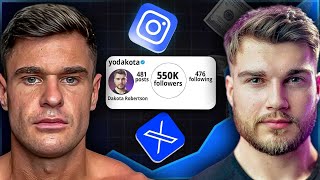
Dakota Robertson went from low-pay jobs to building a Twitter ghostwriting agency by starting with a cheap course and obsessing over copywriting. He breaks down audience growth: write simple, value-first content with strong hooks, use trends, and amplify with paid ads. YouTube builds the most trust, Twitter second.
Chapters
Half the population has IQ below 100. Literally. That's crazy. So if you're using like language that's very complex, it's like you're missing on half the population. The longer someone spends consuming your content, the more you're going to build that trust with them, the more they're going to be likely to buy. You got to create content that actually helps people, and that's going to position you as an authority. And if people see you as an authority, then they're going to be more likely to buy from you because you're actually being helpful.
Let's go, baby.
LFG.
Podcast. This is, this is my second podcast in the last like 24 hours, and then I got another one straight after this, so I'm in a good flow. You know, the more you do, the less rusty you get. Like, I find when I take a while off YouTube or podcast or anything, I'm kind of like, the words don't come to you as fluently. But you're a man of many words, Dakota. How did you get into doing what you're doing now?
Oh, it's been crazy. So I, I mean, I've done all kinds of stuff. Like, I used to be an nutritionist, used to be a medic, security guard, delivery driver, server, like all this stuff.
Secret agent. Yeah, secret agent. OnlyFans.
But yeah, I just didn't like the path of, you know, just working all these years, taking orders from people you didn't respect, being surrounded by miserable people, getting paid shitty. And I came across some books from my friends like Think and Grow Rich, you know, Rich Dad Poor Dad and all that stuff, and kind of indoctrinated me into thinking differently about how you can approach life. But fast forward a few years after like the age of 18, kept reading those books, but came across crypto actually in 2018 and went down that rabbit hole. And to keep up with the news with crypto, I was on Twitter.
Okay.
And I was on Twitter and some kind of course popped up on my feed like, hey, you can make money by starting a Twitter audience and growing. And I just thought it was interesting, and I was like, okay, well, I've always been looking for some way to make money online and do my own thing, so eventually just bought the course for $40.
$40, man, nowadays they're going for $200. You got a deal.
Slash out the prices. This is 10K today, $47.
10K to $40, and you're like, oh, amazing, buy now.
Yeah, the course is pretty shitty, but I mean, it got me to write online. I got introduced to people like Dan Coe and all these other people, and I just really liked their train of thought and what they were posting, and inspired me to start posting. Absolute shit show at the start, I was just posting the shittiest content ever, and eventually got better and started learning from different people online and learning copywriting, web design, all this marketing stuff. Started growing my own Twitter eventually. And then I offered that as a service to other people growing their accounts and then just spiraled up the agency from there.
It's wild because so many people, they start with like YouTube, Instagram, video, but am I right in saying you started anonymous?
Yeah, so I started anonymous, but it was funny before even Twitter, I tried doing YouTube for like a day.
We all do. If you make it past day one, you're here and happy.
It was the most ghetto setup. I had like books like holding a camera. With like tape and stuff.
Bro, that was me.
Like, that was—
I had the iPhone sellotaped to the wall, and it was an iPhone 5. And so because it was like this, you know, you can't flip the screen. So I sellotaped to the wall like that, and so I couldn't see the screen. So I would like press play, sellotape it, and half the time the wall would press pause. So I would be like going hard making fitness videos, and it wasn't recording. iPhone sellotaped to the wall. The OGs will remember those days. The ghetto setup. Yeah, yeah. So you tried YouTube for a day? Yeah, that didn't pan out.
I just got too nervous in front of the camera. So it was good for me because writing, you can be more introverted and write about whatever and then eventually kind of grow your confidence. And then that translated to video for me.
Yeah, and so you were at, well, I know it's still your username, but Wrongs2Right.
Yeah, so that was my, well, my first one was Philosophy of Fit 'cause I was gonna be like, oh, we're talking about philosophy and we're talking about fitness.
Yeah.
And I was like, this is fucking stupid. I eventually learned, you have to, at least what I've learned for myself is you have to give value to people to grow on social media and people throw around the word value.
Oh, give value, bro.
But it's like, what is that? Okay. It's helping people solve their problems or helping them get to a desired outcome. So you help people with fitness, you help people like get more confident or you help them, you know, stop being a fat ass or whatever. I was like me, I'm like, okay. I could go the fitness route, but it's like, I kind of like writing. Yeah. I want to explore this. And so I just started studying copywriting and writing, and then I was teaching what I was learning to people, which was helping people, you know, maybe get more reach on social media, make more money, whatever. So that was how I was providing value, and the skill or the vehicle for that, the mechanism, was writing.
Okay. What were you like in school? Like, were you like a wizard at English? Like, did you just— because obviously you're mad into writing, so I'm really excited to do this podcast because, you know, like I said, everyone is just crazy on video now, you're the first person I've had on that can actually write a nice sentence, you know, not scribble it. So what were you like in school? Was English your strong point?
Yeah, I remember in grade 1, actually, I was given an assignment to write some story or whatever, and I just, I couldn't stop writing. I loved it. I loved telling the story, whatever it was, and it was absolute ass. But yeah, I remember the bell rang to end class, and I just kept writing 'cause I loved it.
Yeah.
But over the years throughout school, I kind of started to not like writing because they're telling you, you know, it's gotta be minimum 2,000 words, it's gotta be this, write about that, like boring stuff. And I just, although I was good at it, I just didn't really care for it that much. And it wasn't really until I started writing on Twitter again that I discovered, oh, I actually love writing as long as it's what I'm writing about. But yeah, writing was my top academic in school. I just excelled at it. But I mean, I was still ass.
Yeah, the only thing I was like decent at in school was like, sounds so jock, but like was rugby. And then like, but not even just the rugby, was the fitness aspect of it. So you'd have like two separate training sessions. You would have like, you know, your skills rugby, passing the ball training session, which I was kind of ass at as well. Ass is a great word. I was ass at it. So I wasn't great at it. Great at that, but I was really good at the strength and conditioning, like in the weights room, you know, the tire flipping, the pitch sprints and all that. And so that definitely— we all like what we're good at. So that definitely, when I, when I left school, translated into doing what I'm doing today. And so after school, did you go to college?
Yeah, well, out of high school I graduated a bit early because I went in this program where they teach you a trade, and for me it was electrical.
Oh nice.
Um, so I went to, uh, to a construction job right after high school, and it was miserable, 'cause I was working 12 to 14 hours a day, surrounded by miserable people, I was in the middle of buttfuck nowhere in Canada, super cold.
What part of Canada, by the way?
I'm in British Columbia.
Okay.
And so it's kind of like near Vancouver, where I'm at, but I actually flew out for these jobs, because they're in oil and gas plants, so I was in like, literally, no one knows where the hell these places were in Canada, but they're freezing cold. But yeah, it was, it was, yeah, not fun. But eventually I was like, screw this. I need to, you know, find a career that I would like. For me, I always thought, you know, teaching people would be cool. So I was gonna be a high school teacher teaching English and psychology. But I mean, I do that now, so I just get paid better.
Exactly. You know what? I went down a TikTok rabbit hole and it was the oil rigging. Oh God. Have you been on an oil rig?
No, I haven't done oil rigging, but that stuff is holy. That's another level.
They're like modern day pirates. Yeah. Like that is, It's absolutely wild. So after being an electrician, you decided you want to go down the writing route. So what exactly, you know, is ghostwriting? You know, because that's essentially part of what you do as well.
Yeah, so ghostwriting, you just pretend to be other people on social media and then you grow their account with content and either get them more sales, get them more newsletter subscribers, get them more followers, whatever connections, whatever they want. But essentially you're just taking over someone's social media and you're writing in their voice and getting a Deserto Cup.
So we have a little secret. I have a little secret to tell the audience. One of the ways that we know each other is Dakota did quite some amazing copywriting on my Twitter. And I get like DM, like honestly the best, not, not kissing your ass, right? But I, I've gotten it before. I get people like who email me like, hey Rob, here's 50 tweets I made for you. And like they're just ChatGPT pretty much, you know, they're super generic. So me and Dakota, we jumped on a call and essentially did an hour-long podcast with your business partner as well. And then we just wrote these bangers. And it's one in particular is my most viewed and highest impression tweet ever. It was about, what was it about? How to boost testosterone. So of course the LF Army, they love that. They're like, like, but like you've also this crazy network on Twitter. You just figured it out and you just blew it up. You linked the old Game Plan programs in at the end. And I was like, that was my first time I was ever like, whoa, ghostwriting or copywriting, whatever, truly works. Nowadays it's me on Twitter, you guys. I swear. But it was, I was really impressed by it. And still to this day, you know, you're the only person that's ever done it properly. And so you're big on Twitter. What is your biggest tips to get your first like 10K followers on Twitter?
Yeah, so a big one I see is people, they wanna be self-help gurus like Tony Robbins and life coaches, all that. They just wanna give really fluffy information. And a big problem I see with beginners is even if you do grow to 10K followers, there's no way to monetize because okay, if you build an audience of people just like your stuff for whatever platitudes, fortune cookie content, you're not really building yourself as an authority.
Fortune Cookie. I know, I think of these fucking cute things. It's perfect. It's just so perfect. ChatGPT is the modern day Fortune Cookie.
Literally, yeah. This is brutal. But yeah, it's like you gotta create content that actually helps people and that's gonna position you as an authority. And if people see you as an authority, then they're gonna be more likely to buy from you because you're actually being helpful. It's like you, you created content on YouTube that was actually useful to people. Oh shit, I like Rob, I like his content, it's useful to me, and it's like, I'm gonna buy from you, right? So you gotta think from the frame, okay, how can I be useful to people? And I recommend, okay, picking a skill that you enjoy and that other people would wanna learn or find use from. For me it was writing, for you it was fitness, and other people might be nutrition, it might be marketing, sales, whatever. But I think it's really important to have a hard skill that you can give actionable advice on. You don't have to be an expert, you just have to, okay, go out, learn for yourself, apply it, and then teach what you're learning, and then you'll build a following that way. Another part is distribution. So a lot of people, they think posting content's enough, and maybe for some platforms, but you know, at the start you gotta find ways to get eyeballs on your content. So you can do that by commenting on bigger accounts and actually, you know, giving value in the comments or, I like the yes and framework with improv. Like, yes, I agree with this, and, you know, here's my experience, or whatever. Yeah. And then you can also pay for retweets, or, you know, story shares, whatever the platform is.
How much is a retweet going for nowadays?
Well, it depends on the account. Yeah.
Like, account with, like, maybe 500K audience and good engagement.
Yeah, so, I mean, it also depends on, okay, is this a platitude account that just has a bunch of, random followers or is it more specialized? So I mean, you can charge or you could pay someone between like $10 to $50 a retweet if they have like 500K. Yeah. If you're more niche down or you have a more engaged or specialized audience, then you, I was charging like $80, $60 a retweet. Yeah. For some—
Press the button. Yeah. Life has gone too easy.
I stopped doing that like 2 years ago, but there was like a time I was like, holy shit, I can't believe people are paying me.
Oh man, from the oil rig to this. Yeah.
I was just thinking like, it's so crazy, you know, people will work an hour and get paid $10, $20 an hour, but if you build leverage, it's just like, it's mind-boggling. Like, I was literally pressing a button and making someone's wage for 3 hours just by pressing a button. It's just mind-boggling what the internet is.
Yeah, man, it's absolutely shocking. So I always go back to, I'll never forget like the last 9 to 5 I worked, or it was a 9 to 6, it was in like just to start a company in an office, you know, in Dublin, and you know, I was just sat at my desk for most of the day. And I'll never forget like my monthly pay, I'm pretty sure it was after tax, was like €1,800. Oh my God. So, and like nowadays, this is a little crazy story. Like sometimes I don't like talking about, you know, money and how much I make, but this is the podcast. The podcast is a little bit more intimate. So funny story, I was at, I wanna build like a gym out here. And have you ever seen those adjustable dumbbells? They're like super, they're not the shitty screw ones. They're like super sick. They're like $500. And I went onto an Instagram page that sells them. You know, started liking the posts. You know, I was like, sent it to Linda. I was like, oh, I'm gonna get these. And then I get a DM from, I was gonna buy them. I was literally like about to, you know, buy them the next day, order them online. Then I get a DM from the company and they're like, hey, we'd like to pay you for a sponsored post for these dumbbells. You know, like $2 grand for a sponsored post.
For a reel.
And I'm like, I went from paying $500 to getting the actual product and then getting $2 grand cash on top of that for like a product I would, was not only used, like was legit about to buy. Like social media, and they'll clearly sell 4 dumbbell racks. You can sell a lot more than that. It's like the perfect audience really. So it's just like, it's absolutely shocking like how much money is to be made on social media. Like I think it's like Kim K charges like a million per post.
Yeah, that's ridiculous.
Yeah. She's like the, the queen of personal brand, which is something that you're big on as well. And so there's a few things I want to go back to, but just while we're on that, what are some, some key points or some, some your best piece of advice for building personal brand? And also like what is personal brand?
Right? I mean, essentially it's, it's no different than brand. I think.
Yeah.
You know, it's just you, you know, you're a brand. Mm-hmm. Like everything we do is like representing who we are and saying who we are. So, I mean, I just view personal brand as reputation.
Okay.
I think that's an easy way to frame it.
Yeah.
But yeah, when it comes to building your personal brand, one thing is people don't do interesting stuff in real life, and then they come on social media and they're trying to maybe change some words from someone else's post and post as their own, or they're like taking quotes from a book and reworking it, and they think they're growing a personal brand. It's like, no, you're just not interesting. You gotta go out and do stuff, like maybe build a business, go get jacked, you know? Go travel someplace and then come back and talk about it because anyone can copy your posts, but they can't copy who you are. They can't copy your story, your background, what you do, your worldviews, your opinions. So I think the more you can go out and gather experiences and actually live life and then bring that and document it on social media, the better.
That's a banger right there.
Yeah.
Clip that. Yeah, clip, clip, clip. Darren, what's up? Darren, you know Darren Lee.
Oh yeah.
He actually, he intro'd us. I was just chatting to him right there. Produces this whole podcast.
Oh shit. Yeah, yeah, yeah. Yeah, yeah.
No, honestly, he's in Bali or Singapore now. I'm trying to get him here. But you know, so that's on personal brand, right? So in the fitness industry as well, so easy to just be like, hey, calories, macros, gram of protein, legs push pull. But just exactly like that, so many fitness people are boring as fuck. You know, you gotta throw in a little bit of spice in there. Like show the 10,000 calorie challenge. Show the cheat meals, show the travel. And people are like so afraid to not stick to their niche that they're like, oh, I just have to post fitness reels on my page. But it's like, people will connect with you a lot more if you show like, you know, building your home, your relationship. I know that can be a rocky one. But your travels and people will connect to it a lot more. And in my opinion, And then when it comes to selling any product, the main thing is building trust and connecting with your audience. So like trust is the number one thing because when you break it down, someone's putting their credit card details onto the worldwide web. So they have to make sure that it isn't like a scam AI account. They have to make sure it's real. So the more people like connect with you, they see like you're a real person, the more trust you build. So that's like, that's my biggest tip for like personal branding and you know, how to pretty much make a sale online. And so, uh, going back to monetizing creators, that's something that you specialize in. So what would be your first steps? Like, let's say someone is like, you know, they, they've grown a decent audience now, and I know it depends on the industry they're in, but what would their first steps be on monetizing it?
Yeah. Well, assuming that you built your audience based on a skill.
Yeah.
It's like, okay, we gotta create an offer and And I'm by no means like a crazy expert. I read $100 Million Offers, that's where I get my information.
That's all you need. I'm not taking credit on that. That's all you need.
But yeah, you like put together an offer, make it, you know, quantifiable outcome, maybe have a guarantee, target audience, do you know when do the deliverables, you know, when does the person get the deliverables, just like stuff like that. And then just like put together an offer. Once you have that offer put in place, you know, go out and try to find maybe a cheap client or a free client. If you can get a paid client, that's great. But like, get somebody to work with in exchange for a testimonial or a case study.
Yeah.
And then that's gonna allow you to create content about how you got a result for that person. And then you post about that, you know, maybe for me, me, you know, if I was starting out as a ghostwriter, I'd post about, oh, here's how I help my client, um, gain, you know, 50 followers with one post and break it down. Yeah, here's how we optimize his profile. Here's the 5 elements you need to know to optimize your profile for more conversions. Here's how you do X, Y, or Z. Here's how I did X, Y, Z. Yep. And that's what, at least from my experience, case studies and showing how you got results for people is the best way to get clients. But at first you have to go out and get clients, and then if you don't have experience, well, if you do it for free or cheap, that's gonna be more enticing. So you kinda gotta earn your stripes. But yeah, and then it's just posting content, doing outreach to people that seem like a good fit, and coming across, like people screw up outreach because they're just copy-pasting the same thing to people.
I get so many.
Yeah, right?
And they're like the same, do you know what they've started doing now? What? They're like, hey Rob, how do I like bring up my triceps and all this to try get me open DM? And I'm like, I do try to reply to everyone and like give advice and I click on their page and it's like copywriter helping you scale. And I'm like, you don't give a fuck about growing your triceps, son. I know you just want me to open that message request. I seen this. So what are your tips for a good cold outreach?
Yeah, so again, I'm not an expert on this. What worked for me—
I think you are. Yeah.
Well, what I did with you, for example, is I believe I made a Loom video for one, like, yeah, highly personalized. And then the first part of the message I sent you, so I had the Loom video, but I also had the text. The text was super personalized. I went through a podcast you did with Dan Coe. Yeah, I listened to it. I found a part that I resonated with and I could relate to, and I gave you a personalized compliment to start, like, hey Rob, like, I love the part where you talked about, I think it was like video games or something. I was used to be a fat kid, I used to game blah, blah, blah. The reason I'm reaching out, it was like the next part is that, you know, I recently got this result for Dan Coe, blah, blah, blah, social proof. Like this is what I do. I'm a Twitter ghostwriter.
Yeah.
I think we could do some cool things, get similar results for your account. If you're interested, you know, click here, let me know, whatever. Yeah. I forget what it was.
And I clicked on that bitch. I was like, he's not asking me for like tricep tips. Yeah. This is real. Yeah. But it's all about like, if I see a personalized message and you know, sometimes I write to influencers as well that I want to, get on the podcast. That's, that's like cold outreach at its best, really. Speak at an event, send some fuel cakes to, collab on YouTube with. And it's all just about being personal. You know, it's just anything you can show that it isn't like a copy-paste thing and that like you're just putting some nice thought into things. And so going back to monetizing your audience, how do you personally do it and what are your source of Income. Yeah. The IRS is missing.
Oh, fuck.
Yeah. That's the American.
I've got a company set up in Panama now.
Ah, yeah. I got one in Dubai. That's it. You know, I don't make any money. Yeah. What? I don't make it off. So how do you personally monetize your audience? What are your source of income? Okay.
So when I started out, I monetized through done-for-you ghostwriting services. Businesses. So I grew people's social media for them, got them more followers. That was primarily what I did. And then once I gained a lot of experience with that and scaled up my agency, I transitioned to Done With You coaching. So I think it was like 2 years I never sold anything to my audience and I built up this audience of like 100,000+ people. I just never sold anything to 'em.
That's key kind of. Yeah. The longer, the longer you can wait.
Yeah, the longer the runway, like the farther you can take off, right?
Yeah.
But yeah, so I offered a Done With You coaching program. I think it was January 2023 and I showed people, okay, here's how I grew my social media and here's how I grew my ghostwriting agency. I'm gonna teach you everything I learned. And yeah, that, that worked out really well. I got a lot of interest with that and I realized like, I love teaching. I mean, I was gonna be a high school teacher before all this anyways. You know, it's really cool to help people quit their jobs, drop out of college, all this stuff. And I was like, oh, this is awesome. I make way more money this way too. And I just enjoyed it more. So I was doing the done with you coaching and the done for you ghostwriting at the same time for a while, but I just realized, like, this is a better vehicle, like teaching people how to do this. So I just pivoted to doing that full time.
Time.
Um, and that was the summer of 2023.
That's recent.
Yeah, yeah, I just went full time with it. And then, I mean, that's what I still do now. And then I'm gonna launch a low-ticket community soon and, and, uh, do that. But, um, yeah, it's been cool. So I've really like stuck with one thing primarily. I think that's why I've had more success than some people, is because I've been laser-focused and gone and learned all the nuance with stuff and then transitioned to a different vehicle that had more leverage. And then maybe down the line I'll drop a course and then find different ways to manipulate my offer.
Yeah, definitely. What platform are you using for the low ticket, by the way?
Yeah, so no one knows. I find these like—
I'm trying to— I want to do that myself. I have my fitness app. I want to do one kind of like that. Like business coaching for personal trainers, and I'm trying to like pick the best platform.
Yeah, so this is like a really niche one no one knows about. I use Heartbeat Community. Um, I like it because it's got some cool like automations you can do within the platform, and it's got like everything bundled into one. Um, but yeah, I never really liked Skool. I never liked, uh, Circle or any of the other ones, but I really like Heartbeat because they just got all the features I love.
Yeah, nice. And so you've got some big viral bangers online, not only written text but in videos as well. Tell the people, how do we go viral on social media? What makes a viral video, for example? Bring me through your brainstorming process, the hook, you know, the, the base of the content, the storytelling. Walk me through it.
Yeah, so there's definitely Peter people that are better at going viral than me, but from the times I did go viral, hopping on trends is huge. Well, one, the idea. You need to have a good idea behind it, 'cause otherwise it's like whipped cream on dog shit, right? So the idea, trends are huge. So right now, infographics on Twitter and LinkedIn are huge, like showing that, or on Instagram there's a trend a while ago where they're doing the animations like Dan Coe was doing.
Yeah, I love them. Yeah. Man, they're so like nice. Nice to watch.
Yeah, yeah, and then you can, like I did a twist on them where I did a shitpost of one of those animations 'cause they're all so serious. I'm like, okay, how can I like twist this? And I made a shitpost of how to become a millionaire in 69 days, wake up at 4:20 AM, like do, sun your balls in a cold shower. Like I just like, this is this trend, but I made it my own by adding a little pizzazz. So like finding what's working for, other creators and then I think twisting it in your own way to make it more your style. Like maybe like the 10,000 calorie challenge, like how can you find, you know, that was obviously a trending thing. How can you find a way to, you know, change it up or make it different? And then the idea, but also the hook. So you gotta hook people in the first, you know, first sentence, the first 3 seconds, whatever.
2 seconds now, yeah, straight up. It's going down by the year. It's nuts, man, yeah. We're losing our attention span. Yeah.
So you can get creative creative with that. I see there's two ways to do a hook. You can do a visual hook, so maybe movement at the start or like, I don't know, something weird.
Flash your abs. Yeah, yeah, I get a million views on a reel when I do the abs at the start. And then when I don't, same video, it's like 100K or something. It's just 'cause like, people are just visual beings and that if someone sees like, you know, someone who's put in the work, someone who has the results, with, they're just more than likely to listen to them. Even if someone with not as good results is giving better advice.
Yeah.
And it's, so it's kind of unfair in that sense. But, but that's my hook. Look at my abs. Look at my abs. Why Rob, you're, you're such a deep and intelligent guy.
It was like the caveman brain. It's like I came from, you literally gotta like get in the mind of, of someone that's a potato.
Yeah.
The IQ of a potato. And then you gotta make it applicable to everybody. Yep. So that's how stuff goes viral because 'cause if you're saying some stuff like super fancy words, hard to understand, you know, it's really complex, well, think about this. Half the population has an IQ below 100. Literally. That's crazy. So if you're using like, language that's very complex, it's like you're missing on half the population. Let alone people that have English as a second language. So you gotta make it really dumbed down. One thing I've noticed too is, is, at least for me, my niche is making it very actionable and easy to understand. Because people, they, a lot of it's status. So if someone shares a post that's useful to other people, then it raises their status. So if I share something that's very actionable, very good, I was like, oh, that's a great piece of content, I'm gonna share it to my story. Other people find value in it, they associate that value with me. So like, a lot of it's status. But yeah, like, If you make a good hook, make it very actionable, hop on trends, have a good idea, not tren.
Yeah, I was like hop on tren, well yeah, done that. No, I've never taken tren, guys.
I have.
Yeah, I can see those arms. For sure, yeah. And so if you were to rank every social media platform in order of importance, what would you rank like top, like for example, if you could wake up tomorrow and have like 100K followers or subs on any platform, like what would it be? And then go down from there. I know you're biased towards Twitter.
Well, YouTube actually. I think YouTube's the best.
Yeah.
Like the thing I think about with content is how do we get more time on attention? So I think the longer someone spends consuming your content, the more they're gonna, you're gonna build that trust with them.
Yep.
The more they're gonna be likely to buy, subscribe to your newsletter, whatever.
Yep.
So I view YouTube as number one and like the people on there, are searching for answers to things like how to, you know, do X, Y, how to get abs, how to, you know, get—
It's the biggest search engine ever.
Yeah, it's crazy. Yeah, and it's just a great trust-building mechanism, so I think YouTube is definitely the top.
After that, personally, this is like me personally, yeah, yeah, no, that's why I want a person.
I love Twitter. It's just, you know, you're getting in people's minds and you get to see what they're thinking. Actual good content. It's more based on, okay, how do you think, not how do you look. So I think Twitter's great. The algorithm's been all crazy lately and just a shit show, but I still love the people on there. And then Instagram's really good, to be honest.
Yeah, Instagram gets great sales.
Yeah, a lot of buyers on Instagram, which is great. Definitely a lot more work for the content if you're a content creator, but I think it's, it's definitely great. And then LinkedIn is a slept on one. I love LinkedIn. Yeah. It's just so much.
I've gotten into it as well. I'm just like, sometimes it's kind of hard.
Yeah.
Like I'm like, who do I think I am? I'm like, I've got like Ben Francis here on my feed and then there's me. Yeah. You know?
Yeah. No, well it's like, yeah, there's so, it's funny because there's so few creators on LinkedIn and then of those creators, so few of them are actually good at creating content. It's just easier to stand out on there. So LinkedIn's really slept on. Um, I hate Threads. I think the people on there are just— most of them are potatoes.
Yeah, it's funny, they're the weirdest, weirdest bunch.
It's like really left-leaning, and I'm more centered.
So if I say some stuff, they're like, you're a fascist, Trump supporter, Trump Derangement Syndrome.
Yeah, straight up. Um, I think I put Threads at the bottom. Um, TikTok, I haven't touched TikTok.
TikTok. Okay, yeah, I'm shit on it.
Yeah, I know it's like, it's good for virality and, and, you know, growing on social media, but, um, yeah, I don't place much value on TikTok. Um, I don't know, is there any other—
no, they're, they're like the main ones. I see some people on Snapchat as well, and I'm like, yeah, I'm like, where— I'm like, I'm not a 16-year-old girl. But look, you know, I know some people do kill it on it. Yeah, I grew like, you know, my TikToks, I think like 30K or something and I'm like, well, this didn't make a difference. Yeah, I think in order to really like notice a difference in sales on TikTok, you almost have to get to like 500K or like a million almost to notice the difference. Whereas like if you have 20, 30K subs on YouTube, that's when I quit my job. I was like, if you have like, 'cause subscribers, YouTube is so like dedicated that if you get to that amount, like, you know, you can, you can pretty much start whatever you want. Yeah. And so seeing as we work in the social media industry, so first of all, how do you avoid burnout? As I know that's a topic you've spoken before. It can be so consuming. It can be 24/7. You don't really get evenings off, you don't get weekends off. How, so how do you avoid getting burnt out from doing what you do?
I think a, a big thing is Not, well, one is consistently showing up every day. You know, not placing so much of a workload on you. So my thing is, okay, as long as I get one tweet every single day, I'm good. If I don't do that, my head explodes. Literally since I've started posting on Twitter, like the very first day, I told myself I'm not gonna stop posting. I've posted every single day since September of 2020. Money every single day. I was like, my head explodes, my, my dick falls off if I don't post every day. Like, it's just, I just cease to exist. Yeah, if you adopt that mindset, I think it's, it's really useful. Um, but also not beating yourself up if you're not posting 5 times a day, 3 times a day. As long as you do one a day, I think that's very important to do. Um, also for me personally, using an app blocker like Cold Turkey is great for me because, you know, if our career is so associated with social media, it's easy to be like, oh, I'm gonna go on Twitter and like, it's productive or whatever. No, it's not. It's bullshit.
Yeah, so true.
Yeah, so you can put on an app blocker. I like Cold Turkey because you can't uninstall it, and then you set a schedule like, okay, uh, between the hours of 5 AM till 12 PM, no social media. I only unblock the sites that are associated with deep work or doing whatever I need to get done. Also, I bought a physical physical, uh, timed lock case for my phone.
Oh shit, yo, it's gotten that bad?
Yeah, because there's no app blockers that I can uninstall with iOS, so I'm like, okay, well, I gotta use a physical.
Your mom's having a heart attack. Come on, I'm gonna— no, sorry, not today, Ma.
Yeah, so those are like legit. I think the 80/20, I think that's the, the 80% that that'll get most of the work done. But yeah, it's like just finding, okay, when it's time to rest, rest. When it's time to work, like actually work. And I think the trouble is when you're blending the two together, like, oh, work for 5 minutes, go on social media for 5 minutes. But if you eliminate that, I find you get a lot more done. When you get all that done, you can relax and you can relax, you can recover and hit it again tomorrow.
Yeah, and so what's a typical day in your life looking like? You know, what time do you wake up at? What time do you find you can focus best at? You know, what is your kind of like work blocks? Like, run me through your day in life.
Yeah, so I wake up at 4:28.
Sun my balls. Yeah, yeah, just for play, that skit.
No, so I usually wake up at 6:00 AM. I've been slacking lately, but usually 6:00 AM. I like to experiment with different things. Right now I'm I'm not doing any work for the first hour. I'm just kind of reading and just consuming information, content that I'm looking to get better at. So I do that, I drink my coffee, and then usually I get to work at 7:00, 7:30. I'll go to a café or coffee shop and I will list out, okay, what do I need to do for today? And like, what's the highest priority task?
Yeah.
And then I will usually set a timer for 2 hours and just work on that one thing or the top 3.
Yeah.
And use an app blocker, block everything else out, and then just work on that. And that forces me to not get distracted. And then after 2 hours, I'll take like a 15-minute break and then 2 hours again, and then kind of repeat that until my brain just—
the brain's just like, yeah, no more work blocks, please. And like, what's your diet like as well? And your training? You know, there's some We got to ask on this channel.
Yeah, yeah, of course. I love it.
That's what we're here for.
So I've tried all kinds of stuff. What works well for me is fasting until 12:00 or 2:00 PM, because then I just don't have to focus on eating. I can just focus on work, and then no blood sugar crash or anything. And then when I do eat for lunch, I make it really high protein. I try to do low carb for lunch, so I again don't get that blood sugar spike. And then, uh, dinner, yeah, just really high protein. I don't care about the carbs at dinner time. Ideally, I want to carb up, yeah, near that time. Um, and then, yeah, so it's really high protein. I only focus on protein and calories. I don't care about fats or carbs. Um, and that's just what works well for me.
Yeah. And what type of training do you do? Yeah, so I got pretty big guns there, big guy.
I've been training I've been training for 13 years, so it's like, yeah, it's fucking same size as mine.
Yeah. And I'm the fitness professional.
The Jack nerd. Yeah.
Yeah.
So I do full body and I try to hit it 5 to 7 days a week. It's been kind of complicated lately with me traveling so much, but ideally, yeah, it's full body. I hit each body part for 3 sets, 3 or 4 sets. I try to train till failure. And usually my workouts are like 45 to 60 minutes and then I end with cardio. But yeah, I just, I've done the bro split, push, pull, legs. I was like, I just enjoy full body the most, I think.
Yeah, when I'm like traveling or if I've just got like a fucking hectic week, I switch from legs, push, pull, like 6-day down to just 3-day full body. And I actually get like stronger. I actually like recover better, get like crazy good pumps. Pumps. It does like take you out of it, like when you leave the gym and like, you know, everything is trained. It is quite taxing on the body. And like the whole kind of benefit of a bro split is just kind of mental, that you can just concentrate a little bit more and just like make sure you're fucking annihilating, annihilating body parts.
Just a paraplegic after.
Yeah, you know what, I think it was like the Hodgkins or something, they've made this video and they like, they did like a dedicated arm day every day, and then they just did like pull-ups and chin-ups, and like their arm growth is like the exact same or something. You know, people forget to realize like when you're doing full body routines and doing compounds, like everything's, everything's getting hit. Like, you know, isolation movements can be great, but oftentimes they're overrated. And yeah, I'm the same. Like, I usually wake up around 6 or 7 whether I like it or not, like, which is kind of annoying because 'cause if I don't fall asleep till like midnight or 1, I will still wake up the same time, fucking sun. And so I got the blackout blinds, but the fucking sun sneaks in there. I wake up, absolutely floor the caffeine, the nootropics, the water, the electrolytes. I'm like, there is, I have a new lease of life in me. And then between 7 to 11, I will do pretty much my entire work of the day. Like, Tim Ferriss got the 4-Hour Workweek, Rob Lipsett's got He's got the 4-hour day. He's got the 4-hour day, then goes, catches a pump. So then I'll train like usually like late morning. I did an early one today. Train late morning and then I'll have like either my first meal of the day or like, you know, my first main meal. Maybe if I'm feeling, if I'm actually, if I'm leaner at the time, then I will need, 'cause you're technically lower on energy, the lower body fat you have, that's like what it is stored and you have less food in your system. So if I'm like competition prepping, or on poverty calories, you know. And then I'll have something small before the gym, but if not, just huge meal after the gym, food coma for an hour, and then I'll do like fun shit, like, you know, record podcasts, record videos and everything. But I'll do like my main, you know, at my desk laptop shit for the first 4 hours of day— of the day. And then that's like, that's like pretty much it.
What kind of work are you doing?
So a lot of it is, you know, calls with my app developers, manufacturers, sponsors, emails, always clear that. And so like I kind of have to motivate myself to have a clear head to write, doing all client check-ins, that's, you know, very time consuming. So I do like obviously the app with the Gameplan app, which is the low ticket thing, which is like, that's like, you know, my main thing and that kind of runs itself. I've put in these systems in place that literally like like it just prints and runs itself. And not only that, but like it gives like the perfect service. Like there's, when you get a program from Gameplan, there's like literally every single topic, every single thing personalized to you. Big team running that in like New Zealand and Cardiff. It's crazy. If any personal trainers out there want the magic sauce, shoot me a DM. But so that kind of runs itself. But then I also do, you know, high ticket one-on-one coaching. Coaching where, you know, I have like assistant coaches and everything and, you know, sales team and onboarding, but it is me, you know, like it's voice notes, calls, FaceTimes, everything. And I'll only take on like 20 guys with that. And it's funny, like if you sign up to Game Plan, you'll get the same information, like you'll get the same training, nutrition, and all that, but with the one-on-one you get the accountability, and that's just essential. What people need. Like, everyone knows what to do, you know, but they just need accountability, motivation. And with the high ticket as well, you also can come to Marbella anytime and train with me. Like, I had a few clients at the event.
Oh shit.
Yeah, yeah. So that was really cool. And so that's like, that's a big selling point as well, is like, you can never really beat an in-person training session. And like, the majority of my clients are Irish, so it's a very easy flight. So people will come for the weekend and, you know, they'll come with their other half and, you know, their spouse. Is that weird? Weird words. Yeah, partner, business partner. Yeah, they'll come with their girlfriend or whatever, and like, you know, they will come over here, have a little barbecue and stuff. So it's a really like really personalized thing. So that takes up a lot of my mornings as well. Editing— I have many editors, but no matter what, when they send it to you, you gotta fucking go over it yourself. I'm like, yeah, I'm like, you don't know my awkwardness. You know, like they'll leave in a pause that you hate, but other people wouldn't think about it. So I still do like quite a lot of editing and then just coming up with like video ideas and just getting ready for the weekend. So that's like the main things that like I work on. And then yeah, after that in the evening, it's just chill time really. Yeah, like I, people like, for example, like Christian Guzman and Max Tuning and all, like crazy hard workers, you know, such hard, like they're the hardest workers I know really, you know? Like, I'd rather— they're way more successful than me because of it, but I'd rather just, you know, I like the kind of balance that I'm at. Like, I could be further ahead, but I kind of don't want to be, you know what I mean?
Like, um, it's easy to get caught up with that too, you know, especially if you're in your 20s or 30s as a man. Yeah, see all these guys like making money, blah blah blah, and they— a lot of people don't see the stress behind the scenes of running like even a sales team or or managing employees, like, fuck that. I'd rather just maybe have 3, 4 contractors, really tight circle, but yeah, have systems in place and just chill, like my life, like, yeah, make good money, but yeah, I don't wanna manage 100 people, 1,000 people.
There's someone on Twitter and he like specializes in making like one-man brands. I think Dan Coe talks about it a little bit as well.
Justin Walsh.
Yeah, that's it, that is exactly it. And he speaks about like the joys of just having like a really lean operation. Yeah. And I, I resonate with that so much. Like, you know, I've a very small team, if you can even call it that. Just people I can, that kind of makes things run smoothly and just keeps a lean operation. And I also work a lot on like commission and revenue, like for setters, you know, like in my sales team, I'm like, like if you get the sale, then, you know, I'll give you a percentage. But then if they don't, then it's fine. So, it's kind of like I make sure things are in the green. Because I think it was Hamza, he made a video on like, at one stage he hired like on payroll like 50 people and people were just slacking off or something. And you kind of lose the run of yourself when, and like they aren't motivated if you're not getting commission. So I think he made a video on that and then he just like got rid of everyone, you know, 'cause it wasn't worth the stress. And what's your take on money Twitter? Have you, I've inadvertently found myself on money Twitter and I'm like, why am I getting shown fitness stuff? Why am I getting shown money Twitter?
All roads lead back to money Twitter.
It does. I kind of love it. I think it's hilarious. You're this second person I've had on from Twitter. You know, the first person was Mr. Overpaid, Hasan. Oh yeah, yeah, yeah. He's actually a great guy. All his tweets are like, well, they're kind of true, but they're like satire, in-your-face Tate vibe. But in person, he's actually really nice, and we had a really good conversation. But what's your take on money Twitter as a whole?
I love it. It's like, it's like kind of a dysfunctional family. Yeah, yeah, different like parts that, you know, really vibe with each other, and then other parts in it that like, oh, screw that, screw those guys. Yeah, yeah, it's, it's cool because I remember, yeah, when I started, it was just really small you know, all these like maybe 10 key guys.
Yeah.
And it's just crazy to see how much it's grown over the years and how many more people they're like drawing into their cult, our cult.
Yeah.
Yeah. But it's cool because we're indoctrinating the youth into making money online. It's, it's cool. But yeah, I mean, you got esoteric money Twitter, I guess I call money Twitter, like, you know, all the, all the bros and girls, I guess.
Yeah. Yeah. Yeah.
Like the few that are there.
Yeah. Are they even really girls? Like, is it just dudes? Who knows? Apparently there's a few that are actually men and they're pretending to be girls. I'm serious.
That's so crazy.
Yeah, yeah, I've seen it.
Surprised.
Yeah, it doesn't surprise me. They're better writers, so they're like, I'll just pretend to be a girl.
They're like that in crypto too. That's— it's crazy. Um, but yeah, it's, uh, yeah, it's cool because you got esoteric Twitter, you got, you know, finance bros, you got your crypto bros, you got, you know, looking online this solopreneur blah blah blah, but yeah, we're all like collectively on this journey of getting better in our own respective skills, niches, and we're documenting it along the way, and then it's cool because other people see that like, oh shit, maybe I can do that, and yeah, it's just really cool. It's just a big self-improvement orgy.
I was like, I didn't expect an orgy at the end of that sentence. I was like, what? And so obviously, your whole, Your whole life is based around writing, so I'm sure you have a grand book collection. So what are the top 3 books that have changed your life?
Ooh, I would say, well, one, $100 Million Offers by Alex Hormozi.
Damn.
I found Alex Hormozi at 19 followers, so I was there before he was cool.
That's a flex, yeah, that's a flex.
But yeah, his book really, really, helped me understand a lot about business, and it was very actionable, and actually helped me formulate my offer early on. So that was great. Awareness by Anthony de Mello is another great one. That was more spiritual and woo-woo, but it was just really, really helped me understand my relationship with other people and myself. And then, god, there's so many good— I think Writing Tools by Roy Peter Clark. A book just taught me a lot about writing as opposed to the academic way, which is dog shit.
Yeah.
But he gave me like really actionable advice or tips in that book that helped me apply it to Twitter and actually grow my following, essentially changed my life. So yeah.
Yeah. That's, that's awesome. That's awesome. And so what would be the best business advice that you could give to yourself starting out? What would you say to like young Dakota? To just, you know, about to embark on this big journey.
Yeah, I mean, leaning into discomfort is, I think, the biggest thing, not only in business but also, you know, in fitness. Yeah, I mean, you, you starting out with people maybe making fun of you for making content. Yeah, it's like, well, look at you now, right? Yeah, they're probably stuck at whatever they're doing, same shit, same job. Yeah, exactly. So I mean, leaning into discomfort, and that was something I mean, thankfully I followed when I was starting out, but I never realized what I was doing until later on. Because I was hopping on sales calls, I was shitting my pants, like, oh my God, I gotta sell this, I don't know what to do. Or like posting content or just putting out an offer. I was just always willing to go on the deep end of discomfort, and that really made all the difference for me. So yeah. And then not really fearing screwing up or failing, because you're going to get everyone saying, oh, you can't do that, or oh, that's risky, maybe you should go back to college, or whatever. I think you've got to just take a bet on yourself and understand, OK, I know this is going to be rough, and I'm going to screw up along the way, but just be willing to go on that adventure anyways, because it makes for a good story too. You know, without struggle there is no real story. So there's that. And then learn an actionable skill. Like that's more practical. One is like, you need to learn a skill that helps people.
Yeah, you got to show up, be like, hey, I'm here, everyone, give me money.
Yeah, so you gotta make yourself useful to other people and not fucking rely on someone else to figure it out for you. Like I can tell immediately with people in my coaching program Instagram, who's gonna make it and who's gonna struggle. It's like the people are asking questions you can Google. It's like, dude, it's like, come on, you don't need me.
Yeah, yeah.
A lot of people are just looking for permission or validation and they like know what to do, but they need someone else to say, hey, you need to go do that. It's like there's a certain point where you just got to figure it, figure it out for yourself and actually like just go out and do the stuff. And you know, yeah, come back after you've tried and get feedback, But like, yeah, there's like a certain drive I noticed a lot of people have. Like, you don't have to have the skills at the start, but you have to have the drive or the ambition to like go out and like find the information for yourself and, you know, put, put together what, what you can.
Yeah. My, my like biggest lesson or what I would tell to my younger self is literally observe what the majority of people are doing and then do the exact opposite. Take the road less traveled. Take the hard choice, however you want to dress it up, just do the thing that you don't want to do. And then that's how you're going to get the result that you do want in life. So that's like my biggest tip as well. But bro, here, absolutely smashed it today. A lot of knowledge, a lot of wisdom there. Tell the people where they can find you.
You can find me on OnlyFans.
I can't hear. He's OnlyFans manager. That's it. Satan.
Straight up.
Yeah.
Twitter is probably the best one, @WrongstoWrite, W-R-I-T-E. Also on YouTube, just Dakota Robertson. You just type in Dakota Robertson on the platform, you'll find me.
There we are. Unreal, man. Really appreciate it. And I'm so happy to see you out here in Marbella as well. When an American is in Marbella, it's like seeing a dog walk on its hind legs.
I'm Canadian.
That's like calling me British. Yeah. Well, that's even harder to get to. I'm like, what flights even come here from Canada?
Yeah.
But no, I'm super happy to see you here and I'm glad you really enjoyed it, man. You're a legend, bro. Appreciate it. Appreciate it. Smash! Pua!
More from Rob










"I Haven't Worked in 10 Years" - How Rob Lipsett Built a £1M Fitness Empire From Nothing
