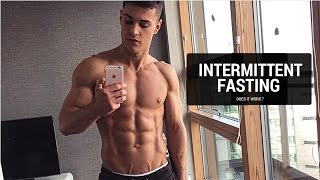
Rob Lipsett breaks down the 16:8 intermittent fasting protocol, debunking myths about breakfast and growth hormone while explaining why it works: appetite suppression and easier macro tracking. The catch: fasting 16 hours may hurt muscle protein synthesis, so he suggests eating protein in the morning if you're trying to build muscle.
Chapters
What's going on? I'm back in Ireland. I made it safe and sound. I'm here. Haven't uploaded in like 3, 4 days. Reason for that is I've just been unpacking, getting over jet lag, sorting out my life in general. Even though I'm going to Orlando next week, so I'm gonna be off again before I know it, but nevertheless, I wanna get a video uploaded, okay? And it's a topic that I get asked so, so much, and I've only ever answered it briefly in Q&As. And that is the topic of intermittent fasting. Let's get into it. Okay, I'm gonna try to smash through this. Right, intermittent fasting. What is it? It's kind of an eating protocol of fasting for 16 hours of the day and having an 8-hour eating window. This can obviously vary. Some people like to fast for a bit longer, a little bit shorter, having bigger and smaller eating windows. How do you do this? You wake up in the morning, you do not consume calories. So you have something like a black coffee, maybe a zero-calorie beverage. Water, sparkling water is good for appetite suppression, anything to hold you over. You head out, go about your day, and maybe have another coffee around 11 or so, and then around 1 PM, 2 PM, you break your fast and start your kind of eating window, and then this finishes up around 9 PM or whenever you go to bed. A few myths are that having breakfast stokes your metabolism. That has been completely debunked. The thermic effect of food is actually based on how many calories you eat a day, not how many meals. Some people also like to say that fasting in the morning boosts your growth hormone, and even if it does, trying to manipulate your hormones through your diet alone is kind of like the magnitude of putting a teaspoon of salt into a swimming pool. It very may well do so, but the effect that it has is just not going to make a noticeable difference, or else people wouldn't be pinning growth hormone into their ass. Why do people do intermittent fasting? Well, it is great for appetite suppression. You know those people who eat something and then they just can't— they get hungry and they just keep eating and eating? Especially kind of carbs with some people. Some people, when they eat in the morning, they're hungry again at 11 o'clock, so it's good for those people. Eat bigger meals. Obviously, if you're eating fewer meals a day, you're gonna get to eat a lot bigger, more enjoyable meals. I myself have actually done intermittent fasting the odd day when dieting, and I could eat a pizza when I'm dieting down and still fit it into my daily caloric intake. And having a pizza to look forward to every day on a cut makes you very adherent. So adherence is another pro. It's easier to track and log. Let's say you're using MyFitnessPal, the app that I use to track my macros. It's obviously going to be a lot more difficult to track 6 meals instead of 2 or 3 bigger ones. There's less planning and simple to follow. So again, you know, less meals, you're going to have to like do less meal prep, probably no meal prep at all. And it's going to be very simple and easy to follow. The only guideline is 8-hour windows. So just don't eat in the morning and have your first meal around 2 PM. It's Really simple to follow. Disadvantages. I would not be giving you a fair representation of intermittent fasting if I didn't give you disadvantages. Again, I am completely not biased towards intermittent fasting. I eat regularly, I do intermittent fasting some days. I'm not trying to sell you some intermittent fasting program. No bias. It is not exactly optimal for muscle protein synthesis, MPS, for sure. Basically, the research— research Research has shown us that for optimal muscle protein synthesis, we want to eat every 5 to 6 hours in a day. So that's, you know, typically 3 meals— breakfast, lunch, and dinner— if not more. A 16-hour fast goes against this, but I myself and my friends that have done intermittent fasting and clients, I've seen little to no muscle loss. So, so that's what the research may say, but I'm not sure how this pans out into practical application or real-life situations. I think personally, once you're hitting your macros and your protein intake, that you'll be more than fine. Some people simply feel much better with breakfast. That is absolutely fine. Some people love breakfast, their favorite meal of the day. It's not sustainable for them to do intermittent fasting. That's cool. It's not good for people who struggle to get in enough calories, especially those people on a bulk. Some people find it tough to consume enough calories to gain weight, then intermittent fasting is probably not for you because you're trying to cram it all into a small eating window. So like I said, I've done intermittent fasting myself and I've got some great results with it. Same with clients and everything. I've also had clients eating regularly get awesome results, and I've also done the same myself. You know, I've eaten many meals a a day, and most days I do eat breakfast. So this is my kind of approach to intermittent fasting that I recommend you guys on a cut try out. Basically, for breakfast you have a protein-only breakfast, so something like scrambled eggs, egg white omelette, protein shake, protein bar, steak and eggs. There's actually loads of high-protein, low-calorie options available for breakfast once you get creative. So the reason why I think this is best of both worlds is you stimulate muscle protein synthesis in the morning You have that feeling of having breakfast, which can often be a placebo for a lot of people. Some people just feel good doing— eating something in the morning. Protein is very satiating. It stops you from getting hungry, and you still get to save all your fats and carbs for the evening time. And let's face it, fats and carbs are delicious. This is the kind of most commonly and best approach that I've kind of put in place for people myself. It's also what I used in the final few stages of my prep. To help get me extremely lean while retaining muscle mass. Shit, is it getting dark? Gotta wrap this video up quick. So guys, that's it. Just a really quick video going over everything to do with intermittent fasting. There's no magic to it. Some people like to say there is, but it's really just gonna come down to total macro intake and your adherence. How you like the plan, if it suits your schedule and your lifestyle. If you wanna work with me, go to lipssetfitness.com or even shoot me an email beforehand on the contact page so you know what you're getting yourself into. I'd actually rather that. Some awesome vlogs coming this week. I'll see you then. Keep it real.