James Blackwell Reveals His Path to $100M Net Worth
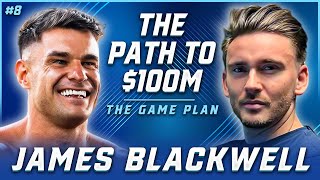
In this extensive interview, Rob Lipsett talks with entrepreneur James Blackwell about his journey from early side‑hustles—selling sweets, car flipping, and running a coffee shop—to building a multi‑million‑dollar recruitment agency, creating an online mentorship program, and developing a SaaS product for the recruitment niche. Blackwell shares his philosophy of first‑principles thinking, lean business structures, and the importance of hiring A‑players. He discusses the massive role of mentorship (both free and paid), the $150k+ he has invested in mentors, and how that ROI propelled him toward a $100 million net‑worth goal. The conversation also covers his daily routines, meditation, mindset work (affirmations, visualization), “monk mode” and “fire mode” productivity hacks, and his lifestyle choices—living in Dubai, renting for flexibility, investing in property, watches, cars, crypto, and multiple bank accounts. Blackwell explains his criteria for hiring, building an international team, and the value of in‑person meet‑ups. He touches on personal topics such as relationships, values in a partner, education (self‑taught, no university), and his views on AI (using ChatGPT‑4 for automation). The interview blends business strategy with personal development, offering actionable insights for aspiring entrepreneurs.
Chapters
I used to have such negative self-beliefs, and I actually used to be an extremely negative person. And I used to view myself, because I was terrible in school, I was the bottom of the year, and I used to view myself as a failure because I would get these test results and they would say F on them, they'd say failure on them. And then as soon as I flipped the script and I started looking at the glass half full, and I said, this doesn't define me of who I am, It's almost like my luck changed overnight.
Reverse engineer everything back to first principles of how you want the business to look on the, at the end. So everything for me is simplification. So can we do more with less? Always. 'Cause the more, as you scale a business, you get more fat, which just means you've got more things, you've got more processes, like it gets very complex. So trying to keep the business as lean as possible, but having good A-players in your business.
What's the benefit of you living where you rent?
Flexibility and freedom, because anything can change in the world. Look, everything that's going on in the world at the minute, I want to be agile, I want to move, because if anything else happens, then I can move to a different country tomorrow.
James, we're going!
Thanks for having me, Rob.
Forza, bro! Welcome to Marbella. What do you think?
Yeah, I love Marbella. It's nice. I used to come on holiday here probably 7 years in a row, and yeah, so it's nice to be back. I think as we discussed offline, I'm potentially looking at a place here maybe, so we'll see.
Yeah, and what'd you think of the weekend?
Yeah, the weekend was awesome. You put together a great event and some great speakers, good vibe, good energy, and yeah, I enjoyed it.
Appreciate it, man. You know, we're delighted to have you here, and you know, I followed some of your stuff online, but it was great to connect properly. And now in this podcast, I want to delve a bit deeper into the life of James Blackwell. So tell me, what was the first entrepreneurial entrepreneurial venture? What was the first entrepreneurial thing you did?
Yeah, so ever since I was younger, selling sweets at school, same story, paper rounds. I did Clean Easy, Avon, like, you know, where you're dropping the catalogues off around the doors and then hoping for orders.
Yeah.
I tried everything. And then I started buying and selling cars when I was like 17 at the car auction. So I used to buy like a £500, £1,000 car, put it on my mum's front drive and try and sell it on the street. And I kept doing that until she got really annoyed because she was sick of people coming to the door, knocking on the door. So, I was always wheeling and dealing as such. I was always trying to look for ways to make money. And then my first proper business was a coffee shop I had in Durham when I was like 20, 21.
I've been to Durham.
Yeah.
Where Harry Potter was filmed.
Yeah, it's true. Yeah, there's like good university there and some good schools. So, I had that for 2 years. And I think back then I didn't have a mentor, I didn't have any finance, I didn't have any guidance at all. And I was like, I took over this coffee shop and it was doing like quarter of a million a year, I got it up to. And, but it was just very hard to go to the cash and carry and back and trying to get cash flow. No one gave me loans, no one gave me any support. I was literally just threw in at the deep end, but I learned a lot around business there. And so yeah, that was my first entrepreneurial venture. And I would say that was, it wasn't a success as such, like it was sort of a failure because at the end, the recession came and yeah, like I, I look back and like it was good to have that failure earlier on because then that set the stone of like, right, I need to learn more as being an entrepreneur and actually learn how to run a business.
Yeah, and it toughened you up a little bit. And then so we have the coffee shop, that closes down, what's the next move after that?
So then, uh, I ended up going into car sales. So I've always been— I love cars, so I ended up working for BMW. I got an opportunity there and I, I stayed in car sales for like 4 or 5 years. And I think back then to where it is now on online marketing and how you can make money online, that's only been a thing really the last 5 to 7 years.
Yeah.
So like from our generation of making money, it's— I think it's a lot easier to make money online now than it has ever been before. So I think back then I was selling cars and then I fell into doing recruitment, which is pretty much high-level selling because you're it's psychology selling because you're selling someone a new opportunity, a new job, and you've got to deal with their family, the kids moving, and all of the emotional changes humans make in order to change a job. It's one of the most stressful things. So that was like, that woke my eyes up to how much money you could make in recruitment. And that's when I started my recruitment journey.
I find that interesting because a lot of people, when they want to grow up or start a business, they want to be a fireman, an astronaut. You're like, recruitment. Where did this interest or passion for recruitment come from?
Yes, it probably wasn't recruitment, it's sales as such.
Yes.
So like, recruitment is just a sales job. So typical Wolf of Wall Street, if you could imagine. Yeah, very like that. It's like working 12 hours a day on the phones, dialing, suited and booted. Yeah, lunch clubs on a Friday, getting drunk and then spending your paycheck, and then you go again type of thing.
That sounds good.
So yeah, so it was a good, uh, you can get stuck in that cycle. And yes, and it was a It was a great opportunity that I had there, and I started to make some good money. And then that's when I set up my own agency from there.
Okay.
To do it myself.
And so, you know, let's say you want to set up a coffee shop. You know, the first thing you do is you get a space, you know, you buy all the stock, you buy the products, the machine. How do you first set up a recruitment agency? What are the process behind it?
Really easy. Same as a marketing agency, digital agency, social media agency. So it's pretty much you just need a laptop.
Yep.
A data list, get some clients, and away you go. So It's very easy of entry into the market, but it's a harder skill to learn, to get it right, to actually make fees and get placements and get clients. So I think that's why a lot of businesses fail. So 95% of businesses fail in the first 5 years. Yeah, because they don't have the know-how and knowledge. So that's why it's better to shortcut that route to success. Get a mentor, get a blueprint that you can follow, because the businesses that are easy to start doesn't necessarily mean they're easy to make more money. It's just an easy way to start. Whereas like a coffee shop or retail unit or anything else, e-commerce, you need money to buy stock.
Yeah.
Whereas you're just selling yourself, it's B2B. And I think it's the easiest business for anyone to make the first 10K or first 50K a month. Like service-based businesses are still the best.
Yeah, that's still my main source of income is coaching, you know, the app, everything. It's like, it's just pure, you know, straight into the account. That's what it is. There's no shipping, there's no storage, there's no, import fees, you know, it's just straight up. And so you've mentioned mentors a few times now. Where do you find some good mentors, and who have been some of the best people that you've worked with?
Well, yeah, so I've had a lot of mentors. Like, in terms of— there's free mentors and paid mentors. So the free mentors, you've got to give value to them. So I used to meet— I used to join like a good golf club, and I would meet multi-millionaires on the golf course. And so that's why I picked up the sport of golf because I got to meet good affluent people. So you've got to surround yourself and be in the areas of like being able to meet those type of people. But it's not just that, you need to have some knowledge that you can value exchange. So I was a big believer, I read a book a week for like 5 years in a row.
Wow.
Knowledge, knowledge, knowledge. And with that knowledge was like, maybe my strengths were marketing and business. So I could meet a mentor, future mentor was successful and I could give them some value back and I could hold a very good conversation that was interesting to them than most other young people that they've met. So I think like meeting free mentors, you've got to be able to give value back for sure. And then you've got paid mentors that are a specialist in maybe the industry that you want to be in. And you've got to look at a mentor. Are they where you want to be in 2 or 3 years' time? Have they lived the proof? So have they been through that journey? and do I believe they can help me get to where I want to get to? Those are the things that I look for in a mentor.
And how much do you think you've spent on paid mentors in the last 5 years?
Yeah, for sure. I mean, I was totting it up now, like I've only— I've spent about $150,000 just this year in mentors. Obviously didn't start like that. My first course, I think I paid like $2,000.
Guys, if you want to be successful, cough up $150K straight away or you're done.
So like, it was a lot of money when my first one was like $1,000, $1,500. And yeah, I think as the more success you have and the more little nuanced things that you're looking for, you're happy to pay that premium because you know that's going to help you make an extra $5, $10 million. So yeah, I would say definitely over $500,000 in mentors I've spent. But it's been money well spent. I've got an ROI on that.
Yeah, OK, you see an ROI. And now recently I saw that you mentioned your current goal is to hit $100 million net worth. What's the game plan to get there?
Yeah. So for those of you that don't know my journey, like I got to 7 figures with my agency and that's been consistent over the last decade, 10 years. And over the last 4 years I built an online course and mentorship program to help others build an agency to 6 and 7 figures. So we've had like over 700 people go through that program now, a lot at 6. We created a lot of millionaires. And so that got me to 8 figures. So 10 million network and plus now. And then now it's created, we've created a SaaS product. So, SaaS product is going to be in my recruitment niche where we're going to facilitate the members I've got in the program for a software solution. And that's going to help me with evaluation in the SaaS world. And then I'm going to be buying and acquiring more companies at a different level. So, like, I want to play business at a higher game. So, like, what gets you from 7 figures doesn't necessarily get you from 8. You've got to be in a different vehicle each time.
Yeah.
So now I'm moving into what I would call probably the third stage vehicle, which is a SaaS company and then buying and acquiring other companies and using my skill set and my team, like in ops, marketing, sales, and use my blueprint that I've used in my agency and help other people scale their businesses to then use that in other businesses as well.
And so could you explain for anyone who might be new to this type of information what a SaaS— it's not, by the way, SaaS as in sassy, it's S-A-A-S. SaaS. Could you explain exactly what that is?
Yeah, so it's like software as a service. So, it's like pretty much any tool that you would use as software, whether it's a plugin, an automation software, email automation, a CRM system, those type of things.
And are you creating your own software or kind of white label, like you sell as something similar?
No, so we're going to— we're in the process of creating our own software. So, via developers, invested a lot in the tech. So, yeah, I'm all in on investing in that long term because it's not going to be a profitable business from day one.
Yep.
SaaS is very hard to get right. And the biggest bottleneck for most SaaS companies is they don't know how to sell it. So they can create a great solution, but they can't get in front of the consumer and get them to use it. Whereas I've got the advantage, I've already got a lot of paid members in my program that know, like, and trust me.
Yeah.
So I can push that product into that market as long as it's a very good product, which I believe I will be be able to get it to that. And then it's a really easy sell to them. So then it's a subscription model. So then you get an 8 to 10, 12x multiple EBITDA on the business. So it's a lot easier to exit that SaaS company, but it's harder to get started. You need a lot of capital, and you need to realize you're not going to make money maybe year 1, year 2, year 3.
And so is that your main focus at the moment, the SaaS company?
I wouldn't say it's my main focus. My main focus still is online mentorship 'cause I love mentoring other people. I wanna, 'cause I get a buzz off like helping people create financial freedom. So, we're gonna be helping more diverse people in business in general. So, like my model I have taught recruitment agency owners, I can teach other business owners as well. So, the next step now is, I actually just committed to learning from one of my old mentors. We're working one-on-one with him now on mindset. So, it's a lot about, energy, quantum alignment, affirmations, all of these little nuancings that I did at the start to get to where I got to. It's not just tactics. Like, tactics are easy. You can find out tactics pretty much on YouTube and online. It's implementation, but it's also the negative belief patterns, the rewiring of someone's brain to become the future version of themselves.
Wow, that's the stuff that I absolutely love. But so that's what I'm just so into myself. And I know Adam As well, you read a lot of stuff by Bob Proctor and a lot of visualization stuff. And I remember, with me, what changed my entire life completely, I used to have such negative self-beliefs, and I actually used to be an extremely negative person. And I used to view myself, 'cause I was terrible in school, I was the bottom of the year, and I used to view myself as a failure because I would get these test results and they would say F on them. They'd say failure on them. And then as soon as I flipped the script and I started looking at the glass half full and I said, this doesn't define me of who I am, it's almost like my luck changed overnight. So if someone wants to improve, you know, their, their self-image, improve their mindset, where are some of the places that you would start?
Yeah, good question. So affirmations are number one for me. A lot of people think, oh, it's cheesy, but when I look back, like, I was pre-programming my brain. So you need to unwire your brain and compact, like all of the beliefs that your parents are— some of the biggest failures for kids, like it's a hard job, but like they have pre-programmed their kids to their false beliefs, their negative patterns. So unless like your father or your parents are probably great loving parents, but they're not multi-millionaires and successful in business. Okay. So like you can't take advice from them. So someone was asking me, your session as well, of like the parents saying this and that. Just never take advice from friends or family members on business unless they are at a stage where you want to be.
Yeah.
So that's a, that's the first thing is to not listen to them. Second is to, I would definitely leverage something like YouTube and podcasts of like people around that space. So Bob Proctor, for example, is a good one. Anything around like quantum, quantum energy, Mechanics. There is like a couple more things, like a book called Reality Transurfing by Vadim Zeland is a good book. Power vs. Force by Dr. David Hawkins is very, very good as well, of the different levels of frequency that you need to act at in order to attract success. And I would also look at The Surrender Experiment by Michael Singer, and that's a great story. He works with Tony Robbins, and this guy was like just did yoga and meditation in the woods somewhere and all of a sudden created a billion-dollar IT company just by going with the flow and not listening to his voice, like the inner voice in your head. So you've got to remember that inner voice. Sometimes people have two voices of like, no, I shouldn't do this, or I shouldn't take this risk or whatever. You've just got to drown out that voice because that voice has got you where you are today. And if you're not in a good place of where you're happy with, then you need to stop listening to that voice and listen to different parts of your brain and other people to help reinforce that.
Yeah. And you're a very zen guy. Like, I find, you know, even when I'm sitting with you, I'm very nice and relaxed. You know what I mean? Do you practice any meditation or mindfulness? And what's your meditation routine if you do?
Yeah, good question. Yes, I've meditated for, I think, 8 years now. So when I— before that, I was a different person. So when I was before— when I just started my agency business, very Type A personality, partying on the weekends. Like literally, if you could imagine Leonardo DiCaprio that plays Wolf of Wall Street, I was pretty much that guy. I thought I was the guy.
You kind of look like that. Yeah.
So I was, and then I didn't get into meditation until I had pretty much, this was like over 10 years ago, like a panic attack. It was random. I was like, what is happening with me? And it happened 2 or 3 times. I was like, I don't understand what's happening. And me being a controlling person, like Type A personality, which I'm sure you are as well, you wanna just get it fixed and you're like, you're looking at it more and more, why is this happening? And that's stressing you out even more. And what it is, is when, 'cause I was starting to listen to the likes of Grant Cardone, Tai Lopez, Gary Vaynerchuk, and I was getting up at 5:00 AM, going to the gym, then just listening to these audiobooks. Then I was going into work, 'cause that's when I didn't set up my business. The stress was like my paycheck at the end of the month wasn't reflecting on who I was wanting to become and pre-programming the brain. So, it's the difference between like where your current self is right now and your current situation to your desired situation. There's such a gap that your brain can't like understand the difference. And because it's not really in reality, you need to have shorter goals and you need to have shorter expectations on what you want to become because And I think a lot of people have got that difficult online now because they've seen a lot of successful people on Instagram, maybe looking at my profile, people are thinking, well, I want that. And they don't see the hard work and the stress and the 10 years behind all of that blood, sweat, and tears. So you need to make sure that you, you are setting realistic expectations in your future self first, because otherwise that's when the stress, anxiety could come into place. And then yes, I started meditation and I haven't looked back with that for the last 8 years, and that has helped me keep calm and more connected for sure.
But yeah, I remember when I started getting into meditation myself, it was after like a really heavy trip in Ibiza, and I came back and I was like, yeah, and I was like, you know what, I think I need this. And the best way I describe it as is, it's like a pair of tangled headphones in your pocket and you're taking them out, you're untangling your thoughts. And so do you use any apps or do you just do it completely yourself? Like, what's your meditation process?
Yeah, so there is, there's a couple of good apps. I'll double-check which one I use, but I use, so you can use guided, you can use a lot of them, you can use on YouTube for sure. There's one called Insight Timer. It's a really good app for meditation. And I'll do like 20, 25 minutes. So you can do, you could do guided meditation, you could do silent meditation, whatever works best for you. Personally, I think people getting into meditation use guided.
Yeah.
Because you're probably not at a level where you could just do quiet meditation. I did Transcendental Meditation. That's what I practiced for the first 3 years. So where you're just repeating the mantra. So I used to actually, I remember this, I used to go to this old woman's house back in Durham with a small group. Honestly, it was like a wake-up experience for me because all these people are at different stages in life and here's me like a young business person.
Yeah.
I was like, wow, it was totally different to where I am now for sure. But I must have been in a harder place back then, but I did it anyway and that really helped give the foundations of meditation. But now I normally go on YouTube. There's a good Bob Proctor meditation actually called Abundance Meditation. You just put it in YouTube. Yeah, it's got millions of hits. There's another one by Vishen Lakhani from Mindvalley. He's a really good guy to mentor or learn from as well. And he's got a good 6-phase meditation. And that's where you envision your future, a great day ahead of you, that type of thing. And that's quite a good meditation as well for people just learning.
Absolutely love that. And now you mentioned going out, Wolf of Wall Street, drinking, partying. Do you think to get to the level that you're at, or just to really level up in life, do you think you have to cut that out, cut out those weekends if you really want to become the best version of yourself?
To be honest, yes. I'll be honest. Look, now I still have a drink now and again. I know I haven't been drinking for quite a few weeks. And when I say drink, I would only ever have 2 drinks. I would never really get drunk. I like feeling fresh in the mornings, especially when you're doing mind work, like in terms of like, to get ultra successful, it's in your mind. You can't get rich with labor, like physically building things, even though we appreciate those people or whatever, like they're not multi, multi-millionaires. Like the rest of it's done working smarter, not harder. So you need to be in a good state of mind. You're not going to meet good people around you in the pub. Like, let's be honest. So like you are who you hang around with. And I think, yeah, that starts with like not having a party phase. Like you need, you do need to cut that out, especially if you're not in a position to.
Yeah.
Like if you're in a position where you've made good money and you've made a few millions, then now you can loosen up now and again for sure. But like, 'cause then it's only little increments. You've got businesses running, you've got employees, you've got staff, you've got money coming in, you've got recurring income. You can afford to do that now and again. But when you're first getting started or you're not at that stage, you should sacrifice that for sure. Like don't sacrifice not having good experiences in life for sure, But just going out on the drink every weekend, you're not gonna learn anything from that and it's not gonna be a benefit at all. It's only a downside.
Yeah, there's no pros. I remember in 2014, '15, and '16, they were my kind of come-up years when I was laying the foundation in Ireland. And I think I probably went out maybe a handful of times in those 3 years. You know, and they, I look back on that and people sometimes say to me, they're like, I was like 22 at the time, and they're like, oh, do you not like miss, you know, your early 20s? Do you not think you missed out? I missed out on absolutely nothing. Missed out on absolutely nothing. And there, I'm so glad I did those 3 years. And then recently I just did 4 months of, you know, complete sober, no going out. Had the competition prep, but it was a little bit more of that. Me and Adam were speaking before, the best month of business in my entire life last month. And I really think it's because of just that focus and, you know, essentially going into monk mode. And so monk mode It means it can be different for a lot of people. Do you ever go into a period of monk mode and what does it entail for you?
Yeah, I think we discussed this at the talk yesterday.
Yeah, on the roof.
Yeah, so monk mode for me is like if you wanna get a big project done. So for example, I had a book to finish that comes out now. So that was where I had to go into a phase of like 2, 3 months of monk mode. Same when I was building other elements of my program out, But I think more it's in spurts. So I said like to your audience, like fire mode is what I teach in my program. So that's where you've got 2 hours of phone off, emails off, and you're working on the highest income generating tasks that you can do to move the needle forward, to bring the income. 2 hours block down. If you can get fire mode done every single day consistently, you'll do more in those 2 hours than most people do in 8. So that's what I would say is having mini fire modes, because a lot of people buzz off the, the monk mode thing.
Yeah, it gets views on YouTube.
Of course, but you can't, it's not consistent enough, and it's like most people don't really do what monk mode would be. So I think, and it's very extreme, so it needs to be for projects as opposed to like a daily, weekly habit. I would say it's just chunks of 2-hour blocks of getting like the highest leverage tasks done.
Yeah, and so what's your daily routine looking like at the moment? Typical average day, maybe in Dubai, So I know you're traveling right now. So what time do you wake up at and what's your workflow like for the day?
Yeah, I think at this stage I'm at life now compared to say I was like even 3, 4 years ago, I was very, very regimented, getting up, going to the gym, getting, sorry, getting up, meditating, journaling, going to the gym, listening to my affirmations, then start my day. Not starting the day opening a laptop, checking emails. I would be disciplined on the high-value tasks. So I did all of that first. Like now I'm in a position where I don't ever have to work again in my life if I don't want to, I could retire. So it's a different mindset. So I just work when I want as such, like, because my business is there and I've got a team that does all of the work. There's only really 4 hours a week I would say that I have to turn up to Q&A calls and whatever. The rest of the time is working on projects or the business to help make more money or create more, more growth. So yeah, like every day is different. I'll wake up when I feel like, I'll still get up I get up around about 9:00 AM, 9:30 AM.
Slacker.
So yeah, slacking.
The day's over by then.
I know you're an early bird, yeah?
Yeah, I just like it though. But I think people, you know, they try flex. They post a picture of their laptop with a timestamp at 5:00 AM. It doesn't matter, you know?
But I did, look, I did all that for years. Like I was up 5:00 AM and working a full-time job and setting up my business. So I did that probably for 6, 7 years. But now I don't need to do that anymore. So it's a nice thing. Like, I could if I wanted to, but I don't need to.
How much hours sleep do you get a night?
I always try and get 8.
Okay, good.
I need 8 hours. Like, sleep is like one of the most important things, top 3.
Oh, so I watched the— what's the Joe Rogan podcast with Matthew Walker? I've watched it probably like 4 or 5 times. It's years old at this stage, so I didn't even realize how old it was. That podcast changed my life. I actually, when I'm working with a fitness client, coaching them, I give them like, you know, a starter pack. Like, that's in the starter pack. I'm like, you need to watch this. Yeah. You know, just putting that out there to get your sleep right.
So true. But like, I mean, it's having a dark room, a cool room, Oura Ring. I haven't wore that today, but I do wear Oura Ring just to measure my sleep, like performance. It's good. Or you can have the strap thing.
Yeah, yeah. I'm on the fence with wearables, with fitness wearables. Like, 'cause I'm like, if it ain't broke, don't fix it.
I didn't like it.
Yeah, yeah. I think I also like, I don't like the feeling of always, I don't think I'd be able to sleep, but I do like the way the Oura Ring is like, I probably notice it a little bit less.
You notice it and it's accountability because you're just checking, it's a bit like gamification. So you know if you had a good sleep, you reward yourself in your mind. So that's just hold you accountable for that and that helps beginners get some good sleep. But yeah, I use blue blocker glasses sometimes and on my phone I change the settings so it's just red light behind, so it's not blue screen.
Ah yeah, I've had that.
So that's important as well because like blue lights after like 8, 9 PM is not good.
Yeah, and so going back to how you do nothing anymore and just chill out and you've set up a great team to help with this, what were your first hires? How did you automate a system like this? Because I think that's like truly impressive and I think it's really cool how, you know, I'll have entrepreneurs on this podcast and they, you know, it's the hustle grind set culture. They're like, I wake up at 5 AM, try flex on that. You've like, you're actually doing it right. This is what you want your life to be like. You know, you want it to be automated. So how did you build these systems and what were the first things you did?
Yeah, reverse engineer everything back to first principles of how you want the business to look on the, at the end. So everything for me is simplification. So can we do more with less? Always. 'Cause the more, as you scale a business, you get more fat, which just means you've got more things, you've got more processes. Like it gets very complex. So trying to keep the business as lean as possible, but having good A-players in your business.
Yeah.
It's hard. It's hard.
Yeah.
Because those employees need to buy into you. So you need to be able to sell yourself, the vision, the journey that you're going on, and be able to financially reward top, top talent and have a knack for spotting like potential. So I was just, maybe luck or whatever, I had a good intuition on some really good hires that I made. Where I knew they were highly conscientious.
Yeah.
So they could just get a job done. I didn't have to repeat a task to them and they just run with it. And yeah, I'm blessed to have really good employees both in my agency now, but that took probably 5 years after hiring and firing maybe 30, 40 employees to get like a good core team of 10 in that business. And then in my other business, 25 employees, and they're around the world. So I've got a breadth of talent around internationally, so it's maybe a little bit easier to hire top talent. But again, not adding complexity in terms of my time. So, I would never do one-on-one sessions, for example, because I'm not trading time for money ever. Yeah, yeah, I like that. Leverage is your employees, automation systems. So, I would always have leverage as much as possible in the business longer term. And then it's also making sure you can deliver great outcome or results to your clients so then you can charge premium services. So I would go into high ticket, as it were. So my masterminds are high price, but also they get good value as well, so they get a good ROI. So that means the profits are higher without the team having to do much of the work.
Yeah. And so you said your team is international. Do you like ever meet your team in person or is a lot of it just online based?
Yeah, so—
Like, is your interviews done over like, you know, Zoom or—
Zoom, yeah.
Nice.
Most of them are over Zoom, but then I'll either fly them into Dubai now and again or in the UK for my masterminds so we can all get together. I do think it's important to meet all of the employees for sure. Yeah. At least once a year or twice a year. Yeah. Whether you're doing an event together.
I think like after, you know, 2020, it's brilliant how things have become so international and so open that we can, you know, the producer of my podcast, he's Irish, lives in Dubai, in Singapore. We've never met, you know. Yeah, shout out to her. But yeah, from Cork. Um, but it's crazy. But I, I do think that meeting person to person, one to one, even doing mastermind weekends like this, you know, uh, nothing really compares to that. And so what do you look for when you are hiring a person? What's the main thing?
Conscientiousness, or highly vibrant. So that's nice. And I always say batteries included. So you need to come to work, Duracell batteries in you, ready to go. Yeah, like someone like you with all of your energy.
Give me a job.
You can sense that. It doesn't mean that they need to be like high, high energy. They just need to understand they get the job done because you don't want to manage them. As entrepreneurs, we're not managers, and it's very hard to hire good managers in a business. So until you're at an employee stage of 10 employees, you are the manager as such, but you're never going to be a good manager. Yeah, you, you're a visionary, you're a creator, you're an entrepreneur. So, you need to make sure you're hiring employees that can just get the job done without you having to motivate them every day. That's the first thing that I look for is batteries included, conscientiousness. Love that. Conscientiousness means like, even like if I walk past the office and the light bulb's out and I spot someone that spots the light bulb, they're the one that just gets it changed or organises it or sends it to me or my executive assistant to get something done. They don't just ignore it. 'cause that's lack of conscientiousness. And that trend is everything from an email sent to how they tied up the CRM to how they do everything. So how you do one thing is how you do everything. So I look for that same in employees, like their standards, because you want to keep raising the bar, like the minimum expectations you expect from your employees. And the better employees that you get, then the higher the standards become.
Yeah. And is there many of them based out in Dubai?
Uh, not at the moment, no. So, um, no, no, I, I think maybe 2 or 3 of them are going to move to Dubai very, very soon, as everyone is.
Yeah, man, I'm thinking about making the move in December. Yeah, but here, tell me about Dubai. What made you move there? What's the lifestyle like? How do you find it?
Uh, yeah, good question. So environment is key. So I got to a point where— I'm from Newcastle in the north of England— looked like there was a point where I'm successful and there's not as many successful people that you can surround yourself with on a daily basis and the energy as well. So like you have patterns even in your body, your body remembers certain like locations and there's certain trigger responses and it keeps you like, for you to be a new version of yourself, a new environment is the biggest, easiest change you can make, easiest and hardest change to make to become that new person. 'Cause it's like, you're in a new environment so you can be a new you, whereas if you're stuck in that old environment and trying to create a new you, you're reminded of the old you in the environment all the time. The places you go, the people you bump into, the things you see.
Yes.
It touches everything. So one thing was Dubai, like, really changed it for me to really help make me more money, was to be in the sun every day.
Yes.
To see growth consistently. There's always new towers getting built, new roads, new new opportunities all of the time. So you're in a growth-centric mindset all the time, just pre-programmed by being around, seeing the growth. Yeah. So whereas like my hometown is like the shops are shutting down all the time, there's graffiti, there's like homelessness, like there's a lot of things going on. Yeah, yeah. So that's pre-programming your mind of all of those negative patterns. So it was being in positive reinforced environments all of the time. The weather changes everything. You've been in the sun here, I'm sure you're more productive, you're happier. It's more to do, not looking out and it's gray clouds and raining every day. Even though you try and program your mind to say, "Oh, it's great. I'm so happy it's raining today. This is amazing." But really deep down, you know it's not amazing.
Yeah, it's grim. Yeah, I remember when I first came here. So I was living in London at the time and it was January 1st, 2021. My lease ended, gyms and everything were still locked down. Dublin, the exact same. So I said, "Where else in Europe do I know is an international community?" Amazing weather, more or less English speaking, you know, everyone here does, amazing gyms, and direct flights to Dublin within the EU, same currency. Only place that ticked off all those was Marbella. So I went out for a month, Airbnb for the month, and just absolutely loved it. Income went up, worked harder, productivity levels, and just general happiness. And so day-to-day life in Dubai, you live in such a nice apartment as well. How much is that rent per month?
£10,000 a month.
Worth it?
Yeah, of course it is. Yeah, like, because it's, it's happy. It's like floor-to-ceiling windows, see full skyline views, full sun every day. That's what I am. But I imagined this on my vision board. I know we've talked about vision boards before. I had this vision board maybe 8 years ago, living on my private beach on a big balcony. It was, it was a Grant Cardone style. I don't know if anyone's seen Grant Cardone's like place he had in Miami. Yeah, his wraparound balcony, sea view.
Yeah, I've seen that.
So I had that picture on my vision board and I was like, well, I don't think I'm going to move to America. I just couldn't comprehend like how I would get there, but I just put it in my mindset anyway. And then all of a sudden Dubai suddenly opened up and I never even considered Dubai before. Yeah, pre-lockdown. Yeah. So I went there and loved it, and then lo and behold, like, I'm in the apartment of my dreams. And yeah, I'm very blessed to be there for sure.
Nice. And do you own any properties in the world?
Yeah. So I have a property in Dubai. So I bought 2 apartments as investments in Dubai. I don't own where I live, so I rent where I live and then I buy to invest.
Okay, so wait, explain that now because a lot of people, myself included, they'd say, oh, why don't you just buy a place? What's the benefit of you living where you rent?
Flexibility and freedom because anything can change in the world. Look, everything that's going on in the world at the minute. I want to be agile, I want to move, because if anything else happens, then I can move to a different country tomorrow. That's the first thing. Yeah, like the other assets that I have there, I can rent it out. Yeah, so that's the first thing. And also capital expenditure. So like, if you've got, say, £1 million that you just buy in a property that you're, you're living in, it's better to have that as an investment, maybe spread on 2 properties, so you're spreading the risk and you're getting rental income yield from that and asset appreciation, as opposed to living in where you live, I'd rather use that money to invest in other businesses or in myself. And it's just a different way to look at it. There's a good video on YouTube I watched very recently by— it was Grant Cardone again, and he reverse engineered why it didn't make sense to put like, say, £10 million in a big villa as opposed to investing it.
Sales villa.
Yeah, because I think apart from people in Dubai, you're paying you're paying tax on your income to get that money to put it into a property. So you're paying 40% more. You're not going to get 40% capital appreciation and you're losing out on what that money could have made in your business.
Yeah.
Do you think it's a liability to own a home? I think pros and cons. I think it's different. I don't know how much of the audience has a family and kids. I think—
Yeah, it's good. The audience is like 90% male audience. Audience in their like 30s. So yeah, probably coming into that age.
Yeah, so I think anyone that's got kids and family, like I know a lot of friends that are multi-millionaires that look, they own a property just for their wife and the kids. So in logic sense, no, but like for the security, they, the normally your partner wants a bit of security, so you have to do that. Yeah, but if you're not in a position, then I don't agree with owning a property because the biggest investment is in yourself. You just get a better ROI. And on investing in your business. So, yeah, like, there's definitely more employees or more ads or where you can scale your business more effectively to get a bigger return than in property. And plus, unless you're a property expert and that's what you do live and breathe, then the chances you've been really successful in property compared to a real property expert that gets the listings before they even go on the listings— yeah, they get the plot of land before you and they can get things accepted before you. Like, that's an edge that they have to be very successful in property. For us, that— the only reason I— and I like property and I'm investing a lot more over the next few months— is just it's secure, it's no risk. So I'm very high risk in my business as an entrepreneur. Once I've made all of that capital, I want low risk. Yeah. So I would happily park it into properties, but just, just realistically, probably not where I live. At some point that might change, but just for now I'm happy to rent because I like moving around. I don't know where I'm going to live yet. I want to have bases ideally in— I'll still probably go back to the UK, but maybe in Surrey, a nice house, and then a base in Dubai, and then probably in Switzerland, which I'm looking at.
Switzerland, nice. That's proper— that's baller mode. Yeah, that's the cash strapped around the waist. And so you mentioned investments there. What are some of your favorite investments? What are you into yourself? So of course property, briefly.
Uh, very big on watches. Like, I have a 7-figure watch collection.
Run us through the collection.
Uh, that's like— shout out to my younger brother because he works in a, uh, with a my watch friend, so he sells watches. So he was always on me, James, you need to buy this watch, you need to buy this Patek, this Rolex. So yeah, I've got a range. I've got a Patek 5980 full rose gold to a gold Rolex Daytona with the green dial.
Nice.
Rose gold olive Day-Date, white face Rolex Daytona. I've got like a black and gold AP, like a Starbucks Rolex, Pepsi Rolex, some others.
The list is too long, you've forgotten. Yeah, yeah, I can't remember.
The reason I bought them was, when I like watches, was because again, everything going on in the world, I want it to be liquid as possible. So if I had to move to another country, I can move to another country and I've got assets.
Yeah.
There's obviously a big concern with banks at the moment. So like you try and spread your risk in banks. So I've got like 8 bank accounts because I don't want all my money in one bank in case it goes bust because over the next few months or year or so, like there's going to be big issues with some banks.
Yeah. The Silicon— what was it?
Silicon Valley.
Yeah. Yeah.
And a few others. And there's more and more. So I think— and then I've got crypto. Bitcoin. I spread in crypto and then banks, property, and in cars. Like, I like my cars, a good car collection in Dubai, so I like having it in cars. But at the minute now, I've flipped reverse. You go through these stages. So I've had all of the luxury cars, I've had all of the luxury watches and all these nice things. Now I want less. Yeah, because I feel the baggage, I feel the weight on my shoulders of having all this stuff. Stuff. I don't want it anymore. I just want one good watch, one good car, and obviously maybe 3 designated places I live around the world.
Yeah.
And that would be it for me. So I didn't buy them just because I wanted lots of things. It was more just diversification of like my investments. But now I'll probably be happy to put more into property, I would say.
So on that topic, right, of, you know, cars and watches, First of all, how important do you think it is to reward yourself? Second of all, do you think these material items make you happier as a person?
Yeah, it's very important to reward yourself. Like, the physical tangible asset that you wear every day— a watch is a great example because every time you look at it, you remember that— you definitely feel 1% better.
Yes, 100%.
If you've got a good watch on your wrist— only in Dubai though. Like, no, I don't take just— I don't take any watches in Europe whatsoever. Like, they're in a safe and the I would never take them there. Yeah, but like, it's a good feeling to have a good watch for sure. Same as when you're in the car, like when I'm like in my Ferrari and it's nice and I save it just for weekends now and again, you feel a little bit special. Yeah, 1 million percent. So do those things make you happier? Very, very tiny amounts. And yes, over time, after a few months, you get bored of it and it's just the same. But there is a little bit of thing. But like, it's not a case of like buying luxury items will make you happy overall. No, like there's a lot to do with that. It's your mindset first. So as long as you programmed your mind and you meditate and you're calm and relaxed, that's the main thing. And you've dealt with all of the things that you need to deal with that maybe in the past, that's important first before any like nice car or watch is gonna change the way I feel like your happiness. It just adds a little bit.
Nice, and what's the happiest part of your day? What's your favorite part of your day?
My first cup of coffee. Nice.
I love that, right? Because it's like, We're talking about Ferraris, we're talking about watches, a little cup of coffee is all it takes.
It has to be a good one though. Yeah, I have good coffee beans.
And okay, what machine are we talking? What coffee machine?
I've got a Gaggia, I think it's called, an Italian one. Yeah. And yeah, I get good coffee beans called Arabica from Dubai, single roast origin. I've tried loads of coffee beans and I do think it's, um, if you have a— if you start with the best cup of coffee for the day, you don't need as many. So I wouldn't have 2 cups of coffee a day, but if it's with good quality coffee, then it's better than 5 Starbucks.
Here's me on my third energy drink of the day. But so we touched on it briefly there, uh, when we were speaking about properties and houses. You mentioned the wife and kids. Few things. What age are you now?
Yeah, I'm 37.
What the hell is going on? Like, what moisturizer are you using? Like, I swear to My God, you're looking younger than me. I'm 31.
No, you're looking good.
Appreciate it, appreciate it. But what is the plan? Do you want to settle down? Would you want to pump out a few James Juniors? Pump out a few. Yeah, how's the dating life at the moment? And, you know, do you want to settle down and have kids eventually?
Good question. Yeah, so I was in a long-term relationship and then that didn't work out. And then I've had a couple of girlfriends. I'm single at the moment and, yeah, looking for my future wife. So, and what are some— taking place, as they say.
Yeah. And so what are some core values that you look for in a partner?
Uh, yeah, really good question. I think it's harder as you get more successful and you get more wisdom in life and you've seen a lot that goes on. Sometimes it's a bad thing. Yeah, because you girls that are married that would cheat and lots of different things.
In Dubai as well, you just see evilness.
Yeah, of course. It's highlighted even more because all the prettiest girls in the world would fly to Dubai hoping to meet a rich man and whatever. So for values for me is whether they're religious or not. I think religion is a good thing. I've met girls that are religious and maybe from Islam and it's very good culture upbringing for them. And yeah, it's just hard to see through. Ideally you want someone with not much, too much past and too much trauma. Of course. Because you're gonna end up trying to fix them and change them. And I was guilty of that, like trying to be the father they never had or whatever. And then you're just obsessed with trying to fix this girl and it's just never gonna change.
No.
So they need to come from a good family, good upbringing, good morals. You can tell by the way they dress, like, You get a lot of DMs from girls that have got hundreds of thousands of followers, bikini pics everywhere. Like, I'm never gonna wife you.
Yeah.
You're never gonna be a wifey. I'm never gonna change you. So you want someone that's like very private on Instagram, dresses respectively, like is not seen in a nightclub, and has probably got more natural beauty. And I'd look for like in a wife and partner as opposed to, yeah, your typical girl that thinks on Instagram Like, it's not just about, like, looks. Like, looks are very, very important, of course. Yeah, but I think the hard part a girl's got is, like, when she's pretty, she gets everything given for free. Yeah, she didn't have to earn it. And, uh, then she's getting flew on, like, private jets or yachts and around the world or whatever. Like, you don't want a girl— you're never going to be able to be with a girl like that because she's going to be used to that luxury for a long time. So, uh, yeah, look, it's it's hard. Especially because you think about it more. So I'm very— that's why I'm tuning in more to my energy frequency now. So I think the different energy you give off and vibe you will attract that type of woman. So I've tried to change my belief patterns in— and the trends of dating certain girls and whatever, because I'm going to get the same results. So like the same as living in Dubai, it's the same date, you take them to the same places, you have the same conversations. I'm bored of that now.
Yeah.
So I'm looking for something more deeper, like on a higher level frequency, where like my queen can be the person that's gonna be there for me to make me the biggest king in the world and like look after me and nurture me. And feminine energy is very, very important. A lot of girls have been pushed to be more masculine now because they need to fend for themselves, uh, they need to have their own income coming in. And there's nothing wrong with that. I've I've had girlfriends that were very successful and made millions.
Yeah.
And that's great for them, and I'm super, super proud for them. And I understand they had to do that because of the upbringing they had, and they had to do that because they didn't have a man to take care of them. But the hard part for them is turning that masculine energy into just being a soft feminine woman that what high-value men want.
Yes.
They don't want— like, every time this girl would say she makes this amount of money, I was like, I don't 'cause you won't be paying for anything with me. I'm paying for it all. Like, that's my role and job as a man.
Provider.
Yeah, provider and protector. So then like, it's very, it's very disjointed for them. So they've got a hard situation because a lot of those girls that, even if they are good girls, like they need to survive. So they need to have to either fend for themselves and be in that masculine role. So, and then they've been brainwashed with social media and everything else that they can settle down when they're older. When really, like, I'll be honest, I'm looking maybe for someone that's maybe like 22 to 25, 26.
Yeah, exactly, because there's— it's a biological fact, of course, you know, you know, and people completely forget about that, that there is a biological clock that's ticking. And, you know, for like we were saying, kids, there's only a small window where, you know, things will go smoothly. And so is that something that you want to have, some, uh, some kids?
Yeah, for sure. Like, I'm really looking towards having kids very soon. Yeah, one of the reasons being, uh, I'm quite sporty, like I play tennis, golf, football, in the gym or whatever. And, uh, I felt it with my body, like I've tweaked my back a little bit. I don't know if I pulled a disc or something like that, but my back, you know, last few days. And I played a full 11-a-side pitch football the other week and that's just ruined my body. And I'm thinking, wow, if I don't like have a kid now and I'm gonna be be maybe 47, 50, and my kid's 10 years old wanting to play in the park or like on football, like I need to be fit and healthy. So I think like now is a good time, like there's no reason why not, but it's— you need to pick a good mother, like that's the hardest thing because they're going to be raising your kids as well and you're going to be with that woman hopefully for life and yeah, and happy with her. Yeah, it's a good question. I would definitely, um, I would homeschool them.
Wow, really?
Yeah, unless it's a very, very good private school in, in Dubai or Switzerland. Yeah, most likely not fully in the UK. Ideally, I would homeschool them just because the school system like hasn't changed for hundreds of years. It's still built on, uh, the old foundations of like all of the learning modules. Like, they don't teach you anything about being good in life, the dumbing down kids.
And now they're bringing in—
Not to mention LGTBIQ+.
Yeah, all the crazy— now they're bringing in just some of the maddest stuff I've ever seen in my life. There was a clip of a, like, a very— like teaching a very young class. It was some man with a big pair of massive fake boobs, like he got them surgery onto him, like in America. It was— it's just American schools in particular are becoming extremely strange places.
Crazy.
And so on the education front, did you go to college?
No, I left school at 16.
OK, nice.
And just self-educated. School for me started when I left school, I'll be honest. And that's when I started reading books, getting mentors, studying life. Because very rare school prepares you for anything in life, I don't think. Even in university, unless it's for a doctor, scientist, those type of— chemist— yes, go to university. Everything else, I don't believe in university.
What would you say to the people that say you gotta go to college, you gotta get a degree?
Well, they're probably not successful telling you that. So like, if they've got a great amount of wealth and they're saying it for a good reason, then yes. And I think it's slightly different for male and female. Like, I understand for females, they'll want that as security. So from my experience and ex-partners and stuff, like, they wanted to finish uni to get a law degree or get a marketing degree because it opened doors for careers for them. For most men, you should be learning online and you should be going out and grinding and putting in the work. Yeah. Yeah. So yeah, I don't really believe in college or university and I don't really think there's many people that would really push that that are really successful. Unless it's like an amazing university in Harvard or Stanford or like you've some sort of genius.
Yeah, it's like an exception. That it's just like, you know, a very small case. I remember, I don't have many regrets in life, but one of them is wasting 2 years of my life in college. There are 2 years that I'll never get back. So I did first year college, right, business again. What a load of nothingness. Like, hey, you're studying business.
Yeah, but they're not even taught by business people. I did that for a few weeks and I left.
Yeah, yeah. So I did 1 year. I should have left after a few weeks. I did 1 year, failed all the exams, Repeated the year, failed them all again. So that was 2 years. They were like, would you not give it a bit more of an effort this time round? And so then I cut my losses. I said, I'm completely wasting my time here. I'm gonna go out and just— all I cared about was fitness, the gym, and getting other people to achieve their fitness goals. And I asked one of my lecturers, I go, have you, have you ever started a business? They thought I was being cheeky and I was like, no, no, I'm serious, you know, have you ever done like maybe a little side project or anything? And of course the answer was no. It was at that moment when I, when I cut my losses and left. And so just a quick one that you mentioned there a few minutes ago, you mentioned when we were talking about, uh, core values in a woman, you mentioned religion. I thought that was very interesting. It's actually the first time anyone on this podcast has ever even brought up religion. Are you a religious person? Do you practice any religious practices?
I was born Christian and I went to church till I was like 10 or 11. So I'm not in— look, it doesn't really matter what religion as such. Like, look, obviously Islam's like getting a lot of very good like reputation at the moment.
Press at the moment, yeah, I would say.
And I get it. Look, I I, because I see it and live in Dubai, I really respect that religion as probably like the number one religion at the minute that hasn't changed. Because even in Christianity, the things have changed in church, like they're letting a lot of like different things, crazy stuff.
Yeah, weird stuff.
So yeah, that's a problem. But I think just religion in general, I think it's just a good foundation for like if a girl's being brought up religious or respectful family. So there's girls I've met recently that they just couldn't do anything to disrespect their family name or religion, and they respect their mum and dad, so they haven't done anything crazy. Like, so those type of values are good because it's instilled, so it means that it's less work for me to try and, uh, to try and make sure that they are maybe a high-value woman.
Yeah, not insane.
Yeah, not crazy, not looking for drama all all of the time. Yeah, a lot of— some, some girls are looking for drama, and they're used to seeing people on Instagram, then going out in clubs, and then like talking and gossiping about different people. I just want higher-level conversations that we can have, deep impactful conversations about the world, life, the universe, conscientiousness, energy, spirituality, like psychology, like all of those type of topics I love talking about. And when you want a partner, you want to be able to have those type of deep discussions, not just that she looks pretty and is she's good in bed.
Like, yeah, a topic that you, that you mentioned there, like, they all love all that stuff, right? So I'd love to know your take on AI and how it's currently trending. What impact do you think it's going to have on humanity? And also, are you going to, or maybe you already do, utilize that in your companies?
Yeah, yeah, so we utilize that for sure. ChatGPT-4, like, we use to craft email responses job posts, like different things on the backend that you can plug it in and automate. So you've got to leverage the technology at the end of the day. Like it is scary what it can do because I think there's the stuff that it can do on the dark web and like it can be an alter ego. So yeah, look, the world's a bit crazy at the minute, I'll be honest. So nothing surprises me with like all of this technology and everything else. That's probably going to be the next biggest impact instead of a war or whatever it is. So, uh, One thing I learned is like I'm very into conspiracies, but—
Oh, me too. Yeah, thank God.
But I don't, I don't go down the rabbit hole as much now. All I can control is myself and what I can do. So for me, it's to make, to create as much wealth as possible, but also make as big an impact and improve as many lives as possible and wake more people up and help them live a life that they can protect their families, create financial freedom, choose where they live and move around the world fluidly. So The rest of the stuff, like, from the higher powers, like, you can't control. It's being aware of it and being smart to not believe, like, what the media pump or whatever. For me, when I see something in the media— I don't watch the news— but if someone presents something to me, I always automatically think the opposite. Yeah. What's the agenda here? What could it be?
Yeah.
Uh, and okay, I get that now, so I'll make sure I do business or life this way.
Yeah. Do you know, until 2020, I actually used trust the government. I actually used to think like they had our best interests in mind, and then just after COVID everything completely changed that. I've tightened up my tinfoil hat. That's it. But yeah, that's awesome, man.
I mean, the dreams for me is like having a farm somewhere, self-sufficient, some land or an island. That's one thing I would love to have is like having some sort of like just tranquil land.
Definitely. And you seem like a very tranquil person yourself. Do you ever encounter any stress and anxiety, and how do you deal with that if you do?
Very rare now. Yeah, I'll be honest, the more successful you are and the more money you make, the less stressed. Of course, because nothing can impact as much now. Because even if I lost all of my wealth tomorrow, and that's very, very unlikely because I've diversified, like all of my assets and businesses and I've got different streams of income. Even if I lost it all tomorrow, the skill set that I've learned now and the power in my mind and everything else, I know it's really easy to make it back. Like once you've made your first million, then like the next 10 million, like after that, it's very rare that you're going to get stressed. There's times like you might get annoyed or whatever, worked up around something stupid. Yeah. But at the end of the day, like 80% of problems in the household and for most men and stress is money.
Yes.
Money would solve that. You wouldn't be stressed as much if you had the money. So do the things that you need to do to make the money. Stop messing around going out on the weekend, spending crazy money on stupid things to try and look successful when you're not successful. Like there's a lot of people out there that are trying to preach that they're successful and wasting lots of times like recording videos and whatever. You should just be behind the scenes grinding in your business, making more money. Like you don't need the perception of trying to be successful. It's just like go and do the work Fuckin' boom!
James, tell me, what is the game plan for the coming months? What's the plans for the rest of the year?
It's gonna be interesting. Summers I enjoy because I travel the world in the summers, so, 'cause I'm not in Dubai, so I'm gonna be going to France, Italy, Switzerland, maybe back to Spain again, Greece, a little bit of time in the UK, and I'm also gonna be planning on where I'm gonna have a base 'cause I'm gonna have a second base, whether it's going to be in Switzerland, maybe Marbella, maybe a couple of other places in Europe, and then really just launch the SaaS software. My book launches hopefully in the next couple of weeks, dial that in. And yeah, I'm going to be doing maybe a couple of different events. I want to do Joe Dispenza. Yeah, his meditation retreat thing for 7 days. It's supposed to have been very transformational for a lot of people, so I would really like to do that. Hopefully in August. So I'm always still constantly working on myself. And yeah, like, just keep, keep on growing, I think, is about enjoying health, wealth, love, happiness. I'm very different in the fact of I don't just work, work, work. I want to enjoy life because, like, tomorrow is never promised. Like, yes, hopefully I will live to 100, 120, but I might not live till next week. So I want to make sure I'm enjoying every part of life and and when you work hard, like, you enjoy the fruits of your labor with experiences. Yeah, that's important.
That's awesome. Yeah, when I was going into this conversation, I was like, oh, this is going to be super businessy and, you know, talk about all this, and it was very nice and chilled and zen. We spoke a lot about meditation and energy. It was a beautiful conversation. And so tell the people, if they'd like to know a little bit more about you, where can they find you?
Yeah, so @jamesblackwell on Instagram. Search James Blackwell on YouTube. I've got a YouTube channel as well. Those are the two best ways to get in touch.
Awesome, man. Bro, thank you so much.
Thanks for having me.
And hopefully I have you here in Marbella.
Yeah, hopefully soon.
New local. Cheers. Sweet, smashed it.
Thanks, man.
More from Rob










"I Haven't Worked in 10 Years" - How Rob Lipsett Built a £1M Fitness Empire From Nothing
