Marriage, Fatherhood, and Life’s Biggest Changes | Joe Delaney
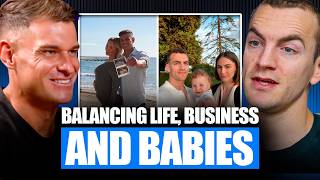
In this candid, two‑hour conversation between fitness‑entrepreneur Rob Lipsett and his longtime friend Joe Delaney, the hosts explore the seismic shifts that come with marriage and parenthood. They begin by dissecting day‑to‑day parenting challenges—sleep‑training, night‑time rocking, weaning, and the pitfalls of constantly pandering to a baby’s immediate preferences. Joe illustrates how short‑term conveniences (rocking a child back to sleep, giving in to tantrums, or offering unlimited screen time) create long‑term friction, making life harder for parents and fostering unhealthy habits in children. The dialogue then moves to broader parenting philosophies, contrasting age‑appropriate expectations with the temptation to “just do what’s easiest now.” The conversation shifts to the emotional landscape of fatherhood. Joe describes the evolving joy of watching his son Cass grow—from a newborn “blob” to a giggling toddler—highlighting milestone moments like the first laugh and the gradual acquisition of motor skills. He reflects on the meaning of life, suggesting that the deep, almost genetic, love for one’s children is a core driver of human purpose. Later, the hosts discuss the practical realities of balancing a demanding career, content‑creation, and a newborn. They touch on the impact of screens in public settings, the need for parental self‑awareness, and the importance of setting boundaries. The episode concludes with Joe’s personal goals for 2025, emphasizing a desire to address spiritual and creative needs beyond the pragmatic goals of business growth and financial stability. He wants more creative freedom in his content, to explore topics beyond fitness, and to find a balance that satisfies both personal fulfillment and parental responsibilities. Throughout, the tone remains conversational, anecdotal, and reflective, with moments of humor and candid honesty. The discussion offers practical parenting advice, philosophical musings on purpose, and a glimpse into the challenges of maintaining personal ambition while raising a child.
Chapters
If I had to give you one piece of parenting advice, it would be: do not take the short-term easy option. Always think about what that is creating for you long term. Like, I've often thought, should I start a channel about this? Should I start a channel about that? Right? But then before you do that, you need to write like 100 video ideas. And if you're struggling up at like 20, you don't have enough for a YouTube channel. The short-term like pleasing the child in the short term makes them way more unhappy in the long term because now they have all these needs and requirements that aren't actually sustainable.
How you doing, bro?
I'm doing real good, man. How you doing?
Good, man. We figured out how to finally, you know, keep our distance but do a little check-in.
We can use computers now.
And last time we saw each other was at my wedding, right?
It was, yeah, yeah.
Did you have a good time?
I had a great time. It was a really good wedding, man.
Thanks. It was like, me and Linda are still talking about it. We're like, the last 3 months have just been the craziest shit ever. Like, we only like got over the wedding and then this all happened, you know?
Yeah, yeah, yeah. Now you just did everything on fast forward mode, on 2x, man.
And I remember there was actually, there was such a funny comment on Instagram where like I put up like a swipe of the wedding and like you weren't in the photos and someone was like, no Joey D. And I was like, he's literally my best man sitting beside me.
Yeah, yeah, yeah. People, someone messaged me like a week ago saying like, still waiting on your vlog from Rob's wedding. Like, watched everyone else's.
I was like, maybe I don't upload mine. I'm like, Mike's already done it. I'm like, fuck it.
That's it out the gate, man. It's like announcing your pregnancy for you.
We were saying like, we're trying to justify the cost of the wedding and we were like, oh, you know, think of the, if we were to put a brand deal on everyone's channel, that would be like tens of thousands. So we're like, it's pretty good PR. It was in the papers in Ireland. I'm like, all right, you know, that makes me feel way better.
Yeah, whatever helps you sleep at night, man.
Yeah. And what's the story with your wedding? It's, uh, because I know you obviously got— you did the legalities, but you yet to do the big ceremony, unless I'm not invited.
No, true. Yeah, we've already had it actually. Sorry. No, uh, we will do it, but it's just not a priority right now, you know what I mean? Uh, there's bigger life events first, man. So probably a little bit further down the line. I don't mind you know, being a bit older, doing it would be cool. And then it'll be like a celebration of everything so far. It's like, we made it, rather than having it at the start.
Yeah, definitely. And it's like, uh, one thing that we, we literally didn't get to do— some people are like, enjoy your marriage, or enjoy your engagement, and then enjoy your marriage. Enjoy, like, really drag it out, like, make it all last as long as possible. We we were married for 3 months. We found out, like, baby Lipsett was on the way during our honeymoon, like, literally in Miami. I don't know if I've actually told the story to anyone, but basically, so we were in Miami for our honeymoon because we tied in Max and Taylor's wedding as well. We're like, we'll go to Miami. We love Miami. It's funny because American people probably find Miami tacky and stuff. But we absolutely love it. So we were just hitting the beach, having dinners every night and everything. And I woke up one morning and so we were doing, oh nice, that's amateur hour. This is how much caffeine I need. And so we were doing like loads of tests before going and everything. They're all coming back negative. And then we did one, we were like in CVS and there was like a pack of like 5 tests for like $10. 'Cause Americans, like Teen Mom, they're always doing pregnancy tests. Like they got the super, the superpower ones Miami, you know, the 304 ones. And we're like, grab a pack of them. Like, let's just do another test. And we're like, we just did one a few days ago. It's not going to be positive. Let's just give it a shot. And then so we're doing it one morning and I actually got like really bad news, like, like a big fine that I got, like a massive fine. I'll go into it, I'll go into it one day. But I was like, oh, a stressed night in bed, read my emails. And Linda's like, I'm pregnant. And I'm like, Linda, now is not the time for jokes. I don't need this right now. And she's like, no, I'm serious. And then we were happy afterwards. But then after that, it kind of cut our honeymoon in short.
Yeah, because all of a sudden you're like, oh, shit, now I can't drink and go eat sushi and, you know, which is all you do. It's been a rough couple of months, but now we're so happy.
And yes, that's the main focus for the rest of the year.
And for the rest of the next 18 years, man.
Pretty much.
Probably longer, to be fair.
Maybe. No, 18, I'll just send it on its way. But you were just in Dubai as well, right?
I was, yeah.
Joe was so funny that you wouldn't even tag the location on Instagram. You didn't even want to tell anyone you went to Dubai.
Yeah, yeah, yeah, yeah. Well, you know what, it's, uh, it's polarizing, and you can tell why, because there are good things about it. Um, the weather, but then again, deserts are generally hot. Um, you know, the pro— the airlines, the proximity to Europe for winter sun, because you really have no options, right, for winter sun. In Europe, uh, in the depths of winter anyway. You can go to like Tenerife, but that's basically, you know, that's still real— I'd rather do 7.5 hours on Emirates than like 5 hours on Ryanair. That's way— I'd rather do like 48 hours on Emirates than 5 hours on Ryanair, you know. So you don't really have that many options, right? So, uh, it's, it's— there's really good things about it, like You know, the fact that it's just sheer luxury, but then there's really bad things about it, like you can't walk anywhere and there are no trees and it's polluted and a pure depressing dystopian concrete jungle.
The beach isn't real. Like, that, that really got me.
Not much of it is real, really.
Yeah, I'm like, why is there no seashells?
Why is there no— there's no a lot of things. Well, you know what I mean.
I'm actually a resident in Dubai. I'm going, I'm going in like 2 weeks.
You know, the thing is, we looked at it so much because people— you see all these videos, people just love to, you know, have strong opinions on anything, don't they really? Because, you know, uh, a balanced opinion on anything doesn't really get you many likes on Instagram. So you see all these like, oh, I moved to Dubai and it's the best place in the world, it's really safe, you know, you can leave your phone on a bench and it won't get— yeah, blah blah blah. My girlfriend can go out at night. Yeah, great, right? It's safe in some ways, like, you know, there are different types of safe, aren't there? Um, but so, so we were always seeing these things thinking maybe Dubai is good. I had it in my head, I thought it's probably not my kind of place, but I thought maybe it is good. You know, everyone says it's really good. People go and move there and, and rave about it. Um, and then I went there and I thought I actually had a really good holiday, but that's because we stayed in a hotel that was unreal and there are like a million staff for every individual need, and you just— it's just pure luxury. Like, it's not really hard to have a good time when you're living in absolute, just grotesque opulence.
Grotesque opulence.
Just, just embarrassing levels, truly embarrassing levels of just lavishness, right? Um, but then like you think what makes that possible, man? It's like, I don't know, there's definitely a dark underbelly, isn't there? That's just— I, I would never— I would really never— I would never even— I would never think about spending that much time there, to be honest.
Yeah, last year around this time last year I spent I think like 6 or 8 weeks there because I was like setting up my, my business there and everything. So there's a lot you have to be there in person for. So this time I'm only going for like a week actually, but last time when I was there for 8 weeks I got so fat. I literally, I swelled up, 'cause my step count was fractional. I was just eating out for every meal 'cause I was in a hotel, literally didn't have a kitchen. So virtually every single meal was eating out. And so I just felt so out of shape and gross. And the food in Dubai is so decadent and lavish. They're so extra with everything. All the baklava, and like you get a steak and there's like onion fries sprinkled on top of them. Like, it's just— they bring over that dessert and, you know, they crack it open, then they pour it on. One of them, you know, it's just—
What is this trend of doing everything at your table? I got a carbonara over there and the dude was like, it came over and it was just ingredients, man. And I was like, This is what kitchen's for. I just had pasta in a plate. And then he was like, yeah, yeah. And then he was like, he poured on my, uh, guanciale. I don't know if it was actually guanciale, but he poured on the guanciale out of like a, what could only be described as like a cocktail shaker. So there's just lumps of, lumps of pig in a cocktail shaker that just, just got dumped on top. And I was like, all right. And then comes like the egg slurry on top, and then he's mixing it around, and I'm like, it's just kind of weird, man. I get, I get that this is the thing in it, it's because everyone, they think that you want to film it and put a reel up and be like, oh look, look, this, this man is making my dinner for me, you know. But, uh, I don't want to film it.
Yeah, yeah, they get all disappointed.
I could get it if it's like you know, sometimes there's like a dessert and it's like a chocolate bomb and they pour some like hot caramel sauce over and it melts and it looks like it does something. But when you just dump in egg and cheese on top of pasta, it's not quite the same, man.
It's not appealing. So I did the 8 weeks there and I just spent most of my time in an Uber in a hotel. Like, even if you want to go to a restaurant, it's in a hotel, you know what I mean? So yeah, I do really like it. I go like every year. It's great for a holiday. Have to enter every like 6 months. So I went in August, crazy hot, like, like insane, but not— I thought it would have been worse. Like I could still walk around. But yeah, just like a week or two. Well, that's a bonus.
I mean, if there were any pavements.
So I go every like 6 months and I like it, but long term I see how you can get like a little bit of cabin fever and just go a little bit nuts.
You could get really just— yeah, it could— you could get really jaded by just everything gradually.
And then you got the whole crypto bro brass thing there, and that's, that's, that's kind of the worst part about it.
That's, that's the other thing really, is like, you just see— I don't want to be— how do I say this without—
say whatever you want, it's my podcast.
Yeah, I'm just trying—
I mean, it's our podcast, this is now the weekly—
it just attracts a certain demographic, doesn't it? Certain demographic, which is rich because I got back from there a week ago, two weeks ago. So maybe that's me.
And what's it like, uh, traveling with Cass, right?
You know what, it's, uh, there's a, there's a, a section of age that I think isn't really worth it unless you're with parents.
You sent me this reel.
Break it down. Yeah, so when they're young, very young, they're actually really easy to travel with. People are a bit cautious because they think, oh, I don't want to take a tiny baby away with me. And but I mean, not, not weeks old obviously, because that's probably a bit young. But we traveled with Cass when he was about 3, 3 and a half months, something like that, uh, maybe getting on for 4 months. And It was great. Like, we were a bit apprehensive about it, but it was honestly super smooth. They sleep on the flight, they sleep all the time. They're not crawling around yet, so you don't have to look around every 5 minutes and be like, where's my child? You know, you don't have to baby-proof your hotel room because they're not, you know, climbing on, swinging from the light. And eating stuff that they shouldn't. Uh, so like, it's super easy. That age is like really good. Uh, you know, I think you just have to be a bit flexible with things like naps and just let them nap on the fly and just like not be too— you can't be too, um, like attached to your routine, you know what I mean? If you have a week off a routine, whatever. Then the next trips we went on he was— it was early summer this year, so he must have been 9, 10, 11 months old, kind of thing. Uh, that was a bad age, right? Because by that age, they're crawling, some are even walking. Uh, and they also need to be on— well, I mean, people parent differently, but I think at that age they should be on some kind of structured nap schedule, ideally. So you're trying to deal with that, you're trying to not sunburn your baby, you know, you, you're trying to entertain them all the time, you're trying to stop them from eating everything. It's not an easy age to travel, I don't think. Then when they get a bit older— now he's coming up to 18 months, like running around and like just much easier to, to deal with. He's definitely entering toddler tantrum stage, 100%. Uh, but you know, he'll play with stuff, he'll kind of entertain himself a bit. You know, he's a lot more— it's just, it's fun again. Now it gets, it gets— that's actually way more fun because now you're not just carrying a baby around. Yeah, you're showing a baby things. Yeah, yeah, like you're throwing around in the pool, you're showing them stuff like He's just intrigued by everything. And so, like, your holiday becomes about showing them everything, and it's like just so much fun. Just so much fun. So much better than— it's so much better than traveling without, you know, you think, oh, really? I think so. Yeah, I think so. Like, how long can you spend in the swimming pool on your own, man? Yeah, I get pretty bored.
Yeah, I can't even lie out. I can't even lie out.
We're an 18-month-old in the situation, and it's just— it's hours of fun, man. It's endless fun. And they're so funny at that age as well. They're so funny. They're just always saying shit and doing shit. And like, it's like— because they're learning new things like so fast, and you don't know. You're not— you're like— Cass only just started putting two words together. Right, so he says loads of different words, right? He's got quite a good vocabulary, I think, um, but he's only just started saying two things at once. And we didn't even realize this at first, but we were on, uh, we were away a couple of weeks ago and he had a little fruit salad for it for his dessert. And it was a little, like, it was a little berry or something. And we were just talking between ourselves, not really paying much attention to him while he was just eating his fruit. And we realized after a few minutes he was just like that, going, red ball. Just saying red ball over and over.
And I was like, yes. Me and Linda are like, we're thinking, we're like, oh, is our fun party trips over? But I'm like, will we ever have a really fun holiday again? That's kind of restored our faith in it. When you're away, like, do you drink alcohol or do you keep it tame?
Like, we, we haven't really— we definitely like would have a glass of wine with dinner. Yeah. Uh, but you know, you're still trying to keep to some kind of schedule. Um, so I would definitely say we keep it tame. Yeah, we're not out there getting pissed and that.
Yeah.
Put yourself to bed. Here's the room key.
Lock it up, you know, Matt and McCann on it.
The only thing that we haven't done— this is another reason why we ended up going to Dubai— was because we haven't really experimented with massively different time zones. So if you go to Dubai and you live in Europe, then you're, what, a few hours ahead? So really, their bedtime, if you can adjust a few hours then you can basically go to bed at the same time and keep them on UK time. So say he goes to bed at 7 PM and then you're like a few hours ahead, he can now go to bed at like 10, 11, and that's cool, right? Okay, it means you don't get that time in the evening to yourselves, but it's fine, you know.
Yeah, we're, we're planning on maybe like November, in that whenever that period is of the, the can't do anything good to travel period is. Yeah, yeah, again, so that'll, that'll be like our big trip because it's an island. Even before having kids, we were like this would be the perfect place to have a kid.
Yeah, it's just an island.
We're like staffed out of it. The baby physically cannot escape the island.
Yeah, yeah. So you can't lose it unless they get on a seaplane or row away in kayak. Yeah, my only apprehension with that would be, would be time difference. Like, what, what is the time difference there?
Uh, I think it's like, yeah, it's quite big. It's like 9 hours.
Yes, 9. So you're pretty much just— they're gonna have to adjust, right? You can't keep them on, on, on Spain schedule in that instance, right? So how long would that take? I'm not sure. You know, I, like I said, people, people do it, you know, um, but I haven't. I'd probably— yeah, see how it goes, man. Let me know. Yeah, you know, keep—
I'll keep you posted. And so if you were to base yourself somewhere apart from exotic Manchester in the world, um, where would it be?
That's a tough one, man. Um, I've thought about this a lot. Yeah, I've thought about this a lot. Um, I think if I had to, if I had to live in a different country— yeah, and now assume that like family isn't there, assume my entire family died in a house fire so I didn't have to visit or anything like that, leave them like I did. Yeah, yeah.
No house fire necessary.
Yeah, I'll just be a terrible son.
Yeah.
Um, then I think— I mean, I haven't been for years since we went, but maybe Australia.
Yeah.
But then again, like, it's hard to— it's hard to know without going in the last, you know, very recently. Um, just because, I mean, it's got all the comforts and convenience of the UK, just with better weather and nice beaches and, you know, etc. Um, so if I had to, probably Australia. I don't think I would— I don't think I would live anywhere in Europe, you know, because I just don't see the point. Like, it's so close, there's no— there's no need, is there? It's so close, you can just hop around.
I take offense to that as a— yeah, I take offense to that.
Okay.
And have you got any, any travel plans travel plans for 2025?
Uh, we— have we got any travel plans for 2025? It, it depends. We might do just, just something simple. I really just want to go back to— I want to spend my summers between Greece and Italy, basically. So we might get a villa in Greece somewhere, maybe mid— back end of the season, like September, mid-September, something like that. Take family. That's the thing, that's another thing, traveling with kids. Like, we brought Max's parents to Marbella with us, obviously, so they could watch Cass while we came to your wedding. And like, it is just so much easier having an extra pair of hands, right? The one killer, the worst part— this is the absolute worst part of traveling with a kid, right? It's before you check all your luggage in, just carrying all the various bits of apparatus through the airport. That is the, that is the single worst, like, 10 minutes of maybe being a parent.
That's where the dad strength comes in, mate.
We were— it's just, there's nothing more annoying than, like, you know, just shit falling off you when you load it up like a Santorini mule. You just like pee your shit all over you. You've got We went to Tuscany.
That was a very good reference.
We went to Tuscany in May, and so we were hiring a car, so we drove around. So we took our own car seat because we heard, you know, if you get one from the rental company, it's a bit shit. You know, some other kids like thrown up in it and etc. So we took our own car seat, we took our own cot because we were staying between a load of different places. You don't know what they're going to be like. Sometimes you turn up and it's— you wouldn't put your kid in it, you know what I mean? Yeah. Um, and then there's all of our luggage as well. And so like, you lit— like, high chair even. You, you're walking through the airport and you've just got like so much shit, right? And so like, if you can travel with parents, family, you know, whatever, oh my God, it's just so much help. Like, just carry that for me and you know, or just carry the kid for a while. The good thing is though, you get through security quick because there's always like a, always like an extra, a little line for like parent and child and stuff, or, you know. So it's, there are benefits as well, definitely.
Yeah, we are like, we've already like had a chat with my family, Linda's family. Like, the deal is you can stay in Villa Lipsett for free if you look after baby Lipsett, you know. That's the payment. You know, you look after baby Lipsett while we go out for dinner or whatever, and then you can, you can stay here as long as you like. So we're definitely, we're like, that's the thing, like, we're probably going to go on very little holidays. Yeah, have this, you know.
Well, that's the thing, you, I mean, we live, you know, 15 minutes from Max's parents, so they can help us, you know, if we ever need. It's not that we ever really need, but sometimes you just want to go out or you want to do something, or, you know. And so it is super handy. Obviously, if you're not you're not near your family, are you? So it's a lot harder to be like, yo, come watch the baby for a while.
Yeah, we're actually, we're actually moving home like for May and June, July, August, because is Linda having it in Ireland? Having in Ireland, yeah.
Ah, okay.
Irish passport is the most valuable passport in the world.
I wondered why.
Again, like you said, we're gonna need just like get a lift to and from the airport, get a lift to and from the hospital. Yeah, yeah, maybe go to the airport. See you later. But yeah, we're just gonna need, we're gonna need, um, that's a good shout. Yeah. And, um, we're gonna rent this place out as well, so that will kind of COVID its, its school fees.
Yeah, yeah.
So I'm looking forward to that. I'm actually in the process right now. I'm getting like, because in order, if we, we rented out before, like, kind of, you know, to friends, handshake deal. But if you want to put it on Airbnb, you have to get like a tourism license. Like you literally have to get— or Airbnb, like you just can't even open an account. So we're getting that now. It takes like 2 days, very, very easy to get. And then yeah, I'll be looking forward to seeing how, uh, how it kind of like does on there, you know. It'd be like, yeah, like I feel like I'm starting a new business in a way.
Yeah, yeah, yeah. Interesting. Just vet people, man. No staff.
Completely. Like, I'm gonna— you're gonna have to do like a FaceTime interview.
Yeah.
So yeah, that's the plan anyways. And so that was a nice, nice intro. Like now the podcast.
That was the intro.
That was the intro. Right. So now the podcast can begin. Joe, I just want you to give a little genesis of Joey D. And I was going to say, like, for the small number of people that don't know your story, because like everyone here watching will know. But then again, There's— your channel has grown so much in the last year or two. There's probably so many people who— there's probably hundreds and thousands of people that have one, never like heard a podcast with you or even know your backstory because they'll just— they'll actually just go on and they'll see these like strictly informative videos and they don't know about like the vlogs and like how old you are.
Yeah, no one sorts by oldest.
Yeah, exactly. Yeah, I do. But give the people a little story of your genesis as like I think, uh, so many actually don't know.
Yes, so I, uh, I guess where would I be now? It was one— ah, okay, so educationally I was pretty, uh, I was an average student, you know.
You're very good, don't lie.
I was a student, I was a bit— I was definitely scientifically inclined, so I did some A-levels, uh, went, studied maths at uni. And I think at uni, you know, in high school you can be mistaken, you know, you can be forgiven for thinking that you're actually clever, right? Because you're in a small primary school or high school and, and teachers are like, oh yeah, you got an A, an A is great. And then you get to uni and you realize 'Uh, I'm not that— I'm actually not as clever as I thought I was because this is difficult,' right? So, uh, anyway, by the end of uni, I kind of decided that, uh, despite now being in possession of a maths degree, I don't think I want to look at maths again, uh, maybe ever. That's like just— that's just exam PTSD, basically, because I didn't really do enough work throughout and then crammed for everything last minute. So anyway, I did the thing which is, uh, avoid work, go away traveling for a while after uni. By the time I came back, a lot of my mates from home who had kind of like coalesced into a new group that were all into training, right? And, and I say that because we weren't really a group that hung out in school despite all going to the same school. So around this time people were starting to really— it was like the, the initial embers of online fitness. It was just, just gradually beginning to, you know, there were people like— you'd see Joseph Rakic on Facebook, obviously, like Ziz, people like that, you know. This was before he died, right?
Yeah.
And, uh, and we started making videos that were just pure— we basically thought that we were funny and yeah, and didn't even think, oh, other people might find us— we didn't even think about what other people would think. We just thought that we were funny and that was— that is the bottom line, right? That's all you— that's really the only prerequisite you need. So, um, we'd film a few little like funny like gym-related videos. We thought they were funny anyway, maybe, maybe not so much. Uh, put them on, on Facebook at the time, and this was when Facebook had like mad organic reach. I say mad, like we grew a Facebook page to like maybe 20,000, something like that, right? But some of the videos would go get like 100,000 views or something like that, just pure uploaded as a straight video to Facebook. And, uh, it was just, it was, it was the wild, wild west of like online It was like almost kind of like the start of social media.
Like, it just felt weird. Like, why, why did Facebook go to complete shit? Like, it had everything to not— it had all the money and the, the expertise in the world to just knock off shit. And I went on Facebook like yesterday. I'd like just logged into Rob Lipsett Fitness, and I'm like, what the hell is this? I'm getting like Turkish news.
Yeah, it's literally It's just for selling wardrobes now. It's not, it's not a, you know, I think now it's just this weird mishmash of trying to do everything that every platform does but not doing any of them that well. And I think the rise of Instagram, Instagram, and the fact that Meta then bought Instagram meant that they were just like, let's just, let's just concentrate on this because this is already way better.
Yeah.
So, uh, so anyway, we made a few videos that we thought were funny. We built a Facebook page. Gradually, one by one, people were like, oh, I've got a girlfriend now, uh, she disapproves of me making stupid, uh, gym videos. Or, you know, one or two, like, just people didn't really want to do it. People weren't that bothered about it. It was just like a fun thing for a few months for most of my mates, and then they stopped. And gradually, one by one, everyone stopped, and I was still there like, uh, I want to make videos though. So I basically carried on making videos, and that's when I was like, right, I'm gonna— if I want to do this, I have to do it on my own. Um, and so you actually— we, we kind of went at it a little bit different. I focused more on Instagram in the early days, and I remember you being like quite— even though I think we both uploaded on YouTube for the first time around a similar time, Yeah, I think you definitely focused on it more in the early years, which was obviously a good move. I was like, uh, YouTube, fuck that, what's that, right? You know, yeah, I remember I was uploading like 4 videos a week. That's just madness, man. It's just madness. But also, what a, what a time to be alive, man. Just pure golden era shit. Like, I just want to rewind, rewind like my whole— I just want to rewind my whole YouTube homepage like 10 years. And just be able to log on and just see everything there that was— yeah, you should be able to do that, man. Just set the date back. Yeah, you can just get like the fresh, the fresh homepage, a fresh explore page from like 10 years ago.
Wouldn't even be hard to do. Do you know what I was, I was talking to someone recently about like back in the day when you're watching YouTube, you would like click subscriptions and you would just watch all your subscriptions. Now I don't want like anyone I'm subscribed to. I just watch what my homepage gives me. Because the AI has gotten like so good at recommending videos that I like.
Yeah, it's crazy.
But that used to not be the case.
Subscribe is just an irrelevant— subscribe has been an irrelevant button for so, so long really, because there are so many channels that I'm subscribed to but never come up because I don't watch them. And then there are also so many channels that I'm not subscribed to but always come up because I watch them. And therefore, why, why hit subscribe? It's just this like symbolic button that doesn't really make a difference or anything. Yeah, anyway, slight aside. So, uh, yeah, I started on YouTube, started making— I guess originally I would just make these little videos. The first maybe like 10 or so vlogs were just gym focused. Like, I'd go to the gym, I'd be like, oh yeah, I did a squat, hit a PR, blah blah blah, having a pre-workout. So, so just standard stuff, right? That wouldn't really pass these days, but definitely did back in the day. Um, and then I think it was about vlog 11 or something, I started including like more lifestyle stuff. I was like, went through a bit of a party phase, you know, going Ibiza, all that kind of stuff, right? So started including that, that whole side of things. And that, I think that's when I really started to kind of gain a bit of traction. Not traction in terms of numbers, because I was like really a lesson in like how not to optimize your YouTube, right, in terms of like thumbnails, titles, like trying to get some kind of like mass appeal. I didn't really ever think in— I suppose I've never still, still not really thought seriously about like branding as such, you know, as a person, do you know what I mean? Like, what is my image? Yeah, yeah, they're decent now. So that was a, that was an inflection point which, which we can come to if you want. Um, so just more, more kind of like lifestyle stuff, some travel-y kind of things, all that. And, uh, and that was when I guess we started making the odd video together, uh, and that was really the, the golden age, right? That was, that was probably for me definitely what I enjoyed most, but I was also doing it, you know, there are always compromises, right? And because I wasn't like optimizing things. I wasn't really selling much in my videos, you know, I'd have a few links but that was it. So I was having a really good time but I wasn't making like really good money, at least not come— I'd come hang out with you or hang out with other people, anyone else really that had, you know, a similar kind of online presence to me, and I'd be like, shit, everyone's making loads of money and I'm just making like an all right, a normal amount of money, you know what I mean? But that's the sacrifice, right? I wouldn't change it. That's just— there's always— there's a compromise, you know what I mean? Um, and then I guess my— as you grow up, right, your, your whole, you know, there's just constant changes in there. Your social circle starts doing different things, you know, people start, start settling down and getting married and having kids, or you just grow up and you grow maybe a little bit tired of partying all the time, or, you know, etc. And with that, there was a kind of not-so-slow, actually, realization that this isn't like a sustainable way for me to make content forever, because I think I'm, I think I'm kind of done with constantly trying to show people things, right? Trying to get the audience excited. That's what vlogging is really. It's like, oh, look at this thing that I'm doing, look at this exciting thing that's happening, you know. And you're constantly going— you're basically constantly going, hey, look at this, hey, look at this, hey, look at this. That's what you've got. And that's a really high maintenance way to live your life, man. And you start thinking, oh, maybe I should do this because this would be good for a vlog. And then you think, hang on a minute, should I live my life for a vlog? Should I— is this the right way around to do things? And then you start questioning like just too much. And then once you start questioning, it stops being natural anyway. And once you start thinking about shit, right, you know, if your content is, is, is vlog style, I think once you start thinking about it too much, it kind of takes away just a little bit like Like, people are endeared by just, just authenticity, really, aren't they? I know that's such a, such a buzzword now that it becomes— everything becomes almost meaningless, right? Because you just sound like another person talking about, you know, we'll start talking about bringing value in a minute and being, you know, just throw the buzzwords out all at once. But, you know, people are— people like people who don't look like they're thinking before they say something, because that's— that makes you think that someone's being genuine with you, and, and, and you, you know someone more, don't they? So, so I think once you do start to question, oh, why am I doing this? Am I doing this for the vlog or because I want to do it? You know, I think that kind of takes away from that. Also, it just wasn't— it was just getting to the point where I just felt like it was not it was not professionally viable, it wasn't personally viable. And I, and I thought maybe I should make a bit of money for a change because that's also fun, right? That's also fun. You can do things, you know, you can buy a house, you can build a gym in your garage, you can, you know, uh, you can go enjoy grotesque opulence in Dubai. Great. Uh, and so there came a point when I kind of pivoted into, into more informative style videos because I also saw that my views and channel weren't really growing. It was, it was always just very gradual, slow growth. I'd get a little bump when I'd come do a video with you and Mariah, and that, that was it, man, you know. Um And I thought maybe I can have a go at YouTube. Maybe I can actually, actually try at doing it, like play the game. Like, yeah, yeah, yeah, yeah, maybe. Yeah, you know, um, you know what, you're very lucky.
I started interrupting. You're very— when you did this pivot, like, it, it worked. It landed. Like, it worked well. Like, the first time you did it, got like loads of views. Whereas like, if I don't do a vlog, like if I do like a sit-down video, usually it tanks because like my audience loves the Marbella lifestyle, they love vlogs and everything. So like, you were very lucky that when you did that pivot that it, it switched and like everyone was like, yes, you know.
Well, I think that's not wholly true because there was certainly resistance, like, you know, but, but there had already been resistance because my vlogs had gone from like uh, you know, lots of partying to less partying. And people are just like— people who like partying still like, oh, I just want to see you do this and do that. So there was already resistance to how the vlogs were changing. And then I did switch to a more informative style, and I thought, you know, of course there is a, there is a core audience there who are not gonna like it, but from the fact that my channel went— just zoomed up, like, there are also way more people who actually get something from it now because it's like, I actually think, right, what do people want to know? How is a good way to put this information across in a concise and helpful manner, right? And that obviously attracts, you know, a whole, whole new crowd. So it's not really that the current lot of subscribers were all on board with it and we're all like, oh yeah, now we're gonna follow you through this, follow you through this new trajectory. It was just that I got better at titles and thumbnails and attracted a new audience, you know, really. Now there will definitely be people who still follow me and still even still watch my videos because obviously there's going to be some people who liked the old stuff and will like the new stuff, et cetera, you know. And some people who just like me and just think I'm, I'm sound, that's, that's fair enough as well.
You still have the same dry humor in your informative vlogs as you did— as in your informative videos— as you did in the vlogs.
Exactly. You can't, you can't take the— you can't take the Joey D out the video. Just something. There's a phrase there, something. Um, so yeah, I think like if you— if you are saying that when you do informative stuff it just falls flat because your current audience don't like it, I would say that's a title and thumbnail issue. Yeah, because that just means there isn't enough other people who have seen it, new people who've seen it. Because a lot of my audience now, every video is new audience, do you know what I mean? A lot of them are first-time viewers, right? Which just means that your titles and thumbnails are decent. Right? They also, you know, because not everyone is gonna— if it's informative content, then not everyone wants to know everything, right? Because really all you're doing with a, with an informative type video is you're trying to guess like what do people want to know. If I say like, uh, how long does it take to see your abs if you start at 20% body fat, right? Say that's a video title, right? Then a lot of people don't want to know that, right? That's fine. Or people who do want to know that, they're not the same people who want to watch a video about diet or about cardio or, you know, a meal prep video or something like that. So you are of course appealing to different people with different videos, like, but that's just, that's the nature of it, isn't it?
Yeah. And you know what, you're actually correct. And this is a feature I wanted to bring up, and this should be very good motivation for anyone who wants to start YouTube. There's a new, like, uh, feature or algorithm thing. You've probably noticed it as you're scrolling YouTube. You'll see if it's a good title and thumbnail, you'll see a channel that it has like, like 10 subscribers, like 10 subscribers, and the video has like 5 views, and it'll get put into your feed based on like the title and thumbnail if it's really good, high quality. That used to not be there. Like, you used to only get recommended videos that have like 50,000 views from a big channel. Now I'm getting recommended videos that I'm actually interested in and that I've clicked on. And I'm not exaggerating, or like, I'm not exaggerating the numbers. It says 5 views.
No, I've seen the exact same. Yeah, yeah.
So it's a new thing. I've looked into it. YouTube said they've started doing it, and that is like probably the best feature on any social media as an incentive to start. Like, there's no other platform that does that. Like, it's kind of like on other platforms, unless you have a good following or videos getting loads of views, it's like kind of impossible to even like to start. But if you do the proper title and thumbnail, you'll get put onto people's Explorers.
Yeah, yeah. I think I've seen ones that are just— even when you first look at them, it doesn't seem like it is the right title and thumbnail. It doesn't seem like— I guess what people find interesting isn't always— it isn't an exact science. There's no true, you know, true picture of it. You can't make up the perfect scientific model for a title and thumbnail because things just pique your interest in different ways. And all of a sudden, some one person will start phrasing something in a different way and it will do well, and everyone will be like, oh yeah, you can phrase it like that. Like, for example, there was a point where people started putting things in kind of first person. So it would be like, I tried doing this for 100 days, when prior to that you wouldn't really see those kind of titles, do you know what I mean? And then, and then, and then the, the follow-on from that, which you sometimes see people doing, you not so much on YouTube, but this, but this one is, is I think even better for like going viral, you would talk about yourself in third person. So I would say, man tries eating this, and do you know what I mean? It's just a proper viral title, isn't it? Man tries this and this happens to him, and then yeah, people go on it and it's like you, and you're like, why are you calling yourself man? Like as if it's some random article and you're gonna read about some random dude, do you know what I mean?
And have you seen the ones where people like write their title in all lowercase?
Like, yeah, yeah, yeah.
And then they like— and they're like, the, the thumbnail won't have any text in it. It'll be— but for, for some reason it's really compelling. Like, there's a lot of ways to do it. I love them. I always click on them.
That's it. There are, like you say, there are a lot of different ways to do it. It doesn't always have to be the like shock factor, grab your attention type thing. It can be something that just peaks your interest in a more subtle manner. And I love those. I love seeing the subtle title that does really well.
Me too. It's kind of like less corny, it's less tacky.
100%.
Yeah, fresh air. And so while we're on the topic, there's, there's going to be like so many guys watching this video and that want to get into the fitness industry this year. This is their year where they want to do what Rob and Joe are doing. So given the current trends, like what you're seeing is working right now, because you do pay good attention to it, you know, as much as you like to pretend you're disinterested, you do analyze it. What is your advice for them, lads?
I think my first advice would be pick a platform, right? Because we were from a generation where you didn't have to put that much effort in. Actually, that's the cold hard truth. We're actually not that talented, man. No, I won by default.
Biggest health and fitness YouTuber. But like, you can ask ChatGPT, and then that is not impressive. It's because, it's because no one else—
broken, right?
It's broken. There's an error in the mainframe.
That's it. Um, we're from that era where you could just throw a YouTube video up, stick a picture on Instagram, you know, you'd be, you'd be great, right? You'd be sweet, and, and you'd kind of grow on both platforms, and it'd be fine. Right now that is, that is really too high a maintenance of, of an entry point, right? If you want to, you can get to a point where you've got videographers and editors and you're doing all this and you, and you, you run quite a, quite a scheduled, uh, you know, timetable of where you're, you know, this day I'm doing this content, this day I'm doing that content, and maybe you can, you know, uh, grow on all or, or many platforms simultaneously, right? But A, that's probably— you need some money to do that. It's probably a little bit further down the line. B, a lot of people do that and then find, hang on a minute, this is a bit shit. I really— I'm not enjoying it because now I'm just a, just a weird content machine who's got to constantly output things, you know, which I don't think is really a good— I don't really think that's that's how that works. We can come back to that. I don't want to go down too much of a tangent, but like, directions, it's like, well, I mean, I think there is a strong believer that there's a finite amount that people have to say and that people should say, right? And, and you can't expect to constantly put out like valuable content if you're doing it all the time, right? Because you're just not an infinite content machine, and it's going to be it's going to be draining on you, and then you're just going to feel less inspired and less creative, and it's just going to be this downward cycle of shit content that gets worse, right? Um, it's just soul-crushing, you know. I just don't believe that's how people— I don't know, it's just, it's not my— I, I, uh, I am kind of more on the side of, you know, you should, you should take some time, get inspired, work on something, something good, you know, put out content at a pace that, that at whatever pace is right. Let's get back to the question. We can come back to that if you want. So, uh, I would choose one platform, platform to begin with because, as I say, it's just too high maintenance to do all at once. Um, and then beyond that, like, you really need to need to look for, you know, it's kind of a cliché, but you need to look for what there isn't in a sense. Because I find this now, you know, if you, you can scroll on Instagram, you can scroll on YouTube, etc., right? There's just a lot of really similar content, right? And then one person will find a new style or a new way of presenting things And because it's been— everything else has been so overdone, you're just constantly getting these new, like, breaths of fresh air, which is like the new style of content, right? So, you know, the recent— a recent trend which you see with, like, a few fitness people is like this kind of hidden— it's like this kind of hidden camera style thing where they'll just, like, do a workout miked up, and like, it'll be like, oh, this man approached me while I was in the gym and offered to help with this, or, you know, something like this. And it'll be like these, like, they're actually really— I think I find them really horrible, to be honest. These really hard because of how set up and staged they are, but whilst trying to look, you know, the opposite of that. But you see like, oh, I was struggling with this, and then this man came over and did this and helped, you know, whatever it is, right? My boyfriend was feeling insecure in the gym and it's like, like this, and then she goes and like pats him on the back or something, or like, you know, whatever it is, right? And then like it'll go viral as this, oh yeah, this is how people should be. It's this weird hidden camera style, right? But, but the reason why that got so much traction right, is because we were too far the opposite, because we went— everything went too far kind of, uh, you know, polished, polished stage, etc., right? So, so then the new thing appeals to people, right? And you have to try and find a new thing, and that's really difficult, right? It's not something I do, you know. I'm talking here, you know, not I'm, I'm not following my own advice because like it's difficult, right? Um, you know, but, but I would certainly try to, to, to— and I think my main advice for this actually would be don't scroll, right? Don't scroll through other people's content looking for ideas because that is the opposite of how you get ideas, right? Scrolling to begin with is just gonna kill your creativity. But also, like, you're, you're creating channels for your thoughts to go down, aren't you? If you're seeing, oh, this person presented this like this, you know, this person used this angle when they were filming what they were making for breakfast, right? And then the first time you think, I'm gonna film what I make for breakfast, you're gonna go, oh, that angle looked good, you know, something like that. You're just creating these kind of, these kind of guidelines for yourself, which I don't think that's how you make original content, right? And I, I think I've found this myself because right now I just upload really what I want to. But I've certainly been through periods where I've been trying to upload like every week, etc., you know, trying to keep some kind of schedule. And so you're like, right, I need video ideas, right? So I'll, I'll look around, like, try and get inspired, right? You're not trying to copy people per se, but you're trying to get inspired, right? Yeah, and it just has the complete opposite effect, I think. I think it just entirely just leaves me, you know, I've never found an idea that I was looking for, you know what I'm saying? Yeah, like only when you're not looking that, you know, when going back to when I was studying in uni, I remember my tutors talking to me about maths problems, uh, and, and people struggling them. And often you find that if you struggle with something, you can't figure it out, and you try in certain ways to do something, the best thing to do is to go to bed, right? Because obviously at night, not just in the middle of the day, because after you wake up, right, you need to take yourself away from it. And you wake up and suddenly you can view things a little bit differently, and it's just easier to, you know, then go and solve the problem, right? And I think that if you are looking for inspiration through other people's content it's, it's just going to have the opposite effect. Yeah, yeah.
And so what— when you're coming up with, uh, with an idea for a new video, what's your process? Is that something that I, I definitely go blank sometimes. I'm just like, oh, fuck it, let's just do a vlog, you know? So yeah, how do you go about like when you're, when you're writing out your video ideas?
Yeah, yeah. So as I say, I used to try and get some kind of inspiration you know, um, watching other content. I realized probably, you know, not really that long ago that that was a self-defeating, you know, uh, pastime. Now I just literally try and take time entirely away from work, and I think about what I'm doing myself, you know. Um, and I think you'll probably have moments where you're more like— I'll sit down and think of like 5 video ideas, right? And when I think of 5 video ideas, I'll write them down and then I'll just go away from them and leave them and come back. Because it's not just the idea, but it's how you frame the idea. Like, so for example, you need to put that into a video title, right? And if that title is not succinct and clear and doesn't get the message across, uh, you know, in X amount of characters, then no matter how good the idea is, it's not going to work, right? So like, seize on those moments when I do have ideas, write them down, go away, and then come back and look at how I've written them down. And I think that would actually be better if I phrased it a different way. And then, then you start tweaking titles, right? Um, and then again, you just need to keep going away, leaving it, coming back. Go live, man, go live and do whatever you want to do. Do some, some leisurely shit, right? And, and then come back because I've sat in this office, right, looking at a notepad or notes on the computer, right? And it's just not— it is not helpful, you know, because you— I end up like 2, 3 hours passing, I'm like, you know what, I'm just gonna fucking quit YouTube. That's easier right now.
Yeah.
And so like, luckily, over, over, you know, over time, I build up a list of video ideas. So I've probably always got a list of like 10, 20 video ideas, right? And then I look at them and I say, right, I'm just going to do these in order. That's what I say, I'll do these in the order they're written. And then I skip over one, I don't do the first one, and I go, ah, maybe I'll do the second one actually. And then one gets put to the bottom and it always stay— it always stays at the bottom. And then once it's been there for so long, I'm like, right, I'm never gonna make that video because I'm obviously just not interested in making it enough, right? Because I always keep thinking I'd rather sit there and think of another video than to make that one, right? Um, but as I say, they're finite. I have finite things to say, right? And fitness is, is, is not an— it kind of is an infinite topic, right? Um, yeah, in a sense, you know.
Uh, but it's definitely one of the easier genres to create content for because you've got like the pillars. You've got training, then you've got nutrition, and then, you know, you've got your, your schedule, your day-to-day life, then you've got like recipes, like, and then you can kind of combine all of them and mix and match. So it is one that you can like get a lot of topics from, but you know what I mean.
Yeah, yeah, I, I think that you're not going to run out of topics, uh, in that sense. And I think one thing that does make it a little easier is that the gap between, uh, the slightly informed and the everyday, you know, your average Joe who's just starting the gym for the first time this January, uh, is quite big, right? And you can say a lot of things that, uh, actually aren't complex. They don't— you don't need to go to— you go study like exercise science or any— anything really to be able to say helpful things. So what I'm saying here, this is a, this is a really polite way of saying our actual knowledge is fucking shallow, man. It's really shallow, right? We don't actually know that much, or at least nothing complex whatsoever. It's all extremely simple things. Now, the lucky, the lucky part is that you only need to know really simple shit to get in really, really good shape. That's probably true of most things. You only need to actually know quite basic surface-level information to make good progress, like, you know, if you're consistent, etc., right? And so, like, it's not that hard to help people. But the flip side of that is, like, you can either stay surface level forever, you can either constantly talk about, you know, X grams of protein per day, this exercise is good because of that, you know, do you lifting before you do your cardio? You can either constantly talk about this surface level shit forever and repeat yourself, which I think might be the lesser evil, but it depends on your own— it depends on your own kind of like interests and, and, uh, yeah, your— how you approach things, uh, or you can go deeper and deeper and get like nuance, like, you know, this new study came out and this group did this exercise and this group did this exercise and this group had 20% more tricep thickness after 12 weeks. And, and you can go into the minutia of it. So at some point you have to decide, right? You, you have also decided this, this the same as I have, you know, because even though you still do more vlog style content, you still talk about the gym, right? And so like, you have to choose, right? Do I keep talking about the basics? Do I just keep helping this demographic, the demographic of people who just need these fundamentals instilling in them? Or do I go deep? Do I get into the nuance, the nitty-gritty of it? Do I start, you know, uh, talking about the exercise science and go deeper into that side of it, right? And really, that depends, I think, on how interested you are in the science. Now, I have a, I have a, I would say, a casual interest, right? Uh, if some new research comes out, you know, and it says that this method is better than this method and it's, and it's substantial, good, solid evidence, then I'll think that's pretty interesting. Maybe I'll include this in my training. You know, but I'm not somebody who gets turned on by, you know, studies about fucking lifting weights so you can get 3% bigger or reach your natty limit, you know, 6 months earlier. You know, that is actually— that stuff entirely just turns me the fuck off. Just, just really— because I suppose that stems from a belief that you only really need the fundamentals to get most of the way there. And there definitely comes a point where you start overthinking things, right?
Yeah.
Now, it— whether that overthinking is, is technically overthinking comes down to whether it's worth it for you. And I could probably be in better shape if I spent X amount more time thinking about the gym and watching Jeff Nippard videos and, you know, staying— and not just, not just knowing that, but then implementing all these like optimization, you know, methods. I could probably be in better shape. Personally, I think I'm in good enough shape, you know. I think I'd rather read a fucking book about something, you know. I'd rather read about dinosaurs than about the gym, man. Do you know what I mean? So, so like, it depends how far your enthusiasm can go with it, really. I think you, like me, have made the choice that this is about as interested as we are in it, even though we want to be in good shape, we want to stay in good shape, and we're passionate about doing that. We're probably not passionate about the science side of it. And this is not knocking science or science-based content. It's great, it's helpful. Ultimately, if you can get better results in the gym from the same amount of time, that's the definition of optimizing, right? Ultimately, you should do that. I just, you know, might have a mental breakdown if I have to watch— if I, if I have to watch these videos and not just watch these videos, if I have to make these videos Cri— like, if I have to make these videos, that means inevitably I have to read a lot of studies, and that is the driest shit you will ever, ever read, man. Like, there just comes a point where I'm like, I don't— you know, my personal approach is not this one. And so that's why, you know, the, the consequence of that is that I have to repeat myself in videos because they're I just talk about the same kind of topics. But like I say, you title your video well, you do a good thumbnail, then you can at least excuse that somewhat because you're reaching a new audience. So you're, you're saying the same thing but not always to the same people. And so that's how I live with myself. That's how I sleep at night.
So in terms of, um, fitness advices, uh, and trends that you see are currently going around, what do you think is like the most overrated advice currently? Like, even like, not, not content creation, like Let's go into actual fitness. I would probably say the whole carnivore thing, like animal-based, wooden board, chopping board guys at the moment.
Yeah, yeah, the— there's— you see, it's hard to answer without going into like large-scale societal trends, isn't there? Because there is an anti-establishment trend which then becomes like anti-everything trend, which throws babies out with bathwater, you know what I mean? Uh, and then it's, it's, it, you can get into very like, you know, 3 AM JRE territory pretty, pretty soon, man. Um, I definitely think carnivore is just a horrific way to live your fucking life, you know what I mean? Um, but, but again, you're kind of This is the difficulty, right? This is why it kind of comes down to like the fundamental way that the algorithms work. Like, you know, extreme things are going to be magnified, right? Um, and so like, you know, one other danger— I'll tell you, I'll tell you the other, the other kind of dangerous trend, which is again overarching, is this, this search for a soundbite all the time, right? What you have to realize is like the internet is just people saying things, right? That's— people, people say things, right? It's human nature to say things, right, that they think sound good, that will go viral, that can get clipped, right? And you know, you see people who should know better, right? But you can pick out so many instances, right? I've seen, uh, Andrew Huberman say things with so much fucking conviction, and then I'll go Google some shit and I'm like, oh yeah, there was like one study, uh, on rats that showed some mild effect. And he's like, take Tonga Ali You know, I'm certainly taking it. I'm currently taking it.
And I haven't noticed any difference, like, right?
So there's, there's this, this just not— is it's more than a trend, right? Isn't it? It's just an inclination to say something that can get clipped into short-form content, right?
So Yeah, that is actually perfect. That's a good answer. That's like its own fitness trend in itself.
Even— did you remember years ago we watched that? Did we watch it together? The Matthew Walker sleep podcast?
Yeah.
So if you have a look into some of the— because that was, that was a real moment in like fact porn, wasn't it? It was like one-liners, percentages, and one-liners like, you know, the day after daylight savings because everyone gets an hour less sleep, heart attacks go up by this, uh, X amount, or all this, all these things that can be clipped, right? And everyone's like, this is the best podcast ever, so interesting, right? If you actually look into a lot of the claims in that, this, like, they're not really— they shouldn't be delivered with the conviction that he delivers them, right? And I remember reading all these kind of, uh refutations online to just some of the sound bites, like not all of it of course, like, and I thought, uh, this guy is just saying stuff. And now that's the lens through which I look at a lot of, you know, healthy skepticism. I think especially anything that's put forward, you know, as, as I suppose what it is is the trend towards science-based content with lifting, with general health overall, it gets kind of, uh, it, it, it leads to exaggeration essentially, doesn't it? It leads to people being too quick off the mark. The scientific method is not, you know, one new study comes out with a small sample and you know, indicates that some method is better than some other method, or, you know, something is, you know, efficacious, or— it's not react quickly to one study. That is, that is anti-scientific, right? It's not go on a fucking podcast and tell millions of people, you know, with conviction that, that this is— that A is categorically better than B. That is anti-scientific, right? Skepticism is scientific. That, that's the whole, that's the whole point, right? Um, and so like, I think just, just, just if you are personally on a health journey, the best thing you can do is become scientifically literate, right? Fight, fight fire with fire, right? The best thing you can do is learn to read a study, right? And learn to go on Google Scholar and PubMed and search for things and actually try interpret things, you know, uh, because you will see, you know, people will, will certainly pick and choose, right? You find this in fitness, right? You find this so much in fitness that there'll be, there'll be some study comes out, it's about like myoreps or something, which actually the main study that everyone made videos about myoreps from was never actually published, uh, but that, that's a whole tangent, right? Some study comes out, everyone's like, oh, you should do deloads, right? Deloads are great. A few years later— and all the scientific channels do it, right? A few, few years later, some study— deloads are bad. You know, everyone makes a video, don't deload, right?
Yeah, yeah.
And so, and it's like, it's very fickle, and, and you have to always understand that social media and social media algorithms and the quest for clicks will infect the purity of— there is a, there is, there is a conflict of interest, right? Because, uh, you know, doing, doing a lot of clicks and doing well on social media isn't, isn't always aligned with keeping people rationally informed, you know what I mean? And so if you're on your own personal fitness journey, then I think the best thing you can do is just be a fucking normal, rational, and reasonable person, man. Just don't join a cult and like don't, don't have knee-jerk reactions to podcast soundbites. Just be a normal person, man.
Yeah, you know what I always, I always think, so you know the way when you first get into fitness, like you probably do it because you see someone online And when your knowledge is like a blank page and you don't actually know anything yet, like when you're just starting out, you can actually fall into any camp by accident and then you get ideologically married to that camp. We were very lucky that we just gravitated towards Matt August and Team 3DMJ, Alberto Nunez, Eric Helms, Lane Norton, Alan Aragon, Brad Schoenfeld. Who are like, you know, that's the right people to follow. But we could have easily just got into like, uh, Dave Asprey promoting Bulletproof Coffee, Six Pack Shortcuts, Six Pack Shortcuts. Like, so it's all a bit of luck on who you kind of stumble upon first, and then like, it's so hard to undo someone's beliefs.
Yeah, certainly you just have to. But I think that all just comes back to just digesting like content through a reasonable lens, like, you know what I mean? Because we probably were exposed to these people, we probably just thought, uh, they're fucking weird, or that may— you know what I mean? You have to give yourself a bit of credit. We did, we did actually enact some kind of independent judgment on the situation. Yeah, yeah, yeah. But it's not, it's not pure luck, is it? You know what I mean? We did rub two brain cells together, like.
What, what do you think of, uh, Brian Johnson not So funny how Brian Johnson, the Liver King, and then there's Brian Johnson, the like longevity— lived.
Yeah, yeah, yeah.
What are the odds of them having the same name? That is absolutely ridiculous.
Yeah, yeah. I guess you're talking about the, the best looking corpse you've ever seen.
Yeah, Moonboy, as they say.
Um, yeah, I haven't really looked into a lot of the individual, you know, parts of his routine and, and research behind them, right? So I couldn't really critique his daily routine and say, yeah, this is worth doing, this isn't worth doing. I assume he is better informed than me, right? That's one thing. Uh, he obviously has some kind of commercial angle, right? He's rich already, but he still is selling supplement stacks, etc., right? There are links there, right? There are links. If there are links, then there's, there's something, right? Doesn't necessarily mean everyone's just an evil, like, grafter, you know, but it does mean that it's just one factor to consider. Um, from a personal standpoint, I think his life, uh, looks insufferable, uh, and he looks really, really unhealthy. He looks like— he looks just— he, he looks extremely unwell. If he was my friend, I would do an intervention on him now. I would gather my friends and I would be like, stop this, stop this madness, son. Because, you know, I guess he's an extreme example that people live now without really— there's a big emphasis on, you know, optimize every aspect of your existence, right? Uh, you know, and I think one thing that people overlook or don't even consider, right, because you're not really allowed to consider, it's just like your general enjoyment of things, right? How is your everyday overall quality of life. Like, because people get some kind of satisfaction obviously out of being the, the something guy, out of having this kind of persona attached to them. Like, he's the longevity guy, right? And he probably thinks of himself in terms of, you know, like American Psycho cross Batman, like, type. Like, I wake up every day and I do this and this, and, you know, and there's obviously some kind of personal gratification I hope that there's some— I hope he— what I'm saying is I fucking hope he enjoys it, because what otherwise, what are you prolonging? Like, yeah, what if it's, if it's really a huge ball ache to do, then what you're doing is just prolonging an insufferable existence. That sounds like hell, man.
There's a, there's a—
it's gonna live forever, but I hate every fucking day. I'm not saying he does that. I'm saying like, you have to consider what's, what's your actual, you know, quality of life like. And he is just an extreme example of that, isn't he?
You know, we will be back in the studio in just one moment. But first, a word from our sponsors. Even if you think it's a bit overhyped, AI is suddenly everywhere, from self-driving cars to molecular medicine to business efficiency. If it's not in your industry yet, it's coming fast. But AI needs a lot of speed and computing power. So how do you compete without cost spiraling spiraling out of control. It's time to upgrade to the next generation of the cloud: Oracle Cloud Infrastructure, or OCI. OCI is a blazing fast and secure platform for your infrastructure, database, application development, plus all your AI and machine learning workloads. OCI costs 50% less for compute and 80% less for networking, so you're saving a pile of money. Thousands of businesses have already upgraded to OCI, including MGM Resorts, Specialized Bikes, and Fireworks AI. Right now, Oracle is offering to cut your current cloud bill in half if you move to OCI for new US customers with minimal financial commitment. The offer ends 12/31/24. See if your company qualifies for this special offer at oracle.com/gameplan. That's oracle.com/gameplan. Yeah, I like his content. I think he seems like a chill dude, and like, it's certainly interesting, like it's got us talking about it now. But there's a really funny image on Twitter, and it's like often They're the same age. It's like a UFC fighter, Vitor Belfort or someone, or no, it's the Cuban guy. Who's the Cuban one?
Oh, Yoel Romero.
That's it. That's it. Fair play. It's Yoel Romero. They're the same age. And like Yoel's on like TRT and gets punched in the face and like Yoel looks unreal. Like he's jacked and he's like ripped and even looks like he's handsome and everything. And it's like their protocol. Like one is completely reckless, probably going nuts in Cuba, and then the other is like the most sheltered life ever. So, yeah, it's a funny way to look at it. But I started wearing a Whoop this year and it's been pretty interesting, mainly for the sleep. One good thing that I've gotten from Brian is like, so he, this is crazy, but I'll take a little bit off it. So, Joe, his eating window is 7 to 11 in the morning. As in it's a 3 or 4-hour eating window.
Yeah, so 24 fasting, yeah.
Yeah, but no, but not even that. He says he finishes calories before bed as much as possible. So, he finishes eating at 11:00 AM. So, I was like, because when you're digesting food in your sleep, it's not comfortable, mess up your sleep score. So, I don't take it that far, but I've started finishing, I used to eat really late, and I noticed I would just be like, I would actually snore as well, which is not good. And then, I would just have a low-quality sleep. I'd get a bad sleep score. And I started moving, finishing all my meals at 6:00 PM and I just feel way better in bed. I feel lighter in bed and I get a massively improved recovery.
Do you wake up hungry?
No, not really. Yeah, but if you have a coffee or water, it just goes and then, I had breakfast this morning at 9:00. I had 2 eggs, avocado, sweet potato just before this because I knew usually I would eat my first meal at 11:00, but I knew if I was like, I'm going to be doing a 2-hour podcast with Joe, I'm going to need something before that. But yeah, usually my eating window is 11:00 to 6:00 now, whereas it used to be I'd finish eating at 8:00 or 9:00. So, that's one good thing that I have found from And do you ever— have you ever worn like a Whoop or any wearables? What's your take on them?
I've actually got a really— no, no, I haven't. Um, yeah, I guess I— this just comes down to really just my, uh, outlook on life, to be honest. I, I don't really feel like analyzing every aspect of my existence that much. Uh, listen, I'm sure, I'm sure it's helpful. People. Uh, I've, I've worn my Apple Watch a couple of times just to see what my sleep's like. Yeah. Uh, and then it was awful, so I took it off and stopped tracking, and now I feel way better.
So this is what you've influenced me to do. You've, you've made me turn off my bank account notifications.
Oh man, I can't believe you ever had that on.
Yeah, total— it adds up your total spend every day. And like, I was like, I literally went to the shop, say, how did I spend like €350?
Yeah, yeah, you'd rather take one big right hook at the end of the month than like constantly being jabbed in the face every minute.
You like continuous jabs in the face. Yeah, in Tulum it was something like, it was a grand day actually. In, in, in the last time I was in Dubai in February. I spent 27 grand that month. That's like, that's ridiculous.
Like, yeah, I think I, I think this hurts me just hearing about yours. I want to turn your notifications off, man. Don't tell me.
Block my number. But yeah, so that's, that's one thing, that's one thing that I've stopped doing is, uh, I've turned that one off.
Spending 27 grand in a month?
Yeah, I'm still, uh, still recovering from that. From that trip.
Yeah, I'm sure.
For me, yeah, 2024, it was like, it was a very expensive year. I like did so much trips. I got Christian's wedding, um, in Dubai, that trip. Then I had Christian's wedding, like Caribbean is so expensive to get there.
That's it, anywhere Americans go on holiday is expensive, right?
It's crazy.
And American tourism inflation. It is.
And then renovated the garden. That was 27 grand. Then I had the wedding.
Won't go about a month in Dubai for that.
Yeah, no, yeah, I know. I'm like, but at least now I get to keep the garden.
Just everything's in 27s on.
Yeah, seriously. And at the wedding that I had, Max's wedding, the honeymoon, Miami. I'm like, this, this year I'm doing, I'm doing a monk mode minimal, just eating Mercadona for the year.
Yeah, yeah.
And so in Yeah, and so brings me on to, uh, I want to talk a little bit about finances and business. So you actually had, you had a finance channel for a while?
Yeah, I dabbled, man, you know. Uh, I just was somewhat interested. It was around the point where I became personally interested, right, in just like just managing personal finances. Right now, again, just like like sleep and like everything else. Like, I'm not overly conscious, uh, I just, I don't want to spend a large part of my everyday life thinking about the minutia of like, you know, if I've got this cash in a savings account on X amount interest and then my mortgage is X interest, it was, you know, as long as I'm like roughly there on top of it Uh, I'm pretty happy about it. But I started this channel when I was just— became like— when I basically, uh, bought this house and got a bit of money, really. I found that I had some money and had to start thinking, uh, you know, what's the best way to, to manage this, in a sense. Now I'm not talking like managing extreme wealth or anything, but you know, if you've got any kind of lump sum anywhere, it should be, you know, it should be handled in a way that you're not just letting inflation, like, you know, take chunks out of it. Yeah, yeah, yeah. Uh, and so, like, I just started this channel when I became, became interested, spent a bit of time reading up on a lot of stuff, uh, and then, yeah, I thought, let's do this for a bit. And I kind of enjoyed it, it did all right, but then I just like a lot of things, I realized that I can make a few videos about this, but these are just— this is enough content for a few videos but not enough content for a channel. And that is the— if I, I could have so many YouTube channels like that, do you know what I mean? I could, I could make 5 videos about so many different things. Like, I've often thought, should I start a channel about this? Should I start a channel about that? But then before you do that, you need to write like 100 video ideas. And if you're struggling up at like 20, that's not— you don't have enough for a YouTube channel, you know what I mean? Uh, and I didn't have enough, so I just stopped uploading on it and it's fine.
Yeah, well, in order to even give it a stab, you've obviously got an interest in finances. And so what are like, what are your 3 best like money tips or investing tips that people can like— some, something simple to apply.
Like, I know you're really giving me— yeah. Okay. You want to give me yours first? I want me to go first so that I'm not tainted by you. Okay.
Okay. So the best thing that I've ever done in terms of investing, and this is, this is investing advice for idiots, automate it all. Then you go on, go on to Revolut. And every day I buy like $100 of Amazon and $100 of Bitcoin. $100 S&P 500 every day and doesn't go down, doesn't go down. Bitcoin sometimes.
Fair enough.
And that's it. I don't have to, I don't have to think about it. And you can see all the analytics and everything, but that is, that is the only way I've ever been able to invest successfully is by automating it, set it and forget it.
That is true. That's something I don't actually do, but should do. Yeah.
Yeah. I just got one up by Joey D. I'm going to start a finance channel. My life's a mess.
Yeah, yeah, no, I should do that. Yeah, I don't see— it's really true because obviously, you know, I don't know, I don't know what— do you have Irish bank accounts?
Yeah, I have many bank accounts.
I got an Irish one. Yeah, a few in the Caymans.
Why do you think I went to the Caymans? It wasn't actually for Christian's wedding. I didn't even go.
Yeah, yeah. So I mean, I don't know how it, how it works across all the different jurisdictions you're, you're moving money across, but, um, but obviously Fugazi, it's all up in the air. If you're like UK, then of course you should be automating so that you're trying to, you know, max out your ISA every year and do your pension contributions and, you know, all that kind of thing. But, uh, yeah, I have a pension. Yeah. You don't have pension?
No, I don't have pension.
Yeah, you should have pension on, uh, you're not automating your savings. Yeah, so like for us, the thing is you have your business set up in Dubai, so one reason that I have a pension is because it's a way— well, it's not actually tax-free, but it's slightly more tax efficient. Um, so maybe that doesn't apply to you so much if you're paying less tax than me, you know what I mean, relatively. Um, so if you essentially like, you can contribute to— I have a couple of pensions actually. I have, uh, a workplace pension that I have an automated contribution to via my app company which is only really because we set that up for employees, and then I take a small wage from that. So I'm like, right, just automate into the same pot as everyone else, in a sense. Not the same pot, but the same pension structure, so the same, same percentage contribution. And then I also have a SIP, which is a self-invested personal pension, which is basically something that you manage yourself, so you're not paying like fees, etc. But then it means you're also responsible for your investment choices, right? So I just treat the SIP the same as I treat my ISA, and you can contribute to that SIP either directly from your company. So, so I have the app company and then I have my kind of individual company that all my other earnings come through.
Yeah.
Um, and so I can either contribute through to that SIP directly from my company or as a as an individual. So basically you contribute pre-income tax or post-income tax, and that depends— and that determines how it's treated when it goes into that pension, because the government mark it up. If you— it essentially depends whether it determines whether the government bump it up a little bit. So, um, eventually, you know, that will— it's just a good thing to do really. Once you've taken all the money out that you're gonna take out for the year. So at the start of the tax year, I pay myself everything that I'm gonna pay myself for that year, right? So let's say I'm gonna pay myself £100 grand for the year, right? I basically take that all out in dividends— not all in dividends because I'll have a small wage, like I'll take a small salary, so So £100,000 minus my salary, I'll then take out all in dividends on day one and put it all into either my ISA until that's maxed out, uh, or then, uh, other investment accounts, or even just, uh, just, just savings accounts. Because then obviously it's out of my business account and it can be accruing some kind of interest all year, right? And then because I take a— I keep a chunk of that in a, uh, quick access savings account that I'm getting interest on, I can just then use that to draw down on as I live off that money throughout the rest of the year, right? So it means you're at least getting some interest on it rather than it's sitting in your business— in your business account, you know, just, just depreciating, right? So you see then just might as well pay yourself it all on day one. So then once you've paid yourself everything out, everything that you're going to pay yourself for that tax year, the rest of your business money, right, once you've paid your tax, etc., is just going to be sitting there, isn't it? So you might as well then max out a pension contribution as well. I'm just trying to—
I'm gonna have to get it, get it, get my pension going, Joe. I'm gonna go to you for advice.
Yeah, so What is your— what's your plan for retirement then? Save up?
I'll just be a billionaire at that stage.
So yeah, fair enough.
Yeah, man, I'm still, uh, still figuring it all out, I guess. Like, is a pension not just you're putting money aside?
Uh, it is, but I, I mean, again, I don't— it depends where you put it and which country, obviously. The— but for me in the UK currently, uh, you can take 25% of that pension as a lump sum when you retire, which means that you get a lump sum of that tax-free, right? So if I, if I contribute to that directly from my company, yeah, then it's going in tax-free and 25% of it will also come out tax-free, right? Uh, company contributions are also an expense, right? A business expense. So it's pre-corporation tax, right? So you're getting your corporation tax bill down. Again, this is not financial advice. You're honestly doing me too much credit even asking this question. I'm just a random person with a very loose grip on his personal finances. Like, I just made a few videos once and now I'm the finance guy on Rob's podcast, right? Do not listen to me. Okay, okay, right.
So yeah, an easier question then. So, and you dropped all your sponsors, or maybe you got dropped, not too sure.
A bit of both. Yeah, yeah, I can. Yeah.
So how's one, how's the unsponsored life been going? And two, why, why did you choose that?
Yeah, so I left Bulk, uh, I just kind of got a bit bored really. I just, I just got a bit bored, uh, and ESN approached me, uh, offered me a little bit more money, but it wasn't— it was really essentially the same money because, yeah, you know, you know, there's nothing, nothing substantially different because commission was better with Bulk as well, uh, and I just got a bit bored of Bulk. Some— yeah, it was, it was nothing bad really at all. I just kind of felt like a bit of a I felt like a change, to be honest. Um, so it wasn't really even financially, you know, incentivized. I just, I just kind of felt like a change. Um, and then, so left like good terms with Bulk. They were like, fine, um, all good. And then I got with ESN. I was with, I was with ESN for like a few months, essentially. Uh, I— this was around the time when Cas was really young, and I was just not getting enough content out really. So I just didn't even do my full deliverables for ESN. I may have got somewhere close, right? Uh, but ESN gave me like a decent, pretty good contract to start with, uh, and they were like, you know, have this, let's go, uh, let's get cracking, basically. And then a few months went by, I wasn't really getting my content out. It kind of was gradually also dawning on me that I couldn't really sustain this whilst I'm being a dad as well, like to a young baby at the time, right?
Yeah.
Uh, and also, you know, getting gradually more occupied with the app business, you know, I can't really sustain doing like this, this amount of deliverables, right? Uh, and so ESN came after about 3 months. You do like a check-in, the end of probation. ESM were like, uh, you haven't really done enough, you haven't really sold enough. So they said, they said, we'll keep you on, but either you do less, commit to less deliverables, right, and we'll pay you this amount, or we can, you know, we'll keep you on but we're still going to pay you less, basically. So they, they were, they were, you know, willing to continue but wanted to cut what they paid. And then it got to an amount that I was like, I'd just rather not. Yeah, I just basically said I'd rather not have the money and not do the posts. I guess that's what work is, right? You decide if it's worth it for you. And I was like like it's not really worth it for me, uh, anymore. And so I just didn't, you know, I just, just was like, right, I'm just gonna roll without a supplement sponsor for a while, uh. And I, I guess looking back on it in hindsight, there was probably no need to leave Bulk because it was like, it was probably a good setup. I had good, you know, it was— I probably didn't need to leave Bulk at all. Probably shouldn't. I probably I probably shouldn't have, to be honest. I just kind of got— I'd been there so long and I just kind of like— it was quite a high turnover of— I assume you would have worked with companies like this— quite a high turnover of staff, and I just felt like I didn't really know anyone anymore.
Yeah.
Uh, and everything was always like changing so fast just because they, they just grow fast. They just grow really fast.
Myprotein, who are like pretty much the same brand as— yeah, yeah, it was, it was very much like that. It was just like massive office didn't know anyone. Whereas with Ghost, I'm literally like WhatsApping the CEOs. Yeah, yeah, yeah, wasted with them in the Caymans. Like, yeah, yeah, it's a good time.
Like, guys, exactly.
Love Ghost.
That was it.
Legit, legit friends, you know.
Good, good. Yeah, so I mean, everyone was always cool with me. Everyone was always cool with me at Bulk, but yeah, I just kind of got— it's just, just, it just happened. And then I was like, right, now I don't have a supplement sponsor. Uh, and then Rise, the same kind of— same kind of happened with Rise. I just wasn't getting my deliverables done. And then we had a conversation with Mark again. I always had a really good relationship with Rise. I had a conversation with Mark and he was like, listen, what do you want to do? Because like, you either, either do your deliverables like, or don't do them. And I was like, I don't think I can do them, man. So I just thought I just thought I'd roll without because I did get to a point where you just— I also always thought that although Rise was really good, it is really good quality stuff, right, for the most part, right? You know, there's been the occasional item in the odd drop where I've thought, oh, this needs, needs tweaking, like, but for the most part it's really good quality stuff. Like, I still wear a lot of the stuff that I've got from years ago They did a drop like years ago when me and you were in like Australia, it was like 2019 or something, and I still wear some of that stuff and it still is legit. Like, you know, that was one of the best drops I thought, and it was, it was always good stuff. I always thought like it didn't really suit me that much because it didn't have— they don't have a presence over in Europe so much, they don't have a distribution center here, so there's always like customs fees and stuff like that. And I thought that's just long-term So my commission was never good. So I had an all right, an all right base. My commission was never that good because like a lot of my audience is, is UK, Europe.
Yeah. Is that your main audience, by the way? UK?
It, it's actually about, uh, about even now. YouTube is slightly more US, actually, just the sheer population size.
Yeah, yeah, kind of impossible, or it's hard not to. Like, mine Mine is US, uh, UK, and Ireland. But if you actually look at the percentage of Irish, it's fucking insane because the population's like, yeah, a million in Ireland or something. It's nuts. Uh, so Ireland I would class as my main demographic, just the density, but US is technically number one.
Yeah, same. Like, yeah, so US is just about ahead of the UK, I think, and then it's UK, and then like just a load of Europe. Ireland next, and then a load of European countries, just all mixed in. Like, yeah, yeah. So anyway, yeah, I don't have, don't have any kind of long-term contracts now, and it's pretty good to be honest. Uh, but what I do find is that I don't really post on Instagram that much anymore because like I'm really not that fucking bothered about it, you know what I mean? Yeah, it was good on Black Friday. Black Friday with no sponsors is fucking a weight off your shoulders. Although then like now I'm, I'm just selling my own thing now. So now I'm selling my app, right? And so you're just kind of doing— you just put the pressure— it's almost more pressure now because you're kind of selling for yourself in a way.
Yeah, yeah.
But it's good that you don't have to do a million different posts about a million different things. It's just, ah, it's just soul destroying. And it being Black Friday, mate.
And have you noticed recently, right, Instagram started cracking down hard on if you put a load of links on your stories, like it gets like zero views. Like, it's crazy. It's crazy. And so I was doing like linking Gameplan, Fuelcakes, Ghost, Alphalete, gym company. And it was, I was just like, oh, it's the worst feeling ever. And so in terms of, uh, in terms of Push, the fitness app, in our first podcast we spoke about like, you know, building it and everything. So what's the update on how it's been going? If you can give us like some figures, like users or numbers or whatever, that'd be great.
Not really. Yeah. You know, you're going to ask exactly how much money we make.
Yeah. You know, tell us. But yeah, give us, give us, give us an update on how Push is going.
Yeah.
So it looks insane.
It's good. It's good. We're, we're literally days away from releasing a new version basically, which is like a new app essentially. I'm— it's, it's so different because like what you do, obviously I'm not sure how involved in your own app you are or, you know, how into the day-to-day you are, but usually what you have is incremental updates, right? So, so like just tiny tweaks and fixes and new features and things like that that just come out with the new version. Most people don't even notice that their app's been updated overnight or whatever, uh, and like, so it just gradually morphs, right? We've got this new version. What happened was we wanted to introduce new features, um, things like drop sets, supersets, that kind of thing, that actually require a different format. So like, so like your workout page has to look different to accommodate a superset, for example. Like, you can't just stick that on because what you're going to do with two exercises, you can't tick one set off and then scroll down to the next exercise and things like that, right? So we, we required a format change, right? Uh, and so we kind of decided to do all these features alongside an entire app redesign. So we got it professionally redesigned by like this design firm called Open Purpose. They're from, I think they're based in Sweden. Really good.
Uh, please do everything just—
would Wood, shout out to them. Um, the— yeah, really good, really good. Uh, because that was the second or third design firm we'd worked with after pouring money into dead ends. Um, so whole thing redesigned, uh, and load of new features. And we decided— I don't know if this is a good decision or not— that what we do is just bundle it all into one package, right, and just put it out as a new update. And it's so much, it's so different. I'm actually worried that some people— people don't really like that much change, man. Some people— all the app is just categorically better. The layout, even the design, like, although design is somewhat, uh, you know, it's somewhat subjective, it's just, it's almost just, it, it's almost objective how better the new design is, right? Um, still, I'm sure there will be some, some reaction, some negative reaction to it, because people will just wake up, open their app up, and it'll be different. Anyway, so we've got this huge new update coming out in, in a few days, really. We're going to try and release on the 1st of Jan, which has taken us, uh, it's been pushed back and back and back because you just, you, you enter you just find new things that need sorting out, right? Um, and so that's been the focus for a long time, really, up until this point. We have never even focused on the business side. We actually did this alongside a price reduction. So what we wanted to do— we really— the lucky thing about who I'm in business with, uh, one of the guys, right, we both co-own The App Company, uh, and he was the original, uh, developer who built the original version of the app. Now since, obviously, we've had work done by— we've outsourced work and we've got like also like full-time developer, uh, so like he still works on it, but he built the original app. Give me one second. Yep, just wondering if you can hear my 18-month-old in the background.
No, absolutely zero.
Okay, so up to this point, really, uh, oh sorry, I was saying, yeah, so my, uh, business partner, he is like me, idealistic, I would say, in the sense that we're not really business driven to that. We obviously want to make fucking money, like, you want to make money, loads of it, that'd be great, but 'But we still want to keep a sense of like— there's a kind of idealistic nature about us both, right?' So we sat down, had this conversation, we were like, 'Right, we want to make this as good as possible as like a kind of value proposition, right? So we're going to bring all these features in, and at the same time, we're actually gonna make the app a good bit cheaper.' So this is— this means that even all of our current subscribers, uh, most people actually did subscribe during a sale, during like some kind of Black Friday or January sale. But like, people who have subscribed at full price, when they come to renew, they'll have the option to renew at the new lower price, right? So, so we're going to release this new version of the app with a better design and all these new features and at the same time we're going to make it cheaper. So obviously we price tested for a bit just to, to make sure like that it wasn't like diabolically worse. It's, it's slightly worse. We will lose at least initially a bit of money on the, on the price drop, but we just considered that to be like— we thought at this new price with all these new features, this is just something that is hard to deny. It's not a question now whether it's like good value, do you know what I mean?
Yeah.
Uh, and so like we decided to do all this at once really, uh, and up until this point, the first essentially almost 3 years of the app, we've really been working on just the product side of things, right? So just making the app better, just making it, you know, smoother and faster and, and, and more ultimately more useful for people, right? That's, that's the main goal, right? We're at the point where— so obviously to do that you're focusing a lot on the product and not so much on the business. Yeah, right.
That's always the better way though.
Like, yeah, of course, you know, always, of course. But there has to be some kind of balance because you could do that for years and years and make the best app on the planet, but nobody's using it, right? So Over the coming year, we will probably, uh, we will probably slightly shift, right? We've got— we still have more plans for the product. Like, we need to finish off and test and release the Apple Watch version, things like that.
That's why I'm like, get it on Apple Watch.
Yeah, yeah. Well, you know what, we, we surveyed a lot of users and they said that one thing that, that they didn't like— sorry, we surveyed a lot of ex-users and they said one of the top things that came back was no Apple Watch integration, right? Because people use a lot of fitness apps out there, do have them. People don't want to look at the phone necessarily during— because you're only a couple of clicks away from Instagram, man. Yeah, that's the opposite of what we want, right? Yeah. So, um, that was one of our most popular reasons why people didn't like continue with the subscription, things like that. So, so, uh that's one thing we're bringing out in future. So there are still, still things to do on the product side. There was still— it will always be an ever, you know, it was always be a project, right? But we will pivot a little bit more this year probably into let's actually grow this business now. Let's start thinking out, thinking about like, we don't even have a social media presence.
Yeah, you don't, you don't post that. And it's so hard, I always forget to post on Gameplan. But yeah, you know, that's something then that's an easy—
well, exactly, exactly. So, so there's all these things. The difficulty is with a company that's like— with a small company, right? The difficulty is that you have a lot of things that need doing that don't justify a full-time position. So you either need to be just like outsourcing things constantly, you know, to, you know, on a, on a kind of like gig basis, or you need kind of part-time permanent staff. And, and that's like a kind of, a kind of difficult thing to get around because you, you're trying to think, right, well, if the person does this, if they handle the social media and they chip in on the support over here and they do this, like, can we justify then a full-time position? Because that's what you really want. You really want people who are invested. Like, we've got experience with outsourcing bits and bobs, right? And it's not great most of the time. Like, most of the time, people aren't as invested as you. You want people to be in the company. I want to hire full-time employees. That's what— that's— that would always be my preference. Like, yeah, you know, would you have to work remotely, or would you get an office in Manchester?
Or remote?
Yeah, yeah, remote. Like, our other— our other full-time developer is, although he's from a couple hours away from me in Manchester, that's his like home address when he's home. He's just been away for the last so many months. He's been living in Bali for the last few months. He's literally just come home for Christmas. He's going Spain. He stays in Marbella actually, like now and again. Yeah, yeah. He's, uh, going back to Spain in Feb and he's just, he just lets us know. He's like, yeah, I'm gonna be here, is that cool? I'm like, work from wherever the fuck you want, man. Like, I don't care, because he's a good— he does good work, man, and that, that's all you need. Like, I wanna— that's the one thing, like, we always want to keep good, you know, you want to keep good relationships, don't you, with you? Like, you want everyone to kind of just have a good experience of working together, really, don't you?
And so is, is your app your main source of income?
Oh yeah, yeah, yeah.
It's essentially in terms of like, how do I say, what percentage do you— I'm not gonna ask what you pay yourself, like, do you— what like percentage do you like put back into the business versus you take for going to the shops, spending money?
Yeah, so spending money, I kind of— my personal spending money, I kind of live off, uh, YouTube pretty much. I kind of live off—
that's what I was— that's what I was—
yeah, yeah. So I kind of live off like YouTube ad revenue, which will be Like, it varies. Like, I got paid just about £2,500 this month for YouTube AdSense, but that's a low month because I didn't upload much. It varies between £2,500 and maybe like £2,500 and £4,500 for a typical month, probably. Yeah.
What's the most you've ever got from—
and I'll do—
sorry, GBP is, is a lot. Sorry, I was thinking in euros.
But what's the most you've ever got like paid from YouTube?
Like, because you've got a good few viral videos.
Yeah, uh, I can't even remember. Not nothing crazy, probably like 7 grand maybe, something like that. 7 grand, something like that maybe.
I would have said like over 10 because you've got some videos with like—
oh, I think you've got a video 6 months ago with over a million. Yeah, yeah, yeah. I mean, I mean, maybe back in the day, I don't know. I couldn't, I couldn't tell you. Not nothing crazy like, you know, Uh, because even those videos that do have a lot of views, often it's quite gradual, so it's over a few months, you know what I mean? Yeah, I also don't upload that often, so, so I live off YouTube ad revenue. Also did a, did a, a paid integration on YouTube last month, which I charged like a few, a few grand for. It depends on, depends what it is and if I want to do it really. Uh, and then like just a bit of odd bits and bobs like affiliate sales, shit like that. That's, that's what I live off off personally.
Yes.
So I don't really ever live off app money. I do take out—
that was my question.
I, I— yeah, yeah, that as well.
Yeah, that's the best way to do it. Yeah, you kind of— you live off like sponsorship money or YouTube money, and you just— like, I've never spent anything from Fuelcakes. Like, buying stock is fucking so, so expensive, and everything. You just— and it's kind of like peace of mind to just put it straight back in, you know. But then like, like sponsorship money, it's like free money.
Yeah. Well, the thing is, with an app business, it's a very streamlined business model. You really do not— like, you— it, it's like cool to say, oh, like, we put all the money back into the company because it's like, oh, I don't profit off my business, which is a commercial entity. Like, I don't take any— I don't take any money. It's cool to say, I don't pay myself, I just put it all back into the product for the people. For you people, you know. But like, ultimately, you could not put all the app money back into the— back into the app. Like, you would not have anything to do with it, right? We pay— we pay a few staff, uh, and then like everything else we pay for like kind of on a percentage basis. So like you pay for services and stuff that you use, like, that come through as a percentage of what you're making anyway. Like, you can't really— like, we spent spent a bit. The redesign, the redesign cost us— well, we wasted 30 and then we spent another 50. That's a lot. The redesign cost us 80.
Uh, that's a large amount.
Yeah, yeah. And then we've had— we did a rewrite once, which was a year or two ago, which was just to make the app faster basically. We got like just a team of really good developers in to basically rewrite a lot of it just to make it smoother and make the code more efficient. That cost us about another 50, uh, and then apart from that, you pay for like a few here and there for like App Store optimization. It's not that, but there isn't much. You couldn't— that's over years. Like, you couldn't spend that money if you want. It's still nice to have it in the account because you in case you do want to use it. Like, and that's what I mean, we will want to use it this year. We'll want to use it because, you know, you want to, like, if you want to take on more staff, you know, things like that. And if you want to, you know, expand a bit and do other things and just use it, really you use it to speed up your business, don't you? I guess you use it to what people call scale, right? So yeah, now I can put somebody in charge of my I can do someone making, you know, graphics for the social media. I can do someone doing this, and, you know, so yeah, it's, it's not really— it's, it's a very low cost, low, you know, it's, it's a high profit margin business model, 100%. It's like crazy. So like, yeah, you, you, you you got a lot of spare, really. You've got a lot of—
yeah, just spend on a trip tomorrow, just, you know, do it.
Exactly. Yeah, yeah, that's it. Just start expensing trips for research.
Yeah, just— I need to go do Rob's podcast again.
Yeah.
So I want, I want to move things on to fatherhood and marriage. I know we spoke about it a little bit at the beginning, but I need, I need tips, man. Yeah.
Okay.
Yeah, so I, I need— I got 6 months to go. What would you tell, okay, Joey D, 6 months leading up to—
okay, all right, this is right, the last 2 hours you can delete that, right? This is the, this is the wisdom coming in right now.
I saved the best for last. I just get people on that.
Joe Delaney babbling about his pension, for fuck's sake, right? So let me preface this by saying, like, I am a father of one, right? I have, I have one child, and that is the extent of my experience, right? He's 18 months— he's coming up to 18 months now, uh, and like, of course, you can only speak of your personal circumstances, you know, right down to like the individual temperament of your child, like what, what they're like, how they, you know— I mean, I was gonna say how they sleep, but I don't know how, how much of that is actually you and how much of that is them, because you can't just say, oh, my baby doesn't sleep, not all the time anyway, you know what I mean? The usuals, you know what I'm getting at. Yeah, so that's the, that's the, that's the, uh, disclaimer out the way. Uh, if I had to give you one piece of parenting advice, it would be do not take the short-term easy option and always think about what that is creating for you long term. So that is very broad and general, and if you walk away now, you would be absolutely none the wiser. But let me give you a few examples. So I'll give you, I'll give you 3 examples, right? 3. I'll give you 3 examples, right? Sleep. So if, let's say, your baby is gonna get to an age where they just want to be rocked to sleep, cradled to sleep, right, at all times, and if you put them down they might cry for a bit— uh-oh, uh-oh, like a baby's crying, right? And, and like, in the short term, every evening it might be easier for you to just rock your baby to sleep and then put them down, right? But then they're gonna get to an age where they of course become dependent on that, and then it's going to be harder for you to, you know, help them learn to fall asleep on their own. So sleep is a whole different tangent that I'll speak to you about this personally, because this is like definitely something that has a huge impact on your quality of life in the first year or so, you know, first few years as a parent, right? So like in the short term, it's easier to pander to them. It's easier to like go in as soon as they cry. It's easier to— hey, Linda! It's easier to—
at the perfect time, we're getting to the fatherhood part of things.
It's easier to, you know, rock them to sleep. It's easier to— it's easier to pander to them and let them— let them decide, right? But then long term, that is so much harder because, for example, right, babies wake up in the night. Now obviously this is all age-specific. You have to introduce things at certain ages, right? Because a baby isn't always— I'm not saying just abandon your baby in, in the cot from day one, right? Um, but like, babies wake up in the night, right? We, we all kind of do, you know? And if your baby is then dependent on being rocked back to sleep, that means you have to rock your baby to sleep every time they wake up in the night. So that means you don't just wake up for a second and go back to sleep. You wake up and then you're up for 10 minutes, 15 minutes, 20 minutes. Getting your baby back. If they wake up when you put them back down, then you're gonna have to pick them up and rock them back again. You know, soon they're going to be big enough to reach the top of the cot, so it's going to be further down. You're gonna have to lean over, and it's, it's much more— it becomes much more of a chore to do that every time. So, so if you instill this, this, this habit in your baby of being entirely dependent on you to get to sleep, then, you know, that is, that is you in the short term. Doing the easy thing because it's like, I'll just get the kids to sleep. But in the long term, you're making your life so much harder. And so like, I certainly think like when the time is right, at the right age, uh, you know, schedule and structure and sleep routines and sleep training to an extent is, is just absolutely just pivotal if you want to maintain some quality of life, if you want to be able to get up in the morning and still go and hit the gym without feeling like a you suck a turd, right? So like, that's example one. Example two is like eating, for example. You know, if, if you're— if your kid, once you start weaning and giving them food, and you know, once, once they're past the initial stages of just exploring new foods, they're going to get to a point where they start developing preferences, right? And if you start pandering too much— oh, you don't want to eat that? Okay, now I'll put this in front of you. Oh, you don't want to eat that? Now put this in front of you. And you just constantly give them options. And, and in the short term, that might keep them happy because, you know, they're like, right, I can, I can just decide what I want for my dinner. In the long term, they're gonna be requiring that every time and think that they actually get to decide what they have for dinner every night, you know. And, and, and actually, you know what kids want to eat? Just ice cream, man. That's it.
Yeah.
And so like, why can't I have ice cream every day? For dinner, right? And so again, like, the short-term, like, pleasing the child in the short term makes them way more unhappy in the long term because now they have all these needs and requirements that aren't actually sustainable, right? Um, and then once they get a bit older— Cass now is just starting to get into, like, toddler tantrum, like, phase. So it is crazy, man, like like he'll want something and he'll ask you to like pass him something or point at something, right? And if you don't immediately do it, right, it's just 0 to 100 in, in a split second. It's just immediate tantrum. Like, like the other day he had a tantrum because I put his sock on when he wanted to do it. Now he actually can't put socks on. So what? So, so he wanted to just sit there and try and get his sock on forever. And like, I gave him a go and I was like, at this point we've got to go out, so I'm gonna have to put this sock on for you, mate, you know what I mean? And he was just absolutely flipped out about it, right? And like, of course, you know, when babies are so young, they don't immediately grasp the, the con— you have to be aware of kind of their development and what they're capable of, right? That's a key kind of element. Yeah, you have be, because you can't expect your, your toddler or baby to sit there and be patient for 10 minutes if they don't understand the concept of waiting for things. Yeah, or they're not able to understand that concept yet. So obviously your approach has to be age-specific, and they change so fast that you have to, you know, keep a close eye on what they're actually capable of comprehending, right? So But when it comes to tantrums, like, if you are gonna give in straight away, then all they learn is that this works, right? It works to just scream at something as loud as possible and I get what I want. And like, again, that is— that's short-term pleasing, uh, but, but long— short-term, it's easy option, but long-term, it's gonna make your life so much harder. Final example, because it's a big one and it's a huge thing that you see, right? Screens, right?
So, knew it.
You— we take Cass out for food, right? Uh, he'll sit there in his high chair and like sometimes he won't want to be in his high chair, he'll want to run around the restaurant, or sometimes he'll want to grab a knife and, you know, have you Yeah, yeah, you know, but like, and you don't always get to enjoy your meal that much because you have to like to some extent entertain your child, or at least give them things to entertain them, whether it's something to color or something like that, right? But if you— and this is probably somewhat controversial right now— you can just put a screen in front of your kid every time you go to a restaurant right? But then what you're gonna have to do is put a screen in front of your kid every time you go to a restaurant. Yeah, right. Because, because you create that, that need, and they never learn to entertain themselves or, or play on their own or, or not be entirely engrossed in a screen. Like, obviously people's approaches are different with screens. Like, I don't mind like having something on the TV. I don't mind watching the footy and he's in the room. I'm not gonna be like, oh shit, no, a screen, do you know what I mean? Um, but I think there's a difference between something like a TV, right, a screen that is attached to a wall and it stays stuck to a wall, and a screen that you can hold in your face while you do every single thing throughout your day, and it can go everywhere with you. There's a huge difference between those things. It doesn't mean that like like, you know, there isn't a time and a place. Like, he used to absolutely just hit the roof when he'd want changing in— when he'd need changing, and you'd have to go into like a tiny bathroom on the plane, for example. So like, on the plane, we'll distract him with something, with a phone, whilst we're changing a shitty nappy in a tiny cubicle, because if not, he's gonna kick up, like, literally fling shit everywhere. I'm That's not hygienic, man. So like, there are obviously like times and places where like, you know, the lesser evil. But if you become dependent on things like screens or just constant stimulation, things like that— think about yourself. I think I'm dumber because I spend too much time on screens, right? Uh, you know, I think my life is worse for spending too long in front of screens. So you know, I don't want to inflict that on my child 30 years earlier than it was inflicted on me, do you know what I mean?
Yeah.
Uh, and so like, I think that was a long answer, but you know, uh, overarching theme is, you know, think about long term. Don't just give it— yeah, don't just, don't just take the short-term easy option because it actually makes your life so much harder. And the thing is, a lot of these things, like, like not giving into a tantrum— when you think about it, that's actually the easy thing to do because all you have to do is nothing, right? You actually don't have to do anything. You have to endure a bit of crying, but like, at a certain age, crying is just a means of communication for a tiny person who can't really express themselves. So like crying for a baby isn't the same as crying for an adult. It doesn't have the same gravity. It's like, oh no, he's really, really upset though. Like, he's really upset. Let him put his sock on. You know what I mean? It's like, oh, he's just mildly annoyed. So that's all it really means. And you have to take it in the context of it's a baby.
Yeah. And so what has been the single most memorable or the single best moment of fatherhood so far?
Ah man, it's so hard. There's just moments every single day. Like, honestly, it is just— it is— it's just indescribable, like, levels of satisfaction, you know. People ask, like, what's your favorite age? But I just think it gets better. So far, up to this age, it gets better. Every age because they give you— when they're a newborn, they just sit there and like don't do anything. They don't even make eye contact with you in the first few days, like in the first few weeks probably. They don't— they can't even lock eyes with anything. They can barely see that far in front of the face and stuff. So, so like they're just a, just a blob like when they're a newborn. I mean, they're super cute, but like once they start getting to an age where they can give you stuff back and they surprise you with things that they say and do and he's like interested in things. Like, it's just mad. Like, it's just so satisfying. I think like a lot of the milestones happen gradually. So like, I don't remember the first time he crawled, for example, because they start getting up on the all fours and doing a little bit of a shuffle thing, and it's like a very gradual process, right? And like the same with walking, they might take one step or like stumble somewhere, and you don't go, oh, that's a clean step. It's like an evolution, isn't it? It's a gradual process. So, like, you don't remember these moments so much of, like, oh, the first time they walked. Like, you're just like, that was probably the first significant walk. Does that count? Yeah, that probably counts, you know what I mean? But one thing I do remember was his first laugh, because obviously it takes a while before they even smile, right? And then they, they do, like, accidental smiles, like smiling in the sleep and things like that, that like they don't know that they're smiling. But a laugh is just unmistakable because it is something that just goes from, from nothing to like just this like proper, just, just pure chuckle. Like, and it's so funny. Like, so I remember that moment, but honestly I couldn't say that's the best moment because like when you have a kid, like every day especially in this age when they're doing new stuff all the time, every day you just, you just look at them in amazement, like, and, and you just have so many— like, they'll go through phases of being like more cuddly with you and not. And like, man, it's just, it's just at the end of every day we just sit there in bed and we're like, how good is Cass? Oh, he's so good.
I bet you're just like, how did we, we make this?
No, like, no joke. We talk every day, we say that every day, we say that we're like, how good is Cass? Like, he's so good. Like, he does, you know, and then just start talking about everything he does. And it is just the most rewarding. It's the most rewarding. Of course it is. Like, of course it is.
It's the meaning of life. Because of course, if you didn't, then life would just end. Like, the planet would just stand. So I guess, I guess it literally—
I realized, like, the answer, the meaning of life Exactly. Like, yeah, I'm not, I'm not being like— this isn't me being like soppy or anything. This is, this is, this is— oh, it definitely is ingrained into our, into our genetics, man. You're genetically predisposed to, to feel like this, aren't you? Because that's why you, that's why you want to raise children, like, because it's just so— you love them so much and it's just so like gratifying. It's just, it's It's crazy, man. It's another experience, mate. You honestly can't— you think about your life before having a kid and like sometimes you do think, oh, you know what, I'd love to do a car journey without him screaming in the back, or like I'd love to go and enjoy a meal without having to entertain, you know. You sometimes, of course, think that, like I'd love to sit by the pool for 30 minutes and not do anything. But like, that's such, such a minor afterthought. You also think, oh my God, this would be shit without him. This would be like, if we— if it was just us now, if it was, it would just not be— you feel like it— their experience is just so enhanced by having a child to do doing all these things with you, like, it's such a— it's just another layer on top of all of your experiences that just makes it so much more fun and enjoyable.
And, you know, man, you got me, you got me very, very excited for this. So yeah, great.
Good, good. You should be on. I mean, of course, like, you have to take everything with the, you know, a word of caution. Your life will will fucking change, man. Like, your life will, will, will.
I think it'll be very funny as well.
It's an adjustment. Yeah, yeah, yeah, it's an adjustment. Like, you especially, you live a life of utter fucking freedom, man. Just pure freedom. So like, what are you gonna do if all of a sudden you've got a kid who needs 2 naps a day and you want to try and keep some kind of nap schedule or something like that? Like, obviously depends how you parent that, but all of a sudden, ah, actually we can't go for brunch now because, uh, you know, little Timmy needs a nap.
And, you know, little, little Roberta. I think, I think we've got, we've got the name. I think we've got the name. Yeah, yeah, I think we're— it's already going to be Lily Rose Lipsett or Isabelle Rose Lipsett. Wow. Rose is Linda's middle name.
Yeah, Rose is Max's middle name.
It's Max. It's a great middle name. So yeah, we're still deciding, but they, they seem to be the top two. But finishing off, what are Joey D's goals for 2025?
Oh, it's a good one, man. Yeah, damn it, I should have known that you're gonna ask me about goals, man. I'm on a podcast with Rob Lipsett. Uh, yeah, you know what, I don't know. I'm gonna have to sit down and think about it. Like, I definitely want to change something, right? I want to just do better and change something because, you know, this is another thing about like, like having a kid, like that this— it's, it's everything. The idea of balance becomes just so much harder to actually instill into your everyday life, right? It's very hard to to scratch all of your itches and get everything done that you want to, you want to get done, right? Um, and so like, I'm certainly, certainly have some, some, some areas of life that I feel like I have some kind of interest that is currently being unfulfilled, or some kind of inclination that is that I'm not quite living up to. So, uh, yeah, in terms of goals, let me think. I don't really— I haven't written anything down Um, but I wanna be, uh, I think I wanna live in a way that is probably a bit more— you have to fucking— one sec, let me, let me, let me think about how to phrase this one. Um, I don't know, I'm gonna leave it. You're gonna have to just cut that out.
Yeah, yeah, my best advice for goal setting is just do the one massive thing that you know you have to do, and that just sorts out everything else. So instead of setting like 5 little mini goals just do that one huge thing that you kind of— that's constantly in the back of your mind and that's guilt-tripping you for a good reason, that you know you have to do.
So I think my— I think my goals though are probably more centered around satisfying, uh, what I would call personal, or what I would actually call spiritual needs. Do you know what I mean? Because we have like real-world pragmatic needs, like the need for you know, money, for example, uh, or, or, you know, professionally guided goals, right? Things like that. You know, I want to grow the business, I want to do this, I want to buy a house over here, I want to do this. But like, I think if I'm really honest with myself, there are probably spiritual needs that I, that I have really at the forefront that, that would contribute more currently at this phase of life to my everyday well-being. Like, for example, like, for example, um, when it comes to creating content, things like that, uh, I think that I probably have the desire to express a bit more freedom in creativity than I actually do. That's one thing that you get with just constantly pumping out informative fitness videos. You start thinking to yourself, ah, 'What if I made a video about this?' and 'What if I made a video of that?' And actually, I want to talk about things outside of that. And I guess one of my goals would probably be to, like, express my creative freedom a bit more, find an avenue for that that suits my, you know, abilities. There you go. Unreal, guys.
Guys, that is the annual Joey Dee podcast. Maybe we'll make it a regular thing. But Joe, I just want to say thanks so much for coming on. This is going to be like released at the perfect time as well. Like, joining the Rob Podcast at the very start of the year. And thanks for just like being such a good friend to me and such a good role model and someone that I can always go to for just amazing advice. And, you know, I'm just like, it's like the perfect morning for me. Just kick it off with a big 2-hour chat with Joe.
So I love it. That's really, that's really, really cool.
I mean, I mean, all right, Joe. Peace.
More from Rob










"I Haven't Worked in 10 Years" - How Rob Lipsett Built a £1M Fitness Empire From Nothing
