My Advice On A Career In Fitness
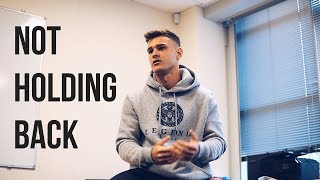
Rob Lipsett dropped out of college to build a fitness business on Facebook, then grew a YouTube channel with an iPhone. He shares what worked: publish consistently, outsource what you're not good at, and focus on keeping clients actually doing the work rather than perfect programming.
Chapters
What is going on everyone? Welcome to today's video. Now we have the kind of Raw Academy class that I take on the weekends here in of course Raw Gym, and so what I decided to do is bring you guys along with me and just prop the camera up and kind of listen in and have a chat. Love these kind of talks, they're really relaxed and I think there's a lot to be learned from them as well. You know, I can provide some value here and help anyone else who kind of wants to start off in the fitness industry or maybe even grow their social media or online business, anything. But before we begin, I want to give a quick Thank you to Legend London for sponsoring this video. My go-to jeans, and they now have hoodies as well. And so again, I'm gonna put the link for them in the description box. Recommend you guys go check them out. And I also was shooting with them a couple of weeks back in London with Joe and everyone, and we made a really cool video that I'm gonna link down below as well. So thank you so much. Enjoy and keep it real. I'll catch you in the next clip. So today is gonna be— I think it's called a fireside chat. I think that's actually like what they kind of call it in the entrepreneurial public speaking world. So I'm going to talk about my experience when I was sitting where you guys were and go into a Q&A and a chat. Because again, I do freaking TED Talks. I was talking to Dior Yes a couple of weeks ago. I have my talk on February 10th. But I actually much prefer these little small room talks. It's chill. It's like, yo, what's going on, man? Have fun. You know what I mean? It's cash. It's a lot more fun. So yeah, loosen up, relax, you know. I hope you all make friends with each other. You're gonna be seeing each other loads. I know the last course, like, they're all really good pals. You live together, you learn together, you eat together, and that pretty much sums up my life. But, um, so it's gonna be a lot of fun. So I am gonna start where you guys are sitting now. I was about 21 and I was studying business management, and again, I was absolutely terrible at it. I repeated first year twice, failed both years, and I was like literally just stagnant, like literally just going nowhere, which is a bad feeling in life because, you know, there is one thing that's very valuable money can't buy, and that's time, okay? And right when you're in your like early 20s, you're like primed to kick some fucking ass. Like, you're literally— you want to get out in the world, and I was just there like studying this course that I didn't like, and it was just like Ugh, you know, and then I kind of thought to myself, all right, I'm not good at this, so what am I good at? And it's like ingrained in us from school that we're taught to work on our weaknesses and do the things that we don't like to do. So it's like, oh, if you're failing accounting, oh, you better do some accounting, guys. If you're bad at maths, you better work on that. But they don't tell you that if you're getting A's in something, you know, oh, you should really, you know, that could be your thing, right? You know, you should really hone in on that. And it's actually funny, I got like 340 points when leaving, nothing spectacular. And but the courses that are the modules or the classes that I was good at were art and English, which is creative, right? And no one ever like said that to me. No one was ever like, hey, you know, you're a creative guy, maybe you should do something about that, okay? And so I was always thinking I was stupid, you know, um, not good grades. And I went into college just business. I was like, oh, might as well, you know, do that. And again, it was the same thing. I was failing lots of classes and led to believe that I was very stupid and not good at anything. And so once I was in college, I was like, okay, look, maybe I should just do something I like. Maybe I should just follow your dreams, right? Okay. And so on the side, I did the Raw Academy personal training course. It was under different management back then. And funnily enough, I passed that no problem. Hardly needed to open a book because I was so into the gym as it was, you know, I loved it, right? Do what you love. You're going to hear me say that about 20 times today. And so I passed that and that was great, right? So I did that alongside college. And then after my second year of failing, I was like, okay, look, I'm wasting my time here. Like, it's going to— I'm probably going to go 3 for 3 here and fail again. And so I said, look, I'm going to drop out. I'm going to just do something. Okay, so at this stage I was quite lost in my life. You know, I was kind of going in between retail jobs that I just didn't like. I had no enthusiasm for them. I was just getting fired. Like, I I wouldn't blame my boss for firing me. I was like, you know, I have no enthusiasm, no interest. I was like, good choice, right? I was like, I would fire me too. And so at this stage, I just took my own advice and I was like, you know what, I'm really into the fitness thing. I love training, I love nutrition, love connecting with people. I'm a people's person. Maybe I should just do that. And now this was 2014, this is about 4 years ago. You know, it was very different back then. Like, Instagram was like hardly even a thing. And, you know, YouTube vlogging wasn't as big as it was now. And I was like, okay, what can I do? Like, so I set up a Facebook page. And because Facebook at the time was big, not too big now, it's gone a little bit downhill. It's good if you pay for ads. But let's talk about Facebook marketing another day. That's like a book in itself. Facebook was the thing at the time. So I started writing out kind of articles as posts. That got a little bit of traction and people would message me, inboxing me, looking for plans, training plans, looking for personal training, right? And I said, "Amazing, I'll do them for free." Okay, so I was giving out all these free plans because there was nothing else to do. No job, no college, so I was doing all these plans and everyone was coming back to me with these killer results and really happy. So I was like, "Oh, hey, wait a minute, let me just have a think here." And oftentimes people go, 'Rob, how do you start a business? How do you— what do you do? Where do you start? Where do you set your goals?' And it's always just a problem that presents itself to you every day, and you just come up with a solution for it. So I was like, 'Oh cool, I'll just start charging for these plans, or maybe I'll write some ebooks.' And, um, that's exactly what I did. And then so I went into a college course of some kids studying computing, and I was like, and I was like, standing at the door, I was like, Hey, hey kid, do you want to make some quick money? And he was like, yeah, right? So I paid him like €200 for a website that could handle payments. You know, I started doing these ebooks, online plans, writing them just at night. And that's pure profit, you know. People think you have to make a huge investment to start a business, and all you need is €200. And so I did that, and then I started shouting about it from my phone. You don't even need to pay for marketing anymore. Crazy fact, I've never ever ever ever paid for an advertisement. I probably should, I probably should like put a bit in Facebook ads and stuff, but I just like never found the need to do it because there's making enough noise as is. Like, we've all got this phone in our pocket and it's just like, it's insane because it's the first time in the history of human mankind that we can just connect with people across the world in a matter of seconds. Like, if you want your mind blown, the planet has been here for literally tens of millions of years, something like that, The internet's been around for 20-odd years. Like, actually, like, put that figure in your head, okay? Think of number 20 here and then think of the number 10 million here and like divide 10 million. Like, is that not insane? Then on top of that, social media and smartphones have only been around for 10 years. Like, that's staggering. It's absolutely staggering to think of. So we're probably in the best age we could possibly be. Like, it would be a shame and it would be disrespectful, it would be wasteful to not capitalize on this opportunity. Like, when you actually think of the numbers and how lucky we are to be born in this year and to, you know, actually be born in a first world country and have access to the internet, it's absolutely staggering, the odds of actually getting this. I started doing that more full-time, started making more plans, and it really catapulted from there. I went onto YouTube. Again, I didn't have a big fancy Sony camera. I had an iPhone 5. Y'all got the iPhone X now. Like seriously, that thing records in 4K. It's like the camera on the iPhone's better than that camera, like pixel-wise and stuff. So I had an iPhone 5 and I just picked it up and I just started saying, hey, this is how I train all day, this is how I eat all day. And it just went from there. And fast forward 3, yeah, about 3 years. I started like the Facebook page, 2014. YouTube 10, 15. And so fast forward that and we're here now. And, you know, we're making a great kind of living off this, inspiring a lot of other people to do the same. And people always say, oh, did you miss the boat? Is it oversaturated now? Is everyone trying to get into fitness? Is everyone trying to get into social media entrepreneurship? Not at all. Okay, not at all. Okay, the word #ad #paypartnership, #influencer, it's only invented in 2016. Like, it's literally only invented in 2016. Like, is that not insane? Okay, so you're right on time to get into this. If you love it, you should definitely do it, and it's literally the perfect time to kind of go in on this. And so I'm going to open into a Q&A now. We're going to really talk about certain topics that you guys want to hear. And really get comfortable with the people in this room. Everyone here is obviously super chilled. Like, if you're even here, you're a proactive person, okay? It's actually like very rare to get these people all in the one room. So get some questions together, chill. I'm just gonna go off for toilet break, 5 minutes, get a drink of water, and then I'll come back in a second and we can have a good chat. Like, um, photography and videography, if you want to market yourself And that ad doesn't just go for the fitness personal training industry, it goes for anything you're in. You know, like when I get my haircut, the barber takes a photo afterwards and he's like, oh, come over here for the good lighting, you know, come down here, move your head. Like, you know, you got to take a good photo. Like, you're just— it's the same as putting an ad on the side of the bus, just, you know, who the hell is looking outside the bus anymore? Like, you know, everyone's looking at their phones. We're going to go on some topics here. Hey, throw up your hand, anything you want to ask, and we're just going to have a good conversation.
So yeah, are you training people over in Maldives?
Yes, yeah, it was. And that's actually great because, yeah, I am like a fully qualified personal trainer, but then it quickly— I knew I always wanted to do the online thing, but I did have to go back to training people in person in the Maldives, and I loved it. Like, I was doing like HIIT classes on the beach, and it was just really cool to just like, you know, one-on-one is amazing, just talking to people. Like, even doing this now, like, we're in a day and age where it's all WhatsApp, it's all texts, it's all phone calls, and you know, it is great to interact one-on-one with people. So it was really nice, yeah, and it was good to kind of get back to, get back to my roots in a sense, and it was not a bad place to do it.
What's your biggest struggle that you found trying to get into the fitness industry, and like, what would be your biggest advice to give to someone to try and like get into it?
So that, that's like pretty much what we're talking about today, and it's great to touch on the struggles because It's all nice to say, ah, you know, everything's great, everything's dandy, but like, behind every success there's 10 failures, if not more. You got a stage where like I was getting like, you know, just failing stuff and getting rejected and things on the regularly that I just like kind of look at it now in a different light, like it's a positive way, like it's just a lesson and you gotta learn from it and you'll deal with that well. So a few things, okay, first of all was transitioning from my 9 to 5 into kind of fitness industry job and then working for yourself, that was very difficult. And especially with the people around me, such as my parents, because they obviously come from a different generation where having a steady income, a steady job, is like the be-all end-all, you know. They're like, oh, you know, he got a job working in the office, great, you know. And so they actually didn't believe me. They're like, you can't make money online doing fitness. They're like, you're training people through Skype. Like, you know, they literally didn't have a clue how it worked. Like, I was like jumping jacks through the webcam on the laptop. They didn't even know what an ebook was. And then I actually had to show my parents like my bank accounts and stuff, and they realized it was very real. So that was difficult, transitioning from, you know, the real world into the online world and your peers, what they think. And it's also very difficult at the start. You're going to probably have to— like, there's no shame in working a normal job while you're getting your side business off the ground. You know, I was working in a watch station in Dundrum in the House of Fraser and like, you know, selling watches. I hadn't a clue about watches. Like, they'd be like, "Yeah, so tell me about this one here." And I was like, "Well, it tells the date and the time." Yeah, and they'd be like, "Right." So I was terrible at that and like, you know, I got fired eventually. And so I was doing that during the day and then at night I was trying to do all the videos and the editing and uploading. So you've got so much things on at once. But then one day when your side gig kicks off, you know, it's safe to leave the day job. I call it the magic number. Once your side gig makes more or as much as your main gig, safe to go. It's cool, you got something to fall back on. So that transition is very difficult, and getting people to kind of like believe you as well. And then, In the beginning also as well, this is actually quite a good thing that happened to me, is a lot of people when they're just starting out, they'll compare themselves to someone at the top, right? Then that goes in any, any business, like not just fitness. Like they'll be, you know, getting 1,000 views on a YouTube video or something, and they'll be comparing themselves to Steve Cook getting half a million views, and they just started. But that's one thing I actually didn't do. I, I just kind of focus on myself. And I remember I was getting like 400 or 500 views per video, and I was like, "500 people are watching my videos?" Like, I didn't care. And when I got 1,000 subs, I think I was happier than when I got like 300,000, because I was like, "This is insane." So I was very just keeping in my own lane and focusing on myself. Now, not comparing your chapter 1 to someone else's chapter 10. That is a big thing to do. Like, do not compare the beginning of your story to, you know, someone who's been at it for so long. Um, but they would be the kind of main struggles. And then like everything along the way, like I think the first time I tried to organize a seminar, uh, it's like years ago, literally sold about like 3 tickets. I was like, I might as well talk to people on the street. I might as well like pull people and just be like, shake them, be like, talk to me, please. Just round up 3 people. And now like I'm doing a whole event in the RDS on February 10th and there's hundreds of tickets sold. So like, if I never had that initial failure, you know, my marketing was wrong, my prices, everything was wrong. But if I didn't have that initial failure, I'd never have actually progressed. I'd just be doing that all over again. So your failures are like amazing. Like, they're honestly blessings in disguise. Like, I can promise you that. And just laugh at them. Like, it's really funny. Like, when you actually fail, you're just like, look at the state of this guy. It's like, laugh at yourself, you know. And so yeah, there's been a lot of struggles on the way, but to sum it up, say don't compare your chapter 1 to someone else's chapter 10. Understand that you will fail and understand that there you need to fail, like you actually have to fail in order to get better. Um, so yeah, great question.
What's your experience when it comes to like social media and stuff? Like I've been training years and like training my clients and stuff, like I always want to post pictures but then I'm afraid like everyone's like, oh, here comes another picture, here comes another shirtless pic. But I do think like, do we just like start pumping out content, or should we be smart about the way, you know, you said you post one in the afternoon and one earlier on in the day, so should we smart, like post like what time and stuff, or should we just pump out content?
I would say if I had to choose, a mix of both is great, you know, a bit of calculation, but at the end of the day, pumping out content is going to get you, is going to be a better thing to do. Like, you can always have, you can always get loads of content and cut down, but you can't get no content and cut up. Do you know what I mean? It's like when you're getting your hair cut. I'm making a good few barber analogies today. It was like when you're getting your hair cut, if you cut too much off, you can't grow it back. But if you just cut a little bit off, you can, you can keep going. And same with content. You can't magic content out of nothing, but you can cut it down. Yeah, so just always pumping out the content. And that's something, a mistake that I see most people do, is they'll come to me and they'll be like, Rob, Rob, Rob, I started a YouTube channel, please check it out. And I'm like, yes, let's do it, how's it going? I check back a month later and they've like hardly uploaded. They just like, they just don't stick with it. Like, they're just not consistent with it. And pumping out content goes with consistency, um, and consistency is just, just paramount in anything you do in life. It's paramount whether you're getting results in the gym, it's paramount, yeah, are you turning up to work, you know, you're doing this, you know. Um, so consistency in pumping out content, I would say, is more important. And stop giving a fuck what people think. Like, really, it's like Whoa, how do I even put this into words? It's like someone is taking time out of their shitty day to look into what you're doing, form an opinion on it, like actually form an opinion on it, give it some thought, and they're like, "I don't like what he's doing," and actually bother to like say it to you. Like, that's actually embarrassing that someone does that. Like when someone leaves a comment, a mean comment on my YouTube video, I'm like, "No shit, it's an anonymous profile." It's embarrassing. Stuff they're saying. That's why they're private profiles, okay? If it wasn't embarrassing and it was a good thing to do, they'd be like, you know, fully open about it. Like, do you think like, you know, whatever, Mark Zuckerberg is making anonymous profiles and commenting mean shit on people's pages? No, he doesn't have time for that, okay? No one at the top has time for that. So if you are getting a little bit of shit online, like, just think of what that person's actually like. You know, and they actually just kind of laugh at it and feel sorry for them. Yeah, sometimes when I read like a comment— no, you do! Like, you— like, when someone leaves a really mean, harsh comment, they're not in a good place. Yeah, you know, they're not. How would you even have the time to do that? You're not up to anything. So I do feel sorry for them. And like, I know it sounds funny, like, I know it does sound funny, but like, I truly do. And that's why— that's why I don't take offense to it. Like, sometimes when someone leaves a really harsh comment on my YouTube, I'll like agree. I'll be like, right on, 'Come on, man, you couldn't have said it better.' So I literally like take zero offense to anything online. And like, once you start doing the same, you know, be better. And just do think of that bigger picture. Just be like, 'Oh my gosh, I pray for you,' you know. Um, so yeah, to answer your question, pump out content. Just don't give a shit what some negative person has to say. Not saying complete disregard constructive criticism, like, but it's pretty obvious when someone it offers you constructive criticism and when someone calls you a wanker. So yeah, you know, you can tell the difference. Yeah, you're like, "Wanker." It's like, "Thanks for the helpful comment. I'll keep that in mind going forward." So yeah. I have so much fun in these Q&As. I'm not gonna lie. It's just so much fun. On days when I've got like something really busy going on, like I've got an event. So for example, this event on February 10th, I'm gonna have like 3— I've brought in like 3 photographers and 2, maybe 3 videographers as well. But when it's just me chilling here— How's it going, yeah? Rock on. Once it's me just chilling here, there's actually a certain quality to doing it yourself that people find it a lot more personal. People kind of actually connect to it a little bit better. And that's why now vlogs or YouTube is like replacing TV. 'Cause like, you know, TV is like, it's an actor's own script, whereas vlog is like, this is my life, you know? Like, it's literally me and a propped up camera right there, you know? The batteries just ran out on the last one. So, you know, people actually like that, you know? Like, no one will care that the quality changed a little bit. People will actually like that, and like, it's a new kind of, not trend, but it's a new thing to do is If you're doing a vlog, it's nice to have some professional clips in there, but then it's cool to have some phone footage, like some Snapchat stories, you know, like it adds that personal touch. And so back to the team question, I do have like an accounts team. Obviously I have all the lads who help me run Raw Academy, who do the marketing for Raw Gyms. I've got an agent, a social media agent, who gets me good brand deals. I've done ones with Samsung and Lynx and some huge companies. So I've got that. Again, I've got a lot of photographers and videographers on call. I've got a full-time web developer. Um, so yeah, I do, do have a team. Yeah, like, you know, without outsourcing, you're going to be in a bit of trouble. Like, there's not enough time in the day for me to do all that. I just, you know, okay, it's website marketing, everything to do all that, but like the majority I do, do myself, you know. Like, there is still a lot of stuff that you can't outsource. Like, at the end of the day, my agent, if she gets me a brand deal, she's gonna have to run it by me, you know, like I'll have to make the final decision on that. Um, so you do— it is a bit of a one-man army, but like you will have to outsource eventually. And like, one thing I never kind of, um, hesitate in spending my money on is camera equipment or anything that will go back into the business that you can expense. So editing software and travel as well. That's one thing I just don't want to spend money on.
What advice would you give for like talking to the camera? Because I bought a camera and tried it for hours and just laugh at myself every time I turned it on.
Well, you've got the first step nailed, laughing at yourself. That is extremely important. I laugh at myself multiple times a day. So laugh at yourself, don't take yourself too seriously, and do have a bit of fun with it. And like, also don't put pressure on yourself. Like, if it's just you recording, like, chilling in your room, it's like, let's do it again. It's like, oh, I didn't get that clip right. Let's go, let's do it again. You know, so there's no— don't put pressure on yourself. And like, literally everyone, everyone hates how they sound on camera first. Like, no, like, literally everyone. I think it's something to do with the human mind hearing yourself from a different perspective. Like, it just sounds weird, but it actually doesn't sound weird to other people. It's like, sorry, that's just what you sound like. But practice makes perfect, and you'll just get used to it over time. Then you really enjoy it. And like, there's like, it's an amazing feeling to be able to look back of what I've been doing like a year ago. And not only not having like, you know, some people keep a diary. It's like I can, and you see words on a page. I can look back what I'm doing a year ago and see a video of it. Like, it's crazy. Like, it's so good. Like, I would do this if no one was watching the videos. Just so I'd have them for myself. Like, it's— can't wait to look back on these. And I do look back on my old videos, and it's great to see where you were at that time in life. So enjoy it. Yeah. So in the last few years, what's some of the worst advice that you've either been given or that you see badly around the industry? Yeah, that's a great question. Everyone's always asked for the best advice. What about the worst advice? Um, in the industry, I've actually kind of surrounded myself with the, the kind of right people to mainly get good advice. Some bad advice, hmm, it actually, I don't really like to have regrets, you know, because again, everything's a learning experience. And not even in the industry, one of my regrets was going to college. Like, I hate saying that, like, because it's like, oh, 2 years, like, when I was like 21 and 22, like, I'm killing it. But that would be like one of my regrets. And then definitely is just trying to follow a path that you've no interest in. Like, oh, it's— that is like, it's really bad. Like, it's like, life is short as is. Do you know what's even shorter? Your 20s and your 30s seems way shorter, you know? And that's when like you're primed and ready to go like that. And that's even shorter than the whole thing. That's a small fraction of life. You're gonna waste that. I know it sounds so corny and cliché, but like, do go after what you want to. Chase your dreams. Um, no, but like, I'm dead serious about that. Like, that, that is like the probably the, the best advice that like I've been given. And like, really understand that, like, they say never too late, but like, you know, you do want to— you don't want to waste, you don't waste time. You can't buy back time. Uh, but worst advice, I don't know, it's hard to think of like worst advice. Worst advice, probably go to college. But you know, I'm not against college, like, I'm really not. Like, if you're doing a course you like, okay, of course you're interested in But if you're just doing it because your parents told you to do it, then probably gonna have a little rude awakening towards the end. So yeah. Did you learn anything from the business course? Unfortunately not. They had a marketing module, okay? And so I was like, okay, sweet, you know, marketing, this will be fun. They didn't even mention social media in it. They're talking about newspapers and radio. I'm like, is this curriculum from 1997? Like, what is it? And so I was very disappointed when I walked into that module. And so the social life of college is very important. No, it actually is, like, to actually like meet people and, you know, yeah, networking and stuff. That is, that is one thing that like you can't get anywhere else apart from college is that whole college life. So, and, um, so yeah, no, I'm trying to think. I'm like, no, I don't really remember much from that course, unfortunately. But like, I probably just did a bad course that had no like appeal to me. Like, if you want to be a doctor or an accountant or something like that, then you do have to study that in college. But I think business is a little bit, uh, it's like you'll learn more just going out into the real world. It's an experience really rather than learning about it. Yeah, yeah, exactly. So business is like, you kind of, you get more just doing it yourself in the outside world. And it's funny, in America, I know we're not from America here, so the college debt isn't like as intense as Ireland. Like, it was like €100 grand to go to college in America, whereas like in Ireland it's like, what, €3-4 grand a year, is it? Like that? Yeah, but like, that is still quite a bit, you know. Imagine you do 4 years in college and you like don't like it. That's like, what, like 4 by 4, it's like €16 grand. Like, you can do a shitload with €16 grand, you know. So I essentially wasted €8 grand doing those 2 years. So instead of starting off my business with €200, For that acron, you know. So yeah, you do kind of have to weigh these options up. It's crazy once you start like reading about American colleges, it's keeping you dead. It's like to keep the people down. One of the richest people in the world is a college loan person. Oh, it's absolutely mental. Like, it's like a conspiracy that's like allowed. It's like illegal. You can't, um, it's called bankruptcy. Oh yeah, that's what I wrote. You can't even declare bankruptcy. Like, oh my God, listen to some Jordan Peterson on this. He's a kind of speaker that I've gotten into recently. He's my favorite speaker as of now. It's mind-boggling, the, the scam that college debt in America is. Like, it's absolutely mind-blowing. Sorry, this is the chats that I love to have. Like, we're here talking about college debt in America. It's like, I just want to be a personal trainer. But no, that, that's how I talk. But as— yeah, and obviously there's like those people who try to get into personal trainers Some people make it, some people don't. What would be like the biggest difference between someone who makes it and doesn't? Yeah, well, first of all, you know, that's life. Like, you can be a lawyer and not make it. Like, you know, Lionel Hutz on The Simpsons, he's like, you know, struggling lawyer, you know. And like, people will look at a lawyer as being like a great job, which it is, but it's like, you can be a terrible lawyer as well. You can completely backfire. So there's good competition wherever you go, and that's why I hate when I hear people say the excuse. This is an excuse saying it's oversaturated. Oh, it's like, yeah, everything is. The Earth's got fucking billions of people. You're going to be up against a little bit of competition, all right? Everything is saturated. You're not inventing a new job that only you are going for, okay?
Um, saturation is kind of a good thing though, because then you can like see who's the best and who's the worst.
You can learn from other people, and competition keeps you sharp, right? If you had no one to compete with you wouldn't be the best. You get lazy, right? Competition's great. Oversaturation's great, right? Love it. But so, come back to your question, what is kind of make or break, did you ask? Work rate and work effort. I hate to break to you, but like, what you put in, like, you'll get back out. And it's kind of like what I spoke about earlier, about like, I hear people and they're like, oh, you know, I'm trying this, I'm trying that, and like I look into what they're doing and like they're hardly posting, they're not getting the content whack, like, you know, they're not consistent, you know. So oftentimes you do just have to take a bit of ownership and be fully honest with yourself and just be like, am I putting the work in? Am I putting the effort? Like, or am I expecting to get something back when I'm not giving enough in? And like, you know, sometimes you have to be a little bit hard and honest with yourself. Like, being honest with yourself is great, and ownership is like this— like this new word that I've like just gotten madly into. And it just basically means like own up to whatever your decisions are, like own up to whatever you're doing. Like, sometimes you just gotta say— like, I think in December I was like, I didn't work hard enough. I was like, I had a bad month for content, um, you know, I didn't do anything spectacular, I got a bit lazy. Owned up to that, right? You know, I was like, December wasn't a great month, but we're gonna make the next month amazing. Uh, so literally, you know, there is no magic secret. Like, you do have to just get out there, make your voice heard, and like put in the effort, and it'll come back to you. I don't know what time it is. Uh, 24 minutes past 11. Half till half, but we'll keep— we'll keep— probably keep going after that. So yeah, I'm having a good chat. I'm a good chat. So yeah, I think you have a question.
Do you think it's like important to like Try to get to know the client before coaching them, seeing what kind of exercise they actually are doing and working around that, or—
Oh, absolutely. Oh, absolutely. So when you, uh, someone who's like really clever, uh, jump Team 3DMJ, is that Eric Helms, uh, Alberto Nunes? We'll get to know those guys. They're like just very evidence-based and just really smart individuals, and they have this thing called, um, 'Training and Nutrition Strength Pyramids.' It's a really good book, I'd recommend reading. It's a really fast read, and it's basically, um, in the order of importance. So you have things like, for nutrition, it's like energy balance, calories, then you've macronutrients, then you've like meal timing, and then you've like supplements, the tiny little bit at the top. It's like the cherry on top, right? Um, and so the, the very bottom, before any of all that, is actually adherence. Okay, and sustainability, because you can give someone the quote-unquote best plan in the world, and if they can't stick to it, it's obsolete. And so finding out what exercises people like, what they don't like, and what foods they like, what foods they don't like, that's going to give those long-term results, right? So long-term consistency over short-term perfection any day. And there's a really good quote from Lyle McDonald as well. Do any of you guys know him? Again, he's just another kind of researcher, really clever guy. He goes, the person who is going into the gym every, you know, a couple days and progressing on leg press will get more results than the person who squats the same weight every week, you know. So it's like, we're led to believe that, oh, squats are the be-all end-all, but if you're— if you don't like them, then you're not progressing on them. Well, then maybe pick an exercise that you do like and do progress on. So moral of the story is adherence Personalized plans, personalized routines, they are what's going to give the real results. Anything, actions speak louder than words. And I often like, you always hear, do you want to know, I hate these 3 words: I'm gonna do. Oh, oh, it's annoying. It's like, I'm gonna do this, I'm gonna do that. It's just like everyone's just giving it all this and then no one actually executes. So execute, really important to execute, because like you can say whatever you want. Now I can say I'm gonna be like the President of Ireland in a couple years, but that doesn't mean it's going to happen. Like, I can literally make any noise I want with my mouth, so it doesn't mean it's going to happen. Thank you, bro. Appreciate it.
More from Rob










"I Haven't Worked in 10 Years" - How Rob Lipsett Built a £1M Fitness Empire From Nothing
