The TRUTH Behind Fat Loss Diets
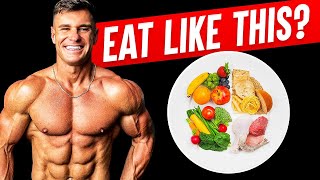
Rob Lipsett breaks down ketogenic, intermittent fasting, carnivore, and other popular diets. The only thing they all need to work: a calorie deficit. He recommends 80% whole foods, 20% fun foods, high protein, and weight training over any single diet approach.
Chapters
Leading up to summer, I'm gonna be dropping a lot of videos about training and nutrition. Personally, I love talking about nutrition. I like the way it gets people divided, drives people crazy. It's like talking about religion. And in this video, I'm actually gonna be reviewing various popular diets, talking about the pros and cons of each one, talking about the myths and the facts about each one, and giving you guys some guidance and helping you sift through the BS. I want everyone who subscribes to this channel looking good, feeling good for summer and just living their best lean shredded life. Because that's what life is about, it's about having abs. That's the secret to happiness, right? But before we get into things, I want to thank HelloFresh for sponsoring this video. Very fitting sponsor. They are a meal prep company. You go onto the website or their app, you choose whatever meals you like, be it high protein, low carb, whatever it is, whatever camp you're in, whatever it is that suits your preferences, and they arrive to your door. All the ingredients are included in the box. They have instructions on how to cook each meal. It's a really enjoyable thing to do. Me and Linda love doing it. They're available all over Europe. Ireland, Spain, of course the US. They're amazing service and I couldn't recommend them enough. More on them later. Now let's get into the diet talk. First of all, why does any diet work? I thought this was common knowledge, but in recent years I've seen so much misinformation online that apparently it's not. Every single diet, no matter what it is— vegan, 6 meals a day, intermittent fasting, typical bro meals, whatever it is— they all put you in a calorie deficit. That is the one thing that every single camp can agree on and is the one thing that is proven by science, that you need to be in a deficit to lose body fat. So now that we have that out of the way, let's delve into the different diets that you've probably seen online. So first up on the dietary hit list is the ketogenic diet, which, funny story, it's actually the first diet I ever followed. So when I was 18, I was going on a trip to Ayia Napa. If you know, you know. It's a place where people, young people, go to commit sin. So I was going I want to look lean. And so I said to myself, okay, I've seen it online, people just cut out carbs. So that's what we're going to do. Now, it wasn't a full proper ketogenic diet. A proper ketogenic diet is when you go little to no carbs and you increase your fat intake quite high, and also your protein intake is usually classed as moderate. Now, I just did pretty much all protein and a lot of eggs, so it was by default a ketogenic diet, but I kind of didn't plan it out to be a ketogenic diet. Either way, I saw a lot of results in terms of losing fat, and the reason for that is because it of course put me in a calorie deficit. It also had me eating a high protein intake and lifting weights, which are kind of like the 3 main things you need to do. Now that is not gonna optimize your body composition because if you cut out carbs completely, for me especially, I do well on a high carb diet, training tends to go to shit. So I lost a lot of strength in the gym, but I just didn't care. I just wanted to get lean and have abs. And I looked pretty good for, you know, an 18-year-old. And I went on my merry way to Ayia Napa. Of course, when I went, I stopped the ketogenic diet, and that's one of the cons that we'll talk about today, is it's not sustainable for the most part. If you're having alcohol or even sauce on some of your meals, anything, it's extremely difficult to stay proper no-carb and do it properly. You're pretty much eating just meat, eggs, even avocado has carbs in it if you want to be really strict about it. So it's very difficult to keep up the ketogenic diet in the long term. And I believe up to 50% of people who start the ketogenic diet, they drop off after a couple of weeks, if not months. So the pros to the ketogenic diet is it's high protein, it is high satiety. So protein and fats will help with our hunger a lot. And it's also very simple to follow. Just the only rule is you cut out carbohydrates. And again, I respect that. The cons are your training is most likely going to suffer. It's not sustainable for the vast, vast majority of people. And life just fucking sucks without carbs. Let's be real. Like, I want to eat ice cream, oats, pancakes. Like, seriously, imagine someone said to you, okay, all right, you can never eat carbs for the rest of your life. Everyone's gonna be like, no. Everyone's gonna be like, no, when you put it like that. So that is kind of the main cons and why I do not recommend it. Also, there's a lot of keto zealots, keto doctors that touted as some sort of, you know, medical cure to all disease, and this is Just not true. This is complete quackery. And oftentimes a lot of the benefits that are found from ketogenic diet can just be found also from straight up dieting and being in deficit and losing body fat. So overall, ketogenic diet in terms of— I'm not going to rank it as the worst. I'll give it like 5 out of 10 if I'm going to rank these. Okay, I just decided I'm going to rank these now, right? I'm giving ketogenic 5 out of 10 in the official Rob Lipsett dietary rating. Speaking of nutrition, if you are looking to build some good habits in 2024 and get in the best shape of your life for summer, you should go check out HelloFresh. It is a company that I've been using for many years, and as you can see here, they've got such an easy-to-use app to order off. You just click here, you go to build your plan, and then you can choose any style of meal you want. So whatever camp you may be in, whatever taste you have that need to be catered for, HelloFresh has got it all. It's taught me a lot about different types of recipes and learning how to try new things and also experimenting with different ingredients. Not to mention that The meals start at £3.15, so it'll help you save a lot of money as well instead of buying 100 different ingredients. Scan the QR code up on the screen, get 60% off your first box and then 20% off the next 2 months. Also some free gifts in there as well. So go check them out. Couldn't recommend them enough. I've been using them for years now and I'll be using them for years to come. So again, a big thank you to HelloFresh for sponsoring this video. So next up we have intermittent fasting. Now, why can I instruct you on intermittent fasting? Because I do it myself about 4 to 5 times per week. Oftentimes you'll see guys who are selling intermittent fasting programs, no names mentioned, they'll list all these magic benefits about intermittent fasting and these are all BS. It actually sucks to see 'cause there's a few guys that I like that I follow online and, you know, they list the benefits of intermittent fasting but then they'll just also throw in some complete BS and lies on top of that as well. Why do I do intermittent fasting? And the main reasons are productivity and convenience. If I'm having 6 meals a day, I have to log my food 6 times a day. I have to prepare 6 meals. Your whole day is ruled around eating these meals and timing them perfectly. So with intermittent fasting, if you're just having 2 or 3 large meals per day, it's very convenient. So if you're an entrepreneur, if you're on the go, maybe you're in college or you work in an office and you have to commute, it's very simple and minimalistic. It's also great on a travel day to avoid the airplane food and, you know, just kind of get in the right mindset. It's just a really simple diet to follow, and you only have to log on to MyFitnessPal or The Game Plan, whatever you're following, 2 or 3 times a day to track your meals. So it's extremely convenient. Another reason I do it is for mental clarity. And now there's not much science or magic going on here. It's just common sense. If you wake up in the morning and smash back a full Irish or Christmas dinner worth of calories, you're going to fall asleep. You're going to feel sluggish, tired, bloated. I actually like doing these videos fasted because my face looks sharper. Like, there's some days where I'll do like a podcast or video and I'll have like a big salty meal beforehand. I'll go record and my face, the whole shape of it looks completely different. Okay. And so I like to do intermittent fasting just for those main two reasons: convenient and productivity. You feel mentally sharp. And now another huge benefit of intermittent fasting is that you get to eat like a king. Okay. It doesn't really feel like you're dieting. You're in a deficit, but because you're reducing your meal frequency, you get to eat like 2 or 3 massive meals per day. I have gotten shredded eating like pancakes every single day, massive oat bowls, fro-yo. You can essentially eat whatever you want while you're intermittent fasting. So that is a huge benefit. It's really good for cravings because something I say to myself is I just go, okay, the next day I can, if I'm craving something, I just go, I can fit it into my diet. And even if I'm like finished my calories at the end of the day, I can just be like, oh, tomorrow I'll just like— I get to have these two massive meals. One of them is going to be the thing I'm craving. They're the benefits of intermittent fasting. The cons are, you know, sometimes some people just don't like it, okay? A lot of people just, they're not able to do it. They can't, they need something in the morning, which I think a lot of it is in their head. But look, different strokes for different folks. But in terms of cons, there's not that many apart from a lot of people in the industry claim that it has magical benefits like promotes autophagy and it increases insulin sensitivity and that it boosts your growth hormone. It's like, bro, you're acting as if you're like pinning GH into your stomach. It is not going to make a measurable difference on your growth hormone. People even go as far to say as intermittent fasting increases your testosterone. This is just nothing to suggest that, like, that is just straight up not true. So there's a lot of BS claims that come on, come along with intermittent fasting, but overall I'm going to give it on the Rob Lipsett hierarchy of diets I'm gonna give it a 9 out of 10. I think a lot of people, they could do with, you know, having a smaller breakfast, especially in Irish culture. You know, we always have the big full Irish in the morning. But I'm gonna give it a 9 out of 10. I do it myself, but I really wanna stress the amount of bro science around it and that it's really nothing magical. If you were just in a 500 deficit eating 6 meals a day, 500 deficit fasting in the morning, fat loss is gonna be the same. So next up, we have the Carnivore diet. And this is, this actually spurred me to make this video, okay? This, in my opinion, is almost as bad as veganism. In the last 2 years, it has become the most prominent diet online, probably because of guys like Liver King going completely viral. It's convincing. I'm gonna actually start with the pros behind it, but this has been probably the biggest source of misinformation and bro science that I've seen online. So first of all, what is the carnivore or Paleolithic diet? And that is when people kind of, as the name suggests, stick to diets and foods that they would only find in caveman times, okay? So So even though there's virtually none of them, so that's like the first thing that is nonsense. But stuff that is just all organic and little to no processing and a lot of raw food as well. What's wrong with that, Rob? Nothing. And so this diet is, when I see a lot of the dudes with the wooden boards, you know, flashing their abs and having all their food on a plate, like, I actually really like the meals and all the meals are really nutrient dense. And I think like if a lot of people ate this way, by default they're going to just follow a better diet anyways, and they're going to get good results, and their health's going to improve. They're probably going to improve their body composition as well. So what's the issue? What's wrong? It's when you start demonizing certain foods that are absolutely fine to consume, when you start getting this holier-than-thou attitude and telling people, hey, you can't eat that, hey, that's a conspiracy theory, the government's trying to make you weak and keep you down. That's when it all just gets kind completely wacky. But overall, I do like the diet. It's high protein, nutrient-dense, but then it just starts demonizing certain things. Like, I had some guy on Twitter the other day being like, why are you eating oats and salads? I'm like, bro, I do so much worse on the weekends. You're actually coming for my oats and salads? Like, I'm like, I literally knocked back 5 whiskey sours and a large pizza and a kebab, and you're saying oats and salads are my problem? Please. It's when they start going in on foods that are absolutely not only perfectly fine but literally healthy, that just, it becomes a complete fad diet that is just packed full of bro science. But overall, like, I eat a lot of meals. Like, in the morning, you know, I love steak and eggs and avocado, or for lunch. And yeah, that's a technically, technically a carnivore meal. It's all, eat a lot of these meals myself, but I just don't think there's magical benefits to it. So out of 10, I'm gonna give this 8 out of 10. I like it. I have a lot of friends that eat animal-based, and they understand that it's just like kind of an easy rule follow. It's nothing magical, but there's just a lot of people like the Liver King and other guys like that that just kind of ruin it for everyone, and they start demonizing healthy foods. Next on the list, we have low-fat diet. This one is kind of gone in the '80s, okay? This was really popular in the '80s, and where this came from, there was some terrible studies on cholesterol that are just not true. Terrible studies on eggs. Eggs, one of the healthiest, most nutrient-dense things you can eat. Nature's multivitamin, as I call them. Thankfully, this is pretty much gone. Like, if anything, it's the opposite. People love talking about how healthy fat is, and they kind of hype it up a little bit, and they kind of forget that, like, there's still a lot of calories in fat. Like, there's 9 calories per gram, and sometimes people will eat such high-fat foods, they'll put them out of deficit. Overall, the low-fat diet, I think, has more or less completely gone. So overall, the low-fat diet, if I was to rate it, I'll probably give it 2 out of 10. If you go zero to low fat, you're going to absolutely wreck yourself. You're going to get so fed up with your diet, you're going to get burnt out. But Thankfully, it is not very prevalent anymore. I don't think anyone really touts a low-fat diet. Maybe fruitarians. Is that, is that still a thing? Okay, so next up we have the sugar-free diet. And I want to start off by saying this. I've done a video on this. It's one of my first ever videos that I did on YouTube. It's called "Are All Carbs the Same?" And so to explain it, summarize that video, yes, the body just turns all carbohydrates to glucose. When you consume them, okay? Be it a can of Coke or a sweet potato. That's like the perfect classic example. Or a can of Coke, a sweet potato— are they both as nutrient-dense as each other? Obviously not. The sweet potato is going to be packed with vitamins and minerals and fiber, and it's going to be a lot more filling than a can of Coke, okay? That is pretty much nutritionally devoid liquid calories, so it is not going to fill you up whatsoever. Liquid calories, complete no-no. That's a little side note. But the carbohydrates, still, your body will just see 35 grams of carbs. But of course, common sense prevails that you should go with the more nutrient-dense option. The problem is with the sugar-free diet is it's just saying— it's just too much of a blanket statement. Like, there's going to be sugar from bananas, blueberries, you know, a lot of healthy foods. So again, the main thing you want to focus on is total carb intake. And if there are some sugars or a good bit of sugars in your diet, it's not going to make a difference as long as you're still going for nutritious choices as a whole, you can have a little bit of sugar in your diet, okay? It's not gonna throw things off as long as your carbs and your calories are accounted for. So sugar-free diet, it's a pretty good rule to follow. I'm gonna give it 7 out of 10, as you know, it means well. Most of the information is correct. Yes, we don't have all our carbs coming from sugar. We're going to be hungry AF if that's the case, and it's a decent rule to follow. But the main thing is total daily carb intake, and some sugar in your diet is absolutely fine. It's not going to give you cancer. It's not toxic. You're gonna be all right. Eat a goddamn banana. So next up we have the vegan diet. I think the main issue that comes in things here is it brings in a lot of emotions. Okay, I completely get that. If you are doing a vegan diet from a moral standpoint and you kind of understand the nutritional downfalls of cutting out this infinite amount of food choices and a lot of beneficial foods, and you're depleting yourself of a lot of specific nutrients— B vitamins, complete proteins— if you understand that, you still want to do it from a moral decision, well then I can't really say anything about that, okay? But that, that is completely your decision. Tends to attract a lot of wacky people. It tends to attract a lot of hippies and a lot of people who bring their emotions into it. And I've never seen an angrier crowd online. There's a lot of emotion there, cutting out a lot of perfectly good food. Animal products are some of the most nutrient-dense things, and it is pretty much the opposite of the carnivore diet. So if I'm gonna rate the vegan diet out of 10, I'm gonna give it probably a 3 out of 10. So many people drop off, they can't sustain it. I think it's about 76%, and overall it's just pretty wacky, especially when you're cutting out shit like honey. Really, the sweet spot is anywhere between the carnivore and the vegan diet. Again, the answer often lies in the middle. We've covered a lot of different diets. To wrap things up, what diet should you follow? And for me, what I recommend doing— and you know, is this even a fad? Is this even a camp? Is this even a religion? Just take a balanced approach. Maybe take something that you can sustain, adhere to, that's high protein, nutrient dense, 80% whole foods, 20% fun stuff, and that puts you in a deficit. Couple that with lifting weights, your health is going to be on point, your physique is going to be on point, your mental sanity is going to be on point, and your social life is going to be on point. I don't think anyone can really argue with that. And see, the thing is, with people from— you're in a specific group, a specific camp, that's easy to market, it's easy to sell as the magic pill. Unfortunately, all I have to sell you is common sense. So I hope you enjoyed this video. If you did, leave it a thumbs up, drop a comment down below. I'll see you in the next one. Peace. Keep it balanced, keep it real.
More from Rob










"I Haven't Worked in 10 Years" - How Rob Lipsett Built a £1M Fitness Empire From Nothing
