Episode 727: Task Stacking: Get More Done in Less Time

Lisa Woodruff walks through capturing every task cluttering your mind onto index cards, then sorting them into categories during a 90-minute Sunday session. She batches quick wins, schedules appointments, and automates payments to clear low-hang fruit and move from reactive to proactive.
Chapters
Last week on the podcast, I started this 4-part series about being a household manager and using the Sunday Basket as your inbox in order to free up 5 hours every single week. So if you didn't hear that podcast or watch that video, head on back to watch that. But in this one and the subsequent episodes, I'm going to be talking about the 3 steps that we take in the Sunday Basket that move us from reactive to proactive. And this first step is being able to capture every single blessed thing that we need to remember to do, which is a lot. Now, in the past, I used to do this by making to-do lists. So I'd grab a lined piece, you know, a lined notepad. I would take a legal pad or a smaller one, and I would start making to-do lists. And after I'd done a lot of to-do lists, I started making a to-do list for work and a to-do list for home. And sometimes I'd have a to-do list for work, a to-do list for home, and a to-do list for just for the kids. And so I'd have multiple lists. And I would cross things off the list, and then I would rewrite my list, and I would reorder the list. And I spent a lot of time maintaining these checklists. But over the last decade or so, I completely stopped doing lists altogether. And I realized what I've done is I've gone almost exclusively to writing things I need to do on index cards. And there are a couple of different ways to surface these tasks, but we need to start by surfacing the tasks for the next couple of podcasts so we can hear how this, um, how this goes through the process. So number one, we capture the task. So if you're a to-do list person, this would be taking everything on your to-do list and making every single thing on its own individual card. And the way that I come up with the things that I'm going to go through with you on this list is, first of all, I'll just take a notepad or a stack of index cards, and I will sit down and I will literally let my brain tell me every single thing it wants me to do. And I write down one task Or one thing to do per sheet, and then I tear it off. And that's what I did right before I record— sat down to record this podcast interview. I made this list of things I need to do. When I was about halfway done, like I'd gotten everything out of my brain, then I checked 2 places that I regularly check for items that I might need to remember. One is in my text messages. So I'll just scroll through my text messages and and see if looking at those past text messages reminds me of any conversations I had or actionable to-dos I need to put on my list. The second thing is my email, both personal and work. I'll just scroll through my email. Often when I'm at work, I will just print out emails and I'll put them in my Sunday basket, so that's in place of writing them on an index card. But for this activity, I've been out of town for a week, so I went through and I just scrolled through my email, and that gave me a few more things that I needed to write on these index cards. Okay, so this is going to be kind of the minutia, but I'm going to read through every single thing that I just wrote on these index cards, and I'm going to use these same index cards in the next couple of podcasts to show you how things go from something I'm remembering to tasks to do now and projects to do later. Okay, so let's get into it. Number 1, I need to bring home small bins from the office with lids on them because I'm going to be working on Abby's storage area. Abby is my daughter. Um, and Grayson is my grandson. So for Grayson, I need to schedule the electrician to come put different lighting in his bedroom and also lighting in the loft. I need to schedule an oil change for my car. I want to clean out the lunch cabinet in our kitchen. I need to set up an autopay for the preschool season for his school payments. I need to make sure I have Velcro to put those pictures up in my grandson's room. I need to bring home 2 IKEA 2x2 cube units from the office for my grandson's bedroom. I need to go to Verizon to fix our Verizon bill because I've tried through the phone, it's not working. I need to go handle this in person. I need to schedule my Pilates classes for September. Okay, let's just stop for a second. I'm not like gonna do all of these tomorrow. Like, I'm just telling you everything I need to do, and this is a good place to stop and And you can hear some of these are like big, small, like I don't filter. I do not filter my brain. I don't make her wait or organize what she wants to tell me. I just write down everything she tells me as if, you know, she's my boss and I'm just writing down everything she has. Once it's all on paper, then we will start ordering, prioritizing, task stacking, all that. But we can't do that until we have all the information out. So I'm just going to keep going. I need to wrap birthday gifts. I need to take the wreath down off of our front door and wash the door. I need to order more yogurt. I need to cancel a Wild Grain sourdough bread auto-ship. I need to organize under-the-bed storage in the basement. I need to automate a car payment bill. I need to see if my daughter wants my grandson to take soccer classes at the gym now that he's 5. I need to make the swings in the backyard higher because my 5-year-old grandson, he— it's too— they're too low for him to swing. I need to change the filter in our HVAC unit, which also reminds me that I need to schedule a fall tune-up for the HVAC unit. I need to return a baby stroller, check my passport expiration date. I know it expires in 2027, but I'm not sure when. Um, I have a Wow window box on the front of my house which has plants in it, and it's time to schedule the fall plantings. I need to pack for a trip to Chicago. I need to print out a gift idea I have for someone for Christmas already. I need to put a new mastermind I just signed up for the annual dates on my calendar. I need to book a ticket to California. I need to pick paint colors for the painter who's coming. And also I want to tell you about this Sherwin-Williams book. So when I was an in-home professional organizer. We had one of those, you know how you can go to the store and they have that whole fannable paint? Sherwin-Williams has it. It's a whole pack of like every single color they have. And I went in and I said, I need to buy this book. And a matter of fact, I think I bought this book before, but I have no idea where it is, so I need to buy it again. It was like $11. Well worth it, you guys. And she's like, oh, I see your record, you did buy it. I was like, how many times did I buy it? Only once, she said, but maybe it was twice and she was just being nice to me. So anyways, I had to go. I've already done that. I've already gotten the Sherwin-Williams paint color book. Now I need to pick out the paint color for the painter. Um, I just booked a trip in May that I need to put on the calendar. I need to go in our storage area and I need to figure out how many shelves and brackets I have to put up the shelving in Abby's storage area, and then also how many of the little bars I need to buy for that from Lowe's. I have a note here, I need to go over to Joey— that's my son's condo— and reset his circuit breaker if that's a problem. If that's not the problem, then he needs a new dishwasher, and also there's something the matter with his shower. I need to clear out my garage, donate juice boxes and old dog food, hire an electrician to take down a fan, reschedule a repair, and order the next 3 weeks of Tovala meals with my mother-in-law. All right, that was a lot of tasks and in a really random order, right? Like, those didn't make sense at all. So I'm actually going to pause this podcast And put them in order, and I'll come right back. Okay, first I have sorted and I'm setting aside some of these index cards for us to talk about in the next podcast when we talk about projects. Specifically, I have the project of organizing my grandson's bedroom, the project of doing my daughter's storage room, and the project of Labor Day, which we talked about a couple of podcast episodes ago, but now I have individual items that are going to go for Labor Day. I have a couple of items that I don't know what to do with, and one is going to the Verizon— actually, I'll do these at the end. No, I know exactly what I'm going to do for that. Um, and I need to talk to my daughter about these. So these actually at home would just live on the kitchen counter until the next time I see my daughter, and at that time I would talk to her about this soccer, if she wants to do soccer classes. And also I need to wrap my grandson's birthday gifts before Sunday, so these 2 are going to live on the kitchen counter until I do them. Now these index cards, I've now sorted them by how I'm going to get them done, and this is what I would be doing in my Sunday basket time. So first I'm going to do anything related to my calendar. So I'm going to schedule those Pilates dates for September, I'm going to put those new mastermind dates on the calendar, and I'm going to put my May vacation on the calendar. That's going to take maybe 15 minutes. Then I'm still on my computer, so I'm going to go ahead and I'm going to reschedule the repair that I need to. This is a company that I could do that through one of those chatbots. So I'll be doing that, and I could do it on the weekend. I need to schedule my oil change, also can be done through a chatbot, so I'm going to go ahead and do that. I'm going to go into my email and fill out that WOW Window Box fall survey, and I'm going to go into my email and I'm going to cancel that sourdough bread auto-ship. And I'll be doing those canceling while I'm waiting for the little chatbot to tell me when we can schedule our next appointment. All that's going to take me maybe 15-20 minutes. Next, these are things that just need to be done at any time, so I'm going to go ahead and do them on the weekend. I already have that Sherwin-Williams paint book. I've already picked the color that I want. I just need to make sure my husband's okay with the color, and then I'm going to text the painter and tell him that we picked the color and what the color is. Uh, I'm going to print out that idea that I have for Christmas, and I'm going to go ahead and put it in a Christmas slash pocket that I have, and I'm going to get up off my hiney and go find my passport, figure out when it's going to expire so that I have that date. Next, I'm going to move— I'm still on the computer. All that's going to take, you know, 15 minutes, 15-20 minutes. Now I'm still on the computer, but now I'm going to move into finances. So I'm going to automate that car payment, that car payment bill, and I'm going to book that ticket to California, and I'm going to set up autopay for those preschool payments. All that's going to take probably 20 minutes. Then I have down to order more yogurt. Like, when I wrote this note, I had enough yogurt to get me to the next time that I'm going to have groceries, but I'm low on my back stock of yogurt. That's why I wrote myself a note. So I'm going to go into the, the store that I buy my groceries from, and I'm going to go ahead and put yogurt in the cart there and then just leave it there until I finish that grocery order later. Then these 2 that I said I wasn't sure what I'm gonna do, you can tell we're about 90 minutes in, right? So I'm done with my Sunday basket time now. I have these 2 things. They're not projects, but I'm not going to be able to get them done on Sunday. What am I going to do? So one is go to Verizon and talk to them about their bill. So my son also needs a new iPhone, and he's a tech guy, so he has to have the latest model. And so I'm recording this at the end of August, and I know he wants the latest model, which is going to come out sometime in September. So I went online and I figured out that the new phone is coming out on September 9th. So I calendar blocked an hour on my calendar on September 10th to go into the Verizon store, get that project done, and then also get him that new phone. And then I have this little note which I'm going to leave here for our projects next weekend for Labor Day weekend. I'm going to add this into Labor Day weekend, and that is going to my son's house and figuring out what needs to be done with his circuit breaker slash dishwasher slash shower. All right, so this is the first task, the first, um, skill that you learn in becoming a household manager and using the Sunday basket is capturing all of the ideas. And I read all of mine because number one, they're not like that unique, and also there are a lot of them. And I just did this in 15 minutes. Like, you give me some time, I could give you a lot more tasks. And this is our entire life. Like, I just spent a lot of time doing tasks yesterday. So we as household managers are managing a lot. We're managing our physical house, we're managing whatever work we're doing, we're managing all the people who live in our house with us. We're managing who we are becoming and our growth and our wellness and our nutrition. Like, we're just managing a lot of things, and all of those things that we manage have a whole bunch of tasks associated with them. And for me, the easiest way for me to manage, stay in the manager role and not in the task doer role, is to continually write down all of these tasks that need to be done. And then if they can wait until Sunday, they must wait until Sunday. And then on Sunday, you can see I've got a big stack of tasks. And the first thing I usually do on Sunday before I even start my Sunday basket time is I get out another notepad or index cards and I, I think, is there anything else I'm still thinking about that might not already be written down? Or as I'm going through my Sunday basket time, I'll think of something else I need to remember or want to remind myself of. This is, uh, called cognitive offloading. When you take something that is right here in your brain and you're thinking about it, you have 2 choices. You can remember it harder Or you can write it down and you can offload it to the environment so that you remember it. There are really no other options. Now, the way I offload it to the environment is I literally write it on a piece of paper and it literally is sitting in my environment. You could put that information in an app, you could email yourself, you could, you know, somehow digitally give yourself those reminders. Those don't work for me. I mean, if they work for you, great, like don't change what works for you, but that doesn't work for me because out of sight is literally out of mind for me and I And I have a lot of ideas. Like, all these ideas happened right before this podcast, so I have a lot of ideas. And I like to literally write them down by hand on a piece of paper and put them right in my environment. I'm at the office right now. There are designated places on my desk. So as I'm in meetings, if I think of something for home and I write it down, I put it in this one spot. If it's for work, I write it down, I put it in this other spot. If it has to be done right away, I put it in this other spot. I have 3 spots that I will constantly all day long be writing something down and just putting it in the environment. What happens for me personally, and this is what science will also show, is that when you write something down with your hand on a piece of paper, it literally moves that task out of your head onto that paper and opens up that, that spot in your brain for more capacity and thinking. The thought in science is that it moves it deeper into your— out of your working memory and into your memory, your more longer-term memory. Because you're not trying to constantly remember, monitor, and make sure that you get that task done because the task is now out here in the environment. Also, when I used to do this on a to-do list, that would solve the problem of not having to remember it in my head. It did offload it onto a to-do list. The problem is then when I would go over to the to-do list, I would see, let's say, 10 to-dos, and that is being generous. You know, we have 25 to 40 to-dos on our to-do list. So then you're scanning and you're scanning and you're scanning, and as you're reading all of those to-dos, it's reminding you of what you haven't already done yet. And you're trying to think about like, okay, when am I going to get that done? How long is it going to take? Are there any other to-dos on this list that I could stack with that to-do so I could cross off multiple things? And the worst part about a to-do list, and the reason I truly gave it up— that was cumbersome, but it worked. The worst part was I would have a task on there that was maybe a 30-minute task Well, also you have to know how long tasks take. Maybe we should do a podcast about that too. Let me know if you want a podcast about that because I know how long tasks take. But if you had something that was like 30 or 45 minutes on that task list and every time you went to your to-do list you had 10, 15, maybe 20 minutes, you would never pick the thing that was 30 or 45 minutes because you couldn't cross it off even if you could get half of it done. So then, I mean, I never got this far, but you could take bigger tasks that are 30 or 45 minutes and break them into 3 15-minute tasks, and then remember where you are. And already I'm like, oh my gosh, I've wasted so much time, I could have just done the task by now. So anyways, that then becomes a little mini project. So the thing we're covering in this podcast episode is all of the little tasks. Every single thing that I told you about that was on this list that I did in my Sunday basket time was a 5, 10, 15-minute task, and most of them were— I could do 5 or 6 of those in a 15-minute Chunk. Those are all the little low-hanging fruit. And the reason why we do it on Sunday— you may say, oh my gosh, that's a 90-minute block for Sunday basket, like you should use that 90-minute block for your projects. No, don't do it, because all of these little, you know, 5, 10, 15-minute tasks— these are all like 5, 10-minute tasks that I got done in one Sunday basket imaginary session that I just went through with you. Um, These are all things that need to get done. They're not urgent. They are important. They can get done at any time. And so I defer them to Sunday, and then I get them done all at one time because I don't have to do the task switching to get them done, which is a great benefit. But also, if you're like, ooh, I want to use that time for project time, these little tasks left undone create a lot of cognitive load— little half-done open loops in your brain That are just weighing you down, making you stressed out and anxious. Did I get it done? No, you didn't get it done because you don't have a designated time on your calendar to do all these little things. The only other way you can do that is to constantly be scanning a to-do list and checking things off in every spare minute of your day. And you know, the to-do list works for a season, but if you want to have project time, which we're going to talk about in the next pod episode, Then you need to be able to get chunks of time, 30 minutes, 45 minutes, 90 minutes in one fell swoop. The way to do that is to start moving all of these little things over to one scheduled time. It doesn't have to be Sunday, but it needs to be the same day of the week at the same time of day so that your brain trusts you. Your brain doesn't trust you because you don't get your to-do list done, and it knows you don't get your to-do list done. And if you start writing these things down Oh yeah, that's great. Lisa said to write them down, but I don't trust you. You're not going to get them done. Your brain will keep reminding you, get the yogurt, get the yogurt, get the yogurt, because you don't have a good system to make sure that you actually get the yogurt. Once your brain knows, oh, she wrote it down, she'll get to it eventually, then you have this increased capacity and an increased working memory to either work on the project you're actually working on or think about what is new and what is coming next. And that'll be the last episode in this series. All right, so give yourself the gift, give yourself the gift of 15-20 minutes of uninterrupted time. Get a stack of index cards, get little notepads, get your favorite pen, and sit there and just write and write and write and write and write every single to-do project thing that your brain wants you to remember that you don't remember. And then set aside some time to get done these tasks, but keep that time going because you're going— your brain is going to have more and more and more tasks. And next week we'll talk about how to tackle projects.
More from Lisa





Podcast 726: Time, Money, and the $300 Million Impact of Household Productivity


Parenting Isn't the Only Caregiving Role That's Draining Your Energy #Parenting #Caregiving

Turning 40 Isn't About Age, It's About Responsibility #TimeManagement #Organizing #MentalLoad

The Sunday Basket Saves Hours Every Single Week #SundayBasket #Organizing #TimeManagement

Your To Do List Will Never Be Done, and That's Normal #TimeManagement #Organizing #MentalLoad
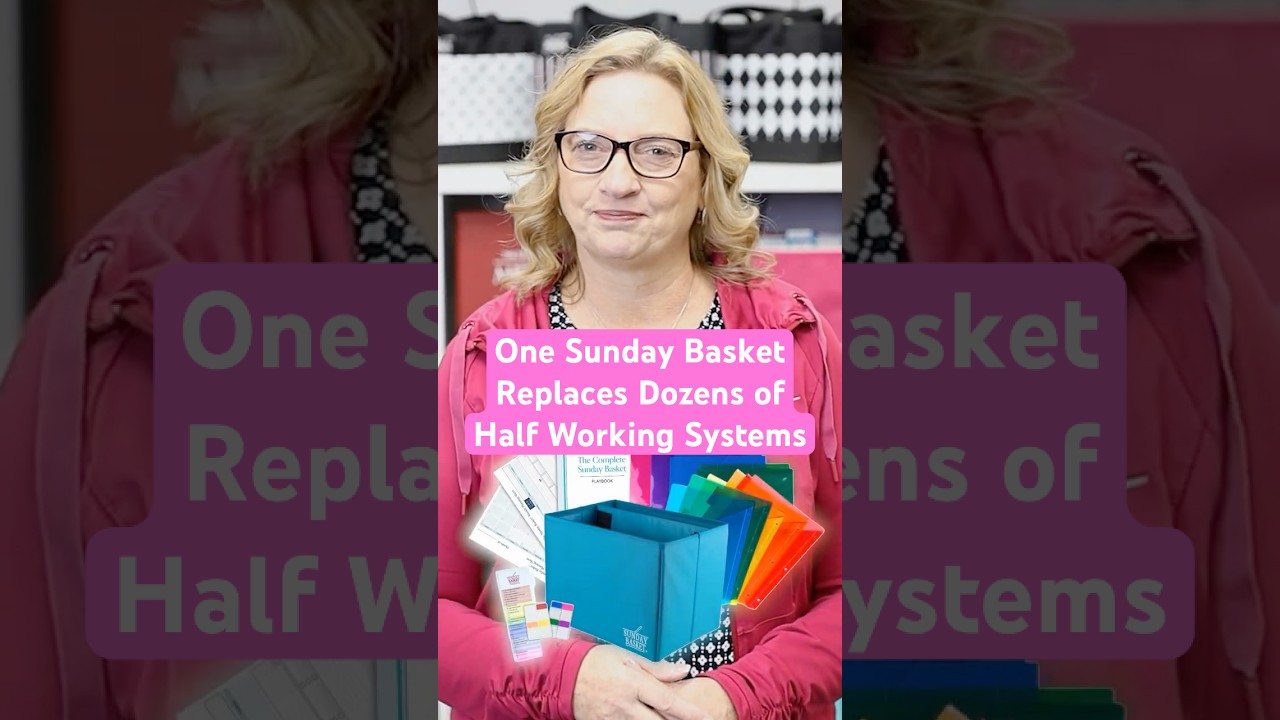
One Sunday Basket Replaces Dozens of Half Working Systems #SundayBasket #Organizing #TimeManagement