Anthony Suau and Sachin Patel Discuss the Impact of Glyphosate
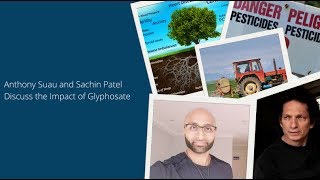
Transcript of an interview (Healing Hashimoto's Today) with photographer/director Anthony Suau about his documentary project 'Organic Rising'. Suau recounts his transition from photojournalism to investigating industrial agriculture, describes health and environmental concerns tied to widely used agrochemicals (glyphosate, atrazine, 2,4‑D/dicamba), and outlines the role and limits of the USDA organic label and practical steps consumers can take (buy organic, know your farmer, CSAs, participate in NOSB). The film is a multi‑hour series intended to educate and mobilize public participation in organic standards.
Chapters
Hi, everyone.
This is Satchin Patel, your host for the Lifestyle Track of Healing Hashimoto's Today. I have a very special guest. We have a photographer and documentary filmmaker, Anthony Swa with us today.
Welcome, Anthony.
Thank you for being here.
Thank you.
So you're in the middle of working on a really important project which is called Organic Rising. And Organic Rising is a film that you're making. We were talking about it before we started this recording. And I'm really fascinated to learn about what you're learning through this process. And, you know, we're going to tie this all back to chronic disease because we know that the food that we eat. Not the food that we eat, sorry, but the chemicals that are sprayed on the food that we eat are contributing to a lot of chronic and degenerative diseases. So how did you get into this as a photographer and journalist?
I've been working as a photojournalist for 40 years. Let me think back. That's correct. And maybe closer to 50 years. 40 years. And I've worked as a contract photographer for time magazine for 20 years and for approximately the same time for National Geographic. So I lived in Europe for 20 years and traveled across almost all parts of the world, Middle East, Africa, but specifically focused a lot in the last 10 years in the transition of the former Soviet Union. So I was based in Russia for more than 10 years. I moved back to the United States in 2007, late 2007, the last years of the Bush administration. And at that time, the mortgage crisis was just beginning. And I began to cover that for Time magazine extensively in early 2008. And as I was traveling around the United States, I started to again eat the food that I had known when I was a child growing up in the United States. I was born and raised in Peoria, Illinois, right in the Midwest and the heart of the Midwest. And the food when I was growing up was second to none. The soil there is amazing. The beef we had, Black Angus cow every year that my parents bought. And we had the best steaks you can imagine. And the corn was edible by humans at that time. And the food that I began to intake when I came back in 2000 ate was not only tasteless, but it also, I was gaining weight very quickly and I was getting sick very frequently and not feeling well. So I started looking at this. I saw Food Inc. I saw some other documentaries and looked at some of the things that were going on in the food industry and the things that had changed. And it became very evident to me that there was A major malfunction situation going on in our food systems that I was completely unaware of. And while I was in California working on the mortgage crisis in 2012, I met an organic farmer who lived in Santa Cruz, and she invited me to her farm. And I wanted to begin to understand what that was, what did that mean to be organic? Because it seemed to me to be something very complicated, and I wanted to begin to understand what that meant in terms of the agricultural system that we had in place. So the further that I went into it, the bigger it got. The idea originally was to create a 15 minute film and host it on a small website and just create a kind of document. But as I got into it and started meeting some of the farmers and started beginning to understand why what they were doing was so relevant and so important, I started going further and further into this film. We did an Indiegogo campaign where we were very successful in raising the funds that we needed to take the film to the next level. And at the same time, I was able to connect with a lot of people in the organic community and around the world that were involved with the organic, with organic production. And at that point, someone suggested that we look at the scientists who were looking at and studying and doing research on the chemicals that were used in conventional agriculture. Because the number one reason that people buy and eat organics, as far as we understand, is they want to avoid the pesticides. So I took that very seriously. That idea that came to me from the Indigo campaign and one of the contributors. And so we ended up researching out a number of these scientists and following up on and looking at the specific chemicals that are used in conventional as a reason for why organics is so important.
Okay, so you went down the rabbit hole, right? It started off as a small project, and it's one of those things like, you know, once people, you know, start digging a little bit deeper, it starts to start to smell pretty bad down there. Now, you talked about some conventional pesticides that people are trying to avoid and their effects on human health. That's something that you're going to be covering in the film. So can you talk about how this relates to the organic movement in a little bit more detail?
Yeah, I mean, we looked. What we did is we looked at three primary chemicals that are used in conventional agriculture. We spent time with a GMO farmer in the heart of Illinois. And this was a farm that as a boy, I would go to for 10 days, two weeks every year in the summer. And at that time, it was a very diverse farm. There were all sorts of animals, cows, pigs, chickens, and an array of vegetables that were being grown. Today it's run by the son of the farmer who ran the farm when I was a kid. But he and I grew up as kids together pretty much on that farm. So we were very close. And it was very easy for me to connect with him and interview him and get a real understanding of what it is that they use and the process that they go to. He's doing now only GMO corn and soy that's pretty much prolific throughout the Midwest and throughout the country. In terms of what agriculture is today. Everything is based on this GMO corn or this GMO soy products that are produced by a handful of chemical companies. And he was able to explain with us to us exactly the process in a year what he puts in that field, from the fertilizers to the, to the herbicides, the fungicides and the pesticides that are used to create these GMO products on a one year cyclical basis. And then we went to the scientists who have been studying those primary chemicals for decades when we looked at glyphosate, we spoke with Dr. Don Ueber, who's a plant pathologist out of Purdue University. And he's been studying glyphosate since I think the mid-70s. And what he explains to us is primarily that glyphosate has three patents on it. It has a patent as a mineral chelator, which basically was its original intent in 1965 to it was poured into boilers. It was used on boiler pipes because it would take minerals and it would turn them into liquid, and they can flush them out through the drain pipe. Well, what they learned is when they flushed them out, that it killed everything that was green and growing. Trees, shrubs, plants, grass, whatever, it killed them. So Montesanto takes it in 1975 and patents it as an herbicide. And farmers start using this as a chemical as burn down. So they will use it before they plant the field, before they put anything in. And it just wipes out everything in the field. And then they have a clean field to put their seeds in. Wow. In the mid-90s, Monsanto then comes up with a seed that is resistant to glyphosate, and it's a soy seed and that soy seed. So the farmers can go out, they can plant all their soy seeds, and as soon as they start to grow, they can continue to spray the glyphosate. Glyphosate as they see the weeds come up and it kills all the Weeds. And that plant is the only thing that's alive in the field. When you see a GMO field, whether it's corn or soy these days, especially in the middle of its growth or towards the end, those fields look amazing. I mean, they are super clean of weeds and they're immaculate. From fence row to fence row, they have these hundreds, thousands of acres of these immaculate crops. The problem is that it is very complicated in terms of what it's doing to the plant in the soil. But let me finish with the patents by saying that the final patent that was placed on in 2004, 2005, I believe, by Monsanto itself, was that they patented glyphosate as an antibiotic. And this is very important because the antibiotic effect of that chemical is obviously having an issue with the human biome and the human function. So according to Don Huber, this, this, when they spray this chemical onto the plant, a certain amount of it goes down into the soil and it chelates the minerals in the soil that are important for the plant to, for its nutrient uptake. It's zinc, manganese and iron. And all of a sudden the plant starts to have less nutrients and minerals in the soil to provide nutrients to the plant. And part of that is going into the seed and the plant itself. So it's going into the food, but it's also going into the food through the ground. From all the studies that I've seen and looked at, the use of glyphosate over one or two, three years is pretty insignificant. And it does pretty much what Monsanto and these other companies will tell you it does in the labs and their test settings, and the soil is not really affected too bad. What you see, what I've seen is that fields that have used it for 10 years or more, and we're talking now farmers that have used it for decades, that these soils are very depleted of mineral and they're full of this antibiotic effect. So what happens is the antibiotic effect that goes into the food from the glyphosate. Obviously you take that in through the food because this is sprayed through probably 80% of the crops in the United States today. And it's that prevalent in our food system. Wow. It affects your gut microbiota, as any antibiotic would, and it also creates a resistance to antibiotics. So this is not an acute effect that happens, but it's a chronic effect. It's a long term effect that can happen on the gut microbiota. And when of course, the gut microbiota is weakened and impeded your immune system starts to diminish, and you have the onset of a number of different diseases that we're seeing now that have become prolific throughout the US and countries using these Crohn's disease, celiac, all these sort of autoimmune system dysfunctions that we're seeing. And so that's, you know, that's basically one of the side effects. Again, there's one of the other uses of glyphosate is they use it now specifically in wheat production very heavily as a desiccant. It's used right before harvest. They use to dry down the plants. They'll spray it over the wheat because they believe it gives them a more uniform and higher yield. Right. And so we're seeing a huge amount of this wheat now with the glyphosate in it. And according to Dian Huber, at that point in the plant's growth, 80% of the glyphosate goes into the seed itself, right into the food supply. So you're getting a much higher dosage of glyphosate when it's used as a desiccant as opposed to just the herbicide. So, you know, that's. That's what we learned to a certain degree about glyphosate. It was declared a carcinogen by the World Health Organization about two years ago. Monsanto has been pushing back on that recently. There's some court cases going on in California, in San Francisco, where farmers are suing Monsanto because they believe that they've gotten cancer and Hodgkin's lymphoma from their exposure to glyphosate. Where I grew up in the heart of Illinois, I can tell you that cancer rates specifically among farmers are just out of control. They're building cancer wards all over the place. There is definitely a correlation, and we're seeing all these effects in humans. This court case in San Francisco, they just revealed last week a number of interoffice documents that was released by the lawyers working in defense of these farmers, showing that Monsanto themselves were very concerned about what these chemicals were doing to humans. And the suffocants related to Roundup with the glyphosate also were known to be carcinogenic. So even Monsanto itself was having a lot of inner office questions about this chemical and its effect. So there's a lot of evidence coming out now that this chemical, which is the primary chemical herbicide used around the world today in the United states, we spray £85 million a year every year for decades now. And that's all in our food. That's all going into the soil, and it's all going into the atmosphere. Glyphosate can get into the water supply and run off as many of the chemicals will soak into the ground. And over decades, it can get into the groundwater and drinking water. So that's another issue. Secondly, we looked at atrazine, and there we talked to Dr. Tyrone Hayes out in Berkeley, California, and he's been studying atrazine since the mid-90s. And atrazine, he was hired by the company who was created, who was developing the product at the time. And he exposed African clawed frogs to one part per billion of atrazine. What's legally allowed in our drinking water is 3 parts per billion in the United States. During the course of his research, he was able to convert male frogs into, literally female frogs, where they would copulate with males and lay eggs and produce. Produce offspring. This study was rejected by the company. They went after him. They tried to discredit him, which was normal procedure for these companies. But his tests have been duplicated over a hundred times around the world by various scientists and universities. And what they have shown is that it's not only happening in frogs, but in birds and reptiles and fish and other species. And atrazine is very volatile chemical. It gets up into the atmosphere, usually with dust and wind, and it can travel over a thousand miles. And when it rains, it rains atrazine. And this can move, you know. So as one journalist put it, when it rains in Chicago, in the Midwest, in the middle of the summer, this time of year, it rains atrazine. When it rains in New York, it's raining atrazine. When it rains in Washington, D.C. you know, those chemicals are coming in. It also leaches into the groundwater. And that's been a huge problem. There was a massive lawsuit about three or four years ago where the water supply companies in the Midwest, 22 water supply companies throughout the Midwest, sued Syngenta to have them pay for the filters in the water companies to take the atrazine out of the water because it was coming in at much too high of a level, especially in the middle of the summer and the spring season. And so we know that it's heavy in the water supply and it moves very easily. Basically, what it does, as I was explaining earlier, it takes testosterone, and through this protein that's called aromatase, it converts it to estrogen. It's a very simple process, and it's known as endocrine disruptor. There are many chemicals that are in the agricultural community that are endocrine disruptors. And of course, this is worse in the placenta. When the mother is pregnant and the child is there for nine months, that fluid is there and they're exposed for a longer period of time to those chemicals. So what you're seeing, according to Dr. Tyrone Hayes and to a prenatal doctor that we interviewed in Indianapolis, Indiana, who's seeing the effects of this on the children that he's, that he's dealing with, is you see a high rise in male genital abnormalities. You're seeing a rise in, I believe it's called kleptorchinism, where the testicle doesn't descend, hypospadia, where the urethra doesn't come through the end of the penis and micro phallus, which the penis is very small, not much larger than the clitoris. So they're seeing the rise of these male genital abnormalities rise as a direct effect of being exposed to these chemicals, specifically chemicals like atrazine in the womb. Fan. Yeah, I will say when I, when I was conducting the interviews with the scientists, which was in late 2014, I was so struck by the information that I was getting, I actually thought that the information wasn't true. There was no way that this information could not be known by the press and the general public. It's far too relevant to our health. And as I've spent the time to research and look at what their findings were and what they were telling me in their interviews, I've realized that everything they said was backed up by scientific, peer reviewed, peer reviewed journals. And everything they were saying was accurate.
It's pretty scary. I just wanted to circle back and talk about some of the things you mentioned earlier. You know, with glyphosate specifically, you know, we've got, you mentioned that the atrazine concentrates in the placenta. Right. So our children are born with this huge unfair disadvantage because they're basically, you know, soaked in these chemicals for nine months. The mother is eating foods that are laced with chemicals. Now, a lot of children are born via C section, so they don't even get the mother's immune system. Then they're exposed to antibiotics. In childhood and through the certain processes of life, sometimes we get infections, we take an antibiotic and then they're being fed foods. I know even infant formulas that have soy and corn and stuff in them. They're probably doused with, there are certainly doused with these chemicals during their growing season. But then the Residues in these foods are definitely going to be there. And then wheat is a big staple in a lot of people's diets. And you know, as you mentioned, that concentration of chemicals is higher in wheat products. So we've had this like perfect storm for our children just to, just to have a miserable future. So it's kind of scary. And I'm so happy that you decided to take the 15 minutes and turn it into a longer series because I think this information does need to get out there. And I know there's other people in this space like Stephanie Seneff that are also doing work, you know, in regards to this and Shiv Chopra here up in Canada, they're doing work in regards to this. But how does this, like, you know, how do people know this and continue to do it? And how is there not a public uproar or outcry that is, I mean, I would imagine people would be rioting in the streets if they actually knew this information, but they're not.
Yeah, I think that the biotech industry, the chemical industry has done a good job at attacking the scientists and creating doubt. I mean, in the same way that the tobacco industry was able to push the realities of that off for quite some time. There's a lot of money involved, of course, billions of dollars involved with a chemical like glyphosate. So I mean, one thing I'll add is according to Don Huber, glyphosate is an endocrine disruptor when children are exposed to it in utero. And Tyrone Hayes, I can tell you he was. There was a, I don't know, five to ten page article in the New Yorker magazine a few years ago that told the whole story of Tyrone because he was talking about how people were coming to his lectures and they were screaming at him and trying to, and they were tapping his phone and they were threatening him. And during this court case where the 22 chemical companies in the Midwest were suing Syngenta, through a journalist that I know, they were able to get access to many inter office emails that Syngenta had that clearly showed that they had meetings and talked specifically about discrediting Tyrone and how they were going to do it and laying out the plan. And that was all written in the New Yorker article about how they were, how they had tried to discredit him for many years. And yet his reputation is so valuable. When you go to his lab in Berkeley, it's an incredible place, it's immaculate, it's perfect, totally under control. And he's got all These samples all along the walls of all these frogs. And he's, he's got all this incredible work going on in his work, by all accounts, according to the New Yorker, and people who have researched him is just impeccable. So, you know, you see what these guys are doing. Don Huber. When I first talked to Don Huber, I really wasn't sure about Don. But when I went to research what he told me, I interviewed him probably three or four different times. And I realized as I went through his interviews that he was quoting word for word, peer reviewed journals and studies. He could recite things verbatim. And everything he said was so poignant and so accurate that it really moved me when I understood the level of intelligence that I was dealing with a guy like Don Huber. Don Huber at the same time is a plant pathologist. And we had a very fortunate event happen where when I was in Iowa the first time and I met him at the Farm Progress show, which is a huge, like a hundred thousand farmers show up with all these new products every year and you have all the big chemical companies there. Don was there and he was going on with a small, going around with a small group to some farms in Iowa, talking to farmers. And I asked if I could accompany him. And he allowed me. And the last farm that we went to, we arrived in this big barn, huge, with these huge combines and, you know, amazing implements and these huge thousands and thousands of acres of corn and soy fields surrounding us. And there were probably 50 GMO farmers in this barn. And he is revered by these guys because he's so smart on plants and pathology. And they listen to him and they really idolize and they hang on to every word that he said. And he clearly stated to them exactly as I stated to you, some of the issues related to glyphosate and atrazine. Some of the farmers that are pig farmers, such as Patterson in Denmark, who are experiencing, when they feed their pigs gmo, they see the level of birth defects and infertility, spinal bifida, all these other things escalates, just as we're seeing escalate in our human population here in the United States, when he takes them off the GMOs and the glyphosate feed, all of a sudden their health improves within two weeks and the fertility rates and the birth defects decrease. So, you know, he was able to quantify this in front of a large group of farmers, GMO farmers. And he does that on a consistent basis. And as I understand, his crowds are growing Larger and larger and larger as he goes out through the Midwest. And farmers are really listening because they're not being told this stuff by the seed companies and chemical companies, of course not how effective it's going to be, how they're going to do that. And now of course the bigger problem is you have a lot of plants that now I believe it's between 50 and 100 plants that are resistant to glyphosate weeds. And the big plant is the corn is the pigweed. Pigweed can get 8, 9, 10ft high and it's tall. You can see there's photographs online, you can see the corn fields with eight foot corn and it's just being dominated by this pigweed. And the stuff is this as thick as an arm and it's 8, 8ft high. Glyphosate is not killing this stuff. And it's become so prolific, especially in the south, that they've now created another seed, both Dow Chemical and Monsanto, that is resistant to a chemical called 2,4D. And Monsanto's chemical is dicamba. And these are phenoxy herbicides and they're very different. These chemicals have a real problem that when the weather heats up they really vitalize up into the air and they move and they kill everything off target that's other people's plants. What's happening right now is one of the greatest disasters in agriculture in the South. The southern states in Arkansas, Missouri, Tennessee, that many of the farmers have bought these new seeds and are using this new chemical which is a combination of glyphosate and 2,4D or glyphosate and dicamba. And they're moving and this stuff is heating up and it's killing the fields of hundreds of farmers. So far this year, over a million acres of farmland have been destroyed by off target use of this chemical. Wow. Farmers. There was a case in the end of last year where this happened where one farmer who's fields were completely wiped out by his neighbor's use went over and he murdered and killed his neighbor over the results. I mean the tensions are so high. You're talking about people's livelihoods, hundreds of thousands of dollars and it's a complete mess. It's a train wreck going down down there. Just a few weeks ago, maybe two weeks ago, I believe the courts in Missouri and Tennessee and Arkansas banned these chemicals from being used until they could stabilize the situation. They were getting as many as 10 farmers coming a day to them saying that they have off target damage to their crops. So let's just. And one other thing that's important to Note is that 2, 4D is the chemical that's half of Agent Orange. So we're now putting a chemical out there into the environment on a mass scale that's 50% of Agent Orange. And so, you know, there was a huge outcry by the public when this chemical was coming to market the last few years. And we have footage from the congressional hearings with the head of the FDA and the US The FDA and the EPA where they banned the use of this chemical. And according to a major report by the Chicago Tribune, the farmers wanted an agricultural industry. The chemical industry wanted to use this chemical so bad that they went in and they found a document that allowed 41 times more exposure to 2,4D that showed no health risk. And the EPA took that new data and from that allowed the chemical onto the market. So what they did is they upped the exposure for humans 41 times what it was under the Bush administration, where under the Obama administration it was allowed 41 times. And that now maintains itself. So we're getting much higher exposure to a very dangerous chemical. It moves very easily, and it's creating a massive mess across the country right now. And we'll see how that plays out because you're going to see a lot of lawsuits and problems coming from that through agriculture. So, I mean, how that's affecting us as well is there are certain health risks to that. And we'll see how that all plays out in the coming years. Because we're not. We're not decreasing the use of these chemicals. That's the problem. We have this system in place and it's a crazy system, but we're not decreasing the use. We're decreasing use. We're increasing the use and we're spreading it wider. There are over 85,000 chemicals that now are allowed in our environment every year. And what we know for fact, and we have the EPA and the FDA standing in front of Congress in this film saying it is not our job to oversee the health aspects of those chemicals. That's the job of the chemical companies. That's their responsibility. They basically just rubber stamp the research that's being done to authorize the use of these chemicals. There's no oversight on these chemicals. And that's just the bottom line. And we are being exposed to thousands of chemicals. Again, 85,000 chemicals that have been approved in our environment. And it's really. It's industry run amok.
And how do you even study 85,000 chemicals and isolate one. When people are exposed to so many, I mean, even before they're even born, and I would say that even before people are conceived, their mothers are exposed to these toxins and they become incorporated into the fetus and then into the child. You know, it's scary because we're seeing that decline of the health of the entire population, right? We're not just seeing children get sicker, we're seeing children, teenagers, middle agers, adults, elderly people. Everyone's getting sick at the same time and they're all developing similar diseases in terms of hormone disruption and endocrine dysfunction and autoimmunity. We're seeing this becoming a huge, huge issue. And just to tie it back for our viewers, you know, anything that affects the gut and affects the immune system, glyphosate, as you mentioned, was originally one of its patents in the 90s or 2005 rather, you said was for it to be an antibiotic. I know one of their crutches that they say is that human beings lack the shikimate pathway in our liver, so we don't metabolize it the same way as other species might. But here's the thing. Our bacteria have this pathway. We know and you know, and everyone watching this might know that 99% of our genetic information and gene expression comes from our gut microbiome. So anything that we do to destroy our gut health in combination with the food choices, the stressors that we're under, and the chemicals that we're exposed to, I mean, that's going to create a huge ripple effect in systemic health. And anyone who's watching this who has Hashimoto's, you know, one of the things that I often say is that you don't, you'll never just have Hashimoto's. Like if your body's attacking one of your most important organs, it's probably attacking other things. And it's probably not just an isolated problem that's causing your Hashimoto's. I mean, many roads lead to Rome, right? So there's lots of ways that this configuration of Hashimoto's can come to be, and certainly our food supply is one of them. So people really get hung up on what they eat. And what I think we need to focus on is what's being sprayed on while we eat and what's happening to what we eat before it gets on our plate. And, and from what you're saying also, it's hard for even organic farmers to maintain that pure organic status if the chemicals are being carried in the wind. And in the rain. So maybe you can comment on that as well. If somebody says this is USDA organic, then what does that really mean? It might mean that the farmer didn't spray anything in their farming processes, but it doesn't mean that those crops aren't exposed. Is that correct?
Drift is a very big issue in the organic industry and there's a kind of war going on. Obviously you're seeing the drift going on with this 2,4D in the south from conventional farms that are using the seeds, the resistant seeds, to those who are not. So you have the same with organic farms that are being hit with these pesticides as well. There is in the organic USDA regulations a rule that there has to be a 30 foot something relevant around a 30 foot buffer between anything that's conventional and organic. According to Don Huber, this is pretty much an irrelevant measurement. This stuff really does move and can move off target glyphosate as well. Can move. So, you know, yeah, that's something that organic farmers are battling. And an organic farmer who's tested during his inspection for those chemicals and is found to have too high levels will lose his certification and then won't be able to keep it. I mean, the one thing I just want to, want to move back on a little bit is that the other scientist that we talked to, Dr. Warren Porter in Madison, Wisconsin, really talks about the relationship of the mixture of chemicals. Because as you said, we can do the studies on glyphosate or 2,4D or atrazine, and we know those specific effects to a certain degree, but that's not what we're exposed to. We're being exposed to a combination of these chemicals. And how do you quantify any effects of a human, especially over a long period of time, on those chemicals? Over a long period of time and the GMOs themselves. And you know, one of the things that he said, and even taking it further than what you were saying, is everything connected with the gut microbiota also affects your immune system. And there are many connectors between your hormonal and sexual functions and your brain and neurological functions that are connected with the gut microbiota. So they know that once your gut microbiota is exposed to this antibiotics and this glyphosate and things that it can also affect your neurological and your sexual functions. They're all related. And so all of these things are happening at the same time. And how the all of these chemicals coming together in the food supply is affecting the mass population, I mean, it's it just gets into massive unexplainable possibilities of what's happening. When you look at human beings up until, what, 50 or 100 years ago. We started using these pesticides with ddt in the 40s and early 50s. And you look at the obesity, you look at the health problems, you look at all the sexual dysfunctions. The Time magazine, National Geographic, did a cover story on children who can't even figure out what gender they are because of their. They don't know what their genitalia is telling them. It's, it's very. And as they grow and as they hit puberty because of these endocrine disruptors and the connection between the gut microbiota and the neurological effect, you know, it has a confusing signals going to the brain. So there's all these things going on within our society that's extremely dangerous and extremely detrimental. The doctor that we spoke to, Paul Winchester, Dr. Paul Winchester in Indianapolis, Indiana, is seeing a huge increase in birth defects, infertility rates rising both in terms of low sperm counts in the months. And they're seeing this in males mostly, who were conceived in the months of major pesticide spraying in May and June. They see a rise in infertility rates, they see a rise in birth defects and premature births. And he says this has just exponentially risen since the 80s at a massive rate since we've. Since the onset of these chemicals. So for me, when I arrived in the US in 2008, I saw a human population that was so disfigured physically. And you have to ask yourself why. We have never seen humans look like this in the history of mankind, and yet now we're overwhelmed with these kind of diseases, cancer and obesity, these things that have become prolific through our society. We've never seen these in the past. And that's all tied in with the time period that we've been using these GMOs and the related chemicals and pesticides. So that's, I think, something that we have to consider. And the chemical companies are saying, well, you can't prove this. You just have a correlation. I think we're at a point where we have to say, let's err on a little bit of the side of caution here. I mean, maybe it's your job to prove to us that it isn't a problem. And that's, I think, you know, a lot of the points in the film that we're kind of making is in terms of the pesticides is these things are incredibly dangerous. And, and I'm, and I'm all for making a farmer's life easier, whether you're an organic farmer or conventional farmer, that the life is a hard life and these are hard jobs. And I'm all for making their lives easier, but not at the expense of society and human health in general and the environmental health. Because what's this doing as well now to all the living environment that surround those plants as well as the soil itself? What we see is in soil that's been saturated with these chemicals, glyphosate and atrazine and fertilizers, these nitrogen fertilizers that they spray, is that the soil no longer holds water. It was explained to me by the people at the Rodale Institute. When you have an organic soil that's full of organic matter and microbial activity, high microbial activity, you have these aggregates in the soil that is like a bent straw. It makes the soil very difficult to pull water down and evaporate upward. What happens when you put the glyphosate? You're breaking all the. Again, it's a chelator. So you're breaking all these minerals and you're killing all the aggregates in the soil. And all of a sudden, it's like a straight straw. And all of a sudden, the water can go up and the water can penetrate down even further. So the water moves very quickly in that soil. And can that. Basically what many of the plant pathologists and people who deal with soil will tell you is at this point, most of those fields are. And that soil does nothing for those plants except hold them in place. That's all that they do. You know, they're using a lot more water. In years of drought, organic soils produce much higher yields, as much as 30%, according to the Rodale Institute, than conventional. Wow. Because they're able to hold the water. And that's the soil itself. I think the idea is, if you think of the soil the same way as you think of your gut microbiota, is that you're dealing. The more healthy and balanced that soil is, as is your gut microbiota. That's the balance. I mean, that goes into the plant, that goes into you. Your biota becomes healthy. It's a cycle. And that's. And that's a very healthy cycle. That's a very clean cycle that nature has produced for millions of years. And when you start to break that cycle, you start to break down the whole system point by point. That's basically what it is.
So just so we don't scare people to death and depress Them even more. What are some possible solutions to this? What do you see as a possible solution? I know Stephanie Senna. If I was at a presentation that she gave and she talked about certain beneficial bacteria that are found in kombucha, for example, that can bind up glyphosate and help pull it out. Other solutions that we can start implementing, for anyone who's watching this, what can they do to immediately start feeling better? I mean, you mentioned avoiding GMOs, which that's easier now than ever, but it's hard. It seems like it's very difficult to avoid the herbicides, the larvicides, the fungicides and the pesticides. So is there something that people can do to bind some of those things up, like activated charcoal or growing your own food or drinking more kombucha? What are the solutions that people can start implementing? Because I don't see this changing anytime soon. And I'm sure you're in agreement with that, that, you know, we need to come up with a solution now to protect our children and future generations. So what can the average person do?
Well, I think, I mean, on a daily basis, you know, I think that's a personal decision and just keeping yourself aware of what you're using on yourself, what you're eating and all these other things. But I think on a broader sense, and what we do get into then in the film, and the most important point is the organic industry. And that of course, is a way to combat all these issues with pesticides and GMOs and these things that are in our food that can be very harmful to ourselves and our children. And the USDA organic label has been set up. And I think most people don't understand this. And I think it's important. And this is one of the things that we explain very clearly in the film, we go through all the aspects of this label, is that originally when it was founded, the USDA label, they created a non governmental body. It's the only non governmental body in our government, so to speak, that has oversight on the USDA organic program. And it's called the National Organic Standards Board. And that board consists of 15 members. Some of them are small organic farmers, some large organic farmers, food advocates, scientists. It's an array of people that are in this group. They change every year. They're voted in and out, and twice a year they hold public open forums in different cities around the country every time to, to make sure everybody has access to it, where you can go and you can say, I don't like this product in my organic food. And there are a number of large watchdog operations such as the Cornucopia Institute, such as Organic Consumer association, such as Food and Water Watch, Food Democracy now. And the center for Food Safety is another important one. And they all attend these meetings and some of them have millions of people behind them when they walk in. And they are allowed to speak for three minutes and they're allowed to give presentations in front of this 15 member panel. And it's an extraordinary thing. You know, when we filmed that we, we attended one of these conferences. The heat and the passion and the energy that was going into this meeting, and I will say even more than that was the intelligent level of the intelligence of these people and the research they had done. It was as if the people were coming up and reciting college thesis in three minutes, one after the other after the other. It was so high level, it was so intelligent and it was so interesting to watch. And there's this battle going on between, to a certain degree, some of the larger organic companies, food companies, processing companies that are producing organic now, whether it's Coca Cola or Pepsi Cola or some of these other ones that are now producing organics. And what you have is a lot of smaller farmers with a little bit more of a visceral approach to organics who really want to keep the integrity in that product, no matter what the cost in terms of time and money. And on the other end, of course, you have people that want to make money with that label. So there's this balance going on inside that meeting every year. The most important thing you can do as a consumer is understand that you have a piece of that, is that they're waiting for all of us to take control of that system, because we have the control of that system. It was built that way originally by these organic farmers. And the more people that we can educate and make understand that you have the right to go to these organic, the National Organic Standards Board meetings and input, connect yourself with some of these big watchdog groups. If you have a beef about something, whether it's copper hydroxide or hydroponics or whatever it is that your interests are in the organic community, you can have an input there. And I think the more people that come onto that as a public to force and make sure that that organic, USD organic label means what we want it to mean, that we want to keep those pesticides out of there, that we want to keep those GMOs out of there, that we want to keep that clean, healthy soil in the ground and our plants coming up with those nutrients that we want and flavors that we want in our foods. It's really your participation and all of our participation and the ability for us to participate in that process that makes that label so important. And I think to date, that really hasn't been known and it hasn't been used, and it hasn't really taken effect in a way that the public hasn't addressed that label. I mean, yesterday had a long conversation with some people who are trying to remove hydroponics as something that has that USD label because it's not grown in soil. And of course, we know that the soil, again, like the gut microbiome, is bringing you all those nutrients, is bringing you. You know, if a soil is really taken care of, you have a high degree of organic matter. If you have all those aggregates, you're bringing in all those nutrients. You could take those out in hydroponic. It's not really what organic is about. There's a fundamental piece missing. So there's that debate going on now. So where does the public stand? And my advice to the people that are fighting for this was you need the public, you need to educate the public and bring them in. So that when everybody stands in front of that National Organic Standards Board and you have 10, 20, 30 million people saying, we don't want this, then the National Organic Standards Program, the usda, has to sort of align themselves with that way of thinking. And that's. And that label maintains its integrity, and it becomes something that we want as consumers in the marketplace. And it's a known label. We recognize it now. People understand that it means something, but what do they really understand about what it means? And what it really means is that we are in control of our food supply on this label. And as long as we address that, we can, to a certain degree, control what that food is that we're putting in our bodies and the bodies of our children and so forth.
So we've got to, as a public, kind of step it up. We've got to take more ownership. We've got to hold people accountable. You know, it's really sad what's happening. And, you know, I've got a young boy, he turned seven yesterday. And it's just scary to know what's going to happen to his children and my grandchildren and great grandchildren if we don't change this. And we're their voice, especially children that are not even born yet, we're their voice. And if we don't do anything about it, we don't Take ownership over it. Not only will our health continue to suffer as adults, but as we get older as well, but our children, their health is going to suffer. And they'll look back at us and be like, why didn't we do anything about this? So I'm really happy that you're bringing more awareness to this topic. And, you know, it's obviously up to us to do something about it with this information. It's not an easy thing to discuss. I'm sure there's a lot of people that are resistant to, you know, to this information because there's a lot of money involved with it.
But.
But we have to start putting money secondary or tertiary to human health. And until we do that, these big companies, their interest is not human safety, their interest is making a profit for their shareholders. And I would say that what they're doing is also dumbing us down. Anything that affects our microbiome affects our brain and our neurological health. And you put people in these positions, they can't even necessarily think for themselves as they once were able to because of the destruction that's going on. So, you know, they've got. They've got us by the ball, so to speak. And until people who are awake, like yourself and myself and everyone who's watching this, until we take action, it's going to be a very difficult road ahead. It's not going to happen passively. We're going to have to be very active in this fight and struggle.
Right. That's what I hope the film that we're creating will do is spread the information in terms of education, really show you. You know, we look at some of the issues within the organic community and that are problematic within the organic label. You know, we're not offering or saying that the organic food supply is perfect and that system is perfect. It's not. It's far from. But what we're. What I do want to say and what I want to be clear on is that you have an active possibility to participate in keeping those products clean and keeping them what you want them to be. And I will add to that some of these large companies do make an effort to keep that visceral, organic alive. You have companies like Nature's Path, which is a Canadian company, and there's just a number of them that are. That are big, even within General Mills. And some of these people who do work within the organic standards. And I will say that when we did an inspection, we went with an inspector, and the inspectors do not work. They're not employees of the usda, they're independent contractors. And we went on a inspection with the ccof, the California Organization of Certifiers. And they're incredibly, they have an incredible reputation for being very thorough. And they do, they are great people to have as your certifier. And then they report that information, they go on the farm, they inspect the farm. They can spend more than a day inspecting the farms, looking at the soil, looking at all the paperwork. Everything has to be written down on these organic farms. What's put in the soil, what kind of seeds you use, where did you buy them. All these things are recorded and they have to be proven to the inspector. And once the inspector goes through this, then the farm gets its certification. But when you have a big farm and when you have these farms that are multi million dollar operations and the inspector that we talked to had done a lot of inspections on some of these bigger farms and you can be sure that these guys are, are not going outside of the standards that have been created by the USDA because there's just too much money involved. They're just too big, they can't afford. I mean, you see it, it does happen on a certain degree in smaller levels. And there are reports by the Cornucopia Institute and others who have violated those standards and they're calling them on that. And that's important that we call those people on it. But be sure, again, it all goes back to what's. If those big companies go into the National Organic Standards Board and have too much influence, then they can do everything right in the field. But the label itself is already corrupt. The system is already corrupt because they allowed themselves to use this sort of synthetic fertilizer, whatever. So the main thing is that we remain vigilant on those standards with watchdog groups and we keep ourselves informed. And that when the NOS becomes the town rolls into town for its annual, annual meeting, you go and you listen and you take part and you work with people within that to keep that standard as strong as possible. Because it's, it's the strongest thing we have right now and it can be diminished and it can lose its integrity. And a lot of people believe that that's the case. But what I say from looking all of this at this for five years that we've been working on this film is that it's the best thing we have. It's really a great system. They set it up right. The farmers who created it set that up really smartly. They created this out of government body that oversees everything. And we have the ability to do something on that area of our food supply that exists nowhere else in our government. So it's a great thing. And I think that you see that label, trust that label as much as you can for you and your children. It's a good thing to have. And that is definitely the difference, let's be clear, between the non GMO label and the organic label is the pesticides. The non GMO label means that there can be all those pesticides in that food. They are not testing for pesticides. They are testing only for GMO contamination. The USDA label tests for those pesticides. It's that those pesticides are out of there and that the GMOs are out of there. It's also GMO free. So the organic label basically is a little bit redundant to the non GMO label. The only difference is the non GMO label has a slightly tighter percentage that can be allowed of GMO contamination. I believe it's 0.5% in organic or 5% in organic and 0.9% in non GMO. I'm not sure that's 100% right, what I'm saying, but it's something to that degree. So when you see a product that has both of those labels, you know, you're getting the cleanest product that you could possibly get from a store. And on top of all of this, I think what the film in the end really says, however, and after talking to all the farmers that we talk to, the organic farmers who practice these standards, adhere to these standards, is that label is relevant when you're shopping in a big city, in a grocery store, when you're not in contact with the farmer, when there's a third party in between you. The best, the very best thing for you to do when you're buying food or purchasing food is know the farmer, know who's growing it, know what kind of practices he's doing. And those kind of people show up in farmers markets, right. You can connect with a csa community supported agriculture where you buy a share into the farm at the beginning of the year and you get a box every week, vegetables and fruits. And you can visit the farm usually and see what their practices are and if they're using those chemicals or whatever. So, you know, so that's, that's, that's like the ultimate, that's the best. You know, the organic label provides us some sort of oversight on food that we have no connection to that farmer.
Right.
That's its main objective. Wow.
This has been very enlightening, very enlightening information. And I know those of you watching are really going to benefit from taking some practical steps, you know, so trust the label, the USD organic label. For now. It's the best that we can do. When you're not connected to the food, if you've got the USD organic label plus a non GMO label, then that's a little bit more insurance that there's, there's less GMO contamination in the food. And the best thing you can do is, at least for now, is visit your farmers markets. Even better than that would be to set up a CSA account and probably even better than that would be to be your own farmer. Right. That's probably the ultimate.
You don't really know what you're doing.
Yeah. Then that's the ultimate hierarchy of taking action over this. And I think this interview was really to raise, not to scare you guys, but to really raise more awareness about what's really going on. Because a lot of people with chronic illnesses think they need another doctor when they really might need to just change the quality of their food. So when it comes to food, if you're going to focus on anything, focus on the quality of your food and what's being sprayed or not being sprayed on your food. Because these things are very disruptive to our gut microbiome. We know when that becomes a problem, then we become very inflammatory prone. We become very prone to inflammatory issues that also lead to leaky gut type of syndromes. And then that leaky gut and intestinal hyperpermeability then leads to autoimmunity. And one of those autoimmune conditions might be Hashimoto's. But we found historically that when you have one autoimmune condition, you usually have multiple autoimmune conditions. And if pigs can stop eating GMO and start, and farmers can start seeing results in a very short period of time, then I believe that the same could be true for human beings. So it's a combination of eating better, eating smarter, but also becoming more conscious of what's being done to your food. So Anthony, just in closing, if you wanted to let people know how they can learn more about the film, how they can connect with you and learn more information about the work that you're doing and perhaps even support some of the initiatives, that would be great.
Great. Yeah. I mean, one thing I want to say at the moment is the product that we created is a 10 hour series. So we were able to delve into these, some of these issues in depth and get some really important voices onto the screen. To tell you about these things, but our Facebook page is very active. We post almost every day, and it's Organic Rising Films. Organic Rising Film. And our website is organicrisingfilm.com and, you know, we hope to keep everybody informed about when this film will be out and. And available to the public so we can get this. We're working very hard right now to make sure that this gets out as quickly as possible because we believe that we've created probably the most detailed film about this aspect of the food system, the organic industry, that's ever been created, and we're anxious to get it out there into the public.
I'm super excited to watch it, and you have my full support. And as soon as the film comes out, we'll be certainly sending our contact list, an email to inform them. Because, you know, people, it's one thing to hear it from us, but it's another thing to hear it from the experts that you've curated as part of this documentary. So I appreciate you for putting all that time and effort. I know it's not an easy task. I know you've probably had to bang on some interesting doors and you've seen some interesting things about our food supply. And I again, want to honor you and thank you for sharing that and bringing that to the public.
Thank you so much for having me on. Appreciate it.
My pleasure. Thank you.
More from Living







Is exercising at the gym the best way to recover after a bad night's sleep? #shorts


Most people focus on supplements, diets, routines…but ignore the most important thing — their be