How I Recovered from 3 Major Abdominal Surgeries
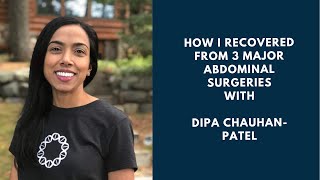
Deepa Chohan had an emergency C-section, hysterectomy, and multiple small-bowel obstructions that left her with adhesions and SIBO. She recovered using functional medicine, castor oil packs, hyperbaric oxygen, cold laser therapy, and manual therapy at Clear Passage, plus yoga and mindfulness work.
Questions this video answers
January 9, 2019.
More than 48 hours of labor prior to emergency C-section.
Emergency hysterectomy (to stop fatal uterine bleeding).
August 2016.
About 12 sessions.
Chapters
Hi everyone, this is Achin Patel with the Living Proof Institute. And today I've got a very special guest with me. It's actually my wife, Ms. Deepa Chohan. So thank you for joining me today, Deepa.
You're welcome. Thanks for having me on.
So just so everyone kind of gets your journey under their belt and understands the things that you've been through. I think it's important that people start by learning your background and also how you got into functional medicine. But before we do that, I just want to let people know that today we're going to be talking about how you overcame multiple major abdominal surgeries, went through many near death experiences along the way, and how your health actually helped save you and support you and help you heal much faster. So that's what we're going to be talking about today. Very heavy stuff, very interesting stuff. And you've overcome quite a few things to be in the position that you're in right now. And I think it's a very important and courageous story to share with those of us that are watching. So I invite everyone to comment and share questions and show support Pradipa as she shares her story. So thank you once again for being here. And maybe you can start by telling us a little bit more about how you got into functional medicine because you do have a unique story that I think is important care.
Okay. So I am trained as a conventional pharmacist. I did a residency after I graduated in hospital pharmacy because that's where I was really interested in pursuing my career. And so I started working at St. Mike's in the oncology department. And I saw a lot of sick people there. Typically, the patients that were admitted into the oncology department were patients who were having complications from chemotherapy and or their cancer. So they were quite sick and a lot of them were very young. And at this time, you had just started getting into functional medicine, starting your journey with functional medicine. And I remember you were sharing a lot of what you were learning with me. And I know you were sharing a lot of nutritional and dietary strategies and changes that you are learning. And when I looked at some of these patients in the hospital and the food that they were being served in the hospital, I was quite appalled by what type of food they were receiving. With their condition and being so sick, I could see that it really wasn't serving them. So that's kind of how my interest in all of this peaked and started. I kind of just saw what you were doing and I didn't really have any major health issues. At the time, but it just kind of piqued my interest, and I started learning a little bit more about, you know, lifestyle medicine. And I hadn't really gone into functional medicine training just yet. So a lot of my functional medicine training actually started after my son was born. So if I get into the story of what happened with me when my son was born, because up until that point, I was really healthy. I had a really remarkable pregnancy. I was working out and training with Jeff, my personal trainer. So shout out to Jeff at least three times a week during my pregnancy. So I had built up a lot of muscle reserve, and I had an awesome pregnancy. I loved being pregnant. It was more so during my labor and delivery that a lot of the complications occurred, and a lot of them were due to the fact that my water had broken quite early on, and I wasn't having contractions or dilating. And then we soon found out thereafter that my son's hand was actually on the top of his head, so he wasn't able to pass through the vaginal birth canal. So I had to have an emergency C section after about more than 48 hours of labor. So I had to have an emergency C section. Thank God he was fine. And I guess due to all the vaginal exams and just being in labor so long, and, you know, due to the fact that my water had broke, I had developed a infection in my uterus, and so that caused basically fatal bleeding. And I had to have an emergency hysterectomy because the medication that usually stops the bleeding wasn't stopping the bleeding. So I had to have an emergency hysterectomy. And thereafter, I developed, I guess, the actual procedure because it was an emergency situation. So I developed a small bowel obstruction, and I had developed adhesions just from that surgery. I guess with it being so messy and being an emergency procedure, along with other factors, I developed a small bowel obstruction, which therefore required another surgery thereafter.
So.
So after Devin was born, a lot of my strength and a lot of my energy obviously, went into raising this new baby and trying to get back into nursing and breastfeeding. Sorry. After a month of not being able to because I was in the hospital. So with a lot of different strategies, Satchin had given me a lot of different herbals, and then I had a lot of different, different Indian remedies which help increase milk production, I was able to fully nurse him by about nine weeks of age. And just keep in mind that the first four weeks, he wasn't able to have any, hardly any breast milk. Just because I was in the hospital. So basically I started getting into functional medicine after my surgeries just to help me heal. I had run a lot of the testing on myself just to see where I could optimize my health. I found out that I had small intestinal bacterial overgrowth. I used to get a lot of bloating post surgically, and a lot of that probably had to do with the surgery itself, the abdominal surgery itself, which is one of the causes of sibo, our small intestinal bacterial overgrowth. So that definitely was an area that I addressed. And I also took the functional medicine training and that's kind of my journey with functional medicine, just using it on myself first with all these surgeries and all the health issues that I went through post pregnancy.
Yeah. So a lot of people start their functional medicine journey as patient zero. And I guess you didn't probably realize the true benefits of all the work that you're doing, even the exercises that you're doing, eating healthy, healthy mindset. Those things probably gave you enough of a reserve so that you could not only deliver a baby, have two major surgeries in a 30 day window, and then go back to breastfeeding your child. There's a lot of moving parts and certainly living healthier and being healthier to begin with helps people recover so much faster. So why don't we get into some of the strategies that you use to help you recover more quickly as a result of implementing some of these lifestyle changes.
So I actually ended up having a second bowel obstruction in August 2016. And at that point, Devon was sick. So just because it was the second time around, once you have one small bowel obstruction, you are 30% more likely to have another one. So I, because of that second one, I really wanted to take action. And you know, with the conventional medical system, they really just put their hands up in the air and say, no, this is the statistic. Just having another surgery causes a lot of scar tissue and adhesion, so you're more likely to get another one. And there's really nothing that we can do except if you have another one, it'll result in another surgery. But I really was, I really wanted to find answers to why or how I could reduce that 30% number down to zero. And so I basically did a lot of research and I did everything in my power that I could do to decrease that 30% recurrence rate. So some of the strategies that I did is post surgically, I used a lot of castor oil packs just to help decrease scar tissue and adhesions. I still do them once in a while. And for those of you who are not familiar with what castor ale packs are, basically you take a cotton cloth and it just has to be about that big, and you saturate it in castor oil, and then you put that cloth on your abdomen and you put a plastic bag over it, and then you put a hot water bag on top of it and you leave that on your stomach for about 30 minutes. This is a very old practice, and if you do do some research on it, it has been shown to reduce scar tissue and adhesions, especially post surgically. You really want to make sure that you focus your efforts on decreasing scar tissue formation.
We actually have a great story about somebody in the hospital who was basically left to die with a bowel obstruction. And they used castor oil packed and basically within a 12 hour window, they were basically dismissed from the hospital. Do you mind sharing a little bit more about that?
Yeah. So a friend of mine, his uncle was in the hospital and he had called me because his uncle was diagnosed with a small bowel obstruction and they wanted to do surgery on him. And he's a little bit elderly, he had some respiratory issues, so he would have been quite a high risk surgical candidate. And they really wanted to do everything in their power to decrease the risk of surgery or to decrease surgery at all. So I had told them about caspar L packs and so they did the casparil packs a few times. And basically the next day his bowels were moving, he had a bowel movement and they didn't have to do surgery on him. So it basically pretty much saved his life.
Awesome. So, yeah, continue with your story. You use castor oil packs. What other strategies did you use?
I also did hyperbaric oxygen. So I found a clinic locally. Thank God, they're not that common here, but I found one that's just pretty much a 10 to 15 minute drive. And I did a hyperdroperic oxygen treatment and I did a lot of research in terms of how to decrease scar tissue. And hyperbaric oxygen treatment was one of those strategies. I did about 12 sessions. And what hyperbaric oxygen does is it basically just infuses your body and your cells with oxygen and that basically optimizes cellular function and it can help increase blood flow to the area. And when you increase blood flow to the area, it can help decrease scar tissue and adhesions and it can keep things flu and moving. So that was another important strategy that I did post surgically. I also had the advantage of owning a cold laser. So I did some cold laser therapy as well. Kind of the same philosophy there. It helps to increase blood flow to the area, and it has been shown to decrease scar tissue as well. So I did that literally almost every day for about two months. I still do use it once in a while. I don't know if you have more to add about the cold laser.
Well, the cold laser is great because it penetrates deeper and it's very passive, so there's no pain involved. You just apply a laser to the area where you want to increase oxygenation, increased tissue function, and scar tissue develops under low oxygen conditions. So essentially, anytime we decrease blood flow to an area, the microvasculature is not able to provide the nutrients that's required. So the body will do the next best thing, which is lay down scar tissue to try to protect and stabilize the area. And in the abdomen, especially if you have surgery, they're moving a lot of things around, and things can get. Can shift and kink, and all kinds of things can happen. So minimization of scar tissue formation is very, very important. And of course, in someone like yourself, post pregnancy, you're actually. Your resources are very, very limited, right, because your body's trying to heal from surgery. It's trying to lay down tissue to stabilize the area and to heal the open wound, the surgical site. And it's also trying to produce milk for the baby. So your resources were obviously very, very taxed. And the body just wants to make sure that you live. And sometimes it'll do things overly aggressively. And some people tend to be more keloid or scar tissue prone. So depending on your skin color, depending on your nationality, depending on your history, some people are more likely to form scar tissue or excessive amounts of scar tissue as a result of that. So that may have been the case with you, which means you have to take extra precautionary measures to increase oxygenation to those areas. And hyperbaric oxygen obviously does that. And the cold laser increases microvasculature as well. And you've used other tools and resources, which I'm sure you'll get into. But moving on, one of the things that you did use, I still remember our trip down to Florida last year, was something called Clear Passage. Do you mind talking a little bit more about that as part of your strategy?
Yeah. So 90 days post surgically, I went to a clinic called Clear Passage, and it's located in Gainesville, Florida. They actually have multiple locations throughout the US And I think they have a few in the UK as well. So I flew down to Florida to get the treatment at this clinic. So what it is, it's basically deep tissue massage or deep tissue manipulation. And it's five hours. Sorry, four hours a day for.
Four.
Hours a day, for five days. So a total of 20 hours. And they basically just manually help to increase fluidity and movement in the abdomen and decrease scar tissue and decrease adhesions. And they've done quite a few research studies, and a lot of their studies show that by attending clear passages and then doing their maintenance exercises, you can do decreased the rate of reoccurrence by 30% to 3%. So that for me was like no questions and no questions asked. I was going there. So I went down with my son and with Sachin. They were great support to me. And it's something that I definitely don't regret doing and I think has made a huge difference for me. So that's definitely something that I would recommend to anyone who has any issues with bowel obstructions or scar tissue issues. They do also see infertility patients, patients with endometriosis, because it's kind of the same thing in terms of scar tissue formation, just decreasing the scar tissue to help with conditions like endometriosis.
Yeah. And for those of you that don't know what SIBO is, SIBO is an acronym for something called small intestinal bacterial overgrowth. It's very, very common as one of the root causes of ibs and a lot of chronic digestive issues, even heartburn, can be attributed to something called sibo. And SIBO is when there's an overgrowth of bacteria in the small intestine, essentially types of strains of bacteria that have over colonized that area. And chronic constipation can be a cause. Abdominal surgeries can be a cause. It could be a round of antibiotics that trigger placebo. It could also be the way that people use the bathroom. So we take for granted that the majority of the world actually goes to the bathroom in a squatting position instead of in a sitting position. That shifting and repositioning of the pelvis makes a big difference in how much interabdominal pressure is required to have a bowel movement. So simple things like this can make a huge difference. And I do remember when we came back from Florida, you know, one of the things that you had from the surgeries was a weakening of the abdominal wall. But you also had a minor case of SIBO that basically started after the school journey that you went on and that resolved significantly. So the little bump that you had decreased really, really significantly in a five day period. And it's basically gone since then. So I even saw a profound shift in the way your body composition or body shape changed as a result of that procedure. And not only that, but I know that things like your digestion and stuff like that also improved as well. So pretty profound changes from the Clear Passage Institute. So it was a great experience, great people, and I know it's helped a few of our friends as well. So thanks for sharing that. I know it's probably not the easiest thing to share, but I appreciate that you also modified your diet. Right. So why don't we talk a little bit about that? You know, what was your diet like post surgically that you felt helped in the healing process?
So when you have a small bowel obstruction, you really want to avoid foods that are high in fiber. So a lot of beans, legumes, lentils, those are very high in fiber and quite difficult to digest. So I really reduced my consumption of beans, legumes and lentils. Also had to eat smaller meals, a lot smaller meals more frequently throughout the day. Just you don't want to overload your system. I still tried to keep my diet very rich in phytonutrients, so eating lots of fruits and vegetables is still important. And then also the protein content was important too. So adding some collagen protein to my diet and eating a little bit of eggs as well, just to help with tissue repair and rebuilding.
Okay. And I know vitamin C plays an important role and you're going to get lots of vitamin C from the fruits and vegetables that you're eating. Vitamin C helps with collagen regeneration. And also, of course, taking collagen provides your body with all the building blocks that it needs to create its own healthy tissue. As opp to laying down scar tissue. Was there a particular brand that you.
Used for the vitamin C? I use a product called C Biofizz by Designs for Health. And then for collagen, I use the bulletproof collagen powder.
Okay, awesome. So we'll give a shout out to Designs for Health and Dave Asprey for creating a great product like that. So thanks for sharing those tips about diet and nutritional modifications. But I guess one of the most important parts of this journey is also your mental outlook. Right. And it can be very, very taxing emotionally and mentally to go through this. I know it was for me, witnessing what you're going through and feeling like I couldn't really do anything about it except provide support and emotionally, but also physically but there was not much else that I could do about it. So what was your mental like from the inside or the outside looking inside looking at?
So I guess the first time that I had gone through the bowel obstruction and all those, you know, labor and delivery issues, I felt like I was really strong. I just wanted to get home and I wanted to take care of my son. I kind of just didn't even think about what had happened to me. I prioritized him, and I just moved on with my life. The second time it happened, I felt a little bit more defeated. I did have more of a victim mentality, and I felt sorry for myself. Why did this have to happen to me? And I just couldn't really understand why everything happened. But I basically was listening to a podcast that Dave Asprey did with Cynthia Pasquale, and I just remember one clear line that she said. And she said that life doesn't happen to you. It happens for you. And that line just kind of changed my outlook. And it basically, you know, I started, instead of feeling sorry for myself and playing victim, I tried to think of, you know, how this. Think of the other side, right? Like, how this could have been, how this benefited me. And I think that it helped me to realize that I need to prioritize my health first before I take care of others. I need to take care of myself first. I think that the first time it happened, I just prioritized my son and everyone else, and I kind of didn't really pay much attention to my health. But the second time around, I said, no, you know what? I'm going to just do everything in my power to take care of myself and my health. And I basically, you know, from that point onward, I prioritized my health and not just my physical health, but also my mental health as well. I think that that's something that I learned as a huge lesson and also learning to say no. You know, I'm still working on that, but just learning to say no when I feel like I've outstretched myself.
Hey, I think that's an important lesson that a lot of people struggle with, including myself. Do you have any strategies that you can share that you're utilizing or any inspiration that you're utilizing to help you in saying no.
I think it's just kind of listening always to yourself.
Right.
The more you get to know yourself, the more you can learn about what is authentic to you and what feels right to you. So if something doesn't feel right to you, then, you know, a lot of us are Conditioned to always say yes. And especially women and mothers and, you know, care providers, we always overextend ourselves and we always prioritize our children first. But you cannot take care of your children properly if you don't take care of yourself first. And I know as kind of post surgically like, I really prioritized my health. And then around December, January, it felt like I started going back into my normal ways. And a good friend of ours, Sid, came down from Cincinnati to do some feng shui in our office. And she could just tell by my energy that I was a little bit overspent. And she basically forced me to take two hours out of my week. She tried to say take a whole day, but we kind of narrowed it down to two hours, at least two hours a week to do something that I want to do for myself, whether it's just, you know, sitting in a room and reading quietly. And so I chose to take up a yoga practice. So that's something I try to do pretty consistently every Monday and Friday. I just take out that time to go to a yoga studio and do that practice for myself and take that time for myself.
You also took a meditation and mindfulness course as well. Maybe you want to talk about that and mention how that's helped you.
Yeah. So I guess I've been following a lady named Shefali Khabari. She wrote a book called Conscious Parenting, and I heard her on Oprah Soul Sessions probably about two to three years ago. And her message just really resonated with me at the time. And so I was on her email list and she was promoting a course called the Year of the Awakened Heart. And it was all about, I guess, personal development and growth and I guess doing that inner work. And so one of my New Year's resolutions was to spend instead of spending more of my time on learning more about functional medicine and the latest treatments, which I love doing. I said, you know what? I'm going to focus on myself and my mental, well being first this year. And so I decided to take her course. And it's been quite profound and life changing for me. And it's just changed my whole outlook on life. And I feel like I'm a better mother, a better wife, better daughter for taking this course. And I really think that prioritizing your inner growth is very important. So it's honestly been a life changing experience for me. And I'm so thankful for this course.
Actually, I'm very thankful for it as well, because it was the one thing that could. You're Glued to that computer, you know, and you've been very consistent about it. It's hard. It's hard to. Like, sometimes they just want to staple you down to the bed or to the couch so you're not constantly getting up, moving around, doing things, because that's in your nature to constantly feel like something needs to be done. And learning to say no and taking this course and doing some of the inner work that's required has really transformed you. So I've kind of witnessed it firsthand to see the power of all these things combined, and it's just been amazing to not only witness it, but to benefit from it as well. So thank you for doing that work. I think it not only helps me as your husband, it helps our son, Devin, as he's growing up. And it also is experience and knowledge that you can bring back to the community and share with others. Because a lot of people probably struggle in silence with these type of problems, and they don't know where to turn to or what type of work is going to help them feel their best. Again. So, again, thank you for sharing all this. How would you say that this experience, very importantly, how would you say this experience has changed your life?
So I think it basically has taught me to live in the present moment. You know, obviously that's a work in progress, but try not to ruminate too much on the past and focus more on the future and not focus more on the future and live more in the present moment. And also one of the biggest lessons that it's taught me is just to always live in a state of gratitude. I mean, we take the little things for granted, like having being able to eat and being able to have a daily bowel movement, you know, post surgically, that was like a huge thing for me is to have, you know, when will I have pass gas and have a bowel movement? So, you know, that was a huge marker of success for me. And so it's just not taking those little things for granted and just being thankful for your health.
Yeah, it was kind of funny. We were joking about this the other day, but we were celebrating, you know, hoping that you would pass gas, right? Hoping that you have a bowel movement. And when you finally did, it was like one of the greatest joys of our life. Because a bowel obstruction, as benign as that sounds, is basically life threatening, right? Because if toxins aren't moving through your body or if your bowel is kinked up because of scar tissue, the tissue becomes ischemic and then eventually necrotic and some people have to remove these parts of their bodies. They have to remove a foot of their small intestine in some cases if that part of the body becomes necrotic and dies. And it doesn't take very long for something like that to happen. And I still remember when you had the second obstruction taking you to the hospital, how violently your body was reacting to the whole process and, and it was just crazy to witness it and just amazing to see how you've recovered and grown from it. So if all this hadn't happened to you, you probably wouldn't have taken the course. You probably wouldn't be doing this webinar, sharing your story. And you probably wouldn't be as grateful for all the things that you have. I mean, the simple things that you have, like just being able to eat and have a bowel movement and not have, you know, this issue really puts things in perspective. So what would you say that you're doing now to educate others through this experience?
I guess one of my main roles at the Living Proof Institute is to do lifestyle consultations with our patients so, you know, they don't have to have a bowel obstruction to know all this information. But just educating people that the basics are so important, no matter what type of experience you're going through. You know, making sure that you obviously eat a healthy plant, strong diet with, you know, low decreasing inflammatory foods, making sure that you have some sort of exercise or movement practice. You don't just have to go to a gym and lift weights. You can do other things that you like, ride a bike, go to yoga, whatever it is that you enjoy, making sure you prioritize sleep. I think that in our society we don't prioritize sleep. Everyone's so busy doing, doing, doing, and we don't prioritize sleep. So sleep is very important for healing. No matter what type of issue you're going through, not just post surgically, but for, you know, any type of condition and whether, even if you're healthy, then you really want to prioritize sleep as well. And then making sure that you detoxify your home and personal care products. You really want to decrease that burden on the body, decrease the inflammatory burden on the body. And then I think the most important thing is reducing stress and working on your mindset. So that definitely is a huge one that I like to emphasize to all patients to really prioritize their stress, stress and mindset. The other thing, the other things that I'm kind of, you know, helping spread this message. I've done Several interviews like this. I've done a podcast with someone named Brian Hardy. This podcast is called Redefining. Redefining. Oh my gosh. Popped out of my house. Redefining reality. Redefining Reality. So I've done a few podcasts with him which go a little bit deeper into bowel obstructions and you know, how you can heal from them. Post surgically.
Okay, fantastic. Well, we had a couple questions come in. Chrissy wanted to let you know that she took the course and it's amazing with Dr. Shefali and Shauna is asking how she signs up and so Chrissy is kind enough to provide the link for that. And just in closing, is there anything I wanted to comment on or share as some final closing words to everyone?
I guess, you know, I was. I think that if you can prioritize the lifestyle factors, you know, sleep, the things I just talked about, you know, those are really going to be preventative strategies to help you deal with any unforeseen issue that can arise in your life.
Right.
So, you know, I, I guess from these experiences I really take those things seriously and I really try to prioritize my health and my self care as number one.
Okay, well, thank you so much for sharing all this. What is the best way for people to connect with you? What would you say the best ways for people to reach out to you? If they're looking for help, if you're looking for support. Support. If they're looking for some guidance, they've got surgery down the road that's coming up or they want to avoid a surgery if possible, whether it's abdominal or whether it's a limb like a new surgery. What's a good way for people to connect with you?
They can connect with me through Facebook, through Facebook Messenger. That probably would be the most accessible and easiest way to. To connect.
Okay. Krishna has a few nice words to say. Thank you for sharing. You are very brave and strong individual. I would, I would definitely agree with that. So thanks, Krishna for sharing that. And you know, once again, Deepa, thank you. We really appreciate you and everything that you do at the office to hold us together. You're a strong, brave person and your story shares just that. So thank you once again and thanks for everyone who tuned and if you just give her some love, that would be awesome. And not only do I appreciate you, but I love you very much. Thank you.
Thank you. Thank you. I love you too.
More from Living







Is exercising at the gym the best way to recover after a bad night's sleep? #shorts


Most people focus on supplements, diets, routines…but ignore the most important thing — their be