Reclaim Your Closet, Reclaim Your Confidence
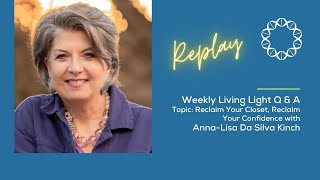
In this live group coaching session hosted by Annalisa of Living Light Metabolic Coach, participants share weekly wins related to health, work, and personal resilience before diving into a comprehensive wardrobe reset aimed at rebuilding confidence after weight loss. The session walks attendees through a step‑by‑step process: (1) assessing how they spend their time, (2) using ChatGPT prompts to determine body type, color season, and personal style archetype (natural, classic, romantic, dramatic), (3) creating a signature color palette and three core outfits for a capsule wardrobe, (4) conducting a closet inventory and decluttering strategy to reduce decision fatigue, and (5) integrating these style changes with the broader metabolic program (loading phase, reset spray, detox, breathwork, Oura ring tracking). Annalisa provides practical tools (Google Docs, presentation slides, prompts) and answers logistical questions about the program’s second round, spray purchase, and weight‑tracking practices. The tone is supportive, instructional, and enthusiastic, encouraging participants to align their external image with their internal health transformation.
Chapters
in settling in. Just wait a few minutes for additional people to join us. Focus on your wins for the week.
We're going to celebrate those first, and then we're going to get into our topic for tonight—
or tonight—
today. Not tonight yet.
Feels like tonight. Working so hard.
But yeah, we'll get started shortly. You're turning your camera on, Shelley. Good to see you.
We'll just wait a few minutes.
I did post in the Facebook Facebook group if you have a couple of things we're going to need for today is a picture of our body and also a picture of our face. If we have those available, that will help with the work we're doing, but you can always watch the recording and be able to redo because there's some things we won't be able to get to today, but they'll be in the recording as examples of things you can coordinate doing after we finish.
So excited to get started. Oh, you know what? It didn't— it didn't post in the group. One second. Okay, thank you for that.
Better. Hey, we're going to get started shortly. Just wait a few minutes for those to join. I'm going to, uh, just make an announcement in our Practice Better. I forgot to set that up as an automation, which for those of you that manage clients, you can also do this. Hey. All right, so that's done. So let's get started with our wins for today. I'm just going to stop the music and see your lovely faces. So, Shelley, since you were on first, do you want to share what you're grateful for this week?
You know what? I think today I'm grateful for my sense of humor because I've had a wild week. I'm going through a merger at work, plus I'm doing my coaching on the side, and I have all kinds of people coming at me in every direction. And I had some screwy things happen in my calendar where I showed up at meetings that weren't there and then missed ones that I should have been at. So I think I'm grateful for my sense of humor this week because I I, um, I wasn't too hard on myself, so I, I gave myself some grace with a little bit of humor. And yeah, I'm just going with what's coming my way and, um, making it fit into my world.
Yep, that's awesome. And grace, grace and peace about the things that are happening that are out of our control and looking at what is in our control. So congratulations, that's awesome.
Thank you.
Patty, what's your win for the week?
Uh, yeah, so I, I am very grateful for the fact that we have a string of beautiful weather days, and, uh, it's allowed me to be able to take my Zoom calls out on the deck again, so, uh, which is my happy spot. So it's not too hot, not too cold, and it's not raining, so it's Perfect get outside time and enjoy the sunshine, enjoy the— well, I can't say the fresh air because we're actually getting smoke from the Canadian wildfires that are coming down. I live in Pennsylvania, so we're being impacted a bit by that. But aside from that, sunny and very pleasant.
Oh, awesome. Congratulations. That's exciting. I know Sachin's been after us on the team to really focus on getting outside for 5 hours a day and be in that. You don't necessarily need to be in the sunlight for 5 hours, but just being outside or outdoors in nature. So congratulations, that's awesome. Way to go. Let's do Becca. What's your win for the week, Becca?
Hi there. I know I'm outside running. That's a good win. Yeah. I don't know. This week I've been trying different things based on some podcasts I'm listening to on how to do different types of exercises. So yesterday I implemented something. I think Stacy Sims, who's the expert on female exercise science versus male. And so I did a 4x4. And it was super hard. Which is like 4 minutes of intensive exercise, 4 minutes of kind of lower intensity times 4. And oh my gosh, it killed— kicked my butt. But I was just like surprised. I did it on this like a walking StairMaster, if that makes sense. Um, and I felt strong. I was just so happy and joyful about like, I did it and I felt good and I didn't get any migraines. So that's Tells me that my body still is improving in health because I used to have fibromyalgia. I think the reset really improved at the second round with all the migraines or whatever. So yeah, I think I could— well, I don't— I want to knock on wood when I say I got rid of my migraines finally for once and for all. It was always declining over the years, but oh, once in a while it'll pop up here and there. With intense exercise. So I'm really, really happy about that. Sorry to go on long.
That's okay. Congratulations. That's exciting. I had the same experience. I used to— if I went to work out, I would have to go to bed because it would be too overstressing and dealing with migraines. But now going through the program, and again, just like you, it took twice to go through the program for me, made a huge, huge difference. I haven't had a migraine in quite a long time and used to get them quite frequently. So congratulations, that's awesome. And next we'll have— oh, so Deanne Vales put, grateful to be on a road trip to meet up and spend time with family. She's listening in today, so congratulations, that's exciting. Always being with family brings its challenges but also brings fun into the equation. Dorinda? What's your win for the week?
My win for the week really was I, I was down with a head cold for like the long— I don't know if it's a head cold or virus— for the longest time. And I feel like, um, the win was just being able to know how to nurture my body and listening to like when to rest and when to just like shut it all down. When— because in the beginning there was the, um, I was like throwing everything at at it I could, and I was putting so much effort in, it was exhausting me. So honestly, it was just being able to kind of clue in and listen and go like, okay, I need to stop. I need to like eat what I need to eat, plan my food. And that felt very nurturing to get the fresh vegetables and the really good clean protein in too.
Oh, excellent. Congratulations. And often when we're sick, we don't want to do any of those things. No, we don't. So that's, that's like a step in the right direction. And I presume you have an Oura Ring and Monitoring on your, yeah, on your Oura Ring really helps. Especially, you're saying, Becca, when you do your exercise and you go to the gym, the next day look at your stress resilience and look at what happens based on the workout that you do and how it affects you. That's changed my whole outlook. I can go to the gym and work out. If it was too hard, the next day the ring will say it's a rest day. And I'm like, oh, so you kind of learn as you go. Jana? Would you like to share your win for the week? If you can't share online, then just, or with voice, then just let me just do—
I can share.
Okay, perfect.
I think my daughter went back to school, so I am getting up like at 6:00 AM, but I'm still successfully doing my morning 1-mile walk. So I've made it happen. So that's a win for me. I've been doing that now for 3 months and haven't missed a day.
Good job. Congratulations. That's exciting. And you know, if you don't, you know, you're continuing to do it, but I find if you kind of miss a day or you're late getting out there, your body tells you, okay, you gotta do this 'cause you feel better. That's awesome. And setting the habit up is most important because that helps you accomplish your goals long-term. Hillary, what's your win for the week?
My win is I am on day 7 now of the program and I made it through the loading phase. And past the, you know, the first few days when you feel kind of sleepy, that was what my experience was like, but I'm just really happy. This program is in alignment with how I've already kind of been eating and just making some of those tweaks. I'm seeing some nice results. And for my day 7 weight, I'm down 5.2 pounds.
Excellent, congratulations, that's so exciting. And yeah, I would tell you, everybody on this call would say, "Yep, we made it through loading days," 'cause they are the hardest of the whole program. And you're through week 1, moving into week 2, and so things will start to change. Also note, don't, from a weight comparison, what you lose in week 1, you're losing both fat, water weight and inflammation. So in Week 2, really concentrate. Don't look back at Week 1 and think, "Oh my gosh, I'm not keeping up," because most often in Weeks 2 to 6, you're going to be losing 1 to 3 pounds per week, generally, as you're going through. Okay?
Yeah, I want to share one other thing too, is I spent a lot of time measuring my stomach. Like, I would— like, this is what I've been doing for like a long time, and I haven't been able to get it past a certain point for— I don't— I can't tell you since I've been measuring. I've not had a big win on it, but today in my measuring, I finally hit a point where I'm like, wow, that's really impressive. So that's a big win for me.
Congratulations. Yeah, I did a finger competition a year, a few years ago, and the training was intense, but it was focused on when you lost weight, it was from your fingertips in and your toes up. It was never the belly. I, I was like in 6 months in and I still could not get rid of the belly. The rest was coming. I had muscle and everything. And with this program, I found my belly went first. And so I think it's just the process of how the program works really helps to eliminate a lot of the detoxing and the things that we're holding on to and get to that fat that's in the tummy that, you know, as your cortisol comes down and the liver starts processing things out, you get rid of that first. So congratulations, that is so exciting. I think that's one thing with the program that's so amazing, that changes happen very quickly. And so that keeps us motivated to keep going and to accomplish the things that we are as far as our goals are concerned, to be able to stick to the program and be able to accomplish them. So congratulations, everyone. That's awesome. Whoop, hang on, press the wrong button. Okay, so I'm going to, I'm just going to move right into our topic for today. I'm hoping we'll get through some of it. We won't get through all of it, but there will be a recording and I'm providing you with some tools. So I'm going to give you a document Let me just copy. I'm gonna put this in the chat for you. And this is a document we're gonna use to follow along. I also have a presentation that we're gonna go through and be able to focus on keeping on track because that helps me stay on track. So let me just share my screen and we'll start there, and then we'll have questions after or during while we're going through. Um, let's do this and this. Okay, so our focus for today is to reclaim your closet and reclaim your confidence. One of the key things, uh, as you start to lose weight and change, obviously, you know, many of us have those treasured clothes that are in the back area of your closet. Um, yeah, that's right. Um, and, uh, you're hoping to fit back into those clothes. Um, I had a box where I had all the things that didn't fit, that were things maybe that I had from work or from different times of my life, pieces that I really liked, and I didn't want to get rid of those pieces. And so as I lost my weight, I started to fit back into those, and I'm telling you, that is It's so exciting when you start. The key though is you want to stay in those clothes and get rid of the old clothes that you were wearing or the, the clothes that were at a bigger size. We often— when you go to your closet, you want to be able to see the clothing that you can wear right away and the pieces that fit together. That's what we're going to work on today. So the first thing that we're going to talk about today is how you package yourself is the most important. If you look at Jamie Lee Curtis on the left, she just looks like an average woman. You know, her hair looks good. She's got a, you know, a body shape that's more like an H. She doesn't have a waist. Yet when you look at her in the middle, you can see how they accentuated her body frame to make her look like she had a waist. And of course, the one thing that I have learned, when you dress yourself, you're not thinking about yourself when you're out there, and that allows you to focus on the person that you're talking to. And in the case— I love her quote— the more I like me, the less I want to pretend to be other people. And isn't that kind of the statement of confidence, of being like confident in yourself, um, as far as, uh, your, uh, image that you're trying to portray as you talk to people? And meet people. So here's some key tips that you want to think about as you're meeting with people or involved in different things. Of course, making good first impressions is key. Think about a book, and you read the book cover. On that book cover, you'll go through that, and that will determine whether you read the book. It's the same thing when you meet others. And so the question is, are you building barriers or bridges with your outer packaging as people meet you? The first thing that comes up is the visual impact that occurs in 7 to 20 seconds when someone meets you initially. There are 12 things that I'm going to talk about that help you make a good first impression. Of course, the first 12 words you speak should be some form of thanks. The first 12 steps you take, you know, you get up in the morning, you move from your bed, take that stance of confidence as you move to the bathroom usually first, knowing as we're women. And the first 12 inches from the top of your head down should be impeccable, and then the last 12 inches from your shoes should also be very well maintained. There was a story about a gentleman who looked put together, but his shoes were all scuffed and he didn't put them together. So when he went to meet, you know, people in meetings or things. They didn't take him seriously because his shoes were not put together. Next. So we're going to be using ChatGPT today. If you have an account, I would suggest you open ChatGPT and we'll start. I've given you the prompts in the presentation or in the Google Doc. That we'll be using today. And again, if at any time you're going through the, you know, ChatGPT and asking questions and it starts to affect either your mental health, you feel distressed, or it's sensitive what's coming back, just close it out and stop and then seek a qualified mental health professional. ChatGPT is great for lots of things, but it's not great for mental health. And remember, you're in control. You can pause, stop or end the session at any time. Okay, does that make sense for everyone? Okay, so let's move on. So the first thing I want you to think about, and this is key for your wardrobe, is understanding what are the key areas of where you spend most of your time. This is just an example. What I'd like you to do in your form, you have in your Google Doc. Let me just share in your Google Doc here. It gives you kind of some instructions. So you can kind of think about how many hours do you spend weekly in each of these categories. So think about your professional work, your casual everyday, your fitness, your social events, those kinds of things. Then I want you to think about your total weekly hours, and then you can calculate your percentage. But for today, let's just kind of give an estimate because we want to move along fairly quickly. And later you can shade the pie if you want to give an idea, and then we'll move on to the first. So think about where you spend most of your time in these areas, or you can use the wheel that's part of the presentation that I'll share again here. So does anybody want to share their percentages? Has everybody got them? Shelley, do you have your idea of kind of where you spend most of your time and what your outfits— it's thinking about your clothing for what you need for each of your sections. So if your business work is, you know, 40 hours a week, that would probably be right. You need, and certain style or certain things that you need for that, that would be most of your week. And then social events might be a smaller portion. Fitness and activewear might be, you know, less too. And then casual everyday might be more or less depending on how much you do spend time and work.
I'm going to say like the business work casual everyday because I work from home, so I do But I do, I'm on Zoom calls all the time. So there is that element of professionalism and business casual with a blend of the fitness activewear because I teach fitness classes. So I would say, you know, I'm going to go on the high end, like almost 75% is a blend of those three. And then I put social and travel and 25% if I'm looking at a week, for example.
Yeah, yeah, just an estimate, just so you can just write down your, your numbers because we're going to incorporate that into the prompt. Dorinda, you're about the same as Shelley, do you think? Yep, that's okay. Yeah, I'll wait.
My computer is being really weird all of a sudden. I think I'm kind of in the same way. I don't, I don't teach fitness, but I do. I work from home most of the time, but I am really working to get back out and do, you know, like some business networking stuff. So even though most of mine is kind of a business work casual, I'm really looking to build up a fun, more casual, but like a business casual type of a wardrobe. And right now my closet is crazy. There's like different sizes and I go in there and getting dressed is painful.
Yes.
There's too many that I don't like, or I put it on and I'm like, this is perfect timing today. Thank you so much for doing this.
You're welcome.
Yeah. And that's the thing. We don't want to go in our closet and find many people in there, right? The goal is to go in there and find us so we can dress ourselves, right? And not take all that time, right? Because that also affects our decision fatigue, right? We're in our closet. I have nothing to wear. Nothing fits. I don't know. The process of going through the reset and then coming to that where you've lost that 20, 25 pounds is going into the closet, getting rid of everything that doesn't fit, and focusing on those things that, um, are in that range of what we can wear. And I would also tell you, the one thing that I've learned about image is really focusing on fit rather than size. Some of us get So hung up on size, right? We're like, I have to be— I can remember I used to work in a— it was called Pantorama. It was a jean store. And a girl came in, I kind of sized her, gave her the jeans, she put them on, they were tight. And then she, can I get the next smallest size? And so she said, you know, I'm having trouble doing the zipper up. Can I get a coat hanger? And then that's the pair she bought. I'm like, oh my gosh. And it was all about size for her. She had to fit into like a 0 or a 2, or I don't even know what size she was then, but she had to fit into that small size. So just crazy the things we go through as women in, you know, sizing or putting our outfits together. So, all right, so let's move to the next piece. So here's what I wanted to focus on with you today as well, is, um, really thinking about your body type, um, and finding that out. If you don't know what that is, we're gonna do that with ChatGPT. So the first ChatGPT prompt is really focusing on that wheel that we just did and putting into the prompt. So you're gonna copy. So from the sheet that I gave you, you're going to go down to the first prompt. You're just gonna copy all of this. And then actually, we're going to copy this part first, and you're going to paste it into ChatGPT, and then you're going to edit your— I am what— how tall I am, what weight you are, and how old you are. So if you can open up your ChatGPT window and then copy and paste this in, we're going to start with this as our first step. Oh yeah, I can. Copy to chat. Here's the document again. And great, Hillary, excellent. Yeah, that's awesome. So you can get a sense for the percentages of your thing. Okay, so we're copy and pasting that in. We're going to put that prompt in first, and then we're going to get a sense— whoops. Sorry. And then the next one is, uh, the ultimate goal of this conversation is that you help me find my signature style and create a capsule wardrobe strategy. In the first step, I want you to analyze my body type, my lifestyle, will, and take that first suggestion of what shapes and directions suit me best. So from your document— whoops, that did not work. Let's go here. Okay, why can't I share? Okay, I have to stop share. Not going to the right place. Hang on. So in here Okay, so I didn't— yeah, so you copy and pasted that in, and now we're going to move to the next piece. As you're going to— so this, I relate with natural, classic, romantic, or dramatic. So here on this chart, I'm going to talk a little bit about these different styles. If you've been typed by an image consultant before and have an idea of where you fit, great. If you've never done this, I'll talk a little bit about the differences between them. So natural is someone that likes casual, more flowy type, comfortable. I think that's the biggest thing for a natural is comfort. They like very fabrics that could be like tweed or jean or leather. They're very into natural fabrics that they're going to wear, and they're not fussy. They may or may not wear jewelry, and if they do, it's very simple. A classic, on the other hand, is someone who likes to have everything put together. Like you can see in this example, her purse matches her jacket, her pants somewhat match her shoes, her hair— although this, the only thing with this one is her hair is not— usually with a classic, their hair is like, would be more like the romantic, and it is an example, very put together. They like it going. So a classic is someone— the only thing I would suggest with a classic, often they have outfits that can stay, can become dated. So being or understanding some of the trends of what is coming is also key to making sure that you have an understanding. Oh, excellent, Dorinda, you've been called a bohemian hippie many times. Awesome. And that would fit into more like a dramatic, but you can use the bohemian hippie style as your style. A romantic is someone— you can see she's in a floral dress, it's cute, she loves color, she loves— it doesn't like fitted or boxy things, she likes to wear more flowing things. And then a dramatic would be someone who's in style, like you— the trends. I have a friend of mine, she buys the mannequin every season. She'll go to the store she likes, she sees the mannequin and how they put it together, she goes buy the whole outfit and she hangs that outfit in her closet and she's always on trend every season. Not all of us are there. Some of us are, but just getting a sense. So yeah, Patty, if you're athleisure, that would be also typed as a natural as well. Excellent. So let's go ahead and we're going to— in ChatGPT, we're also going to add in I relate with and which are the ones. If you have your own, you've been typed before, you know what you are, put that in. And then if you have a photo of your body type, so you would have taken pictures. Let me go here. You would have taken pictures. Um, oh shoot, something. Okay, you would have taken pictures. Oh, here you would have taken pictures of you, maybe not in this style with a bathing suit on, but likely you would have taken a picture with your body shape. If you have those pictures, you can upload them to ChatGPT and then hit enter. And let's see what your results come back as your body type. So we'll go ahead and do that now. And then anybody want to share what they're getting back as their body frame type? I know for me I'm a balanced body type. So in here we have different body frame size. Some of us are— this is like a V-shape where the hips and the shoulders are— whoops, sorry, the shoulders are wider and the hips are narrower. This, the lady in green, would be like a pear-shaped where her shoulders are narrower and her hips are wider. The purple lady, uh, lady in the purple bathing suit, is more balanced. You can see how she has a waist here. And this one also would be more of a, probably an A-frame. There's also an H-frame where the waist is straight up and down. You don't have this curvature in it. So it's different body types. So you'll probably get your different recommendations for what your body type is. Everybody able to get that going? Any questions? Dorinda, Shelley, or Melissa, you're all on camera. Were you able to get that ChatGPT prompt in?
I got the prompt in. My computer's just being really weird today, which is the first time it's happened. So I'm— it's— everything is just slow. So I'm working on it though, but I did get the prompt in.
Jumped in. I'm coming in, Elisa, and, um, I've just kind of used the information because I didn't have the, the document up, so I'm just using ChatGPT using the information that's in there. I've got different stuff in here coming up, so it's kind of—
okay, great.
Thank you.
And from your color strategy, we're going to focus now on putting together our color. So 2 key things is knowing your body type and your color will help to then develop your style and your signature style based on your color. Whoops. Based on your colors. So if you have a clear photo of your face and hair in good lighting, You can upload that as well, and you're going to add in, can you analyze my color type and create a color strategy for my capsule wardrobe? That would be your next prompt, which will be in your Google Doc. So here you're just going to copy, can you analyze my color type and create a color strategy for my capsule wardrobe? So if you copy and paste that into your ChatGPT, it'll then put together kind of colors and things that go together for you based on your coloring. And again, this is not, you know, if you, if you've ever been to an image consultant, they're going to do a lot more with you to try to get an understanding fully. But this is so much fun. I, when I was doing this and going through, I have had training as an image consultant, and boy, I got some great results that really came back with kind of what I already know about myself, which is fantastic. So the next piece— so here's what we're going to be trying to get to, is to have a signature palette. And so the next prompt you're going to put is, can you generate an image of my signature color palette based on my color type? So often with color, there are different seasons. If you've ever gone to have color typing done, they'll puts you into a particular season. I was quite difficult when I went because I am a, um, I'm a summer and a winter. I can wear both. So they, every time I've gone, I've been typed as everything except spring. I've been a summer, a winter, and a fall, and different people type me differently. And that's because the confusion. I have gold flecks in my eyes, so Often they confuse that I should be an autumn, which I am not. I'm really a winter and a summer. So getting a sense for what you are. In this case, it came back for me. I'm a romantic natural style. I love flowy outfits. I love anything with color. I like florals. And then it came back and gave me kind of, here are my core neutrals. And hopefully this will come for you as you're going through the process. They'll put together the— ChatGPT often will put together the picture with the core neutrals, the signature colors, and then some accent colors that might fit. And this can help you when you're building your capsule wardrobe because, as you can see, most of these colors pretty well, they all blend and go together so that you could have navy outfits, you know, maybe pants and a top. And then maybe I could do like a lavender top. For example, or I could do a Dusty Rose top or a Soft Plum or a Blue Grey, right? It would go with all of those. Similarly with the Cool Grey, I'm likely going to be able to get pieces to go together with those. And then your accent colors, you'll be able to pick and choose pieces that will go together with that. And we're really— today we're just focusing on colors, but you can also do at a later time fabrics, you know, like different blend. Like some people like tweed or If you like patterns in the clothes or florals, right? Those are things that you can incorporate into your ChatGPT as you go through this on a maybe a second time process. So did everybody get something for their colors and palette? Okay, excellent. And so now we'll move to the next. So the next piece is really revealing. This was awesome for me because I really got to see kind of pictures of what I could put together as the clothes. Now, they're not perfect, but they're pretty close to what I might wear. So let me just bring this back up. So, so you're going to go— let me just share— you're going to now go back to your document and you're now going to pick What are 3 signature outfits I could create that would make a fantastic base for my capsule wardrobe because they can be combined? So it's really getting to what are the key pieces that you could have in your wardrobe? You know, like I have this navy top that I wear almost with everything. I have a— one of the key things for me is V-necks is very important because I have a round face. And so wearing a V-neck helps to elongate my neck as well because I also have a shorter neck. So there's different things that you, uh, you'll, um, that will come up for you. And also for me, it's, it's picking up on my style. See this, uh, top that's a wrap? Because of my body type, I'm a balanced body type, I have a waist. Being able to do a wrap and with a little tie helps to accentuate that waist, you know, in there. For other people who have different body shapes, you'll get something different. Similarly, because I'm more romantic, the dress has more floral on it. So for you, you're going to get things differently. And probably because I said I was 62, which I am— not yet, sorry, I'll soon— end of summer, I'm 61— um, it gave me nice shoes to wear in there, not those high heels, because I don't wear high heels. Um, so it just gave like a really nice combination of different outfits to try to get a sense for, um, the pieces that I could put together. And look, you know, you have the navy pants. I could also turn this— I could put the— these navy pants with that jacket, right? Um, I could also put this jacket instead of this one. I could put this jacket onto that dress. Right? So, different combinations allows you, and most people don't remember what you're wearing. Similarly with the, yeah, sensible shoes. Thank you, Patty. The earrings, right? You change your jewelry and that changes your whole outfit too. So, it's getting to that capsule wardrobe where maybe you have 12 pieces but you have 40 different outfits. And that's also great for traveling where you can bring along multiple pieces that you can put together that help. Um, with that. So, and if you don't get today what you're looking for or what really appeals to you, go back and ask questions and put more information in. Try to get to that point where you feel comfortable with what you're seeing. Okay, all good.
This is fun. Thank you, Annalisa.
Oh, you're welcome. Absolutely. So the next step in the process would be to do a closet inventory. So you sort of got an idea of kind of the colors, what fits your body type. It's got a lot of information probably that it's given you that gives you kind of a sense of, you know, what pieces would be most appropriate for your body frame and your clothing personality, which really helps in the long term. Right. But now you have a closet. As Dorinda said, with many people in it. So you're going to take— so you can do this multiple ways. It all depends on your personality. For some people, you go into your closet and you just do tops one day. Don't do it all. You know, some people say— other people go into your closet, take everything out, and then go through it all. But that's— for some people, that is way too difficult and way too long. But it all depends on, you know, your time, how much you have. Maybe it's just if you have 60 minutes on one day that you can put towards it. Often it's just getting started with it and you start with your tops, then you do your pants. And if you think of Marie Kondo, she always talks about taking all— so if you have clothes in multiple closets or multiple places, bring— if you're doing tops that day, bring them all to one place. So you can see them and go against this kind of, what am I going to keep? Does it fit me now, today? If it fits me now, is going in, and it suits my body shape and it suits my clothing personality, I'm going to put that back in the closet. The rest of the things, if they don't fit, if you— you— they got to go in a box and they go out to the garage, the attic, they go somewhere else. They don't need to be in your closet If you, if you feel you're concerned, you don't want to give them away yet, just put them in the box and then put them out of sight. And then 6 months later you go back and you decide, I didn't wear them, I'm going to donate them, right? That's for people who have more difficulty getting rid of things. Um, if it needs alteration, it goes somewhere else. It goes in a bag to go somewhere for that. It does not go back in your closet until it gets altered. If it's a replace, needs to be replaced, write that down. I'm going to give you in your, your Google Doc, there's a form there for a capsule wardrobe to kind of put in the things that as you're going through this, you're putting in what your tops are. I did this actually during COVID I took pictures of me wearing all the outfits, and I took pictures of the pieces so I could put them all together on a page so I could see all my outfits and know what I had and then know what I was missing. Because that's also the key piece. Often we have pieces in our, in our closet that we don't wear because we don't have the key piece we need to wear with it. So just thinking about those things as you go through. Uh, grow animals. Yeah, that's the best. Sears was awesome for that with kids. You could just go get this and this go together, boop, we're done. Um, so, uh, and then lastly, donate. There's so many women's shelters, different places that are looking for nice clothing. If you still have good quality clothing, then do that. Now this is what I got with chat. You appear rectangle athletic with hourglass tendency. Very good, Dorinda. Awesome. Yeah, so you're, you're straight up and down through the waist. So you, anything you're going to be wearing or trying to put together is to create that waist, right? So as you go to the next thing, it's going to walk you through and it's going to try to create clothing styles and things that are going to help. So that will teach. So, you know, spend some time. We can't do the closet inventory. A shortways belted item do not look good. Ah, interesting. Yeah. So we, we don't have time to do, of course, the closet inventory, but I've given you some tools in your Google Doc. There is in the end part here where you can put together, once you've figured out your base colors, you've got your accent colors, And then go through your closet and put your garments that are the pieces that can go together. And then any accessories that you have. I know for some personalities, their accessories are in their clothing. So, you know, they may have sparkles or things on their clothing. They don't need to wear accessories. So it's not for everyone. And then put together kind of the outfits that you've created. Get an idea of what that is. So you eliminate decision fatigue in the morning because the more decisions we make during our day, the more chance we have of later making wrong decisions or decisions just because we're tired or fatigued from that. Does that make sense to everyone? And then lastly, here's building a capsule wardrobe. So here you can take a picture of this. This will give you a great idea of how to put the pieces together and how to think about, you know, when you start with your base colors, you're going to pick those 3, then you pick your 2 accent, and what you got as a result of of your, um, uh, your, um, pictures that you should have got. And the information that ChatGPT gave you kind of helps you with that. What are the 3 base colors, and what are the 1 or 2 accent colors that you could incorporate into your wardrobe? And then choose 12 garments as a start. You can pick and choose. Some people like to more wear more dresses, some people like to wear tops and bottoms, It's all what appeals to you. Although with tops and bottoms, you have a greater chance of mixing and matching those pieces to get more outfits with that. But this is just a base to give you an idea to get started with, and then from there you can add in and then mix and match, you know, try different outfits. You know, I always found when I went into the, um, uh, when I went into my closet and put pieces together, oh wow, I didn't even think that could go together, right? And then the last thing with it would be accessories. So that gives you kind of a sense for the different outfits that you'll be able to put together and just clearing the clutter from your, from your closet so that when you go in there, there's only one of you in there, and that one of you is your signature style. And every time you get dressed, you don't think about it anymore. And then that will allow you to be a blessing to someone else, because when you're sitting and it's too tight or it's too loose, you're fidgeting, you're always thinking about, you know, do I look— but when you have that style and you feel great in your body, that confidence gets exuded and it's just amazing. You walk into the room and everybody's like, whoa, who is that? So I'm hoping that will be for you as you change things out and put things together and be able to have that new kind of you. Because you've spent so much time and commitment getting to where you're at, you want to be able to live into that new identity that you've created. So that's what I had for you for today. Hopefully, you know, there will be a recording of this that will go out, and I'll put together the, the different— I'll probably incorporate the presentation and the Google Doc. So you want to go through it again, you'll have the steps to go through it. So did everybody get kind of their signature style, or at least kind of an idea of what their colors are and their— so, Shelley?
Yes, I did. It's really fun. So thank you for this little session today. And it's so great.
Excellent. Excellent.
Thank you.
Wonderful, useful topic, Deanne. I just had a photo shoot. Oh yes, good job, Patty. That's awesome. I'll be plugging this in once I get home. Yeah, awesome. Yeah, I think it was so much fun. I picked it up from someone else who was doing it in their group and just edited it based on what I know about image consulting to be able to help you guys with that. So any questions about the program? you know, different things. I did want to share with you, uh, for, for some, uh, people who have questions, if we're not available at the time that you need an answer to the question, I just want to share our, uh, we have a Living Proof Coach. If you've never been introduced to our Living Light Metabolic Coach, you can ask questions. We're still refining, and sometimes you may not get the perfect answer, but We've loaded it with all kinds of information, questions that we've had in the past. So if we're not available and you really need an answer right away, you can always use the Living Light Metabolic Coach and it will help you get your answers directly as well. But are there any questions today for the program? Yeah, go ahead, Shelley.
At least I just wondered, you know, speaking of doing the program for a second time, what's the best way to do that? And do you then apply to have more sprays sent to you or just maybe enlighten me on the second time around.
Yeah. Okay. So is the second time around for more weight loss? Is it more for detoxing? What's your purpose?
Detox.
Okay. So you're going to do a shorter window.
Okay.
Weight loss isn't your mode of— or the key to your next round. So you'll still use the spray, you still do the loading phase, but you're only going to be doing the reset part. You can do it with or without the spray. The spray obviously helps to rebalance the hormones, help with a lot of things, but you can— you'll be doing it all. The release phase is only 7 days, but you still take the spray for 42 days.
42 days. Okay. And you get the spray. I just, I just saw some of the chat that was going on in the, yeah, the recent portal. Yeah, about the spray. So I can just go in there to purchase it?
Yeah, there's two links, one for US, one for Canada. You can pick the link from the, the reset. We recently, uh, Deepa has decided that we are putting the, the reset spray with either journaling or with, um, uh, what was the other thing? Coaching.
Okay, so it's a package.
Yeah, it's a package. We tied it together because we have found for people going through this second round when they can still get to coaching and journaling in the process, then it just helps the success.
Okay.
Okay.
And ask questions too, as you're— because you're a little bit different for what you're doing. And so your, your adjustment will be different. You don't want to lose weight. You're going to keep track of your weight in the beginning. You might lose maybe a pound or two at the very beginning, but your goal is not to lose weight. So you'll be reintroducing your oils and then you're like, as you did in maintenance last time. You'll wait for those, those earlier.
Earlier.
Okay.
Okay. Is there a place in the portal that I can just look for that, like the guidelines, or I can—
Yeah, let me just give you that right now. There's guidelines for those that don't need to lose weight. Let me just find that.
And that's for this specific to the second time around. Correct.
It's actually specific to anybody who doesn't need to lose weight.
Oh, okay. So I have that in my little book that I have here at home.
Yeah, I'm going to give you this right now. That link that I just posted is a link to the document that walks through for protocol for those that don't need to lose weight. And I would highly recommend, you know, once you get to your goal weight, doing the reset on a regular basis, even if it's just, you know, like spring and fall. You know, often we talk about doing detoxes anyway. The program is a detox in a sense. Your body is eliminating a lot of the things in it. So just doing a 7-day once you're at your goal weight, just doing that to keep the body going. Sachin and Deepa often do the 5-day one with what's— I forgot the name of it. I can see the guy's face, but there's a— oh, shoot, I can't remember the name. Look up— anyway, they do a 5-day program where it's limited in the, uh, food that you're eating, um, and it's like a longer detox, but it's not just water fast. You still eat some things, uh, as you're going through. That's another option, um, you could do that versus doing this. But I like the reset. I mean, it just resets hormones. If you still have some things going on, it's always great to just go through it.
Absolutely. Okay, perfect. Thanks for your help.
You're welcome. Any other questions for today? Prolon. Thank you, Becca. I know I got some great people out there to help me. Yeah, Prolon is a really good one. You can even— I've seen, um, where you can see what Prolon has offered and you can just create your own too, where I've seen people do that because there's like olives and broth and different things that are included.
So, all right, I'll have a look. Thank you, and thank you.
Yep, you're absolutely welcome. Uh, Hillary asked, should I be posting a picture daily of my weight on my— the scale? Where would I upload it to daily? Normally what I usually recommend is you, if you want to upload the picture, you can put it into your breakfast section and do a free-form entry, and then you'll see a place where you can just click to say upload a photo. Um, in your— are you, Hillary, are you posting in your lifestyle journal your weight measurements?
Yes, I have been.
Yeah, if you're doing that, don't— you don't need to upload the picture on the weight scale. It's fine.
Okay.
Okay.
Yeah, don't make it more difficult than it is. We're having to do too many things, right? Awesome. Any other questions about program? Depending on which phase you're in. I know, uh, for Hillary, as you're moving into week 2, you're going to start to see your energy lift. Week 3, often you'll maybe have some emotional things that will come up because, of course, tied with our weight is emotions that we've stored or traumas that we've had. And often that's why we still hold on to the weight, is because we need to release those. There is, um, Sachin has in your modules done a breathwork I remember doing one with him, just fantastic. The breathwork was about going back to a time, to that little one that, you know, and it's you in an earlier time where you were in a situation, and he takes you up a mountain. Like, once you resolve and hug that child or that, you know, previous self of yours, you hold hands and you go up that mountain to celebrate that you've overcome that emotion. You know, we're storing those and the key is to release them. And once we release them, they're gone from our body, and then our body can get back to doing the restoring that it's doing. So highly recommend in the modules, if you can get access to the breathwork that Sachin has in there, helps tremendously. And it also changes where we breathe, right? If we're breathing up here, we're in fight or flight. If we're breathing lower down in our belly, we're in a relaxed or more restorative state. And just changing that for me helped tremendously in just calming my system down. I could see it in my Oura Ring. The change in my stress levels over time is significant. And also how many breaths I take a day. I've been able to drop that because that's also a sign of longevity is the more breaths you take, the less you live, which is interesting. I don't know why that is, but I know I've heard Sachin say that. That before. So you want to breathe less. Maybe it's because you use your lungs more.
I don't know.
Um, all right, so any other questions for today? I'm absolutely open to help in any way I can. Yeah, okay. So I'll give you back the rest of your day. Appreciate all of you. Congratulations for all that you have accomplished in the week, uh, past. And set your goals for the week ahead so that you can accomplish those dreams that you're going for. I know sometimes it's not easy, and sometimes you need to reach out. What's that in the cab? Have you ever seen that? Call a friend, or, you know, different things. Make sure you're doing that as you go through the program. We're always here support you. And, um, love you all. Have a great week.
Thank you, Annalisa. You're the best.
Oh, you're welcome. Take care.
Thank you.
Okay, bye.
More from Living







Is exercising at the gym the best way to recover after a bad night's sleep? #shorts


Most people focus on supplements, diets, routines…but ignore the most important thing — their be