Chronic Pain & Suffering…Neovia
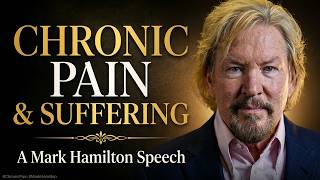
Chronic pain becomes an invisible force reshaping family life. The speaker argues that while science splits atoms and maps genomes, medical treatments lag a decade or more behind discovery because researchers, manufacturers, and regulators work in silos. Neovia aims to integrate these disconnected parts and deliver cures faster.
Chapters
The Baseline of Suffering. Pain changes the geometry of a household. Not all at once, not dramatically, not dramatically at first, but it happens gradually, almost invisibly, until one day everyone realizes life has quietly reorganized itself around this limitation. Schedules change, sleep changes, conversations change, hope changes, even silence changes. People have never lived near chronic pain, well, they often misunderstand it. They imagine pain as an event, like a sharp moment, temporary, isolated, because that's how we all really have experienced pain. In our lives. It's something that arrives and it peaks and then it goes away. But chronic pain, now that's different. Chronic pain becomes atmospheric is the best way I can explain it. It settles into rooms, into routines, into schedules, into relationships, into the emotional calculations people make every day without even realizing it. How much energy will today require? How bad will tonight become? Will this treatment work? Will this specialist help? Will things improve, or is this simply life now? Watching someone you love suffer over long periods of time creates a peculiar emotional tension. Tension. It's hard to describe. You want to help, you desperately want to fix it, but eventually you collide with the limits of current medicine, current systems, current timelines. And sometimes those timelines matter when suffering is continuous and ongoing. So that was the realization that began changing me. I spent decades believing in human capability, not merely individual success, but civilization's broader capacity to solve problems, problems that were once thought impossible. I mean, humanity split the atom, we mapped the genome, We walked on the moon. We created artificial intelligence capable of astonishing feats. And yet, despite all of this progress, millions of people still live trapped inside bodies that medicine could only partially help. Disease advanced faster than treatments. Aging continued its relentless progression. Neurodegeneration, chronic illness, frailty, metabolic disease, cancer, autoimmune disorders, countless other forms of suffering just continue extracting an enormous human toll. Now, because these, these sufferings happen on an individual basis, not in the collective consciousness of civilization. They largely go unnoticed. Millions upon millions of suffering from disease and pain, chronic pain, living with it, dealing with it, hoping for the next breakthrough, the next discovery, always waiting. Well, it goes unnoticed because everyone is in their own little environment, their own little family, dealing with it. So this contradiction, what became harder and harder for me to ignore, the advancement of knowledge, of technology, but the lag of cures for those who are suffering. And those who are suffering, they don't have a loud voice. Each one deals with it on a family level. So the science itself, well, it keeps appearing very helpful. I meet with scientists all over the world. I think, well, look, we're so close here, we're so close there. At a longevity conference I went to, I found out that for the last 10 years, Each annual longevity festival discusses cures to these chronic diseases in the same breath as they did the year before and the year before that and the year before that. They always say, well, it's 9 years out. Well, I just went to one and it's still 9 years, 10 years out, and it was 9 or 10 years out a decade ago. See how that works? You always have hope. You always think that, wow, with AI or with rapid biomedical technologies, this is going to be fixed. But the suffering just continues. And there is a gap. So that distinction became one of the central insights of my life. Most people assume that medical, medical progress moves slowly because scientific discovery moves slowly. But that's only partially true. You don't really get a sense of that until you actually sit down and talk to these cutting-edge scientists. Discovery, yeah, it's difficult. Bio— biology is staggeringly complex. Human systems are delicate and deeply interconnected. Interconnected. Safety matters. Precision matters. Ethical standards, they all matter. But over time, I began to suspect that the greatest delays often emerged after the discovery itself. The funding, the trials, the institutional inertia, the manufacturing limitations, the regulatory navigation. The fragmented infrastructures, the disconnected systems. You see, this is the opposite of NeoThink, right? This is the opposite of integration. This is fragmentation, and it is alive and well in the medical industry, more so than any other industry. And isn't the medical industry the most important industry? You realize that when you have a family member who's suffering. Now, during this delay, the suffering just continues uninterrupted, but there's no major headlines, there's no megaphones, there's nothing announcing this civilizationally. So I began thinking about time differently, differently than everyone else. Not abstractly, but biologically, emotionally, civilizationally. Every year matters when you are waiting for a cure. Every day matters when you are waiting for a cure. Every delay matters to families who are watching their loved ones decline, and that does not get enough attention. Not from our supposed overwatchers in the government who are concerned about us and our safety and our well-being. There's a horrendous gap that I became more and more and more aware of, particularly as someone who is dealing with a family, a loved one, family member with chronic pain. I'd say that most painfully of all, is that these human experiences are not collective. So they go unnoticed. The suffering remains fragmented, as I said, to millions of isolated instances. A daughter in pain. A father losing mobility. A mother with Alzheimer's. A spouse with cancer. A child with a rare disease. Each family experiences its struggles individually while the larger systemic causes remain mostly invisible. See, what are those causes actually? When you talk to scientists and CEOs of biomedical and biotech companies. That invisibility starts becoming quite visible. I mean, once I saw it, I could never, never forget it. Never forget it. So my life has been about bringing these invisible problems out to the awareness of civilization. I spent much of my life studying hidden structures. Long before Neovia, I became fascinated by the difference between systems that create acceleration and systems that create stagnation. You know, the mortal mentality versus the immortal mentality. So why do some organizations, they innovate rapidly while others decay under their own complexity? Why? I began pondering this and seeing that it's most prevalent in the biomedical field. There are deeper reasons why that I won't get into today, but in my writings, in a book I am going to— that I've decided I must write, uh, this will come out, uh, the deeper reasons why it's the biomedical field that's the greatest victim of the gap between discovery and dissemination. Why do some individuals generate extraordinary creative output while others remain psychologically dependent on external direction? Well, my readers, my readers know Why that is? Now those questions shaped much of my philosophical life and my history, my writings, my NeoThink books. I became increasingly convinced that civilization advances most powerfully when creative individuals are allowed to integrate knowledge across boundaries. That's NeoThink. Instead of becoming trapped inside rigid institutional compartments. That's the hierarchy. Drawing it together with what Wallace mentioned earlier, what I've been working on lately in my neothink book Unleashed: The Promethean Promise, that's Aristotle, who was largely lost, versus Plato, who took over with hierarchy. Integration creates breakthroughs. Fragmentation slows them. So that principle appeared everywhere I began looking. In business, in technology, in government, in science and medicine, especially medicine. Medicine, well, it's a sitting duck for abuse of regulatory power. It's a sitting duck. By the way, I'm working on a 3D AI moving animation. It's, it's, it's incredible when I get this done because let's say someone is scrolling, right? Literally within under 1 second, everything I've written in 45 years, everything we're doing with Neovia, everything we're planning in our future can be cognitively received. In one second. So I am working on that. It's going to be a game changer. Be looking forward to that. I'm working on that currently. So biomedical progress had become fragmented across enormous institutional layers full of control. Full of hierarchy, right, that often struggle to communicate or move coherently together. It just doesn't move coherently. NeoThink is lacking. Brilliant researchers, and I've met many, well, they operate separately from manufacturing realities. Investors operate separately from clinical realities. You always hear, "We can't get funding, we can't get funding, we can't get funding." That's all going to change. Regulators operate separately from entrepreneurial urgency. And I'll go a little further on that one. Regulators, well, they're operating on self-promotion, largely. Not all of them. A lot of them have good hearts. But the ones who count, there's a nefarious purpose. Now startups struggled, and I meet these people constantly, they struggle to navigate systems designed for much larger entities. That's why you see startups making these major breakthroughs and then they have to sell out to Big Pharma. Because they cannot move forward on their own. And it would be better if they could, but they can't. Not now. Infrastructure development lagged behind scientific potential. And meanwhile, patients waited. Always waiting. Yeah, that gets under my skin. So one evening, after another conversation about pain management with my family, those treatment limitations, and the exhausting cycle of incremental medical navigation, I found myself asking a question that would eventually alter the course of my life. What if the central problem was no longer discovery itself? Now that's a leap your mind must make. Because we're always saying, "Well, when they break through here, when they discover this, then my child, my daughter, my father, my grandfather, they'll be good. We'll be able to cure them." That's what we think. But I realized at a certain point in my life that discovery is not the problem. It's delivery. So once that is understood, that the discovery is— it's not that. It's the inability to deploy that discovery fast enough. Well, the question unsettled me because the implications were enormous and they were personal and they were emotional. So if that were true, when I first came upon that, that NeoThink insight, then humanity already possessed far more latent capability than society was structurally prepared to utilize. It meant the future was arriving unevenly. That was shocking, particularly when you're dealing with someone who lives with increasing chronic pain. It meant that bottlenecks, bottlenecks were becoming existential. It meant that progress itself had become trapped inside systems. I'll call it the hierarchy that no longer optimized, that were no longer optimized for philosophy. And medicine is where we need that philosophy. But it's the least, it's the one that is struggling the most. Some of you original old-timers remember in Neo-Tech the drawing of the stick drawing of the upside-down world. Remember that? Once I began seeing the pattern, I saw it everywhere. And this was my neo-think mind at work, seeing patterns and beginning to readjust my path to correct those bogus patterns. Because I saw it in medicine and I saw it in infrastructure. I saw it in manufacturing. I saw it in governance. I saw it in America, in beautiful America. I saw it in America itself. The country that once built Hoover Dam, the interstate highway system, the Apollo system, the Silicon Valley, the modern aerospace age— well, it— this country increasingly struggled to complete projects quickly, efficiently, or cohesively. In fact, we increasingly struggled to compete. America struggles to compete. Processes expanded, timelines expanded, costs expanded, caution expanded— unreasonable caution. But human suffering did not pause to accommodate institutional delay. The suffering kept going at the same clip. In fact, I'd be willing to say it accelerated. Now, that tension sat enormously heavy with me. Now, especially as I watch aging advance around me. Aging is humanity's most universal experience, yet society speaks about it with strange emotional resignation. Right? People discuss it as though deterioration were simply an unquestionable background, a background condition of existence, rather than one of the greatest unsolved scientific and medical challenges in history. Again, you old-timers who have read my father's works realize that the ultimate goal of Neotec, out of which grew NeoThink, is curing chronic diseases, chronic age-related diseases, and ultimately aging itself. So I couldn't look, I couldn't look any longer at society the same way. I couldn't look at aging as a background to my life, my family's lives. I just couldn't look at it like that anymore. I began viewing aging entirely differently than all of my friends, most of my relatives. Not as a single event, but as an accumulation of countless failures occurring gradually across time. See, this is where my neothink mind changed the way I saw this universal experience of aging. I started looking at the puzzle pieces: cellular degeneration, mitochondria decline, inflammation, protein misfolding, immune dysfunction, the slow erosion of biological resilience. And underneath all of it, was the same haunting realization. Humanity was learning extraordinary things, extraordinary things about these processes, but the application lagged dangerously behind that discovery. How far behind? I almost don't want to tell you. I'd say in most cases, at least a decade. When you are dealing with someone who is struggling with increasing chronic pain or other chronic illnesses, and you understand that this treatment that you're applying or that you're using or that you're being referred to by a doctor was discovered 10 to 20 years ago. So what you're using is 10 to 20 years behind the medicine or drugs or processes, the technology that could remove your suffering. As I said, there's a deeper reason behind why the biomedical field has this greatest gap of any other field. And yet this is the most important field. This is our lives and our experiences, our suffering, all comes from this gap, this lag. I can't live with that. That gap, as I said, has become emotionally intolerable to me at a certain point in my life. It's not intellectually any longer. It's not working in theory. It's not my writings, my— my emotionally moving writing, such as Super Puzzle and the Miss Annabelle story. It's not that now. That's actually in my life. So it's very emotional as a father to someone in chronic pain. And I know many of my listeners, see, Many of you are experiencing this too, one form or another of chronic pain. But I don't know that. You never knew my personal situation I decided to reveal to you today because we work on it in private. It doesn't have a megaphone. It doesn't have a collective voice. And yet we're the most beaten up industry, the biomedical industry, from the hierarchy, from the suppression, the constraints of the hierarchy. So there is, there was a moment in my life where an idea which became an idea when I was a child growing up under Dr. Frank R. Wallace. It was an idea, but it stopped becoming an idea and stopped being something theoretical as it became a personal responsibility. So I didn't yet know what Neovia would become. And when we started, remember, it was called Immortalis, and Immortalis is still the international holding company. Neovia, for, for reasons, certain reasons I've explained in the past, is the United States effort for Immortalis, Neovia. So I did not know what Neovia would become when I launched this. I remember we started off as a network state. And it's still a network state on joinimmortalis.com. But I did not know whether this was even politically possible when I launched this. I didn't know where it would be built. I had some thoughts, but I had no idea where it would be built. But somewhere deep inside, a decision had already begun forming. If civilization's greatest bottleneck was the speed at which knowledge became reality, well, then perhaps the most important thing I could do with the remainder of my life was help build environments where that transition could happen. Faster. Now, not recklessly, not carelessly. Faster intelligently. Faster responsibly, humanely. Because time was not waiting and neither was suffering. Now I hope I brought us all together a little bit more. Those of you who are suffering, share, share it, share it as I did today. Because this collective voice of the suffering that we're being denied cures needs to become an emotional movement. It needs to be the emotional drive behind Neovia. Last night, I, you know, thinking about all this and I have a lot, a lot I'm weighing and balancing and juggling. Last night, I just took a moment and then just looked at the stars. Beautiful. View of the galaxy from where I was, of the Milky Way. And as I looked, powerful metaphor overcame me because I realized what I was looking at, all that beauty, well, that wasn't real. That was the past. As you know, light travels, and what I'm looking at, at the Milky Way, could be centuries, millennia. In fact, a number of the stars I'm looking at don't even exist anymore. And stars that do exist, I can't see yet. And a metaphor overwhelmed me Because I realized as I look at the medicines that my daughter, that you may be taking, that you see on TV, you're looking at the past. You're not looking— I deal with scientists on a regular basis. You're not looking at the discovery that is there and available now. You're looking at the past. You see, You see these ads on TV that seem— these wonderful breakthroughs. Well, that discovery was made 10 to 20 years ago. It's just breaking now. And what breaking— what I mean by that is breaking available, availability to you now, the television commercials and so on, the FDA clearance. So what's happening here? People are suffering, suffering. It's the most important industry to close that gap. And that's what Neovia's goal is, to close that gap responsibly and humanely.