The More You Do Doesn't Make You More Valuable
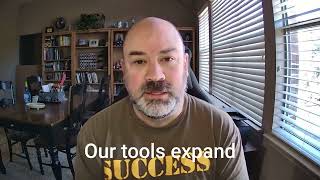
In this live‑training replay, Mark Reynolds challenges the pervasive cultural myth that productivity and busyness equate to personal value. Drawing on his own experience as a high‑performing accountant and early‑life entrepreneur, he explains how early praise for being reliable and hard‑working led him to equate worth with output. He reflects on why this belief is flawed, emphasizing that value is not earned by sheer volume of work but by the quality and impact of what we choose to do. Reynolds highlights time as the ultimate equalizer—everyone has the same 24‑hour day—so the only way to increase meaningful capacity is to eliminate low‑value tasks and deliberately create space for rest, recuperation, and high‑impact work. He discusses the importance of rest (referencing Covey’s “sharpen the saw”) and the endless influx of work (emails, meetings) that can distract from core responsibilities. Using a childhood lawn‑mowing business as a case study, he illustrates how delegating and outsourcing can free the owner to focus on higher‑value activities like sales and client relationships, turning a labor‑intensive operation into a scalable service. Reynolds warns against the “expert bottleneck” where top performers become the sole executors of tasks, disempowering teams, and advocates for leveraging others to handle work at acceptable quality levels. He concludes with practical advice: protect calendar time, prioritize high‑value projects, and consider short, focused coaching sessions (“laser calls”) to identify constraints and actionable steps. The session ends with an invitation for community members to schedule such calls and a reminder to avoid wasting time searching for solutions.
Chapters
Hey, everyone, it's Mark Reynolds, man. How about that? We're gonna try it again. So apparently the first live did not record. There you go. Living and learning live and in real time today. So without further ado, he I just want to welcome everybody back to the replay live training. Try it again. Where we were talking today about one of the big cultural myths that really plague especially American workers. But a lot of just Western thought, which is the more I do, the more valuable I become. And that's a really poisonous thought that a lot of us just adopted. And it takes a long time when you start to think like, where did that thought come from? How did that even get into my mind? Why do I believe that? And I know for me, for the longest time it came from the fact that I was really good at a lot of things. So I got a lot of positive reinforcement. A lot of it melt well meaning from my parents, from my teachers, from mentors for my friends because I was talented, because I was smart and I was hard working. Like most of you, I came to be very reliable. And people said that they didn't have to worry about me because I could get it done. And so I did. And I would just keep taking more and more of it on. And then I started feeling a little bit overwhelmed. So I really dug into productivity books and speaking with Masters and getting David Allen's getting things done and reading essentialism and then getting caught up in Stephen Covey's seven Habits. And I bought all the calendars and I bought the schedulers and I got into email box zero for a while. And then it occurred to me that. Why was I doing all this? Why did I feel so compelled to be the one that had to do everything? And the thought was what I do makes me valuable. But that's not true. It's not true in the way that we traditionally think about it. So let me just take a step way back here for just a second. And as I put my hand on my heart, I feel it beating. And I think I have to do nothing to earn that next heartbeat. As I stop and get conscious with my breath, I realize I have to do nothing to earn either of those. They're gifts of life. So then I think, what about others? Do I value others just for what they can do? How much they do for me? Is that how I think about my family? Is that how you think about yours? I think about the day that my son was born and I tried to tell him this was some regularity, that there's nothing that he does that makes him worthy of love? I chose to love him from the moment he was born. It's not about how much he does. And I think a lot of us can get there with our close personal relationships. Like, that's a. That's not super bridge thought. That's not super far for us to travel, to go, yeah, okay, okay, my family. But what about work? And that one takes a little harder, especially with some, some of us with the careers we grew up in. Because, you know, for me in accounting, we have billable hours if you're an attorney, you have billable hours if you're a doctor or a nurse. Right. There's patience, there's charges. And clearly the more you do, the more you work, the more you bill, the more value you add to the company. But that doesn't change your worth. And as you move up in the company, more and more is asked of you. And for a lot of us, we keep a lot of the old things that we used to do because we're really good at them. If you're an amazing accountant, you've got amazing skills, which means that you, in many areas, especially if you move all the way up into the senior ranks, you could very well be the subject matter expert on a topic. You may be the leading subject matter expert in the entire nation on some of these elements, especially around some super technical components. But what that means is at each step, instead of life getting easier for you or better for you, or more reward, more rewarding. It just kept getting busier. We kept adding and we think, oh, and that makes me more valuable because I'm doing more stuff. Until you reach the point where the calendar is completely full and we all get there at some point because ultimately it still just becomes a math game for us. How fast can you work? How smart are you really? How refined are your tools, how disciplined are you in your habits, how much energy do you have, etc. But at some point, you will cap out, everyone caps out, and then what do you do? Do you see that's the most I'll ever be. That's my total worth. No, no, because it's not about how much you do, how many things that you do, quantity of things that you do that are going to propel you forward. And you know this too, right? There are a lot of things that we do that don't add any real joy to our life. There are tons of things where we see people do, they just don't add any meaning for you. Others are doing them on your behalf. So one of the key secrets that is an open secret is that when a schedule gets full, we understand that the premise of time is that each day is only 24 hours. Nobody has a pause machine. There's no additional time allocation. You can't save it for today and get tomorrow. There's no ROI. You can't invest it. You can't, you can't save 20 minutes today and let it ride in a safe indexed mutual fund for the next 20 years and then have a million minutes 20 or 30 years from now. It's not like that. It's a set bucket that expires in the old video game world. It's like a 2D scroller, right going left. Once the screen is passed, there's no going back. We only go forward in time. So once you know that everybody's got the same 24 hours, it's super exciting because one that's the great equalizer. No matter how you were born, where you were born, what you look like, how much money you have, etc. Everyone gets the same 24 hours. So in order for you to do more of the things that you would like, the only way to create more space for the activities that bring you joy or bring additional value to the company is for you to eliminate items that are already on the schedule. And people really push back. When I say, oh, the secret to doing more is by doing less. Because when people hear me first say do less, they think do nothing. And I'm, it's not at all what I'm saying. I will say that is always an option. And for a lot of people, learning how to create free space on your calendar is a super amazing tool because many people don't take the time to just strategically place rest and recuperation in their calendars. This is one of the biggest learnings from the Stephen Covey program around Sharpen the saw habit 7. And there's a lot of, there's a lot of research coming out from the, in the fields of biology and science and just neuroplasticity and mental health and disease and all that around rest and sleep and people know that and we're working harder than Pandemic didn't stop work, not at all. It hasn't changed in any of my time. It's just more. We get better tools so that we can do more. And a lot of us aren't asking if it's just more or if it's valuable. Our tools expand. Emails, for example. It's super easy to do more. A lot of us have come to the point where we go, I don't know that it's adding a lot more value. It's really more of a distraction at this point. So when you think through my calendar is full, is it full of things that add meaning? You ask yourself, is it full of stuff that I choose for me because they are the very most important things? Did I create space? Did I accept this? Or have I just been so long in default mode of having people just put things on my plate until there's no room for any of the stuff that I would have picked? Is there no more room for the things that you want that you know, create joy in your corporation? Is there no time left on your schedule for you to do the things that you're really hired to do? Your most important tasks, your MVPs, as we would say, your most valuable projects, is your best time spent on the most important activities? And for most people, it's not. It's not unless you are consciously working on it and thinking about it all the time. If you go and spend time with some of the most successful people you ever get a chance to watch a billionaire, somebody that's running multimillion dollar organizations and how they are with their time, they're ruthless. They are absolutely surgical about managing their calendar. It's a bit of a joke. At the highest levels, it's always about, yeah, let's get some time on the calendar to talk. Never are like, yeah, like you and I, it's, they're driven by the calendar and the most valuable resource that they have is time. And that's a shift that a lot of us don't make for a while because as we're coming up, we feel money is the limiting resource access something other, because time is what we have. But at some point in your life, as you get successful, you cap out, the calendar caps out. And you have to learn to make the mental shift that no, time is actually my most valuable resource, the thing I must protect. Everything else can probably be made up. There's always more money to be made. There's always work to be done. Right, let's be clear. Work is like water out of the water faucet. If you want more work, you just have to turn the spigot and it flows freely. Emails the same way. There's no end to it. There's no final point where it's all done. Even if you finish today at this exact moment, if your inbox is, is at inbox zero, by the time you finish this, there'll be something there. There'll be a new email. And even if there's not one now, there'll be one tomorrow and the next day. They will always be coming. There will always be plenty of things to pull you away from your most valuable activities. Another thing that people say is, yeah, but if I don't do it, it won't get done. At least it won't get done. And I'd offer that's a really disempowering thought, not just for you, but for the people around you. Because the truth is that quite often, even if you are, in fact the world's expert at this, and nobody could do it better than you, does it have to be done at that level? Honestly, if you could hire somebody, you could turn it over to a staff member and they can do it 75%, 85%, or even 55% of what you could do. That's still a step towards leverage. And I'll say I got lucky on this. So I had a lawn business when I was a kid and I was mowing lawns and one of my good buddies was moving away. We were. I grew up in a Navy town for, you know, some of you may know my history, some of you are still new, are new to the world, my world. I guess you're not new to the world. But yeah. He asked if I would take over his lawn services, and we both were pretty full for kids and. But I agreed. It sounded good. I wanted the money for sure. And so I was trying to mow his. His lawns and my lawns. And inevitably, as I was mowing lawns, people would ask if I would mow their lawn too. And it didn't take me very long before I just didn't have any more time left on my calendar. I'm still a kid, I'm trying to go to school, and I'm mowing these lawns on the weekends and in the evenings, and there's just so much time. But the request kept coming in and I wanted the money. So I learned my first little bit of co sourcing, outsourcing. I started to ask some of the other local kids if they would want to mow some of the lawns. And it started to scale. And at first it was hard because I didn't feel like they mowed the lawns as well as I did. They weren't as diligent in the edging and the raking of the leaves and just making the yards look pristine. So a lot of times early on, I would pay someone to mow it and then I would come back later and either remow it or finish it up. And I wasn't getting a lot of time efficiencies and I was getting frustrated. And you know how it goes when you're. You don't know how to hire and screen employees or contractors, so to speak. But the requests kept coming in and so it's either cap out or learn to manage it. And I was really glad that eventually I learned that while the lawns didn't get mowed exactly how I would have liked them, I started talking to the customers and the customers were still thrilled. And I know they were happy because they were referring me more customers. And the business continued to grow and the business continued to expand and pretty soon I was mowing no lawns. I was in full time sales because I had come to the conclusion that the sales part was the most valuable portion. That was the thing the other kids couldn't do. They could all mow. And clearly, obviously the more they mowed, the better it got. The more people I worked with, the more, the better it got with onboarding my kids, so to speak, showing them the way. This is long before we had such things as this, where I could do looms or YouTube videos or walk them through employee onboarding manuals. None of that. It's beyond the scope of the story, but it's the same for us. And I just, I've worked with executives that have risen through the ranks quickly because they were the go to in the office. They're the best, literally some of the best in the world at what they do. And their schedules are so full because they wind up being the only person that attends the meeting because they're the expert when they have a team beneath them that's trying to grow as well. And think how disempowering it must be to be on that team and to not have any of that good work coming down because we've chose to hold it up. And for me, I was lucky. Like I said, I learned very early on to delegate, defer and just hold on. I always ask, is this the money maker, I call it the big domino or is this what I'm paid for? And that really had more to do with kind of my unique background and my training starting at the executive level and then working my way back down into kind of more tactical roles that I was trained from the beginning to rely on team. I had to rely on team because I wasn't going to be the best at it. I was never going to be the expert. So it was very natural for me for a long time to just go with that mindset of let me go figure out who could do this for me in a manner that is at least up to standard, right that they can grow into it. So those are just a couple of thoughts I wanted to shoot out today. I did want to let you guys know that I am clearing the calendar for the rest of the today and I carved out, I think all of tomorrow except for just a handful of appointments to make room for the community. Since we've got a large number of people coming into the into it this week for quick 15 minute laser focused call Again, one of the things we're constantly trying to reiterate in this group is for you, especially as a busy individuals with a lot on your calendars, that the fastest way for you to get going is to not try to do it yourself, to not try to become the expert in this as well, but to rely on others if you want to go that way. If you want to start to incorporate the teachings that I'm offering, you can on the link below or I'll post a link to a quick 15 minute I call a laser coaching session a success audit where all we do 15 minutes is get laser focused on really what the current constraint is for you and get you at least one actionable tip to move you forward. So what I don't want you to do or to feel like you have to do is come to a training, do something like this and think like, okay, now there's more I have to do, more I have to learn. No, I'm trying to offload some of that for you and honestly it's just the fastest way I know to help you and it helps me. The more I talk to you just directly, the more I know exactly what you're facing as well as the other members of the community, which helps me create trainings like this every week to just address them, as well as any other additional resources, guides, etc. That will serve you and keep you in motion without tying you up or getting time lost in scrolling or searching through YouTube or the algorithms and just hoping that that you stumble into the right solution. With that, I want to thank you for attending. If ever you need anything again, please reach out for one of the scheduling sessions or if you have a topic or something, send me a DM and I'd be glad to take a look at it and see if I can't send you over a resource or like I said, get you back into motion. I just, I don't want you guys searching and wasting valuable time on trying to find answers. Let me help you if I can. All right with that. I wish you well and have a wonderful week, and I will talk to you later. Bye.