Harvey Nelson: Customizing Sports Nutrition Products For Athletes by Elite Athletes
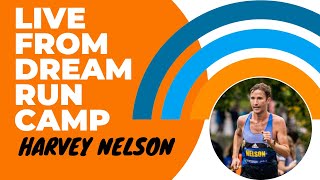
In this informal, candid interview recorded at Dream Run Camp in Flagstaff, host Matt Fitzgerald chats with professional runner and coach Harvey Nelson. The conversation covers Nelson’s running background, personal bests, and his Achilles injury that led to a shift from elite competition to triathlon and eventually to coaching. Nelson reflects on his mindset, emphasizing process over outcomes, the mental‑physical balance of distance running, and the challenge of transitioning out of a 13‑year competitive career. He introduces his Flagstaff‑based startup, Blank Sports Nutrition, which offers customizable, low‑cost sports nutrition products (carb mixes, electrolytes, upcoming protein). The discussion also touches on training locales (Tucson, Flagstaff, Colorado Springs), his early life in Arizona, and advice for an ultra‑distance runner with an autoimmune condition. Throughout, the tone is conversational, humorous, and occasionally profane, revealing Nelson’s pragmatic, ego‑checking philosophy and entrepreneurial drive.
Chapters
Assistant Coach Lauren Clement. Um, you could be here. We have openings. Um, got some awesome dream runners assembled, um, to experience the awesomeness of a professional runner and professional running coach, Harvey Nelson. Welcome, Harvey.
Thank you.
How you doing?
I'm fantastic. How are you?
I'm doing well. Um, Yeah, I'm a little frazzled, if I'm being completely honest. But yes, doing well.
Good.
Yeah, it's like these Thursdays have been hard, like for the last 6 weeks. I do a live thing on— I guess it's a Zoom thing, like from 4 to 5. And that's— oh, wow. Yeah, that's why I wasn't here to greet you.
Okay.
And then I've got to, like, pivot and it's all awesome stuff. Yeah, Thursdays are my favorite.
Don't get that time to reset.
Yes.
Get things going.
Exactly. But this was the last one, so I'll get back to normal Thursdays. Yeah. The first question I wanted to ask you was, are you the most famous person named Harvey Nelson?
Possibly. I don't know. I'm not very famous.
Do you know of any more famous Harvey Nelsons?
I mean, my grandpa was Harvey Nelson, and he had a holiday in the city of— in a small city in California named after him. So, okay, maybe he's more famous. He also had a baseball park named after him.
Oh yeah, that's—
yeah, that might seem kind of permanent.
Yeah, yeah, impressive. My dad had a Tom Fitzpatrick Gerald Day parade one year in his hometown.
Oh wow.
Which was like this big.
What did he do?
Uh, he's— he did these crazy solo long-distance swims. Um, oh, okay. Yeah, it was like in Lake Ontario and the St. Lawrence River.
Uh, swimming in open water that long is—
yeah, yeah. My dad's nickname is Sea Bass. Yeah, I, I pretty much— I care a lot about being the most famous Matt Fitzgerald.
Okay.
Yeah, because I've had some competition. It's a very common name. And so there was this other writer. He, he went by Matthew Fitzgerald. But there was a while there when I was like, people were confusing the two of us. And this guy, like, his whole shtick was misogyny. So I really—
for it or against it?
Against it. No, no, for it. Sorry. He was for it. Well, I mean, I mean, he was a misogynist. So I think he's one of these people who had had like, you know, like, like a traumatic divorce and then he just never got over it and he just blamed all women and he would write these like terrible screeds and then people would like, you know, guys who were like buying it would email me like fans of his. I'm like, I am no fan of yours.
Okay.
Yes. And then there was an actor named Matt Fitzgerald who was really making a run at me for a minute there.
I was nervous. I thought he was going to overpass you.
Yeah, I think he might have, like, he clipped. But, you know, it's Hollywood, so his star just was a shooting star. Yeah. Sorry. I waylaid there.
Yeah.
How fit are you?
Not very. Yeah, yeah, I had, um, Achilles surgery in October, so I haven't run in 8 months. Yeah, they stopped running about 2 months before the surgery.
Yikes.
Yeah, so swimming and— yeah, that's heavy. Yeah, part of sport.
Yep. Yes. Yeah. Yep. Yeah, it's funny. I just ran today 4 miles nonstop, and it's the first time I've run that far without stopping in close to 4 years. Yeah.
Wow. No, hopefully I don't have to wait that long.
Yes. No, better me than you. Yeah. How old are you?
28.
28. Yeah. For fuck's sake. Yeah, I mean, I missed a lot of my prime too with injuries, but my prime was not your prime. You've run some very fast times.
Kinda.
Yeah, seems like the further you go, the better you get.
Yeah, I think so. I mean, I've definitely always liked to run further because I just feel like I get gassed really easy on the short stuff. So I feel like the longer it gets, the easier it gets. Like a lot of people will say— I remember like during my marathon— That's a quote.
The longer it gets, the easier it gets.
Yeah, I remember a lot of people are always like, oh, like the marathon is so scary, you should be worried. And like, it's like, I don't know what you're talking about. Like it's— I don't know. I feel like it's easier than an 800.
No big deal. Yeah, you can pack a lot of suffering into 800 meters.
Yeah. Not the kind of suffering I like.
Yeah, yeah. There's actually some interesting research showing how like physiology aligns with psychology around those types of preferences where you tend to like what you're good at.
Yeah, yeah, that makes sense.
Yeah, so 1:01:48 for the half.
48 or 46. There's like the chip time versus the start time. Okay, I was like, in the—
obviously we're taking the faster.
Yeah, I always say 1:46.
Yeah, I apologize.
I'll, I'll, I'll, uh, you know, let it pass.
Way out of line there. Yeah, and I don't even dare, uh, 2:14. Is that a 48?
I don't know the seconds on that one.
Oh, he doesn't know the seconds of his own marathon. Too cool for school.
Uh, I try to forget my races, try to be the— as, uh, Ted Lasso says, be a goldfish. Yeah, I don't remember him. Yeah, except for the 1:01:46. Right.
Uh, but that's helpful, like the idea is like, who cares what I've done before, I can, I can do better.
Uh, I think so. I think I didn't run well in college, at least to like the standard that I held myself. And so I always try to just like forget what I had done and be like, I can do better, I can do better. And I think that was like a big reason that I ran as well as I did after college, was just like let go of the idea that I am my last race. Yeah, I mean, you're not— you're never your last race. It's just like either you're more fit, you're less fit. Yeah, kind of irrelevant what you've done.
Yeah, yeah. So it's more a matter of like do I have untapped potential still?
Yes. Yeah, yeah. And I think also it's just— I think it's an ego thing if you're like constantly obsessed with like the times you've run, whereas like, I don't know, I mean, it's hard not to have a big ego at times. And so I think it's hard not to have a big ego at times. Yeah. So I was always trying to—
100%. Yeah.
Keep myself in check, you know, because it's just running. Who gives a shit?
Are you writing this down? This guy. That's 3. We do have a quote book. We have an actual quote book. Yeah. It's just running. Who gives a shit? Please remember that one at least. All of you. Well, this is recorded. We got them all.
That was our team motto.
It was?
Yeah.
Of course.
Just running. Yeah.
But who gives a shit?
Who gives a shit, yeah. We used a few more profane, a little more profane language in there as well.
Right on. Yeah, why stop at shit?
Yeah.
I'll put that in my diary tonight.
Yeah. Well, it's funny, because that's very much in the same spirit as one of the Matt FitzGerald Geroldisms that's on a wall in Becky's bedroom. It says, "No one cares about your stupid PR." Yeah?
No one cares, work harder.
Yeah.
That's another— I can't remember who says that one.
Yeah.
Someone does.
Cameron Haynes, I think.
Yeah. Sounds right.
Yep. And also, questions are welcome at any time from anyone. I have plenty of things I would like to ask Harvey, but jump in at any time. Mm-hmm. Yeah. Yeah. Rewinding. I've never been to Tucson, Arizona. Have you?
I grew up there. Born and raised.
Yes. How do you like it?
I love Tucson. Yeah, I think it's a— I think of like LA or I mean Phoenix as like LA's ugly little sister. And then Tucson's like the cool cousin. It's got a lot more character. It's a very large Latino population, so there's a lot more of that Latino culture, and so it's just a lot of fun. There's not a ton to do. It's the desert. But so I was always doing sports and stuff growing up, which is great since it's 120 degrees in the summer, but yeah, the winters were wonderful. And people there are nice, everyone's friendly, and the mountains are incredible. So yeah, I think it should be on everyone's bucket list. Very underrated in my opinion.
Yeah, I need to get down there. Yeah, it's absurd. It's the same state, for crying out loud.
4 hours. And you have to drive through Phoenix, which—
zing!
That sucks.
Yeah, and so how did you— well, first of all, before I say that, so yeah, everyone feels like they grew up in a place where there isn't much to do, but you find stuff to do.
Yeah, you get in trouble.
Yes.
Yeah.
Did you?
Oh yeah, a lot. Yeah, yeah, I was definitely— Until I found running, I wasn't necessarily on the best path, and running kind of reined me in a little bit, gave me some more purpose and something healthy to focus on.
Yeah, yeah. I discovered, my friends and I, that something fun to do when we were 16 was hurl crab apples at cars, passing cars at night from the woods.
Yeah, we, we set up On Halloween, we stole some people's jack-o'-lanterns from their front porches, and on a pitch-black road, we just set them in the street. Cars just mowed them down, and people would get out of their cars and start screaming, "We're gonna kill you kids!" And we'd just run off laughing our asses off.
You need a disclaimer at the beginning. Do not encourage.
Yeah.
Oh yeah, I don't recommend anyone do it. Especially if you're an adult.
Excuse me. Yep, my lawyers are telling me. Yep. Yes, ignore. And then, yes, so that's interesting. So you were a little bit wayward, and your life could have maybe gone down a slightly different path if you hadn't discovered running.
Uh, yeah, and like a few other events I'd rather not get into, but yeah.
We love getting into the stuff people would rather not get into, so we'll move on. Yeah, we'll move on, but like, this is a safe space, so whatever, move on. Yeah, yeah, it's okay. Yeah, keep going.
Uh, oh yeah, I mean, I don't know, I just like— I don't know, I mean, you're in the desert, you got not much to do, you get in trouble. I was drinking a lot when I was like 14, 13, ended up in the hospital and then didn't have a life for the next 2 years because of my parents, you know, they're worried.
Yes, repercussions.
Yeah, so yeah, then running and that was my socializing and so yeah, just put me on a better path.
Yeah, so I mean, yeah, I mean my younger brother ended up in the hospital Yeah, for the same reason when he was 14.
Yeah.
Yeah, it's common shit.
Yeah.
Yeah, no fun. Yeah, but then like in terms of like, because you know what I've heard you express about your kind of mindset toward running, like for— to me it like it sounds— I don't know, like pretty, pretty kind of like elite, you know, like like both rational and passionate hungry at the same time. When you meld those two things, like magic happens. Like, was all that stuff kind of undiscovered for you, you know, in that transitional stage when you're like coming out of possibly going this way and getting into the running thing? What do you mean? Yeah, so like, was it, there's some like self-discovery that occurred there? Like where you got to know yourself in a different way?
Yeah, I mean, I've always kind of been pretty driven to like push the limits, and I think learning to move past things took time. I've always like, I don't know, I feel things deeply. I'm a very emotionally driven person, and so I think It's pretty easy for me to feel something really strongly for a short period of time and then just like process it and then move on. And so I think I kind of process things pretty quickly, and that might not have always been the case. Like, there's been scenarios and things that have happened that took longer, but I think it's something I've worked on, and I think it's like something that I've always kind of applied to sports itself and not necessarily other things that kind of took longer to learn to do. So, but yeah, no, I think it's, it's not always easy, but I think it is, it is something that's worthwhile and something that helps. And yeah, yeah, guys, it's just running, right?
Yeah. Yeah, it's funny. You remind me, you remind me of myself in certain ways, like in that regard. So where are you now in that journey? Because like, that's a huge setback. Like the Achilles stuff is like, yeah, like it's not— it's like that's the one you don't, you don't really want.
Yeah. I mean, I don't think I'll ever compete at the same level I did. Um, yeah, I mean, the Achilles, like, I mean, it started in like 2019 and, uh, it took me out of the Olympic trials, uh, in my training block. And then I ended up like racing like 10 miles of it and then just kind of dropping. And then it just kind of lingered and lingered and it got to a point where I was like, I just can't keep running as much as I'm running, but I want to keep competing. And so then I went to like triathlon, I got a pro card in triathlon within a couple months of moving over there. And then I pulled a muscle in my back and my Achilles was just blasted just 'cause I'd put on 20 pounds to compete in triathlon. And I was like, I can't keep doing this. And got the surgery and yeah. So we're in that transitionary phase again of figuring out what is the next step fully.
Yeah, that's a, that's a funky place to be at 28, um, because like, yeah, I'm sure you feel like you have unfinished business, uh, as an athlete.
I don't know, I think I've come to accept that I'm not gonna compete at the high level, highest levels anymore, um, and there's definitely a good 8 months where I was just like floundering, just unsure of where I am or where I was going. Just because, I mean, you devote— I mean, I started competing when I was 14 and I stopped competing at 27. So 13 years of my life focused on just one thing, right? And like at such an intense level of focus, uh, it's going to take time to accept that. And I think a lot of— I think, I mean, I know that's very common for a lot of athletes.
Yes.
And I think there is a certain level of just maladjustment out of college, especially for like when athletes don't go into professional competition. And so I think I just had that a little later.
And so, yeah, but yes, but of course you never know what the future will hold. Yeah. So I mean, I mean, like, you're doing what you have to do. It's like the— this is the reality. I'm accepting the reality.
Yeah.
But, you know, time passes and—
yeah, yeah. Time heals all.
Well, yeah, you move on, right? Yeah. Yeah. You find yourself in a different place and you, you just come to— you just find a way to just like maximize like where you are.
Yeah, I still work out a ton. I think I would lose my mind if I didn't. There's not— there's a few, you know, screws loose in my head that need to be turned tight with working out. So, but yeah, definitely not the, the main focus right now.
Yes. And so the main focus would be coaching. Yes. Uh, okay, what's the main focus? Just tell the interviewer what the main focus is.
Me and some friends started a sports nutrition company. Yeah, and so we're all in on that, and it's just, uh, yeah, a lot of fun. I'm still coaching. I love coaching. If any of my athletes are listening, I love you. Um, he really does. Yeah, I do love my athletes. It's a lot of fun. It's very, very fulfilling helping people achieve their goals. I do love it. But yeah, Blank's— it's called Blank Sports Nutrition, and we do customizable sports nutrition. That's like our main focus right now.
Okay, tell me more. You're Flagstaff-based?
Yeah, we're based in Flagstaff. We, I mean, we do have— our goal is to be like have our hands in every pot and make like every product, but just cheaper because we are using the supply chain in a way that makes it way more efficient than everyone. And so we can be half the price, one-third the price of Morton for the exact same product, but also with flavor.
Well, this is a really important pivot. So How do we get a hold of your stuff?
Blanksportsnutrition.com.
Simple as that, huh?
Yeah. Yeah. I don't feel bad about putting that in there at all.
No. But I mean, I don't mean to do business while we're in the middle of an interview, but like, I mean, could we like, could we, could you have like samples of your stuff?
Yeah, so we have the trial flights. We have trial flights and So we have 9 flavors right now, and so we can give you boxes with 9 flavors. Yeah, absolutely.
Because you see all these goos up there, like that's—
Yeah, I'd love to get some in here.
Yeah, sweet. This has been very fruitful.
I've got some in my car actually I can bring in.
He's got some in his car. If you were at Dream Run Camp, you could have some Blanks Sports Nutrition right now. Or not right now.
In the future.
20 minutes. In the very near future. I have a question. Yes. About the sports nutrition.
So is it just like energy gels and boosts that you do? Right now we just have a carb mix. We're about to do a electrolyte mix. We're releasing it I think Saturday probably. And then we'll do protein at the end of summer. And we're in the very early stages of startup. Like we've been going for since January. So we're just—
yeah, nice. We're getting in on the ground floor. Sweet.
Perfect timing.
Yeah. Well, uh, tell us how that came about.
Um, so my friend Mike Arashida, he's a professional triathlete and just like a genius. I wouldn't even say borderline, full-on genius. The smartest person I've ever met. Had an idea to like make gel, or like he wanted to cut down on all the waste because there's so much waste in our sport. Like, I mean, you think of the gels, like one-use gel, and then it's just thrown into the trash. And so we wanted to figure out a way to make it more efficient, more affordable. And, uh, yeah, so we've been kind of going down that route.
Yeah, yeah, that's very intriguing.
Yeah, that's a lot of fun.
Yeah. How does— so as you like, you know, threw yourself into this new venture, you know, you talked about those like 13 years of a pretty singular focus on running performance. And obviously, like, you know, you grew and changed a lot, you know, in pursuit of like that brass ring. Like, to what extent and how does that stuff apply to something that, like, on the surface looks quite a bit different from, like—
Yeah, yeah. I mean, I think the general— I mean, I think, I think to be, like, at that very elite level where you're training, you got to be a little intense. And so, obviously, you can have a ton of fun. I think we pride ourselves, especially the group that is the startup core, pride ourselves on having a ton of fun, but we're all very much like, we want this to be great. We don't wanna make a half-assed product type thing, and we wanna make sure that even though it's cheap, I mean, it's insanely cheap, how do we also keep the quality up and not screw ourselves over? Grow too quickly, or, you know, I, I, it's, I think it's the focus on the details and like everything we do. And I think that's like what gets you to your best in anything, any pursuit. And so, yep, um, yeah, I think just like that singular obsession with things.
Yeah, I find that so fascinating just because, you know, we tend to think when, when we're looking at successful athletes that it's all about like what they're— what's special about their bodies. But like, you don't get to the highest level of any sport without having some special stuff. Like, yeah, seriously. Yeah, yeah, you know what I mean? Like, yeah, if you're like— if you're 14 and everyone's untrained and undeveloped and you win a race, all right, well, that means you have some like natural talent. But just like, you know, the people who are the fastest at 14 are almost never the people who are fastest at 24 or 34.
Yeah.
Um, and it's all that, like, the further along you go in that developmental arc, the more the stuff above the neck starts to weigh in. And then, then it starts to make sense, like, how it's transferable.
Yeah.
You know?
Yeah. No, it's, uh, yeah, they always say, you know, running's mostly mental. I obviously— it's not 100% true, but it's very physical. Um, but yeah, no, it's very both. Yeah, it's very both. Yeah, it takes a lot of, uh, mental fortitude to keep grinding when your body is telling you to shut it down and it hurts and you're really uncomfortable and you just want to go to sleep. Yeah, in a race, yeah, you want to walk off, you see a nice little, uh, grass patch and you're like, God, it'd be really nice to take a nap then.
Yeah, yeah, that's I'm sure that's happened. I usually just want to die. Yeah, because if you, if you're asleep, you might wake up. Yeah, back into misery. Great. Yeah, yeah. And so with the, on the coaching piece, like how much, like again, this idea of transferability, like the things You know, because everyone has a very particular path. And I love how like athletes kind of narrativize their journeys. I hear all the stories from people come through here like that. You know, it's not just like a sequence of dates, events, times, PRs, whatever. Yeah, it's like it's a story. Yeah. And yeah, so Um, yeah, how do you see the, uh, that's the thing, like what I love about, you know, because I am a writer and a runner, so like for me it's very natural to just like blend the two together. But I think even if like most athletes, like you're like, you're in pursuit of the happy ending, like, you know, I mean, like happily ever after, like, you know, that's like that. I mean, so we're all doing this. It's like, oh yeah, it's like the best is yet to come.
Yeah.
Um, and I'm, I'm guessing that like that is part of how you look ahead, cuz like I felt old when I was 28, but I can tell you 28's really young. So like you've got a lot of look, uh, a lot to look ahead to you. And like, how do you, like, how do you want the story to play out?
Uh, I don't know. I recently especially I've tried to focus more on like just Join the present and enjoying the— I think what— yeah, okay, I think I can apply this to running specifically. Uh, for me, running, like, the racing was fun, and I really enjoyed chasing and pursuing the goal itself, but I've always really, really enjoyed the process. Like, I loved running an obscene amount of volume. I took so much pride in that. I was like, I was like, there's so few people doing this. Like, I am so cool. Like, I'm so much tougher than all these other stupid little babies. I'm gonna show up on race day, I'm gonna have done so much more, I'm gonna kick their asses, you know? And I think, uh, for me, I've always— I don't— I'm not a very forward-thinking person. I'm very much, what can I do right now? Like, how do I better myself in this moment? Um, so I don't— I don't want to put like an expectation on what like what the future looks like, 'cause I think that's like a monkey throwing darts trying to figure out, trying to guess the future, you know? I don't know what it holds, and I don't really care, as long as I am process-oriented and enjoy the things, yeah.
[Speaker] Yeah, yeah, so basically I asked the wrong question. It would have worked fine in reverse, 'cause I'm always in the future, but yeah, not everyone is. Yeah, your approach can be a winning formula, right?
Yeah, I'm sure some, yeah, a lot of people obviously can be more in the future and figure it out from there, but I'm too dumb to figure out the future.
You're too zen.
Too zen.
On that note, I do have a question. I used that last week actually for the other guest, but what was like your favorite, you know, you're talking about the process, what was one of your favorite training camps or destinations or processes that you kind of went through and grew a lot?
Yeah, uh, processes.
Is there a great destination somewhere that you got to train that was awesome?
Flagstaff.
Right answer.
I have lived here for 10 years. Um, I don't know, I feel like I've gotten the opportunity to train a lot of really incredible places. Um, I mean, my hometown, I had some pretty cool workouts on the It's called the River Path, and it's just like along this dried-up washbed. Had some incredible long runs out there. I really liked— actually, what's the name of the city? It's a city in Colorado. It's where the Air Force Academy is.
Colorado Springs.
Love Colorado Springs. Boulder's overrated.
This guy's killing it.
As far as I'm concerned, it's sea level. 5,000 feet. 5,000 feet is the new sea level. Quote me on that one. Um, yeah, I don't know. I feel like there's beauty in most of the places you can go to train. Um, not a big fan of training big cities, but that's obviously Training processes, I really liked, um, like threshold training and like being in like a half marathon type block and just like losing yourself in the efforts. Um, I don't know, it's a really broad question, but I think, uh, yeah, I mean Flagstaff's the best. There's so much running here. It's like, I mean, I'm sure however long you guys are here, you're not going to be able to touch every single trail, which is incredible. So yeah, Flagstaff, best training camp.
I mean, I mean, there is a reason I opened Dream Run Camp here. It could have been, it could have been Boulder. Yeah, but it couldn't have been Boulder. I mean, it's basically Phoenix.
Yeah, it's Colorado's, Colorado's LA.
Yeah. It's like the ugly stepsister of the ugly stepsister of LA.
It is pretty beautiful. I will say it is. The mountains there are nice.
No, yes, it has a lot to recommend it. Yeah. So I would like to briefly put you on the spot and just like test your coaching acumen.
Okay.
Yeah. So sitting next to you to the right here is Betsy Mueller, who is— I'm coaching her, so like, okay, go ahead and step on my toes if I'm doing it wrong. Looking for advice.
Okay.
And she, she's fixing to run across the entire United States of America in one go.
Wow. Yeah, in one day. Yeah.
So Betsy is 40-something years old.
She has, she has a day over 30. I don't believe it.
Yeah, she has a like an autoimmune condition that like it's like actually a big part of the motivator, but also like a factor that needs to be considered in like how you approach like such a like what would be an immense challenge for you, me, or anyone. Um, and so like, like if you just had this like, like, you know, kind of thrown at you, it's like, yeah, figure it out. Like what would be your like first step to try to help Betsy succeed?
I haven't taken on too many ultra tasks, so this isn't quite in my wheelhouse, but I have some people who've done ultras and done not quite the same but similar ideas like week-long events. I mean, I think in preparation for this, I would say just like volume, like getting used to being uncomfortable for a really long time.
Sounds fun.
At a very like low effort. Yeah, I feel like that's kind of, yeah, the route. Yes. Yeah, getting hills in because there's going to be a lot of hills in America. Uh, I don't know, slamming some cheeseburgers along the way. Um, I would say probably, and this, this comes from my background in triathlon, is the, what we called the fourth event, which is getting used to calorie consumption. So getting used to consuming things during training is going to be massive so that you don't have, you know, you don't throw up or have any other issues during.
Yeah, 40 miles a day, like that's some calories.
Yeah, so getting ready for that fourth event is gonna be huge.
Yeah, yep, right on. Cool.
All right.
So yeah, see, everyone adds something. We haven't talked about cheeseburgers. She's vegan.
Oh, it can be with the— what's that fake meat stuff?
Yeah, there's lots of options, like bacon cheeseburgers.
Yeah, yeah, even better.
Yeah. Yep. Cool. Shoot. Like, yeah, it's funny. I did not know about your sports nutrition. I thought I did my research. Yeah, because we haven't met like a lot of people who sit here I've met before.
Yeah.
And so like I looked you up and like that should be the first hit, but it's new as of—
Yeah, it's new. I'm not like— we have like an Instagram that we do all the marketing through. I just repost it. It. And yeah, not really on the marketing side of things.
Yeah, right on. Yeah. Because, you know, Flagstaff— I mean, it's like Squirrel's Nut Butter is here, right here. And like Ruby, she hooked us up with like a— like, we'd love to boost like Flagstaff brands. Like, we're all about Flagstaff.
Yeah. Yeah.
So we'll talk.
Absolutely, yeah.
Okay, cool. Awesome. Appreciate that.
Yeah, I appreciate it. Yeah.
I want to open up the floor once more for questions for anyone who has them. Lauren just wants to know what's for dinner. Yeah. What's for dinner is actually an experiment. But aren't they all? When Taki cooks, it's an experiment. And it almost always works out great. Everyone remembers last week's raviolis? Yeah, those were a hit. Yeah, and so we got some balls of some kind and some noodles.
You'll see.
It's balls and noodles. It's delicious. So on that note, thank you for tuning in to—
More from Matt









Hosava Kretzmann: Live from Dream Run Camp, Hopi/Diné runner and Flagstaff local!

Chris Thornley: The Story Behind Squirrel’s Nut Butter: Funny Name, Serious Lube

Nick Arciniaga: Running Plateaus, Chasing the Olympic Marathon Team, and Supershoes!