Neil Weintraub: Building Flagstaff’s Running Community For Everyday Runners
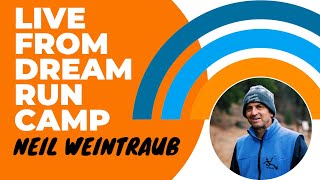
In this conversational interview, Matt Fitzgerald talks with longtime Flagstaff runner, archaeologist, and co‑founder of the Northern Arizona Trail Runners Association (NATRA), Neil Weintraub. Neil recounts how a small post‑Solstice race meetup in 2001 grew into NATRA, a Saturday‑run community that has persisted for over two decades. He describes the evolution of local races—including the Solstice, the Big Brothers Big Sisters Half Marathon, and the Flagstaff Running Series—detailing how volunteerism, early web pages, and later social media helped expand participation. The discussion moves to practical issues such as limited track access, the need for a new community track, and the challenges of finding flat land in a rapidly growing city. Neil shares extensive trail and road recommendations (Gold Digger, Rogers Lake, Woody Mountain, Kaibab forest roads) and reflects on the culture of collaboration, the importance of preserving the community’s “specialness,” and the pressures of housing costs and population growth. Throughout, the tone remains informal, nostalgic, and enthusiastic, with occasional humor about retirement, beer, and HRV measurements.
Chapters
Amra, as always, assistant coach Lauren Clement, almost always. There's been the rare sad exception when you weren't behind the camera. And we have a fairly full house here, folks who, a couple who are experiencing their first DreamRun Camp live. Very excited to have special guest Neil Weintraub.
Perfectly said.
Yes.
Thanks for having me.
Yeah, you bet. Yeah. So it's funny, I didn't notice I did not deliver any of your credentials. So often, like, if I have a professional runner here, it's just like, you know, Nike-sponsored professional runner. But I'm like, well, do I introduce you as an archaeologist? And if we— there's got to be some kind of relevance to running.
Yeah. Yeah.
And so If I were going to lead with one of your, like, running credentials, like answering the question for the folks who don't know you, um, well, I'd say I was the co-founder of Northern Arizona Trail Runners Association.
Yeah, you know, that's been a very big passion of mine for the last almost 2 and a half decades. So, uh, you know, and also coordinating a lot of the local races here. Which takes up quite a bit of my time in retirement now. So yeah, the archaeology stuff.
Retirement, right?
Retirement. Yeah, yeah. I made a few mistakes thinking, oh, I've got— I'll have all this extra time now and I'm not driving back and forth to Williams. And immediately thought, I could fill that up. And that was a big mistake. And some— somebody, a good friend of mine, said, Neil, take 2 years off when you retire. I was like, huh, should have listened.
Okay, that's a good tip. I'm going to tuck that one away.
Yeah, yeah, I've been telling everybody that that's the big mistake I made.
I could see myself doing the same thing.
Yeah, absolutely.
Yeah, so for those who don't know, what is the Northern Arizona Trail Association?
Northern Arizona Trail Runners Association. It's just a It's really just a meetup group that we started after our Solstice race in 2001. And actually, I— that was the first year I actually ran it. And after the race, a bunch of us were sitting around and we thought, you know, I don't know if you guys have ever done— you've heard of the Imogene Pass run, which is up in from Ouray to Telluride, a great race. And You know, they have 1,000 runners doing it, or, you know, now 1,500 I think is the limit. And we couldn't get 35 runners to a trail race here back in 2001. And we just at that time kind of kicked around some ideas about what we could do. And the biggest thing we thought we could do was start a running group on Saturdays and get people excited about running trails, because still at that time, I mean, there were a number of us that have been around Flagstaff for a long, long time, and we were loving that we're on the trails. And, um, but you didn't see a lot of runners. You'd see them out on Highway 180 or, uh, you know, just hitting the early stages of the urban trail system, uh, but they weren't getting out into the national forest, which is probably our greatest resource here in Flagstaff, is that we're surrounded by two of the most incredible national forests with endless roads and endless trails.
Yes.
And so we thought, well, that's, that's how we're going to do it. And I had, at that time, that was pretty early in dabbling in web pages, so I taught myself HTML and, you know, started an email list with 6 people, and that sort of fed off of each of itself. And, uh, and then, um, we thought that the race, the, uh, Solstice Race, was originally conceived by a couple other friends of mine, and, uh It was just an 11.5-mile grueling race up on the Sunset Trail, and it was really challenging, and everybody thought, this is beyond my ability to do this. And so we thought, well, you know what, let's stick a shorter course in there for beginners to— and that's when it exploded in 2002, the first year that we were officially NATRA, and, um, it just kind of took off like wildfire from there. And, uh, the race became a sold-out race, and it just kind of built the community. And as things progressed, we went from web pages to social media. We just kind of stayed on top of that. So, you know, we were one of those early groups that kind of embraced the social media scene. Yeah, it was a new way of getting people interested in running. So that's kind of how it all started, but You know, the thing I think we're so proud of is that we've been running together for 23 years now without fail every Saturday unless there's a big event that we're helping volunteer at and everything. So it's just really a social— we joke about it now. When we started the running group, it used to be, oh, well, let's go out for an 11, 12-mile run. Well, it takes us a lot longer to do that, so now, now we're doing 5, 6 5, 6 miles. We have walker. I just had my hip replaced, so I go walk. I do an out and back or something. We've gotten slower as we've all gotten older, and, uh, but, you know, a lot of us been running together regularly every Saturday for 20, 23 years. And now we spend more time having coffee after the run than we do when we're actually out on the trails. So It's a lot of fun.
Yeah.
But yeah, so that's basically what Natchez is. Yeah.
Well, it's a testament to your success that, you know, the first time I ever really did any running here was 2017. And like what you described in 2001 is unimaginable to me, you know, just, you know, I mean, because like it was like we were— I was in— I was here for, you know, the entire summer and I was in the national forest running all the time. And like, that's because that's what all the locals were doing. They, they showed me where to run. Uh, it's just hard to imagine that like that wasn't happening just like 16 years before.
Yeah, you know, races were, you know, the one of the races I direct, the Big Brothers Big Sisters Half Marathon, that actually started out in 1978 as a trail marathon. I mean, it was a trail marathon. Um, I mean, not really trip, but it's on the forest roads. So the forest roads had always been taken advantage of, you know, even the races that were at Fort Tuthill, those were out on the trails. But you just didn't see a lot of people out, out and about on the trails. It was mostly on the tracks when, you know, the tracks were a lot easier to gain access to and you could open the gate and walk in.
So not everything has changed for the better, right?
But the, you know, the Flagstaff Urban Trail System, that's all— that pretty much got going in the late '80s. And I don't know if you've interviewed Nat White yet. Nope. He would be a great— he's the kind of the godfather of all this. He moved here in '69 right after, you know, the Olympics had been in Mexico City and Flagstaff was really put on the map back then for the first time. But by the time I got here in the mid-'80s, you know, people knew about it. You know, I thought about how, wow, this is great. I came here, it was kind of very much a fluke. I needed credits for my anthropology degree, which came very late in my college career. College career, I was at a small college in Iowa, Grinnell College, and my professors at the time said, Neil, you know, you can pick up 4 credits if you come out to Flagstaff, Arizona with us. And I was like, well, that sounds good. I really didn't— I had plans to go be a camp counselor again back in New York, and that sounded a little bit more exciting to me. And so myself and 8 other students, we, we hoofed it We all carpooled out, and I saw the peaks for the first time, you know, coming, coming across. I think when we got to Petrified Forest, and I was getting pretty excited about, you know, doing my first run, and at 7,000 feet. And I think the first day we went, we went out to our site, the excavation site out off of Camp Townsend-Winona Road, and we came back and I thought, I'll go for my first run. And we were living at the top of Campbell Avenue, if you know, it's out on the northeast side of town. But we were right at— we were renting an old ranch with some dilapidated buildings. And so I thought, oh, this is cool. And the run started out dropping down Campbell Avenue, and, and we had already become regulars in those first couple days at the what was the Silver Saddle Saloon. Now it's the Timberline Tavern, I think. And so it was exactly 2 miles to the bar. So I went down feeling pretty good going downhill, you know, on my first run at 7,000 feet. And then I came around and, you know, back on 89, doing pretty good. Started going up Campbell Avenue, which is probably a 200 or 300-foot climb over the mile or so. And, uh, you know, I always like to finish my run off with a sprint, so I kicked it in. And, you know, I was trying to impress a couple of gals on the— no, not that they were paying attention or nothing. But I get to the top, my professor's out, you know, everybody's milling around getting set up, and suddenly I can't breathe. I'm grasping for breath. So Dr. Whitaker pulls pulls out an artifact bag, you know, just a brown bag, and he says, Neil, you need to— you're hyperventilating. Take this bag. And sure enough, that was the last day I ran that summer. Went back to college.
One and done.
Bucket list. I was one and done. Yes, I once ran it several times, and, you know, I thought that was the end of the story. And, uh, Little did I know a year later I'd get an internship after graduating. My professors took me out here again, and I was living in a chicken coop at the museum in Northern Arizona for 2 months, which went into 2 years. And back in the day, I mean, you guys have probably run up there on Schultz Pass Road. That was my backyard. You know, everything was open back then, and there was so much less development. Every morning I'd go up Schultz Pass or up Eldon Lookout Road, and I was in, I was in heaven. I'm like, man, this is like the best place to run on the planet. And then of course it wasn't long before I found Buffalo Park, and, and, uh, I did find the best place to run next to Central Park. I was like, wow, this is Flagstaff Central Park. The views here are a little bit more my style.
Yep, it is our Central Park.
Yeah.
Um, lingering on the question of, uh, of track access. Oh yeah, because I figure I'm talking, I'm talking to the right guy here. So, uh, like, how do we get a community track built?
Oh man, I— that—
we need it.
We need it. Um, man, the floodplain looks pretty good right out your backyard. Better talk to the Army.
Yeah.
Yep. Um, yeah, I mean, that would— I honestly, because I'm not, I, I'm not really into running on tracks any longer, it's sort of one of those things that I don't think about very often, but I hear about it.
Yeah.
Um, you know, and, and back in the day it was, you know, just about any time of day you could go to any of the go to any of the schools and jump on the track. Even, you know, back east it's not an issue. I mean, my sister-in-law lives in Pittsburgh and every time I go back there I can go to the nicest high school track, Mount Lebanon, got a beautiful, beautiful track and just walk right on, no questions asked. And so it's always sort of been a mystery how that all sort of got locked up. I mean, I think my understanding is you can use it after hours, um, but I just don't know how that's playing. Uh, and I know there's the, uh, people were going down to Sedona to do the speed work, and I imagine they're still— that's still available.
But Cottonwood.
Yeah, Cottonwood. And, uh, so yeah, I mean, I think there's places, but you Yeah, and I thought there was one track. Was Sonawa available?
Uh, not to my knowledge.
Okay, it might be. Okay, anyway, that might be worth looking into. But how do we build one? How do we build one?
Uh, you're an archaeologist, right?
I can survey you the land.
That's a start.
But it's, uh, yeah, it would need to be done with private, you know, some kind of private in-holding.
I just, I say maybe we just try to get one built overnight, like out there. Like we just like, we stage it. It'll be like D-Day. We'll just stage like all the equipment we need will be hidden somewhere in the forest and then sun goes down and go.
See how that works out for you.
You know, sometimes it's better to ask for forgiveness than permission.
In that case it won't. Trust me. But I mean, I thought you'd like it. I've always— Buffalo Park serves the— for me, that always served the need. I mean, early on, and we've got team-run Flagstaff with the access on Tuesday nights, and I think that's a good example of how things could be done. And yeah, I mean, that's other than sort of finding those groups. I mean, back in the day, I mean, I remember with Trina Painter, you know, she had her Team Trina and we would just walk onto the NAU track and do that. And we could walk into the dome. But, you know, the town since I've got— it was just under 30,000 when I think I got here. 85. And so now you're talking about, you know, almost triple, more than double, and getting close to being tripled. So the population has gone up, but the number of, uh, you know, there has not been a new track built since, uh, probably since Sonawa High School was built. So, um, there is, uh, you know, I mean, there's proposal for, you know, there's a bunch of new schools. Marshall's being built. I think Kenzie is going to be relocated onto the NAU campus. But man, you know, there's just finding the right spot that's flat. You got to— there's a lot of challenges with that. So yeah, I don't have an answer to track access.
It's worth a try.
Yeah.
I'm going to pause for a commercial break. I would like to say a kind word about this Sierra Nevada Trail Pass IPA. Trying it for the first time, non-alcoholic. Usually if I'm holding a beer during one of these interviews, it's, it's the real deal. And but I want to see, like, I want to test because I take— I measure my HRV, heart rate variability, every night, and everyone says alcohol makes a huge difference. So Anyone want to place a wager on what my HRV will be overnight? My highest ever is 32. Some kind of cool prize, like a signed copy of a Matt Fitzgerald book. No? We'll do it on—
What are you going to guess?
33. I don't want to be too optimistic. I'll be kind of bummed if it's not higher, you know what I mean? Because everyone says it. Anyway, it's neither here nor there. But anyway, it's pretty tasty.
Yeah, good. Yeah.
So is the Downtown Mile on the 4th of July one of your events?
So the downtown, yeah, it's part of our— 20 years ago, we, a number of us back in the heyday of doing hand timing, we collectively said, hey, let's help each other out. So the handful of races that were taking place, we basically came together and, you know, everybody knew each other, so we're all friends. And we said, hey, let's help each other out with timing. So we created this Flagstaff Running Series, and it was basically an idea to sell a package to the community at a reduced price, and then we would have all the volunteers from those nonprofits all helping out, and it just, it worked like a charm. You know, we would put flyers around town, and again, that was the day— I mean, we were doing online registration through Active, I think, at that point in '05. And so it just kind of started slowly growing, and, uh, you know, we would do all the hand timing and pulling bibs and reordering them constantly. We even had this crazy point system that I kind of created in my head, which was based on percentage finish. And if, you know, you did— you took your best 3 of 5, we'd calculate a standing. And now that we're in the world of spreadsheets, that was a lot easier to manipulate. And I was doing all this when I had a full-time job.
So no wonder you had a hard time slowing down, right?
Well, and then we had sponsorship from Salomon in those early days and Blue Cross Blue Shield. So it was starting to really, uh, you know, get a, get a strong footing in Flagstaff. And then, uh, we had the great fortune of, uh, Gail Hughes coming along, who was just a database guru. And she was in on a lot of the early, um, uh, the early, uh, stages of those database managements and chip timing. And so suddenly we had a chip timer come to Flagstaff, which was super exciting, and she was more than willing to teach us and help us out. And, uh, so suddenly that— and then Run Flagstaff, well, at the time, uh, uh, I was at Runner's High, so Vince, uh, you know, started to help start the running store, and then that took off, and now that's progressed into them doing all the chip timing. So The partnership still exists after all these years, and we have the oldest races and towns that are still part of it. So, um, you know, we, we still— we don't have to help out with timing as much, uh, but we still kind of package it together. Yeah. And, uh, you know, basically have that for the community to, you know, it's, it's a smoking deal when you get these 5 races, including the big one that I help direct the Big Brothers Race, which is 47 years old, and it's one of the largest and oldest half marathons in Arizona. So, um, you know, is that in August? That's in August, yeah. It's August 10th, and we're real excited. We get— is that— you have a dream camp right about that?
Yeah, I'm just looking around the room just like, yeah, let's see, signing up right now.
Well, we can, uh, we, we can, uh, We can make that happen.
Yeah, that sounds, uh, that sounds cool.
Yeah, it's a great, great event. And, uh, that's one of my favorite things to talk about is, uh, the fact that I, uh, I got on the board of Big Brothers Big Sisters, uh, at the same time that I was starting NATRA. And the Big Brothers Half Marathon was sort of a a test for me as a race director. But I had this crew of Big Brothers board members that had started the event, you know, and had— some of them had run the event. It's the sheriff of Coconino County, it's the, it's, uh, the police chief of the city of Flagstaff, and all these very prominent members of the community that did all this for just because they thought it was a great thing to do. And they were sort of my mentors in, in rearing me to start directing races voluntarily, you know. And, and they made it fun, and that was the best part of it all, was they just, uh, they knew how to party and put an event together. And so I kind of fed off of that. Yeah. And I said, okay, well, I'll direct this first race. We used to be at Fort Tuthill, but we moved it down to Observatory Mesa, which is probably one of the first places you went running when you were here. And so the race started downtown, went on top of the mesa, and you know, when I took it over, it was probably, you know, we'd consistently have about 100 runners out at Fort Tuthill. But I was like, we could be doing so much more. And then we started advertising it digitally and on websites, and and, and we really started attracting more and more numbers, and we finally got pretty close to 600 one year back in the mid-2010s. And, uh, but these guys that were there in 1978 for the first one, they're still my crew today. Oh wow. In laying out the race, and it's turned into like more than— it's now a 3-day event for the board. Where we have a pre-race party, barbecue. We used to do it on the course, now we do it downtown. Then we have a day of packet pickup, then we have a pizza party for the runners the night before. It just becomes this huge event. And then Saturday is the big race. And we've invited, so walkers now do the half marathon. They have a, they can start at 6:00 6 AM. Non-competitive runners that just want to get the really cool finishing medal, they can start at 6 AM. They just don't end up in the division categories with the competitive runners. So it's become this really cool gathering after 47 years that just kind of continues to feed on itself. And so that's, uh, yeah, if you guys are looking for a great race, yeah, it's really cool.
Yes. Oh, I gotta get fit though.
Oh, you don't have to be fit to do that. Running up the hill, that's, that's the thing. My, my— every year I always enjoy it. Um, you know, when I'm giving my instructions, I tell everybody, okay, who's here from the valley? Whose first time is it on the course? Raise your hand. And there's always a bunch of hands that go up and say, walk the first mile and a half, if you know the Mars Hill Trail. You know, it's pretty unforgiving. But the very beginning of it from— if you park at the— our race start is right there at Thorpe behind the Adult Center by the tennis courts. And so you get about 50 yards and the gradual hill starts going up. And then after about a mile of that gradual hill, which I hate that— I, I don't mind that quarter mile that goes straight up. I can suck it up and do that. But it's that first lead-in, and that's how you're starting the race. It's like, you folks from the valley, walk, just walk, trust me. And then people will always come back, thanks for the advice, that worked, that worked, you know. So yeah, and that's pretty much our other race. Solstice used to be up on the peaks, but because of the fires, we've been pushed away from the peaks. And so I brought it out to my old forest on the Kaibab over by Parks. And so the Solstice, it actually is now a prairie run in probably the prettiest setting in the Flagstaff region, but it's flatter than a pancake. But the way it's designed now, it's the first part of it. So we have the short course, which is 6 miles. It's an out and back. So everybody sees the elite runners. So last year it was Rob Carr and Rachel Smith, out there dueling it out, but every runner, no matter how slow or faster they are, they get to watch those guys speeding back towards the finish before they have to do the 5-mile outer loop. So I think the way we've done that has been really popular. Yeah, even though, you know, people miss the old course, but there's not much I can do as a race director when I'm told the road's closed and you're not going to go up there, and it's not safe to run on a lot of those trails because of the fire. So, you know, we had to— you know, that's one of the things about Flagstaff. You really, you've got to be adaptable. So there— I mean, you've been here since 2017, so there's been forest closures, and that's something that everybody has to understand is that's for public safety. I knew the last big fire, a friend of mine was up there when that took off. She saw the plume and they were trying to get people off the mountain. You know, this time of year, it's just— you're taking your— you know, you're taking chances when you go up there, which is why you should always, you know, be with a partner, you know, be in communication. And, um, you know, there's a lot of safety that people have to be concerned with when they come here and take off into the woods, especially this time of year. But Yeah, so that's the racing, kind of the racing stuff that I've, I've been doing. And yep, keeps me, keeps me busy. Yeah, you know, from designing bibs to designing shirts and getting the right shirts ordered 6 months ahead of time, you know, and guessing at that. That's, uh, never-ending, but I, I enjoy it. And I've got the same people I work with year after year, the same shirt company. And so it's just like, what are we going to do now? Throw out ideas. So, but it's fun and it's a hobby, you know. Like, if, if you ever do this or go into race directing, I, I do it just because I love doing it and it's fun. I don't— I was like, right from the get-go, I'm never going to pay myself to do this stuff, you know. It'll benefit the nonprofits 100%. And that way I'm not putting pressure on myself, you know, say I'm a professional race director, I've got to do things this way, right? Um, that's all out the window. So I could sort of have my own creativity and say I'm going to try this and see if it works, as opposed to having to worry about the bottom line, right? Yeah, you know, so that's, uh, one of the things I think that makes it really fun for me, as opposed to the pressure of I've got to get so many runners into that race, or I've got to do this, or make so much money. It's, it's, I think, one of the things that makes a lot of our local races unique, because we do have these folks that are just doing it for the community, which is just awesome.
Yeah.
And that's, that's the way it was when I got here in the '80s. And I— Nat White, who I mentioned, he had his own organization, Flagstaff Road and Track Club, and they put on a series of 10 races across the Northland. There was one in Winslow, there was one in Williams, there was, uh, there were a bunch in Flag. And a lot of those races kind of fell off the radar in the '90s when that all kind of fell apart. And, uh, but those were amazing. And they were doing everything by hand. They were calculating standings in each age division all by hand, and the Daily Sun would print out the winners of each race. And that was all for like 50 or 60 runners back in those days that were the regular crew. So yeah, a lot of changes.
Yeah, yeah. Which you, uh, um, first of all Does anyone have a question? I'm just like completely dominating.
Yeah. All right. I'll just, I'll just keep going.
Keep marching. Yeah. I mean, your last remark gets to the question I had teed up, which is like, how do we preserve the specialness? Because like, you know, you came here and you and other like-minded runners thought, this is pretty great, but it could be better. And then you actually rolled up your sleeves and made it better. And now people like me come in and like inherit that. And it's just so great to get the history because it only deepens like my sense of like how precious it is. And like, you know what I mean? But like my concern is like, you know, sometimes growth brings risk, you know, and, and the specialness could be lost and people are like, what happened?
But it hasn't. And, you know, that's been the beauty of Flagstaff and the beauty of, you know, like groups like you. You say, how do I get involved with the community? Right? And you jump in and you get involved with the community. And, uh, you know, we've got this great column in the Daily Sun. I don't know that there's too many communities that have had a weekly column for 15 straight years every Sunday. And, and that, that history is because we had, uh, uh, the editor of the Daily Sun back in the day, uh, Randy Wilson. He was a runner and he was like, oh, this would be a really great thing to do. And of course there's a bunch of us in the community that said, all right, you know, let's, let's do this. And it's usually like this groupthink. And even with all the different, you know, we have— what I love, you've got a running group you can go run with for free any day of the week in Flagstaff, you know, and, and they're all so welcoming. Yeah, you know, whether it's the Bagel Run or the, you know, we got the Run Flagstaff. Now Hoka's got— Ben's got his run on Friday.
Yeah, we're there every Friday.
We've got our run on Saturday. Uh, Sunday there's the, uh, there's the Front Runners group. Uh, Mondays and Wednesdays there's the Brew Run Club and the Historic Run. And then Tuesdays there's Team Run Flagstaff. I mean, it, it, you know, there's so many good things going on, um, and so many opportunities for racing and, and socializing. And that's what tie— I think that's what ties this community together is that we're not competing with each other. We're working together and finding ways to share the information together because everybody's coming to Flagstaff, you know, and especially in an Olympic year like this. And it's so exciting for, you know, to go up to Buffalo Park and it's like a who's who of runners, you know.
And I've seen Matt Fitzgerald there, for example.
Right, yeah. It's awesome, isn't it? But the cool thing is a lot of those folks do get involved in the community in one way or another. They step up, they go to a race, or, you know, uh, looking at Abdi, and he showed up at our— with his book, uh, was it 2 years ago at our Big Brothers, uh, gathering? He, he, uh, was able to sell a few books to the runners and just, it's inspiring when you have that mix of your most beginner runner. Team Run Flagstaff had this great step into running. This is how my wife, who hated running when we met, everybody would say, are you a runner, Diana? No, I'd only run if I'm getting chased by a bear, you know, that kind And then, uh, in, you know, in 2019, she started stepping into running, and we had the pandemic. Her twin sister was already marathoning, and then they started competing in the virtual races that we had set up. And next thing I know, my wife is passing me. I can't keep up with her. She's now being coached by Craig Hunt. Um, and so Coach Hunt has her— she's now one of the top runners in Flagstaff, and she's in her mid-40s and running like the kids run, you know.
Amazing.
And yeah, and, uh, we were just back in her hometown in Erie, Pennsylvania. We jumped into a small race. She won the women's race, almost caught the second place guy. We were just like, wow, yeah, it's more than that. And Here we are, uh, at lower elevation. So of course that was, you know, like one of our first experiences dropping down after all the hard training. I mean, that was the thing about— for me, when I first got here, my goal was to run the New York— my first marathon was going to be the New York City Marathon. So in '88, I trained that whole year. Big Brothers— I did the Big Brothers half marathon, and I had a training partner. And, um, you know, it was like going to New York was— knew I could do it. Didn't break my goal of breaking 4 hours, but I soon would and learn all the benefits of high-altitude running. And for me, it was, you know, we go down, race in Phoenix, and I'm running a minute per mile faster down Phoenix just in a 10K or a 5K. I'm like, there's all the evidence you need, right? So Flagstaff magic, it is. It's the air, it's the magic in the air, you know. And, uh, you know, I feel pretty good about having lived here for almost 40 years and building up those blood cells. And so, yes, it's, uh, it's, it's a special place. And if you can stick around, it's that much more special. That's been, I think, one of the hard things for a lot of people is it was one thing when I got here in the '80s and I was paying— when I moved into my place in North San Francisco, 2-bedroom duplex, it was $300 a month for 2 of us in the nicest part of town, right at the base of Buffalo Park. Yeah, that was— and the landlord did not— he didn't raise it. I lived there for almost 7 years, even 6 years, and he didn't raise the rent once. And so that's— those aren't the stories that you hear in Flagstaff and anymore, you know. And so it's become a difficult place for people to get their foot in the door.
Yeah.
And establish any kind of residency. So, um, yeah, it's—
there's a lot of challenges to that, but all you got to do is start a running camp.
Brilliant. It's brilliant. I'm looking at this place thinking, oh my God, and now you're on the— or the last extension of this urban trail.
Yeah, yeah, which I didn't know when I bought the place.
Oh really? Okay. No.
Yeah, yeah, I just got lucky there.
Yeah, yeah. But this is a great jumping off point now for—
it is, you know. Yeah, it's kind of ideal.
Yeah, yeah. Woody Mountain Road is not my favorite road to run in. I know there's a heck of a lot— I wrote a column about that.
Did you?
We were driving down to Rogers Lake one day. If you haven't done the trails out by Rogers Lake, the Gold Digger and, uh—
have not.
Oh my God. And that connects over to Fort Tuthill. So the Loop Trail—
tucking this away—
but you can drive down there, uh, and hop on, uh, Gold Digger Trail, which ties into the, uh, uh, the Loop Trail, which will take you over to Fort Tuthill. So you don't have to run the washboardy, uh, Woody Mountain Road, um, because that's always— it gets so much heavy use out there. Yeah. And in the summer, all the dust that gets kicked up, it's awful. I don't know, I always hear about the pros running out there, and I'm like, that is the last place you'll find me, uh, you know. And you can turn off of there and find plenty of forest roads, right, or less used. But running on Woody Mountain, that's a freaking nightmare. So, you know, my recommendation is go park down at, actually, the first pullout area there on that, um, uh, Gold Digger, uh, or the Two Spot actually. There's some interpretive signs. You can park there, run your heart's content on the trails, or you can run up to, you know, if you want to gain elevation, just run the road up to the Woody Mountain Lookout. That's fantastic. And the last pitch is about a half mile straight up, so wide road All good.
You just earned your dinner.
I can earn more than that. Go run any of the roads west of here that was towards the Kaibab National Forest. You won't encounter a soul. A lot of the runs— yeah, actually the roads are marked, the miles are marked. And so Bill Williams Mountain, the road around the 108 Wait Road. It's like a 22-mile loop that's all got the mile markers. I think— I don't know if the half-mile markers are posted, but those are all roads. Yeah, you're gonna encounter less people on those roads. Yeah, you will on the trails here.
Yeah, and all that stuff, stuff is so accessible for us.
Yeah, where we are from here, it's like you're on I-40, there's no stoplights, and bam, you know, you're Observatory, or even, you know, the 191 gets a— or the 171 gets a lot of use. I know a lot of the runners go out there, but heck, you go to the next exit, the Parks exit, you can run the old— that's the old road to the Grand Canyon, Spring Valley Road, right there north of Parks. You can run that forever, and that's a nice road. All right, yeah, cool.
I'm going to follow up with you because that was a lot.
Yeah, yeah, cool.
You did earn your dinner.
I always like doing that.
I'm fixing to eat it. It's been an absolute delight to have you.
Yeah, well, thanks for having me. It's great to finally meet you.
Come back anytime.
Oh, hey, I'll eat dinner anytime. All right.
More from Matt









Hosava Kretzmann: Live from Dream Run Camp, Hopi/Diné runner and Flagstaff local!

Chris Thornley: The Story Behind Squirrel’s Nut Butter: Funny Name, Serious Lube

Nick Arciniaga: Running Plateaus, Chasing the Olympic Marathon Team, and Supershoes!