Bothsides TV Episode 12 with Matt Mazzeo, Managing Director of Lowercase Capital

In this episode of Bothsides TV, host (Speaker A) interviews Matt Mazzeo, Managing Director at Lowercase Capital. The conversation moves from Mazzeo’s personal background—growing up with a mother who was the primary breadwinner, receiving full‑ride scholarships to elite schools, and the formative effect of financial aid—to how those experiences shape his venture‑capital outlook. Mazzeo emphasizes the importance of a founder’s narrative, distinguishing “mission‑driven” entrepreneurs from mercenaries, and describes his practice of spending the first half‑hour of every meeting learning a founder’s story. The dialogue also explores broader themes of class bias in the U.S. and U.K., the need for equitable education funding, and the role of financial aid as a social equalizer. The latter part of the interview shifts to a discussion of Uber and Uber Eats, with both participants sharing personal usage anecdotes, reflecting on how ride‑hailing has reshaped Los Angeles’s transportation, safety, and nightlife, and how trust mechanisms underpin platform success. Throughout, Mazzeo discloses his own investment in Uber and his belief that the company’s core mission remains strong despite side ventures. The interview blends personal storytelling, social commentary, and venture‑capital insights, offering a window into Mazzeo’s values and the cultural forces influencing his investment decisions.
Chapters
Welcome to Both Sides TV. I'm super excited to have Matt Mazzeo here with me today from Lowercase Capital. We've talked about you coming in for maybe a year.
Yeah, yeah.
And I'm super happy to have you come in today. And in fact, one of the reasons we delayed, one of the reasons is You were in the midst of fundraising.
Yeah.
And maybe it wasn't the world's best time for you to be doing any marketing while you're fundraising. And it turns out your fundraising went okay.
It went great.
Yeah.
It went great.
So tell us about Lowercase Capital for people who don't know.
Yeah, so Lowercase Capital is an early-stage seed fund. It's small. It's just my partner Chris and I. So Chris started the fund. Maybe I should start there just 'cause a little history's always good.
Sure.
So people know what Lowercase has become now. Chris started the fund right as an angel investor, sort of 2007. He was working at Google. Chris's story is actually fascinating. Self-made kid from Buffalo, terrible entrepreneur, lost all the money from his first business, which he used his student loans to do while in law school at Georgetown. Turns out he's a much better day trader. He was for a number of years. Ended up going up $12 million day trading in college. And then over a weekend of bad trades ends up going down $4 million in debt. And basically spends the next 6, 7 years working his way out of that debt. Law firm Fenwick, startup Akamai and Spadera, and then ultimately ends up at Google in 2003, I think. And from then to 2007, basically he's doing like special initiatives, whether that meant building data centers all over the world, or whether that meant being, you know, carrying Eric Schmidt's bags. You know, he's kind of all over the place at a time when Google was still a place where you could maneuver a little bit more fluidly. And then 2006, 2007, starts placing a couple angel investments and uses those early angel investments into Photobucket and Twitter and parlays them into his first fund, lowercase one, around a few different theses that he was observing at the time. First and foremost is sort of like a well-documented one now, which is you needed less capital to start companies than ever before. You could start to become a more institutional seed investor and add tons more value than just being a hands-off angel.
In that first set of investment activities, so it started prior prior to there being an institutional fund, it was his personal money?
Yeah, he was writing checks out of his own bank account, and eventually, and trying to spend a lot of time convincing other investors to come on into some of those investments.
And it was '06, '07?
I think so, yeah, I think that's when he started.
Do you know roughly when the first investment in Twitter was made?
I think it was '07.
Okay.
And that's kind of what ended up leading to him, a few other funds, I think the Industry Ventures guys came to him and said like, hey, you should actually take this more seriously. He ended up putting together Lowercase One, which was just an $8.5 million fund, and doing, you know, making a life out of it. He left his job. I think the New York Times said, you know, idiot leaves the most, you know, luckiest job in the world, leaving Google in 2007. And he takes his risk, and he sort of puts a lot of his own capital to work.
And it's pre-crash, right? It's pre-September '08 was the last crash.
Yeah, yeah. I think it's right prior to that moment in time.
And so lowercase one, $8.5 million. Chris Sacca investing that. What are some examples other than Twitter and Photobooth?
He goes out of Twitter, Instagram, Kickstarter, Heroku, Twilio, dotCloud, which has now become Docker, and Uber.
And were there any successful investments in that fund?
I think we're, I mean, a lot of it we're waiting to see.
But I think the press, —press on Lowercase One is that it perhaps will end up being the greatest venture capital fund ever. In terms of percentage returns?
Yeah, in terms of multiple on return. I mean, he was one of the largest investors in the seed round of Uber, which I think drives a lot of returns, especially when you're a fund of that size.
And so he invested this capital. When was Lowercase Two? Did that precede you?
So he, Chris then raised lowercase Spur and Stampede, 2 and 3, I think in 2011 and '12, and I came in to basically head up early stage for 2 and 3 almost 3 years ago now.
And are the rough sizes of Spur and Stampede public? Is that? We've kept, um, so— You don't have to say stuff that's not public.
Yeah, we've kept them relatively small. All of our funds have been under $50 million. OK. So I think as opposed to a lot of VCs which sort of see success in Fund 1 and start to spiral up, we've sort of stuck to our knitting across each of our funds.
And Spur and Stampede, were they raised at the same time? Is that con—
Around the same time, with Stampede being focused primarily on media tech. OK. And Spur being a much more broad-based fund. And then now we're on Fund 4 in Frontier, and it's sort of encompassing of all of our funding. Both the media strategy and the broad-based strategy.
So Spur, which is broad-based, Stampede, which is media tech, you were involved almost from the inception of those?
Spur had invested some of its funds, Stampede almost none of it. And so I got sort of exposure across both of those funds.
And we're gonna, I promise at some point, pivot off of Chris, but since he founded Lowercase, I think it's a good time to— Yeah, yeah, of course. So he decided at some point, perhaps the most successful early-stage investment fund in history in Silicon Valley, all of those names are Silicon Valley firms, and then he moved to LA.
You know what's funny? He— people think of Chris as an SF guy, but he had sort of extracted himself from that environment years ago. So he left and actually built Lowercase living in Truckee and then bought a place in Manhattan Beach. And sort of commuting between the two. And he found there was this huge advantage for him, and I think likewise for me, in not being in the white-hot center of it all, sort of the echo chamber of it. And he found he was being, by being located in San Francisco for years, he'd built all these great relationships, but he was having his life dominated. The same way that your life gets dominated by your inbox when you're in the white-hot center. People are asking for coffees, for lunches, for dinners, for events, and sort of, he was being more reactive than he wanted to be in the relationships that he was developing. And so he moved not far away, but far enough that he was not being rude by not taking every coffee that came to him. And then he spent a lot of time being offensive in terms of like the— Not offensive. No. Going on the offense. Yeah, no, he was definitely offensive. He's also offensive. He's also offensive. Let's be straight. Yeah. No, but being like proactive in terms of the relationships he was developing. So he would bring people out for, you know, he has a— 'Cause one of the nice things is we don't have any office space, so he was able to buy a little place in Truckee and then a nice place right next to it, and he'd bring out teams and just spend the weekend jamming with them on product, and that's, you know, I think how he built some of his closest relationships, who are still some of our closest friends, LPs, founders, is just like the jam pad at Lowercase.
So the lesson I'd like to give to people about that, at least I'll draw my own conclusions, I always say to people, if you wanna build long-term relationships, you need to find a way to get out of the sitting across from a desk with them.
Yeah, no question. And when—
because otherwise you're a transaction. When I come to see someone, whether it's an LP that I'm trying to raise money from now or in the future, when it's an entrepreneur that I wanna get to know over time, in that artificial environment where I have the 11 o'clock to 12 o'clock slot where you had a 9 to 10, 10 to 11, you've got a 12:30 to 1:30 lunch. 3 days later, you barely remember. You barely remember anything. And even if it was a good meeting, what I remember is, ah, I kinda like that guy, but you don't remember much. The reason that I really like to change up my life 4 or 5 times a year, put myself in a position to go to Founders, or Web Summit, or to South by Southwest, or to one of these events and live fortuitously, not schedule meetings, is it's those encounters that you have with people that have the breakthrough long-term relationships.
I totally agree with you. I think we get lost in the indulgence of, and it's really hard to remember what you ate for lunch. Same thing with meetings, you get lost in it. In fact, Chris and I met at South by, just as an example, like, that's where we built our relationship. How did you meet him at South by? So at the time, so I was in early, maybe it was 2007, so early before South By had become this crazy hyped up environment. It was still primarily for devs and launching products and you could really break through the noise. I was a young agent at CAA building out an entire practice around tech and venture and social. And I brought a client, or a client was going down, Gary Vaynerchuk, who's now pretty active in tech and media. At the time he was a wine expert. He built his parents' wine business called Wine Library from nothing to one of the largest e-retailers of wine. Gary, as a way to sort of understand tech better, leveraged his wine expertise, and so he basically had like a late-night wine jam session. So he'd bring like a case of his best wine to his hotel room at the Hilton, two twin beds, he and his brother AJ, and then he invited like 10, 15 buddies to come to the room. At the time, nobody had really accomplished anything. Yeah, maybe the most successful in the room was Garrett Camp, who had maybe just sold StumbleUpon or had StumbleUpon. The rest of us were just nerds who enjoyed learning about tech and debating, and there was no shortage of opinions in the room. So now looking back, a lot of those people are founders that we've worked with in other funds that we've built relationships with. And so it was like Garrett and Travis from Uber, Matt Van Horn and Dave Morin from Path and Apple, I think, at the time, Aaron Batalion, LivingSocial, Ryan Starver, Twitter platform, and now, what's it called, Redpoint. Owen Brainard, who manages money for a lot of those people, Michael Galpert, who built Aviary and is an active angel, Matt Mazzeo from Jawbone. There's just a bunch of people who, again, were super early in that moment.
Fast forward a couple years, I was at one of those. That's how I met Gary Vee, that's how I met Travis, that's how I met, you know, a bunch of the guys were there. And by the way, and it was Ryan Holmes. I think we took one of those tuk-tuks or whatever things that you— And by the way, like, I think I got there, Dave McClure was there. I think I got there. Yeah, McClure was an actor at a bunch of those. I think I got there at like 12:30 at night, and I think I went home at 3:30 in the morning.
Yeah, we go all night. We still do it. It's probably the best thing I do every year at South by. But like, in that room was this guy wearing a cowboy shirt. He tells the story like I was wearing a suit just to piss me off. But there's a guy wearing a cowboy shirt, and he's just like the loudest. And the premise of the jam is you take a position on an issue. Will Facebook be worth $5 billion? What's the future of digital video look like? And you argue. And he and I just found each other on the other side of the argument every time. I'd be like, what about this company, what about that company? And we'd just go at it. It kinda hasn't stopped for a decade. So that's how he became my best friend, mentor, and now partner.
I know that he's loud and opinionated, but it's hard for me to imagine he was the loudest and most opinionated in a room where GaryVee's there.
You know, all of the people in that room can hold their own a little bit. Yeah, we're all like a little bit loud, and there's no shortage of— But I love it.
I love the energy that comes from GaryVee, from Chris, from people. The world is filled with people who don't wanna take positions, and I find it great to hear people.
That's the premise of that whole thing. I love it, and it's some of my favorite times.
So how did you go from that jam session to joining?
Lowercase? Yeah. So prior to Lowercase, I spent 8 years at Creative Artists Agency, which is one of the largest talent agencies in LA.
And we're gonna come back to that, but I wanna hear the specifics. How do you parlay a, I'm a young punk, You've got a fund. I've never done venture. Yeah. I think, you know, did you say to him, I think you should take me, or did he say, I need a young smart kid in LA? No, no, no.
I think one of the hardest things, he approached me 3 years ago, and from that moment we became good friends, right? So anytime he needed stuff in media and entertainment, we would have a jam about it. If I needed things in tech, he would sort of be there for me. Became an incredible mentor, a great friend, and while he was sort of building out his practice, I was building out a really fun practice at CA managing tech on behalf of the firm, which is relevant to how he ultimately sort of identified me as a potential partner, his only potential partner. He came to me and said, "I wasn't looking to bring a partner. I built this brand, I built this fund and this track record, and now I've got a fund focused on media and tech. I think you'll be better at running that fund than I will be, and I want you to come on board." I trust you, and I think you have, we knew that we had a very similar moral compass, and in a firm of just two, I think that's like the basis is trust and do you agree in terms of where your moral compass points? And so, he was like, I'm not looking for a partner, this isn't a recruiting mission, if you want it, it'll be you and me, and I'll train you and mentor you in all the things that you don't know, and I'll let you take the lead on the things where I think you're better.
And on Stampede, therefore, were you more active than he was? Were you more of a lead role?
Yeah, it ended up being actually just that it worked towards what we have today, which is very similar, which is we work across all of the funds together. So every investment we do together. But Stampede was just an area that I knew really well. At CA, I'd spent years representing talent like Michelle Phan and Phil DeFranco. I knew all the people who were active in digital video. And I knew that would be a big piece. And some of the premise that he had built was that—
Yeah, but did you know that young budding director Paul Bukadakis?
I actually did. I've known Paul for years.
He's really good friends with, uh— He's on, uh—
Oh, is he on there now?
He's on Periscope.
God, that guy is good looking. Yeah, I've known Paul for years. He's fantastic. I mean, at CA, the job was building relationships with everybody in media and tech, and so if you were a startup that had anything to do with video or social or mobile content or any of publishing or music or sports, invariably you came through CA, and invariably one of those, like, some agent or client referenced you to me, and I got to see you, sit there and take those meetings for 8 years. And so, the ultimate story is like, I loved that place, I love that place still, some of my closest friends, the clients are incredible, but Chris is like Wonka, he gave me an opportunity to come into his business and basically, finding mentors I think is everything in this industry. And when somebody offers to mentor you, it's one of the most important sort of offers they can make.
So you're Charlie. Yes.
If we get to the Charlie Chocolate Factory reference, I'm out of this one.
And so Fund IV, you raised when? End of last year. End of last year, so 2014. And does it have— is it a combination of Spur, which was Broad, and Stampede, which was MediaTek?
Yeah, it's all of our early-stage activity. So everything falls into it. There's no distinction anymore.
Roughly the same size? Is it bigger?
Of the combination, they're— it's still under $50 million.— We don't announce that stuff. It's kind of—
Yeah, I know, but just general shape and size. I mean, it's strange, like most venture funds do announce size. Is there— well, I don't need to probe, but— No, we candidly—
I think part of it is that like we're just always active. There's no— whether we're in one fund or the next, people know that we're making investments. We don't have to crow again about raising that moment, I think people just—
In Fund IV, has your role changed and did your role in fundraising change or has it been consistent since day one?
From a day-to-day perspective, very little has changed. From a title perspective, I'm now managing director but in a firm of 2 people. Chris is chairman, I'm managing director. Titles really don't mean anything for us. Activity-wise, it's kind of been the same that's happened organically over the last 2 years in that I'm taking most of the first meetings, I'm sitting down with entrepreneurs and handling a lot of that initial deal flow. I'm probably building the thesis first on whether I'm excited or not about the company. And Chris will, you know, again, all of these are 80/20, so in some cases Chris is like just super excited about a company, he'll take that meeting.
And then I imagine that if you get excited about something and decide to lead the investment, and obviously Chris at some point's gonna weigh in, that the behind the scenes now suddenly you have access to, I mean, you had this phenomenal talent set of relationships, but Chris now probably can take any investments you make and give you almost unparalleled access to Silicon Valley.
He's the best at a handful of things. I mean, he's great at being that person to help with a hire. He's incredible in the next fundraising moment. He's just built such a great network of other funds that trust, and we've co-invested. Part of our fund thesis is that we're collaborative in all our investments, so we build a lot of relationships. With other funds, and so he's incredible at helping with fundraising process. He's amazing at helping companies get marketing or that deal that like helps change the entire trajectory of a company. He's also great in helping companies who need, who are in need of sort of like a safe place to land and helping through some of those harder moments. He's an incredible sounding board for me as somebody who's like still figuring out where bodies are buried in this industry to get a sense of, Diligence of where am I missing something on this company? Here are my assumptions. Where am I wrong? Where am I right? Yeah, he's amazing at all that stuff.
And if I could give you a perspective and maybe some of the viewers a perspective, it's like the lowercase that the media knows and the lowercase that I know seem to be two different things. Here's what I mean. Yeah. The lowercase in the media is Saka Saka Saka Saka. But in the last 3+ years, at least in Los Angeles, anytime I've seen Lowercase represented at conferences, events, taking meetings, meeting other VCs, it's really been you. Has Sacca allowed you to be LA guy? I mean, I'm not saying you're not also present in Silicon Valley and New York, but like, own LA as a way of allowing you to build up your own brand, or how has that relationship worked?
I think that's one of the challenges that you have of like when you step into somebody else's brand is like how do you build a profile for yourself? And you've seen it talked, Fred Wilson talks about this for, I mean Andy Weissman and those guys are incredible. And Fred has built a real brand for himself, so how do those guys get some spotlight there? I think Chris has, from a mentor perspective, has just been incredible about not, about pushing me forward in all those moments. And I spend a ton of time in SF, I'm in SF a day or two a week every week. I'm in New York once every 6 weeks now, 'cause a lot of our portfolio's there. And so I'm on the road a ton, and he's just got no ego about being Matt front and center. His away message is even like, all our deal stuff, you should be referencing to Matt, he's the managing director here. He's been like, it's really hard to trust somebody else with a brand that you've built, to take your hands off the wheel and know that they're, gonna treat the brand with respect and like follow through on what they say, and, and, uh, he's been amazing at that.
And 3 years in, now that you have a track record of your own you can point to, you've been through the fundraising process, you've built a kind of norm with Chris where you guys know each other's strengths and weaknesses, and he knows he can trust you to be an ambassador for the brand. I mean, have you thought more about trying to do a little bit of media outreach to kind of change at least the media public perception of lowercase as two managing directors? Or is it not important, do you think?
No, I think it's important a little bit, done the right way. I think I've seen people get ahead of their skis. I think at the end of the day, like, your reputation is built on the deals you do, not the lists you get on. And so people will start to see companies that I've been actively involved in, and they'll understand what those brands are, and they'll say like, Oh, that's amazing and totally makes sense. And that's how real reputation gets built in the long run, is like other companies and other funds seeing the activity and the work that you do and like talking about that. And so I care, like part of why we just didn't announce the fund is I would rather people know me for the, for not for fundraising, just like our companies. I don't encourage a fundraising announcement.
What about, what do we have off live streaming? So on the topic you guys are on now, one question came up, a couple people, I didn't catch their names, But how does your investment thesis differ from Chris's?
Did you adopt his? Did you bring your own?
Have you guys collaborated on one for the firm? And just for microphone's sake, I'm just going to repeat it. So how has your investment philosophy and Chris's differed?
As a broad thesis, I think I adopted his more or less in terms of really nimble collaborative capital. Our fund sizes are intentionally small because it allows us to be one check in a group of, in a syndicate of other investors. We almost always, unless we feel with conviction that we can be the most valuable and we don't even need other investors in a round, which is almost never, we almost always work with other funds collaboratively. And so we keep our fund size small so we can write really nimble checks. We're opportunistic. We don't have like a geo-specificity. We don't have a vertical specificity in terms of expertise. We have to believe that we can add value to those companies, and so it's like really a service approach. And if we can't build a case for it—
Sounds like thesis-wise, you guys are pretty much on the same page. And Michael, I'm going to come back to you in just a moment after I talk about CAA, but so be ready for your next question. We're going to get some more live questions for you.
Just to finish one piece of that, which is the thesis expands a little bit. So our central thesis is, can we add immediate value to that company? We don't take the passive role in our companies. And if we can't build that case— and we've missed a lot of opportunities because to get great returns because we didn't feel like we would build a narrative around how we add value. And so if anything, like, that is expand— that range of investments, potential investments, has expanded because not many people had 8 years of media experience and so know every publisher and every network and studio and artist and know how to build companies within this ecosystem in the digital media specific area specifically. And so our range of potential investments, I think, expanded, but the central thesis and drive of our fund hasn't.
I think. So you say that your reputation will be based on the investments you make and the relationships and the value you add. Like, if you wanted to be known early for some of the things you've done in the last 3 years investment-wise, give me 1 or 2 examples where you could say, you know, I think when people start to learn what I— the work I've done at X or the decision I made at Y, like, what would be a good example of that?
Um, the media stuff will probably come first, just 'cause that's where I spend a lot of time.
Okay, so what's an example or two?
Recently we did a company that I'm super excited about here in LA called MobCrush. Okay. Um, that's starting to get a little heat. I love the live streaming space, as do you. Yeah. Um, I spent a lot of time researching it. Why don't you describe what MobCrush does? MobCrush is a platform that enables anybody to stream live video on their phone but layered on top of a mobile app. Specifically today, it's games.
Don't pay attention to the Periscope.
Specifically today, it's games. So, you know, the comp for desktop would be Twitch. What they've effectively done is it allows you to really simply go into a mobile game and stream yourself on top of that in real time.
Now you and I know Twitch, 'cause we both spend a lot of time in video. Tell me why you think Twitch worked so well. I mean, Amazon paid, what, $850 million, or a little bit more for that? A whole bunch of reasons.
So when I was at CA, one of the clients that we had was Ustream. Basically, I was doing entertainment BD on behalf of Ustream, helping them get into studios, helping them get into, you know, boxing matches and get premium content on the platform. And it didn't matter how much content we plowed into that platform, musicians, live events, order of magnitude, Obama spoke in the Obama inauguration on there, order of magnitude higher than that were the gaming things. All the gaming content, that ecosystem just loved it. And part of the reason was that like, Live streaming's really hard. You and I do it pretty frequently. We were early on Meerkat and Periscope.
Let me step back for one second, Matt, is it's not that live streaming is big with video games. That's true. Yeah. But even not live streaming video of video games is enormous. I just want to give you this perspective from Maker Studios, okay? Totally. If you break down all the genre, comedy, Yeah, music, scripted, women's lifestyle, whatever. And then you have games, and games is its own category. Games was always the biggest. Yep. And we had to split the games category in two and create an own category for one particular game that was bigger than every other game combined. Minecraft. Minecraft videos became so big that they became their own vertical, and how we measure it My son, he's addicted to Minecraft, which I like because it's digital Legos.
It's basically Legos. Oh, you build like creative—
Creative 3D worlds and building, and he does it with friends, and so they interact with each other, and you learn kind of leadership skills and how to direct people, even resolve conflict. You're resolving conflict in Minecraft, I love it. One of his friends came into Minecraft and blew up some of his stuff, and he wouldn't talk to his friend for 2 days. And we're at home and we're like, you know, I won't say his name on camera, but, so you're not getting along with X, and what happened, and how are you gonna resolve that, and are you gonna get over it, and whatever. But I love that component of it, but then he'll sit and he'll watch other people's worlds and how they build, and you could think of it as someone just learning how, like architecture.
Totally, totally agree with you. That gaming in itself is enormous, right? We all spent the time, even my generation, like at an arcade watching somebody else play games and like—
Well, you know now that esports is, it's bigger now than actual physical sports.
Yeah, the Becks from Riot Games were, they went to high school with me. I've watched that whole thing explode. So I was a gamer, I know that space really well, saw the confirmation with Ustream.
On Twitch, why did people want it live? What was the—
The reason is 'cause like, one, it's sports, there's competition, there's skill in there. Two, it's something they can relate to, so like, When you're watching somebody play basketball, you might never be able to dunk, but you can definitely play League of Legends, Dota, and StarCraft. Yeah, okay. The quality of the content is really high. These games are like, the graphics are incredible, the drama of that moment's incredible, and it's something you relate to. And so, it's not like you're watching somebody just like with a random camera spinning and it's like disorienting. The video quality is so high, 'cause you're basically remixing the art that the game creators have developed for you. Yeah. And so, It's drama on top, it's context on top, and then on top of that you have personalities. And so I think that's the piece that people miss a lot, is it's not just the game that's streaming. It's like the best streamers, the most followed streamers in Twitch, are those who are the most entertaining. So it's almost like a DJ layer for web video.
Even on YouTube, the most popular, probably still to this day, but for like the years that I was involved at Maker was PewDiePie. Yeah.
Basically, he's a gamer. Yeah, but not like an amazing gamer. By no means the most skilled gamer. He's funny. Just the most entertaining.
He's funny, he's charming, he's handsome. And he has a skill that a lot of people don't understand, which is he engages the audience. So he calls people out on video, he'll Skype 'em in, and he does this fist bump thing with them. People go crazy when he calls and puts 'em on. So what is MobCrush doing that's different than Twitch or anyone else?
MobCrush is natively mobile. It's a different audience entirely. The people who are playing mobile games aren't the people who are streaming Twitch-style games. It's a different consumer. Give me an example. Let's get some of the games. Minecraft is actually a great one. So people are on mobile right now. I'm sure we could log in and, I was watching the other day these two brothers on mobile streaming for hours. So if you take a look at how much time people are spending playing mobile games, it's just, it's pretty insane just the usage numbers there. And so right now that's a solo experience. Right now you're playing Minecraft by yourself primarily in mobile. Even then you're, there's no content being created around the experience that people can tap into. This allows you to put face, it activates the front-facing camera, you're playing the game while you're doing it, you're layering content there. Thousands of people, somebody did a 24-hour stream, they had 35,000 viewers in a beta of the app. It's just, the engagement's insane.
So you know what my son does is he'll set up FaceTime on his iPod and they do virtual playdates. He's 9. —Yeah. —And they'll do virtual playdates where they're building a world together, but they want to see each other—
They want to look at each other.
—and talk to each other. It's virtual playdate during the week.
Now it's that but public, and it's—
And then I guess one thing that they'll have to figure out if you're doing live streaming of something like Minecraft is also how to protect minors. Totally. You know, because it's young people who are doing it. But so that's an area that you're passionate about. You made an investment in MobCrush.
And I know it's an area I know I can help. I know that ecosystem. I understand the caster mentality. Video makes a ton of sense for me, I just—
Where's it team-based?
Here. Yeah? Yeah, not far.
I knew that, I'm trying to get it out on camera.
It's here in LA, sorry. So that one's—
So there are interesting companies being built in LA. Incredible companies.
The last one I did was in LA too.
Yeah? And is that announced or that's not announced?
We can talk about it, it's called Lumi. They're basically a platform— How do you spell it? L-U-M-I. They were a YC company. They're basically made-to-order everything. So right now it's stamps, but effectively they're taking all the work out of helping create custom order products, and that could be eventually like wood sculptures, that could be putting your logo on a piece of glass, that could be, you can imagine eventually being sort of like anything that you want personalized or customized, well beyond just t-shirts and swag.
And if I'm not mistaken, Homebrew did that with you?
Yeah, yeah, Sacha sits on the board there.
Gotcha. What excited you about Lumi? Lumi? Lumi.
Founder Fit, Jesse Genet, and Stephanie, her co-founder, amazing, designers by background, they went to school out here. They had a really convincing vision for where they wanted to take that company. They believed in a world of customization. I do too. I think we're moving to a space where people want to make every object. This shirt, this shirt. Even this shirt. Even this shirt. People want that level of customization on it. And that last mile for big box retailers is really damn hard. Like if you're Gap, —how do you satisfy both of those things?
It's been 20 years that as an industry we've talked about this term mass customization.
Mass customization. And so I think they could be a missing API for how you customize the last mile over retail.
Gotcha. Well, that's super. And I think Jonathan Triest invested in that as well, Ludlow.
Yeah, yeah, Ludlow's in there. They're actually— Jonathan's partnered with Adam Lissigur at Sandwich, who's like the launch doctor. He creates the greatest launch videos of all time. Yeah, bro, I know.
We've used Sandwich video on many of our— Yeah, he's amazing.
And he's actually based— they're based out of the same building. So also in, uh, LA, in the Arts District. Yeah, but we've done, we've done all over.
Yeah, so I found out about Lumi, but I found out about it a little bit late, so like they were already in their process, but I had heard very good things about them. So congrats.
Inspiring team. Thanks.
I'm gonna jump into agent stuff, but what do you have for me? Um, sure. So on the topic of live streaming, Matt specifically, do you Do you see scripted content getting streamed in the live streaming world?
Do I see scripted content getting streamed here?
An example is Days of Our Lives, but choose your own example.
You know, I was there for the first day, when I was at CA, my first month or two, Lonelygirl launched. And if people remember Lonelygirl, it was this like phenomenon for one of the first originals within the YouTube ecosystem where it wasn't just like face-to-camera, sort of unscripted stuff. It was really like subtly scripted, but, you know, um— So let's be clear about this, okay?
So it was created by Miles Beckett.
And Greg Goodfried, yeah.
And Greg. And it was originally not known that it was scripted. Right. So they originally made it seem as though it was like reality. Yeah. And then later it was revealed that it was actually scripted.
Right. And so I'm not convinced that you'll be able to—
And it was very effective. Crazy. And they went on to create a similar concept in the UK called Kate Modern. I remember it was a— And they were 2 for 2 with that. Yeah. And then they went on to create a company called Equal, E-Q-A-L. And now Miles has created another company that we've backed. He's a great—
He's an awesome entrepreneur and a good friend.
He's gone back to his roots, which is he's a UCSD alum along with me. He's a doctor, right? A doctor. Yeah, he studied medicine. And he's back to his roots, so his new startup is in the medical space, and I don't know how public it is, so I won't talk about it. Fairly public. Yeah, we did. I know we announced, but do they talk about what they do? So it's, it's basically helping create a marketplace for doctors who want to fill in for part-time services, like the moonlighters. Yeah, but like, it turns out that— let's just take one segment, which is women. So my sister-in-law is a doctor. Yep. And also my high school— not my high school, my college roommate, he's a doctor, but his wife's a doctor, and they both have children. And, you know, there was a while where my, my college roommate's wife was working 1 or 2 days a week, and that ability to want to be in the workforce but maybe not be full-time and have a full practice or even someone who might have a practice but wants to put in extra hours, because it turns out even doctors, like, are not loaded and picking up evening hours at a clinic. My father was a pediatrician and he used to do some evening hours at a clinic and just pick up extra dollars. So it's helping create an efficient marketplace for that. I didn't mean to—
no, no, Miles is great.
And then Greg went on to do what you were doing, but at UTA and doing a phenomenal job. UTA, taking UTA really, I think, has figured out, at least for now, how to straddle the world of tech, media, and talent.
They're great services, no question, and like understand the space and are active in all the events. I like that team a lot. I think to answer the question— Scripted. —around scripted, my girlfriend works in television. She works for Shonda Rhimes. I spend a lot of time in that world too. Creating great scripted content is really hard. It takes time. To write that stuff down, to create enough volume to make it make sense. For livestreaming, you know, I could see semi-scripted, like hitting points where you need to like make it work and giving some of that, like where you hit story arcs, but to create a full scripted narrative that works specifically in livestream, I think is gonna be really, really challenging.
I think livestreaming of scripted will only work, and will work, as an adjunct. To existing. So to the extent you have a story and a narrative of scripted TV, yep, in whatever format— 8-minute, 22-minute, 44-minute, or some variable length— and you want to tell backstories where you're pretending like a character who's in character is actually live streaming with you, but they're in character. Imagine like how Stephen Colbert was always the character Stephen Colbert, but you could stay in character. But I don't believe as a core storyline, live streaming really works. But I think it could create great— I know I was talking to Peter Chernin about this. I can't remember the name of the show, but they had done a show that was over the top and they really built— they were doing like pictures on Instagram and building whole profiles of the characters as though they were real. You know who's done a great job with this is Actually, Silicon Valley, the show. So I don't know if you know this, but like on Facebook, I logged on one day and, uh, what's the name of the company that they had? Pied Piper. Pied Piper. Pied Piper was recruiting. They were recruiting for people and they were looking for talent and they were, and they were, uh, putting out ads as though it's a real company when in actual fact by doing that you're just creating media attention for the actual property. So I think there's a lot of backstory stuff one could do, but I don't think the The actual story. Let's talk about your role as an agent. Yeah. So you graduated Harvard. Yeah. What year did you graduate? I was '05. '05, so— Crazy year. You almost could have been Mark Zuckerberg's roommate. I guess he was like a year ahead of you.
Eduardo lived a floor above me. Eduardo Saverin. And Joe Green, who was my year, was his roommate, so.
Also a great L.A. entrepreneur. Yeah. And When you graduated, did you go straight to CAA?
Yeah, I fell ass-backwards into a job at CAA as a second assistant.
So let me give you the narrative of an assistant at an agency. It's the person who really wants to be in Hollywood one day— writer, director, producer, whatever it means— and they start their job, no matter how smart they are, picking up dry cleaning. Doing dog walking, being available at all hours to do anything for people. What on earth possessed you, young, smart, driven Harvard graduate, to wanna haze yourself and do that?
Uh, one, I'm a glutton for punishment. Okay. For people that know me. Uh, two, I knew I wanted to be back in LA. My mom was basically still raising brother and sister, and so it was important to be back near family. A college— a high school advisor, believe it or not, had advised me that if you're gonna be in LA, you should be in the heat of whatever industry is there. So if you're gonna be in DC, be in politics. If you're gonna be in San Francisco, be in technology. New York, I guess finance. In LA, this town, especially at the time, was run primarily by entertainment. And I didn't know any better. I just didn't know where to start. And so I got enough advice saying agencies would be a good personality fit, whether that's a— whether that's a compliment or a knock.
A knock on you. CAA, we should say, I mean, very prestigious. There's basically, I would say, two white shoe firms, if we could, is William Morris and CAA. And then William Morris famously went on to kind of take over Endeavor, which was—
Reverse. And yeah, yeah, yeah. William Morris.
That's right. I was kind of like putting it in. It is named William Morris Endeavor. It's otherwise known as a reverse takeover. By Ari Gold, I mean Emanuel, and of course Endeavor kind of ended up running that. But basically you have CAA and William Morris, and of course there's UTA and there's others, but CAA is really white shoe, so you went to a great place. What did you, did you start as an agent? Like an agent? No, no, no. Agent, I mean agent assistant?
I was a second assistant, so technically I was the assistant to the assistant to a guy named Rick Hess. Crashed the car. I crashed his car on the first day of work. Are you kidding me? Yeah, he's the best. I can't believe he didn't fire me. Yeah, I never got to drive his car again. I can imagine that. God, I miss that car. What kind of car was it? BMW X5. It's a big car. It's a big car. I'm sorry, Rick. And you're just a bad driver, or? You know what, I was driving this big car, and he's like, he brings me in on the first day, he's like, congrats on the new job. Your parents must be super proud. Go gas and wash my car. And I had just read the mailroom, which was like prepping me for all this, and I was an eager beaver, so I was like, sir, yes sir. Gas and wash? I was ready for hazing a little bit. And so I drive the car, I go to the gas station, I'm in the gas station, the tank's basically empty and the car is dirty as hell, and I get out of the car, I'm like, tank's on the wrong side, put the car in reverse, and as I'm backing the car up, bang, and I hit, I look at the rearview, I look at the side, nothing. Like that feeling of the pit in your stomach, and I'm like, I call my mom. I'm like, Mom, I think I just got fired from my first job. I'm so sorry. I look outside the car, and I've hit not a small pole, like a redwood in the gas station. And the yellow metal that was around the pole has like come off, and it scraped the car. And I'm like, holy shit. I need the last few minutes of my life back.
But he didn't fire me. I have to tell you, like, I mean, I like CAA. I like WME, UTA. I find that kind of behavior and the structure of the industry that does that repugnant. Like— Oh, what, the hate? Yeah, the idea that I'm gonna have people walk my dogs and pick up my dry cleaning and drive my car.
So as somebody who went through that whole experience, I can tell you that it's been embellished. Shows have embellished that, no question. That CIA is, while it does imbue in you this sense of service, which is extraordinarily important, it's not anachronistic. Some people look at that as anachronistic. I see it as like service first, and it teaches you that I don't care whether you're an agent or the CEO of that company or an assistant or somebody in the mailroom, like you're all working towards those.
So your argument is that it's intentional, meant to bring humility and a sense of service. No question. And then ingrain that in you.
Yeah, I think we actually look for that in a lot of our entrepreneurs too, is have they ever experienced like a service job and do they know what it's like to be at the mercy of a client or customer or another culture, I think that's a crucial part of being an entrepreneur. And it builds empathy and humility.
So leaving aside whether dog walking or picking up dry cleaning is a good training ground for that or not, I have to say, and I've never really thought about this, but I wholeheartedly agree with you. The service mentality and service industry, I think, really trains you well to be an entrepreneur. And truthfully, I think it's something that's lacking from a lot of the tech and product-led entrepreneurs these days. I think of my own journey, Matt, is, you know, from a very young age, a waiter in a restaurant and working in a computer software retail shop, yeah, serving customers, to working as a consultant at Andersen Consulting where your job is client service and you get calls on a Friday at 5 PM that say you need to be in Miami on Sunday to join a new project and your first thought is, okay, right? Like, I think that mentality has really suited me well in my career. And how— even, even honestly, Matt, how I think about LPs, because I know many VCs who look at that as—
for LPs, yeah, who look at it as a chore.
And it's like, but I view LPs both as the people who keep me in my business and my job. I view them as the money who funds most of our industry. And I view them as a source to really learn what happens across multiple VCs because I can't be in all other VC firms and know what the norms are, but the LPs do.
I totally agree with you. I've actually— it's funny, one of the things that Chris instilled in me in the very first days was I started writing LP communications from day one. And he really— He made very clear that these are, you know, treat these like clients that you would from your old agency experience and like spend the time getting to know them and put it like, part of this again is not just putting me front and center publicly but privately to our own LPs of like spend the time to get to know them. They're valuable in terms of the information that's there and they're also gonna be the first people that support you if you start building those relationships on day one. So he was incredible in that.
—then, and a lesson for entrepreneurs, which will form probably 80% of our viewership, is I think you need to think of VCs that way. Like, the people who have— I mean, we talked about Paul Bukadakis earlier. I funded Paul's company, Ferris. Yeah, yeah.
I spent a lot of time with Paul.
And I think the world of him. And there's definitely a— he's an entrepreneur, and I funded his company, and that relationship exists. But I actually think of him as a friend and as someone that I enjoy spending time with and that I feel like I know him as a person. And I feel like the reason that's super important, not only how we work together becomes more authentic, but I'm way more likely to have a guy's back or a woman's back in good times and bad if you really understand, not just because you like them, but because you know how they're gonna behave in tough times because you know them. You know what I mean? And you've gotta make hard decisions about, in hard times, who you support and who you don't, and you're way more likely to support people you know and understand.
Totally agree. Yeah, there's very little, for us, there's very little space between us and the entrepreneurs. There's like, it's just this relationship that you build and you get really close. You're at the weddings, you're at like, it's hard for me to differentiate between those two a lot of the time.
And yet, there will be times where you're gonna have to make tough calls. It's hard. You know, and you've gotta be able to create that distance. Totally. So you were at CAA, and how did you get in this role of being the guy who bridged talent, media, and tech?
Yeah, so I fell into this group there run by a guy named Michael Yanover, and it was basically Richard Lovett, Michael Rubel, who run the firm now, and with the other partners. Did Richard leave? No, no, Richard, I had lunch with him yesterday. He still runs the fund, or he still runs the firm. And Michael, whose job at the time in 2005 was— and the question that was going around the agency is, do we become more of a boutique agency and stay film, television, music, where they dominated half of those markets with like Tom Cruise, Will Smith, Oprah, like Seacrest, all those different clients, or do we expand with where our talent is gonna go and become this full-service agency into licensing, into lifestyle, internationally, into sports. None of those businesses had been built yet, and I got to be in this group called business development, which was really just helping grow the agency in non-traditional areas. And one of those became tech and digital. And I was just cheap and young and loved that stuff natively. I was reading Slashdot, I was like reading all those blogs, like that's what I cared about. And so when companies came in, I was just kind of the first person that they let sit with those companies. And I, if a VC was coming in, or when YouTube came in, and it was like Steve and Chad above a pizza parlor still, and like, They hadn't yet won the Video Awards. I kinda just got to be that guy that took those meetings, 'cause it probably wasn't worth Richard's time or the other guy's time, and I loved it.
And so— And Michael, who I've known for years and years, he's gone on to actually raise a fund, right?
Yeah, which was right as I was leaving, they were building that fund.
And it's part CAA money, but part—
Mostly third-party LP capital. Again, I don't know how much of that is out there, but yeah.
If it wasn't public, I apologize.
Yeah, but the job ended up breaking down to a few things. The really simple stuff was like service to the client. So like, as they were exploring anything in social or digital, and as that became a bigger piece, whether it was YouTube networks or partnering with a startup, I was the person that sat with the clients.
How do, how should entrepreneurs think about working with talent? I wanna pay homage to something Michael Yanover said years ago to me that kinda all, You know, you hear metaphors and they stick in your mind, and I always tell people that's the importance of metaphors. He said, "Entertainment talent really likes checks that they can sign on the back, not on the front." Right? And it's a great metaphor for people who want short-term cash rather than long-term equity. And that has, generally speaking, speaking, been my experience. Not everybody.
Yeah, I think that's shifting a lot in the last few years. Especially in the last few years, you're seeing examples like Ashton and a bunch of others and Troy and people who understand both worlds fluently step into more of a long-term co-invest.
But those guys are really the exception. And for anyone who doesn't know it, I have sat in meetings with Ashton and hear how he probes on businesses and talk to entrepreneurs who pitch him. And he's as thoughtful, if not more thoughtful, than most VCs.
He knows, he's in those jam sessions. He knows product well. He spent the time. In the early days, he was one of the first clients I remember that would be like, I wanna go up and meet the team at YouTube and just sit with them and learn about what they're up to and understand the business. And like, spent the time working and meeting and adding value long before ever asking to invest. And that makes him great today, and that curiosity.
Definitely hasn't waned. But how can companies work with talent? Like, what— is it worth working with talent? Are they prima donnas? Do they want too much equity? Do you really get value? Or are they just working across 50 companies?
I think you have to do— I think you have to really spend the time to make sure there's incentive alignment with any relationship you bring into a company. Any time you're trading a piece of your business for cash or services or anything like that— and First Round just did a whole thing around advisors— and when you're going through your, you know, through fundraising, you're doing this analysis constantly of, is it worth my time, effort, and equity to give to this person, whether it's in exchange for cash or services, and bring them into my world? And I think it's really easy to get enamored with the talent piece and the romance of it and the press of it, but I think at the end of the day, you have to really assess whether there's authentic match to whatever that person's building. There's no question with like Honest and Jessica, and with Funny or Die and Will, and with Michelle Phan and Ipsy, like, you're seeing examples of talent-led businesses that fit perfectly where there's long-term incentive alignment, where they're not just asking for like, you know, a tweet.
But Jessica isn't just the name there, right?
I agree. She's authentic and fits and she's a founder. So if your question is like, you know, when can I as a startup just ask for an endorsement deal?
Yeah. No, or, no, my question is, How does one begin to think about whether they should work with a celebrity and if they— well, first of all, whether they should work with celebrity, number one, and then number two, if they decide they want to do it, how do you get beyond the bubble? There's like gatekeepers galore. There's people like you in your role at CAA whose job is to like bubble.
Yeah, I think this is— I think that's a real challenge, is like you have to understand the incentives and alignments of all of those people. Constituents. It's hard because for a lot of people who don't, who haven't spent years in this ecosystem, it all looks like one opaque mass.
'Cause there's a business manager.
There's a business manager, the lawyer, a manager, an agent. An agent. A friend, an uncle, whatever the case may be. I think it's really hard to navigate those, and so first, ask whether it's worth spending the time. Two, make sure there's real incentive and alignment in terms of their fit for the product. Are they gonna be the people that ask the right questions and understand what you're building? Or are they looking for a quick buck? And if they are looking for a quick buck, make sure that exchange is equivalent in value, right? And assess what you're giving up for what you're getting in terms of their activities.
It's not an easy hack, though. One of the things you've talked to me about in the past is the apprentice model that I think is prevalent in the agency world. Totally. And describe what that is, and do you think that also applies to VC, and how has that shaped your thinking?
The thing that's gotten me through very complex bureaucratic systems at CA sometimes, and the agency dynamic, and I think ahead at each step of my career, more than anything, has been finding people who are willing to take the time to mentor me. And I think I've built this thesis around the idea that almost every modern business today is an apprentice-based business. There's somebody who is, with you or above you in an ecosystem that is willing to take the time to teach you, to help guard you from pitfalls that you might be stepping in, to give advice and take time out of themselves to like give candid advice that's not just, you know, placating you. And I think that's more important than anything. It's something that people have really missed, and like, it's not an easy thing for people to jump into. There's no way to just be like, be my mentor, Mark., but it starts with adding value to somebody else's life first and eventually evolves sometimes into this great, like, mentor relationship. And I've been lucky enough with Yanover and Lovett from CA, and Chris, I count you and a bunch of other people as people who've, like, literally taken the time. You were one of the first meetings I took when I started Lowercase and, like, gave me honest feedback in terms of the things that would be challenging for me, and I spent a lot of time thinking about it and continue to do so, you know.
I think, uh, try to abstract that for other people. What my observation of you— you're likable. It matters, being a likable person. You hustle. Uh, you seem to be authentic in that the things that you talk about being passionate about, you seem to live your life that way. So I know, for example, if I introduce you to an entrepreneur like A lot of times I'll agree to fund a company and they'll say, who else should we include? And then your name will come up and I would say Mazzeo in a second. And I don't— Thanks, man. I don't say Sokka in a second. No, sorry, that's gonna sound wrong. No, I would take Chris Sokka in a second. But what I mean is, like, if I know that you're the lead and you're gonna— the guy gonna play the role, I know that it's you who's gonna make the difference, right? And so We did VidMe together. We did MakeSpace together. We've had an opportunity to work together, and my view is you're gonna play a role in helping those companies, and that's valuable to me. It's valuable to the entrepreneur. And also, one of the things that you have a unique way of wording this, but like in our meetings, you would say, okay, just kick my ass. Like, what's your line? You've got a line.
It's beat the shit out of me.
Beat the shit out of me, that's what you say.
I ask for that a lot. I used to go into bonus meetings at UTA, and they'd be like, you're doing great, keep up all the good work, doing fantastic, and I'd be like, no, this meeting's not over until you really kick the shit out of me.
Yeah, just beat the shit out of me. And like the nicer version, if you can't authentically get away with saying that, would be like, look, I really want to find the areas where I need to improve, or where I have blind spots, or where I need to grow, and you telling me nice things, of course I appreciate it, I feel great, but what I really wanna know is what do I not know? Yeah. And just so you know, like in my career as a VC, I've done the same thing. I went to see Fred Wilson very early in my career and he's a very generous person. I'm sure he gets a lot of people hitting him up. I feel like to some extent I had to earn the right. Like I didn't reach out to him like 5 minutes into venture capital. I established a name and a reputation and built an authentic relationship with him. I said, look, I want help figuring out some things that I don't really know about running a fund. How do you think about this, this, and this? I did the same with Brad Feld, very helpful for me. I did the same with John Callahan at True Ventures, very helpful for me. Those guys are great. And then I went out to my contemporaries. And I feel like I have as much to learn from my contemporaries as I do the people who came before because they're going through the same struggles. So Dana Settle at Greycroft was great to me. Rick Heitzman at FirstMark Capital, Roger Ehrenberg at IA Ventures, Rory O'Driscoll at Scale. And, and just having this outlet— and this is my great advice to entrepreneurs— is so many people come to me and ask for questions and advice. There's so much more you could learn from going to your peer group. Totally, because they're living it, they're living the issues, you know.
Yeah, I, I, I totally agree with you. I, I keep coming back to this as one of the biggest challenges for for people getting started today and trying to find their way through systems today is that every moment in my career I can point to an individual who saw enough of themselves in me or potential in me to pull me up through the system and take a bet when I was unproven. And I think those things accelerate you really, really quickly.
So the person who reminds me the most of you is that guy right there.
Carney? Will Carney.
He's, yeah, he's just like super curious. Yeah. Opinionated, no question. Can be a loudmouth. Can be a lot— can we say that? Can be a loudmouth. You're suggesting we're both loud? Uh, has great relationships, is authentically interested, and, uh, you just naturally want to reach out to— I mean, all of our staff I feel that way about, but just sitting here, but like, you authentically want to reach out and try to help. Yeah. And so we spent lunch today— I mean, basically I was a broken record, just like Here's what I think and here's what I think and we need to do this and you need to think about that. And whatever you read about in TechCrunch or SlashDrive, whatever you're reading, Vox, whatever you're reading to get your knowledge, it's a superficial knowledge. And then where you really can reach out to people in the trenches doing things, you're really gonna learn. 'Cause the most valuable bits, people can't really say publicly. Totally agree. Anyway, that's been valuable to me. And you're never— I mean, I'm 47. You're never too old to learn. Yeah, I have everything to learn. I go to my LPs, and I know some of my LPs are younger than me. You know, I've got LPs who are like 40, 41, 42. But what they have that I don't have is they work with many different funds. And so I'll say You know, how should I think about corporate governance of partners? Like, how do we collectively organize? What do you think of conviction as an investment thesis versus consensus, and who makes it work, and how do— why does Sequoia so consistently beat everybody?
And I'll ask. I love the fundraising process. For me, it was one of the best educations I ever could have had, both in learning how to tell your own story cogently, but also every single one of those meetings I'd walk away and be like, tell me about, what are you seeing that works as a strategy among other funds? What differentiates you think the best from the second tier? It was a fascinating learning experience. And they, not many people take that moment to ask, and so they're really excited to have that conversation.
That's the lesson, is ask. Yeah. You know, I talk about it in terms of salespeople, —Yeah. —So I always say, don't be a crocodile salesman. You know what a crocodile salesman is? Really big mouth and really small ears. You know, you really— if you think of fundraising from VCs, from VCs to LPs, as a sale, because it is. And everything is a sale, like, you know, deciding where you and your girlfriend should go on vacation is a sale, right? Like, because you've got your agenda and she's She's got hers, but listening and having empathy helps deeper relationships and helps with the sale. What do you have on Periscope? So on the topic you guys were just talking about, how do you guys choose when you have those people in your life that are offering advice, who to listen to, what advice to take, what pieces to discard, and so on and so forth?
How do you filter between like the mentors, the mentor and their perspective? —Right, and what are you gonna take? Some things resonate with you, maybe some things don't.
So the question is, given— I'm only repeating it for the microphone— is given how many different sources of advice you can get, how do you choose who to listen to?
'Cause you'll get conflicting advice. Yeah, you get conflicting advice all the time. There's no right or wrong here. I think it's ultimately like, what fits you the best, right? Like, you can't pretend to be somebody else, but you can take bits and pieces from tactics that other people have used and incorporate them better into your life. Nobody services human beings better than Richard Lovett. The guy who runs CA is the single best I've ever seen. It's because he's ridiculously curious. And so the tactic that I learned from him is at the end is like, how can I make your, like, what's the one thing that I can do to make your life better? In almost every interaction I've ever seen him have, he finds a way to ask that question, either explicitly like that, or he just hears it, and he follows up on that one thing and delivers like, some piece of value to a person's life. And it might be years that he might never happen, he might never take advantage of that, he just adds value without asking a single thing in return. And it's like, it's driven his entire career through the roof 'cause he keeps doing it. And like, you know, you just pick up these little things that like fit you really well. You're like, I know, that's a tactic I can do and I can pick up and learn it, fits me really well, I can go from there. And so you pick up like little bits and pieces from different people. And if you hear conflicting advice, whichever fits you the best I think is the one that works.
My advice would be this, Matt, is— and I'll just give a small plug for my blog because I've written a whole treatise on this— is if you go to bothsidesofthetable.com on Google, bothsidesofthetable.com triangulate, and I've written about this topic. And here's what I actually believe. So occasionally you will hear advice in Silicon Valley which is don't listen to anyone who gives advice because your situation is different than anyone else's, and anyone giving advice almost is a shuckster or a fraud. And that is a meme and an ethos amongst some very successful people in the Valley, and it's about the worst advice. I mean, it's ironic in that it itself is actually advice, right? So when I've read articles by people who say that or watch interviews, I want to point out the irony of it, but I generally don't. But, but here's the thing. You need to take every topic in your life and constantly be curious. And that's what I mean by triangulate. A little bit from you and a little bit from you, a little bit from you, and then you kind of mix it in a pot. And two things happen. One is, over time, I realize— take Fred Wilson, consistently great advice— and I'm like, okay, if I have a hard topic, I know I can ask that. And maybe there's some other people who occasionally, there's sometimes they're right, sometimes they're wrong. And there's some people over time you're like, ah, that guy's advice or that woman's advice just hasn't been great over time, and you just cut them out.
But anyway, deal flow works like that too. You— yes.
And you triangulate, and then in the end you really have to trust your judgment. Yeah. And if you don't have good judgment, then, you know, I guess you need to be realistic in your career about your role and you probably shouldn't be the number one or the person making big decisions. But in the end, if you have really good judgment, you listen well, you can contextualize advice and then apply it specifically to your situation. Because otherwise you end up with what people call mentor whiplash. Like, you tell me this and you tell me that, and I'm going to do a little of this and it doesn't work.
No, you have to incorporate, and then you have to like listen and then incorporate into your own authentic and then move forward.
Right, you need to seek it. And I think that's what makes you effective because you're constantly— I care about it. Asking people.
The other thing I would add to that is like, I learn a lot by seeing how other people behave, and I learn about like, watching Chris, how he interacts with entrepreneurs and how we sit in those boards, and the years that I spent sitting on boards at CA, like getting to observe like, David Z and Jeff Blackburn and guys on the board of one of the companies that we built there, and Yanover, and watching guys like that, and you, and getting to see that, you start to pick up things, things that people would never say explicitly, but how they word a criticism, how they phrase a criticism, or how they advise a company in a certain direction. There's a lot of mentorship that you can pick up passively without ever having to ask for it specifically, if you're just curious and read. Like, nobody has ever been— we've never had a moment as transparent as this with great VCs who have a ton of track record and great advice, and you can just go out there and read it all right now. It's like spend the time to do that. I spent a ton of time doing that and getting feedback from like lawyers and just, I think there's a lot out there that you can do.
The weird thing is, given blogs in particular, more than social media, you can usually engage with these things and ask them questions and I'll answer just about anything. If you ask me on Twitter and I see it, I'll give you the 120-character response, you know, including your username. If you ask me on my blog, if I have the time, I'll write a 3-paragraph response. I wanna, before we wind up, understand what drives you. Now, what some people may not know, and I hope it's okay that we talk about this, but you went to arguably the top high school in LA, Harvard-Westlake. And, you know, amongst Angelenos, there's probably 4 or 5 great high schools, so we'll say it's amongst the 4 or 5 greatest. But arguably probably the best academically speaking, um, and you didn't pay for it at all even though it's a private school. It's something that you're now passionate about giving back and trying to donate money to. You went on to Harvard, graduated. Like, why were you in a situation where you had this sponsored for you, and what role has that played in your life?
It's funny, if you look at my resume, I probably have, like, some would say the douchiest resume of all time between like Harvard Westlake, Harvard, CAA as an agent, and now a venture capitalist. It's pretty hard to out-douche my resume. Okay. But, you know, so when I got into Harvard Westlake, I sort of had a pretty solidly middle-class upbringing, and then Dad gets sick in that moment. He was a Vietnam vet, Agent Orange exposure, and so, And you grew up in LA? I grew up in LA. In the Valley? Sherman Oaks, yeah. Sherman Oaks, good. Mom still lives in that same apartment. Where the Galleria is?
God, I love the Galleria, man.
Don't take the Galleria away from me. I'm still 818. Yeah. But yeah, I think it's really easy to judge people based on like a resume and based on brands like that.
Well, someone could see you, okay, like, you know, pretty handsome chap, blonde hair, packaged, you know.
Oh, are we talking about, okay.
No, I mean, but like, they could see you and you've got your Apple Watch and you work at CAA and you're a venture capitalist, and the impression one could draw is born with a silver spoon in their mouth. Yeah. And that couldn't be further from the truth.
No, that wasn't the case. I was lucky. So Harvard-Westlake changed my life. So right as I was about to get in, Dad, finances go to shit. They put together a scholarship package. I didn't pay for anything. Mom was, working at a place in the Valley, assistant to a real estate agent, whatever she could to pay for everything. And so it was basically my brother, sister, and I home most of the time, and a school that covered books and travel and food and sort of saved us at a moment in time where we could have had this like normal American trajectory hopefully, saved us from sort of suffering in that moment. And so I love financial aid, huge proponent of it. Changed my life.
And for a period of time, because your father was ill, your mom was both main breadwinner and caregiver.
She carried a lot of weight for the fam. Yeah, and just Vera Mazzeo is a saint. And, you know, brother just graduated chiropractic school. Kate, funny enough, worked at CA and then Funny or Die with me. We all did just fine.
And what lessons have you learned from that experience of Did watching your mom play that role, or the fact that at a time where it was instrumental in your life, you primarily were driven by a female mom figure, did any of that figure into your life, or do you think it's just a footnote?
You know, it's funny, it's, um, for me, it gave me a real chip. I think it made me really competitive. For me, you know, you see Harvard Westlake especially had money everywhere, and it was all the wealthiest kids in the school. Harvard, same way. You saw a lot of wealth and, you know, I was on full financial aid scholarship there, so they covered that too. I think for me, it felt like the great reset button. Like, it felt like the great equalizer. It didn't matter how rich I was, it didn't matter how much money my parents had or what their jobs were or any of that. I would still have gone to those places if I were the luckiest. And so it made me feel really competitive in some sense, that I had to make up for some of that, but it also felt just great that it was like the this reset button on the wealth system in the US. And so I could have done anything. It was like limitless opportunity. It didn't matter how rich my whole background was or how broke I was. Nobody cared that I was the poor kid. Nobody knew. Most kids didn't know. And so that look of like, oh, he's silver spoon, I don't know, I felt like it gave me an advantage. People didn't see it coming. I just worked hard and cared a lot. I think it gave me the opportunity to outwork people a lot of the time, 'cause there was no other option. It was either I'm gonna outwork you and I'm gonna stay in school and get these scholarships or I'm homeless.
Does it play into your investment decisions? How do you contextualize what motivated you versus other people?
It also, yeah, I think it definitely plays into all of those things. When I started CA, that was actually, For other people, it's like, holy, you know, you could've made $100,000 on Wall Street. I was making, what, 20-something grand living on my mom's couch. It just didn't matter. Money didn't matter 'cause I could get away with not having any of it. And so it kinda gave me this advantage of like, I could lose it all, press the reset button, I've done it before, and be fine. So maybe it gave me this moment of not caring about short-term cash as much. I didn't need to make a ton of money 'cause I could be happy and make an investment early. I think all of those experiences, like from doing a, running a cleaner, like a dry cleaners in college, and like, being in these service jobs and service at CAA, it definitely drives my investment thesis.
Do you look for the narrative of the individual?
No question. I spend almost the first half hour of every single meeting understanding who that person is and why they got there. And like, a lot of entrepreneurs I think with us jump right into like the business. Here's the business, here's the problem I see in the world, and I like, every single time I'm like, pause. Like, where are you from?
It's a funny thing, Matt. Like, our very first meeting we talked about this. This is what we talked about. Yeah. Our very first meeting. And I walked away thinking, that's a guy I wanna spend more time with, like the narrative. And I'm so interested in the narrative. I have, and it's controversial 'cause not every VC agrees, I have encouraged entrepreneurs to have the first slide in their deck be the bios of the founders. Interesting. Because I believe—
I think it's like 9 or 10 in the Sequoia pitch deck.
Yeah, and I think they're wrong. And I think it's important, first of all, it's a way to get out of the slide deck 'cause if we're just going through slides, We're not building rapport, and rapport is everything. Totally agree. And if I can talk about my journey, and you've got to find some positive way of talking about your journey. First of all, people aren't looking at slides, and now everything else, if I win that argument, like if I'm not winning and I talk about my background, they're like, ugh, then I'm fucked, but like I'm gonna be fucked anyway, right? Yeah. But if I can draw some positive conclusions in any way possible, then they're leaning in for the rest of the presentation.
Totally, totally agree. And this business is as much about the people and the relationships you build as it is about a financial transaction. So starting with it just being financial seems to be the wrong metric. And for me, I look for— I look to differentiate between mercenaries and missionaries in some of these businesses. Businesses, and it's really hard to do that when you jump right into the company. It's a lot easier if you understand where the person's coming from. What does success look like to that person? Are they gonna be the kind of person that's looking for a quick out? Are they doing this because they see business opportunity, or because they care about the problem? Like, when you've talked to guys like Ev Williams, and we talked to guys like Perry and Yancey at Kickstarter, like, they talk about a mission that's bigger than them, and they're humbled by it, and they're like, they feel honored to be the ones pushing forward on this mission, this vision of the way the world works. And it's very different from the ones that are like, I know I can flip this business to 3 people in a couple years. And so, the story that comes out in the narrative.
And you look at like Sam Rosen at MakeSpace.
And his story about his girlfriend at the time and the hurricane.
Oh, going all the way back to childhood.
Oh, oh. It's crazy hustle.
Yeah, difficult relationship with his father, and from a kind of scrappy background, and not taking any of that for granted. You get a sense that he's playing for more than just, I wanna make a quick buck. Totally agree. Can I say something hugely controversial? Yeah. I guess the only answer was yes. It's your show, I guess.
Whatever you wanna do.
In England, okay, I lived in England for a long time. What drove me crazy about England was the classist structure in society that existed because So much about England is defined by your accent and where you grew up and how much money you have. And so the definition— I had a good friend from Liverpool, and, you know, he was a partner at Andersen Consulting, now Accenture, and he was probably making half a million bucks a year, and I'm sure a lot more money than anyone in his family for several generations had made. But because of his accent, no matter what meeting he was in, he was typecast as lower middle class Scouser, they're called, people from Liverpool. And I got a free pass 'cause I was a Yank. They just assumed, you're a Yank. I don't know if you're from Minnesota or Dallas, Texas or Sacramento, California. So here's the controversial bit. That drove me nuts. And I saw that class structure play out. What enabled you to be so successful, and what you said earlier is, "No one knew I was the poor kid." Yeah. And not that you were poor, but on a relative basis to the rest of the city. Definitely on a relative basis, yeah. But you have the same accent, and you have the same look and feel, and you speak with the same English words and intonations as Mark Zuckerberg would, right, or Bill Gates or anyone. My issue is I think when you look at African Americans or Latinos in this country who were raised in different households of different economic means, and you introduce them into a white male dominated system with people with a certain language and toolkit and, and, you know, nomenclature, they, they do stand out in the same way that someone from Liverpool does. And we as a society have got to find better ways to overcome that, because I do think that invisible bias exists, number one. Yeah, there's no question. And number two is where you were able to get financial aid for a very expensive private high school and a very expensive private college We as a society have got to do a better job of providing public funding for education. No question. And I think what's happening is that we're cutting it back, and so the Matt Mazzeo, the Latino, the Matt Martinez's of the world— That's my Latino name. Are— I don't know, it was the first thing that came to me— are not getting the same access because we're making it harder for them to get into upper education and harder for them to get access to the resources they need when they're younger. And I think that's coming at— to the detriment of us. And I see it in the UC system in California where we're getting more and more public funding for education cut back, which is supposed to be the great equalizer, which is what you talked about, which is coming out I had every opportunity a rich kid did. But you don't have that if you don't get in. And what's happening is public schools in order to make up for the budget deficit are putting more and more students from foreign places, either foreign states or foreign governments, foreign countries, because those people will pay a premium. And so that's how they make their budgets work. But something's entirely messed up about our system that Matt Martinez is— the 15-year-old Matt Martinez is not going to have the same opportunities you had.
I couldn't agree more. I spent a lot of time with HarborWest, like, helping raise money, and I spoke at an alumni event last year to all the trustees to talk about how financial aid impacted my life. It's important to me.
What percentage of Harvard-Westlake do you think is on scholarship?
I don't have the exact number. 10% or 25%? I think it's in the 30s. God, I was there. They're going to kill me for not knowing this number. I want to say 38%. That's the number that comes back to mind. Are on scholarship. Or on some form of financial aid. And they're higher than most high schools, and still, most private high schools, and still so much more to be done. But I know, like, they go through this list of like 10 students currently on financial aid and feature them. And one of them is this girl, Marcella Park, who is a freakish math genius. She's 16, she's a Harvard incoming freshman now. And she is just mind-blowing in her abilities, and you're just like so grateful that school is like providing those opportunities for people like her. And so I just, I wish there could be more of that. Care a lot about it. So if I could help more, I would. 28% is the crowd answer. 28%, nice.
28%. Does anyone know what it is at Crossroads? If anyone wants to throw it out, that's where my son goes to school.
Oh, nice. We're also getting hashtags for Sooster 2016, by the way.
I love that. If it wasn't for that damn trip to Jamaica when I graduated— although these days you can get away with anything. Jamaica was minor. Let's finish on one last topic, which is Uber, okay? Just to pick a random topic, okay?
What company's changed LA more than that business?
So we were having this conversation, was it yesterday or today that we were talking about it? I think it was today, this morning. So when you think about childhood, again, I'm 47, Mothers Against Drunk Driving started in my hometown in Sacramento. No idea. And in the 1980s, and this will, like, to the majority of this audience, will seem like mind-blowing, like anathema to what— how they've been raised. Probably to you too. There was no public backlash against drinking and driving. People just did it. Yeah. And, uh, of course people were dying, and of course it's a terrible thing, but it just— there was no public education in the same way that I grew up not wearing seat belts in the car. Yeah, parents didn't make you wear seat belts. We didn't wear helmets when we rode bikes. You know, smoking didn't have the same stigma, although it had started in the '70s. And when I lived in France between '95 to 2000, in that era also there was no backlash against drinking and driving. When I lived in LA '91 to '94, everyone was held in little pockets because you really couldn't go far if you were going out drinking. Uber has really changed the fabric, I think, for a positive, I mean, I have to say Uber and Lyft, but it's changed the positive of the fabric, not just from a commuting perspective, but from a safety perspective. And I just don't buy any argument. Anything is gonna have some goods and some bads and some positive externalities, but I don't buy any argument that Uber makes things less safe. I know there are some segments of population that are less safe, but generally speaking, it's made things order of magnitude more safe, and as a parent, I'm so happy it exists.
I think it has totally reframed this entire city. It makes LA so much more manageable. This city, you couldn't, I grew up taking public transportation in this city. You couldn't take, there's no way I could do this job and not have a car. Most people living in this city have to have a car. I think Uber is getting to a point now, especially with Uber Pool and UberX, where you can literally, you're almost at economic parity, I think, for a lot of consumers here. It's changed the nightlife, no question. I mean, like, I think we're gonna look back and just be like, so shocked by this idea that people had to drive around and then, what'd you do when you went to a bar and got a couple drinks? Oh, you just drove home. Yeah. Like, that's absurd. It is absurd. That's absurd. That's why people from New York have a real knock, or used to have a real knock on why LA's nightlife is terrible. LA's entire culture has gotten better, thanks to Uber and thanks to—
So I wanna tell you about an experience I had today. So I dropped off my car for service. Yeah. And I said, oh, I'll take an UberX. Like, if I have to go on a freeway, I take Uber Black. I just prefer to have a safer car. Okay, really? I'll just say it, yeah.
I UberX everywhere, or UberPool everywhere.
When I'm on the freeway, it's like Uber. Yeah. When I go around Santa Monica, I take UberX because it's all surface streets, it's not that fast, cheaper. Why would I spend the money, right? So I UberX'd. And then I thought to myself today, "Well, why don't I try UberPool?" What do you think? Because I was going from 17th Street to 2nd Street on Santa Monica, 1.1 miles. I mean, I could have walked it, but I had meetings and stuff. And so I booked it. It was awesome.
It's awesome.
It was $3.96. I got into the vehicle with a young Asian gentleman, probably 25. Yeah. And I said to him, just 'cause I'm a curious guy, like, what are you doing in this car? I did, I was gonna Periscope, but I thought it wouldn't be fair to him. Yeah. So I was like, what are you doing in this car? And he said, I just moved here from Pittsburgh, I live in Santa Monica, I take it every single day, cost me $4, and it's, you know, I don't know, I guess he doesn't have a car or whatever. And I only say young Asian in that he's, He's probably from China, maybe South Korea, I don't know. But I mean, he's not Asian American. And I said, "What do you do?" And he says, "Well, I just graduated Carnegie Mellon and I'm a developer at a startup in Santa Monica." I said, "What company?" He says, "Well, I'm one of the founders of a company called Springroll and we're at Science right now." I'm like, "What do you do?" The placement company. Yes, and I didn't know about it and he told me about it and it's like a social referral Super Shuttle for people. And he's not the CEO, but very articulate in telling me the value prop. So I said to the driver, I said, well, I said to him, what percentage of the time do you get in a car and there's someone else? And he said, about 20%. I said to the driver, what percentage for you? He said, about 40%. When I go to LAX, this is driver speaking, 100% of the time. It's $5 to get to LAX. So if I could short a company, it would be Super Shuttle. Right. For $5, you can take an UberX to LAX now. So, so I'm asking the driver more questions and he said plenty of times a man and a woman get in the car and they kind of exchange phone numbers. Very, very common. He said very common right before lunchtime if he's doing a ride around Santa Monica, North Hollywood, West Hollywood, for people to say, hey, do you want to grab a bite? That's cool. And this was his first, like, business transaction that he saw, but he said Springroll raising money at some point, and good to know a VC.
Yeah, I think this is what happens when you layer trust into a system, right? You just have, like, this part of, it started out with trusting the driver and the passenger, and knowing that they would both be, you'd have, you know, a system of rating those people was huge. That you could actually have a rating on the driver that you were getting into.
And on the passenger.
And on the passenger side, and it creates a level of trust.
I imagine in San Francisco, If you UberPool, it must be like 90% of the time you have a co-rider with you, no?
I don't know what the usage numbers there are, but I've had one every time I've gone to LAX and had interesting conversations every time. I bumped into two Australians last time, and I had just, like, I was just in Australia, they gave me all this advice before I went, and I gave them advice on how to do, like, how to run around LA. Yeah, I love it.
Now, you, so I believe in UberPool and the mission of like, removing the need for people to have cars. I mean, even I did the economics of UberX versus owning my car.
Yeah, are you at parity?
No, UberX would be much cheaper. Much cheaper? Yeah. Well, first of all— You've got a nice car. I have a nice car. It has to be said. And you layer that on top of parking, right? It's $14 a day, and I park in the public lot, it's $14 a day, plus maintenance, plus gas, plus everything else, right? It would be cheaper to UberX for sure. Now, so anyway, so there's that whole argument. But you have been interested in an idea called Uber Eats. Yeah, I love it. And I get messaged all the time on my mobile phone about it, but I have never tried it.
If you, so if you like the menu of the day, if you like what's coming, you get a sandwich or salad or whatever's coming. What's the exact menu? So Uber Eats, the experience is like this. You click on, it's another tab tab, whether it's X, you know, Luxe—
Are you a shareholder in Uber?
I am, yeah, yeah. Well, Chris was one of the earliest investors, and through one of the funds, I'm an investor as well. So, but the Eats experience—
I'm not diminishing it, I just feel like I need to say.
Yeah, of course, for disclosure. And then you click on the Uber Eats tab, and you get basically like a set menu of like sandwiches, salads, whatever's like the fresh from like a couple local restaurants. Click on that, all checkout through the app, and it's like the fastest delivery experience you've ever had. They already have—
And the guy just has it, or what happens?
Yeah, he's got it, he's got it.
Do they have like a cooler?
Yeah, they have like a little cooler in the car. 3 minutes, I'm telling you, the first experience is mind-blowing. It's like the first time you get into an Uber, you're like, how the hell did that food get to me so damn fast?
I'm gonna try it.
You have to try it, it's mind-blowing.
I'm a little bit skeptical about businesses that stray from their core mission, because I believe Uber has so much still to do. —in changing the way all transportation works. And it feels to me, like from Uber's perspective, like a slight stray from its mission. I love it. But as a consumer, I'm excited to give it a try. Check it out. So listen, it's been a long winding, sometimes political, sometimes funny, sometimes douchey apparently, conversation. Yeah, my resume in particular. But so happy, Matt, that you came in.
Hey, thanks for having me, man.
And finally— a chance, at least for me, to tell the great story of Matt Mazzeo that I've known for a long time, and I hope in some small way to help change the definition of how people perceive lowercase.
Thank you for the time and for the support and mentorship. It means a lot.
I appreciate it.
More from Matt


Coatue Management Matt Mazzeo’s path into VC and his philosophy on being helpful
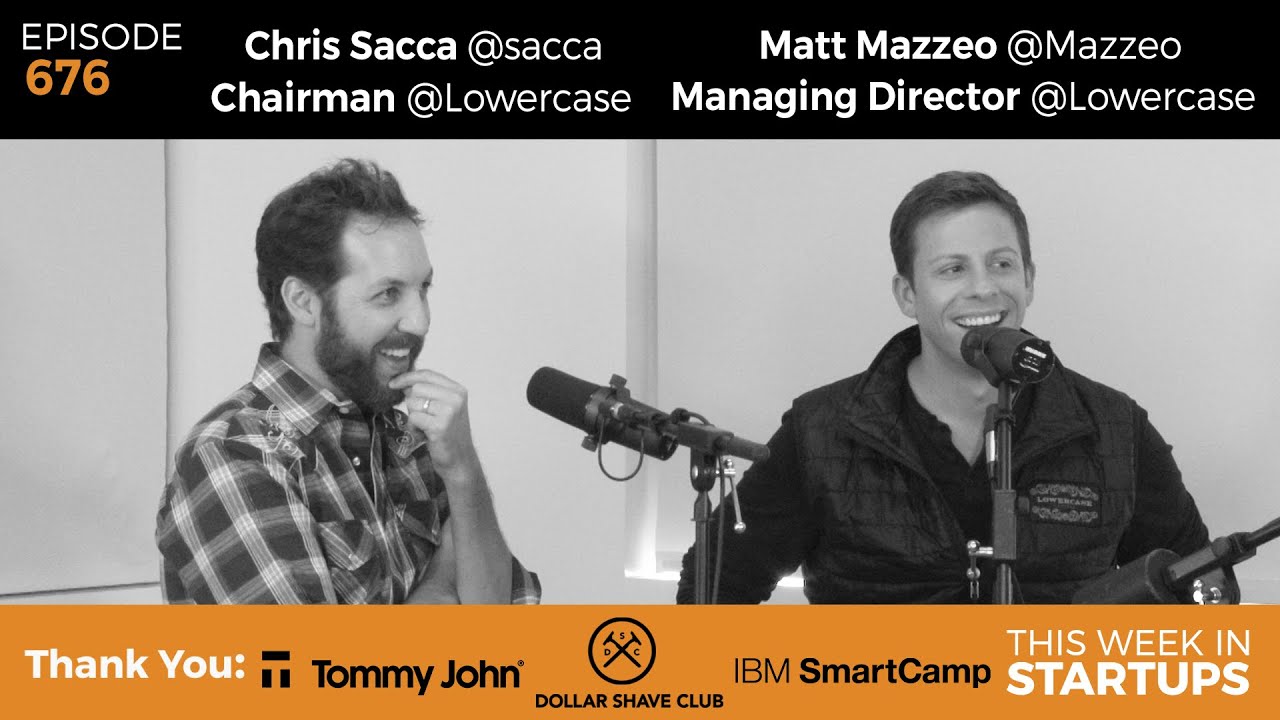
E676: Chris Sacca Matt Mazzeo PT1: Building co's, investing rules, Twitter spills, solutions, buyers


Matt Mazzeo, Managing Director, Lowercase Capital (Pt. 1) | Product Hunt LIVE

EP 43 - When Should Startups Raise Money? Matt Mazzeo (ex-Coatue) on Fundraising, Product & Growth