LAUNCH FESTIVAL: Product Hunt AMA with Matt Mazzeo, VC, Lowercase Capital
In this Launch Festival AMA, venture capitalist Matt Mazzeo shares his unconventional path from a talent agent at CAA to a partner at Lowercase Capital with Chris Sacca. He recounts how a chance meeting at SXSW led to a long‑standing partnership and explains the importance of authentic relationship building, emphasizing that people quickly detect insincerity and that genuine, value‑adding connections matter more than transactional networking. Mazzeo outlines his investment framework—access, selection, and service—describing how he measures himself on deal flow, long‑term selection ability, and the service mindset he learned at CAA. He details how Lowercase adds value to founders through market expertise, storytelling, brand crafting, and a hands‑on community called “Camp Lowercase.” When evaluating founders, he looks for mission‑driven, “bold‑humble” individuals who understand their strengths and weaknesses and can attract complementary talent. For aspiring founders, he advises identifying a problem that obsesses you, studying recent seed/A‑round deals for mentorship opportunities, and focusing on mission pride over hype. The conversation closes with a charitable appeal for Charity: Water, leveraging the network’s influence to raise funds.
Chapters
Perfect. Up next, we have my man. Please give it up for Matt Mazzeo. Matt.
Hey, dude.
Thank you for coming from LA for this.
Yeah, thanks for having me, guys.
Absolutely. I don't know if you guys know, but Matt Mazzeo is a Meerkat star. I don't know if anyone's been following. Anyone here follow Meerkat? Anyone on Meerkat? So you know Matt Mazzeo. Anyone here in Matt's circle? The stream last night? You're a celebrity now, man.
There are people in the stream. I'm curious, what's the composition here? So I've been coming to this event for, I guess since like Arrington and Cal Canis were friends, whenever it was called like TC20 or something. I'm curious, what's the breakdown in here? How many, show of hands, how many people are founders?
A hell of a lot of founders. Most of them.
How many investors? Not that many. And just people in the ecosystem thinking about startup life and jumping into it, like not necessarily a founder, but just jumping in. Okay.
Everybody else?
A lot of founders. This is a heavy founder crew.
That helps.
That'll help guide the conversation. Thanks, man.
Absolutely. What? So 8 years at CAA.
Yeah.
How did you break from the entertainment world into the tech world?
So for people that don't know what CAA is, it's a big talent agency in LA. They started when I started there, and I kind of fell ass backwards into the job, um, right after college. They were more than anything a film, television, music agency. So they represented like 50% of the stars that, you know, in all of those ecosystems. And their job, you know, entourage aside, was like help those people build careers and get jobs. And so the people that, you know, Tom Hanks, Tom Cruise, Steven Spielberg, uh, you know, um, Oprah, Ryan Seacrest were all clients of the agency. And this was in a moment in time when they didn't know what the hell they were going to become. And they— the partnership there decided rather than service talent in just these 3 areas, talent is going to expand. And this is pre-Facebook, pre-Twitter, pre-YouTube. So keep that in mind. Talent is going to— pre-Facebook off college campuses. Talent is going to have their own distribution. Talent is going to think about licensing and endorsements and sports and video games and all these ecosystems that they'd never thought of before when it was just a film business and just a TV business. They allowed a group of us, me included, to go out there and basically think about different areas for growth. Non-traditional areas where like, what would a talent ever do in India or Dubai? Or for me, it ended up being all things tech. It was at a time when nobody gave a shit about it because there was just no money in it. I was cheap, I was young, and it was an opportunity to not have to sit in purgatory for a long, long time. I kind of made that my focus. The way the CAO was organized is you had a client in the middle and you had experts around them. I say experts because nobody was a digital or is a digital expert really. And so I just kind of faked it and managed to put myself in that role for any artist. And so the plan was I'm going to— same way that colleagues of mine serviced the clients in television, film, music, television, film, music, sports brands, whatever. I was going to cover venture funds, tech companies, entrepreneurs, and look for ways to partner our clients in those, in those businesses to build startup companies. So we ended up incubating companies like Funny or Die out of that ecosystem where Will was a client. We said, hey, here's a great opportunity for us to build a business around a sort of seminal talent, and then built an office here right on like Fifth and Mission and started commuting back and forth. And so my job was basically being this translator between tech and entertainment for a long, long time., and then it sort of evolved naturally, if I'm being honest.
And now you're business partners with Sacca, of course, at Lowercase, you know, one of the most impressive—
He's a great dude.
Yes. Uh, firms around. How— what did he see in you? You know, was he interested in kind of your entertainment and tech, uh, background, or was it just you as a person, or why did he pick you?
Um, you know, I don't think it was that he was looking for— so, uh, you know, Chris had run the firm Uh, so people that didn't see Chris yesterday, Chris left Google, started the, sort of the, one of the earlier angel funds when it wasn't cool to do yet, and, uh, started being really sort of, uh, aggressive at early stage positions and not trying to shoehorn too much capital into companies, but those first few hundred thousand dollars instead of, you know, forcing you to take a couple million, um, that was sort of Chris's bread and butter and he did it successfully in a bunch of different companies.
And, and you, you're understating it. The, the return on one of those funds is like 1,000?
Uh, he did, he did really well with it, but I mean, he did, he did well and chose well and was right-timed and right-sized for, for where the ecosystem was headed. And Twitter, Uber, yeah, Twitter, Uber, Instagram, Docker, Optimizely, um, all in that first fund. So he did really well with it. The thesis was right, turns out, and there weren't many people doing it. Um, but he wasn't looking for partners, I think. What he was— it just became a sort sort of an organic thing. We were friends, so he and I met 8 years ago at South by Southwest at a jam session. So if you guys know Gary Vaynerchuk, if you're in this world you probably do, 'cause he's just out there all the time, he's a good friend. Back in the day, Gary was just the wine dude. That's all he was known for. He was like a wine expert and a client of the agency, and the agency was thinking, can we turn this guy into a lifestyle star? And Gary was like, I'm way more than a lifestyle star. I'm gonna go to South By where all of the, you know, this is back when it was, South By was a bunch of devs and coders hacking stuff up and you saw some live code in panels and stuff. It was really a little, you know, it was more authentic I think then. And, uh, and Gary put together a jam session late at night in his hotel room. Uh, today he does this secret wine party if you guys have been to South By, and he like shuts down a bar because he tweets it out and like 5,000 people descend on the bar. But then it was— you know, in his hotel room, 15 of us just jamming on things. And, um, in the room were a bunch of guys who hadn't really done anything. I actually think— MSG, are you in the room somewhere? MSG was in that room. Uh, Battalion from LivingSocial was in that room. Dave Moran, Matt Van Horn, Travis and Garrett, and, uh, AJ Vaynerchuk, his brother, and a whole bunch of, uh, of guys who just hadn't really done anything yet.
And did you— uh, so talk about this. Did you know— 'cause a lot of advice people give to— for people trying to build relationships is look for the hidden gems. You know, and here was a whole room of hidden gems. Did you know everyone in that room was going to do something eventually? How did that work out?
No, we were drinking wine. Gary brought free wine. Gary brought a box or a case of wine. We were all just getting, you know, mixing red and white, because God, you know, none of us knew what the hell was going on. And we were just jamming. It was just fun. It was like, for those people who tuned in last night to the jam session that we did with Danny, who's a good friend and one of the best designers, Danny Trinh, It was just easy. It was fun. We were just like talking about what we thought was going to be awesome and fun and cool. And in that room, you know, there was no pretense. Nobody was like, you know, shh, you know, shh. Nobody was fronting. Nobody was like shutting other people down. If you had a thought and your thought was valid, pass the mic, let that person speak. And so there was this guy in the room who was brash and smart and knew everything, and like you couldn't argue with him because he was faster than you. And He wore a cowboy shirt, which was really obnoxious. And, you know, he just became one of my closest friends. We used to beat the shit out of each other. That guy is Chris Sacca. Today, 8 years later, out of that hotel room at a conference not unlike this one, I met my, one of my closest friends in the world and my future business partner. And so don't sleep on people. Just put yourself in those situations. If you're smart and you're hustling, there's— I bumped into a bunch of you guys in the last couple of days, and it's— there's a ton of hustle in this room and people who are like, building really awesome things and are out there and introducing themselves and aren't sleeping on other people. This is a— I love these. That's why you love these conferences, right? Absolutely. You get surprised all the time.
And the don't sleep on people is really interesting. And one thing I really admire about you, you're one of the best relationships I've seen, period. Whoever you're talking to, what are some of the principles that have made you so successful in relationships?
Relationships?
Relationship building, as you know, professionally in terms of helping your career, in terms of just having awesome friends who are doing awesome stuff.
I think people smell bullshit real fast, and so if you try to like, if you're networking, stop. Like, if that's your goal, just stop. Like, go to a place, meet a couple people, have a good time, have a good conversation. You know, Gary Vee built a business around the fact that he was just, you know, I'm okay, he's a genius at it. Go read Gary Vee's books if you haven't yet around like, how to deliver value, how to have a good time. Like, he knows how to do it right. It turns out bringing wine to an event is a good way to build friendships. He's just better at it than most. I think it's don't bullshit people, make friends who you vibe with, and like, you can have a respectful debate about things that you don't agree with, and like, there's no shortcut to it. It's not like, hey, I met that person and like, I did a transaction with them or asked them for something and like, we're best buds now. It's like, You're either making good friends or you're, or you're not. Be cautious with who you spend time with is like a really big one. Like, um, Chris sort of did this, uh, proactively, and it's a lesson that I take to heart, and I'm not as good at as he is. It's, uh, he left San Francisco. So Chris makes all these lists for being like best investor in San Francisco. Chris hasn't been in San Francisco for, I don't even know now, like 5 years, 7 years. He left. He was getting hit up all the time and like, he felt rude, like, you know, saying no to people. It was like being in San Francisco was like being his inbox that other people assigned at all times. I think that was the quote like he had yesterday. And so he left. He went to Truckee and he moved and he picked offensively the people that he wanted to spend time with and made real relations. He brought them out to his little house in Truckee. They slept on the couch. They had like a jam pad, like a whiteboard above his hot tub, and he like hung out with people. And it wasn't like a hack. It wasn't networking. It was like, you're smart, you're doing really cool things. Like, just come out. I want to get to know you. We still have it. It's called Camp Lowercase. And a lot of the teams that we invest in, you know, we don't have office space. So as a, you know, aside, you can kind of come and hang out at the Jam Pad in Truckee every once in a while. And I think those things are like, it's more authentic that way than being like, I'm here to network and like, bang, business card. Those people, I don't know, you go home from a conference and you remember 50 of those. You remember, you don't remember 50 of those. You really remember the 2 people you had a beer with or you shared that like lunch with and you were like, that guy was awesome and smart and funny. And I think that's how you stick with it.
And you, when did you take over as managing director of the fund?
Um, so, uh, this last year we ended up, uh, so we're, we're on fund 4. I think it was more of like a gradual thing. I mean, Managing director of a fund with two guys is kind of a silly title, but like, um, yeah, I think it was just a reflection of like the how our working relationship was. I was the one that was still going all the demo days and, you know, hanging out and taking those first meetings. And, um, I think it was just a reflection of that.
And we were talking the other day about what makes a, what makes a great investor.
And, uh, ask me in a decade.
But one of the things we were talking about was one, you know, is you, you, you We broke it down like access, support, and picking. Talk about that.
How you've learned how to invest. Hunter Walk, who's here bouncing around somewhere, Hunter Walk, if you don't read him, you should. I think he sums this up. He's got serious KPIs for himself. It's really easy for an investor to sit with an entrepreneur. You got a ton of entrepreneurs in the room and the VC's always like, "What are your KPIs? How do you measure yourself?" It's like, "What are your KPIs, bud?" And I kind of like, I think we have a few of those that are like, I measure myself by our ability to see good deals, to select those deals better over time, which is a long feedback loop. It's really hard for us to assess how we're doing that piece, and then to service those deals. I think, you know, those, the first and the third are the ones that I can measure myself best on. The selection I think happens over the long haul, and time will tell. The hardest thing about this job is you don't know whether you're an idiot for about a decade. Um, but the first one is like, I can be at those events and I can meet a bunch of really good people and I can get a sense for the taste that they have. And if I pay attention to those signals and see which deals they're investing into and read their blog posts and their tweets, I can get better at the site thing. Chris has built an incredible brand for us. Like, I think we've got a great network of entrepreneurs that we've built relationships with who vouch for us. That helps me with the site piece. Uh, the selection piece, I think I'm getting better at. I won't know for a while. The service piece, I think, really comes naturally to me. I think when I was trained by guys like Richard Lovett and the team at CAA, and they treat everything like a service job. I started in the mailroom, I started as a second assistant, so I was an assistant to an assistant, and crashed my boss's car on the first day, and that was my path, and you kind of learn this role of everyone is in a service job. The second you think you're the one being pitched, you're wrong. That's not this job. This job is like, if you're doing it right, you are the one that's going out, finding those great companies, and then making the pitch backed up by social proof of why you're the one that should be doing that deal. If you can't make the case for it yourself, you probably aren't the one to be doing that deal. We pass on deals all the time. One of our mantras is, "What's our competitive advantage? What's our unique killer thing that's going to change the course of the trajectory of this company. And if I can't make a compelling case for it myself, I've passed on ones in the past that have like, will haunt me forever, 'cause the returns will be amazing, but I just can't validate that. It just doesn't fit our brand. And if you fail, like you only get a couple of those before the market catches up and was like, "That guy just didn't do anything for me." Like he was nothing but a brand name and like, you can ride that less and less now that, Everybody talks and there's more transparency. There are a lot of firms that rode that brand and didn't deliver. So we care a lot about delivering.
What are some of the biggest ways that you deliver value to founders?
It's different on every founder, I think. Sometimes it's market expertise. I happen to have spent 8 years covering media and tech, so that's a natural one. I know the studios and the networks. The constituents of that ecosystem. I, like, I can help you navigate that world pretty well. We, turns out we've done a bunch of mobile products over the years. We've got that ecosystem down because our fund is broad. Each time we make an investment, we build more expertise in that ecosystem by working with those founders and we learn lessons and you sort of like your feedback loops gets, gets faster. Uh, VC, I think the VC line of like pattern matching is interesting, but, um, I think one of the interesting ways that gets understated is like, um, we care about storytelling more than most. And so if you've ever been to our website, you probably know, like, we care about the brand. Like, it's not your average VC brand. It's a little bit weird. We're a little bit offbeat. You're not getting like a white marble door. There is no office door. It's like just us. And so we care about the brand that we put forth and we communicate very specifically. And if you've listened to Saki, he's way more eloquent than I'll ever be, but he's amazing at doing that and digesting and translating And like, we think about that constantly. It's like in my old job, a lot of it was going to talent and saying crowdfunding is going to be big. And an artist would look at me like dead in the eye and say, "The hell are you talking about? What is crowdfunding?" And try and like imagine explaining. And this is not just the artists who didn't know that world, but to agents who just didn't understand, were trying to advise their clients like, "I don't understand what you're talking about. Explain it like you're talking to your mom." And so Vera Mazzeo, bless her, is like my guinea pig for all of this stuff. I try to explain the companies that I've invested into to my mom, and she, like, if she gets it really well, like, I'm doing my job right. But we do that translation constantly. I think one of the best things that YC has done is it's empowered engineers to be founders. It's empowered a new generation that never got polished at business school, that didn't have, like, crazy long resumes at Goldman or a consulting firm to be founders. And how many of you went to B-school? So a lot more founders in here that didn't go to B-school than went to B-school. And part of the challenge of that is, it's one, it's greatly empowering, right? You can start a company with a laptop and hacking together code. Part of the challenge of that is that you degrade sometimes the storytelling that's important to your business. Selling to your founder, selling to your coworkers, selling to your first client. How do you sell to a VC? Like, how do you communicate to press into a marketplace? How do you communicate it to the person who's waiting for you, waiting with you for an Uber? Chris does the Uber pitch all the time, which I actually did yesterday while outside SFO. Cody Sims from Techstars introduced me to a team working on smartwatch stuff, and they did the Uber pitch, and I ended up taking the Uber with them to town. I was like, "Cancel your Uber, let's do the rest of this meeting now." But they killed it in the Uber pitch, like their 2-minute slot. That storytelling is really, really hard, and it's something that's missing in a lot of the people who are hacking together code, don't have that skill set. So we work a lot on muscle memory around that, and it's important. Messaging is important, brand is important. And storytelling always beats good spreadsheets is a Sacca quote.
So let me ask the reverse of that. So the question was how you help founders. What do you look for in founders? And how can founders, you know, people here who are trying to pitch you, work with you guys, what are some dos and don'ts?
We tend to back people who are freaks in some respect, right? They're people who are making an incredibly risky calculation often, and we try to find ones who are like really mission-driven, right? And so a lot of people say that like, "I'm not in it for the cash. I'm in it for the solution that I'm building." And so we'll ask these questions and we'll try to filter it out. We'll say like, you know, "Why are you building?" That's the obvious question. Like everybody will ask, "Why are you building what you're building? You have any meeting with a VC?" And they'll try to suss that out. We tend to follow it with something along the lines of like, What does success look like to you? And if the success isn't reflected in the solution to the problem that you're trying to solve, but reflects like, oh, and we'd love to exit here, the potential exits that we have, that's like an instant, you know, not an instant no, but like I think it speaks to the motivation of the founders. And so getting motivation right, we tend to, we try to back what we call the boldly humble, like people who are well aware. We don't think human beings humility is a, uh, is a natural state for a lot of the founders. You guys are all huge risk takers. You believe in your abilities. You're the best at something, uh, and that's what's making you go off this crazy mission that you're on. Um, and know that, be bold in that, know your strengths really, really well, but be as honest and candid with yourself about those weaknesses. And the best ones supplant that around them, both with the investors they bring in at the early stage and with the early team they bring in. And like you're wearing 50 hats right now if you're a solo founder, you know, whatever, 25 if you're a dual founder, like start putting hats on people way better than you at those things. And I think that's like, you know, some of the stuff that we really look for in teams is like, are you aware of the weaknesses and can you convince people who know more than you in a category and manage those people to come in and build on your mission? That's a, that makes, I think, a great founder. What do I know? I'm still working on it.
What does success look like to you, Matt Mazzeo?
I don't know. Chris is like, Chris kind of gave me this opportunity of a lifetime, right? It's a little Wonka-ish that you get to come in every day and your entire job is something that you would do natively, right? Like, I love talking to companies. I love thinking 5 years out, 10 years out. I love meeting people. It's just like stuff that I do. Like, I wake up and it turned out like when I left school, like, that was the stuff I was reading. I was reading all the tech blogs. It doesn't feel like work to me, and it's fun. And you get to like, if you do it right, you're like, wow, that company is doing something that's going to— people say that change the world, but like, it's just going to solve a pain point for a lot of people sometimes. Or it's like some audience loves that product and like, are we proud of the things that we're investing into? I think if success is success for me is like when I look back over the companies that have come out, I think Kanye had this post recently from Collab Fund. I've got X number of deals over the course of my life that are going to define my taste, my mind, and my selection, and my ability to help those companies survive. And like, when I look back, am I proud of those decisions? You know, it's a huge responsibility. There's a lot of people that have given me money to go out and make those decisions. And every time I vote and every time I, you know, put that cash on the line and partner with an entrepreneur, is it something in 10 years that I'm gonna look back on like, that's awesome, and I'm proud of that, and And I didn't do it for like the same way that I think that's a much better like sort of filter to go through than the, the soccer returns one. Like I think those things come by having great founders that you're proud of, not the other way around. So that's, that's my mission. Like if, if those are my like selections, like see everything, select the right things, service those to the best of my ability, the ultimate goal is like proud of those investments and what they've accomplished in the world.
And that was portrayed so beautifully about, about you and Saka in the Startup Podcast.
Oh, thanks, dude.
In the most recent episode, oh, he talks the story about Travis. Yeah. And then, you know, the words of encouragement to Alex.
Yeah.
It's, uh, that's been an awesome ride.
Yeah, it's been fun. I, I love— I mean, we're huge fans. If you guys haven't listened, Startup Podcast, throw a plug for a startup company that we're invested into. The Gimlet Media guys are great, and it's sort of this like meta look at starting a podcast company by guys who have built podcasts in the past. And they're like really, really great and authentic and raw. And they, they expose a lot of the hardships that they go through. There's one episode that I love particularly, like, we made a mistake, which I think is a really important thing for founders to be able to say out loud. And there's another one, another sort of mantra is like better, better upside surprise than downside disappoint. And so we, we will constantly with our own LPs, like, give bad news ahead of market. Like there's all these games that VCs play just for those little insider baseball, like I can mark this investment up because like somebody else marked it up and we're a little bit more authentic and ask our LPs to stay quiet about that. Because we care about those sort of authentic relationships and being a little bit honest and not downside disappointing just because we're trying to make a book look good.
What do you want your founders to say about you, to say about working with you?
Um, what do I— he was— I don't know, that's a great question. No, it's a great question. I've never thought about that. I like— hopefully they say like, hopefully if it's to another founder, it's, it's, you should work with them. It's a recommendation. You should work with Matt. And if that, if that's being said, that I think that's the highest compliment you can get from a founder. Is like we ask our— we ask new companies often to like, go talk to anybody you want in the portfolio. And if you want an introduction to one, I'll make it for you. And if they don't like— if they don't get the response that that's right, then I'm doing something wrong. And so hopefully that keeps me honest in doing my business the right way, is the founders will vouch for me going forward. Yeah. And hopefully they're saying that I'm, you know, trying to make that the case.
And perfect for all the people in the audience, for the people listening. —on the Product Hunt Podcast, a lot of aspiring founders out there. What, uh, a lot of people trying to break it in tech, and we heard kind of different philosophies today. You know, Keith Rabois was talking about get on a rocket ship, whatever rocket ship it is, echoing Samberg. A few other people were talking about just kind of pursue whatever idea you're passionate about, could see yourself working for a long time. Where do you kind of stand in your advice for aspiring founders or people who want to make it in tech?
Aspiring founders. Well, there's a difference, right? There's a difference between the aspiring founder who's like, I want to be a founder and they're searching for their problem. I think that's a hard step to get through. I think the problem hits you smack in the face and you kind of can't stop thinking about it. And you're like, this is the most obnoxious— like, for whatever reason, you have an observation about the most obnoxious thing to a certain group of people that you need to solve in the world or the way the world needs to be. And you're like, I can't stop thinking about it. I'm going to quit my job and it's going to be risky as hell. My mom's never going to understand it, but this is going to be it. I'm going to go build this company like That's one thing. That's the founder mentality, but those who want to get into startup life, I do a lot of conversations with friends who are like, in the old media world, and they're like, "I want to be in startup life. It's more exciting. It's more fun. Where do I go?" And I, what I do, I give them a homework assignment. Um, go through CrunchBase, go through AngelList, take a look at all the companies that have raised seed and A funding in the last 6 months. This is for anybody that wants to get into startup life and is making a transition from corporate world or wants to transition, isn't happy with the gig today. Go through those platforms, see anybody that's raised money in the last 6 months, 9 months. They have probably another year of runway. Rank those by people who are great mentors, because I think this whole business is about great apprenticeships. So like, who are great founders or people that you'd be working with that are going to be great mentors for you? Are they backed by VCs that you're going to be building relationships with that you respect and appreciate their thesis? Go read about those guys, get involved. And then, like, is it a mission that you just like want to tell everybody about and you're like, you want to brag about? Bragging, I think, is a great indicator of like where the world is heading. Like, what are people bragging about on social? You can tell a lot by and like in real life, would you be proud to brag about the company you're working for to everybody? And it's like a great filter. Like, yes, I love this company. I love the mission. And even if you've never heard about it, I'm going to sell you on it and you're going to believe me by the end of it because I'm passionate about it. Like, that's a— like, screw those. I think those people who say like, go follow your dreams is like nice, but that's like step by step. If I were starting over again, that is how I would go through and find like, that's the company, that's the founder. And then you do the Graves, like you do the Ryan Graves, you just hustle that person down. You're like, I can deliver value to you. Here's what I'm going to do. You know, if you don't know the Graves story, who just made the Forbes billionaire list with the greatest single tweet of all time. Nicest human being in the world, was first CEO over at Uber, before that was a hire at Foursquare because he was just the hustle guy. They didn't— he didn't get the job at Foursquare, he just convinced them that he had signed up all these locations. He's just that kind of person and he became like boots on the ground on behalf of Uber and he's just an incredible guy. I think speaks to like he found a couple companies he loved and just started adding value and wedged himself in. It was inevitable. He's just like, I'm going to add more value to this company than you, than you can pay me, bring me on board.
Yeah, no, I can't echo that enough. Obviously not Graves' story, but when Ryan was just starting, he, he didn't have anyone and I just volunteered. I was like, you're not answering these emails. You need help. You know, let me just help you for free.
I use you as that example. I'm not kidding. You are. I use you all the time as that example. It's not bullshit because you're on a stage interviewing me and trying to make it nice questions. I think you're actually like, you've put yourself out there and this is like a natural thing for you. You're hosting like an entire day. This is a marathon for most people to have these kind of conversations. Like you're just good at this and you love the product and you breathe it and you like, you eat it and you just like want to make it bigger and you like love that mission. And by virtue of that, you're adding a lot of value to all the founders in here and to this ecosystem. So I give huge props. You found something, you're like, that's a problem I want to work with. That's founder, great. Those are great VCs that I like. I'm proud of the portfolio they've made. And that's a mission that I'm going to go in. That's my like, it's not a rocket ship. It's like a, You know, that's just the play. That's just the solution that I want to be bringing to the world. And so I don't think the rocket ship move is like the move. I think everybody's trying to get on a rocket ship. I think it's like, be proud of like the— be proud of the mission that you're on. Add crazy value so you have stories and mentors that'll back you up in the long run.
It's fantastic advice. This has been a fantastic conversation. Before you go, is there any last plugs that you want to give? Yeah.
Chris was on stage the other day and started a Charity: Water campaign. I don't know if you guys saw his live speech. Somehow he managed to cajole money out of Jason, which is pretty damn impressive. And so he committed, Jason committed to doing $5,000 for Charity: Water. For those that don't know, Charity: Water is a foundation that helps raise money to build wells all over Africa. $10,000 changes the lives life trajectory of, the trajectory of a village. Women are able to go to school, not have to carry water for hours. Kids go to school, waterborne diseases go through the floor. They've done amazing work. There's a, and Jonathan Triest has started one. I don't know where Ludlow is, the beatbox from Detroit, but they started a campaign. So go on Triest at Launch Charity: Water, and if you can, just like spread the word about it. If you can't donate, totally fine. Spread the word about it would be really awesome. That would be my one ask for you, 'cause I think we can get to $50,000 by virtue of like, Sacca cajoling, you know, just the seed of $5K.
And if you do tweet at us, we'll retweet you. Product Hunt's gotta help make that happen as well. Please everybody give it up for Matt. This was an amazing, amazing interview. Thanks guys. And thank you. Boom.
More from Matt


Coatue Management Matt Mazzeo’s path into VC and his philosophy on being helpful
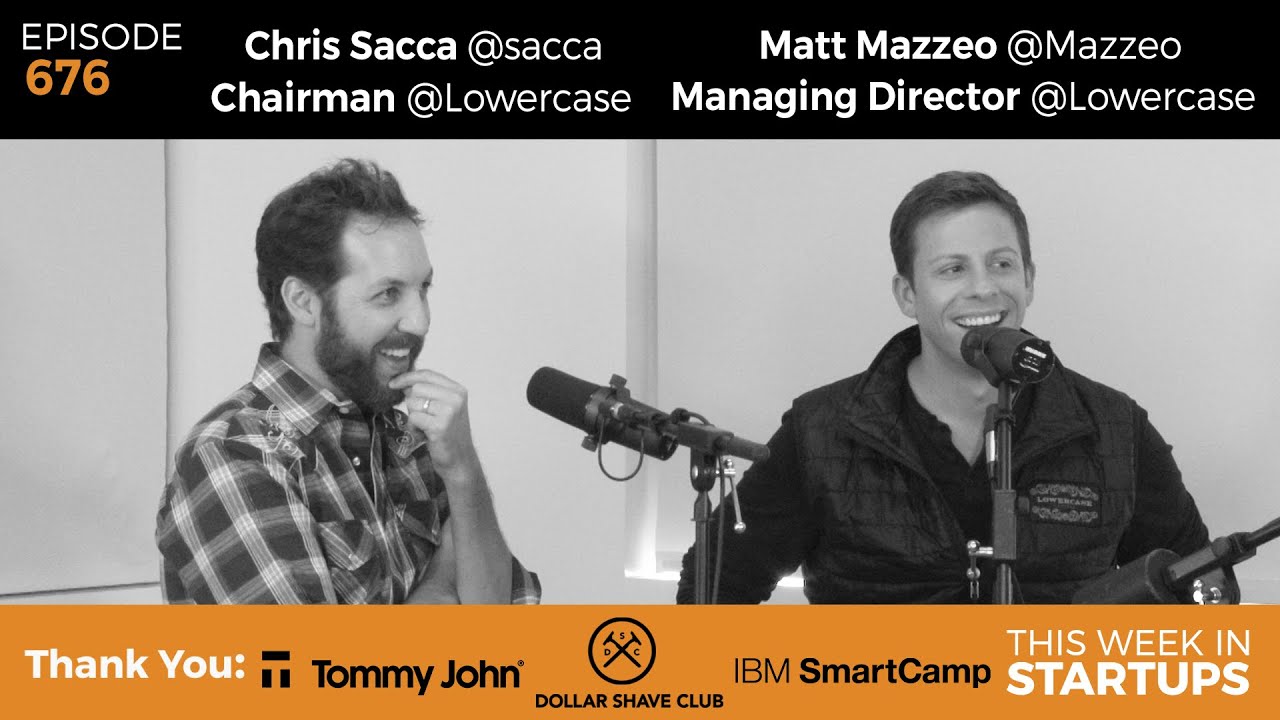
E676: Chris Sacca Matt Mazzeo PT1: Building co's, investing rules, Twitter spills, solutions, buyers


Matt Mazzeo, Managing Director, Lowercase Capital (Pt. 1) | Product Hunt LIVE

EP 43 - When Should Startups Raise Money? Matt Mazzeo (ex-Coatue) on Fundraising, Product & Growth

Bothsides TV Episode 12 with Matt Mazzeo, Managing Director of Lowercase Capital