EP 43 - When Should Startups Raise Money? Matt Mazzeo (ex-Coatue) on Fundraising, Product & Growth

Matt Mazzeo, a venture capitalist who started in a talent agency mailroom, explains when startups should actually raise money. Raise only when you have a clear scaling opportunity or runway problem, he says. Cold outreach to investors almost never works; warm introductions matter far more.
Chapters
Hey everyone, this is George Soto and you're watching Startups Unedited. Today I am with Matthew Mazzeo, who is Managing Director at Lowercase Capital based in Silicon Valley. Uh, Matt, how you doing?
We, uh, I'm based in LA, Chris is Manhattan Beach, but, uh, we spend a lot of time in San Francisco, obviously.
Okay, yeah, awesome, awesome. How is actually the community now in LA? I know with, you know, Snapchat and Tinder and all these great companies popping up, how's the ecosystem today?
I've been here for most of my life and the last 10+ years in tech in LA more or less, and I can tell you that the ecosystem here is as good as I've ever seen it. Incredible teams getting built. More capital than ever before being deployed here, funds that are focused on LA, and a lot of teams that have incredible technical chops building great products here. And so everything from e-com to social mobile apps, and I mean the whole video ecosystem is really dominated here in LA.
And that makes sense. I think as we think about where the kind of the hubs of content are, and, you know, New York and Los Angeles, So I think those—
Yeah, I think it's actually one other thing, which is that like, as you think of these social networks that have been built as now the primary channels for distribution and discovery, most of them were built in San Francisco, but the biggest channels for this distribution have been built around people and built around people in entertainment for the most part. The celebrities just dominate those platforms. And so if you think about like the channels for discovery, and, uh, and distribution. Yes, the platforms are in San Francisco, but the people who actually can push discovery are actually here in LA and in New York. And so it's, it's interesting to see that dovetail. There's a building here in Hollywood where all the biggest Viners all live on the exact same floor. And so it's crazy when you think about how much influence they have over discovery of new products today. But, uh, that's, I think, part of what's happening too, is like you can walk down the street and meet somebody who's got 10 million plus subscribers on any given platform.
Wasn't Myspace founded in LA?
I heard— Yeah, so the Myspace crew is here. So a lot of the team, we actually just backed the team. This team, the MobCrush team, who is building mobile streaming on top of mobile games here in LA. So like live casting, think Twitch for mobile. Incredible team, a lot of them are Myspace vets who built real chops there.
Awesome. Well, Matt, why don't you provide for our audience just kind of a quick background on yourself? I know you came from the entertainment agency world. I was— that sounded pretty cool when you were mentioning it.
Yeah, we, I mean, we were talking about how every venture capitalist sort of has their own unique path to this. I don't know of any others who kind of went through a talent agency mailroom, but— so I, after college, I graduated college, came right back to LA where I grew up. And went into the mailroom at CAA. And my job there was sort of building out new revenue streams for the company. And so I joined as the company was exploding into all these different categories of representation beyond just traditional film, television, and music, where CAA represented everybody from Oprah and Seacrest and Spielberg and LeBron James and sort of all of the biggest names in entertainment. My job was helping find new avenues for revenue. And we ended up focusing a lot— I spent most of my time on venture and digital. And that meant one part filtering technology companies as they wanted to come in and partner with our talent, one part working with technology companies, helping them think about how to navigate LA, the studios and the networks, the sports teams and leagues, and then actually building startup companies from within CA, like Funny or Die, where we would build the business plan, raise venture funding, bring in talent and management as the opportunity arose, and then spin those companies out. And so kind of got to play this interesting quasi role between venture, tech, startup, and agent, and then represented a bunch of talent from the digital space too. And so people like Michelle Phan and Phil DeFranco, sort of as they were establishing these distribution networks and building businesses on top. And then we launched a venture fund, CA Ventures, which is still running today. There's a whole team of great people running it.
Yeah, I mean, I've visited CA a few times when I was working at a couple social companies in the past. It's a phenomenal Phenomenal, big, very big company.
Yeah, yeah, and great teams, great— I love that place. Honestly, I still love the culture there. The clients were amazing, some of the most creative people on the planet, and always willing to experiment and push the needle. I think that's why a lot of those clients are so big on dominant social networks, is they were just the first to jump into that pool on a lot of those platforms, and willing to take a risk when we didn't really know what, you know, those platforms would become. Whether it was crowdfunding or social or livestreaming on video, they were always sort of first to do that. It was great.
You know, as an investor now, is there any sort of strategy or is there a thesis around your investments? And are there any particular, let's say verticals or categories that you think are pretty hot right now?
Oh, you know what's interesting is we have a really broad and opportunistic thesis. We don't identify specific markets, we don't identify specific geographies and say that's what our focus is gonna be. But as you look back on trends within our portfolio, you can absolutely see some of the threads that have become sort of the focus for our fund. You know, our strategy very specifically is early-stage companies, highly technical teams, where we believe we can materially impact the outcome of that business. We probably get known best for the stuff that we do in social and mobile, so from Chris's investments into Uber and Twitter and Instagram and Kickstarter and a handful of those platforms. In the last year or so, I would say those trends have increased. We've continued to stay focused on video, just because that was an ecosystem I spent a lot of time in, so we've done investments like Victorious and MobCrush and a handful of others. We do a lot in publishing, so WordPress and Medium. We do a lot in services to developers, and so Stripe and a bunch of early stuff now that you're going to start to see in the next little bit. We've done a lot in machine learning recently, and sort of starting to see how AI and machine learning can start to spread into things that historically used to be dominated by people or required a lot of people to manage. So Digital Genius in the consumer— in the customer service space and a few others. We've seen a lot in like dirty industries that have never had tech. And so we love that ecosystem. If it's something that like is run by a bunch of people who just never thought about how mobile, social, cloud, you know, blockchain— like you think about all these fundamental technologies that have been built in the last few years. And if your industry hasn't been disrupted by it yet, or you don't even know what those technologies are, I'm looking forward to finding a company that invests in that space. And so I don't care whether it's like self-storage in a company called MakeSpace, or the law enforcement in a company called Mark43, which is doing incredible stuff with the DC Police Department right now. We love those industries that are sort of like behind this last generation of tech. And yeah, that's, that's been a great one. And then a lot in employment, believe it or not. Again, we didn't come into this fund We're now on our fourth fund, all focused on early-stage, you know, activity. And employment has been a real focus for us too, in this next generation of thinking about how in a 1099 economy, in a, you know, in a more flexible workforce, what does that look like for millennials in getting hired today? And so we spend a lot of time with companies that are focused on that.
And when you say employment, are you thinking like technologies that enable employees to to maybe log in remotely to a station, or are we talking like a Hired.com type of marketplace?
Both. So we've invested into companies like Slack, which are no question changing the way that you think about remote employment, right? And WordPress, which is, you know, incredibly remote in its employment, and Bellhops, which is like employing more, you know, students than ever before, and doing it in a really like light touch, but like high quality manner.. But beyond that, just like mechanisms for thinking about how this generation will go about getting their career started or finding the next job. And so I think a lot about those technology platforms. Like when I graduated, I felt lost in the world. And I, you know, I was lucky enough to go— I went to Harvard for college. We have recruiting from everywhere. We had probably the most robust Office of Career Services you could ever hope for. And I remember being there in like freshman year and deciding what classes should I take? And thinking about, well, which ones start after 10 AM? And like, that was my filter for how to think about my, my classes. And that's probably not the best mechanism for thinking about career planning in college. And so we've invested in a couple of companies that are helping redefine how college students will think about career planning far earlier and connecting recruiters now to a far more scaled opportunity to attract talent. So I think I spent a lot of time in that ecosystem.
Awesome. What tips, let's say 2 or 3 tips, would you give an early-stage founder who's just getting their business off the ground? You know, should they be focusing on traction before raising money? Like, what are some tips you'd provide around kind of that thinking in that time period?
Interesting question. So if your question is like, when should you think about fundraising, right? It's whenever you have that, like, whenever you have an opportunity to scale the business up to another level and you think you have enough proof points to accomplish it without burning too much time or capital or energy and focus by going out and raising, right? There's too much of it. There's too much of a jump in terms of like what you've accomplished today versus your expectations or versus the dilution you're willing to take. I'm not sure if I'm answering your question correctly, but like, is your question more around like When should you raise, or is it like, what should you be focused on in the early days? Is it—
Yeah, I think it's both. And the reason why I ask is, you know, when I did AngelPad, you know, Thomas Cortés incubator a couple years ago for an idea I had, and, you know, at the end of the several-week period, we were all running to Demo Day, preparing a great deck, and then in in the effort or with the intention of raising money. And now, years later, having gone through, you know, MoPub and spending a lot of time now with investors and these sorts of things, you know, I don't know that that was the best strategy, at least for us. I think we should have been more focused on product and, you know, and really validating that there was a real business there. So I guess it's both questions. It's like, yeah, when is a good time? And, you know, what should I be thinking early days? And I think you did answer the question.
I think part of the— like, I don't love this idea of like raising around a forced moment through it, through like an accelerator incubator and having like that, those forcing functions. I'm not sure that's the best process for how any startup should be thinking about fundraising unless it materially decreases the time spent fundraising while not mitigating like your opportunity to get investors who are going to be high value add to the company in the long run. But I think those like false windows that you set up around fundraising are almost always bad, right? Like, actually, we have a lot of our founders who start off like, we've got 18 months of runway, so we should start raising it in 12 months or 9 months, thinking about that. And it's like, I think that's actually a backwards way of thinking about it. You should be thinking about raising any time you either have to, in terms of your company is like going to run out of runway, Or if you have an opportunity to scale up and you hit the milestones that you need and you've got and you have an opportunity to scale up faster. And so, you know, I care more about like hitting milestones. And I would actually like say, don't raise money until you have to or until the opportunity is overwhelmingly such that you can and will materially add value to the company. Don't base it around like some artificial timing of like 3-month program. Don't raise it around like some artificial timing of, oh shit, we're gonna run out of money in 18 months. I need to raise in like 6. Like, I actually think those are the wrong processes to go through. I think it's like capital raise is a tool, whether private or public, and you think about that as it relates to like the growth and the milestones that your company is looking to hit, not as like an automatic factor in growing your business. Does that make sense?
Absolutely. So are the days of raising on an idea or just a deck kind of gone, or? I think, or for certain entrepreneurs, it's still available.
Very, very rarely do we back those moments. I think, I think often those moments are a sign of laziness to a certain extent. You can crank so much today with a small team and bust out product and give people a sense of like what you're building beyond your narrative. And we love backing technical teams that would just do that anyway, right? And so George, you and I were talking about earlier, like, this idea of projects versus companies and, like, starting a company feels official versus, like, starting a project where you just start going and doing and building. I would much, much rather back a team that's just going and building and doing and cranking on product than one that's talking about the product that they're going to build. And so some products require capital in advance of that. In very rare cases where we have a longstanding relationship with a team, we will back those teams and we've done it. But almost uniformly, we get better results and can better decide whether to help, whether we can help that company if we can see and play with product or in an ideal world, whether we can see how customers and users are playing with that product and we know how we can tweak certain things. And so it's not that those days are done, you know, great entrepreneurs will create feeding frenzies at every stage of growth, right? Whether it's like a PowerPoint or a conversation and some ideas, you know, with a technically capable team, you'll just back. But I would— those are gonna be the rare and rare instances thanks to the fact that like you can get so much done today and so much of the stack is built for you. You can get a lot done on a laptop with a little bit of cranking and a nimble team.
Absolutely. I remember I started a company in 2005 that was trying to be MySpace for travel. In fact, Pete Cashmore bashed us in '06. Wanting to read those things. But I remember what it cost us, and myself as a non-technical entrepreneur, which is quite masochistic, I should say, I always had to rely on engineers, whether it was outsourcing or, gosh, finding someone back in 2005 that could write things in Ruby on Rails. And I remember the cost of hosting video back then, where is really enormous. And to your point, the barriers to entry are so low now. We could launch an application today and spend, you know, $500, right? So I completely agree with you, like laziness. The other thing that I found is, uh, as a very stubborn entrepreneur who's many times wanted to like brute force a product or business to, to, uh, to life, I've realized that not every idea is actually a great business, and not every idea should you go and raise money for, you know, irrespective of how passionate you are.
I think people are blown away by how often I give the response of, you probably shouldn't be raising for this. I'm a venture capitalist, I love looking for great deals, and this is probably a great deal, but honestly, like, I think you'll be better off not putting capital into this from an outside source. I think you can bootstrap it. I'm all— I think that moment always takes people aback when you're just like, you can just build this and go and it'll be profitable enough that you can grow with a small team and see then whether you really want to build it into a venture-backed business with implications for what the outcome has to be or just bootstrap it into a great lifestyle business. There's no shame in that and there's a lot of businesses that make a lot more sense for that. And so I think people are always like a little bit, weirded out when we give them that response, but I'm not afraid to tell people that.
Well, it's certainly authentic. Well, Matthew, thank you so much again. I know you're a busy guy down in LA. I love LA. I'm gonna be there in a couple months.
I'm happy, man.
I'll ping you when I get out there. There are a couple of former Mopup guys who are spinning up some things down there, so I'm gonna go and check it out. You know, one last question, if anyone has a great idea with some traction and they're passionate and they're pretty darn sure they wanna raise money and wanted to get in touch with yourself or Chris, what's the best way to get in touch? Tweet, website, what's the best way?
We're pretty public and we're pretty out there. Both Chris and I are active on almost all social media. I think the days of having to like, having a wall up between the sources of capital and entrepreneur, like, thank God they've all come, a lot of them have come down. But that said, with that, with that comedown, with the opportunity to connect directly, it's just meant more noise for everybody. Chris and I are a lean team. It's lit. You're looking at half of Lowercase right now. There's like almost no other infrastructure to the team. And so the best way is always through warm introductions, through somebody that we've worked with or trusted, you know, in the order of operations, it's a founder that we backed, a founder that we love, Venture guy or girl that we've worked with in the past that we trust. Coming through one of those windows and getting a warm introduction and having product is like the killer combo. So, you know, we've met people and invested through some cold introductions that have just come our way and we've been fascinated by those businesses. Those are exceptions. The far better way to get a response and have it be timely is to, uh, is to go through somebody like that. And so that goes for any venture fund, right? And frankly, it's almost all of business today is like, we're all so accessible that you have to filter through people you trust and use those proxies. And so that's the way to do it.
Well, Matthew, thank you so much. Matthew Mazzeo, Lowercase Capital, down in LA. Thanks again, and then, uh, I'd love to catch up, uh, in the short term.
Yeah, looking forward to it. Take care, brother.
Take care, man.
More from Matt


Coatue Management Matt Mazzeo’s path into VC and his philosophy on being helpful
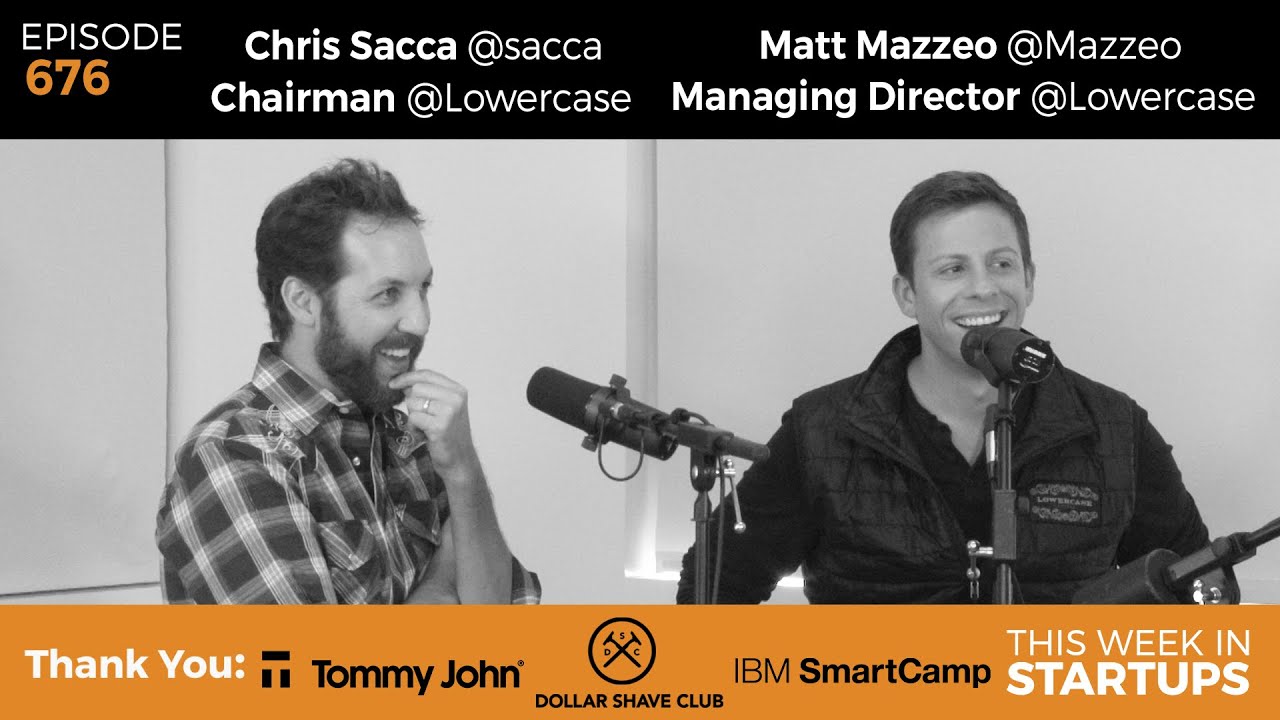
E676: Chris Sacca Matt Mazzeo PT1: Building co's, investing rules, Twitter spills, solutions, buyers


Matt Mazzeo, Managing Director, Lowercase Capital (Pt. 1) | Product Hunt LIVE

Bothsides TV Episode 12 with Matt Mazzeo, Managing Director of Lowercase Capital