
Matt Dart teaches fitness coaches how to boost social media performance by prioritizing watch time over posting volume. He breaks down five hook types and five content structures, then shows how stacking multiple hooks throughout a reel keeps viewers watching. Pick one format, master it, and iterate based on data.
Chapters
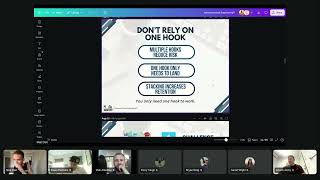
Okay, so basically, if you guys haven't been following my social media, I basically put up two reels of what happened when I got sacked from Anytime Fitness and the. If you guys don't know what happened generally what in terms of the actual watch time and stuff, which we'll talk about in a second. But the watch time was around 30 seconds. Now usually my reels get around between 6 to 10 seconds average watch time. Now the reason why this specific two reels got 30 second watch time is because I'm not sure if you guys noticed and if you did notice, pop it in the chat. There was multiple hooks throughout the, the reel. Did anyone notice that? And if you haven't watched it, you can probably go back and watch it. But anyone noticed there was multiple hooks in that reel. So it, there was, there was like a storytelling, it was the hook that, the hook was, you know, I got, I got sacked from, from the gym. And then there was the screenshot of the text message that I got from the other person. So that's multiple hooks which I'm going to go through today with advanced hook engineering. Rob, I've noticed you've done a couple of, couple of times. I'm not sure if you're doing it on purpose, but you are using multiple hooks in your content. So we're going to go through the five different types of hooks that you can use and the five content structures that are working right now for social media. So let's get into it because there's a bunch of stuff we're going to go through today. So let's go through the reasons why. So I always like to start off with like why this is actually important. So YPT content doesn't actually convert. So you're posting consistently but you're not getting inquiries. You're talking to the camera with no structure, you're explaining too much too fast, you're pitching offers inside the video and you're relying on luck instead of a system. So we're going to solve all that stuff today. We'll give you the step by step system and the format to make your content reach more people. So it's not, it's not so much about posting more content, but we're wanting to improve the quality of your content so what you're actually doing gets more views, which therefore nurtures your prospects. Therefore it makes it easier for them to buy from you, essentially. So as I said before, it's not a content problem. You don't need better ideas, you don't need post more, you don't need to go viral. You need more people stay watching. So you'll hear me say this today, and I've said this multiple times before, watch time is the new currency. It's not, it's not views, it's not shares, it's not likes, it's not comments, it's how long people are watching your content. Okay, and I've said this before, attention creates demand. Watch time drives reach, reach drives, profile visits, Profile visits drive inquiries. If people don't stay, the algorithm doesn't push your content. Okay, so I'll explain this in a second. But essentially how the algorithm works these days is your content when you post it goes into a small pool. And if the watch time is good in that small pool, it'll get sent out to a broader pool of people. And again, if the watch time is good for that, then it'll go to a broader group of people again. Okay, so the key here is how can you get people to watch your videos? Pretty much ideally to the end, but we're going through like the one key format that we're going to go through today. So one repeatable video structure that you rinse or repeat over and over again. So I'm going to give you five different variations that you can do. The key point after this training is I just want you to focus on one of those formats until you kind of figure it out to a degree and then you can test different ones after that. Okay, so you guys kind of already do this yourself. One training, training split, One assessment process, one progression model, one nutrition framework. It's the same with your content. Just focus on one type of format, one type of framework until you nail it and then move on to the next one. Analyze the data and if it's not working, choose a different format. You guys should already know this. This one is kind of how people get stuck. I kind of explained this before, but if you're struggling to get, if you're, if you're getting like consistent, like maybe 100, 200 views on your content, it's just because the watch time isn't there or generally people are only watching the first few seconds of your video, which is the hook. Okay, so I'm going to show you the five different types of hooks that you can use in a second on how you can increase the likelihood of people getting to, you know, five, six, ten plus seconds into your video. We're going through that in a second. We been through this. I've done this already. So the three reason that people stay on your videos it's either education, which is they're learning something new, which a lot of the time my stuff is educational. It's inspiration, so belief and possibility. So if you have like you're telling a story about a client testimonial, or it's like, it's sa. So Rob's, for example, if you don't follow Rob, you got to follow Rob. He had a crack of a video the other day. Very entertaining. And no wonder it got so much more. I'm not sure what the watch time was, but I would assume the watch time was pretty decent because I watched it like four times. So. And that's obviously another thing how you can get your watch time up as well. People, like want to rewatch it again. So that's obviously an entertainment one. But it can be one of those three things. And you don't have to always do one of these three things. But these are the three kind of reasons that people will stay watching your stuff. So these are the five things. These are your five different types of hooks. And the moral of the story here is you want to have as many of these as you can. Also. Good morning, Aaron as well. Great to see you, mate. So you've got the text hook, the visual hook, the spoken hook, the caption hook, and the audio hook again. So the text hook is basically if you're. If you imagine there's a video, there's some text. So if you guys look at. Look at a lot of my stuff, you'll have a text hook. Because a lot of people will actually watch videos on silent. Does anyone else do that in the chat here? Just a yes or no. Do you guys watch videos on silent? Can tell you right now, majority of people are going to watch the videos on silent. Yeah. Then you've got the visual hook. For example, you might be holding a pen. It's a pattern interrupt because if people see the same type of thing, that is going to subconsciously zone out. But if something's different, maybe you're holding a banana, for example. Yeah. Whatever it is, that's the visual hook. So it's a pattern interrupt. Then you've got your spoken hook, which is actually what you say in the first three seconds. And obviously if people are watching on silent, you need to have the captions on, which is why, like, the textbook is so important. So that's the. Basically the hook that gets them to watch the video. Has anyone done this themselves? I do this myself as well. If you're watching videos on silent and the text hook is sparking Your curiosity, you'll turn the volume on to watch the video. Does anyone do that? I certainly do that. So you get a spoken hook. The caption hook, which is the first line of your caption. Does everyone know specifically on Instagram? I'm pretty sure Facebook does this as well. But did you guys know it'll only show about four or five words of the caption? They have to actually click see more if they want to actually open up the whole caption. So that, that caption hook is three to four words. Okay. And then you got the audio hook, which is like, you might have like some music in the background, for example. But again, the audio hook is if they're. What if they've got the volume turned on. So they're the five different types of hooks that you guys can do. So my advice here is to use as many as you can, and you want to use these throughout your videos. So the people who get the most watch time is they'll have a lot of things popping up every four or five seconds. A new visual hook, a new textbook, a different type of audio to keep your attention. Okay, so this is the little bit more advanced, but Morning, Jackie. Good to see you, mate. A little bit more advanced, but the results that you're going to get from this type of effort in your reels is going to make a big difference because you've got to remember as well, your content is nurturing your prospects to eventually want to work with you and buy from you. So putting the extra effort in before you actually post the content is going to make the biggest difference. I said this when I did the hook builder training, but if you had seven days to make one piece of content, you would spend six days on the hook and one day making the actual content. Okay, so take your time when you're actually making your hooks, because as you can see here, there's not just one hook. Like, one hook is great, but if that one hook doesn't grab that person's attention, if you got five different hooks, chances are it's going to grab someone's attention. Right? Okay, let's keep going. So I kind of talked about this already, but multiple hooks obviously reduce the risk of it. Of it tanking. Only one hook only needs to land, and stacking increases the retention. Okay, so we've gone through the five different types of hooks. Now we're going to go through the five proven content structures. So we've got challenge education, skit storytelling, wait or wait for it or like a reaction now in the chat here, who has actually just based on these five things here, who has seen these type of structures before, Whether it's mine or anyone else's type of content. Just a yes or no. Has anyone seen these type of structures where it's challenge or if it's educational, if it's a skit, if it's storytelling or if it's like a wait for it or like a reaction video to something? Yeah, everyone's seen this before. So this stuff works, right? So what you can do, you can copy the format, but you don't want to copy like you don't want to copy the exact content that someone's doing. That's obviously, it's copying whatever they're doing. You can copy the format that they're doing. So I'm going to go through each one in a little bit of detail and give you guys some examples. And then at the end, if we get some time, I'll actually pull up some videos so you can actually see what it would look like. So what I'm doing right now, I've been testing. I've been doing education for a fair while, but I'm testing skits. So I actually had someone else in my videos doing skits are going back and forwards. You guys can kind of do, you know, a similar thing with clients or people in the gym, for example. So let's go through a few different options here. Key here, as I said, is to try just one of them and try it for like a. A good like month or so, analyze the data and then try something different. Because all these formats work, it just depends which one is going to work for you and which one you enjoy making the most. Okay, so challenge. So you're basically testing yourself or someone else. So there's a clear goal and there's rules and there's stakes. So built in curiosity equals high watch time. As an example, what I could have done. Do you guys remember how I made a bet with myself that I had to hit 500,000 views or I had to run a half marathon? That is the prime example of a challenge. Here's the rules. I need to hit 500,000 views organically on my social media or I need to run half a marathon. And basically you just film little snippets of that challenge of like me making content or me analyzing the data, for example, the little snippets like that and then the end result, like the hook could be I'm gonna make 500, 000 views or I have to run a half marathon. That could be like the, the hook, for example. So now you. Now I've got like the curiosity from people to watch to see if I actually hit the goal or not, which I didn't. Which I've actually been training for the half marathon. If anyone's asking in silence. I've been. I've done three runs this week, and I'm happy to say I have improved my time by 90 seconds so far. So I'm getting there. Okay, so let's go through in more detail so what you could do. So you got the hook still, you got the rules, you got the progress, you got the result and the lesson. Okay, so for example, you can do. Actually, let's go to the next one. I've got exactly an example here. Like a fat loss challenge. Can I help a client lose fat in seven days? Okay, so that could be the challenge. Can I help someone lose or increase their bench press by 10 kilos in 30 days? Whatever it is for you, pick a client and say, hey, would you be up for a challenge show? You show, like the workouts, the steps, the meal plan, whatever it is, show some clips of you actually doing the work with the client. Final reveal the actual result. The key lesson call to action could be, hey, if you want the plan that we used to lose fat in seven days, you know, comment the word fat loss and I'll send it to you. Can you guys see, just in the chat, can you see how that is interesting to follow? If you're a prospect that wanted to lose fat and you had a challenge. Hey, can I help a client lose fat in seven days? That's interesting. I would watch that video. Okay, so like, just have a bit of think about, like, what's the challenge that you could do that's relatively close? Like, you don't want to, you know, wait six weeks for you to actually finish like a challenge. For example, what type of challenge did you guys run in, like one, maybe two weeks that you could film some content during that time and then turn that into content. Okay, so something to think about. That's the challenge one. Now, this is education. It's probably the easiest one to do, to be honest, because everyone knows, well, you guys all know the education side of things, about what your ideal clients want. But close one knowledge gap, one clear takeaway. And it's structured teaching. It's not just you rambling on about stuff. It's very structured. So a fair bit of pre work would go into this one. Rob saying, really? Like this one for increasing people's lifts. When I use it Love it. Cool. It can be super easy as well. Like, what's like, what's like an easy, easy thing that you can help a client achieve in, like, seven days? That would be interesting for someone to kind of see if it happens. Literally, this is like just off the top of my head, I literally could have done this for the half marathon that I'm training for right now. Hey, I'm going to start running. Let's see if I can, you know, run 5Ks under, I don't know, 27 minutes, follow along. For the next seven days, I'm going to do three different runs. Let's see if I can hit it. This is what I did. This is what I ate. This is my training. Let's see if I can do it. Little snippet from run one, here's the time I got. Oh, it was 29 minutes as an example. Run two, I did the exact same thing, but I changed this. 28 minutes a minute off. And then run three, I changed this and I got whatever, whatever the result, key takeaway. This is what I should have done from the start. Blah, blah, blah. You know what I mean? You can do something like that. Here's another challenge that you could do. Just off the top of my head, since Rob was talking about deadlifts, how often do you guys see people do deadlifts wrong? All the time, I'd imagine. So maybe here's a challenge. I'm going to go up to a random person in the gym. I'm going to see if I can increase their deadlift by 20 kilos on the spot. Is that not an interesting challenge? That's an interesting challenge for me because more than likely you could probably give them a few tips to increase their deadlift. Okay, let's go back to education. So let's go through an example for education. So again, you got the hook, you got context, which is why it matters. The value, which is ideally 3.5 points, an example or an analogy, and then the call to action. So you guys will, if you guys follow my content, this is the one that I usually do the most, which is the education side of things. Because people, they. For my ideal client, it's like more education. That's what they're onto. So this one is of the ones that I do myself. So if you guys are doing this for your clients, again, I'm just going to use weight loss or fat loss as an example. The example could be around losing 10 kilos. You could literally. So we got, we got calories, protein, steps, strength training, and sleep. So 1, 2, 3, 4, 5. You could literally say as the hook, these are the five things that you need to do to make sure you lose 10 kilos. And number one is not what you think. Okay, so you got the hook, which is the first part and then the second part, which, which is number one is not what you think, which is the curiosity loop that people need to stay around to hear number one. Okay, so not many people think about sleep, to be honest. Like, I know it's obviously probably obvious for us, but not many people think that sleep makes a big difference to weight loss. So you can literally be like, cool, number one is your calories, blah, blah, blah. Number two is your protein, blah, blah, blah. Number three is your steps, blah, blah, blah.Number four is your strength training. And guess what number one is. It is sleep. So you know nothing else matters. So all those four other things doesn't matter unless your sleep is optimal. As an example. Okay, is that making sense? That's how you can do like the education and you can obviously tailor make it to your individual client. Of course, don't just use weight loss as the option. Okay, so now we've got wait for it, which is. I kind of actually just did the wait for it a little bit there, to be honest. So there's not too much difference here. I've done a few kind of like, wait for it things. Like if you guys have seen, like here's my posting schedule to get to 10k per month and about a list of things and it's like a wait for number one because you know it's not what you think or number one's going to take you off guard or whatever. Okay, so it's delayed payoff. It's opening the curiosity loop, the final reveal. Reveal drives retention. So you got the pattern break, you got the promise progressive reveals. So have you guys seen some of the content that I'm doing right now, which is like, never say this, do this instead. Have you guys seen that? That is a wait for it format. Prime example. If you guys want to do. You can do a wait for it with this exact same thing here. You could literally have on a whiteboard 5, like 5, 4, 3, 2, 1. And you could write up each one as you talk through it. So they know there's five things. They're waiting to see what the five things are. Okay, so if someone wants to lose 10 kilos, guess what? They're staying around for the five things. Okay, let's keep going. I kind of covered this already, but you got like reveal five, all the way down to one. Hold back the most important factor. Final reveal surprises clients. Curiosity keeps people watching. So as I said, you're trying to get people to watch as much of your content as possible. It nurtures them. It tells the algorithm that they're interested in your stuff, so they're going to promote more stuff to them. Okay. Everything starts with watch time. Okay, skits. Now, this one's going to take probably the most amount of time, in my opinion. I've tried some skits myself. And you're probably, obviously going to need someone else to do it with you. So you could have like your ideal client versus the coach, which obviously would be you. So you're kind of mirroring clients thinking or what they're going through. I mean, you're kind of teaching people as you're going along, but it's. You're usually trying to be like semi, semi funny in the skits. So let's go through an example for this one. So you could have a client frustration, internal excuses, a contrasting moment, a coach insight, and then the clear takeaway as an example. So as I said, a little bit more work in terms of, you know, going, going into detail in terms of what to. What to put in there. But as an, as an example, off the top of my head, if you are trying to, let's say someone's brand new to the gym, you could literally go through a skit of what a new member goes through when they first sign up to a gym. The frustration, I don't know how to use any of the equipment. Internal excuses, you know, there's too many people around. I don't know, I don't know what to do. I feel a little bit uncomfortable. Whereas you obviously get the coach's insight and like a clear takeaway, which might be the clear takeaway could be, you know, have a chat with one of the personal trainers when you first join the gym to make sure you're comfortable in that environment and to show you around the gym to make sure you know how to use the equipment. As an example. Okay. A little bit more difficult, but if there's other people involved, there's more hooks throughout. Then we've got the storytelling. Now, storytelling, I think in my opinion, storytelling gets the longest watch time. Point proven. When I was doing my storytelling with my specific example, when I got sacked, my watch time was four times as long. Zero to hero. Which is exactly my story. Okay, I got sacked. I got sacked from any time fitness. Guess what happened after I got sacked? I opened my Own gym. Guess what happens after that? I grew to five different locations. Guess what happened after that? We had 12 giants working for me. Guess what happened after that? We're doing 250 sessions a week. I was literally crying outside the gym when I got sacked. So people were like, holy shit. The zero to hero moment is exactly what happened in that story. Client wins and struggles. You can do this exact thing with client testimonials. You could interview them. Emotion builds trust fast. You could see, like, so a lot of the people that commented on my video, it triggered an emotion from them. Because a lot of pts get fucked over by club managers and gyms. They get taken advantage of. So it triggered an emotion from them. So, for example, maybe you could interview one of your biggest client testimonials. For example, one of my clients that I had, he. He lost 60 kilos with me and he, he has a prosthetic leg. He can only do certain exercises and he lost 60 kilos with just pretty much just one leg. And you can go through. The client wins, the client struggles what they had to go through. And it resonates with a lot of people. So usually this will be a bit more emotional triggering. But, you know, the zero to hero stories, in my opinion, you're probably going to get the longest amount of watch time. Because for that ideal client or for that person that wants that similar result, it triggers emotion. And guess what happens when people trigger emotion. They're like, how do I solve this problem? How do I not feel this emotion? And then, ding, ding, ding, guess what happens? Your content keeps popping up and they're subconsciously just getting closer and closer to wanting to work with you. And then as I always tell you guys, when people engage, when they comment, when they like your stuff, start a conversation. It's literally how I grew both face to face and my mentoring stuff very, very fast, is because the conversations, especially for those guys that are not in an actual gym where you need to get your own leads, this is literally how you do it. You create content that sparks an interaction, which is then raising their hand to say that they, they like your content or they're interested, not so much interested to work with you, but interested in that content. Take the conversation into the dms, all these types of content, once people engage, start a conversation. Okay? You get clients from having conversations. Okay? So this is going through the blueprint for storytelling. So the struggle is the hook, the turning point, the lesson, the result, and then the call to action. Okay, so I want to know from you guys, I think we've gone through the files, storytelling, we've got the skit, we've got the wait for it, we've got the education and we've got the challenge. In the chat, which one do you think would be your more your style to get started with? It doesn't have to be the one that you long term focus on. Like I'm testing a few different ones now, but I've been going pro on organic content for a few months now. So I've got a few more reps on the board. I just want you to focus on one thing to start with. So in the chat, which one do you think you could really focus on to give it a red hot crack. And again, we're not focusing on, not focusing on quantity right now. We're focusing on quality. Rob says skit. I'm embracing my inner actor and enjoying it. That video was a cracker. Or I'm serious. In the past it tanked in views. Yeah. 100. Yeah.
I tried to be too serious because I feel like I'm used to presenting to people from being ex Navy and I just without doing, without realizing it, I just go into that presenting mode. You're in front of a bunch of people, you're telling them blah, blah, blah, blah, blah. And with the recent like funniest stuff, I'm like, this is so much easier to just talk and not think. And then just like I'm doing content now with like way less like leading up into it. Way less like retake, retake that because. Because before I was like, oh, I know I stuffed it up. It's got to be perfect. Yeah.
And you'll find as well just on that. You also want to find the type of format that's the most fun for you to, to film. And like it doesn't take a whole lot of effort because that's when you're like, naturally people will feel it as well. Like as you said there, if you're being too serious, then you've probably done like maybe 15 takes to try and get it, you know, perfect. So yeah, props to you, mate. Good stuff, good stuff. Brian's gonna do the skit as well with a new gym member. I think that'll be a good one. That's probably your ideal plant for in the gym. The Dan's gonna wait for it with caption hooks. You suck at editing, Brian. Well, good thing that there's plenty of softwares I suppose to use for editing. So yeah, edits is a good one. My VA uses cap cut a fair bit. The only Annoying thing about Cap Cut is I think I pay for it. I'm pretty sure. I'm pretty sure Edits is free, right? Rob, do you use Edits? Is it free? I'm sure it's free. Yeah, it's free. Also, I've heard, I can't verify this. I can't verify it, but I've heard if you, if you're posting on Instagram and you use the Edits app, they'll share it out to more people because you're using Instagram's edits by Instagram's editing software. So, yeah, Brian, just same with everything, right? It's always going to be hard when you first start doing it. So it might take you a little bit longer when you first start. So all I would say is there's plenty of tutorials and stuff on YouTube and stuff that you can do for editing. Otherwise you can always go down the route of getting like a VA to help you with editing, even like five hours a week for a video editor to help you with this type of stuff. Like you can hire them from as little as three to four dollars an hour. So, you know, what's that? It's going to be $4 an hour, 5 hours a week, 20 bucks a week pocket change to have all your videos edited. And they could probably make some other stuff for you as well with carousels, etc. So, yeah, if any, if anyone does struggle with editing or struggling with just taking too long in their opinion, or they don't like it. Like I, for example, I've got a few different. I've got three VAs that help me with social media. But I always say to people, if, if it's something, it's not something that you enjoy or it's just not your skill set, then yes, it, it's good to know how to do it, but you just need to know the basics and then you can outsource it to someone else, especially if it's only going to cost, you know, three, four, five dollars an hour. You can always start with just five hours a week. And it's well worth it to get more content out there, but the quality of the content is going to be way better. Like if you guys, you guys really wanted to, you can look through my type of content that I used to make, like six months ago, probably 12 months ago, it was absolute crap. But I had to go through that stage of just trying it for me to understand the basics of it so that I could find the right person to help me make it a lot Better. And now my content, like I got a videographer and stuff that we shoot content every fortnight. So you'll start somewhere. Everything's always hard when you first start. And then it becomes easy. Cool. So we've got a bit of a variation there. So a few people doing the. Wait for it. A few people doing the skits, which is good. Now the one thing I would suggest, this is the kind of rules that I kind of made for you guys. So just try one format only. And I want you to actually take your time when making these videos, especially if you're quite new to the social media content creation game. As I was saying before, like, if you had one week to make a video, you would spend six days on the hook or the hooks in our case. Okay. So I would literally spend a few days, at least a few days planning and obviously shooting the content. But just don't just go with the first draft. Okay? You could, you can use also you can also use AI to help you with this type of stuff. So you always do the first version and then put it into AI and say, hey, imagine you're my business coach. Or even use my AI bot, for example. It's got all the content. Imagine you're my business coach. Tell me how I can make this better. And they might change a few words to improve the hook or the text hook, for example, or the caption hook. Okay, so use it as a tool to help you refine. Don't use AI as a tool to do it for you. So you've got the most knowledge, you brainstorm and you figure out a rough first draft and then use AI to refine and make it better. The other thing as well, I mentioned this at the start, but don't try and sell your actual program in the video. All you're trying to do is generate conversations. The selling is done on the call or in the DMs. The selling is not done on the video or the content. So whatever type of format that you're going to use, the call to action should always be to either comment, either comment, a specific keyword, follow you for more value, or dm a certain keyword, some type of interaction to spark a conversation. And then it's up to you to be like, cool. Anyone that engages is to send a message. And when you send a message, you tailor make that message to through the content that you made. So if it's around educational stuff, like ask them about that education stuff that you just taught them if it's relevant to them or you know, let's say, for example, it was around that 10 kilo weight loss. An example message could be. Yeah. Hey, John. Hey John, thanks for the love on my real. Just curious, do you also struggle with weight loss or are you just showing me love because you like me? Yeah, that's an easy way to start a conversation. When this is working, you get higher retention, more profile visits, more inbound messages, and less pressure to post more. So remember, this is all about quality, not quantity. Watch time is currency. Put control, distribution. One format beats many ideas and curiosity creates demand. So remember, watch time is the currency that we want to track. So you gotta remember as well, not only do we want to make this content, not only do we want to make this content, we want to make sure we track the data on the content as well. So again, if you guys are getting close to being fully booked, get a VA to do this type of stuff. Three to four, five bucks an hour. If you want to go through all your, all your stats, review it for you and then you can just make decisions based on the. Based on the data. So let's say a month down the track, let's say you do one video per week for the next month on these type of formats. You analyze the data and maybe you just don't enjoy it, maybe it's tanking. For example, for whatever reason, try a different format and you compare the results. Okay. You make decisions based off the data, not off the emotion. Okay, that's pretty much it. A lot of theory in there. So what do we got? We got about 15 minutes. So I wanted to open it up to questions first. So I'll stop sharing for a second. I'll open up to some questions and then. Yeah, then I'm not sure you have some examples. 10 of the questions.
Yeah, I just got one with regards to the number of posts. So obviously consistency matters. Posting regularly matters does Instagram. Because I had a lot of old stuff that was more niche to boxing. And then I decided, nah, I'm just going to move into. Because I was coaching now out of a commercial gym, not working with as many boxers. My content's not going to hit home with the people I'm working with face to face. So I got rid of a lot of boxing specific content, just archived the posts. Do you know if that affects anything at all or if it just sort of. So I had probably 500 posts and now I'm down to like 300.
Personally, I don't know if that actually affects anything. I wouldn't imagine it would.
Yeah, I'm just reading into the conspiracy theories.
Yeah.
Like, why did my.
What?
No, Rob, your content just sucks.
Yeah, I think it, I think it's more. I think it's more that, like, I don't think your content sucks, though, to be honest. I think it's.
I think it's getting better.
It's getting better. And like, as you, you know, as you put out more content and obviously you, you asked a little bit of a question there about how many. How many posts and stuff. My response to that is do consistency always wins. So don't, don't just like, go five posts a week for two weeks and then do nothing for a month. That's not gonna help you. You'd rather do maybe like two posts a week for, yeah, 12 months rather than going like, go hard. Go hard for two weeks and then do nothing. So don't. Yeah, don't feel like you have to go like, super, super hard. Just make sure you, you can stay to the same consistency week in, week out. And then as you get better, maybe you'll be able to do an extra post every single week. As I said before, it's more about quality. Of course, the quantity still matters. So if you only post once a month, you're obviously not going to get production. But also the feedback loop is what you're looking for here. So the feedback loop is the people who win the fastest are the people who make the content, post it, get the data and then make it better.
Yeah, yeah, I'm just getting into that swing, swing of that now, which is good.
Yeah. Okay. And Dean was saying, I deleted 220 posts and completely changed my niche now and then 91 posts algorithm seem to drive my views and watch time up. Yeah, it's, it's probably more. Yeah, I don't think it's got anything to do with if you deleted posts. I think it's more like, is your content getting people to stay to the end or is the, or people like clicking on the content, stopping the scroll, then it's going to push out to more people.
What's your Instagram day? Is it digest your name,
Chuck it in the chat for us? I think it's Transit Fitness. I think, I think he's putting it in the chat now. Yeah, yeah, Transit Fitness. Awesome. Yeah, thanks for the question, Rob. Does anyone else have any other questions on. On those things? Obviously, Dean, that's going to be really helpful for you for your content because obviously you don't rely on the, on any gym or anything. So you're going to generate Your own stuff. And then obviously, Brian, although you're still at Plus Fitness for you, moving more into the online space, plus the ads specifically Brian, for you. Because if you imagine like if you're running ads and if anyone wants to run ads in the future, which I think all you guys here do want to run ads in the future, the people, you can actually retarget people based on the watch time. So what you actually want to do is you want to try and get as many people as possible to consume like 25% of your videos, like at a bare minimum, three seconds ideally. But you can actually filter or retarget people that have watched a certain amount of your video because they're going to be more warmed up than people who haven't watched your videos. So it's even more important now with targeting on meta ads and stuff like that, that watch time is the currency. I can't remember the stat, but there's some crazy stat where I think it was Google that released it. It's like if someone can watch. Don't quote me on this. Somewhere around this, it's around about 40 something minutes. If someone can consume 40 something minutes of your content, there's a certain percentage that they'll increase the likelihood of them buying. I can't remember the percentage off the top of my head, but it's a significant increase because they get to know who you are, they get to like you and trust you and very high likelihood that they're gonna gonna buy from them. Which is why, like for me, for example, I do, I do a lot of short form content, but I redirect people to the long form, long form content because if they can watch like 15 of my podcast episodes, that's like two, three hours worth of them listening to me talking. And it's pure value on the podcast. So yeah, probably a conversation for another time about long form. Rob, did you have another question?
Yeah, yeah, I mean, I always have wanted to do long form on YouTube because I just feel like I can get my points across. But yeah, I think conversation for another time. Because it's like a different beast, isn't it?
Yeah, it definitely is a different beast. I'm starting to post more on YouTube in terms of long form content for that, for that reason. Because, you know, as people watch more of your stuff, they'll naturally, if they watch it for long enough, they'll start to like and trust you. So it becomes easier to sign people up and you probably don't have to do as much work on sales calls and stuff. To get people to, to, to join the program. Which is why I've done, I've had the podcast for two years now, so over 105 episodes. I don't know exactly how many people come from the podcast but I redirect people to the podcast to warm them up before they talk to me. And you know, Rob, definitely a conversation for another time but if that's something you want to do, I highly, highly suggest it. But it just depends if you've got the time and resources to, to do it because it is obviously going to take a fair bit of, fair bit of time to shoot long form content. Like I've done an episode every single week for the last two years but I'm looking to do a podcast episode every week Plus a separate YouTube video every single week as well. Because you're like, you know how many people sit, sit there and watch YouTube videos for hours? Just watch it, Just watching stuff. They're just nurturing them like the whole time. And then obviously, and then obviously you can create short form content and then redirect to long form. It's a whole, whole separate type of system. Definitely more for the online type of coaches. So I know it's going to be helpful for you long term but obviously we probably have a fair bit of stuff to focus on right now in terms of obviously the hamper plus obviously your short form content. Before we do that I'd usually suggest and my mentor said this to me like don't really start like a long form channel until you around 20 to 30k a month is what he told me. I would say in our one in terms of fitness industry, I wouldn't do it until you're over 10k a month. So definitely a conversation that we will card for sure. I'll definitely have some training on it. But yeah, good question. Long term goals 100% cool. 10. Anyone else got any other questions? No? Okay, cool. Well we might leave it there. So next, next week. Next week we have got another client client interview. Michael from Anytime Fitness is going to show us how he's doubled his income in the program and got to over 10k per month which is epic. And then just a reminder if you guys haven't, if you want to lock in your spot for the event in, in school as a post he's got to comment. I'm in to secure your spot and if anyone needs accommodation, I have secured up to 20% off if you want to stay at the Ridges. I think it's roughly around 2:50 a night from what I've seen so far, but I'll be staying there. But there's obviously plenty of stuff around if you want to stay somewhere else, if you want something a little bit cheaper, it's right in the middle of the cbd. So, yeah, if you haven't done that yet, make sure you get onto that. If you need to book flights. Books and flights. The accommodation. And I will see you guys later on. Enjoy the weekend. I'll catch you later. Bye.
More from Matt




Your staff aren’t lazy. Your systems, standards and leadership might be. Check out Episode 138!





Your team can’t take ownership of work you refuse to hand over. Stop being the bottleneck! #shorts


Slow lead replies cost you sales. The fastest business usually wins. Full episode in my channel!