
Client Hotseat: Josh Murray 7k-12k/month
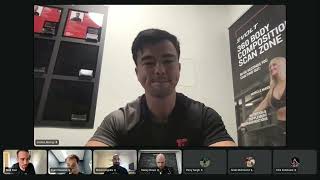
Personal trainer Josh Murray grew his Pittsburgh gym from $7-8K to consistent $10-12K monthly revenue by mastering gym-floor lead generation, handling price objections upfront, and moving clients to online coaching during holidays. He shares his weekly organization system and the software stack he uses to deliver training at scale.
Chapters
Give all the attention to Josh and me. You pretty much just see me and Josh. Um, so what we do every single month, for those who haven't been with us for a long time, um, we interview a client that has done really, really well in our program. So Josh is, um, pretty consistently over that. I think based on memory, 10 to 12K a month pretty consistently. So I just want to go through kind of what you've done over the last— you've been in our program for about 12 months now, essentially what you've done, what hasn't worked, what has worked. Give us the good and the bad because nothing ever goes to plan fully. So I want to hear about the challenges as well. And then obviously some success as well. So for those who don't know as well, I work with a fair few trainers from Fitness First. I've got, I've got 100% success rate on getting people to over 10K muscle at Fitness First. So Harry's on the call as well, he's from Fitness First. So I'm still currently at 100% success rate, but yeah, super pumped to get into, uh, what you've been able to do. So For those who don't know who you are, Josh, can you just tell us who you are, where you're from, how long you've been in PT for, and like a brief summary of who you coach?
Yeah, so, uh, I run my own business in Pittsburgh called the James Division, and what I do here is I help people get strong and, uh, and lose body fat. And I've been working here for the past 10 years— will be 10 years in May, in fact. Yeah, all the way back in 2016, I, uh, started here as Level 1, did my 6 months and then I ran it, started my own, launched my business here, it'll be December 2016.
Awesome, yeah, beautiful. So obviously you've been around for a while, like you're not a brand new PT, so you've been in the industry for quite a long time. But I want to start from like when we first started working together, which was roughly around that time.
Roughly, yeah, roughly this time last year.
Yeah, what were some of the problems that you had in your business, or what, what would you, what were you kind of seeking from me to get help with?
Well, yeah, I was just at a point where I was— my business was okay, but I wanted to get a lot better. So it went really, really well probably 2 years ago, and then it kind of like dipped down, and I sort of got a bit lost in my business. I'm like, oh my God, where do I go from here? And jumped on a call with you, showed me a very good game plan, in fact. And that's right, at that point I had a friend that was was also working with you, um, and he got some really good success with you. Um, yes, yes, yeah, he got about 40 sessions a week, I think.
Yeah.
And, um, so I thought, okay, well, I already know someone that's, uh, worked with you, so trust is really there. And I thought, I may as well, um, take this next step, because if I don't take this next step, then I have no idea where to go to from here. So, and most importantly, I need someone to keep up with my business as well.
Love it. So, can we just go back to what position the business was at when you first started? So around this time last year, according to our records, you were hovering around that 7 to 8K mark. Is that about right?
Yeah, yeah. Well, it was just going down and down and down. So yeah, so I, um, yeah, I just— and I hit 10K before, but I'm not consistent, not consistently. So I needed, um, I needed to get to the point where I could just hold that consistency and go even higher if possible. And I did that last month. Record last month?
Yeah, I think it was around 12.5, almost 13K.
Yeah, it was just short of 13K. Just shy. I mean, it was frustrating because if I had 100% attendance, then it would have comfortably gone past that.
Sweet. Okay, so let's, um, so you're hovering around about 7 to 8K and it was going down, uh, each week. So I've gone through some of our, um, data in-house. So According to our stats, you started around $7,000 to $8,000, and then you got to— you actually hit $12,000 in July. Yes. It was only probably 3 months you went from $7,000 to $12,000. So I want to know, just from your perspective, what did you do in the first couple of months from starting with us? Was it getting sales? Was it marketing? What would you focus on?
Yeah, a bit of marketing. It was just getting leads off the So, um, yeah, basically I just put myself in the mindset like, if I don't get— I got 30 days to, um, well, I got— yeah, I'll put myself in the mindset, 7 days. Yeah, and yeah, and then I would— yeah, it was just, it was just constant hard work, hustle, and Just, yeah, just talk to pretty much everyone on gym floor and get as many leads as possible. It's all a numbers game at the end of the day.
Yeah, it's all numbers at the end of the day. Can you walk us through what you actually did to get leads from the gym floor? Because I think a lot of people are a little bit scared to walk the gym floor.
Oh, just talk to people about their training. Just show you're genuinely interested about what they're doing, goals they're achieving. And if someone's lifting with terrible form You just go there, offer some help, not necessarily book them in for a comp session straight away, but plant the seed. And then once you plant the seed, they know you're the go-to person that actually cares about their training fitness. Because I think a lot of PTs have a bad rep of just getting clients, take the money, and after they start paying you, you don't care about what they do after that. But if someone has the— if some retail— if a member of retail generally care about their health, their goals, then they will come see you. Yeah, they'll join the team.
So just to recap, so you're basically just, if you see something that you can improve on, you're pretty much just going up to them and basically saying, hey, look, by the way, 'Um, I noticed this, this is how you could do this exercise better,' or 'this is how you correct it.' Is that kind of what you do?
Well, I'll go up to someone and go, 'Um, hey, I noticed you're doing this exercise. Um, what you're doing is very, very good, but, um, would you like me to teach you how to do it even better?' So come to them with a, um, in a positive way already, um, already complimenting them on what they're doing. I'm like, 'Yeah, you've done this this lift is very, very strong. I can tell you it's strong. I've got a few tips on making it even better. And then 9 times out of 10, they'll be happy for you to do that. They won't be all— it'll prevent any members from being all defensive.
And then so basically you're giving some free value for us, which is great. At what stage do you start to bring up booking in like a complimentary session? Do they bring it up or do you bring it up?
I'll bring it up. Yeah, I'll bring it up. Look, I'd like to get you in on a free onboarding session, which we sit down together, go through goals, and work out a game plan for you and see how we can get you the best results possible. And it'll just be the one session where we sit down together, and then I'll just try to convert them on the spot.
Okay, just a question in the chat. Do you do that after the first conversation?
Yes, I'll put them in after the first conversation. Sometimes we'll take 2 or 3 conversations, um, depending on how comfortable they are. So, all right, um, it's all about building that rapport, building that trust.
Okay, so it kind of just depends on, depends on the individual, I suppose, if they're willing to Yeah, it depends on the individual.
Some people will be, um, will be already have, um, I want to find a PT in the back of their mind already. Some people, um, they'll be the furthest thing from their thoughts, and you just gotta try to, uh, try to show the value of coaching, try to show them the value of why they need to find a professional that's already been there, done that, that's already achieved hundreds of thousands of results with previous clients, that they're going to be— if they don't start, they're going to be missing out.
Okay, cool. So obviously the main strategy that you had was obviously walking the gym floor. Was there any other strategies that you did to get— well, yeah, a lot of referrals as well.
So So there's been a few clients that I've, um, I've got great results with, um, yeah, with, with fat loss, building muscle, and then they've just, um, sent me their friends. And referrals are the best thing ever because, um, it's just one conversation, sometimes over the phone, and then they sign up on the spot. Easiest sales ever.
Yeah, 100%. So are you actively asking for referrals, or are clients bringing this up with you?
No, no, I don't even have to ask them. They just bring it up because it's all about getting the best results for them possible. And then they'll start— my name will be in the conversation between their friends. And the latest referral I had was literally my client's friend was like, um, can you send me the trainer you are working with? Um, who was responsible for getting you into this shape. And then he did, and I just had a conversation with him, um, literally 15 minutes to sit down, um, because he was short on time, and then he signed up on the spot twice a week.
Okay, so now you— so if we fast forward, so you're up to June, you hit like around that $12K. What was— what were you looking consistently to keep that momentum? Because you kind of hover around that $10K, $11K mark a couple of times, and you went to that $9K once and you went back up to $11K. How did you stay consistent around that $10K?
Well, putting all the effort in, putting more Putting more time and effort into, um, into my own clients, working, um, on my business and working within my business. So how can I make my work better? And never, and never just selling for that. Like, I've always found myself, um, falling into the trap of, um, once I get to a certain point, I start to relax, and then things just collapse down very, very So I've, um, yeah, once I hit that mark, I've always set myself a goal of, uh, one lead a day, one lead off the board, which is not a big target at all. I work in one of the busiest gyms in Sydney, and, um, yeah, just getting one lead a day is pretty easy. That's 5 leads a week, and then you're looking at a high chance of converting 1 out of 5 as a new client.
Yeah, so you basically just kind of always set yourself a goal of 1 lead per day until you turn into 5 leads per day? Yeah, yeah, pretty much.
And yeah, so that's, um, it's not a very high target, and I just, um, it's my puts us in a great position to make this sustainable.
Yeah, at the same time, even though if you don't get like those, you know, 3, 4, 5 consults within a week, you're still communicating with people. So if, if there is a time where down the track those people do want help, then they've already got that relationship with you.
Exactly.
So Obviously you've used that to get pretty consistent leads into the referrals, which is awesome. What about your sales process, your sales team? Over the last couple of months or so, can you talk us through firstly what you do on the sales process? So like what you do during the consult and then kind of what you've been kind of working on recently with that?
Yeah, so I've tried a few different things. And, um, yeah, a few different things I've tried and tested. Some things work, some things didn't work. What I've found that has worked best for me was just going through, uh, through there, going through the goals, going through, uh, going through the training, and, um, and addressing their objections before they become an objection. So I found that the 3 main objections I get is, uh, it's price, spouse, and time. So just like tackling the price objection by going through their, um, going through their like takeouts, their drinking alcohol at all, and talk about that before they, um, before pricing becomes an exception. Because if they bring it up, then I'll be like, hang on, that's, um, if we cut this and this and this and this out, then that would free up some cash flow for some coaching.
Yep. Okay. And are you doing this, are you doing this like during the consult or are you doing this at the end?
Well, only if it becomes an objection, only if they go, oh look, I can't really afford it, the price is a little bit steep. And then I'll start to bring these things up like, look, you mentioned, okay, look, you mentioned you You were out this many times. If we cut that out, do you think you'll be one step closer to your goal? Yeah, yeah, sure, sure. Okay, so if we have this much— look, we've always had— I always try to add it up into a very, very high number. So I'm like, okay, looks like you spend about $200 a week on takeouts, another $100 a week on alcohol. If we, if we halve that $150 a week, do you think it'll be worth you losing 10 kilos in the next 8 weeks by investing $150 a week into some coaching? And very often they will say, yeah, sure, that sounds actually sounds good.
Yeah. Okay. So you're obviously you're leaning more on the logical side of things as well towards the end. To be like, hey, well, you're spending this amount of money. Yeah, if we were to reduce it, then, um, yeah, obviously a bit of a no-brainer. Um, okay, so what about— what do you do for like partner and time objections? How do you handle that?
Well, partner, I always ask them if their partner's, um, supportive of their goals. And they— if they go, okay, look, um, before it becomes an objection, say if they go, I have a lot— I need 'Speak to my partner.' I'll go, 'Hang on, isn't your partner supportive of you, uh, losing 5% kilos?' 'Yes.' 'Okay, so they wouldn't have a problem with you, um, taking some coaching, would they?' 'Who's going to be, um, doing your meals for you?' 'Oh, myself.' 'Okay, sure, so it's not an objection then.' Yeah, okay, so you're basically, um, so whatever the objection is, you're obviously just getting—
or clarification on if it's actually the proper objection. So if it's obviously like clients, you're like, okay, well, you're already spending XYZ on takeaway, can you really not afford it? And if it's partner, obviously it's the food, then yes. And then you're, you're also asking about that, like, who makes the meals. Do you find that's, yeah, like the right question to ask and that gets the right result? I'm just curious.
Well, you've got to ask tough questions for them for, for to be able to dig deep. Sometimes you really got to dig deep to get that, to get them over the line.
Yeah, love it.
Yeah, sometimes you just got to be, not be afraid to ask sensitive questions.
Yeah, okay. And another thing is, because you've been in the industry for a long time, what's your advice to any like newbies that are kind of just getting started into the industry that might be scared to challenge people on what they're telling you?
Well, just talk to as many people around the gym as possible, because the more people that know your face and more people that know that you're generally there to help, the more chance you have to get those first 5 clients over the line, especially being brand new into the industry. Even, um, I always treat it like the analogy of like a um, playing soccer. You're a striker, right? You just know you need to get that first goal, then you're going to go and go on a run. Yeah, all those first 5 goals, you're going to go, go on a bit of a run. Because it's also a confidence thing as well. The more people you talk to, the more confident you'll be.
100%. 100% agree. It's all a numbers game by the sounds of it.
It's got to be, yeah, and the more leads you book in, even if they don't convert, it's treated as like a practice session. And then you do another one, it's another practice session. And you might want to try something different the next time you have a game plan session or a free session with a client or a potential client. Get potential leads.
Okay, so we've gone through a few of the things that have worked really well for you. What are some of the challenges that have come up over the last 12 months? Like maybe 2 or 3?
Well, yeah, the challenges is to keep myself at that, um, at that 12K, 10 to 12K mark. So, um, one of the challenges is, um, which I've been, um, coming quite good at is just keeping end of week, write down how many clients I have, how much money I'm bringing each week, which is very, very important because the numbers drop, you know, you've got to get this X amount of clients to get back to a certain number, or if you have a, let's say, if you have a goal revenue you want to make, you know, you've got to have an extra 2 to 3 sessions per week to get to that number.
So you've pretty much been, you've kind of always been marketing in case you have a bit of a drop, is that right?
In case of a bit of a drop, yes, yes.
Good point to make because you guys can make a lot of money very, very fast, but you can also lose a fair bit of money very, very fast. Yeah.
It's also not putting— not pausing payments as well. So whenever a client goes on holidays, I've been signing them on as an online client. Yeah. So there's no big drops.
Yeah.
Because that's often a big trap I've fallen down. Sometimes I can get 5 clients that go on holidays at the same time, and then that's minimum $500 out of my weekly wages.
Yeah, 100%. So yeah, we obviously had that conversation about moving people online while they're traveling or while they're away or whatnot. Yes. So, and by the way, was that a hard conversation to have with clients? Because a lot of people are like scared to be like, hey, we'll just move your stuff online rather than doing face-to-face.
Well, the trick is that I don't— I've stopped selling my packages as, oh, you're paying this much per session because the client thinks, oh, I'm paying this much per session. So if I don't do the session, then I'm not paying. I start selling it as, okay, you're paying $120 a week. Including that $120 is online coaching, one face-to-face session. You get, you get a checking call at the end of the week. Okay, so they don't treat it as they're paying for my 1 hour that I spend with them for the week, or 45 minutes. They treat it as, oh, they're paying for all this that they get throughout the week.
That's a big golden nugget there from Josh, guys. Yeah, I'm saying Hey, look, it's 70 per session, 60 per session, whatever it is, then if you're not going to do that session, they subconsciously are going to be like, okay, cool, I don't have to pay that week. Or if I'm doing sessions while I'm away, then it's going to be a lot harder conversation to have if you're going to move people to a hybrid.
Yeah, so like, yeah, so if they, they don't show up or they go on holidays, you You have a conversation with them, like, if you want to keep on track with your goals, we've got a goal of losing 10 kilos by the end of May, for example, right? We're not going to let you fall off track, so you're going to— I'm going to make sure that you stay on track. You're going to sign up to a gym while you're in, let's say, the States, or you're in Bali. You're going to sign up to a gym there. I'm going to do programs while you're away. And then instead of paying me $120, it becomes $100 a week. And that way I'll be able to ensure that you stay on track while you're away.
You obviously got the client results at the forefront of the—
because clients get slack when they go away. They weren't training, they'll, um, they'll go drinking, eat, uh, whatever food they want, and before they know it, all that hard work they've done is undone.
Yeah, well said. Okay, so a couple of challenges you had is obviously moving people to, or having that discussion with people to move them to online, obviously change the mindset of charging per session to charging per week. What's another challenge that you had that was quite difficult for you over the last 12 months to achieve this high income, mate?
Um, putting myself in the right mindset whenever I, um, whenever I go into that, um, into that game plan session with a potential lead, right? You know, often I put myself into a victim mindset previously, be like, oh, no one's got money, or the market's saturated. But then I'm like, most people own a $2,000 iPhone. How many people own a $2,000 iPhone?
Pretty much everyone, right?
If someone can own a $2,000 iPhone, they can afford coaching. Just what they prioritize. I heard someone, I forgot who it was, He was like, if, um, if someone was in a lot of pain, right, and it was a— there was painkillers, that was, uh, $10 for painkiller, right, to get them out of that pain, and they only had, um, $10 in their name, they'll be like— they won't be like, oh, oh, um, wait till I save up. They'll like take my money. It's how they value your and you have to sell it to them in a way that they— and so it's in a way that they really, really need your services. They really need help for them to get that result. Clients pay for you, pay for the result at the end of the day.
Yeah, 100%.
They're paying for the result. They're not paying for the pain experience with you, but at the end of the day, they're paying for the end result, which is, well, lose 10 kilos or be able to lose a few dress sizes or whatever it is.
Yeah, well said, well said. Um, did you— can you, can you talk us through how you changed that mindset? Um, because it seems like a pretty big change that you would have to make.
Yeah, well, if I like— if I want that victim mindset, no one's gonna be there to, um— I'm the one that's run— um, that's, um, I'm the captain of the ship. I'm, I'm the one running the show at the end of the day. So like I guess I got a mentor, but I'm the only one that's there to help myself. I have to put the work in, otherwise I'm going to be continually in the cycle of having an average business, which is one of the nicest things in life. But I want to, you know, have a family in the future and support them in a way that I can give my future family the best life for, um, you know, I gotta, I gotta bring the revenue in. So in order for me to do that, I need to be, um, I need to make sure that revenue is consistent throughout the whole year.
Yeah.
And I cannot, um, yeah, cannot let myself, um, form the trap of, oh, be comfortable with the business dropping down. Relaxing and like, oh yeah, I'll sort it out next week. I'll sort it out next month. Oh, June's a quiet month. Oh, it'll be easy next month. I didn't give myself any excuses at all.
And just to reiterate that point as well, even though you guys are working with me, like, I can't save your business. You guys have got to put in the work yourself to get those results. Act as if I'm going to try and save them from whatever's happening in their life.
Yeah, that's right. Like, it's like, um, a client working with me, like, um, I can give them— you give me the tools to get myself from point A to point B. It's up to me to use that tools into my— in my business, right? I'll give a client the tools to lose 5 to 10 kilos in the next, like, 4 to 5 months or whatever it is, right? but it's up to them to put the work in. I'm not going to be there in the kitchen cooking all their meals. I'm not going to be in the supermarket helping them buy all their food for them. I'll give them the tools, but they've got to put all the work in.
Speaking of the revenue side of things, I was looking at some of the stats that you put into our system the other day. One of the biggest things that I saw was in January you hit $12K in January as well. Put a note on there to say last year in January you were only doing $5K.
Yep, that's right.
Can you talk us through, or I'm not sure if you remember exactly what you were doing last January.
I know what I did.
Okay, well, can you talk us through the difference between what you previously did and what you did this time to make sure you had a high income?
I just put myself in a shitty mindset that like, oh, uh, New Year's resolution doesn't start till February, so I'll just wait till February till all the clients come over. Love it. And I'm like, yeah, I'll just wait, wait till the gym gets busy, it'll be all right. And also, also the, um, the Christmas hamper helped a lot as well.
Yep.
So I worked ahead of time, I planned for New Year's in December. Yeah, I had that, um, I had that Mad Christmas Hamper big giveaway. I've got about 40 to 50 leads on that. And I, I, um, I plan— I, I was doing my— I was booking my first week of January before Christmas. So I was booking my— I was obviously put my paid clients in as first priority. I'll put them all in because I've got— look, it's gonna be a busy week. I want you to secure yours first. So I secured them all in, and then I, um, then I started making all those calls, and then I, then I started booking, booking all these, um. So I announced the winner, obviously. I think I forgot what the prize was. I think all the prizes— I think it was 2 sessions with me and booked him in for those 2 sessions. And funnily enough, he was funny, funny story. He, I think you remember this, he actually said, oh, can I take the prize? I don't really want the sessions. I'm like, why wouldn't you want the sessions? You're going to get so much value out of this. All right, I'll do the sessions with you. And he actually converted.
How good.
Yeah, he actually converted. Um, and then, yeah, then I started booking the runners-up. Everyone was a runner-up, but they don't know that. Yeah, and they all, they all, um, they all won, and, um, a session with me. So it was like a game plan session.
Do you remember how many clients you got from that hamper?
I think I converted about— that guy could play about 5 of them.
Awesome.
Yeah, because I remember my books being really pretty busy at that point, but I just needed more to help out. And yeah, got myself a very good position this first week of the year.
Yeah, I think that set you up for a really—
it was good I did that because, yes, I remember end of January, Australia Day weekend, I had a lot of clients go away on holidays, so it freed up some space for me to have some new clients come in. And then by the time they came back from holidays and those new clients converted, I was in a very, very good position for the entire February.
I think moral of the story here for the guys that haven't done like December or January with us is December is all about preparation for January to hit the ground running. Um, so you— we still do a lot of marketing in December, but you don't necessarily sign a lot of clients in December. You do a lot of lead generation in December, and then you sign all the clients in January. That's how it usually works. Um, so generally, like, that hamper, you usually sign 10% of the leads. So if you had 50 leads like Josh, you signed 5 clients. If you get 100 leads, you'll usually sign 10. Usually it's about a 10% from lead to client ratio.
Yeah, I found it works so well because I'll just approach someone and be like, look, I'd say Fitness First is running, I wouldn't say I am, Fitness First is running a Christmas giveaway. You have a chance to win, I'll call it $500 worth of prizes. You get this card, there's a gym in there, there's a tub of protein in there, And what I found really helped in that giveaway— well, what I found that didn't help was standing at the front of the gym because people were in a rush to get into their workout. I remember the first day of me doing that, everyone said no. I had about 2 people that said yes, wanted me to put their name down. And I was like scratching my head, I'm like, what's going on here? Like, this is not working. Put all this money in. I only got 2. And then when I went up into the gym floor, everyone's wanted me to put their name number down.
So were you still going up to people or were they approaching you?
I was, I was going into people. Yeah, I would have, um, I wouldn't have the, the actual hand with me. I'll just have like a QR code, um, I'll just have a clipboard with the QR code and I'll be like, scan this QR code. I had a Typeform thing attached to it and be like, yeah, all you need to do is just put your name and number down and you'll be in with a chance to win $500 worth of prizes. And then it'll just be a short conversation, 5 minutes tops, and then they'll put their name and number down.
Love it. So for those who haven't run giveaways before, usually we suggest doing it every 3 months, so 3 to 4 times a year. Obviously the December one will be like more Christmas and New Year's related, and then depending on when you run it, we'll come up with a thing for that. But, um, they always do very well. Um, I just want to quickly touch on what we spoke about, I think a couple of weeks ago, with your sales process, because we determined that, um, you weren't following your normal structure and your sales conversions were going down. So can you talk us through what we went through and then what you decided to do?
Yep. So I went back to my structure again and sales conversions went up again.
Yeah. So can you tell us what was the difference? I think from memory you were just writing stuff down instead of following the—
Yeah, I was writing stuff down and I just went off, I was basically completely winded and I thought, and I was skipping too many steps, skipping questions and And yeah, it would just be, it would just be too rushed. And then I would prioritize a lot of the time on movement analysis. It might work for some people. In my opinion, this is just my opinion only, it's a complete waste of time. Because they just do a few movements with you and then it takes a lot of time out of the way from from the emotional selling, from asking tough questions, because you're just doing these movements with them. They think they can do it on their own after that. And then you just be like, okay, I charge this much, want to sign? And then they, and then if I get an answer of, I'll think about it, means I didn't cover enough. That's a good word for like, oh, you didn't give me enough value there.
Well said. So moral of the story here is stick to the friggin sales process that works. Don't change. But also really good point as well, because I've said this to a lot of people as well. When we removed that physical part of the session, the sales conversion stayed exactly the same. So I always tell people, like, you can do it if you want, but it doesn't really have an impact on the conversion. And so I was saying the same thing last week as well, like, you guys were there at the event. But very good points there. I want to put a little bit of time for people to ask questions themselves because a lot of people on this call aspire to get to $10K, $12K per month. Commercial facilities. Like, obviously, if people on this call, uh, are not in commercial gym, um, so it might be a little bit different for you guys, but a lot of the stuff that we cover is still relevant. So if you guys have questions for Josh on how he's been able to go from 7K to pretty much 10 to 12K pretty much every single month, then drop them in the chat. Um, but Josh, I want to know, like, for you right now, what's like the next goal for you? Like, we've been talking about doing doing some stuff online as well. Um, what's the next thing for you?
Yeah, the next step for me, um, is now I've got a bit of practice online. I've, um, I've just done my first call to action story just then. It's gonna probably see my Instagram story. Um, so I've been, um, I've just started, um, launching my online coaching, so I've been coaching friends. I've been coaching two friends for free online for one month. They've got very good results in that one month with their lifts going up, progressively going up. They've been seeing some results in their daily habits and their physique. Now I'm— now they've both had the conversation more of like, oh, I'll actually like to stick with this long term. So what's the next steps with paying you? So I'm about to convert those two. And I've also been getting them to send me some referrals as well. So that's the first steps that I'm going to go through with my online coaching is just get referrals and see if this call to action story is going to bring some leads in.
Yep, awesome. And if people do want to actually follow you on Instagram as well, what's your handle?
The JM Division.
JM Division. Brock's got a question here. Do you use a particular app to deliver your online services, like EverFit, for example? And if so, do you use automation and intake forms?
Yes, yes. So good question. So I use Trainerize at the moment. I find Trainerize the most— my experience has been the most user-friendly as a, as a, for general pop clients. Yeah, so I use Trainerize for just training only. I use Typeform for any onboarding clients that want to put their name down to apply. I use a website called Tela for my check-ins. And, um, trying to think if I'm missing something. Yeah, I think, I think I've covered them all. Yeah.
Do you have— do you use like any, um, do you have any automations in there, or is it all done kind manually at this stage?
It's all done manually at the moment, yes. Yeah, I'll use a TOL app. So you can either use TELA or Bloom. They're the two— in my experience, the two, um, best, uh, pieces of software you can use to do client check-ins with.
Okay.
Oh yes, I forgot, that's right. And WhatsApp, uh, WhatsApp for like, um, a group message for like any group chats for clients if they want to post their wins and whatnot.
Yeah. Okay. Can you just confirm? I'm not sure if you can see the chat. Did Brock spell it right? T-E-L-L-A-R?
No, sorry, T-E-L-L-A.
Oh yeah, cool, cool, cool.
Teller.tv.
What's that for?
So it's like a recording software. So it's a screen record software, just like Loom. So you go through your client's calendar. If they send you any lifting videos, you go through that with them as well, and their nutrition, and just be like, you need to work on this and this and this and this and this for next week. And that way, find it delivers better results.
Yeah. Is there a reason why you use that over Loom? Is it pretty much the same thing? Thing?
Well, I don't know what's going on with my laptop, but Loom hasn't been working for me. That's why I've been using Tella. Okay, Tella's been working perfectly fine. And what I can do, it's very easy to use because you can— all you do is send the client— you can download the video that you record, or you can send it to them as a link. So they can— so they'll receive a link, they and click on the link, and then they see the video that you just recorded.
Yeah, cool, easy. Love it. Um, okay, I don't think there's any other questions. Uh, last chance, any other questions in the chat? Um, otherwise, um, when I upload the recording, I'll put Josh's Instagram handle so you can follow him, keep up to date with his stuff as well. But apart from that, um, thanks, Josh, for jumping on and sharing your experience. If you had like maybe 1 or 2 pieces of advice for people wanting to get to $10K or $12K per month, what are some tips you can give us?
Well, you just got to be organized. So spend— what I'll do, spend 2 to 3 hours on every Saturday organizing business. It just makes the week less stressful. Yeah, what I find also helps as well, right, is send all your clients a midweek message just to check in on how they're going. In case I slack off or anything. Um, give yourself a goal of talking to, uh, 5 new people per day, um, and try to book one of them in for a, uh, what do you call it, onboarding session, or like a free session, whatever you want to call it. Um, and, um, just be— just Give members the message that you're just there to help. We're there generally to help because the more— what I find is the more genuine you are, the more trustworthy you become. The more trustworthy you become, the more likely they're going to see you as a coach. They're going to trust you with their health and fitness to take them to get to their results.
Well said. Well said. Great insights. So yeah, there's no other questions in the chat. So thank you again, Josh, for jumping on and sharing your insights and wisdom.
No worries.
Appreciate you. Well done on your progress and choose to keep growing the business even more.
Thanks so much for your help, mate. That's— yeah, it's been very, very helpful.
Awesome. Love your work, mate. I'll upload the recording very shortly, team. But if you've got any other questions for Josh, you can obviously answer them in the community as well. But I'll love you and leave you, team. Have an awesome day. Enjoy the weekend. I'll catch you guys later.
Cheers, guys. Thank you very much.
Bye-bye.
More from Matt




Your staff aren’t lazy. Your systems, standards and leadership might be. Check out Episode 138!





Your team can’t take ownership of work you refuse to hand over. Stop being the bottleneck! #shorts


Slow lead replies cost you sales. The fastest business usually wins. Full episode in my channel!