
Ep15: Ben Hartzenberg: How To Train Clients With Injuries
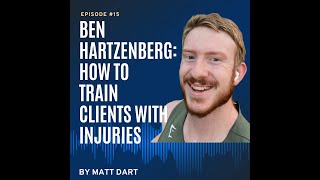
Ben Hartzenberg moved from personal training to exercise science at a physio clinic. He walks through screening injuries with Google Scholar, spotting red flags like nerve pain, and dosing spinal loading carefully before rotation. He argues for loading tendons and rotator cuffs rather than avoiding them.
What's going on, everyone? Matt here for another amazing episode. This is the PT Profit, Leverage and Lifestyle show. Got an amazing guest today, Ben Hartzenberg. We have gone back. Well, we actually met a couple of years back, I'm pretty sure back in the day. Yeah, him on today. So thanks so much for joining us, mate. How are things?
Thanks for having me, Matt. Things have been pretty, pretty good.
Awesome stuff, mate. So we'll dive into who exactly you are. So I know you've been obviously a pt, but a bit more experienced these days. So I'd love to dive into, I suppose, what you have been doing previously. Obviously you're a personal trainer and what you're doing now. Give the listeners a bit of an insight.
Yeah, of course. So I started out as a personal trainer when I started my degree in sport and exercise science at uni. And I did that as a way to mostly just get used to seeing people face to face. Because that I think is the hardest thing for new personal trainers is just learning to. To communicate and talk to people who are different age to how you are to you, I suppose, are in a different situation. But I started out as a personal trainer and did that for a year and a half while I was studying at uni and I became a strength and conditioning coach as well at that time, then went on to work for a year in semi professional football in the NPL and as a strength and conditioning coach and loved it. And then went into sort of a management role at a leisure center and did that for a few months. Didn't love it so much. And now I'm working for Keser Physiotherapy and I'm working alongside physiotherapists in a clinical environment. So people get referred in to see physiotherapists, usually from their doctor or from a friend. They see the physio get diagnosed with whatever's going on and then they referred off to me with a treatment plan from the physiotherapist to do exercise.
Awesome. Love it. So part of the reason why I wanted to get you on this podcast is to pick your brain a little bit about your injuries, rehab, that type of stuff. Because even me, like, I still do personal training myself, but some clients that come in have a few injuries and I have sometimes no idea.
Yeah.
To do or whether to refer people or whether, you know, try and figure it out. But what, I suppose if we just dive straight into it, what are some of the things that, you know, a standard personal trainer can do to, you know, Help those type of clients.
Yeah, absolutely. So the, this is like quite a big topic because when you talk about like injuries or pathologies we usually call them, it's, it's such a broad topic because it could range through just about anything. And I think the thing to keep in mind as a personal trainer is that you don't have to know all the pathologies and how to treat them or what you need to be thinking about. I think the, the big thing you do need to start doing though is start learning how you can research those. So you might, you don't necessarily need to know what all the pathologies are, what all the injuries and muscle tissues and that sort of thing, or any kind of tissue could be, but you do need to know how to research them. So I think probably the most valuable thing as a personal trainer you can do is start learning how to read research papers, learn what all the statistics mean, learn how to analyze those papers and how to flick through them quickly so that when you do get someone who's got a, a complicated lower back pathology that you've never heard of before and you go, oh my God, how am I going to train this person? I got no idea what to do. You can do some research on it and you can come back in your next session with them and you can go, cool, I've got a plan. Or you can go, I need you to go see a physiotherapist first, or I need you to see a doctor and get clearance or whatever it is. But I think starting off by learning how to research these injuries is probably the easiest way because that's something that you do at uni. You learn, you spend a lot of time just learning how to read research papers, but really anyone can learn it. It just takes a bit of time.
Yeah, I love it. That's a good point. Do you have any. Go to websites or universities that do quite good research that we can use?
I think Google Scholar is probably the best just because it's free. A lot of the databases, you've got to pay a membership to be able to view all their papers. Some of them will be free, but it depends if the researcher has made it free or not. So typically like someone's PhD thesis is probably going to be free because they want to get as many people as possible to read it, because then they can wind up getting awards at uni and that sort of thing if they've written that paper. But people who are lifelong researchers, typically you'll have to pay to see their papers or you may just be able to see the abstract, like the introduction of the paper and then the conclusion, and that might be enough. Sometimes if you're just researching something surface level and you just want to learn a quick, brief overview of, you know, what is osteoarthritis and how does it affect movement or whatever like that, and you're just trying to do a quick research on it, you may only need to see the introduction and the conclusion of the research papers, so you might just be able to flick through them. But I think Google Scholar is probably the best one to go to.
Yeah, awesome. Love it. Is there, like, I think, for me, like, pretty common injury or pathology, I think, is what you, you guys is, you know, like lower back pain. Yeah, pretty. Pretty common. At what stage do you think personal trainers could research and try and figure it out on their own to a degree. And then at what stage do you kind of be like, you know, you really need to go see a specialist with this type of stuff?
Yeah, I think if typically, if it's anything, if it's any kind of really significant lower back issue, they'll probably have seen someone already about it because they'll probably go see their GP and their GP will refer them on to someone to get it diagnosed properly or get a scan done. Because once you get a scan done, it's pretty easy for someone, a medical professional, to diagnose you and then that makes it easier for you. If they've already been diagnosed, then you just have to research that specific pathology and think about that. I think, I think it depends on how bad the person's pain is as to whether. Whether you should just go ahead and train them. If someone comes in and they've got lower back pain, something I'd like to do is get them to do like a range of movement test where you get them to, like, bend to one side and then bend to the other side and then flex their spine forwards, extend it all the way backwards and see what kind of range of motion they've got. And also ask them through those ranges of motion what, where the pain is. This isn't gonna, like, this isn't gonna let you diagnose something. It's. It's not gonna be anywhere near enough for you to do that, but it gives you an idea of what kind of movements you might need to avoid. So if you know that they've got a lot of pain into extension where their back is extending all the way back, if they've got a lot of pain through that range, you're probably not going to want to give them a hyperextension because that's just going to flare up, whatever's going on with it. And if they've got a lot of pain and deflection, you're going to want to really be careful with their deadlift technique. Or you're going to want to probably avoid Jefferson curls for the last little while, that sort of thing. So you could do something like that to give yourself an idea of what kind of movements might be aggravating or relieving for them, but it wouldn't be anywhere near enough to. To try and diagnose whatever's going on.
Yeah, yeah, good point, good point.
One other thing I'd consider with that. Sorry, I'll just interrupt for a second. One other thing I consider with that. If they're getting nerve pain down the back of their legs, so usually their sciatic nerve, because this is quite a comm. Issue with a lot of lower back pathologies that are a bit more serious. If they've got nerve pain going down the back of their legs, I wouldn't even. I'd be. I'd be pretty cautious just because it means there's something compressing on the nerve, either in the spine or a bit down lower, but typically in the spine. So that's something where I'd be. I'd definitely be saying, you really need to get this checked out by a physiotherapist or someone like that so that we can get an idea of what's going on.
Yeah. You know, no, not a funny story, but one of my clients, one day, he literally slept in, like, an awkward position and he literally couldn't feel his leg for, like, days. Wow. Like, because of the sciatic nerve. Yeah. And, yeah, I remember it like, he literally came in, he was like, I can't feel my leg.
Was he. He was okay in the end?
Yeah. Yeah. Like, I don't know how he got it fixed, but, yeah, he got. Referred him out to someone and, like, weren't training that that much.
Yeah, that's. That's pretty crazy.
But, yeah, when you brought that up, I was like, oh, jeez, I remember that client that. Yeah, yeah, had that happen. How. How do you tend to. Because I'm assuming you would have trained a few people with, you know, some injuries, given your background. So how do you. How would you suggest, you know, we. We train those types. Types of people.
I think the. The first step really is getting a diagnosis from someone or getting an MRI or scan done to see actually what is going on in the lower back and then getting advice from like a physiotherapist or a gp. The reason I say that is because lower back injuries can range so, so much and the way that you treat them is so incredibly varied. So like my role with Keser at the moment, I see probably half my clients are lower back pain clients and they range from, you know, one of them we might be training almost completely normally and we just have to do slightly slower weight progressions because that could flare their backup. But other than that, I've trained them completely normally and then I might have someone else who isn't allowed to lift over a really, really low weight. And we have to do like decompressions on the lat pull down machine before we can start to relieve the compression in the spine. And it's a really quite a delicate case because it doesn't take much to really flare the back up. And then it gets even more complicated when you go into like chronic pain because if the person had that lower back pain for 15, 20 years, their perception of that, their pain might be completely skewed. So they might tell you it's a 3 out of 10 pain, but because they live every day with a 3 out of 10 pain, that might actually be a 6 or 7 out of 10 pain. But because they, they've lived for the last 15, 20 years with that constant 3 out of 10 pain, it's not, their scale isn't accurate anymore. So then you have to. That's where it becomes so much more complicated because you've got to sort of be aware of that coming in and what type of pathology it is and how that might affect their perception.
That's interesting. Do you have that a bit where people have like that, I guess, that strong pain tolerance because they've had so much.
Not super often, not super often. I've. I've had one guy in the last few months that I've been training and he was like that and it was quite a, it was a bit of a difficult case because the physio didn't pick up on it first and I didn't pick up on it either. And then just randomly one time I just asked him, like, how's your, how's your back feeling? As we were doing a lumbar extension machine that we have, I was going, oh, how's your, how's your back feeling? This one? And he went, oh, it's about an 8 out of 10 pain. And I was like, oh my God, we have to stop, like right now. And it was that was when I realized, and I talked to him about it, and that was when I realized, like, he's. He's actually in like 5 out of 10 pain all. All the time. So for him, at 8 out of 10 pain, I couldn't see it on his face. Normally you can. If they're in like an 8 out of 10 pain, they'll either tell you or you'll be able to see it on their face. And that was a case of where we then had to completely strip it all back and just go right back to the basics and try and work out. And also that was also then educating him on needing to communicate that with us, because if he didn't communicate that, we'd have no way of knowing since he was. So he could tolerate the pain so well.
Yeah, one thing that comes to mind with that is when people are doing a PT session that, like, that don't have any injuries, but, like, they're just trying to push through the pain to get through the session. They don't want to be. They don't want to be like, I need to stop. I need to stop. Yeah, yeah, just keep going. I'm super curious from your point of view, how do we, how do we prevent a lot of these injuries from happening? Like, obviously you don't want to drive yourself out of business, but how do we, how do we stop that stuff from happening, whether it's in the gym or whatever?
So the problem, it's interesting because different, different movements kind of stimulate growth or repair for different areas. So, like the spine, if you think about the spine, you've got vertebrae, and then between the vertebrae, you've got a disc in between. So we need. We need enough load through the spine that the body is sending blood and nutrients to the discs in between specifically because they're probably the more common sites for injury. But we don't want so much load that something is aggravated or inflamed, because then once it's inflamed, every bit of movement will cause friction and then that's uncomfortable and then that develops. So it's a really difficult topic because you actually need so much loading through it. And the problems often happen when you don't load it. So the most, like a really common pathology probably everyone's heard of is a bulging disc or a herniated disc. Everyone's probably heard of someone or met someone who's got that. Always had that in the past. And the. The most common mechanism. It's interesting because I was researching this recently. The most common mechanism for it to happen is when we flex forward and then we rotate the spine. So think picking up a kid off the ground or shoveling dirt, something like that, where we go put our spine into flexion and then we rotate it. That's the most common way for it to happen and that's why it's such a common injury. So the way we combat that is we need to put the person into the flex position under load previously and then we need to put them into rotate rotation with load previously. Right. So the way we combat it is by loading it in the exact mechanism. But we might not do flexion and rotation at the same time. We might make sure we keep those things separate. So one thing I love for rotation is doing a Russian twist. But you put your feet underneath a barbell or something to keep them stable and then you use a slightly lighter weight and you rotate with straight arms, if that makes sense. So that puts, because the ball or the weight you're using is so much further away from your body, that then puts way more load through your spine. So but you can dose this really small. You might only do one or two sets of ten with a two kilogram ball. I found that that was when I started doing them. I found that was enough weight to make it hard. So to an extent you need that loading, you just have to manage the loading.
So is this, is this way you would, you would consistently ask for feedback about pain or how difficult clients are finding it?
Yeah. And you would, you would have a progression as well. Like you, you would always start someone doing an extension based movement or a flexion based movement. Never start them with a rotation based movement. So the spinal handle extension and flexion so much better than it'll handle rotation. So you might do a hyperextension for a month or two, maybe three months before you start doing rotation. But it just, it really depends on the person's history. Like if you get a 20 year old in who's never had any lower back issues, you can probably throw them a bit of rotation and they're not going to have any issues. But if you get like a 60 year old in, you're obviously not going to have them doing a straight arm rotation exercise straight away unless they've got history of doing that previously.
Yeah, yeah, that makes sense.
So it's just the way you approach it and you just, you can do things in your, your introductory session if you like. You can, I like your consult session. You can do movements and you can do tests to see if the person can tolerate it. Fine. And then you can go from there. You might develop your own way of testing it and go from there. But, yeah, just. It's just about sort of loading them up very gradually.
Yeah, that makes sense. Yeah. One thing that I did a fair bit when I first started is I always used to do like a, Like a movement assessment as part of the, like. Well, even in, like the free. The free session, not so much any of the paid sessions, just to kind of say, see what type of movement they had and if they need. Or if we needed to have some type of consideration with the movements that we were going to do at the end of. Or like fitness testing or anything like that. I'm curious to know what is the difference because you're an exercise scientist right now and are you still studying or are you.
No, no, I finished the end of last year.
Oh, cool. Awesome. So what's the. What's the difference between a personal trainer and exercise scientist?
Yeah, absolutely. It's. I think that probably not such a nice way to put it, but an exercise scientist, basically a glorified personal trainer, essentially, you've got the same role. You just have probably a different knowledge level because the exercise science degree does. Your first year is basically just anatomy and physiology. So I think you just out of that, you have a better understanding for how the body moves and what structures are actually moving in what direction. So understanding, like, really specific things like the rotator cuff, how it's made up of four muscles, but three of those are your internal rotators and one is an external rotator. So understanding which specific muscle is working. And then when someone gets a rotator cuff kit, tough rotator cuff tear, you know. Oh, cool. It's the supraspinatus. So I know supraspinatus is an internal rotator, so I don't need to be training external rotation to rehab that muscle. I need to be training internal rotation. It's just really specific things like that. It kind of just gives you another level, another level of, of how to think about these things.
Yeah, just. Just in terms of the. Even the language that you're using now, like, I'm not going to lie, some of the things that you're talking about, I'm like, what are you talking about? Absolutely.
And that's just from spending years at uni listening to the lecturers talk like that. And you sit there yourself going, I have no idea what's going on. You just, you just read it and talk about it, like, often enough, and then it gradually gets better.
I'm sure there's many people right now thinking like, what is this guy talking?
Absolutely. Let me know if you want me to explain. Like, do more of an in depth breakdown of what I'm actually talking about.
I was just going to say like in terms of the rotator cuff injury because I feel like that's quite common as well. So is there any certain exercises, even just simple exercises that you could recommend to either prevent that type of injury or help manage that injury?
Yeah, so thankfully that like preventing it is actually quite simple because you just need to be doing an internal rotation and an external rotation of the shoulder. So if the arm is out to the side like this, you've got internal rotation and then you've got external rotation. And so I think everyone's probably seen someone at the gym doing a banded external rotation where they've got a bandit tied around a pole and they're pulling it backwards. So just that's the simplest way to do it is do that and then turn around and do internal rotation as well. Then you're going to hit all of those muscles. The trick with the rotator cuff though, is that they don't act like other muscles where they have a stretch and a shorten. So they, they're most, mostly their job is to stabilize the scapula and essentially hold the shoulder girdle together. Because if you, if you look at the shoulder in terms of just the bones, they don't have a nice socket that they sit into like a knee does or a hip does, where it's got a nice end of a bone that slams its way into a, a joint or a socket. The, the shoulder is kind of just pieced together. It looks pretty delicate when you look at just the bones and how they sit. So these all sit along the back of the scapula and their job is just to stop it all from falling apart, basically. Which is right, why most people refer to them as like the shoulder stabilizers, because their job is mostly just to contract when the shoulders under load and to hold the whole thing together. So from that perspective, doing a simple exercise like that is fine because they just need to be able to tolerate load like that. They don't need to be able to move effectively through a lengthening and a shortening quite as much as a lot of other muscles would need to.
Yeah, that makes sense. Just going back to what you were saying before, it just kind of came to me just then because you were saying to, you know, prevent certain injuries from happening, you need to still put that particular muscle or muscle group under load. Do you feel like a lot of people will just try to avoid the area completely?
Oh, absolutely. And it, it happens so commonly. It's something we do a lot of education at, where I work on with this sort of thing, because the. It's pretty common to be fear avoidant. Right. If you, if you injure something, you naturally, just by human nature, you. You don't want to move that joint or you don't want to use that muscle again because you remember what happened last time you used it. So it's like that with a lot of tissues. And attendants are probably the best example of that. Where tendons are such a temperamental tissue that they, they don't like to be stretched and they don't like to be compressed. They just like to sit there and hold everything as tight as possible. But they don't have. They're not. Not so much an active tissue. They're not like a muscle where they can move through at a range because they don't have fibers that'll move. They just, they're just made up of collagen and they're just stiff. So what happens with tendons, because they're not very well vascularized, so they don't have a lot of blood vessels going through them, which means it's hard for the body to repair them to get the nutrients in. So the way you've got to get the nutrients in is you need to stimulate that tissue, which means moving the muscle it's attached to through its range of motion. And that way you can then stimulate blood to come in from the bone on one end and from the muscle on the other end. So that in simple terms, that's the tissue. The tendon's a good example of that. Where if we don't use it and we just let it relax because we've torn it, or we've. We've got a tendonitis and it's really inflamed. If we don't use it, it just sits there and it doesn't get nutrients and it doesn't get anything to help repair it if you don't use it.
Yeah, it's a, it's interesting point of view because I feel like even I was, I was showing someone this morning that had a little niggle and we're like, oh, well, let's, let's see. See how we go under label. You know, we'll just test the waters here a little bit. But she was like, oh, nah, just kind of want to rest it type of thing. It's interesting Because I feel like a lot of people that have had previous injuries before will just avoid the area completely, but then, you know, nothing ever happens.
Yeah, exactly. Right.
Just on the, like the language itself, like, did you, did you find it challenging having that type of knowledge talking to. Because I know you were at jets. Did you find difficult to communicate with clients given your knowledge?
Well, a little bit, but not massively. I think that as you once, when you first start learning, I suppose that sort of the more scientific knowledge, you. You tend to use it a lot and use it as much as you can just because you know it. And at the beginning you don't know how to explain it in a way that anyone else could understand. So you just wind up using that complicated terminology. But over time you learn how to explain that concept to someone, you know, so. And I think it gets, it gets easier with time. But no, I suppose I, I didn't struggle if I had time to explain it to someone. Because if I, if there was something specific I wanted to explain to one of my clients about their pathology, like their injury, then I would take the time to explain this is scientifically what's happening to your body or happening to that tissue. And then this is how I can explain that to make sense to you. And then that was really valuable that they always loved when, when I explained that. But it's not worth explaining the science if I couldn't explain, if I didn't have the time to explain the other side of it, I suppose so they could actually understand it. Otherwise they just leave there being more confused than anything.
100%. Yeah, I can definitely relate to. To that. Actually. One of my clients that I just spoke to just before jumping on here, he's studying to be a chiropractor and someone had a injury that he was working with and he basically told them exactly why they had a certain, you know, pain in a certain area. But he explained it only the, like, technical way. But the client couldn't understand and they'd already finished the session and he was like. It was just so awkward because the client had no idea what was happening. But, you know, the PT knew exactly what was happening and we fixed the problem, but the client had no idea.
Yeah, that's such a good point. It's. I think, yeah, it's. You'll find, you'll find it's different when you, when you talk to different people, but if you can explain it in a way, they'll understand. They, you. You can see it on their face when they get it and they Go, oh, yeah, that makes so much sense. Right, well, thanks for explaining that. But if you just explain the, the science or the anatomical side of what's actually going on, they just kind of go, ah, okay. Well, that's, that's interesting. And then, like, you can see it on their face. They have no idea what you're talking about.
Yeah. Does it kind of look like this face? I think you're doing well to kind of simplify it for me a little bit because I don't, I, I don't fully understand. Like, I, like, I, I know a little bit, but, like, there's. Obviously there's a clear difference in knowledge between me and you, but it's good.
No, it's, it's different. It's just different areas of knowledge, though. Like, if we were to talk about business, I, I'd be. I'd have no idea what you're talking about. You blow me out of the water. So it's just different areas.
It's true. It's like different passions. Like, obviously, you've got passion. You know, I've got a different passion. Everyone's got different passions. But common theme for the audience. We're all wanting to help people, so there's all different ways that we can help people. So. But I'm curious to know as well, from, from your perspective. So we've talked about a lot of injury prevention and stuff like that, but what are you kind of, now that you're an exercise scientist, what's the plan for you going forward? Like, are you going to try and become a physio? I know you're working kind of beside a physio now, but what's the plan for you?
That's a great question, that the plan for me has changed a few times over the last, say, two years. Originally, I wanted to be a strength and conditioning coach, and I wanted to work in elite sport and essentially just work with athletes. That was originally where I wanted to go, but then when I did that, that year of actually working with athletes, I discovered I don't really like that industry so much. And also there's very, very little money in that industry until you've been doing it for a long time. So it's a, it's not really a feasible option for me, I suppose. But at the moment I'm, I'm actually going to stay as an exercise scientist. I wouldn't, I wouldn't want to become a physio because that would mean sitting in a treatment room all day and, you know, massaging people and diagnosing things. And I love being out actually coaching people. I love watching the biomechanics of different bodies moving and then solving those problems. I suppose that seem to come up because every one of us is completely different. I love. I get really passionate about coaching side of it. So my, essentially my career progression now is just go as deep as I can into learning how to coach as best as possible. And I like, that's where this role I'm in at the moment has fell in quite well, because I can work alongside physiotherapists and exercise physiologists and they can deal with, I suppose, the boring stuff. Not really the boring stuff for them, but for me, in my mind it's the boring stuff. And then they can just give me a note of, this is what this person's got, this is what their situation is, here's how we need to be training them. And I can go, cool, take them out onto the equipment and get them stronger. So, yeah, I'm going to stay as an exercise scientist. I love what I'm doing at the moment. Aside from, to be honest, where that'll go specifically, though, I've got no idea. Just take it as it comes.
Yeah. So you're still obviously doing like, similar to PT sessions, but in. In like a.
A rehab space, essentially, like a private.
Gym kind of thing.
Yeah.
Cool. That's cool. Do you have any. Do you have any advice for personal trainers? Do you feel. Do you feel like a lot of personal trainers should become exercise scientists?
Oh, that's a good question. No, I don't think all personal trainers should become exercise scientists. I think you've got. You've got to have a passion for the science and you've got to have. I suppose I call it like a science brain where you. You find a really interesting. Learning all the boring anatomy and physiology. Because if you like, that stuff can get really, really boring if you don't. If you're not interested in it or you don't like learning it. So I have quite a, like, analytical brain where I love to. To watch something happen and analyze how it happened and then figure out a solution to whatever we're trying to achieve. I love doing that sort of thing. But if you're not passionate about that, I wouldn't probably go down the exercise science route because you'll just spend three years at uni and get a $30,000 hex debt and then come out the other side going, oh, actually, I probably would have enjoyed just being a PT and, and enjoying coaching people. So if you. If you're more of like a social person, I suppose, not necessarily just a social person, but if you appreciate just coaching people and getting them fitter and stronger, you'd probably enjoy staying as a pt. But it is a good career progression. If someone just. If someone is running their own business and they want to improve their knowledge in another area, I think it's a fantastic idea because it gives you another layer of knowledge to put over your. What you already know about human movement and what you know about getting people stronger gives you the, I suppose, the scientific side to that. You already know how it looks in real life, but giving you the backstory of how it actually affects the body.
Completely agree. Follow the passion, I reckon.
Exactly right.
I went to. None of you all know this, actually. I went to uni for one year and then dropped out. It was a business degree, actually and.
Wow.
Yeah, right. I learned more myself than actually going to university.
Right.
But, you know, I'm sure university has its place. Yeah, it was good. Good value. That's awesome. That was really insightful. I really enjoyed that conversation because, like, it's. It's all somewhat new stuff for me as well. And I think a lot of people are going to get a lot of value from what you talked about today. So thank you again for jumping on board today and thanks for having me, Matt. No doubt we will talk in future. Yeah, absolutely.
Thanks.
More from Matt




Your staff aren’t lazy. Your systems, standards and leadership might be. Check out Episode 138!





Your team can’t take ownership of work you refuse to hand over. Stop being the bottleneck! #shorts


Slow lead replies cost you sales. The fastest business usually wins. Full episode in my channel!