
Matt Dart walks through tax accounting setup and investment strategies for business owners. The session covers cash flow management, tax deductions, and options like shares and property to optimize your financial benefits.
Chapters
Hook it up to the top of your roof in your car. And so I do a lot of camping and everything like that. And Georgia can do a lot of her job remote, so I'm like, fuck, yeah, we could go away for a week and then I can just like work in the bush.
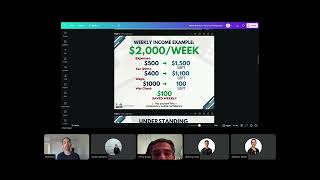
That's so good. That's so good. I think my thing is recording now, so hotspot for the win. But I might have to get Starlink. I think we're going to go caravanning for a while, so I was going to buy it then, but I might have to get on the bandwagon a bit earlier. But all is good. All right, let's get stuck into the training. I'm going to send you through the worksheet. So we're going to talk about tax accounting setup and I'm also going to at the end share a few strategies that I use with my current setup to basically not travel for free, but get a significantly reduced bill for travel because I use my business to get a lot of points. So worksheet is in the chat. Welcome on board as well, Anthony. Good to see you as always. I'm going to start sharing my screen. We'll go through the basic stuff first to make sure I cover all bases and then we can get into a bit more of the advanced stuff down the track. So what I would like to ask is obviously we're going to talk about money today, so specifically tax accounting set up and then how to optimize your money, I suppose to get more benefits, I suppose. But the actual theory part of today is actually probably only going to take maybe 20, 20 minutes or so. After that, I think I would. I think a few people will have a few questions. Probably a bit more of the advanced side of things to probably reduce taxes. Bit more advanced setup stuff in terms of company versus sole trader. So I can enter those type of questions as well. But if you did have any pre or preconceived questions that you wanted to ask, if you could just pop it in the chat now, because I will answer them as we go. But let's get the basic stuff done so we can move on to the more advanced stuff as well. So common theme here. Most people struggle with cash flow and tax track because they lack structure. So I think most people would know someone. How do I legally avoid tax? Great question. I am somewhat good at that and I'll give you my. Or illegally love it. I'll give you my philosophy, I suppose, on that. But a lot of it comes down to having A good accountant as well. Afternoon, Rayn. Good to see you. Workbook is in the chat. If you missed it, there's the workbook again. So we need systems. Systems equals freedom today. So we're going to cover how to organize your money, how to avoid tax time chaos, and how to build financial stability heading into 2026. First thing, the three bank account setup. So this is, this is what I do. And just, just a little warning here. This is not financial advice. You don't. This is just my experience. Okay. This is just what I do. From what I know it is legal, but you know, just make sure you get some individual advice. If you guys do want to set up different accounts and tax obligations and that type of stuff as well. So let's go through my bank account set up. So I've got personal account and A3 business accounts. So we're going to go through the business accounts and I'll explain the differences between the three. So the first one is the everyday transaction account. That's where all the income and expenses come in. So rent, mentorship, fees, subscriptions, all of the client income, I'm sorry, the client's payment, sorry, they come into the everyday transaction account. Then you've got the tax and GST account. Now for me personally, this is just for me and I'll, I'll go through the actual tax brackets in a second and why I put aside 20%, but I put aside 20% of my revenue. So revenue as in total income that's coming in. So not profit, my total revenue, I put aside 20% of my income each week used only for GST and tax. Okay. So you do not touch this account unless you're paying for tax or gst. The third account is a Warchester account, a war chest account, you can call this whatever, but essentially it's just a savings account. Now ideally, what you want to do, you want to have ideally at least three to six months worth of expenses as like a buffer in this account. So if it costs you $1,000 a month to live, you want to ideally save like 3k to 6k and keep it in there and pretty much don't touch it. Okay. Or you can obviously probably grow it further than that, but you don't necessarily want to touch that account. You want to pretty much have everything in the everyday transaction account. Okay. So I'm going to go explain this a little bit further in a second. Now on top of that, I've got a personal account as well. So all my business income, all my expenses go from the Business. But I pay myself into my personal account, so I don't as such have personal expenses in my business account. Some things you could be a little bit cheeky and you could probably claim as business expenses. But for example, my individual rent for where I live right now, for example, that comes out of my personal account, not my business account. Okay, this is an example. So let's just say you're making $2,000 a week and it cost you $500 a week in expenses with rent, mentorship, subscriptions and whatnot. You're left with $1,500. Then you put aside 20% of the total revenue, which is $2,000. So 20% of that is 400. So you down to 1100. Then you pay yourself a thousand dollars a week, as an example, Then you down to $100, and then the hundred dollars goes into the warchest account. So, for example, you save 100 bucks a week. Okay, just in the chat, food is tax deductible, right? If you're eating. If you're buying food for around the gym, yes. But if it's just like groceries, then no, unless your accountant says otherwise. But as far as I know, can't claim that stuff. You probably could be a little bit cheeky and claim some stuff like I do, which I'll share with you. Okay, this is a good, good example that I want to say groceries, I have been claiming as I've been making food content. So in that case, yes. Okay, so if you're buying food or buying food to make recipes as content, then 100%. 100%. That is tax deductible. So we're going to go through very, very soon about tax deductions. So for example, I do buy a lot of stuff from Woolworths or Coles, and I do put them on the business for those types of reasons. So I don't do all of it, but definitely some of it I do put on the business. So general rule as well, just while we're talking about this, like if you're, if you go out to breakfast with the club manager or grab a coffee or something, tax deduction right there. Okay? If you go out with your team, anyone at the gym, clients, all tax deductible. Okay. Which I'll come back to why I do 20% in just a second. So this is ideally how it should look right now. Let's understand. Tax. As a pt, you only pay tax on profit. So income minus expenses is your profit. Okay? So let's say, for example, you earn 50k or you earn 100k, but it costs you 20k to run the business. You are only taxed at 30k. Okay, so you're not taxed at 50k like everyone else that has a job, that all their income is taxed. You only get taxed on the profit. Okay, so going back to Owen's question before, how do I legally avoid tax? How you legally avoid tax is you basically spend the profit. By spending the profit, I mean reinvesting into the business, which is what I do a lot. You guys would have might have seen my story yesterday. I usually spend between 20 to 25k a month on my business. That is one, because some things I need to spend money on to keep the business going. But two, I reinvest and I like to learn more skills so I get better results in the long term. Okay, so let's go through the actual stats here. So if you earn 0 to 18k, you pay 0 tax between 18,201 and 45,000, you pay 19%. So 19 cents in every dollar. From 45,000 to 120,000, you pay 32.5%. And from 120,000 to 180,000. 37%. 180,000 plus 45% tax. Okay, now just explaining this part. So the reason why I set aside 20% for tax is because I know that I have a lot of deductions. So even though, for example, let's just do an example. Let's say, for example, I make $3,000 a week. Usually people would suggest to put aside like 30% or more because as per the income brackets there, most people probably make between 45k and 120k. So it's 32.5%. So most people will be like, oh, you're going to put aside 32.5% of tax? My opinion is I'm going to have at least 10 to 20% of my income as tax deductions or expenses, whether that be subscriptions or rent to the gym or mentorship or ad spend, whatever it is. I know that easily, easily I'm going to have a reduction in taxable income. Prime example. I'll give you guys some, some exact figures last quarter. So does everyone know how GST works? Most of the guys here should have GST part of your business. So GST is basically, once you start earning over roughly 75k per year, you need to register for GST, meaning you need to increase your price by 10% or you need to charge 10% to your clients. But then the Australian government will take 10% of your income minus GST expenses. So for example, my BAS bill for the last quarter, so I made roughly 60 or 70K over the last three months. My, my GST on that was around 6 to 7,000. However, I had almost $5,000 in deductions. So I only needed to pay just under $2,000 for the last three months in GST. But if I didn't have those deductions, I would have had to pay 6k to the government. Okay. Which is why deductions are so important. And that's why. And I'll talk about it a bit later about the other stuff you can claim. But, but that's why I usually only put aside 20%. Okay, so you guys do your own maths. If you want to put aside more, go for gold. I just put aside 20% now just on this as well. When you guys generally make around 100k or more per year, it is usually worth a conversation with an accountant to become a company rather than a sole trader. Does anyone know the reason why you would be better off becoming a company rather than a sole trader in the chat? Anyone got an idea? Tax. Yes. Correct. Fixed rate. Yes. Pay less. Correct. All of the above. As you can see in this example, between 45 to 120 you're paying 32.5%. When you're over 120, you get up to 37%, I believe. Right now I'm pretty sure the company tax rate is a set tax rate. No matter how much you profit. I think it's 27% or 27.5%. So usually, and again, check with the accountant. But usually you're better off becoming a company rather than a sole trader. Yeah, it's 27.5. Next. Owen. So, yeah, general rule of thumb, that's generally the time. And by the way, when you're, when you're under 75k, most of this stuff can be done just by yourself and some basic accounting help. Once you're over 75k or definitely once you're over 100k, you want to have like a go to accountant that you've got in your corner helping you with minimizing your tax or claiming more things. For example. Okay, okay. Now we automate some of these things, so set up recurring transfers. Now this one's the hardest one to automate because your income will fluctuate, of course, but if you have like a rough figure, that usually kind of happens. So if you're roughly between, I don't know, 1600 and 2200. You might be like, cool. At a bare minimum, I'm going to put aside 1600 times 20%, so that's 320. So you might put aside 400 bucks a week and you might automate that as an example. So to automate automated, all you're essentially doing is you're just doing a bank transfer on a recurring basis every single whatever day. Tuesday, Wednesday, whatever day you want to do it. So it automatically goes into that tax account so you don't touch it. The same thing with the war chest and the same thing when paying yourself in the chat. Please. Who pays themselves a set amount each week? Just a yes or no or who pays themselves in general? Yes and yes so far. Beautiful. So I suggest as soon as you can or as soon as you get stability. Yes. It's also a tax deduction, but also it gives you the stability that you need for your personal expenses as well. So, for example, if you're paying yourself a thousand bucks a week and you're making 1500 or 2000 or whatever, you know that your personal stuff pretty much is always going to get paid because you're paying yourself $1,000 a week. Pretty much on autopilot. Okay. Removes the emotion and builds consistency, as I said there as well. So you want to try and automate that process. Same as. Like, if you guys want to talk about investments and stuff, I'm happy to talk about that today as well. Like for investments, like we have an automated investment into a share portfolio or like we have three or four different share portfolios, so just automated. We don't even. I. What do you want me to talk about? The shares or investments? Investments, yeah. Cool. Yeah, 100%. I can talk about that. We'll get through all the other stuff. But yeah, as I said, the theory part of today should only really take about another 10, 15 minutes. And then we'll go through some of the more advanced stuff because I love talking about money. Very passionate about money. Okay. So yeah, really, there's only a couple slides left. So we'll smash through this. So preparing for 2026 and avoiding tax stress. Let's make sure I didn't skip anything here. Okay. Put money aside weekly. Don't wait until end of financial year. What generally happens for most pts is they'll. They won't put any money aside, and then all of a sudden tax will come up and like, oh, shit, I've got to pay 10k in tax. And you're like, oops, crap happens all the time. Automate your transfers. So you can save money on autopilot in that war chest account. You can pay yourself every single week on autopilot and you can put money aside the tax, track income and expenses monthly. Me personally, I use a software called Xero. There's some other softwares like myob which is very similar. I've just always used zero. What does everyone else use, Ray, when used? Zero. Any other subscriptions or any other software? Sorry. That is good for tracking.
Zero.
Anthony, what do you mean zero? Oh, as in like you actually just said the number zero. Gotcha, Henry. Yep, Henry is. I haven't tried Henry, but I've heard heard about it. As far as I know, it basically automatically takes out the tax portion of auto. Does your tax. There you go. Automatically take. Automatically takes out the tax for you. Maybe Owen can just run this coaching call and I'll just keep asking him questions. He seems to be basically repeating the same stuff. All right, next thing, review with your accountant quarterly. Again, if you're under 75k a year, you probably don't need to do this, but definitely when you're above 75, definitely when you're above 100k and you're a company, you definitely want to review your numbers every single quarter. And then as I said before, build your three month war chest. Just while we're on this as well, I want to actually go through some live examples of stuff that you can claim as tax deductions. So we've gone through a few of these things already. But I just want to make it super clear of, you know, people are unsure about what to claim as a tax deduction. Anything to do with your business that helps run your business or that you need to run your business is a tax deduction. Your phone, your laptop, if you're working from home, like me, partial Internet, partial of your rent as well, laptop, webcams, podcast, mics, your Canvas subscription, zero subscription, Zoom subscription, your mentorship fees, all as a tax deduction. You're renting the gym printer 100%. If you're doing stuff for marketing, like if you guys have done hamper strategies before, if you're buying stuff for the hamper, that's all tax deductible. All that stuff, tax deductible. If you think about pretty much. And actually I'm actually not 100. Sure. As a sole trader, but as a company, you can actually put your car through the company as well, which for me personally I claim pretty much 100 of my car expenses, which probably shouldn't, but that's what I Do. What's Anthony saying? Can't claim 100 of things you use for personal. Yeah. So you can't claim 100. So you better claim a portion of your phone and Internet. Now disclaimer here. I'm not an accountant. I claim 100% of that stuff. But check with your accountant to see if they can make it work. Owen says I'll do next week's call while I'm away. Love it. Probably will be just as valuable. Owen's a top dog. Very, very smart man. Anthony does 9010. Yeah. Raymond does it as well. Yeah. So yeah, you like this type of stuff. Like the ATO is not going to care if you claim like a $50 a month phone bill. So I would, I would do that. A couple of other things as well. By the way, team, you can also claim laundry, charity donations as well. I don't think you have to even prove it, to be honest. I think you can just put it in. I'm pretty sure on to have a work everything. What do you mean? I have a work everything, but I am a company, so I don't know how different it is. So sole traders, what do you mean you have a work everything? Oh, okay. So you're basically claiming all your personal stuff as work. Yeah, I mean like to a degree. Most of the stuff that you might do personally, you could probably, probably argue has something to do with your business. Does also help if you do some stuff from home as well. You're making content from home like Owen does with the, with the recipes and stuff and just, just on the content side of things, you know, microphones, podcast, mics, webcams, all that stuff is tax deductible as well. So if you want to up your game in your content and you want to reduce your tax bill, go buy some, some nice, nice stuff. The accountant figures out the balances too. Yep. Got a new iPhone, B. Yep. 100%. Phones, laptops, all tax deductible. Also, by the way, if anyone wants to go traveling, I think, I think you only have to do it international. But if you buy like a phone or a laptop within like a certain time frame, you can actually get a refund of the GST on the spot at the airport. So I'm not sure if you guys knew that or not, but I think it's only international, though. I'm pretty sure it's only international. I've done it a couple of times where I just bought a new phone at the airport and I just went straight to the, the desk and you get you get a 10 refund on the spot. So yeah, next time you go international, if you do need to have a new laptop and stuff or a new phone might be worth the purchase. Just saying key takeaways here. Control your cash flow. Control your business. Simplicity wins. Keep your content. Sorry. Keep your systems lean and consistent. Start small, automate and scale your savings. As income grows, the goal isn't just to make more money, it's to keep more of it and use it wisely. Stay consistent, stay structured, build your war chest, etc. Etc. Cool. The theory stuff is done. Might wait until I have to travel to get one. Yeah, 100%. So it's like yeah, I can't remember what it's called, but just do a quick Google and just be like how can I claim back a portion of my laptop when I travel overseas? Type of thing. And it'll come up done a number of times now. So we're gonna do a bit of a, bit of a Q A in just a second. I actually do want to explain how I'm actually using my business to get points for traveling. Me and Owen were talking about it just before and I want to explain what I do, which works for me, might not work for you, but I'm just going to explain how, how I do it. So I have. So I like to travel and a really good way to travel is to use points and that's with like loyalty programs and like credit cards for example. Now I've got a couple of credit cards that I use and before I go any further, I'm actually going to stop sharing for a second because the content is done before I go any further. Credit cards, pros and cons. Personally, I would only get a credit card if you're going to pay it off every single month, very easily. So don't get a credit card if you're, if you feel like you're not going to be able to pay it off every single month. Okay. Credit cards when you first join will give you a big juicy bonus of frequent flyer points. For example, Amex, which is one of the bigger ones, they might give you anywhere between 80,000 and 150,000 bonus points when you join. And then every single dollar that you spend with them, you'll get like a, you'll get like points based on how much you spend type of thing. So I think I couldn't tell you off the top of my head, but I think I might get for every $1 I spend on my Amex, I might get like 1.5 frequent flyer points or 2 frequent flyer points, for example. Now the key here is to affiliate yourself with just like one, one type of brand as in for me, right now, I used to affiliate myself with like Virgin Australia and their partners so I could fly with that network. Now I'm more with Qantas, so things like Woolworths Rewards. So if you're shopping at Woolworths, you can get frequent flyer points there, which then can be transferred into Qantas points as well. Owen says do you get the card with the business you. Yeah. So the. This is a business credit card, not a personal credit card. So there's different types of credit cards if you want more bonus points and more, more like more perks, I suppose the business credit cards are way better than the personal ones. So, yeah, so I use, I use credit cards a lot. So I basically put as many expenses as I can on my credit cards. Afternoon, Amy. Good to see you. So, and as you guys saw yesterday in my story, that screenshot that I posted, like, if you imagine, you know, I'm obviously spending quite a bit of money every single month, so $20,000 every single month, that's basically getting basically at 20,000 or more points every single month without fail. Now this, the next thing that I do on top of that, so I use the credit cards I do mainly shop at Woolworths, so I can get reward points from Woolworths which then transfer into Qantas points as well. But the other thing I do, and I came across this software last year which I will share my screen for this one. This is pay.com so basically this software allows you to pay your tax, GST, BAS statements, etc. Through their platform. So you're still paid exactly the same, but if you use these guys, you actually get points on that as well. So previously you can't pay like tax and bass on a credit card. You have to just transfer it from your account. Right now you can actually use this platform. You can link your credit card. So not only will you get credit card points for now paying your tax, but you also get points through this software, which then transfers into points as well. Hope that makes sense. So you're kind of doing. You're getting triple the amount of points for the same thing, essentially. So you're getting the actual transfer to the government, which you can't do previously. You get the pay.com points which transfers into frequent flyer points. You choose, Owen, you can either do it with Qantas or Virgin and then you get the credit card points as well. So actually I might just quickly log in and show you guys. This is one of the ways that I use credit cards and the general expenses in my business to get points. Also. Amy, by the way, are you. Are you on a flight right now? I'm pretty sure you're meant to be on a flight to Thailand. Just let us know if you're still. If you're like on the plane or something. Can you see me? I'm on the plane. You're on the plane ride now. How epic is that? Are you like, have you landed or are you like mid. Mid flight. This is wild. How good is this? This is so cool. This is awesome. By the way, I'm just sharing this, this little screen here. So this is literally my account right here. So transactions last 30 days, 21 and a half thousand. So you can see kind of what I'm spending. I don't mind sharing, but you can kind of see what I'm spending money on. So, like this. Is this how much I pay myself every week? About 1200 it costs me. So there's obviously fees to use this platform. Cost me $23 a week to use use the fees. So my wage, my wage also gets me points. Can't be possible anywhere else. This is the only software that I know of that you can get points by paying yourself. So if you want to travel a fair bit or go from flying economy to business, for example, then this is a really good way to do it. So my Amex, I spent about almost 12k. My other credit card is only a thousand. ATO tax office paid 1400. That was my bats bill. And this is Jason. I pay him just like a weekly fee for part of the team. So, so you've got here, this is the Pay Rewards points. And then what you do is you go rewards. And you've got all these different partner airlines that you can go with as well, which I'll just load for you. And then we'll get into the investment strategies as well. So you're transferred to partners. So you've got business rewards, you've got Virgin Australia, you got Qatar, Cathay Pacific, United, Chrisfly, which is Singapore Airlines, British Airways, China Southern, Japan Airlines, Hilton, they're pretty much all the partners you can use. Pay.com, my friend. Hold on. There's a few other things in the chat here. So basically, so Owen's question is, so is this done through a card by them? No, it's not done through a card. It's all done through just their portal. So basically you link your. You Link your credit cards and your bank account. So you can also, by the way, you don't have to have a credit card for this. You can just use your bank account, which is just taking forever to load, which I'll show you in a, in a second. Payments. And before I do that, I'll just answer these questions. So I want to give you a live example on how to do it. How's my bus? So much more. Send me your accountant. Yeah, I can. He's based in Melbourne though. I've had the same accountant for like four years. He just does it for me. I don't even talk to him, to be honest. He just charges me and he just tells me how much to pay. But yeah, as I said before, I think my bas would have been like 6 and a half K and we had like almost 5K of deductions. So I paid 1440 for my bass. So yeah, obviously connect you if you want. And I think Anthony, the app's called pay.com. if I didn't enter that before, but all you do is go make payment in the supplier. And I've got, got my Amex, got ato, I got my accountant. If I want to pay him through here, my credit cards rego. You can pay that through there as well. You put, put in how much you want to spend or how much you want to pay. The description, if you want to pay it now, later, or recurring. And then you put in like, I'll give you a live example. Let's say, for example, I want to pay myself. Let's just say I want to pay it now. You choose. So if you want to pay yourself, you have to use your bank account. You can't use a credit card. That's the only downside. And this is how much it costs. So you got platinum. Platinum or platform fees, sorry, $21 and then GST on that. So it cost me about $23 in fees. I get 24. That's how it works. So is mine makes me do everything as well. I don't want to do the bookkeeping. Yeah, okay. So just a disclaimer. I do the zero stuff. So I do the bookkeeping and he just has access to my Xero account and he just looks at the data and then changes things to kind of make it look better, I suppose. So I actually, I don't actually know what he does to, to finalize it. He just does it. And yes, 100% double dipping in the wife's business. 100%. Although to be fair, because she just has Profit share. I wish I could have all of their deductions because they spend like they spend a lot more than me, a bit bigger. They do like 150k a month in both sales and expenses. Anthony? Yes. That's every transaction. You can obviously do the smaller one which is only $12 but you don't get as many points. So for me I just, I do this one because I just want to get as many points as possible. Yeah, correct. And make a lot of money. But they also spend or they have a lot of expenses as well. So yeah, that is, that's how I'm using a few different things to get a lot of points. So each month I usually get around 50,000 points to use for flights which is pretty much just like a return trip to like Sydney or Melbourne just for me which is all right. But I'm mainly using it for upgrading from economy to business. And Ray, when I just saw your thing before without knowing exactly what your situation is, I don't know if you should get a credit card or not. As I was saying before, I think people should only get a credit card if you can pay it off every single month very easily. So I wouldn't put yourself under too much more pressure. But as long as you can pay it off every single month then it's a, it's a no brainer because obviously the interest is like 20% or more for credit cards. So that's that. Any other questions on this? And then we can move on to the investment stuff.
Is it per transaction? There's a bunch of fees. Sorry I missed that explanation before.
Yeah, so it's per transaction. So if I each week, if I pay myself 1200, I pay $23 a week in fees. Okay. The whole point of this platform is to get points on trend on transactions. You could never get points before like paying yourself paying off your credit card and paying the ato. That's the main stuff that I do it for because you can literally never get points by those transactions. And if I'm already going to be spending that money, I'm happy to spend an extra 20 bucks each week to. To get the extra points because I know I'm going to travel loans. Yep, you can do the same thing. I pay my car loan through here.
The fact I'm not used to this mad.
Power talk finance which is my car loan. I'll pay them through here as well. Is that anything? Sure is my friend.
Far out.
Dude. That's crazy. Anything pay.com that are you actually. Hold on, let me Let me get you a. Let me see if I've got like a. I'll see if I get you like an extra deal or something because I sometimes give you guys extra things. If you guys want to check it out, you don't have to use it, but use the link. I think you can get an extra deal. Well, I think you like a reduced payment, I think. Or reduce fees. Oops, I don't know. I didn't send. 2 seconds team. But yeah, I was so mad about this when I found out. I was like why didn't someone tell me this friggin five years ago with an extra 500,000 points. Raging, raging. All right, all right, let me see if I can send you guys this link so you can get some extra stuff. Yeah, especially when I had the gym when I was freaking spending 10k a week. Unreal. Okay, so use that link if you guys want some extra. You get 10,000 points for free. There you go. 10,000 points are free if you use the link. Okay, so you get 10,000 points, I get 10,000 points. So everyone wins. Okay, let's go through the investment stuff, which is also going to be a nice little juicy topic as well. Firstly, I'd like to know where are people investing their money in right now? Are you doing shares, are you doing property? And if it is shares, where are you actually investing? Are you investing in a individual stocks or are you investing in like an index fund? And I'll explain that in a second if you don't know what that is. Me personally, I do both. I've got an investment property and I also do shares.
Do you want me to talk about what I'm like looking into at the moment?
Yeah, give us some insights.
So I trade like I've done forex trading for a while, so I use a lot of the business money to do that. It's not like crazy capital that I make just because I don't earn shit tons to put into it. So that's something that I've done for a while. I want to look into like index, like the s and P500, NASDAQ, all that stuff. Feel like that would probably be good. And then I'm also looking at making extra contributions into super out of the business and personally so so that way I can claim more expenses. But I can also then instead of being taxed at a higher rate personally, get taxed at 15% on the money going in for super. And then I also want to buy a house. So that's where I'm at.
Yeah, Cool, Awesome. Love it. So who else we got here? Anthony's got no idea about shares. Cool. That's right. Gotta start somewhere. Right into S&P 500 and you use Raise. Awesome. I use Raise as well. How good? So for me. I'll just tell you what I do and then you guys can just take it or leave it. So I've had my investment property for eight years which is awesome. The pro about property is it's pretty, pretty much always going to go up. Very rarely that property doesn't go up. But obviously you need a pretty big deposit, especially these days to get into the housing market. And obviously if you want to take it out, it's very hard to take out because you would have like you to like sell. It takes like 30 or 60 days to sell a property if you want to take it out shares. I use Raise and I also use a platform called Spaceship. So we've got four portfolios. So Raise is a basically Raise and Spaceship are essentially index funds. Index funds are essentially a makeup of the s and P500, which is basically the top 500 companies in the world. Or you can do it specifically in Australia if you want. How Raise and Spaceship works are. How they work is they have three or four different. I think Raise specifically has four portfolios that you can choose from. One of them being like super high risk, one of them being moderate risk, one of them being pretty safe. And you just choose what type of portfolio that you want. Same with Spaceship. Spaceship has one that's more technology based, one that's more like renewable energy type of thing. And you just choose the portfolio that you want and they just kind of give you an update saying hey look, we sold this stock and we bought this stock type of thing. Owen says can't you loan your equity out? I've heard the term debt recycling. I have also heard that term. I don't know what it actually means though. So I, I've just been. Yeah, I know a little bit about property. But yeah, I'm sure there is little secrets that you can do to get the most out of it. But yeah, obviously you can use equity to buy other things as well. Like for example if you bought a house for 500,000 and it's gone up to a million, you've obviously got 500,000 that you could use up to 80% loan to value ratio. So usually the bank won't let you have more than like 80%. So for example, if you, if you had a million dollar property and you only paid 500,000 80 80% of a million is 800,000 and you've got a $500,000 loan, so you'd have an extra 300,000 to use for whatever you want essentially. Does that make sense? Do you have somewhere to look more into this? Trying to get into property providing really hard at my age, Yes and no. Like I bought my property through a buyer's agency, which is someone who helps you find a property, helps you get finance, etc. So. But I was also, I was 23 at that stage. So. Yeah, the thing about property is you need like you're probably going to need 50 to 100k saved up to buy a property pretty much anywhere in Australia these days. So yeah, I've kind of gone off the property side of things just because you need so much money up front. I just have like an. I just pretty much like we invest like 3 or 400 bucks a week into shares and every single month it increases about like 10%. So it's just like, it's just printing money for us right now. Like the property is also going up quite, quite a lot as well, but I don't really plan to sell it, so it's just kind of sitting there. So yeah, that's, that's what I do right now. So if you, if you guys want to check them out, it's raises. R A I Z. Spaceship is just spaceship one word. And you basically just choose your index fund that you want and you can start for $5. $10 doesn't matter. I know. I just do a weekly fee every single week and there's like a monthly fee associated with that. So it's like $5 a month or $10 a month to have that. Yes, I use both. I use both Rays and Spaceship. And our kids also have a portfolio set up as well. Yeah. Com Pocket, is that commbank? Yeah. Yeah. The other thing as well, Raywin just pointed out you can actually round up your spending to go into raise so you can link it up to your bank account. So let's say for example, you bought a coffee for $4.80. You actually set it up so it rounds up to $5 and that 20 cents goes into your share account. So that's a really cool thing as well because you just don't even notice. It's like you already spent the $5 but the 20 cents goes into raise and it just reinvests. All adds up and I've got mine set up so all the dividends that you get, I just reinvest that as well. And it just keeps going up. But the other thing, just a little side note, I'll throw this out there as well. In terms of mitigating tax, we are actually thinking of setting up our company overseas to mitigate all tax altogether.
The Dubai cheat code.
Yeah, hashtag Dubai. Have you seen the Golden Visa, bro? It looks so good. No, I haven't actually. We've talked to a few people about the dust that's ones to set up and obviously you can only really do this if, obviously if you have an online business. So it's going to be very hard obviously if you're doing face to face to set it up overseas but do.
A training on this because with me stepping almost into online completely, like I'm on the cusp of it, I can then keep the face to face portion here in Australia. But I do want to push that into a better tax bracket. I did the calculations using ChatGPT and it was insane how much more money you save.
Yeah, yeah. If you think about it like realistically if you're doing pretty well as a or in any business in Australia, you're probably paying 30, 40, almost 50% tax. So you're almost working for free for half the year. So when you think about it like if you were even making 50, 100k a year in profit, how much of a different lifestyle you would have with an extra 50 or 100k? It's huge. So like you can set up like I don't, I don't know all the ins and outs by the way. I'm just kind of looking into it now but I've been talking to people that you can set up a company in the US for example, and you only pay tax if you have clients in the US So I never plan on taking on clients in the us So I was like, well okay, that's a no brainer for me. And you can actually live anywhere, anywhere in the world as long as it's. As long as you prove that you've got like a long term lease there. Like for example we're considering going to Thailand and you can get a five year lease in Thailand. You can go obviously Dubai. Of course, Cyprus is another good one. Portugal is also another good one where you basically pay zero tax. There's no gst, none of that type of stuff.
So can you live here still and theoretically do it all like let's say you. Because you've got a. No, you can't. So you have to live overseas.
Yeah. If you, unless you stay less than 180. If you stay. If you stay 183 days or more, you'll become a tax resident at that country.
Right. So unless you're from New Zealand and we were looking at doing like a bit of a six month stint here and there because it's so hot here and she doesn't cope with it. So if we were to do, you know, 180 days here, 180 days there, then we wouldn't have to. Is that correct?
Well, how many days is that? 180 times two. What's that?
What's the full 12 months.
Okay, yeah, cool. So yeah, so theoretically, yeah, well basically this as soon as you. I don't know about New Zealand, but in Australia as soon as you are here for 183 days or more, you're a tax resident in Australia. So I don't know about New Zealand, I haven't looked at it. But you know, we, we've already caught up with a guy who lives in Vanuatu that's going to help us with the transition. So you know, if people want to, if people want that training, I can definitely make it. But I don't know all the answers just yet, but I will very soon.
Is there a possibility of even him coming in, doing like a guest talk or something like that?
Yeah, yeah. 100 yeah, people want to know that stuff. 100. He's very, very, very clued on. He lives in Vanuatu obviously, so. And he's obviously Australian. So he helped one of my friends move over to Thailand. They're moving over in January and they've got like international bank accounts. They've got their Visa, they've got the company set up in the States and yeah, they're basically selling everything here in Australia. So yeah, I'm definitely open to getting him to jump on board and come and do a presentation for sure. I think a lot of people would find it very interesting to know the options and yeah, especially if you're looking to move to New Zealand or Canada would be very, very cool. So yeah, heaps of things happening. Did anyone have any other questions on any of the stuff that we talked about? Like we can go even to the basic stuff around setting up your bank accounts or tax optimization or points. Any other questions? Super juicy topic today. Super interesting. I love that stuff. I love the investments, I love the flights, the flat points and also just on the, on the points as well. You can, you can kind of hop between credit card companies as well because the credit card companies will give you all these bonuses when they're first, when you first Join. Right. So, for example, you know, the Amex that I've got gave me 120,000 bonus points. I could just go get another Amex in 12 months time. That's a different type of Amex because They've got like six or seven different AmEx cards and then get the bonus points for that other card as well. Or I can go to Commonwealth bank and say, hey, look, I want to get a business credit card. You know, they might give me another 50,000 bonus points as well for joining. They just hope that you stay with them long term. That's why they give all these big bonuses. Because once you're, once you have a credit card, you usually don't leave. So that's another thing you can do as well is just hop between different credit cards to give you all these bonus points.
Quick question on raise.
Yep.
Can I connect it to my business? Because like, I don't really pay for anything personally anymore. The only thing that comes through is my wage. And then I just put my weight straight into savings because I don't actually need to spend anything personally.
I'm sure you could. I personally, we have it coming out of our joint account with me and Jess. So I'm sure you would, I'm sure you'd be able to do it through the business. I don't think there'll be any issues with that. But worst case scenario, if you can't, for example, what I would do, I would just. Whatever you want to invest each week, if you're putting that money straight into the savings anyway, just put, you pretty much just put most of your savings into shares. Okay.
Because I put like 800 bucks a week into savings. I don't have any expenses really. Like, like I said, I can claim my groceries on tax and whatnot. My car's on tax, my fuel's on tax. Like, I don't, I don't actually spend money on anything anymore.
Why don't you just put everything in there then? Or 800 bucks a week in the chef.
Yeah, I didn't think of doing that, to be honest, because I was like, I was. Where I'm at is because I'm obviously trying to save for a deposit. I'm trying to put as much money down as possible because it's joint account with Georgia and I anyway, so it's like, well, it's growing by like a grand a week. But I could realistically halve that and put it into the savings. Or not savings, sorry, into, you know, portfolios and stuff.
Yeah. Because realistically, if if you, you know, if you need it, you just withdraw it and it's like it's in your account in like three days.
Okay.
If you, if you need to. But like, I would just like whatever you're happy to. Like, obviously there is a risk there, of course of potentially going down. But you know, if you, if you've got a thousand bucks a week to, to spare, Maybe just put 2, 300 bucks a week in. Just make sure you're comfortable with what it's doing. And then I always say as well, my, my little, not, not so much a trick, but every three months I increase the investment by 10%. That just forces me to keep it growing at a steady pace. And I've been pretty much able to do that every three months. Is the increase about 10%?
If you don't mind diving into detail, like, how much have you seen your money go up, like percentage wise? Like, obviously you don't have to give figures or anything, but.
In shares or property, the shares like.
Raise and all that stuff. Property is a bit of a wild one. Like it's a bit. You don't really get the control over how much that goes up.
So yeah, I can tell you percentages. So overall my raise has gone up 8.36%.
Okay.
Spaceship has gone. I think spaceship's a bit better than rays. I don't have the percentage, but it looks like that'll be about nine and a half percent.
So if I were to like use both of these, I use race and spaceship. Obviously I'll put money into both each week and let them grow. But would then raise. You would also round up on top of what you were doing. So that way like you're getting extra money put in for. No, for like without really realizing it.
Yeah, you can do. I personally don't do that anymore, but I used to just because I wanted to have the same amount going into rays versus Spaceship. And spaceship doesn't do the roundups. So I turned that feature off. But yeah, I would say like, you're not going to notice it. So I would do the roundups. If you just want to put as much money in there as possible because like you'll probably get an extra four or five dollars a week going there without you even realizing, if not more. And then yeah, as I said, that's, that's the stats on my one, like mine's relatively conservative. Like I don't have a super high risk portfolio, but yeah, that's the stat. So usually it's like, usually it's around 8 to 10% pretty consistently. But the kids one, the kids one's gone even better. The kids want to like 15. So lucky them. They're. They're on a different portfolio. They're on a higher risk because we're not gonna. We're pretty much not going to touch it for like 18 years and they're just gonna get a bunch of. Bunch of cash. So lucky then. So, yeah, that's. That's what I do. So here we go. Raywin said she does the aggressive one and it was 12% over the last three months. There you go. So she's on the aggressive plan. I think mine's the middle one, which is conservative or not conservative, but it's. I don't know what it was called. I'm on Sapphire. Sapphire, which has a bit of bitcoin, bit of crypto.
Another question I would have then as well is, what about, like, super investments and whatnot? Like, is there anything that you can do there or is it you just have to do it through the company that you're with?
Yeah, good question. I actually don't even like super. I don't even pay myself super. I don't think I've paid myself super at all in like five years.
How do you get around that? Because wouldn't you be a company by now?
Yeah, but I don't put myself on payroll. I pay myself a director's fee.
Ah, can I. I didn't know I could do that.
There you go, my friend. So I don't. I don't do payg tax or anything like that.
I think that's why my bass bill is so high, because I spend like four or five grand every quarter. Because I'm also putting away.
Oh, yeah, you'd be. Yeah, you'd be prepaying tax.
Yeah. Okay, so how do I. How do I do the director's fee? Like, what is that? Like, is that something that's taxable as well? Like, how does that work?
That's not. That's not necessarily a tax deduction because it's your fee as a director.
Okay.
So, yeah, basically it's just the code in Xero. It's basically just like a management fee. You set it up in Xero. Your accountant, or if you want to use my accountant, you can obviously do it as well. But any accountant should know what a director's fee is. So basically, like, when my accountant does my tax return, he'll kind of, for optimal tax purposes, he will kind of change what we pay as a director's fee as like a Bonus to optimize my tax, for example. So, for example, if I want to, if I'm on a tax bracket that I'm about to pay a significant higher amount in tax, he'd be like, okay, cool, let's pay yourself a bonus for the year to put us under that tax bracket, for example. So it's all flexible. So you can kind of like. I can pay myself whatever I want, but I just choose to pay myself 1200 each week as a director's fee. And yeah, I don't pay myself super at all. I think my. My opinion bias. I just think super is a complete waste of time.
Yeah, so do I. I think it's.
Much they charge in terms of fees.
It's so bad. It's really, really bad. And I'd rather, like, put money into something like a index fund or, or something like that because you'll actually see a good return on it.
The, the.
The amount of fees you pay, when you look at it over, like, 40, 50 years, you end up paying so much more if you would have just done it by yourself.
Yeah, 100%. And it's a good idea for people that don't want to think about, like, investments and whatnot. But if you, like, if you want to have a bit more control like I do, then I'm very confident that I would outperform the super people any day of the week. But also, just because, like, you know, they also, most. Most people that have supers, also, they automatically enroll you in, like, death insurance, life insurance, income protection, all that crap that you never need, but it's just part of their system, I suppose. So you end up paying, like, thousands of dollars a year in fees for something that you never really use or get. Perry. So, yeah, personally, I. I have paid myself on payroll before. So, for example, in your individual circumstance, if you want to buy a house, it is much easier for the bank to approve you if you're on payroll as a employee of the company. Because you're a set. You're a set wage, whereas a director's fee, there's no consistency. I could. I could stop paying myself tomorrow, and nothing would happen. Like, it's completely fine. Yeah, I just choose to pass off weekly.
Well, Georgia, she has a 9 to 5 now, so she gets paid set amount no. No matter what. So I think, like, in that case, then it would be okay to then go into a director's fee model, because then I can, like, I already pay myself whenever I want. Like, I do pay myself X amount per week. Like, I pay Myself, I think it's about a grand just on average per week. And then when I want more, I just chuck over more. More. Like if I've got a surplus of cash, I'm just like, I don't want to pay that on bass. Throw it over.
Love it. So in that case, you probably want more. More of a flexible model where you can have the director's fee. You don't have to worry about paying the tax and the super. Yeah, but you know, I probably still talk to an accountant first to make sure your individual circumstance, it's good for that. But just going off what you set up, I probably say like, because the thing is, like when I. When I refinanced my house, I went on payroll for six months so that I proved my income. And then I took myself off again after I got approved for the house. So you just gotta depends on when you want to buy a house. I think you should do it, do it that way when you do want to get to that stage, when you want to buy a house, because it's so much easier to get approved. And then you can go to more the flexible, flexible route.
We're still probably like 18 months away from buying a house, to be honest, just because of the way that everything has gone. So, you know, like, I could potentially do it earlier than that, but it's just I again would like to avoid heaps of tax bills and stuff and just all that stuff because I'm like, I don't want to, don't want to. I. I've planned that for ages, to be honest. I've talked to Matt already about that.
Yeah, I'll. I'll do it first and I'll let you know how it goes. We'll. We'll probably looking at doing it in the next 18 months or so to move overseas because we're another. Another thing that we're doing. We're looking. We're selling the Jess's salon. So once the salon sold, we don't have any ties to being here in Australia. We can kind of just go whenever we want after that. So, yeah, I'll keep you in the loop. Obviously, I'll try and get the guy to come in for training as well, see if he can do a bit of a presentation for us. And so what's possible. I think that'd be pretty cool. But yeah, I think you should definitely have a conversation with your accountant or if you want details of my accountant, let us know. I will say he's very slow at communication. So if you want Someone that's fast. He's not going to be fast.
Oh, my dude takes like three weeks to reply. He sucks. And he like, genuinely. I looked at my tax return this year from personal and it was $400. And I looked at him and I was like, brother, that's not okay. Like that. I get myself at least 1200 and I've done that every year when I've done it by myself. Like, the fact that you haven't done that is a bit shit, man. Let's. Let's fix this. And all of a sudden he was able to get an additional 600 bucks. So I'm like, why didn't you do it properly in the first place?
Yeah. So, yeah, if you want my accountant details more than welcome to just send us a message and I'll make a connection.
Yep.
Otherwise, at bare minimum, have a chat with the current accountant that you've got to see if you can make a couple of changes.
Cool. All right, I will do that. Thank you.
Cool team. All right, I'll. I'll leave it there. Awesome topic today. Super passionate about this type of stuff. So if it was valuable reminder, we're still gonna do Monday's coaching call. Next Friday, no coaching call. And the following week, by the way, we've got the virtual intensive. Okay, so the virtual event, which we've got a guest speaker on, AI which is going to be super, super juicy. So the Thursday and Friday, it's just three hours per day, so 10 o' clock to 1 o' clock the Thursday and Friday. So try and move clients around if you can because it be awesome to, to come to it live. Apart from that, I'll leave it there. I'll upload the recording, have an epic weekend and I'll talk to you guys next week. Bye.
More from Matt




Your staff aren’t lazy. Your systems, standards and leadership might be. Check out Episode 138!





Your team can’t take ownership of work you refuse to hand over. Stop being the bottleneck! #shorts


Slow lead replies cost you sales. The fastest business usually wins. Full episode in my channel!