
Matt Dart shows personal trainers how to scale from solo operation to a multi-trainer business. He covers the 30% delivery-cost rule that protects profit, his own jump to 250 weekly sessions with 12 trainers, and the hiring pipeline from sourcing through onboarding. The shift requires SOPs, weekly leadership rituals, and moving from trainer mindset to CEO.
Chapters
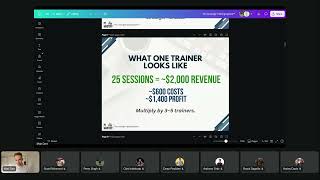
Welcome. Dean as well and Anthony. Great to see you guys. So we're gonna go through the leverage training system, how to hire trainers, buy back your time and scale your PT business without being on the gym floor. Now, I just want to pre frame this by saying you don't have to do it this way. There's many ways that you can build your business. You can build it just by yourself. You can build it with, in person and online, which some people want to do, which is awesome. Or you can build it with yourself plus hiring trainers to work for for you as well to get your time back. There's multiple ways you can do this. I don't want to tell you which way you should do it. I'm just going to give you the options and you guys can choose how you want to do it yourself. Me Personally, I had 12 trainers part of my team when I was doing Face to Face. Scott's got two trainers. We've got other people in the community that want to more focus on online, which is completely fine. I'm just giving you the options. Okay, let's go through it. So why most pts stay stuck. Your income is capped by your hours. Okay. So if you want to only work for or only work on your, on yourself or your own business, you've only got a certain amount of hours that you can do. You could probably only realistically fit in maybe 40 sessions a week, maybe 50 sessions a week at max. So your income is capped. And what happens is when you get 50, 60, 70 clients, which is what I did when I was doing 70 sessions a week. I was burnt out. And you can't, you can't scale, you just, you just stop doing, you just can't do any more sessions. Okay. So you either go to online or you hire people to get back your time. Yeah. Has anyone ever done more than 40 sessions a week before this in the chat? Has anyone done that? I don't suggest it. It's quite mentally draining. Scott's the exception. He just, he just takes a workhorse. My, my biggest week, by the way, Scott was 73 sessions in one week. Anthony. Yeah. You'd be up there, you're doing 50 sessions. Yeah. So yeah, when you get to probably over 40 or 50, it starts to take a little bit of a toll. Toll mentally. But that's just, that's just me. So what, this actually creates leverage, creates freedom, training makes money. So for example, Scott, for example, he's, he's kind of, you have to give us updates on your current income, but roughly around 22k a month. He wouldn't be able to get to 22k a month or it would be be a lot more focused on online if he didn't have trainers that could take sessions as well. So teams create scale and systems create freedom. Okay. The proof in the pudding, I had 12 trainers working for me. We're doing 250 sessions a week now. Does anyone know? Actually it says the wrong here, but I was doing 0, 0 of those sessions. Anthony, gotta earn the beers in Japan. I'm super pumped for you by the way. You'll love Japan. So I was doing 250 sessions a week and I was doing zero of those sessions. So I was doing all the sales and marketing. Okay, So I was still like working. I wasn't doing nothing. But if you want your time back, you need to credit team. Okay. So I'm going to go through what I've done. This is just my experience, what I've done to get these type of results. So 250 sessions a week was roughly around 170 clients. So this is the overall outcome that you want here. You're going to stop doing sessions or you want to cap how many sessions that you want to do. So some people, like Scott, he still likes doing sessions, so he still wants to be part of that process. Me personally, I liked doing the sessions, but I was a bit burnt out from doing sessions at that stage. So I didn't actually want to do any more sessions. Your trainer's going to deliver the service and then you focus on the growth, which is the sales and marketing. So you turn into basically a sales and marketing wizard. Okay, let's go to the next one. Now very important part of scaling a team is you need to make sure there's high profit margins. There's no point scaling a team if the profit is just going to get eaten away by the staff or by the team for their wages. So this one here is a rule that we're going to go through which is delivery must stay at under 30%. Okay. So the margin actually funds your freedom. There's no point you hiring trying to scale in the business if you're not going to make any more money. Prime example, let's say you're making 2k a week right now and you want to scale up to make 5k a week. Let's say you grow the business to 5k a week. The trainers that are doing the sessions that cost you 3k a week, to basically employ them, you're making the exact same amount of money for doing more Work and have more stress. Okay, so what you want to do, you want to increase the income, but you want to have the profit margin to be healthy. So ideally, for example, you would increase your income to 5k per week, but then it might cost you $1000 a week to employ your trainers. So you make an extra thousand dollars on top of the $2,000 you're already making. Morning Harley or afternoon Harley. Great to see you, mate. Let's go through the exact maths what one trainer looks like. Now I'm just going to give you guys an example of what I kind of did. Scott, you might be able to give us some other insights as well because you do it slightly different. To me, I actually paid for all of my trainers rent when I was doing it was like trying to sign someone up. Love it. Lots of stuff. Ali. So 25 sessions, this is based on. So we got 2k divided by 25, this is based on $80 a session. So 25 sessions times 80 is 2000. And if we look at the costs of this, this is including paying for the rent. So you can either do it a couple of ways. You can either pay for their rent completely and you can give them like a lower hourly rate or you can pay for some of the rent, or you might get them to still pay the rent and you give them like a higher per hour costing that cost you $600 in cost to the trainer and you would make fourteen hundred dollars profit each week. Okay, so you can see the benefit here. If you were to have three or five trainers, let's just say it's three trainers and you make an extra 1400 a week profit, that's an extra 4,4200 a week in additional profit for you. Okay? So you need to make sure you've got the pricing structure right. As an example, for me, when we were doing it for my business, we were charging 150 an hour, but we're doing it in 30 minute sessions. So we're charging 75 for 30 minutes. So 150 an hour. Our trainers were getting paid between 40 to 50 an hour. Okay? So you can see that the profit is actually quite decent because remember, you're taking all the risk, all this, all the clients are going to you. You better pay for all the systems to keep them accountable, all the training softwares, etc. So you've got to have a bigger piece of the pie. And by the way, is that making sense? By the way, this in the chat, Just a yes or no if that's making sense. If you make an extra 2k in revenue, obviously you take into account the costs and then obviously get the profit. Yes, yes, yes. Good to see as well. Brock, we've got a call today, I'm pretty sure, so I can start to chat to you soon. Let's keep going. Now, a mistake that people try and make or try and make that they do make is they hire a little bit too early. You only want to look at hiring a trainer when you're pretty much fully booked and you can't really handle too much more workload. If you've got no consistent leads and there's no system documented, you don't want to hire. Okay. So one of the things that we work on with Scott is when we're looking to hire, we need to create systems so you can train the pts to basically coach like you do. You want to basically create another version of you, I guess got saying he charges 130 per hour and the training gets 40. So obviously you got decent margins there. That obviously covers the cost of rent, subscription softwares and obviously the, the risk that you're taking for the business as well. So you need to have the systems, you need to have consistent leads and you need to be at a stage where you pretty much, pretty much full, fully booked. Okay. One of the first things that you want to do is you want to negotiate with the gym. So if you're in a commercial gym, this is for you guys. If you're not obviously in a gym, that obviously this part isn't relevant for you guys. So you negotiate the rent. So you've got the leverage here. So what that means is if you're paying 250 a week in rent, if, if the, if the gym is trying to find a trainer and they're doing all the work, they're going to get 250 a week rent coming in for them doing all that work. But if you're doing all the work and you're bringing in the trainer to them, you've got the leverage to negotiate the rent. So what I did, I had, I was paying 250 and then my second trainer was 200, my third trainer was 150, etc. Etc. So it went down as I brought in more people because at the end of the day it's less risk for the gym. Like you're taking over all the skill development and obviously the lead generation activity. So they don't have to worry about that stuff. So they're usually more than happy to negotiate the rent because it's basically Passive income for them. The next thing you want to do is confirm your lead flow. So just make sure you can still do the same marketing strategies. If not, do more marketing strategies to make sure you've got enough leads coming in. Because when you have team members the, the responsibility increases. So you're basically making sure they've got enough income coming in to survive and then protect your margins as I said before. So you need to make sure you have no more than 30% of the percentage going to the delivery costs. I learned that from a mentor called Kerwin Ray. Has anyone heard of Kerwin Ray? He's unfortunately passed away, but he was a high performance coach based in Sydney. Okay, next thing, the structure. So you need to have clear roles and expectations on what they do and what you do. Now my advice here, my advice here is you do not teach them sales and marketing. If you're going to hire a trainer, they are just to be a trainer. You don't want to teach them sales and marketing because if you teach them marketing so how to get leads, if you teach them sales, why would they stay working for you when they can make three to four times the amount of money doing it themselves? So you need to protect yourself. Don't teach them everything, just teach them how to become the best trainer possible to keep your retention high. Now the next one, who pays the rent personally, I paid for all my trainers rent. Scott, can you just confirm, do you pay for all the trainers rent for you or is it like split? No, I do it. Yeah, sleep and then the pay structure. So Scott said that he pays his trainings trainers 40 an hour. So basically if you're doing 30 minute sessions, it's 20 bucks a session. They just invoice you for those sessions. So we usually suggest them starting as a subcontractor which is basically as if they're running their own business. And then you know, down the track you can probably look at like an employee model and most of the time it's better just to keep them as a subcontractor. Okay. As a subcontractor they still need to technically have like their own insurance. Brock, guessing the system is best for, Are you meaning like which type of trainers to hire? Because this, this is for people that are like fully booked or about to be fully booked when they're hiring a trainer. Are you talking that the type of trainers to hire? Is that what you mean? Just let us know. Yeah, cool. Yes and no. The, the good thing about hiring a fresh PT is you can kind of coach them your way from the start, so they don't have bad habits. I've done both. I've hired trainers before that had like, you know, 20 plus years experience, which was good, you didn't have to teach them too much. However, they were stuck in their, their own way of doing things, so it was a bit more of a headache. But I've also had brand new people coming through as well, which I can kind of just mold them into how I coach people. And it was super easy. Might be a little bit more work in the long run because obviously you have to upskill them a bit more. But in the ideal world, I'll go through this in a second. But you hire for the values that they, that they bring in their attitude. You can teach the skills. Okay. It's not hard to be a good PC. And, and by the way, team, if you're like, if you imagine how good of a trainer you are, you only attract people to the level that you are. So if you're, if you're a 5 out of 10 for a trainer, you're only going to attract threes and fours. If you're an 8 or a 9 out of 10 as like the, one of the best pts, you're going to attract better quality people. So if you want to attract the best trainers, you need to increase your own standard as well. Great question, Brock. Okay, we briefly touched on this before, but this is the 30% rule. You never pay your trainers more than 30% of the overall revenue. Okay. Otherwise you're just going to cut into your profit margins too much. Okay? So this essentially means if you, if you're paying 50 an hour, you need to charge 150 an hour. Okay? You guys can obviously work out what you guys would need to do. But as an example, let's say, let's do an example of someone that possibly needs to increase their rates because some people, some people might charge maybe like $70 to 45 minutes. And I'm telling you right now that's not enough if you guys want to hire trainers. So if you're doing, let's just say it's 80 for argument's sake, 80 for 45 minutes, you're going to need to pay them a maximum of $24 for 45 minutes. Now I don't know about you, but that's not screaming to me that I want to work for that. Okay? So you got to think about it as well, you got to make it a bit of a no brainer for them. Um, so in other words, like the, the, the best Thing for them is better have to do sales and marketing. So if you want to hire a trainer, you want to find someone that's a frigging expert trainer that hates business. That's the perfect scenario. So anyone that hates sales, hates marketing, hates like you know, trying to convince people to buy. That's the type of person that you want to hire. You don't want to hire someone that is hungry to make bucket load of cash because they're probably going to be the ones that want to learn sales and marketing. Okay, so no more than 30% and if you're under like around the 140, 150 hour mark, then it might be time to look at how you can increase your pricing if you want to go down the route of hiring a trainer. Okay, how to find good coaches. Going to go through what worked for me now naturally because I had, you know, six different locations and I had 12 trainers working for me. I had a pretty good network of PTs anyway. But if I was starting from scratch, organic outreach first. Okay, so how I found someone with my best trainers, I literally just go onto like Snap Fitness website, World Gym website, Good Life website and a lot of the time they actually give you the person's the PT profile and their phone number. I was called them, simple as that. I just call him, say hey John, it's, it's Matt here from my business was called Magnum Fitness. That was my business name. Hey, I'm just curious. I know this is super random but we're a fully booked PC business. We're looking to, you know, find a trainer to take on some more sessions. I'll do all the sales and marketing for you to get you the clients. Would you be open to earning some extra income? And literally that's how I found most of my trainers. I did the same thing through Instagram and Facebook. Literally just searched personal trainers in Brisbane and I found plenty of people that way. I have also tried Seek ads as well. Now Seek ads, I believe you have to pay for them now I think it's probably like three to five hundred bucks to find or to get people inbound applying for your role. Okay. So you should be able to find people organically. First message them on Facebook or Instagram. But if you need to, you can go through Seek. We just talked about this with Brock before. The hyper attitude, coachability, reliability and the culture fit as well. There's nothing worse when it's like, you know, if you think about it, some of the most challenging times when I had a lot of trainers is trying to get people to actually culturally fit the team. Because it's, it's just not when someone's on the, like the individual path, which is fine if, when they're on the individual path and it affects the whole team, it affects everyone, it affects the clients, it affects the retention. So you need to, you need to hire based on the person, not the skill set. Because you can teach the skill set. And by the way, you will have to teach the skill set. Okay? You can't just, you can't just rely on their own skills. You need to coach them to how you want your clients to be coached. Because remember, they're your clients, they're not the other trainers clients, they're your clients, they're your brand, they're your reputation. So if you want your reputation to be good, then you need the system to teach the trainers to therefore coach the clients to get the results that they want. Therefore your brand and reputation gets better. Okay? So this is how you. So once you've actually got the trainer, so you've got the trainer, you've interviewed them, blah, blah, blah, this is how you start to get your time back. Okay? So you need to be very careful with this, okay? Because people are used to training with you. So the ideal scenario with this is you're doing between 30, 40, maybe 50 sessions a week and you want to start to get your time back. So more than likely people are doing between two and three sessions a week. Not all of them, but a lot of people will be doing two or three sessions a week. Some of them obviously doing one session a week. But you want to get the trainer to shadow your sessions for at least 20 sessions. Okay? It's up to you if you want to pay them for this. Personally, I didn't pay them for this, but I did pay them for the next part. So I'm going to explain that. Hang on a second. So they're going to Shadow 20 sessions, if not more, or until they kind of get the hang of it. They're going to learn the systems that you use in terms of how you structure your sessions. What's the rest period like? Is it 30 minute sessions or 45 minute sessions? Do you do warm ups, cooldowns, learn the systems, learn the standards, you know, how to start the session, how to finish the session, et cetera. They need to learn how you do it. Okay? So this is why you need to make sure you've got the systems in place so you can literally duplicate yourself again and again and again. Once they've watched 20 sessions worth, then you watch them. Now, this is where I would suggest paying them for this because they're actually doing the work. They run the sessions. You're just there to observe, and you give them immediate feedback. Okay, so this is again, around about that 20 sessions, Mark. So it might take you a few weeks to do this process, but trust me, it's well worth it in the end. You don't want to just handball clients because they've been training with you for more than likely a decent amount of time. They're going to be a little bit nervous to train with someone else. Okay. So make sure they're comfortable. Okay. So you keep getting them to run the sessions until you're happy with how they run them. You can even get them to do some mock sessions with you as well. Yeah. Next one. Never dump your clients. So transfer 10 to 20 sessions first. So what I mean by this is anyone that's doing two or three sessions a week, what you want to do is you want to keep doing one session a week with them, and you want to see if they're open to having the other session or the other two sessions with the other trainer. And all this comes down to is communicating with this with the client. So, prime example, you could say something like, you know, Dan, we've been trying together for a while now. Obviously, you know, we've got John on board helping with sessions because my workload is getting a little bit too much and we need to keep. Oh, I need to keep working on the business to make sure it stays. Stays afloat. Would you be open to doing some sessions with John, yes or no? If I say yes, perfect. No worries. What we'll do then I'll keep doing one session a week with you to make sure everything stays on track. And I'll get John through the other session or the other two sessions just to free up some time. But also you get the benefit of learning from two trainers instead of one. More accountability, more support, more knowledge. That's actually better for them. Imagine training with two trains that are one for the same price. You know, no brainer. I guess that's how you kind of sell it to them. If they're not open to it, then, you know, just keep doing their sessions for the time being. It is what it is. You don't obviously lose the client over this. I kind of went through this. But you keep one session a week, the trainer takes the rest. And as the, as the, as the trainer gets more connection with the, with the client, then you actually offer the client to Say, hey, look, would you want to actually train all the sessions with John? I actually had. One of my best hires was a guy called Travis, and he was the powerlifter. And I actually don't know much about powerlifting. And I actually had one of my best clients, and he actually used to work with me. Actually, he used to travel over an hour to train with me and was one of my first ever clients that I signed. And he was a friend of mine, and he actually said to me, he used to do four sessions a week, and I used to do. I used to do two, and Travis used to do two. And he came up to me and he's like, hey, I'm really enjoying this powerlifting stuff. Could I do all four sessions with Trav? And I was like, yes. Perfect. Sounds good. This is the prime, prime example. If you have someone that have very good expertise and you give them the system to help them get the results for the client, then you just like, yeah, no worries. Catch you later. I'll still be here in the background, and you can use Trav to give you the exact results that you want. So, you know, don't be afraid to kind of. Don't be afraid to be like, you're not the top dog anymore, is what I'm trying to say. I'd be okay for other people to want to train with someone else because it's just your ego that's getting. Getting attacked there. That's happened multiple times before where someone's like. Especially, like. Like, I'm a. Like I'm a guy. Of course, if females want to train with a female trainer, then I'm not going to stop them. Okay, Go straight to the female. Good question, Brock. So you say, did Trav take over the programming for this client? Great question. Short answer is yes. My recommendation is you ideally want to do the programming for the client still, at least at the start, because you still want to have some type of control over what's happening. Okay, I do suggest long term, once, like, at least after three months, maybe six months into this trainer working for you, that you can start to look at having them take over the programming for sure. And they can kind of program for all the clients, and you can give them, like, a set, set amount each. Each week or each month for that. But at the start, I suggest you, as the business owner, still doing the programming and still doing, like, check ins. Again, just a question in the chat here from Harley. If you had someone hired and they had someone approach them to work with them directly and not with Your business, would there be something in their contract to say that they couldn't or a cause? Yes, 100%. There was a clause to say that they cannot take on clients in that gym. They can do stuff outside of the gym, but yeah, it would be a conflict of interest if they were to take on clients. So this just comes down to the system. So for example, if you guys want this, I've got like a 50 page development program that I had for my trainers. It's not a contract, but it's a development program where they know what the process is if someone does approach them on the gym floor or online about getting some help. And the process is simply, hey, no worries, you can absolutely train with us. You've got to book the console with, with our team. Here's the link to booking and they'll literally just book in. And I used to give my trainers a referral bonus for that as well. Okay, let's keep going. So what happens from here? All new clients go to them. Okay, so you stop taking on new clients. No more new clients. Okay, so the key here is to get your time back, not to keep adding more sessions. Okay, so once you hire a trainer, you're going to hand off 10 to 20 sessions, depending how many you've got and how many people are doing more than one session a week. All the new clients go to this new trainer. Now this is take into account that they know how to onboard and start training new clients. Okay. If they're not up to up to scratch with the systems, etc, don't give them any new clients until they're comfortable. So this process is quite slow, but your brand, your reputation is worth it. Okay, so take this part relatively slow now once you start giving them new clients, you're going to notice that you're going to have a lot more time. Okay, so what that means is you don't just sit on a beach and start drinking cocktails, which is what some people will do. You friggin double down on the sales of marketing. So all that time you were spending doing sessions, you're now doing more consults, more sales, more content. This is how you get fast results. This is how we went from zero to 250 sessions in two years. Two years. Okay, yeah, I kind of said this. But what you focus on now is your sales, your marketing and your leadership. The hardest thing that I experienced when scaling my team was upskilling the team because they were, I mean, because I was doing so many things right with sales and marketing, et cetera, et cetera I sometimes forgot about upskilling the team. So my suggestion here is every single week you want to have a and we'll talk about some that kind of KPIs that you want to go through. You'll go through team performance in terms of consults booked, new clients signed, but you also go through retention. But then you go through like a new skill that they can learn. So for example, you might go through, hey, if someone is struggling with nutrition or if someone's struggling with weight loss, for example, here's what you need to do. If this is the case, here's that one here, step two, here's step three. Next week, here's how to read is that I read someone's food diary and my fitness pal do this, this, this, this, this. If someone is blah, blah, this is what you do. Because every single week you're giving them more tools to help them with retention. That's all their focus should be getting clients results and keeping them in your, in your program. Okay, so you got, you got sales, marketing and then leadership is more around upskilling the team because people always want to grow. If they're not growing, they're more than likely going to leave. Okay, so if you're going to keep going to keep upskilling them to become the best type of pts, there's other things that you can teach them as well. Like perhaps you might get them to start making their own content to then get their own leads to then fill filter in to your business and then you give them like a cut of that. There's plenty of stuff that you can do to help the team. Prime example, you want to have like a development kind of phase for them as well with leadership. So right now, especially with Scott, he's got two trainers working for him. But down the track one of them might turn into a head coach which might do the programming which might do the check ins. As an example, maybe I used to have a content creator which is part time pt. Part time content creator. I used to used to have someone do calls for me, part of my team who hates doing calls. I've heard many conversations with you guys about people hating doing calls. Get your pts to do the calls, give them a commission for the people that they book in, but don't teach them all the sales. So stuff that you don't like doing, maybe get them to do it. I hate doing programming, can't stand it. So you might want to get them to do it. Okay, so we're starting to cover some of this stuff already. But before you even hire the trainer, you're going to make sure that your programming templates are kind of ready to rock and roll. Your check in process is, you know, dialed in, you know what you're doing. It's the same process week in, week out. The programming, like when do, when do you update programming? Is it every four weeks, every six weeks? What does it look like? How often are you doing the check ins? When are you expected to get back to people for check ins, for client tracking? Do you do it all in the app like Trainerize or Everfit or would you use Google Sheets? You got to think about all these things before you start to hire a trainer. Otherwise it's going to be an even bigger headache than it is right now. I'm just going to quickly pause. Scott, can we just have a quick conversation? I just want to kind of hear how you do this with your two trainers. Do you still do the programming and check ins or do your trainers do that? I do it. Cool. Are you planning to eventually give that to one of your trainers or are you just going to keep doing that and tell me the reason why I'll keep doing the check ins just because I like to have that one on my, I expect from their appliance as well. Programming though, because they're going to be with the clients, you know, in the gym all the time. They will eventually take the program. Yeah. Awesome. There's a really good point that I thought about when Scott was saying some stuff. There is you guys still need to be in communication with clients. You even though you're not training them. Okay. Because what'll sometimes, well, not sometimes happen, but what can happen is if the client kind of disengages from you and goes kind of all in with that with the trainer. And this has happened to me before, the client will be like, hey, why don't I just quit with Magnum Fitness and I'll just sign up with you so you get more money. That has happened before. So what you ideally want to do, you want to have consistent communication with clients. So check ins, as Scott was saying, he still does them. What I used to do, I used to do feedback calls every, I used to do them every four weeks. So I literally just used to randomly pick 15 clients. I used to call them and I used to just get feedback on their experience. That's how they know that I was still kind of running the business and I still had input and I'll give them feedback as well on their, on their training, etc, on their results. But you Guys still need to, you still need to be involved in the client. Okay? Otherwise there's. This is just about mitigating risk. This might not happen, but it can happen where the clients can not crack the shits. But the trainer might kind of do this as well. They might be like, hey, look, I'm only getting paid an hourly rate here. Yeah. If you want, I can work with you online, for example, and for this month, blah, blah, blah. That could happen. But you just want to mitigate the risk of that happening. Okay, let's keep going. Standard operating procedures sops. So onboarding should be exactly the same process for every single person. The setup session should be exactly the same process for every single person when they do the programming. Same process for every person when you do the check ins. Same process for every single person. Repeatable delivery. That's how you create scale. Okay? There's a reason why I was able to get to 12 trainers and have six different locations. Same process every single time, same reason. Scott's now got two trainers, get one trainer, filled them up, he's now another trainer. Same system, same process. So it's no guesswork. It's the same thing over and over again. We've touched on this a little bit, but you need to develop your team skill training feedback and standards. So I mentioned just before that I used to do feedback calls. Part of what I used to do as well is obviously give that feedback back to the trainer so they can improve. Okay. And of course, if the team isn't meeting the standards, you guys need to be, you know, you need to call it out. If people aren't meeting the standards or if, you know, clients aren't getting the results, you need to understand why they're not getting results. Okay? So you just, you basically become, you become a CEO instead of just a trainer. Okay. If you want to go down this path, okay. I'm not saying you have to do it this way. Saying this is an option that works really, really well if you really love in person training and you want to still get your time and freedom back. Okay, so I kind of said this already, but when you've got a team, has everyone heard this saying? You are you, what is it? You. Slow to hire, but you fire fast. Everyone heard that saying before. This is basically the similar thing that I'm going to talk about here. If you're getting red flags in the first couple of weeks of someone training with you, as in like they're not following the system, they're not following the training, or they're Just doing their own little thing. Then you've got to make sure you have the hard conversations early with the clear expectations. Otherwise it's going to create tension for the clients, especially for the ones that you're handing over. If you think about it, if you've been training them a certain way for six months and then all of a sudden someone else comes in and trains them a completely different way, I'm not saying that they need to train exactly like you, but the, the system or the structure needs to be the same. How you start the session, how you finish the session. You can obviously have differences in terms of how you train, the potential, the client, but the actual system of you doing it needs to be the same. So you kind of become like a people manager. This is why I suggest you doing every single week with your trainers. You go through how many sessions do I deliver? So if you're having a lot of cancels or reschedules, the retention rate, if anyone's canceling, and of course, going through client results, what we used to do for our team, we used to go through the top three clients that we've had for that week and the top three clients that need like an extra, extra bit of accountability or extra kick up the bum. So we're always focused on top clients. So we can probably get some client testimonials or some referrals from them or the kind of bottom three clients or the biggest opportunities. That might be an extra conversation from me, or maybe it's a sit down and chat to the client about their nutrition, for example. And by the way, if people aren't getting results, there is no problems if you guys don't train them that session and literally just get to the bottom of what's happening with their nutrition. Tried this so many times before where trainers will just train people just for the hell of training, but they don't care enough about the person's results in terms of why they're not doing certain things. This prime example of someone that wants to lose like 20 kilos, for example. And they're only coming into the gym when they've got the one session a week with, with you. What are you gonna happen to their results? They're not gonna get freaking results training once a week and eating like crap. So as the PT or as the business, you need to sit down with that person during their session. Not, not any extra time. You sit down during the session, say, hey, look, we're not going to train today. Where do I get to the bottom of the reason why you're not coming into the gym any other days and, or why you're not going for your walks or whatever you want them to do, because there's obviously a subconscious block there as to why they're not getting the results that they want. And at the end of the day, if they're not getting results, it's your fault, okay? You're responsible for your client's results. Next thing, the unfortunate part about trainers, some, some of them will, will leave. Remember, it's just the job, okay? There's nothing keeping them there forever. Never rely on one trainer. People leave. Keep a bench ready. As in keep a bench ready. Essentially means like, let's say you wanted to find a trainer and you hired the first person that you called. Make sure you've got a bit of a backup line, say, hey, look, we found, we found the trainer, but we've probably been looking for another trainer quite soon. Do you want me to kind of keep you in the loop if we have any other positions available to make you some extra money? Okay, so you just want to have like a little bit of a backlog or a wait list of people that you can, you can go to if some people don't work out. Okay. Little example that I had when I had a trainer leave as soon as I went on a holiday. Great timing. Basically resigned as soon as I left. I was like, okay, great, no worries. But lucky enough, I had a couple of other trainers so I could be like, hey, I urgently need you to come in. And do you know, it was like 40 odd sessions a week. I need this person to cover for. And they're like, yep, no worries, sounds good. So I could easily come in and take their place. So this is just, all this stuff is just about mitigating the risk for you because it is higher risk when you have trainers part of the team. Okay, so general rule of thumb here, we got one trainer will give you some leverage, they'll get some time back. Two trainers give you some real income. When I say real income, I'm talking like 5k plus a week profit. 5 trainers or more will give you the freedom. So lucky enough for me, when I had, I can't remember how many I had at this stage, but when I had, or when we had our first daughter, which was three and a half years ago, I was lucky enough to take two months off completely from the business. I did nothing at all because I had trainers, I had, I had a sales team, I had appointment setters, content creation people, et cetera, et cetera. So that's where you get the real freedom to kind of do whatever you want. Not whatever you want to a degree, but it gives you the options to choose what you want to do with your time. There's a few more slides to go, but I'm just kind of checking in who so far would be either open to hiring trainers to work for them down the track or even wants to hire a trainer someday to work for them. I'm just kind of curious so far. Obviously Scott does also. Scott, how many more trainers do you want? I'm just curious. Three more. Cool. Awesome. No one else so far. Hopefully I didn't scare you guys off. Harvey says love it. Need to build all the processes and systems and have them on paper. Yep, 100% one day. Yeah, definitely open to it. Awesome. Cool. So, yeah, as I say, guys, at the start of this training, like, there's so many different ways that you can build your PT business. I just wanted to give you the option to have this if you want to go down this, this route. And it's definitely possible. I've done the, the route with hiring trainers. I've done the route with online, so I've done both. It really just depends on what, what you want. If you really like being in the gym, then maybe this is going to be a good option for you. But this is really cool. Okay, let's keep going. We've got a few more slides to go and then we'll go through any questions that people have as well. So the real benefit here is more time left. Burnout and higher income lifestyle is the goal. You guys should know my podcast is called pt, Profit, leverage and lifestyle. But one thing to have the money. But if you don't have the leverage or the lifestyle, then in my opinion, it's pretty pointless to have all the money if you can't do anything with your time. So that's the benefit here. You do the same thing as I said with online, just a different type of business model. So what you really need to do here, you need to stop thinking like a trainer, stop thinking like a sole trader, and you need to think like, like an owner, like a CEO. You got to make business decisions, not just trying to make, you know, 1,000, $2,000 a week. This is where you actually make or can make a very big chunk of cash if you get this stuff right. So, yeah, that's the kind of end of the slides for today. I want to give you guys the training on how to, how to make this happen for you. There's obviously going to be some challenges. We're obviously managing people. You kind of become like a. An emotional regulator to a degree when you've got so many people working for you. But you know, there's pros and cons to everything. So we're going to have 10 minutes left. I'll open it to some questions because I know this might be completely different to what you guys have thought about before. So does anyone have any questions on anything to a trainers in terms of pricing strategy, in terms of the marketing side of things that you need to do? Any questions at all? We've got about 10 minutes to go through some questions. No questions so far. Okay, here we go. What if you opened your own PT studio? Do the same rules apply? Majority of them, yes. Obviously if you open your own PT studio, there's no rent. You'll be paying for the rent anyway. So exactly the same rules apply. Different to PT studio, apart from the rental structure, because you. You'd be already paying the full rent anyway. So they, they wouldn't need to pay your rent. You were still in sales and marketing. They would still just do the sessions. So basically exactly the same. That's something that you could do. Dean, for your situation and Brock for you guys that have the home studio, you guys could either. You guys could still hire a trainer to work from your home punk studio, for sure. You would just. It's exactly the same process. You would just turn into a sales and marketing machine and you would just get people signed up and you would basically just onboard them to the new trainer. The only annoying thing there would be if they have like breaks in between sessions, they'd have to just hang out at your house, I suppose, which might be a little bit annoying. Or of course, they could probably just come back. But summarize, Dean, exactly the same process except the rent. I'll give it 30 more seconds. If you guys have any other questions. If you lease the private studio space. Yeah, exactly. Exactly the same process. But what I'm saying is because as soon as you lease a private studio space, you're gonna have to pay the whole rent anyway. So there's no, like. I mean, you could probably charge the rent to be there if you want, but I don't see how that's going to be appealing to a trainer to want to work for. Work for someone else and then have to pay rent as well. Love your work. I love it. Okay, cool. All right, team. We might leave it there then. If you guys have any other questions about what it's like to hire trainers, let me know if you guys want a copy of my development program. I think it's like 47 pages or something like that. Step by step of exactly what people need to do if they were coming into my business. Yeah, that's essentially what you turn into. You turn into a business operator, not a personal trainer. So, yeah, if you guys want a copy of it, just let us know. Otherwise, I'll leave it there. I will also post in school probably early next week. About the training schedule for the month of March, just remember as well we have our virtual event next month. I believe it's the 12th and 13th of March. So just on Zoom. Yeah, 12th and 13th of March. The Thursday and Friday goes for four hours. Four hours each day. Okay, so we have our guest speakers. I'll do my own presentation. We'll have some other people doing presentations as well. But, yeah, make sure you've got some time. Set aside that one. I'll go. I'll let you guys know the exact schedule in the coming days. But apart from that, have an epic day. Thank you guys for tuning in, and I'll see you guys next week. Catch us later.
More from Matt




Your staff aren’t lazy. Your systems, standards and leadership might be. Check out Episode 138!





Your team can’t take ownership of work you refuse to hand over. Stop being the bottleneck! #shorts


Slow lead replies cost you sales. The fastest business usually wins. Full episode in my channel!