7 Powerful People Skills to Make Your Voice Heard (Matthew Hussey)
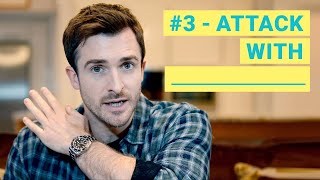
Matthew Hussey shares seven communication techniques to increase your influence and get people to listen. He covers persuasion strategies for conversations and business settings, plus an invitation to a free training on building personal and professional impact.
Chapters
I've always felt that when it came to success in life, there are two major things that we can control. One is how hard we work, and the other is how much of an impression we make on other people. I'll allow this video to assume that you're already working hard, but let's talk about the making an impression part. I want to talk about seven things that we can all do to have more influence better persuasion, more respect and make more of a lasting impression on the people we speak to and have conversations with. Number one, silence is a virtue. We should all master the art of not speaking when we don't have anything to say. So often, especially in business meetings, people speak for the sake of filling air time. It's a vanity play. It's a discomfort with silence, with being seen to not be speaking. But we must resist that temptation and instead wait for a moment when we can actually say something that's going to make an impact. Fight the urge to interrupt. If the previous point was about not speaking when you don't have something to say, This one is about not interrupting when you do have something to say. We've all felt that moment where someone is saying something and we feel this unbelievably overwhelming urge to slice their sentence in half as we jump in to demonstrate our perspicacity. Look how insightful I am, look how interesting I am. But they don't care because they're too busy being resentful or frustrated that they didn't get to finish You've essentially blue balled their point. Do not confuse having something to say with this being the right moment to say it. Number three, attack with humility. One of the greatest things you can say when you disagree with someone's opinions or their plan is, okay, I'm gonna lay out my argument. and you tell me why I'm wrong. This has such humility because you're first engineering the space for them to call you out afterwards. So now you're going to get their full attention because they know you've made space for them to disagree with you when you're finished. But there's also humility because it's almost assuming a kind of naivete. I'm going to tell you all of the things I think are wrong with what you said. and then you can tell me why I'm wrong. So, and this is particularly effective, by the way, if you're ever in conversation with people who are experts in an area that you're not, you could be in a company where you're having to hire website designers or coders or someone on a project that you don't understand the ins and outs of because they're the expert. Then you feel a bit insecure. How do I call someone out on something? How do I tell them that I think this project's gonna take too long or is too expensive or I don't like the plan when they're the expert and I'm not? This sentence allows you to do that. I'm going to lay out my opinion and you tell me why I'm wrong. There's humility but it also allows you to go on the full offensive on their proposal. Number four, don't be a know-it-all. If someone asks you a question that you don't know the answer to in life, simply say, I'm not sure about that or that's not my area or I need to think about that. I want to go away and consider that and come back to you. When I'm on stage, the thing that gives me ultimate confidence is not that I know everything, it's that I'm prepared to not know everything. When someone asks me a question in front of a thousand people and I don't know the answer, I am always willing to default to, I need to think about that and come back to you. Number five, let your arguments wade in before you do. And when I say you, I mean you personally, with all of your biases, with all of your emotion. Sometimes when we disagree with something someone says, we immediately jump in and say, well, I think this. But the truth is, people may not necessarily want to know what you think. In a business context, some of our job is to add value to the room by putting forward interesting arguments or to put forward the other side, but not to put forward our own personal bias. So one of the things you can say when you disagree with something in the room or you think a point needs to be added, maybe you flat out disagree with something, that's fine. But you can always start with, I think there's a couple of things worth considering here. That line allows everyone to be open to what you're about to say because you haven't made anyone wrong. Like, if Harry, if I came to a business meeting with the creative team and I was like, I want to title a new video People who like the movie Love actually are trash. It's divisive. It's right. Now you may think we definitely shouldn't do that Matt, you are a moron for even proposing a title like that. I'm not saying you're calling me a moron. Well you are and I am. Right, but let's say you wanted to know that I'm a moron, but not say that I'm a moron, but still get your point across. You could say, Matt, I think there's a couple of things worth considering about that, one being that it's possible it could offend some of our audience. Now, you could also add to that, we may of course decide that we don't mind if this particular video offends some of our audience and that it's worth doing anyway, but I did want to point out that that's possible and maybe even likely. Now everyone's listening. The people that think we should make that video and call it that and the people that think we shouldn't because the argument was made in a way that doesn't invest all of Harry's personal feelings into it. As a follow on from that point, number six is argue with the argument, not with the person. When someone says something we don't like, Instead of saying, you,'re wrong, we can say, here's my issue with that. Now, when we say, here's my issue with that, we're allowing it to be that, not them. And there's a huge difference. I have been in so many debates with people over subjects that are very dear to them, where ordinarily they may be inflamed, hurt, offended by something someone like me would say in that moment, but they're not because I make it about the argument, not about the person. Here's my issue with that conclusion. Here's my issue with that point of view. I'm allowing them to have some distance from their arguments, even if ordinarily they would see them as the same thing. This is something that's become increasingly rare in our world, of course, with ad hominem attacks having become the norm. When people are going after someone's argument, they attack the person directly. and that's why very little progress is made, of course, because there's no space for people to then be distanced from their arguments in order to agree with you. I have to dismantle my own ego. And if your arguments, if the way that you speak to people right now requires people to dismantle their own ego in order to agree with you, people are not going to agree with you very much. But if you make their argument, your opponent, and make them the person, your ally, you will gain many friends and win many arguments. And lastly, number seven, don't oversell your point. We've all had that moment where we've made an interesting point to somebody or something, said something particularly insightful, and we feel that click, we feel that moment where they nod and we realize Yes, I am the most intelligent person in the room. They do think I'm wonderful. I can see it in their eyes. They may even confirm this by saying, that's a really good point. And when they say that, we feel this giddy high that makes us now want to continue making the point that we've already made. I was once watching a TV show. I can't remember who even said this, but there was a guy who said, I just want to reiterate. And the other guy said, you don't need to reiterate it, you've already said it. And we often feel the need to reiterate things that we have said over and over again. I've done this so much in my life, I cringe when I watch myself do it and I have the problem of seeing myself do it on video in real interviews. When you catch yourself, stop and say, I've already made the point, they're already appreciating it. Let me now allow that point to detonate in their mind and do the work for me if they want to ask me another question about it. They can. Look, when we're talking about these things, we're talking about effectiveness, impact, persuasion, the ability to stand out, the ability to have a distinct, unique, and powerful voice to make an impression on people wherever we go. I have truly found these tools to be some of the most useful in my life. And I started them at age 11 when I was reading How to Win Friends and Influence People. But I've never stopped learning. It keeps getting more advanced. Every new person I speak to, hang around with some really amazing, successful people who continue to teach me and I think, oh my God, I'm just getting started. It never ends. And anytime someone says to me things like, oh, I know all of that stuff. I think you must be playing a different game to me. I don't know what your understanding of this area is, but for me, the learning never stops in this area. I'm always focused on how to be more effective as a person because it affects Everything from my business to my relationships to the new opportunities that I bring in, all of it. If this is an area that you find yourself as interested in as I am, and I mean as I am privately because it's not something I talk about every week in my videos, but it's something that I am personally massively invested in. I have something that you, I know you're really gonna love. What I'm about to show you as a free training, this is gonna be my gift to you today, is from an event that I got invited to that was a closed door event for a group of powerful influencers and entrepreneurs who are all looking to improve their impact out there, build their audiences, build their brand, become more known. And I sat with them and I gave them some of my secrets that I've learned over the years. I've pulled 18 minutes of this into a video training that you get to watch right now for free. And you know, when I say something is free, it actually has value like this free video you're watching right now. It has massive value. So if you want more of that, come with me and watch this. If you're someone who just wants more impact in your own personal life, if you're a business leader, a CEO, or if you're someone who has interest in building a personal brand, this video is an incredibly valuable thing for you to watch and ignore the production value. It's not great, but that's because it was never intended to be shown to the public. You really are getting a peek into something that was only reserved for a handful of people. I'll leave a link here. Check it out and I'll see you in the free training. Oh, the only favor I ask is that when you get there, you leave me a comment. I want to see your reaction. Thanks guys.









