"Am I the Only One Not Living My ‘Best Life’ During Coronavirus?" (Matthew Hussey)
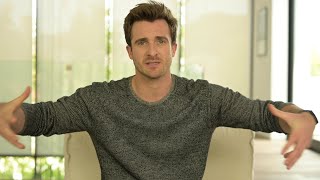
Matthew Hussey addresses the pressure to stay productive during lockdown, acknowledging that losing motivation and feeling emotionally drained is normal. He talks about accepting where you are instead of forcing yourself to live your best life when the world is in crisis.
Chapters
So it feels like by the day we are all coming to terms with the fact that this situation right now is going to last a lot longer than perhaps most of us anticipated or we were told. There's a lot of emotions that come with that. I am seeing people in my own life who normally have zero problems with motivation, finding it difficult to get going, difficult, difficult to get motivated, feeling really apathetic. Other people who just feel like they're not, you know, they keep thinking they need to be super productive, but then they're not even close to being as productive as they are in a time when they're ten times more busy. And of course, the low level anxiety that we feel and the uncertainty that we feel, the frustration that we feel, in many cases, the anger that we feel, all of that going on in the background of our minds, whether consciously or unconsciously, is draining. And many of us wonder, why do I feel so tired right now? And it's aside from the fact that we're a lot less active right now, we're also exhausted emotionally from having to process this every day in ways that we don't even realize. And whenever I put out something right now, there are always comments that say, what's everyone so worried about? Why are people making such a big deal? This is the greatest time ever. Is it bad that I'm not feeling bad at all, that I'm actually enjoying this time? There's those kinds of comments which I find either emotionally numb to the situation or reflective of someone in denial where they don't realize that those emotions are coming for them and they're kind of in this blissful state, state of unawareness or ignorance right now, or honestly just lacking in empathy for what other people are experiencing right now. I was on a run and I stopped by a place that was still serving coffee. This place that normally is a fully functioning restaurant that is just serving takeaway right now. And I said to the guy behind the counter, I said, how you doing? And he said, well, we're trying and we're still making things. And we have these meal plans. If you want, want us to, we'll literally do free delivery at home for you. We'll send you the meals and you can pick what you want and have it customized to you. And as I'm hearing this guy talk, my heart breaks because I think, God, this poor guy, you know, started a business. These kinds of businesses are hard, even when they're easy, even when times are good. Right now, they're hanging on for dear life. And my heart breaks for those people. And so whenever people say right now, oh, like this is, you know, what's the big deal? This could be the greatest time ever. I think we're almost not accessing the breadth of experience that's happening right now. And I also get a little frustrated right now whenever someone voices something they're struggling with. And the comments underneath are littered with, you know, you should remember to be grateful other people have it this bad and so on. And I think, well, that, of course that's true. That's always true. But we have to allow people their pain. We have to allow people their, their truth, their suffering. There's. I think of it as pain shaming. I, I almost want to, I want to have an environment right now where people feel a bit more free to be human without being judged for being human, without the self help world telling them, you should be so productive right now. This can be an amazing time. Step up and be a hero right now. This is, you're gonna come out of this a winner or a loser. Like, we have to get out of that mindset and get into just acknowledging each other right now. I actually think that what's even more important than advice right now is just humanity. So much of the motivation that's thrown at us constantly grates on me a little bit. I feel like there's an avalanche of motivational quotes that drive me a bit bonkers. And I realize the irony of that in the context of this video that I'm making right now. I may well be contributing to the problem, but. But I struggle with it myself right now. When I come to post something on Instagram, I'm like, oh God, I don't want to put up a quote right now and just become part of that platitudinous abyss of mind numbing motivation that when you see it, sometimes the instinct isn't. You're right, the instinct is, oh, fuck off. Like, I'm having a tough time and you're telling me it's got to still be my best year ever. It's. It becomes annoying. And we also have to remember that this is gonna be a marathon, not a sprint. We can try and white knuckle this, and I'm gonna make this the greatest week ever. But we're also gonna have next week and the week after. And if we don't start setting ourselves more modest ideas of what success looks like during this time, we are absolutely gonna burn out before we're even halfway through. What I wanted to talk about today is how we can deal with the Emotions that we're feeling right now and how we can have a perhaps a slightly better experience of this. This isn't a video about how to be blissfully happy during this time, but how do we have a better experience of this really challenging chapter of our lives? I don't claim to have this figured out, but there are things that in the past, in my life I've used to deal with situations where feel very much out of control, where I don't feel like I can just fix the situation. And this is one of those situations. I think one of the things that a lot of people are feeling uncomfortable with right now and in some ways some of the things that the self development world is struggling with a bit right now as an industry is that so much of it is used to controlling things, is used to, you know, fixing problems and, and part of this is a problem that we cannot fix. We as individuals in our homes don't have control over. And for the problem solvers out there and the people that are used to making things happen and taking charge, they're deeply uncomfortable with this feeling of being out of control right now. So how can you deal with those feelings and how can you deal with the negative emotions you're feeling right now? Number one, surrender. My boxing coach, Martin Snow told me a long time ago, surrender doesn't mean giving up. Surrender means acceptance, making peace with. We right now have a situation that we can either fight against and many of us are fighting against it. You know, you can imagine that image of a child that kicking and screaming and crying. Eventually that child might realize if they have a parent that doesn't respond to that behavior or if life doesn't change because they kick and scream and cry, that they stop crying because that's our way of lashing out against the situation. What we begin to realize is this isn't a situation that kicking and screaming is going to change. We're all going to have our kicking and screaming moments, right? I've had mine in one form or another already. Moments where I'm angry about the fact that we're having to make all these changes. Moments where you just get very sad about the whole situation and sit there and don't do anything. You know, we all have those moments in our own way. At a certain point we have to surrender to the situation and say, I'm. It's almost like I'm going to give this situation permission to exist instead of fighting against it. I'm going to this, okay, this is where I'm at right now. And Interestingly and paradoxically, hope isn't always a good thing. In a situation like this. Hope can be a good thing. When we say three weeks from now it's going to get better because we know that blah, blah, blah, but we know right now that everything that's being said to us is just an estimate. The goalpost for when this ends keeps being moved. And the living in hope of the moment when this changes stops us being here now, in this moment stops us making peace with the way things are right now. It actually stops us living because it puts us in this perpetual state of waiting. I'll be happy when this changes. I'll start living again when this changes. And then, of course, when an authority figure says, we said it was going to be on this date, but actually now we're going to loosen up these restrictions on this date. The reaction to that is anguish, is huge pain and disappointment. Paradoxically, the way to get through this is for us to make peace with the way it is right now, to focus on, okay, maybe it's not going to be. Maybe I'm not going to be able to do everything I want to do. Maybe all the goals I wanted to achieve can't all be achieved. Maybe while I'm dealing with the stress of all this, I'm not going to be as productive as I normally am or get in the best workout or do this. But I'm going to make it my own little work of art in whatever way I can, even if just that's a modest way. My work of art could be just me navigating my way through this emotionally, but surrendering to that. We cannot live for the day that this moves on. Number two, we have to focus on the emotional component of this, not the circumstantial component of this. In this case, the circumstantial component is the virus, is the restrictions we have on our movement right now. Social distancing, quarantining. For some of you, it's the loss of a job or the breakdown of a relationship during this time. We can't always change or exert control over the circumstantial component of something, right? And even if you can, you learn that you might be able to manipulate it by 1 or 2%. Like, oh, I'm gonna, you know, I can't go out. I can't do a lot of things, but I can still take a walk. Okay, fine. So that's. We are able to manipulate it to some extent to alleviate some of the pain that we get from the restrictions we have Right now, but it's still small percentage shifts. Then there's the emotional component, which is the way that we're relating to this situation. Now, what's encouraging is the emotional component is both the source of the pain that we're feeling and it's also the part that can be the most heavily manipulated. One of the things that can help us manipulate the emotional component to this is a lesson that was passed on to me by one of my mentors when I came to him about a chronic injury, something that was causing me pain on a regular basis that I could not make go away. He said, so right now, you see it as a foreign invasion. And every time you notice that that pain is still there, it might be that you lose yourself in a flow state working, or you're able to distract yourself for an hour or two. But the moment your mind goes back to that pain that you're feeling, you instantly get upset because it's like there's this foreign invader that's there right now. That's back. There it is again. I thought it was gone. Now it's back. He said, as crazy as it sounds, we have to start seeing this as an old friend, as a kind of companion in your life that you actually make space for. And he said, that may seem completely. That may seem so ridiculous to you because you hate this thing. He said, but we have to start taking that energy out of it and start seeing this as an old friend. This isolation that we're feeling right now, the loneliness that comes with it, the social distancing, all of this can be seen in the context, even though it's new and many of us are struggling because we see it as a foreign invasion, we could start to actually make friends with it, wake up into a new day and go. Instead of going, is the nightmare over? No, I'm still in isolation. I'm still having to quarantine, I'm still having to social distance. Instead. We could wake up into this and go, oh, there we are again. Another day, another day of quarantine, another day of social distancing. There you are. There's this sort of companion I've made space for now. Ah, loneliness. There you are. Welcome, welcome back. We had dinner yesterday, didn't we? Well, let's have breakfast this morning. Hello. It's a much more. There's a lack of resistance there that actually makes it hard for that thing to wrestle with you and exhaust you the same way. Number three, we can benefit from placing the pain of this in a larger context right now. This seems like everything. It seems like everything has been leading to this. And this is the great big painful moment of our lives right now. But seen in a longer context, it will be part of the fabric of a life of many different moments, many different emotions, and it certainly won't be the only painful moment of our lives. We can therefore see this as a kind of training for other situations that we're going to confront in life anyway, that this is actually useful for the purposes of that training. And we see it that way. When we go into the gym, we see the pain we create in the gym as being valuable pain. Sam Harris talks about this. He talks about how pain is contextual. That if you were to wake up in the middle of the night feeling the intensity of pain that you feel at the height of a difficult gym session, you'd think you were dying. And yet when you feel it in the gym, you're perfectly relaxed about it because it's pain that you've not only chosen, but accepted as an acceptable part of your growth. We can actually frame this up in the context of this being a gym. Right now we're training, and the pain we're feeling is an acceptable part of the growth of. Of who we're about to become. And everything else that's coming, we're gonna be more equipped for because we did our training here, now in this gym. So, look, we're all finding our way with this. I have bad moments in my day, and my goal is not to have no bad moments or even no bad hours, or in some cases, no bad morning or evening, but to try to use these techniques I'm sharing with you. These are very personal to me because I use these for myself all the time, to use these techniques to try to prevent a bad hour from turning into a bad day or a bad week. Because these are techniques that allow us to kind of, when there's a fork in the road where we can spiral into something even worse, there's actually an off ramp that takes us somewhere more positive. The one thing I know that is going to be universal from this is, is that we as human beings are going to be reminded of how adaptable we really are. And many people who have never learned how adaptable they can be are going to learn for the first time, perhaps, just how adaptable they can be. And no bad can come from that. I'll leave you with this. There was a comment that was left by someone called KMM Healey on my last video. She said, I'm blind and I find it Fascinating that this pandemic is forcing sighted people to have a taste of physical and emotional isolation. It's the same isolation that many members of the blind community experience, with or without shelter at home orders. Though most people considered blind legally have some residual vision, we don't necessarily see people while out running errands, which means we often have fewer casual conversations with strangers. I never see smiles or any attempt to eye contact from my own friends and family who forget I can't see them, much less strangers who have no idea. Apparently I don't look blind. It can feel very isolating, and blind people have to take deliberate steps to change that feeling. It's interesting to me how the COVID 19 pandemic has impacted the sighted people in my life. Many of them are taking their isolation hard, but as you said in this video, it's a matter of perspective and resilience. But they'll adapt, just like every person I've met who suddenly lost their vision. It's what humans do. It's what humans do, and it's what we will do as we go through this situation, not alone, but together. I love you and I'll see you in the next video.









