Get Over "the One That Got Away"
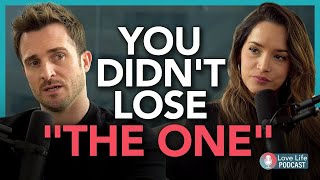
Matthew Hussy and Audrey Hussi argue that "right person, wrong time" is actually a compatibility problem, not a timing one. They explain how people cling to idealized versions of partners who don't exist, then miss real moments waiting for a fantasy. Stop replaying the story and make space for what actually shows up.
Questions this video answers
lovelifclub.com
datingwithresults.com
thethreerelationships.com
Chapters
In many ways, when it feels like right person, right time, you still have all your work ahead of you together in making a relationship work, functioning together, healing together, working through life's obstacles together. It's all ahead of you. And many of the relationships that feel like right person, right time still don't work out. I want to let you know that if you're enjoying my new book, Love Life, there is a place where you can have me literally coach you through it from start to finish. This is a brand new course that we have released inside my Love Life Club. This is where I coach people year round and we introduce new courses all the time. The latest and ongoing course is the Love Life Book Immersion Series, where Every week, I walk you through another three chapters of the book over a six-week period. It's really powerful. A couple of them have happened live, but you're not too late to join right now. And you can go back and watch the recorded ones that I've already done and still join us for many of the live sessions that are coming up. If you've enjoyed the book, this is an opportunity to have me, the author, to take you on a course to actually apply it practically to your life. Go to lovelifclub.com to become a part of the Love Life Club, where you not only get this course, but you get to make me your coach for a year. We have live Q&As every month, not just with me, but with Audrey, with my brother Stephen, on-demand courses, and places where you can get your specific Love Life questions Answered. Go to lovelifclub.com to join, and I look forward to seeing you in the book Immersion series. Now, on to the episode.
Welcome to the Love Life podcast, everybody. I'm Audrey Hussi.
And I am Matthew Hussi. Our mic, people may not realize this, but our microphones have to be set to very different levels because my natural.
Volume is much higher than mine.
Higher. But people love your voice.
They love your voice too.
Well, welcome, everybody. You get both of ours today. We are excited about today's episode. What are we talking about?
I wanted us to talk about this idea of right person, wrong time. It's something that we come up against all the time, isn't it? When we're coaching people and we're speaking to members of our community. It's definitely something that I've experienced and I've thought about. It's such a relatable feeling, which is, you know, if this person could only be in a certain thing, they could be ready, available, you know, not just coming out of a divorce, want commitment, whatever it might be. If they could only be in a different phase of their life, this thing that we have, this connection, could be the great big love, and they could be the one. And you have such a, when we spoke about it the other day, you had such a helpful and insightful kind of way of looking at this. And I just thought it would help a lot of people to hear it. So I guess I'm here today to ask you, what is your opinion and your thoughts on right person, wrong time?
I don't think that someone can be the right person and it be the wrong time. and this comes down to my definition of what the right person is. You know, if you take what we talk about in the Love Life book, that chapter, how to tell love stories, there are four levels of importance. Level one is admiration. Level two is mutual attraction. Level three is commitment, and level four is compatibility.
Let me interrupt you very quickly. When you say four levels of importance, Can you just explain that in a little bit more detail? Importance to what?
Importance in our lives.
Like things we should give importance to.
Exactly.
Got it.
Like what we should think is important or valuable.
Understood. So yeah, so carry on.
Which is, but that you picking up on that word is meaningful because that is the word that gives the whole model meaning.
Yeah.
Is that it's not about how much you feel, it's about how important you should be making something. Because you can be in level two with someone which is mutual attraction and feel so much and it can feel so important. But that doesn't make it important. It's just a reflection of how strongly we feel.
Often level two feels really, really important.
It feels like everything.
Yeah, it's everything.
But you don't have commitment at level two. Commitment is level three of importance. In other words, if someone who you have mutual attraction with is actually committing to you, then that's definitely a higher level of importance than someone who you have attraction with, but they're not committing to you. But even then, compatibility exists as level four because Compatibility says it works. We work together. We're in the same phase of our lives. We want the same things. We have the same idea of what a relationship is. We have ideas of what we want for ourselves in the future that also make it possible for us to have an amazing relationship. In other words, our individual futures that we hope for are synergistic with each other. And you don't have to be, I should say, you don't have to be at the same phase of life, but you have to, the phases you're in have to be synergistic, too. They have to be compatible. And when someone, when it's the wrong time for any number of reasons, someone's just come out of a divorce, someone is 25 and they don't want anything serious. Someone...
Isn't ready for a relationship because they're not ready to give up whatever it is that they think they need to give up in order to be in a relationship.
Yeah, they're going traveling around the world for the next three years.
Oh, that's a good one, yeah.
That might make it the wrong time, but in my book, The wrong time makes them the wrong person because it falls into level four compatibility. Well, it might fall into level three and level four, right? Level three, perhaps because they can't commit because it's the wrong time, in which case you only have mutual attraction. And you, by the way, you might have some compatibility. You might have compatible values. You might have compatible views on life. You might have compatible energy. But that doesn't mean that you're compatible in every way that you have to be. Compatibility is about more than one category. It's a kind of a whole series of things that have to align for a relationship to work.
You also said to me when we spoke about this, you said something about how You don't know that somebody is the right person until you have actually lived through the relationship and you've lived enough time with them, you've seen them in enough context to know that they are the quote unquote right person. And what you were saying was, you know, that this label of right person is oftentimes not earned when we talk about this idea of right person, wrong time.
Yeah. In the same thing as love at first sight is not a marriage. Yeah. People overvalue love at first sight all the time. What is love at first sight? What could it possibly be?
Deep attraction.
Yeah. Not love.
Chemistry.
We define love in a marriage. It's not, you know, raising a child together. It's not, you know, taking someone to the hospital when they're sick. It's not dealing with financial ups and downs together or dealing with a time in life where your partner has lost their passion for their job and is thinking of quitting, but they can't because you have responsibilities together. And how do you navigate that? Because they're unhappy, but also you need the security. And so you're dealing with the messiness of that. Like, these are real things. that people in relationships face that go so far beyond the idea of love at first sight, which I always find to be a little bit insulting to long-term relationships or marriages, you know, that where people have stood the test of time and weathered storms together. And like you said, you don't really know who someone is or what they would be to you until you've weathered those storms together. You know, the idea of right person, wrong time. It's like, well, how easy to say you haven't had to go through a whole bunch of things with that person.
Yeah.
They have not had to pass any of the stress tests of a real relationship. And so even if it was the right time, In many ways, when it feels like right person, right time, you still have all your work ahead of you together in making a relationship work, functioning together, healing together, working through life's obstacles together. It's all ahead of you. And many of the relationships that feel like right person, right time still don't work out. So to then ascribe some special, you know, transcendent meaning to this person who seems like the right person, but it's the wrong time. And to then ruminate obsessively about that person, that becomes very quickly becomes a story that we're telling ourselves as opposed to real life. How can it be real life? You've never had to live it. And by the way, it becomes a way to avoid real life. And that's my real problem with it, is that real life is happening while we're continuously dreaming and thinking of this story and replaying the story of, you know, what could have been if it was only the right timing with this person. Real life is happening. and it's playing out and you're on the stage, but you're, you know, focused on a imaginary play going on somewhere else. That's the danger of it, is that those stories, they actually make us miss our life. And they also make us, there is a kind of, and we've all done it, so I don't mean this point in any pointed way. We've all done it. But it's a kind of arrogance that a lot of us have that we know what the best thing is for us at all times. We know that this person is the best thing for us. This person is what we need. And therefore, we've become fixated on that person as the answer to our problems, if that could only be. But life is much more interesting than that.
So I want to return to this because I think there's something really, really important there. But there's something I want to highlight because I also know that all of this is true. But when you are in that place, especially if you think, I really like this person. We had such an amazing connection, this amazing time, we got close, it was this, it was, they really did feel like the right person. But as you say, they're going traveling, they're this, they're not ready, and the bat is always kind of tends to be a massive, massive bat. But the problem is that when you talk about story, I think what hurts so much is when you don't get to live out that story to find out whether or not you could have made and gone the distance. And sometimes it makes it that much harder to move on from a situation because you're right, it is a story. You do get caught up in the fantasy of what could have been. been with this person. But I just want to acknowledge everybody who's listening who's like, yeah, but also, ah, this is, I just want, I kind of, yeah, I want to highlight that. And I suppose I'm wondering if you personally have any, if you have any thoughts on how you actually move on from that story, because that story is very intoxicating. It's a little bit like quicksand, and it does, you can get stuck in it for so long. So long. You can waste years in the story.
Well, I think that we don't broaden our lens to see how many of those stories exist all the time. Like, there are authors that I read. I read Thomas Paine, who was alive several hundred years ago. And I think we probably would have been mates. Like, I really there's something about, you know, his way of thinking that I just would have loved to hang with this guy and to talk. And I feel like we would have had a lot in common, and. And he's been dead for a very long time. We'll never be friends. But it doesn't mean that there isn't some shared DNA there, that there aren't shared values there. You know, who hasn't had that experience of. reading an author and who's, who they'll never know or who isn't even around anymore and thinking, God, I, I feel such a connection to this, to this writer. I feel, I feel like I am them and they are me, and I am somehow accessing myself through this person. And, you know, it's a special feeling it, but to say Or, God, right friend, wrong time. Like, imagine saying that about Shakespeare. You know, like right friend, wrong time. Many people have read Shakespeare and thought, you know, God, to be in a room with Shakespeare, he understands human nature on this unbelievable level. But it's just, yeah, he was born in a different time. That is always, that's the case. by the way, 99.9999999999% of the time with everything. I mean, it's a creepy example, but, you know, there's a, a 98 year old somewhere who could meet a 20 year old, and the two of them could recognize that they have a special connection and that there's something about the way they think that, you know, God, if they were born in the same decade, they would have been lovers. But turns out this one's 90 and this one's 20. They weren't born in the same time. And I think the more we shave off the extremes and the more we kind of find ourselves in these kind of margins of it was the wrong time by five years, it was the wrong thing because they want to travel. for the next three years. And I need to have a child now if I'm going to have a child. I, you know, when we start playing in the margins, it starts to feel more and more tragic. Hey, everyone. I hope you're enjoying the episode. If you haven't already, go check out my free training, Dating with Results, which is a one hour training designed for anybody who wants to find love faster. If you have never taken one of my programs, this is a great way in and it's free. Go to datingwithresults.com and you can watch that training right now. Enjoy it. Let me know what you think. And now back to the episode.
How do you make it not interesting then? Because you always say like, that's not interesting. And I think it kind of leads in nicely to what you were just about to talk about. But how do you make it not interesting?
I think that, it comes down to what is your commitment to real life. Real life doesn't, it's happening with or without you. And one day it will end. And there will be no, you won't get to say, but wait, I want to go back and actually do it this time. I want to go back and actually live it this time. I'm sorry. I spent 50 years thinking about a situation that was never going to happen. But, you know, I want to go back now and just do it properly and just do it for real. Even if it's a relationship that's half as good as the one in my imagination, I I want to go back and have that relationship now. Life. Life won't give you a second chance, at least not in my understanding of life. World Cups are often decided by penalties. And the person might miss the goal by a few millimeters. That means it bounces off the goalpost instead of going in. Or the goalkeeper might get a fingertip to it that just stops it from being a game-winning goal. And forevermore, that team lost the World Cup. It might have been by millimeters, but it's still a loss. And I think that we obsess over these things that feel like they're millimeters away. But a millimeter is as good as a mile. You're either in a relationship with someone or you're not. It is fucking binary.
Wow.
It's ones and zeros. It feels in our mind, it's like, But we were just millimeters away if they could have just got divorced six months ago instead of today, or if they could have just been further along in their maturity, or if they could have just been ready for children a couple of years sooner, or if they had just been a couple of years older, or We feel like we're millimetres away, but it's binary. They are either saying yes to a relationship or they're not. You're either born in the right time for this person or you're not. You're either at the right place in each other's lives or you're not. That is binary. That's the way that you have to make something not interesting is go, is it a one or is it a zero? And if it's a zero, Then it doesn't matter how close it was to being a one, it's not a one. So that's how it's not interesting. And by continuing to obsess over the zero that was almost a one or could have been a one if the circumstances were slightly different, we really are missing what could be happening right in front of us. And I'm not, by the way, to your point, I'm not saying it's not sad. I'm not saying it doesn't feel tragic. There are some things that feel almost too painful to bear. Some misses that just break our heart. And it's okay for something to break your heart. I don't want anyone to listen to this and go, I'm against grieving over the thing that wasn't. It's okay to grieve over the thing that wasn't. But there's a difference between grieving and going into an obsessive pattern of rumination where we continue to tell the story over and over and over again and end up dishonoring the time we have and our real life by doing so.
And you once said something which I think is so valuable here, is that it's okay to grieve the relationship. that it wasn't. But you shouldn't grieve it as if it was that relationship.
Yeah, don't. It's okay to grieve that the. The disappointment that someone didn't turn out to be the one. But you can't grieve them as if they were the one because it's much.
More eloquent than how I said it.
But the. But the one. The one by definition, the one for. I don't believe in this idea of the pre-ordained, you know, one. I think that. the one, someone becomes the one by having the stuff that you're looking for. And then on top of that, actually being willing to go all in with you and make that relationship as good as it can be. And, you know, I think a relationship becomes the greatest relationship you've ever had because of the way that the two of you construct it. That's what makes it so special. If you don't have that, then you just have chemistry. And we've all had chemistry with people before. that's not the construction of something. If you have a relationship that never was or never became that, then you can't grieve as if you lost the one because the one is the one that's there.
Yeah, but you said earlier that we have an arrogance in thinking that we know what's best for us and what's gonna make us happy. Can you elaborate on that?
I brought a book down for this episode because there's a book by David White called Consolations. And in this book, he basically takes words, everyday words, and kind of re-imbues them with a fresh sense of meaning. And often his take on certain words is counterintuitive. It is surprising and unexpected. Often he finds a lot of redeeming qualities about words that we would think are just always connote something bad. But he also finds some really insidious qualities in words that we often think are good. And one of those examples is ambition. And I'll just read the first paragraph or so. He says, Ambition is a word that lacks any real ambition. Ambition is frozen desire. The current of a vocational life immobilized and over-concretized to set unforgiving goals. Ambition abstracts us from the underlying elemental nature of the creative conversation while providing us the COVID of a target that has become false through over description, over familiarity, or too much understanding. The ease of having an ambition is that it can be explained to others. The very disease of ambition is that it can be so easily explained to others. This has always haunted me and stuck with me because that idea that ambition is frozen desire. It's our over-concretized version of what we think we want. It is very powerful. White is talking about it in the sense of careers and ambition in our working lives, but it could just as easily be applied to our love life. What is ambition in our love life? It very often takes the form of that person we really want to get. That person we wish we could get but can't. That person that we wish was in the right stage of their life or wanted the same things as us but doesn't. That person that we wish was being intentional about wanting a relationship because we have such an amazing connection with them but isn't at a time when we are. We don't often think of ambition in this context, but it is a kind of ambition. It's a It's a frozen desire. It's as David White says, in the love life sense, ambition is very much frozen desire. It is, God, it's so, I hadn't even thought about it like that, but it takes on such profound meaning in your love life. Ambition is frozen desire, the desire we have for a person that has become this calcified, concretized story that is no longer living. It's dead. It's kind of dead. We keep it alive in our mind, but it's dead because it stopped evolving a long time ago.
Yeah.
It set in stone, and it's now the same thing we describe over and over and over and over again. It's no longer living.
That part is the part that haunts to me is this idea of like it's so easy to explain it to ourselves and other people. And that's almost what's great about it, but also that's the downfall is that we have this rehearsed rumination that goes on. And it's so easy to justify why we're obsessing over this person in this story.
And every time you get a new audience, they'll listen fresh. and that brings the story to life again for you.
Yeah. I want to pause there because that right here is so important. The power of our words and the power of our communication around certain things, it's so much stronger than we realize. And we have to be very, very careful about stories and love stories and how we tell them. And sometimes what we think is sharing and connecting with friends and divulging in how we're feeling about something, can actually be the very thing that's keeping us stuck. And I think that is so common. I think it happens to everybody at a certain stage. For instance, you know, if you're going through a heartbreak, if you're talking about it six months later, a year later, about how this person left or cheated or betrayed or just how sad you are and how great it was and how nobody compares. that has a certain power. You are breathing life back into it newly every single time you're talking about it. I think there's actually some studies that say that every time you recall a memory, you basically refresh it and rewrite it in your mind. And you certainly cement it because your neural pathways are going towards this thing. And we get very addicted to our pain. We get very addicted to our thoughts and our feelings. And we have to be so mindful and conscious and strict with ourselves, I think, when it comes to those conversations we have with other people and internally. It doesn't mean, by the way, that if you're going through something and you're hurting, you shouldn't talk about it. That's a very healing and a very important thing to do. It's part of a process if you've been hurt to be able to talk about it with people. But there is a point where we have to go, okay, Enough. I can still talk about it, but is my story evolving? Is the way I'm talking about it different? Am I talking about the things it's taught me? Am I no longer talking about them and now talking about me? Is it evolving in a positive way where I am being the protagonist of my own story, not this other person that didn't want me for whatever reason? Not the one, the right person at the wrong time?
Yes.
I think there's a lot, there's something there that's really, really important and we have to be very strict with ourselves.
And by not repeating the story anymore, we also are starting subtly to make way for a new story. We're starting to make way for a different experience for something else to happen.
Do you think we don't do that because we're afraid that nothing better will come along and by making space for it, we'll be making space for something that doesn't feel as good? Because what can feel better Then there's Disney-like love story about this person where it was just these star-crossed lovers and it was so perfect if only for this one thing.
Yeah, I think there's a sense of we've built it up too high, it's now and nothing can compare to it. I think in some ways, an unwillingness to confront the messiness of real life. and real life can often be disappointing. Real life can be complicated. Real life, it doesn't exist as this perfect story in our mind. It's an ever evolving thing that plays out in real time. You know, the script of a movie is very poignant and perfect, and a conversation happens between two people, and it's a great conversation, and then it cuts to another scene. But in real life, you're still, at the end of that conversation, you're still standing at the kitchen counter with that.
Person and asking them what they want from Postmates.
Exactly. So what should we do now? You know, it's not real life is messier. And I think that sometimes it's an unwillingness to confront the messiness of an actual lived life. And also, I think we underestimate sometimes how much just the familiar feels good to us. We just want the well-trodden path, even if the well-trodden path leaves us unhappy.
Yeah.
We went recently, just literally last weekend, to Los Olivos, to a little wine region in California. We were at the end of this crazy book launch, and we went to this beautiful little wine region and I had planned out all of these things that we were going to do and the vineyards we were going to go to. And two of our favorite moments on that trip were moments that we didn't plan.
Our two favorite moments, I would argue. Yeah.
There was one where we went into a little tasting room that was in the town, and we just stumbled upon it. And amidst the 50 different tasting rooms in this little town.
And your thorough list of the top ones we should visit.
Yeah, well, no, but I didn't have a list for those. We were just walking around trying to find something. And I was like, we got to this one and you were like, should we just go in here? And part of me was resisting because I was like, well, I don't know if this is the best one. And but I also knew you would be annoyed if I started like over analyzing our getaway together. So I was like, okay, I pretended to be more chill than I was.
Easy breezy.
So we went in there and we ended up having this amazing conversation with Robert, the guy behind the counter, who you know, was this chiller, super sweet guy, very relaxed, very laid back. Just, you know, we had the best hour just sit. We were only meant to go in there for like 20 minutes. And then we ended up sitting there probably in there for longer than an hour, just all from walking into this little wine tasting room that wasn't on our list that was completely random. And then the next day we rented these bikes. to ride between three different vineyards that we were visiting. And as we left one of, now our final one, we finished, we were riding back to our hotel, and we ended up taking a wrong turn, which is my fault, but we took a wrong turn and ended up going down this long road. And halfway up the road, we were like, this is not right. Like, we're not, this is the wrong road. And I was like, oh, my God, I'm so sorry. I've, like, taken us you know, five minutes down the wrong road. And. But then on the way back, you saw these, like, donkeys, 20 donkeys in this pen, along with a whole bunch of other animals. I mean, just sheep were in there, pigs were in there, everything. And you immediately, because, of course, your obsession is animals, you just. left the path I was on and went and rode over to look over the pen.
Swift right.
Yeah. And the woman there, she start, there was a woman with the animals, and she started by saying, we're not, we don't open to the public. And then after, like, five minutes of us just standing there and looking at the animals, I think she felt sorry for us. And she was like, look, I'm leaving in 15 minutes. If you want to come say hi for 15 minutes to the animals, then come on in.
Shout out to Casey and Los Angeles, who let hang out with the animals.
She was so lovely. And so we literally go in there, have the best time, like chill with the animals. You had a pig, like literally come up to you like it was a dog and roll over and want you to rub its belly. It was like... you had a goose.
Who was trying to climb your feet and mate with you.
Potentially mate with me. It was just amazing. And that was like, a highlight of the whole trip. So we came away from this weekend away with the two favorite moments of our trip being moments that we couldn't have predicted, especially one of them, and that really we could never have planned for. We could never have planned for the farm that didn't open for the public, that opened for us. We could never have, no wine list would have told me that there was this amazing character, Robert, in this place that we were going to fall in love with. That is the, to me, that trip was a wonderful example of ambition is frozen desire. Because we had all these plans, and the best part of the trip were the two things we couldn't have planned for. Imagine that now applied to your love life. And I just want to leave this as a parting thought today in your love life. Who has been the person that you haven't been able to get off your mind. That is your version of ambition being frozen desire. It's your version of the plans you're making or the plans you wish were happening that are distracting you from the path that you might take that you didn't intend to take. the wine bar you walked into that you walked into randomly, that leads you to a love far more interesting and far more beautiful than this kind of overly simplistic fairy tale, this hollow, dead fairy tale that you keep telling yourself in your mind that cannot possibly compare with the real thing. Leave us a send us an email podcast@matthewhussy.com. let's get two kinds of emails in from this. One, people who the love they found was completely different from the love that they held on to in their mind for so long about someone else. And maybe even from people who haven't found that yet, but you're like You know what? I am, I've listened to this episode. This has really got, you know, sunk in deep with me. And there is a frozen desire that I want to let go of once and for all, that this has made me realize I'm holding on to a story instead of living my real life and the endless possibilities for love to come in a form other than the one that I've been imagining and retelling. for so long. And for anyone who is listening to this that wants to come and join us in the newsletter, because the newsletter is a place where, in addition to the podcast, I'm now writing a weekly letter to our audience where I'm talking about ideas, philosophies, and strategies. that help people not only find love faster, but help people work on the three relationships that I believe determine everyone's quality of life, which is our relationship with other people, our relationship with ourselves, and our relationship with life itself. This newsletter is called the Three Relationships for that very reason, because it helps you with all three. So if you want to find love and you also want to improve your entire life along the way, As you do that, this newsletter is a really beautiful place to be right now. And I'm taking a lot of time to do it every week. So you can go and sign up for free at thethreerelationships.com that's the number three.
The three.
The number three. The three relationships.com and I look forward to writing to you in that newsletter. And of course we will see you next time or speak to you next time in the next episode. of love life. Thank you, Audrey.
Thank you. And yeah, thank you for listening, everybody.
And thanks for listening. Be well and love life.









